


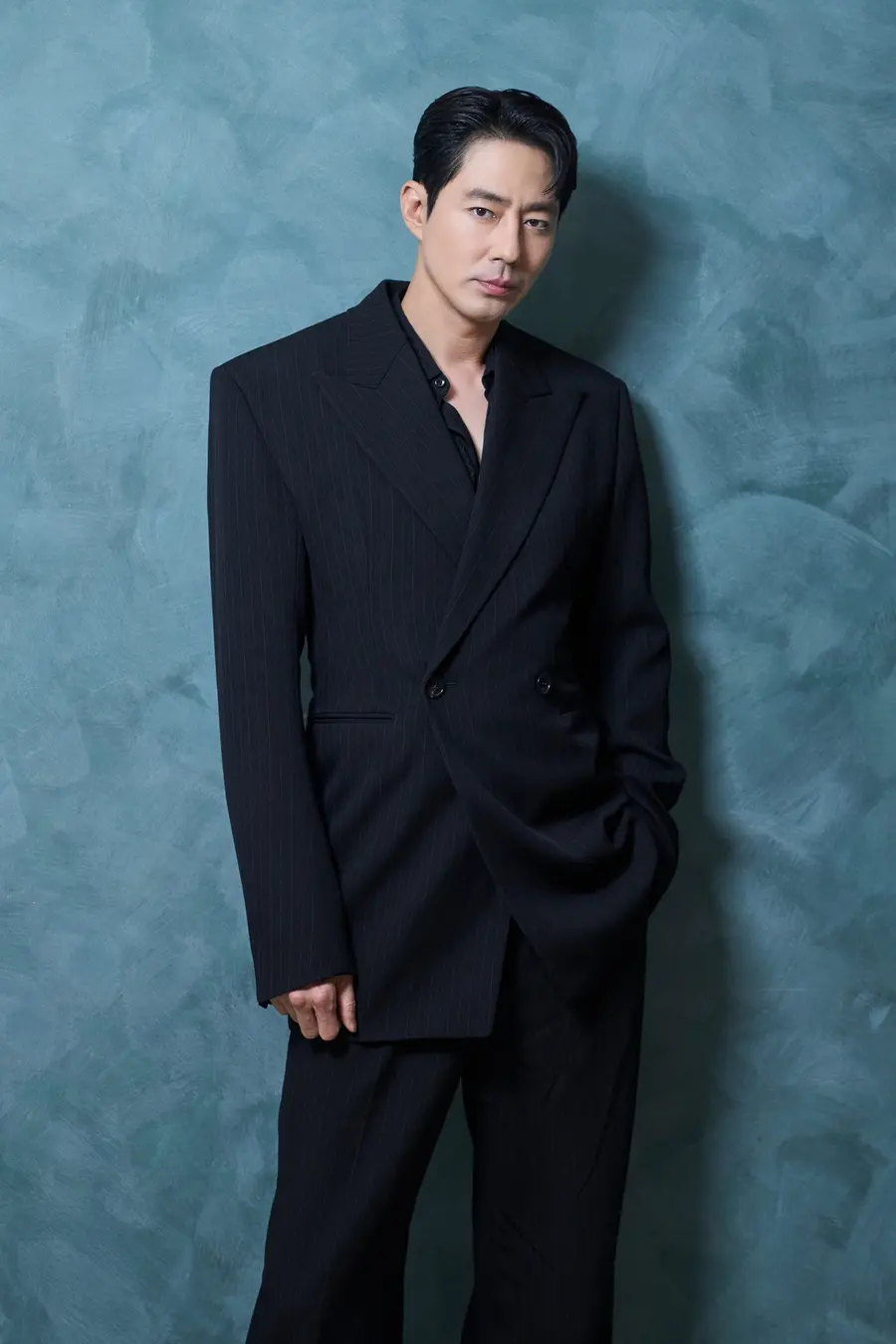
Few actors throw themselves at the impossible the way Jo In-sung does. He runs, hangs on, endures and throws his body into action. In director Na Hong-jin's new film 〈Hope〉, Jo In-sung delivers raw, unpolished action, exuding a wildness and animal instinct as he faces an extraterrestrial intelligence. Rather than relying on CGI, he physically committed to the work. Even amid a grueling shoot that tested limits, his resolve was clear in comments like "I had to go crazy and do it" and "I couldn't give up after coming this far." That mirrors the fierce survival instinct of Seong-gi (played by Jo In-sung), who claws his way through 〈Hope〉 trying to survive at all costs.
The film 〈Hope〉, which opens on the 15th, begins when Beom-seok (Hwang Jung-min), the Hopo Port branch chief stationed in a demilitarized zone, hears from local youths that a tiger has appeared, and as the entire village goes on emergency footing, he encounters an unbelievable reality. Seong-gi, played by Jo In-sung, is a local young man in Hopo Port who does odd jobs for money. From a different perspective than Beom-seok, he propels the story forward and helps create 〈Hope〉's peculiar mystery.
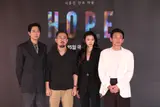
On the rainy afternoon of July 9, in a location in Jongno District, Seoul, actor Jo In-sung met with CinePLAY to mark the release of 〈Hope〉. Here is the full interview with Jo In-sung, who said he hopes 〈Hope〉 will bloom like a trumpet vine that defies the monsoon and typhoons.

It happens to be raining. How are you feeling ahead of the release of 〈Hope〉?
This year's monsoon started later than it has in 54 years. Actually, heavy rain isn't great for a film's box office. Still, with a week to go until opening, I hope people find it a little easier to make it to theaters on the Wednesday when 〈Hope〉 opens. I've been checking the weather a lot. The mood fits the film, but when it rains hard people are less likely to go out.
Director Na Hong-jin said he wanted to make a classic action film in which the actors perform all stunts without CG, like the action films of the 20th century. From the moment I watched 〈Hope〉, it was clear that Jo In-sung literally endured "real hardship." Can you tell us how physically demanding the shoot was?
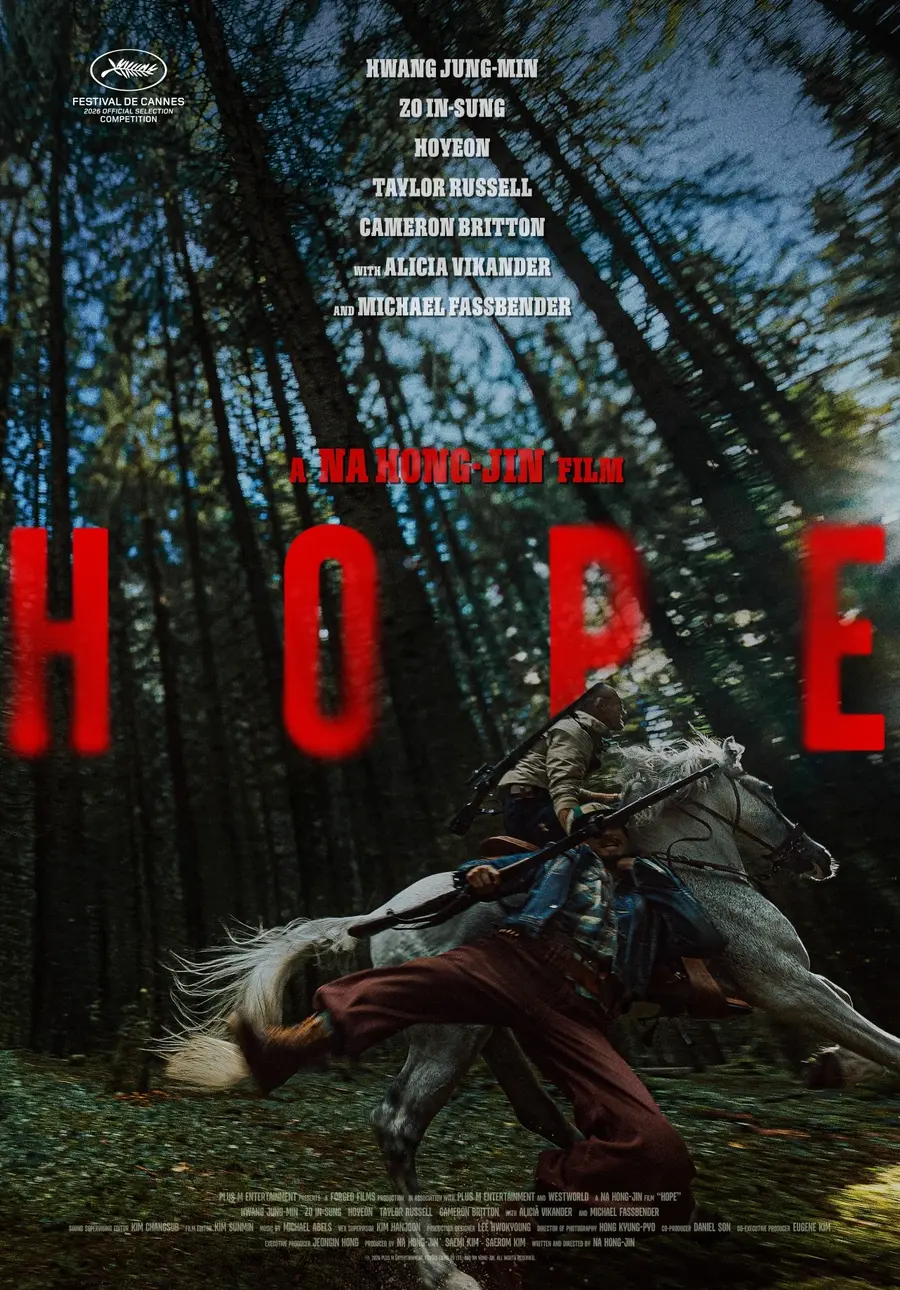
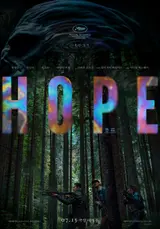
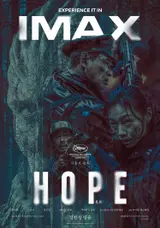
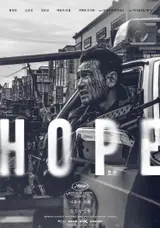
That question is hard to put into words. I just sigh. (laughs) The action in the latter part of the film— the stunt team said they hadn't done anything like it. Even people who ride horses told me they didn't do stuff like that. Then I had to do it. How? It wasn't that it felt dangerous so much as that it seemed impossible. (Like the image on the poster of 〈Hope〉 where I'm riding a horse with one foot) You don't think of trying to ride a horse like that. (laughs) When I tried it, it didn't work well. The vehicles were moving, and because it wasn't a motorcycle the bounce sent me flying off. On a motorcycle I could match the speed and stop, but it was impossible to control. I should stress everything was set up safely, because if you fall off a horse you can die. And in the bridge scene, I was so high on the horse—higher than the guardrail—that I thought I might topple over. Horses aren't meant to run on asphalt. They're supposed to be on earth. We swapped metal shoes for rubber ones because the metal was slippery, but they still slipped. Everyone on set was tense.
As you mentioned, the sequence on the bridge in the latter half is a highlight of the film. How was that scene filmed specifically?
The Hollywood-based XM2 team handling special photography, cinematographer Hong Kyung-pyo and director Na Hong-jin first left in a monitoring vehicle. They launched a drone from that vehicle—an enormous, impressive piece of special equipment. Once the cars started moving, the horse I rode got excited. I'm the last to start, and when the start signal comes I push the horse to full speed, about 25–30 km/h, and bring the horse right up against the vehicle. But the horse hated that and kept veering sideways. I had to pull it back and only when it steadied would the cameras roll and the drone would come down. Then the horse would dislike the drone too. (laughs) The team watching on the Bluetooth monitor below would sometimes lose the connection when we passed a section, so they could only judge by sound if there had been an accident. When they heard “Cut, okay!” they'd clap from below. It wasn't just about being tired; it felt like, ‘I survived but I almost died.’ That said, it wasn't that the set was unsafe—the difficulty lay in working with a horse, which can't be controlled the way a mechanically operated vehicle can.
After pulling off such seemingly impossible action, what did the director say to you?
I did it because no one else could, right? (laughs) The director called and said, "I thought that wasn't something that could be done. How did you do that?" I replied, "You told me to do it, so I did it," and he said, "You're amazing." Now we're on good terms.
It could have been done with CG, but was there a reason you chose to do it physically yourself?
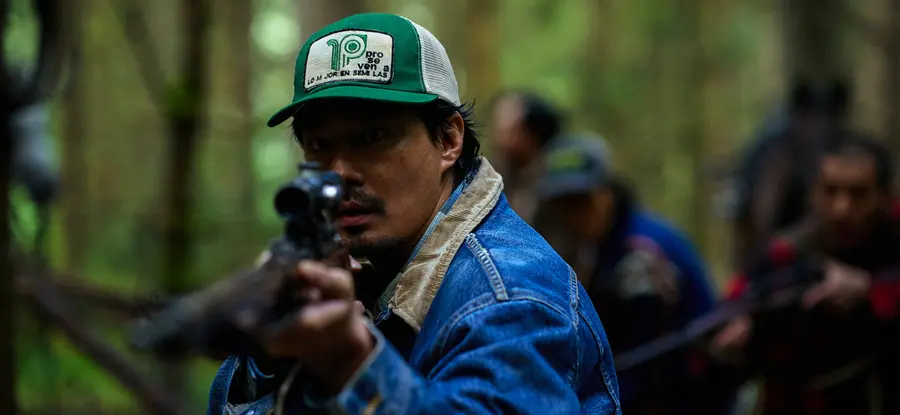
Some people assumed we used a dummy. But there were no dummies on our set. When people say "dummy," it annoys me a bit. (laughs) "What are you talking about? We had people do it here." The reason we went that far is because something new comes out of it. And isn't that what audiences come to the theater to see—those kinds of scenes? If the film lacked even that, what cinematic thrill would we offer, and how would we persuade audiences to come see it? I feel it's only right to give audiences the classic, human-powered cinematic thrills. Just like in the Jackie Chan films we watched before. Our country's SF films have gone through many ups and downs. That makes it even more important to deliver spectacle and a sense of desperation. Creating something new requires courage. That doesn't mean we'll do this every time. (laughs)
In the film, Seong-gi is thrown and battered relentlessly yet keeps surviving. What did you and the director discuss about Seong-gi's physicality and his capacity to survive?
At first humans chase an alien lifeform and then they start being chased. I felt the film was essentially about how far a human can endure when a human comes up against an unknown life-form, driven by the instinctive will to live. Whether the alien lifeform is real or not isn't the point. When humans fight to survive, they can display superhuman strength. There are cases where parents manifest extraordinary strength to save their children, and countless prayers and wishes sometimes bring about scientifically inexplicable miracles. I think the film is able to speak about that human survival capacity. For example, Seong-gi's potato-eating scene was meant to show will to live — he's eating to survive, not savoring flavor. So Seong-gi's series of actions express that survival drive.
Beyond the potato-eating shot, early in the film Seong-gi gobbles rice balls and crunches whole pickled young radish kimchi, conveying a raw, primitive ferocity in those acting moments. How did you shape that performance?
On set we discussed what he would eat there. The director and I talked a lot about it. At first we considered cooking ramen, but that lacked tension and the tempo dropped. If he leisurely cooked ramen it would take about three minutes. So we switched to rice balls and young radish kimchi; we chose kimchi because you don't need to tear it apart—you can bite it quickly to match the urgent tempo.
Director Na Hong-jin is known in film circles as an uncompromising perfectionist. You must have prepared yourself mentally, but was there anything on set that particularly surprised you?
You can infer a director's style from his earlier work. Even if you haven't worked with Na before, you know scenes that could only be shot his way. That energy is unique. The final highway scene was filmed in Hapcheon. We expected it to take a month, but it took just under two months because it snowed. We had to ride horses, and if black ice formed I would have been finished. Even if you melt the surface, snow remained in the background. Because the weather was unpredictable, we always kept the full set ready on standby. Makeup took an hour and a half. So whether or not we shot, all the actors were on set in full makeup, waiting that hour and a half. We often had to come back empty-handed. If the sky was too bright, we couldn't shoot either. Shooting a creature film in the middle of the day is really difficult. You need to maintain cuts, but light consistency doesn't hold. It was a very challenging job, and Na's courage and stubbornness in not avoiding those inherent difficulties were impressive. It became a constant battle with the weather and ultimately a race against time.
When you first read the script, what did you envision visually, and how does the finished film compare?
This kind of work is about how you realize the script. But there are technical and physical limits, so even after reading 〈Hope〉 I didn't expect a perfect realization. For instance, the poster image of me hanging from a horse with one hand—I didn't think that would be possible. Yet it turned out to be the maximum achievable limit, and Na seemed to know that. Even while doing it, I was amazed it was possible.
Director Na Hong-jin said that to convey a sense of speed, some shots were filmed from on the horse. Is that true?
When I rode through the woods, the riding team rode alongside me while handheld shooting.
![[BIFF On Location] ‘Shaving’ Marks Show Kasamatsu’s First Korean Film Challenge: “We Create 100% Miracles on Set”](https://cdn.www.cineplay.co.kr/w300/q75/article-images/2026-10-09/70cadf5a-5820-4f28-bdea-52d94531634c.jpg)
![[At BIFF] ‘Dora’ brings Kim Do-yeon to tears during news conference; Jung Ju-ri’s 20-year project](https://cdn.www.cineplay.co.kr/w300/q75/article-images/2026-10-09/4a118116-5011-4858-a62b-2cedd0851b97.jpg)


![[GV] Bong Joon-ho Praises Na Hong-jin’s New Film “Hope” as a “Breathtaking Spectacle of Unleashed Madness”](https://cdn.www.cineplay.co.kr/w160/q75/article-images/2026-07-17/2f5ec73b-60dd-4ec6-b009-3213b2b5ed95.jpg)
댓글 (0)
댓글 작성
댓글을 작성하려면 로그인이 필요합니다.
로그인하기