


※This interview with 〈Hope〉 actor Jo In-sung continues from Part 1.
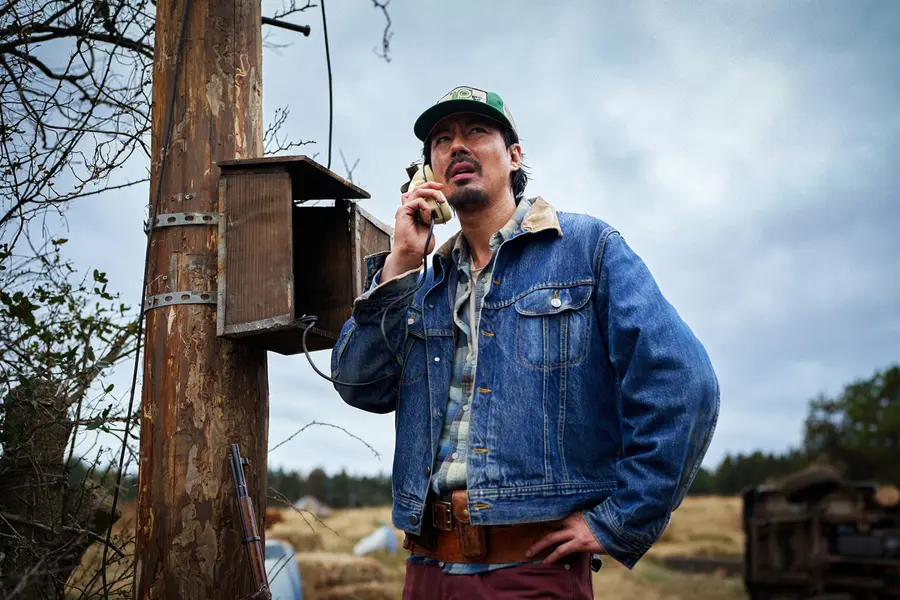
Imagining and acting opposite an imagined being must have been a major challenge. In particular, when Seong-gi confronts a gigantic alien intelligence late in the film, his subtle eye movements and tiny facial shifts were striking. Can you tell us about the acting behind those moments?
Action mattered, but shaping the reactions to the otherworldly elements was also difficult. Reaction is the most crucial thing. For example, in 〈Smugglers〉 (2023), when Kwon appears, I did almost nothing. But depending on what senior actress Kim Hye-soo does in response, my character comes alive. So in 〈Hope〉 the reaction to seeing the creature was extremely important. That’s what makes the creature feel real. That scene was instinctive, and the director really liked it.
Seong-gi’s look brings to mind an American Western. Was that visual style and genre mood intentional, and did the director give you specific guidance on it?
That was the director’s intention: a rural young man with a slightly stylish tone and manner. I grew the beard myself and tanned a bit. The makeup team worked a little magic, too.
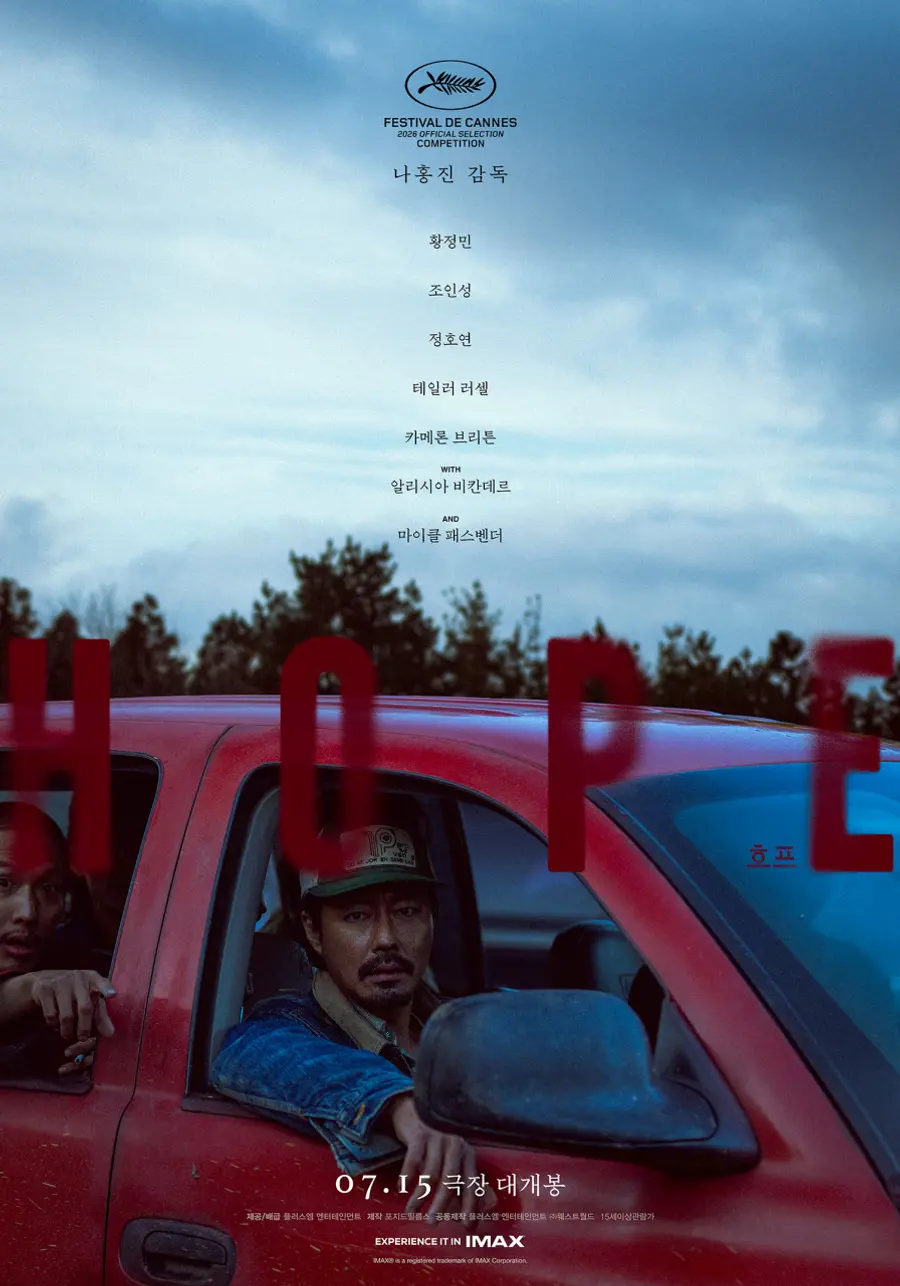
The press materials describe Seong-gi as “a pathetic young man in the village who passes time by hunting and fishing.” But in the film Seong-gi’s spoken lines suggest a very limited personality, which seems like it would make the role harder to play. Was that the case?
Because the character’s background wasn’t clearly defined, I brought in a lot from outside the script. Seong-gi’s group met outside all the time. When we got together and talked, the speech patterns and positioning naturally settled. Bringing that into the set allowed us to move organically and with conviction.
One moment that stood out was when Seong-gi stops his group from shooting the alien, shouting, “Don’t shoot!” Why did Seong-gi try to prevent the attack?
I thought the reason was the difference in how people respond to something unfamiliar the first time they see it. You can’t immediately tell whether it’s good or bad, but some people, driven by fear born of ignorance, turn to aggression. Psychologically, people tend to react negatively when their brains encounter something new. I saw Seong-gi’s line as a quick attempt to stop friends gripped by prejudice—friends who had their guns up even though the other side hadn’t attacked—by saying, “Wait, don’t shoot. Look a little more.”
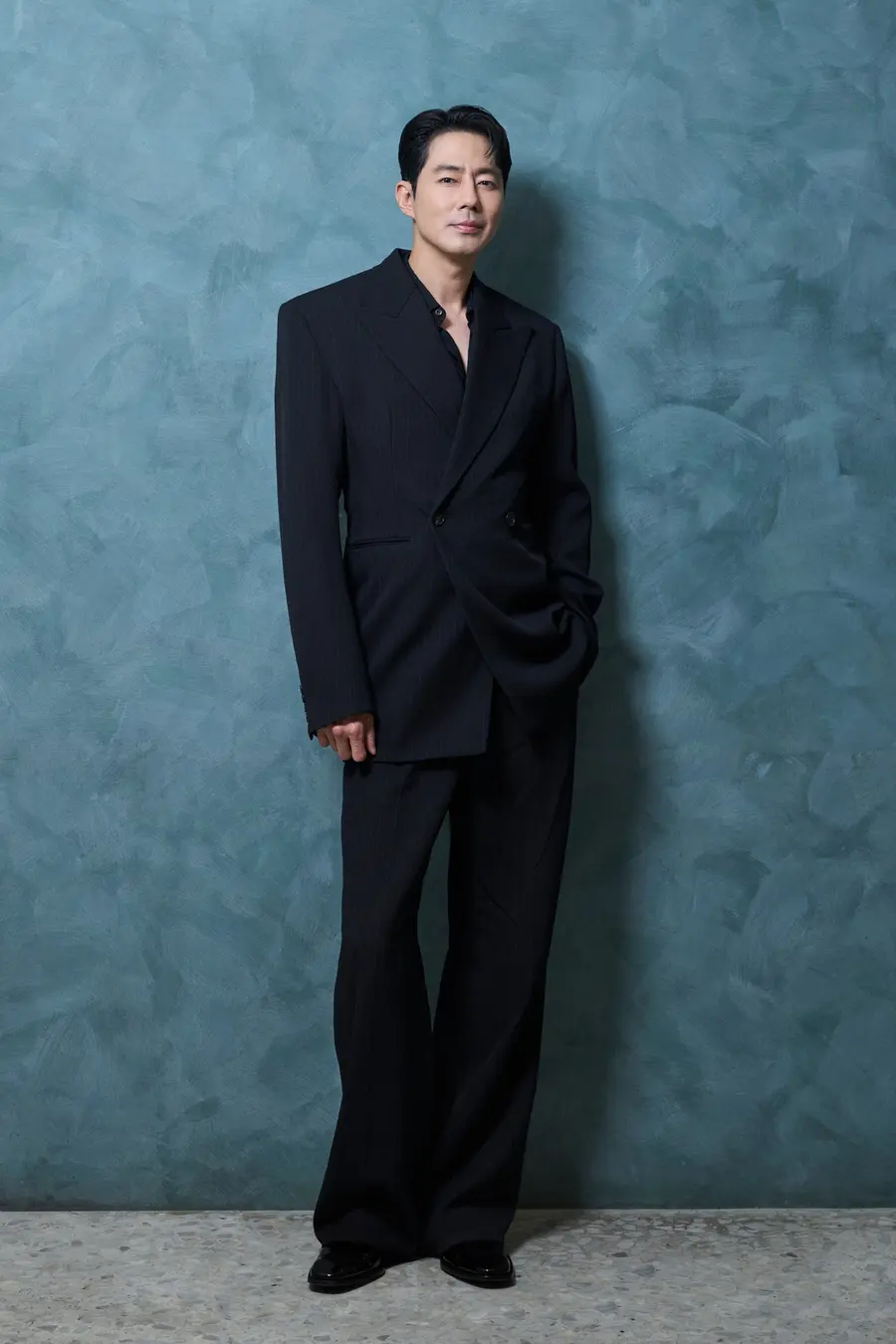
You’ve done a lot of action films. Were there any physical ups and downs for you on this shoot?
We had a physical care team on set. To prevent and treat injuries, action productions always have a dedicated crew. We had a running joke on set: when someone called “cut,” someone would shout, “Manager Kang! Get the senior back in shape quickly.” Because we have to move on to the next take, it means get them back ready fast—massage, apply patches, that sort of thing.
You mentioned in 'Pinggego' that you’ve had preexisting injuries.
The director knew about them and managed things efficiently. That doesn’t mean I could avoid running entirely. And when you watch the rough cuts on set, you get obsessed and keep going. You can’t give up after you’ve come this far.
You worked with Jung Ho-yeon for the first time. She said you were very flexible on set. How was the chemistry with Jung Ho-yeon?
Ho-yeon is new to film, but she’s not new to acting. I feel the times have changed a lot. When I was Ho-yeon’s age, the domestic market was basically consumed at home; it was thanks to senior actor Bae Yong-joon that the market expanded into Japan and China, and going beyond that was almost unthinkable. Now, a work made in Korea can move past Asia to global markets. Under those conditions, to see a talent like Ho-yeon emerge is impressive—she’s a real “super Korean.” She speaks English very well. She feels like an asset to Korean film and drama. I’m only just now starting to do Korean well myself. (laughs) She was really charming on set. My flexibility comes from setting myself up to expect a lot: I’d come in thinking, “I’ll shoot this scene 100 times,” and if we finish after 30 takes I find my calm and think, thank you. If you come in expecting a tough day, you’ll be more flexible. I think Ho-yeon will grow more comfortable as opportunities and experience accumulate.
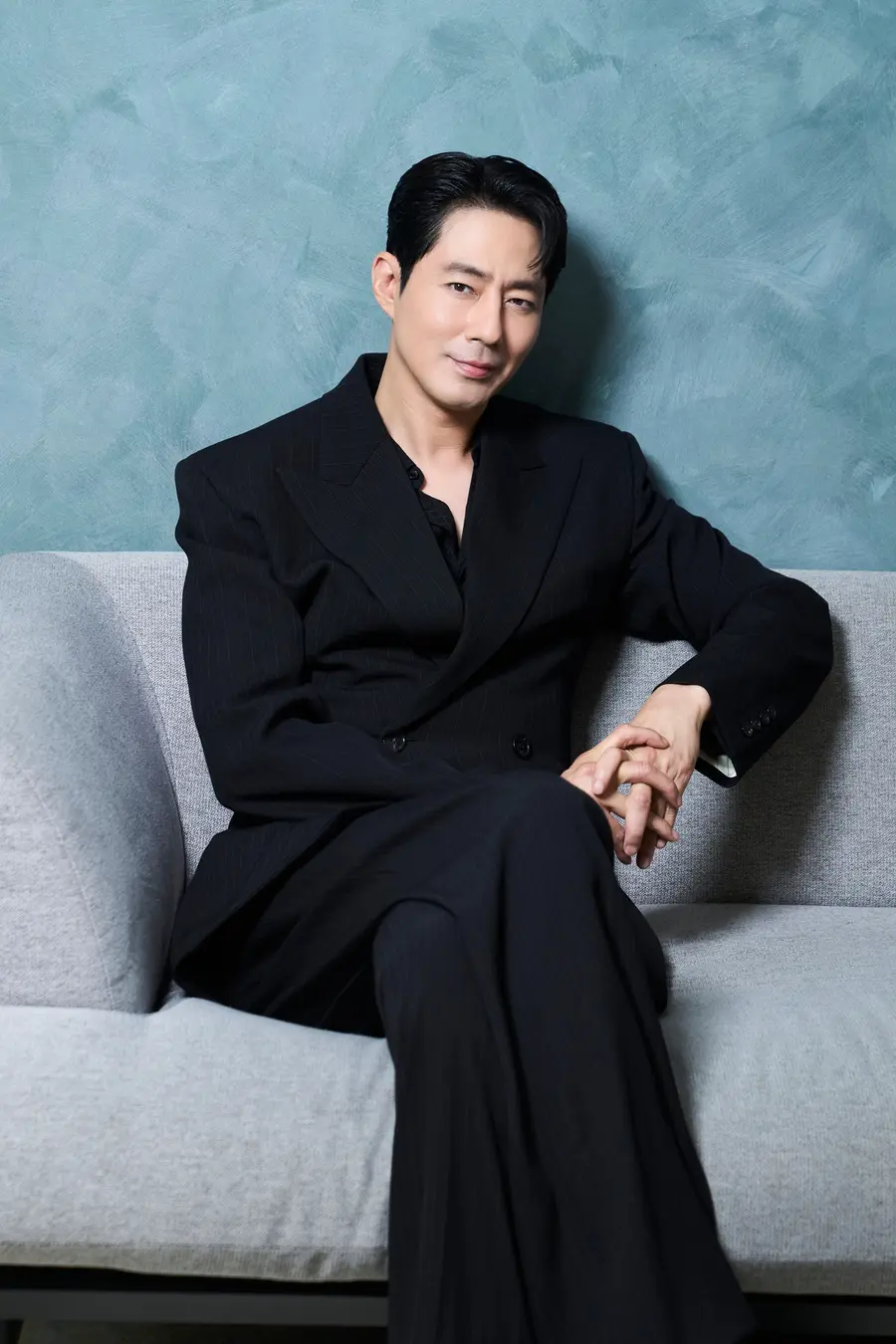
The film’s post-credits clip naturally makes you expect a follow-up. Has there been any discussion of a sequel or any hint from the director?
I’m sure the director, as the creator, has the next story in his head. But simply put, the first film has to do well for there to be a second. This isn’t Hollywood with everything prearranged; it’s the reality of Korean film production. Even the director probably feels the work isn’t finished. I’m waiting for the director to talk about it himself after the film comes out and we see how it does.
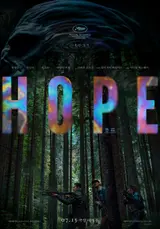
Director Na Hong-jin has said of the title 〈Hope〉, “Everyone has something they want to protect, and for me that is film.” What is the thing Jo In-sung most wants to protect right now?
The fact that I keep thinking about the weather probably means I want this film to be loved by audiences. I’m curious to see how people will receive it.
You’ve said that delivering spectacle and brutality is necessary to complete a Korean-style sci-fi genre. Given the rare genre and visuals you built, you must feel a lot of pride.
My personal pride doesn’t mean much. What matters is that audiences find it thoroughly entertaining. Korean sci-fi has struggled because it inherently carries a risk of dividing tastes. But if we avoid challenges because something is uncomfortable, the film industry can’t create anything new. Failure is part of producing good results. Before BTS rose to fame, many senior musicians tried and failed repeatedly while seeking overseas success and learned from those experiences to get where they are now. We are in a similar process. I wouldn’t claim this work completes Korean sci-fi, but it could be another leap and a beginning.
As a big-budget film and a new challenge for Korean sci-fi, you must feel heavy responsibility as the lead actor.
You can’t help but feel it. Why are you putting this on me! (laughs) I’m not an actor who’s made monumental contributions to Korean cinema—I’m just someone who’s been working steadily as an actor, and suddenly the stage grew like this. Not just me: senior actor Hwang Jung-min and director Na Hong-jin also feel the weight because of the external circumstances everyone knows about. I recently heard about a flower called Neungssohwa. It blooms wide as if laughing at the sky even through heavy rain and typhoons. I hope our film becomes that kind of work. The genre has inherent limits to overcome and the external climate is tough, but I hope our film blooms in the arms of audiences like that flower. If it succeeds, praise it; if it falls short, give it harsh criticism. Being scolded is part of our job. I don’t know whether people liked the final product, but if you did, please help us a lot. If you didn’t enjoy it, write about that too—criticism is how we improve.
![[BIFF On Location] ‘Shaving’ Marks Show Kasamatsu’s First Korean Film Challenge: “We Create 100% Miracles on Set”](https://cdn.www.cineplay.co.kr/w300/q75/article-images/2026-10-09/70cadf5a-5820-4f28-bdea-52d94531634c.jpg)
![[At BIFF] ‘Dora’ brings Kim Do-yeon to tears during news conference; Jung Ju-ri’s 20-year project](https://cdn.www.cineplay.co.kr/w300/q75/article-images/2026-10-09/4a118116-5011-4858-a62b-2cedd0851b97.jpg)


댓글 (0)
댓글 작성
댓글을 작성하려면 로그인이 필요합니다.
로그인하기