



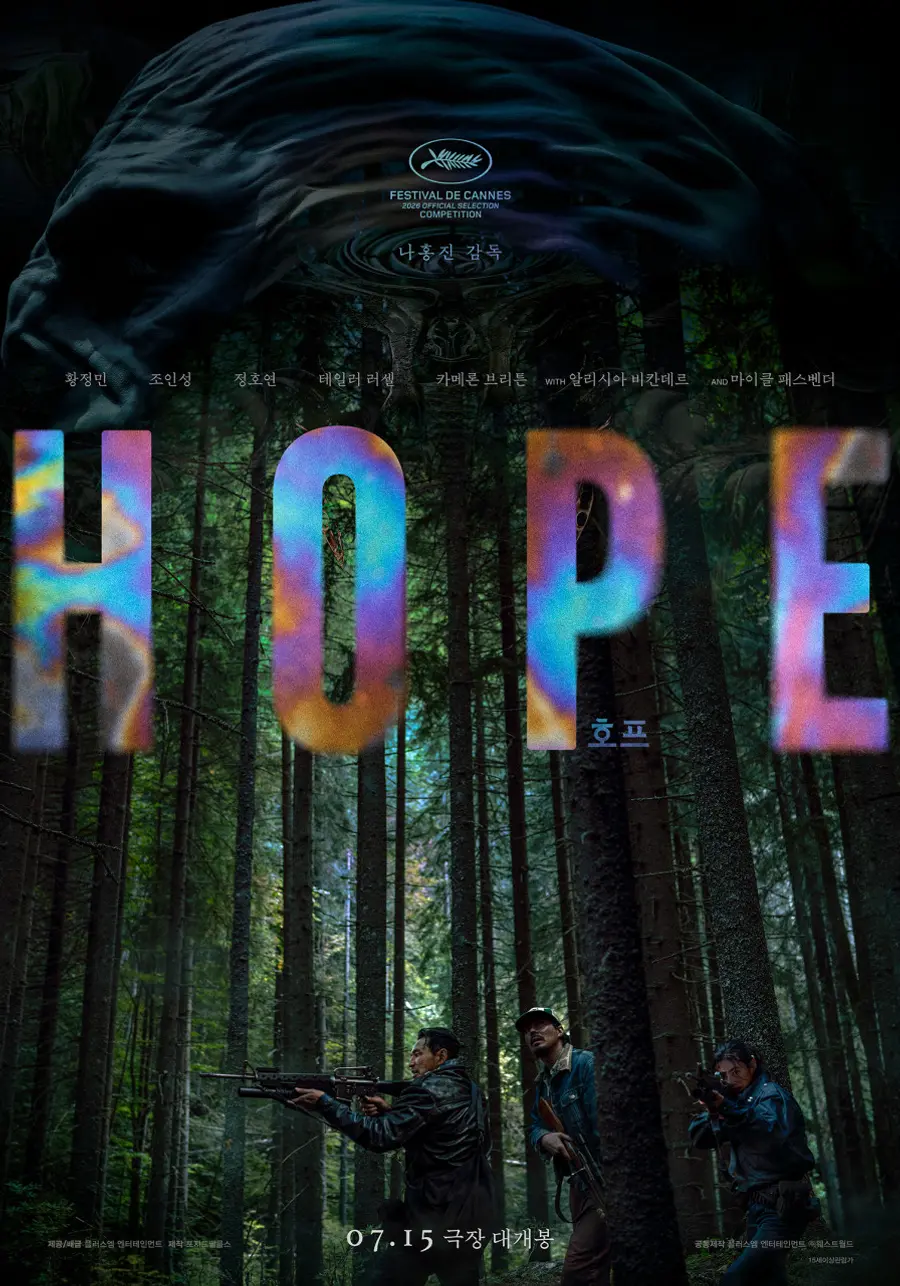
Few Korean films this year have arrived with expectations as high as 〈Hope〉. The film 〈Hope〉 has, true to its name, been framed as a much‑needed sign of hope for the Korean film industry and carries enormous expectations. Each of those factors has helped make the film a major draw. The cast pairs a trio—Hwang Jeong-min, Jo In-seong and Jeong Ho-yeon—with Hollywood performers Taylor Russell, Cameron Britton, Alicia Vikander and Michael Fassbender. It is Na Hong-jin's first new work in ten years since 〈The Wailing〉, and it is a large‑scale tentpole.
After premiering at the Cannes Film Festival, 〈Hope〉 made its domestic debut at a press screening on July 6. Just as people had been saying, it is flashy and energetic, while its more questionable points are just as unmistakable. Rather than a perfectly balanced whole, the film feels like a specialist piece in which particular elements smash through the ceiling and launch into the stratosphere. Here is how 〈Hope〉 plays after its first domestic press screening.
Running at Full Tilt: A Flawless Visual Vision
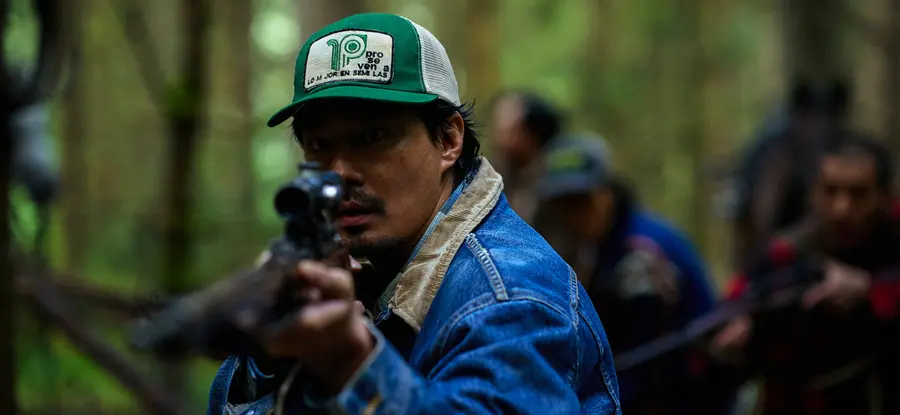
〈Hope〉 opens with sudden warnings of danger in Hopohang. A cow carcass is discovered, and to catch whatever attacked it police station chief Beom-seok (Hwang Jeong-min) and local youth Seong-gi (Jo In-seong) search the village and the surrounding woods separately. In the process the two encounter an unexpected monstrous life form, and patrol officer Seong-ae (Jeong Ho-yeon) joins them as they struggle to defend the village.
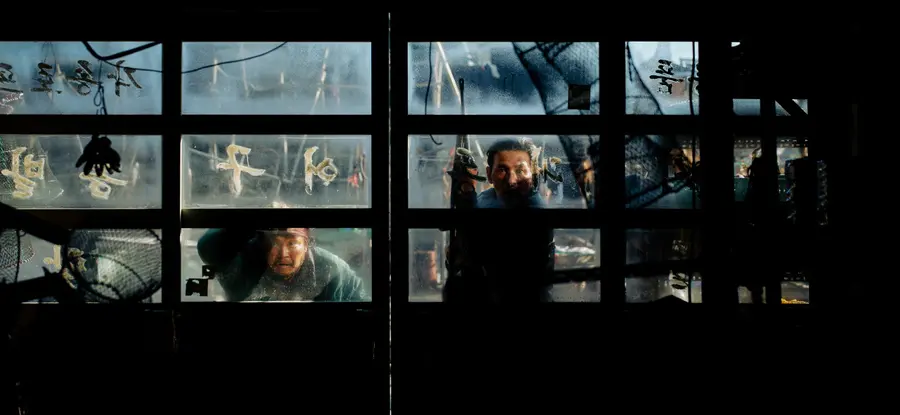
One of the film's most unusual choices is that it offers no lead‑in or foreshadowing. It plunges straight into the premise that "something has appeared in the village." Who these people are, where this is taking place and when it occurs are conveyed only through dialogue and behavior, and only at the most everyday level, as if passing by. If you frame it as a kind of disaster film, it forgoes the usual business of showing the characters' ordinary lives and how the catastrophe shatters them. That confrontation with the unimaginable recalls the sense of absurdity that permeated 〈The Wailing〉.
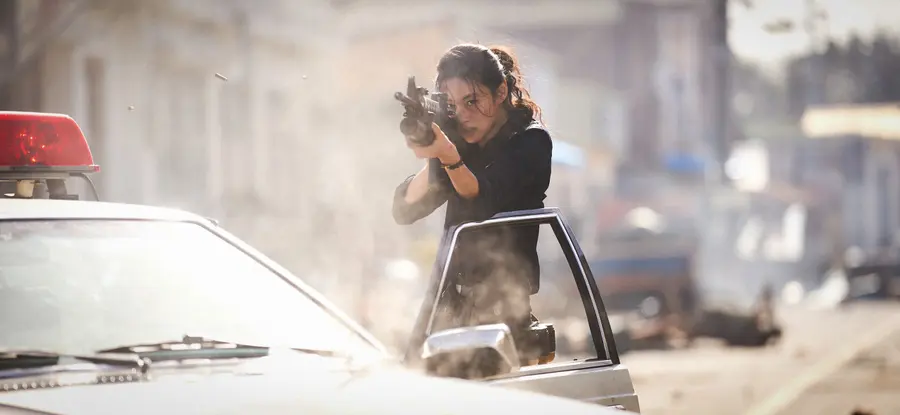
Having omitted those explanatory passages, 〈Hope〉 simply charges ahead. When Beom-seok returns to the village he finds traces of the creature across the devastated settlement and continues the search. The film alternates surprise and suspense, building tension and making the audience a companion to Beom-seok. As if rejecting ordinary grammar, the camera moves inventively. Unlike similar works that confine action to tight, dark spaces and narrow frames, 〈Hope〉 uses wide angles to capture the desolation of the village in broad daylight, letting viewers feel the fear Beom-seok experiences. Even as the action escalates, every character movement remains visually legible, so you can sense the energy generated in those moments.
At the same time, 〈Hope〉 can feel somewhat absurd. While it maintains a largely serious tone, it unexpectedly elicits laughter with surprising lines or actions. The characters—Beom-seok, Seong-gi and Seong-ae—are all inexperienced in these circumstances, so they sometimes make mistakes; Na Hong-jin's talent for turning those errors into darkly humorous beats in desperate situations is on display. Although the film is essentially built around three leads, only the audience sees the full movements of all three characters, and piecing together their arcs for a concrete story outline is part of the film's enjoyment.
After the rush, a lingering emptiness
As mentioned, 〈Hope〉 is a film driven by a very clear directorial vision. With a precise blueprint for concept and structure, it pushes the audience relentlessly. The problem is that the clarity of that concept also makes certain weaknesses stand out.
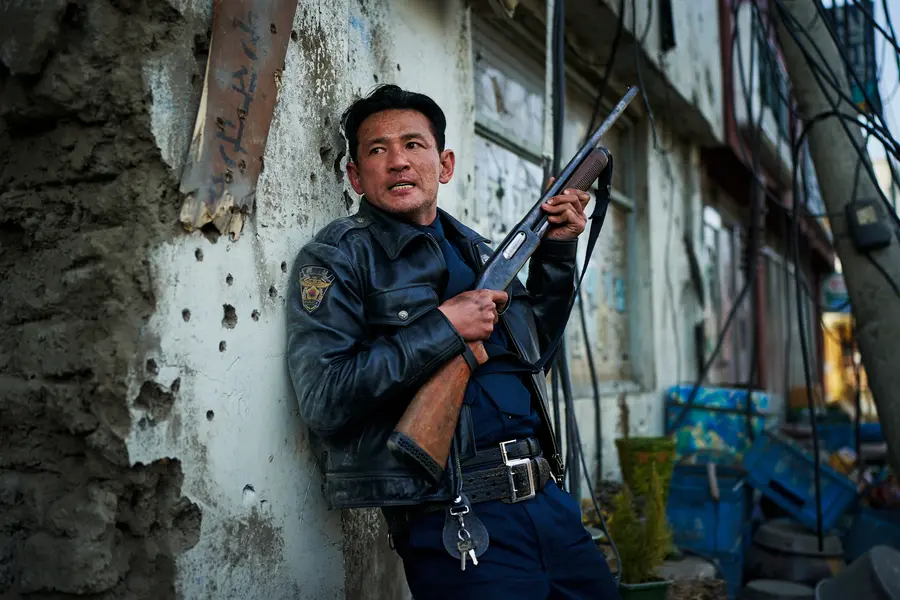
The visual concept is particularly strong, and in service of realizing that vision the film deliberately omits elements it considers unnecessary. By leaving out bits that another film might fill with cutaway inserts or explanatory dialogue, certain moments can confuse viewers. Choices made to preserve the concept sometimes break immersion instead.
Moreover, compared with its visual clarity, the story's direction can feel ambiguous. Around the midpoint the film reveals the broad outlines of its plot. While this resolves some of the unknowns, other elements remain unresolved and are left to the viewer's imagination until the end. The sections that are revealed feel somewhat conventional, and the segments that provoke curiosity are never fully addressed, which may leave audiences dissatisfied. It would have been preferable either to commit to an intentionally opaque mystery or to resolve all necessary plot points. Against the satisfying audiovisual rush, the question of "why this story needed to be told" yields no clear answer.
As Na Hong-jin has said he plans to make adjustments before release, it is likely some elements will change by opening day. For now, however, the film's score, sound effects and actors' dialogue are not always well balanced, so lines frequently fail to register clearly. Viewers can generally infer meaning from context, but given that many of the lines have distinctive phrasing, those moments where dialogue gets lost will need to be fixed.
Despite these flaws, the film's stylistic advances make 〈Hope〉 worth seeing on the big screen. That said, given the high expectations around the project and Na Hong-jin's track record, it is unlikely to satisfy everyone. When 〈Hope〉 opens on July 15, I will be curious to see how audiences receive it.








댓글 (0)
댓글 작성
댓글을 작성하려면 로그인이 필요합니다.
로그인하기