


※The interview with 〈Hope〉 director Na Hong-jin continues from Part 1.
※This interview contains spoilers and interpretations of the ending.
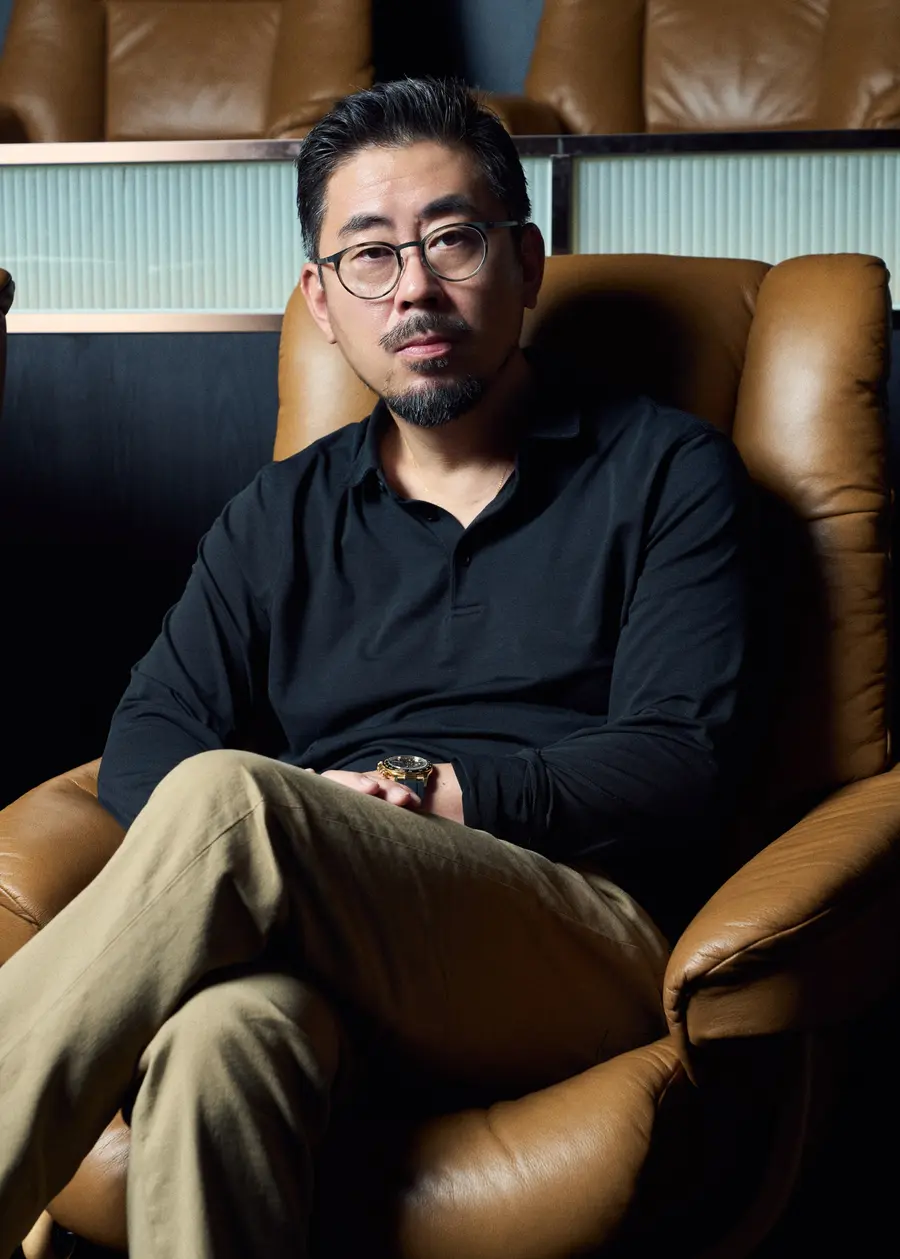
Before the film was finished, you said that the actors who play the aliens—including Michael Fassbender and Alicia Vikander—are the protagonists. In the film, the aliens' identities are only revealed at the end. Were you thinking of a narrative that exists outside the film, or did you mean for viewers to see them as the protagonists within the story?
It's the former. If it were the latter, I'd be utterly shameless. (laughs) I can't ask viewers to interpret an outside-the-film narrative for themselves. You can take those comments as hints about events that haven't happened yet—parts of the story that still exist only in my head. To be honest, I often feel there isn't a need to show what happens afterward. Of course, there's room to think more and adapt it further. The actors have already read that extensive backstory I constructed, and they did gather for that purpose.
As you mentioned, in the final scene the warship descends and there is a massive explosion. It looks like you devoted a great deal of care to that sequence. What motivated that focus?
From a story perspective, the warship carries a being called Ku-eol, whom I thought was the very being Christians call Yahweh or God. When the film reached that point, I thought it was time to bring the god down and put him to death. I deliberately scrambled the order of the dream dialogue and the warship's explosion. If viewers had heard the line first and then seen the ship blow up, it would have been easier to understand, but the preceding two hours and 20 minutes of the story are seriously simple and fable-like, so I wanted to prevent people from easily guessing this piece.
So what, ultimately, were you trying to say with the final scene?
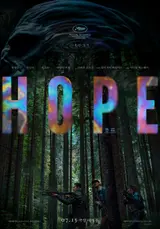
The sinking warship carries the being we think we know. From what it says in the dream, it seems to be that being. The sinking is already an event; what matters is what follows. The aliens talk about resurrecting the child alien who was found dead in the warehouse. That child could stand in for many things: it could represent the troubled state of the press, or the film industry. (laughs) I wanted to end by saying that even if we are in a bad situation, sincerely yearning for resurrection—believing in it and hoping for it—can itself serve as evidence that an actual resurrection will occur. Because I think the word "faith" carries a meaning a few steps beyond "hope," I named the film 〈Hope〉. The reason I didn't call it 〈Faith〉 is that I previously made a short film titled 〈Faith〉 (2023). (laughs)
Your films often bring up religious themes—a cross appears in 〈The Chaser〉 (2008), and following 〈The Wailing〉, this film again asks questions about belief. Religion seems to influence your work a lot. Were you raised in a religious household?
No. My mother and I attended a Buddhist temple when I was young. (laughs) I use Christian elements because, among the gods of various religions, the Christian God is the most prominent and most trusted. When I deliver a message, I think audiences may accept it more readily if it comes through that figure's words rather than a human's. I wrestle with what to say and how to present it, look everywhere for solutions, and somehow the conclusion always seems to lead me back in that direction.
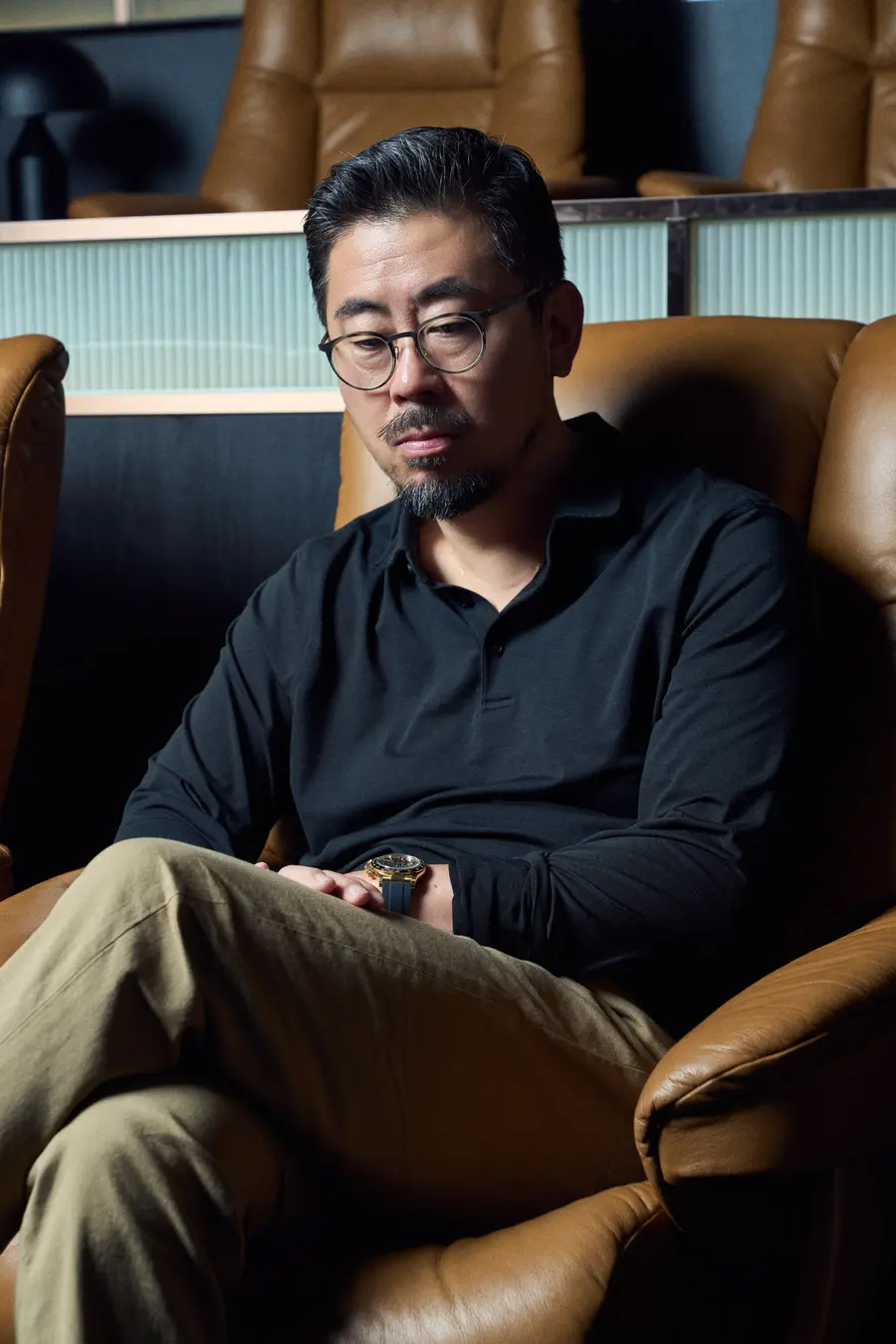
With 〈Hope〉 you presented a cinematic form you hadn't tried before. What goals or directional priorities did you set while directing this film?
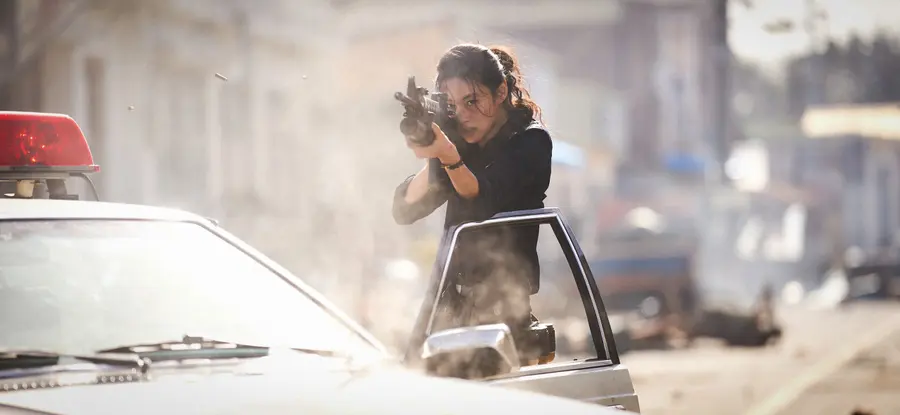
I wanted to move away from the typical Korean-film structure that mixes many genres and instead increase the genre density—especially toward action-thriller intensity. Starting the film with 50 minutes that show no monster and focus on chasing a man was a bold, even excessive choice. My ultimate goal was to maximize the visceral pleasure so that, inside the theater, audiences would feel as if they were right in the middle of it through sound and visuals. Everyone spent a long time in preproduction and during filming pursuing that goal. It was, of course, risky and difficult, but both the crew and the actors worked with total dedication and passion, and fortunately we were able to finish without major problems.
You have been directing theatrical releases continuously since 2008's 〈The Chaser〉, and it's been 10 years since 〈The Wailing〉. With audience viewing habits having changed, do you have any principles you try to uphold as a director?
Making films for theaters is incredibly difficult. It feels like truly mastering that craft is something far off in the future, because there is still so much I need to experience. I always feel lacking, and I do my best to absorb what I've learned into each project, but I know I'm still not there yet. I can feel myself improving, but I don't know when I'll reach the point where I can really command it freely. In any case, I feel I have to somehow survive until then. (laughs)

![[Kim Ji-yeon's Gem Box] 38-Year 'Rookie' Actor Nam Kwon-a of 'Tazza: The Song of Belzebub' and 'Gyeongju Trip'](https://cdn.www.cineplay.co.kr/w300/q75/article-images/2026-10-06/4c4edffb-f31f-4a4d-89a9-6e5cda5d13bb.jpg)


댓글 (0)
댓글 작성
댓글을 작성하려면 로그인이 필요합니다.
로그인하기