



Meryl Streep’s specificity and precision
〈Kramer vs. Kramer〉
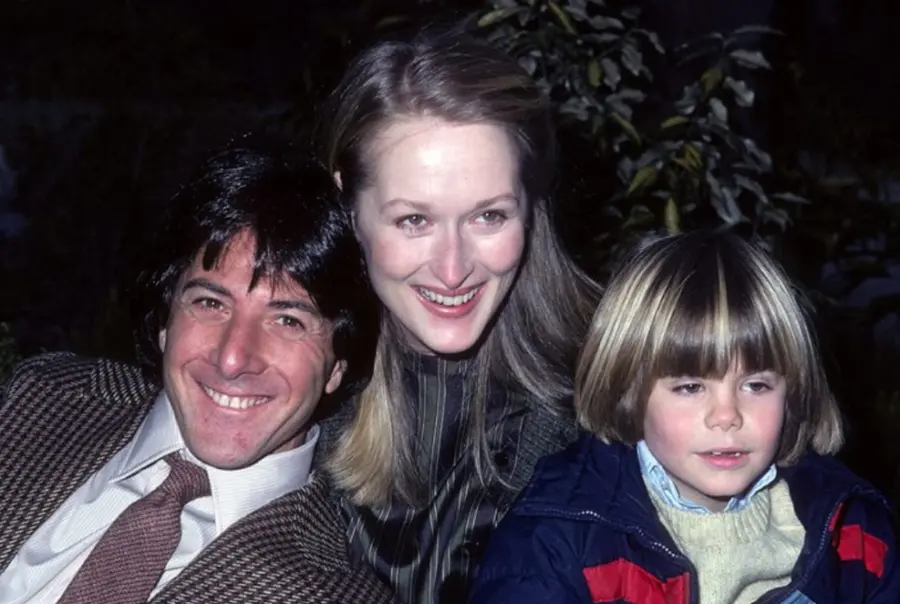
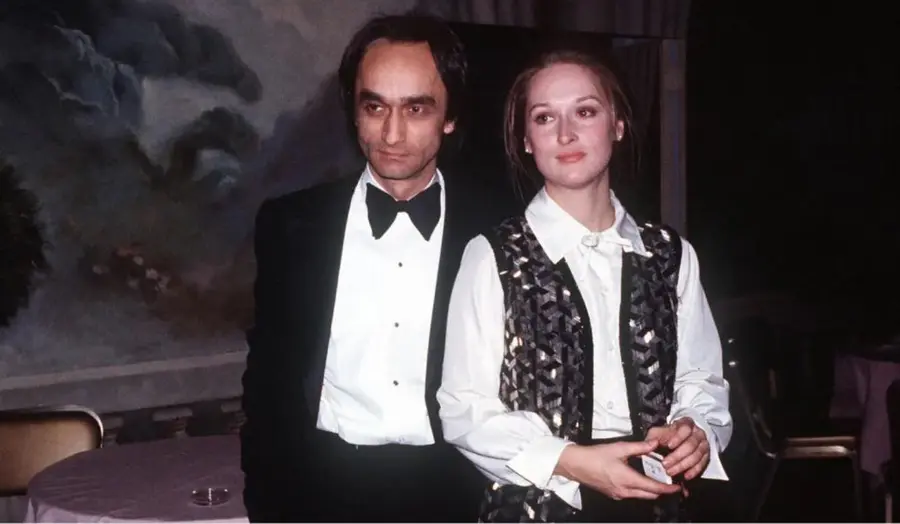
Meryl Streep’s early Hollywood odyssey was anything but smooth. A representative example is what happened during the filming of 〈Kramer vs. Kramer〉 (1979), when Dustin Hoffman and she did not get along well. It wasn’t so much that their relationship was “bad,” but rather that Hoffman, whose real-life behavior—soon to be exposed widely, including in sexual misconduct scandals—essentially forced her into a one-sided situation at the time. When Noah Baumbach’s 〈Marriage Story〉 (2019) was released, many people compared it to the earlier film 〈Kramer vs. Kramer〉—especially in its realistic divorce-court scenes—only to find that in 〈Kramer vs. Kramer〉, Ted (Dustin Hoffman) and Joanna (Meryl Streep) are a married couple. However, one day, Joanna grows weary of her life as a wife and mother, deciding that the life left for her should be written for herself, and she leaves. Then, when Joanna announces that she will raise their son, Billy, the two engage in an intense custody battle so fierce it’s like a war. In the midst of fighting—and seemingly fully immersed in Ted—Hoffman even pokes at her nerves by mentioning John Cazale, Meryl Streep’s former boyfriend, who died of lung cancer at just 42. John Cazale is well known for playing Fredo Corleone, the second son of Michael (Al Pacino), in 〈The Godfather〉 (1973), and in 〈The Deer Hunter〉 (1978) he even acted alongside Meryl Streep—though sadly he never got to see the release of 〈The Deer Hunter〉 and passed away before it hit theaters.
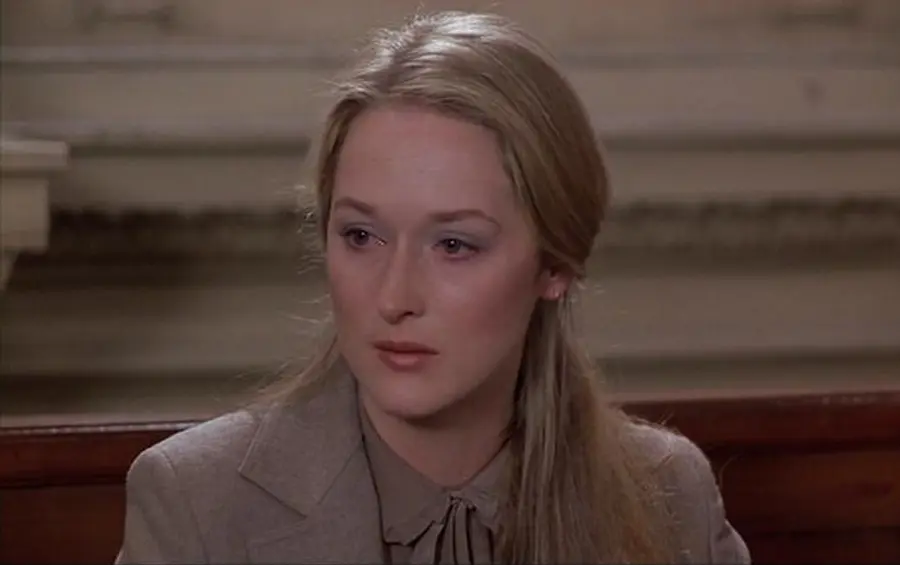
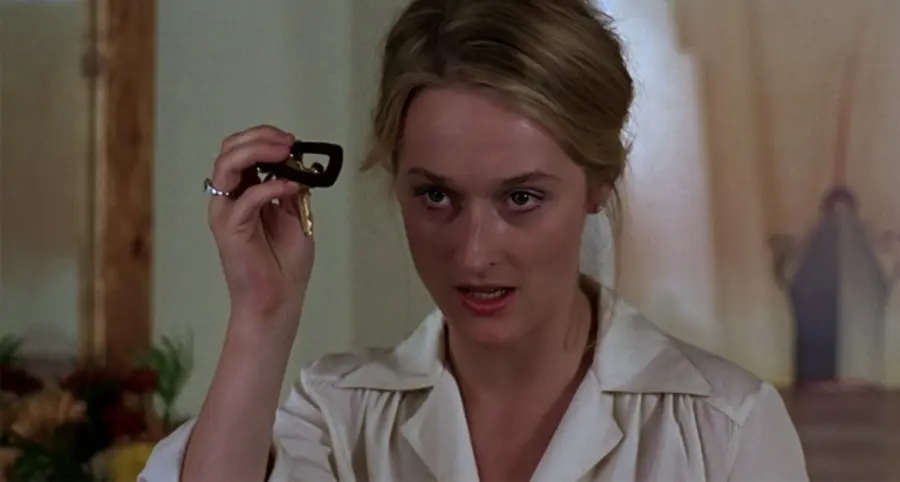
Robert Benton accommodated the adaptation process so that the actors could write a substantial portion of their own lines, but Dustin Hoffman’s goal was simply to turn Joanna into a selfish wife. Yet in that struggle, Meryl Streep refused to make Joanna into a “wicked woman who abandoned her family.” You can see how her determination seeped into the lines at the reunion where she met Ted again after a long time apart. “I spent my whole life being somebody’s wife or mother, somebody’s daughter. Even when we lived together, I didn’t know who I was. So I had to leave. But then I came to California and I found myself. I got a job and I’ve got good psychiatric care. I like myself more than I ever have. I know more about myself now.” On set, Hoffman would often snap in fury—saying things like, “Stop being such a damn feminist henchman, and just act, please”—but she didn’t seem bothered. Leaving aside controversy over Joanna’s “choice” as depicted in the film, Meryl Streep wanted to make Joanna into a character that could, in one way or another, be “understood.” In that sense—this being a work that follows the journey of a difficult choice by a woman—it’s almost the same as saying that before the later film 〈Sophie’s Choice〉 came out, there was already a film called 〈Joanna’s Choice〉.
On the other hand, that side of Meryl Streep is basically not well known, and yet the biographical book 〈Queen Meryl〉, published in Korea as well, contains quite meaningful details. Perhaps that side was something his family just knew instinctively—his father is said to have always advised his daughter Meryl, who became an actress: “If you ever win an Academy Award later, please go up on stage, and for the love of God, don’t bring up politics.” Also, when she was learning acting at the Yale Repertory Theatre, she was assigned to perform death improvisationally; she is said to have played a woman who dies after undergoing an abortion. While everyone else was acting out the so-called “tragic heroine” or “extreme choice” in vague, abstract terms, Meryl Streep played a woman placed in an incredibly specific situation. “I like actors and performances that audiences are not easily able to objectify,” she said—and her own perspective has also been reflected in her later roles. In the end, the essence of the fascination we feel when we watch Meryl Streep’s acting comes precisely from that specificity and precision.
〈Out of Africa〉
A Wonderful Big Sister Landowner in the 1910s
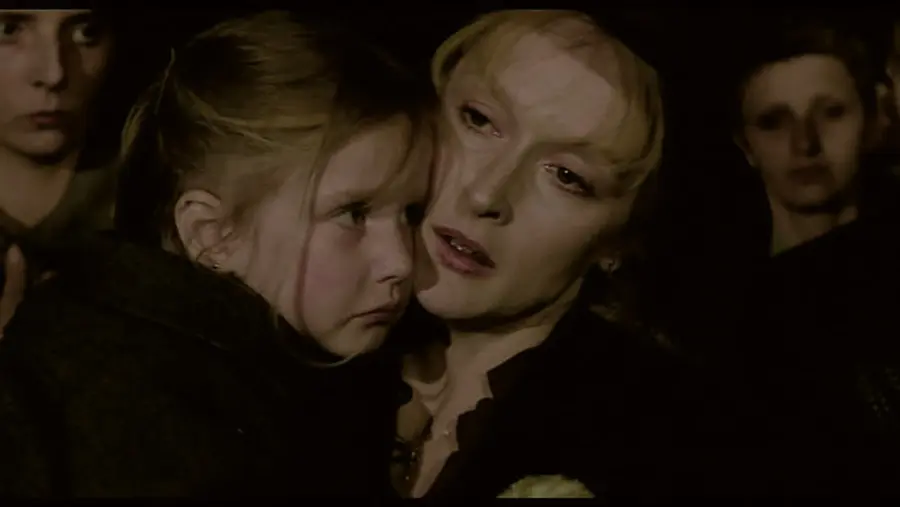
Put simply, in the end, an actor is the person who delivers a film’s theme through dialogue. Expressions and gestures matter, but the actor’s ultimate goal is to convey the language of the script perfectly. The most important condition to call Meryl Streep a “great actress” is that she is, in a sense, a “magician of language.” In 〈Sophie's Choice〉 (1982), the film that earned her the Academy Award for Best Actress, she played a survivor of Auschwitz and mastered the English accent spoken by a Pole with flawless accuracy. In the past, Sophie (Meryl Streep) was told by a German officer—enamored with her beauty—that of her two children, he would spare only one. Inevitably, she had to choose one child. The horror of a war wound that can’t be healed, and the unbearable situation of being placed at a crossroads of “choice” while leaving two children behind—those things come from the perfect command of language.
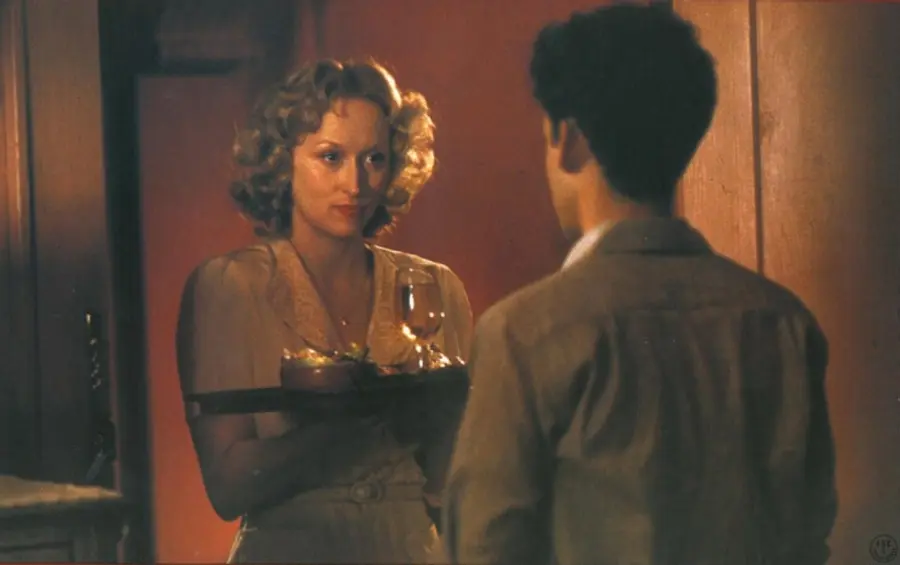
Based on Karen Blixen’s namesake novel, 〈Out of Africa〉 (1985) begins with the wonderful line, “I had a farm on the outskirts of the Ngong Hills in Africa.” Starting from the first-person “I” of a woman living through the upheaval of the 1910s, the bold confidence of “having a farm” on a continent that was also a battlefield for the world’s great powers shows, in today’s terms, the grandeur of a “wonderful big sister.” Set against the vast African landscapes of the 1910s, the film depicts the tender love and separation between Karen Blixen (Meryl Streep), a Danish woman, and Denys Finch Hatton (Robert Redford). Since Robert Redford—who was so close with director Sydney Pollack—was decided as the male lead early on, potential choices for the female lead included Judy Davis, Julie Christie, and Kate Capshaw. Quite a number of actors had already done screen tests. Above all, she had to be able to perform with a Danish accent, and she also had to be able to express the identity of being a writer convincingly. Just as, in 〈Sophie's Choice〉, no one else could handle the English spoken with a Polish accent as perfectly as Meryl Streep, there was no actress who could truly embody a Danish-born protagonist the way she could. On top of that, Meryl Streep was drawn to the story—just like the novel’s first sentence—of a woman running a massive farm alone in Africa. At a time when it was rare for films to begin with narration by a female lead, this was especially compelling.
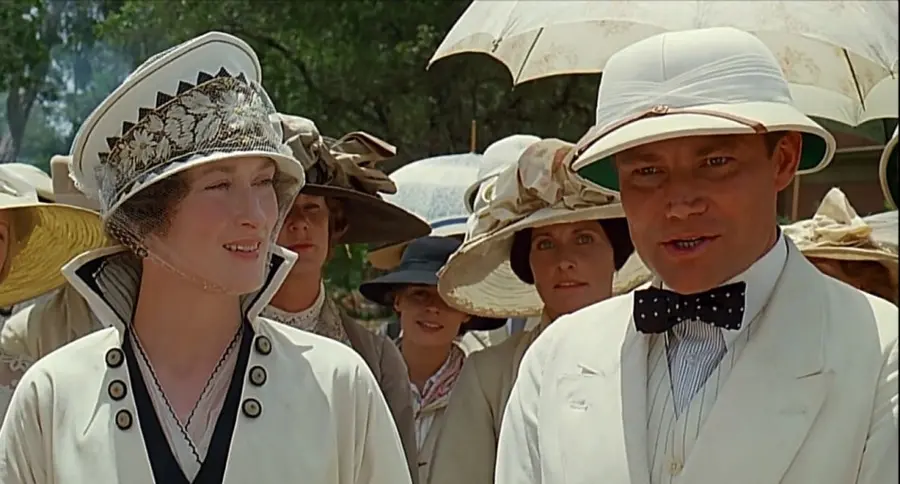
Moreover, completely captivated by a story that could be called a true-life novel, Meryl Streep wanted to turn Karen into an even richer character, but Sydney Pollack aimed to make it a grand love epic set against the scenery of Africa. In fact, the two only had a conflict once. It was when Karen hesitated to deliver the line, “I won’t grant permission,” because she believed Karen was establishing an unnecessarily deep relationship with another woman. I thought it was the scene where the balance of their “push and pull” was completely thrown off, as if Karen were publicly jealous and excessively fixated. In the end, she agreed with Pollack’s explanation—“To complete a relationship, each person has to show their flaws”—and filmed as she wanted, but it was impossible not to feel stung. Even so, Karen Blixen’s presence remains unchanged between the film’s two leads: Klaus Maria Brandauer, who plays husband Bro Blixen, and Robert Redford. In particular, the way Karen reacts upon hearing of Denys’s obituary is an overwhelming performance. Her hand holding a cigarette trembles ever so slightly—then she casually returns to reading a book. Director Mike Nichols, who had worked with her earlier on 〈Silkwood〉 (1983), was instantly taken by that performance again in 〈Out of Africa〉 and asked her to team up for 〈Heartburn〉 (1986), and that is how Meryl Streep and Jack Nicholson first came together.
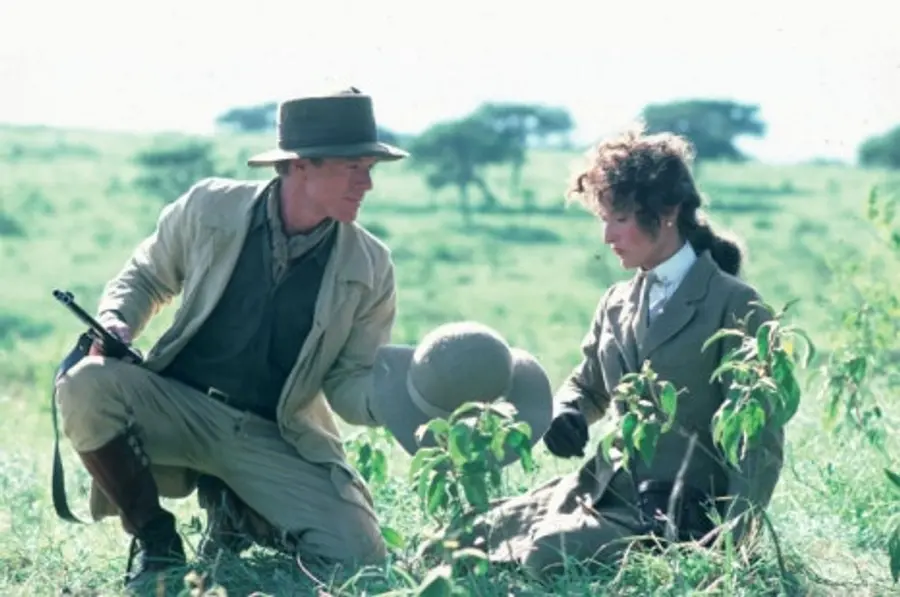
Besides, in the film, Felicity (Suzanna Hamilton)—who likes Karen—tells her, “Someday I want to live my life with my person, just like you do.” Felicity was modeled after the real person Beryl Markham, who is also known as Denys’s other lover. Because she was actually alive at the time the film was being prepared, Sydney Pollack even requested a meeting to seek her advice. Beryl Markham’s 〈West with the Night〉 has been published in Korea as well. When she was 18, she became the first woman in Africa to earn a horse trainer’s license; in her late 20s, she learned how to fly and became a professional pilot. In 1936, she also achieved a landmark feat by successfully making a historic solo flight that crossed the North Atlantic from England all the way to Canada, Cape Breton Island. Perhaps she could also be described as someone influenced by Karen Blixen’s goodness; her guiding belief was: “There is no horizon you can’t cross.”
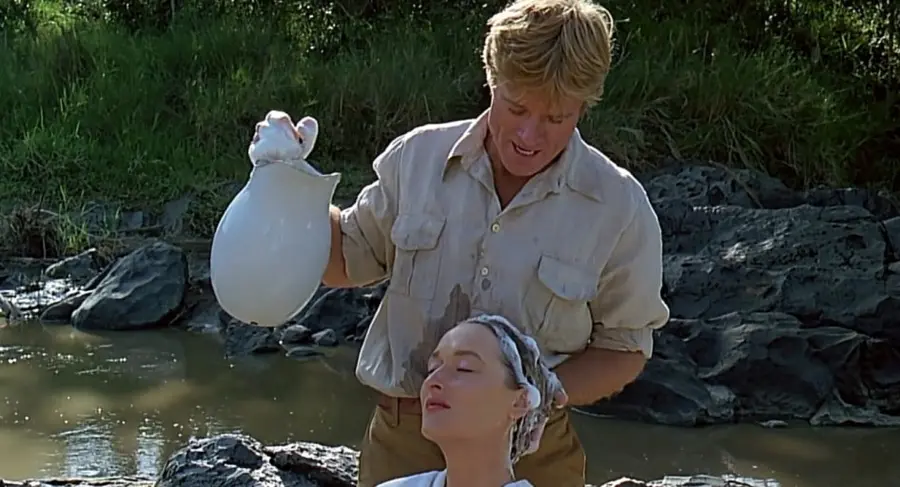
Even though the film’s depiction of the human condition is important, in fact, the film’s true highlight is the overwhelming grandeur of nature. Under that scenery, the scene where Denys washes Karen’s hair later became, in Hollywood, the sweetest, clearest, most commercial melodrama image—up until before the ceramic god figures of Patrick Swayze and Demi Moore appeared in 〈Ghost〉 (1990). And finally, the moment when the two fly on an airplane over the crater of Ngorongoro in Tanzania is truly breathtaking. When the aircraft passes over the crater, the plane itself is nothing more than a single dot. That experience left Karen Blixen with profound emotional meaning. “I learned that God has a richer imagination than humans do. Now I think I understand what it’s like to become an angel”—that was what the real Blixen supposedly said. It’s not just the grand music that does the job; John Barry’s film score—subtle and delicate—captures the mood exceptionally well. In fact, Meryl Streep was deeply absorbed by 〈Out of Africa〉. When she finished filming and returned to the U.S., it became the turning point that led her to leave the hustle of New York City and move to a home in the suburbs of Salisbury, Connecticut. Since during the production of 〈Out of Africa〉 she would wake up every morning in her lodging and look out the window to see a misty Mount Kilimanjaro right in front of her, returning to her New York home must have felt extremely stifling. In those days, when Hollywood was saying that “a female actor’s prime is over once she reaches her 30s,” 〈Out of Africa〉 became for Meryl Streep a brand-new beginning.
▶ “Everything About Meryl Streep” continues in the second article.












댓글 (0)
댓글 작성
댓글을 작성하려면 로그인이 필요합니다.
로그인하기