



〈The Post〉
A Feminist Film by Steven Spielberg
In 〈Black Echo〉, the first installment in Michael Connelly’s detective “Harry Bosch” series, Harry Bosch lives haunted by the nightmarish memories he endured during his service in the Vietnam War. Then one day, he comes face to face with the corpse of a fellow soldier who had served with him in Vietnam in the unit known as “Tunnel Rats.” The soldiers who carried out counter-insurgency operations—such as exploration inside the tunnels and planting explosives—were called that, because it was so dangerous that it was common to get trapped by ambushes in the tunnels, spring snares, or be stabbed with booby-trap spears. Those tunnels, which were crucial hiding places for the Viet Cong, all had small entrances—so that big U.S. soldiers couldn’t enter. As a result, they had to recruit many men with smaller builds, and so numerous Hispanic soldiers became active as members of the Tunnel Rats unit.

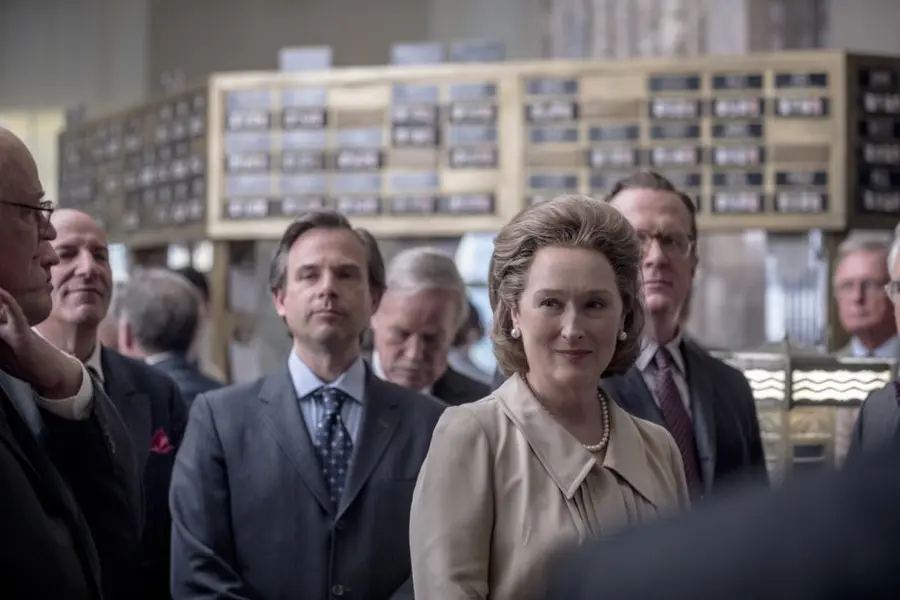
The reason I brought up Hispanic soldiers during the Vietnam War is the near-final courtroom scene in Steven Spielberg’s 〈The Post〉. In that scene, Catherine Graham (Meryl Streep) is guided by a young woman employee from the government side; instead of lining up for admission, she goes straight to the scene. The employee, though she belongs to the government side, says, “I hope Mrs. Graham wins,” and adds, “My brother is still in Vietnam, too.” When the Vietnam War was heading into its later stages, countless Black and Hispanic soldiers were being sent to Vietnam. After all, becoming a soldier meant being recognized as a proud member of American society. They were desperate to be recognized, even if it meant risking everything, just to survive and stay alive. It’s often said that Black and Hispanic soldiers displayed remarkable bravery in Vietnam, but put differently, it also means they were deployed to missions considered even more dangerous than those assigned to white male soldiers. Combined, they made up only about 10% of the total soldiers deployed to Vietnam, yet they accounted for 20% of the deaths—far more than their numbers. The Vietnam War was the first war ever broadcast on TV. But the general public didn’t know its reality very well, as shown in what appears in 〈The Post〉.
It’s hard to overstate that Spielberg has recorded modern and contemporary American history through his films. From 〈Lincoln〉, which covers the era of the American Civil War, to 〈War Horse〉, through which he tackled World War I, and then especially World War II through 〈Empire of the Sun〉 〈Schindler’s List〉 〈Saving Private Ryan〉. 〈Bridge of Spies〉 is also set in 1957, when the Cold War between East and West was at its most intense. But if you compare him with directors of his own generation, he was oddly indifferent to the Vietnam War. In fact, although films like 〈Catch Me If You Can〉 set in 1969 and 〈Munich〉 about the 1972 Munich Olympics overlap in terms of their historical backdrop with the Vietnam War (1960–1975), he didn’t really have much to say about Vietnam. So, on one hand, it made me wonder whether Spielberg was intentionally avoiding memories of the Vietnam War.
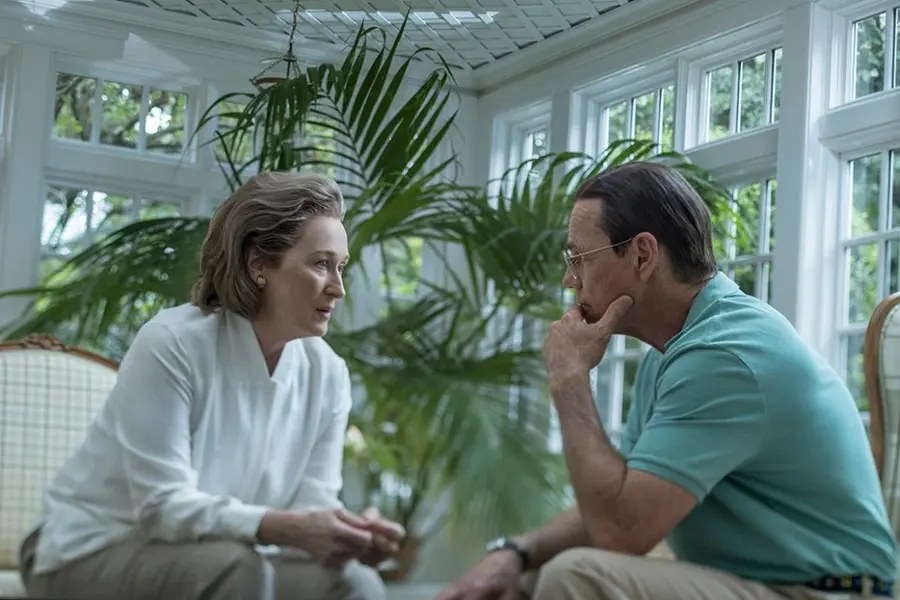
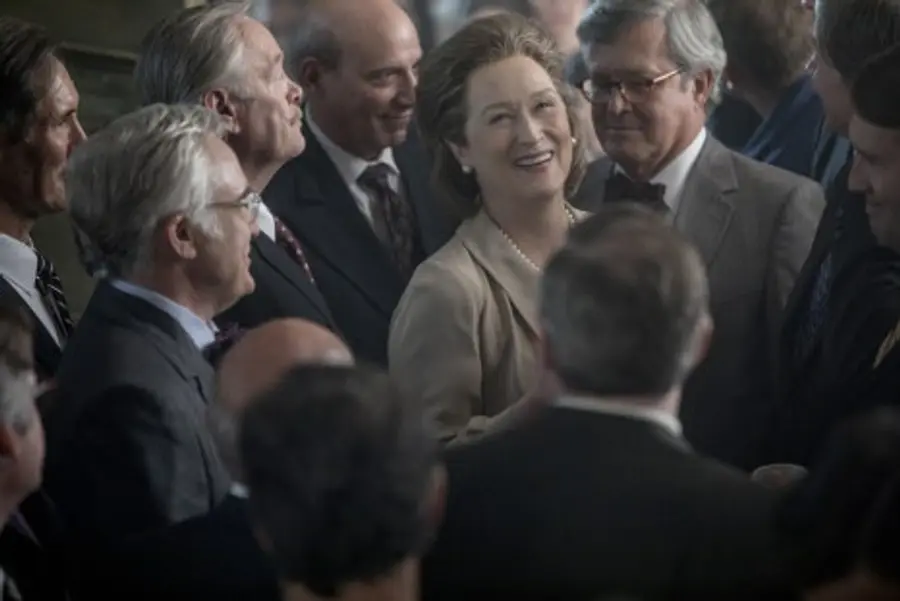
In that sense, I’d guess that 〈The Post〉 might be Spielberg’s first Vietnam War film. Plus, as mentioned earlier, it also includes that government-side young Hispanic woman who sent her brother off to Vietnam—something that never appears in another film, 〈The Assassination of the President〉, which deals with coverage of the Watergate scandal in 〈The Washington Post〉. Instead, Spielberg completed this as a more broadly ranged, more richly detailed feminist film. Meryl Streep’s presence gives Catherine Graham—who hadn’t previously received much attention—an abundant narrative to inhabit. The scene where she agonizes among the paper’s male board members, and then makes an important choice as the woman who effectively holds the final decision, is overwhelming. And it’s overwhelming because it’s Meryl Streep. In any case, the most impressive “period at the end of the sentence” in 〈The Post〉, throughout the entire viewing experience, was Catherine Graham’s dignity when facing a young Hispanic woman. But after that, the employee who gets scolded by a white male senior coworker—thinking about whether she could keep surviving and promoting well within the government, and whether her brother returned alive from Vietnam—still makes my heart heavy. So I looked into it more. Compared with how in 1968, Shirley Chisholm appeared as the first Black woman to serve in the U.S. House of Representatives, it wasn’t until 2009 that Sonia Sotomayor was appointed as the first Hispanic woman Supreme Court justice (appointed by President Obama). And in 2016, Catherine Cortez Masto became the first Hispanic woman senator. How many more glass ceilings, then, did that employee have to break through and live her life above?
Time’s Up! Toward the Inclusion Rider
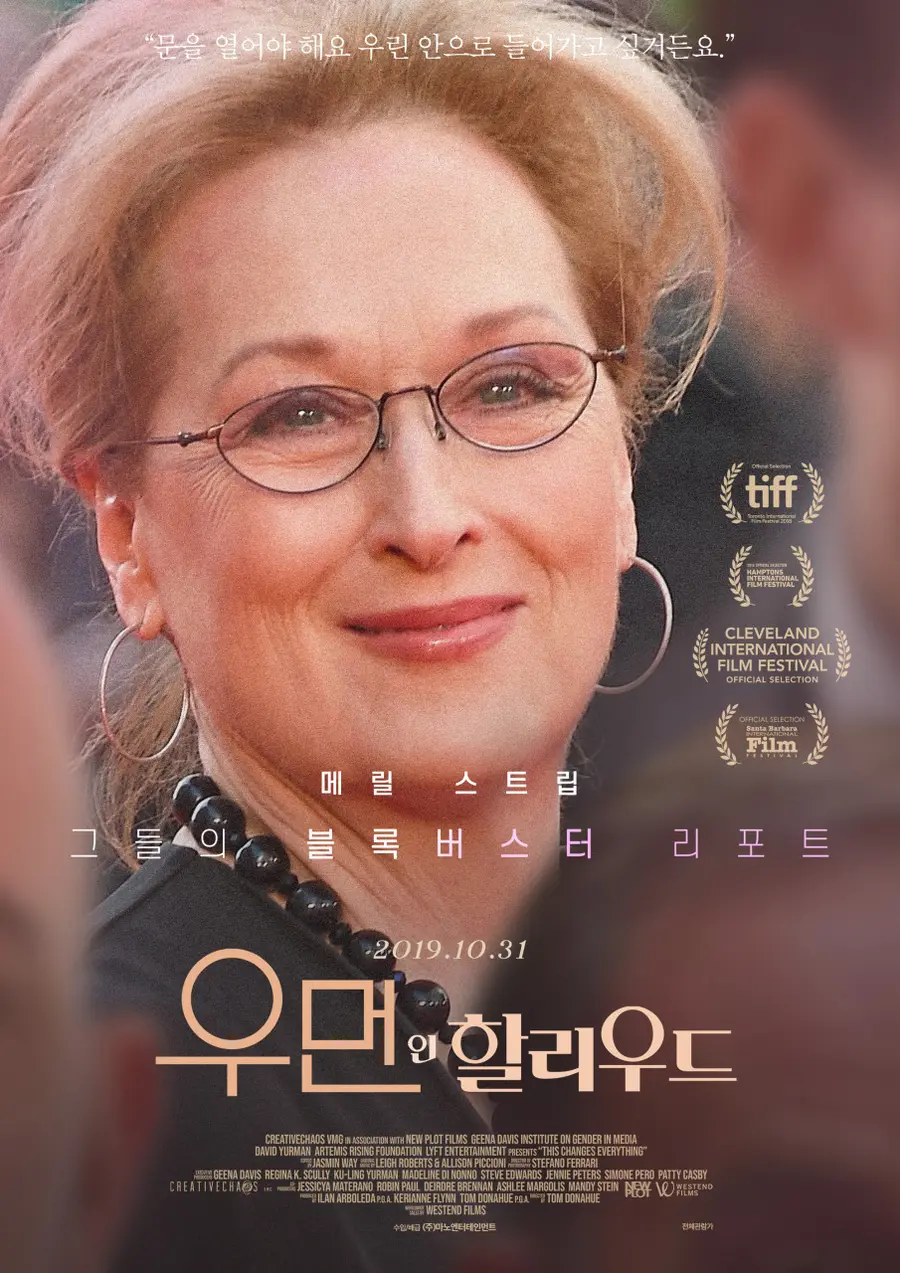
When talking about the glass ceiling in Hollywood, is there any actor who has a kind of “representation” as strong as Meryl Streep? Meryl Streep has been consistent enough that you could call her a living legend ever since her debut. Holding her ground as Hollywood’s one-of-a-kind leading actress, at the 90th Academy Awards in 2018 she was nominated for Best Actress in a Leading Role for 〈The Post〉, setting the record for the most nominations in Academy history with a total of 21. This surpassed the 20 nominations record that Meryl Streep herself set last year—showing a huge gap versus Katherine Hepburn and Jack Nicholson, who are tied for second with 12 nominations, while she had 12 and dominated the rankings. Yet in terms of awards, she’s never been especially lucky: Catherine Hepburn holds the record for the most wins in Academy history with four; Frances McDormand and Ingrid Bergman won three times; and Meryl Streep also won three times.
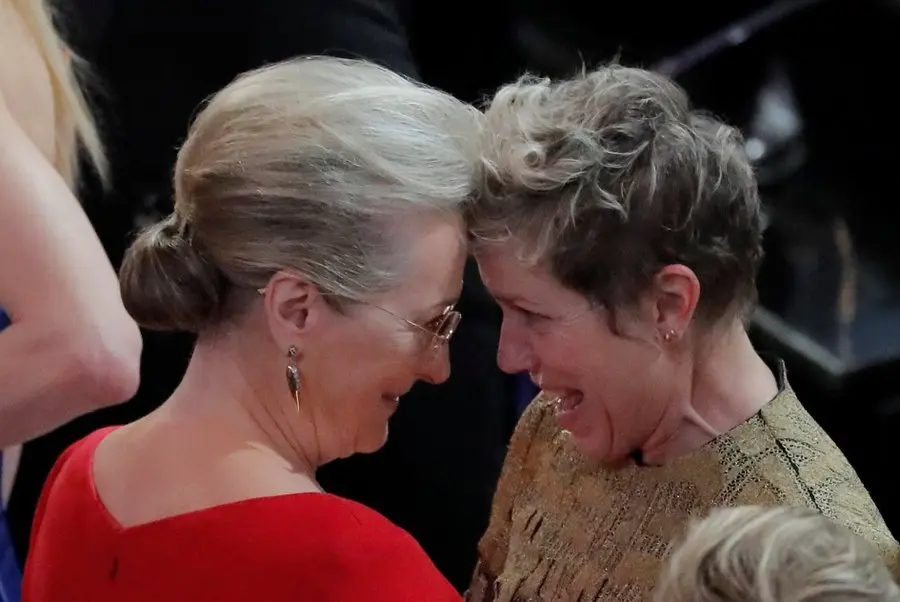
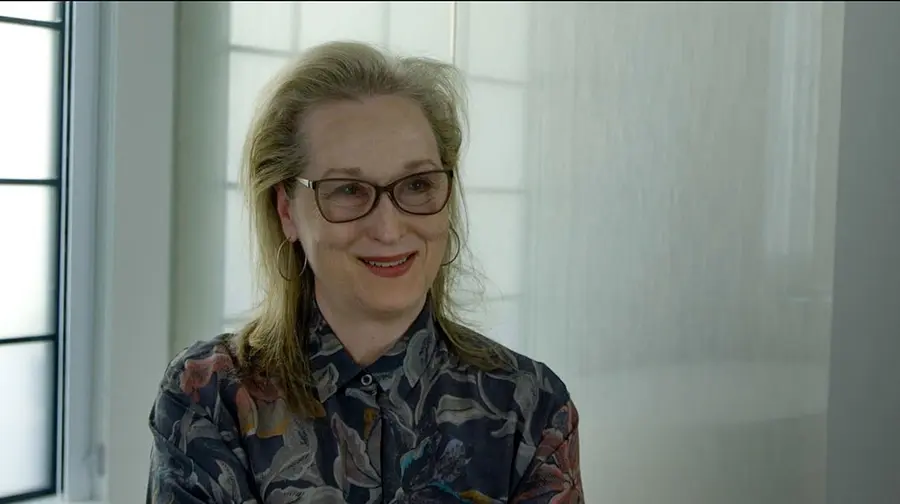
The 75th Golden Globe Awards in 2018—where the precise on-screen chemistry between Frances McDormand and Meryl Streep truly shone—had “black dresses” as the real stars, not necessarily the winners. That’s because Hollywood actresses like Emma Watson, Meryl Streep, and Natalie Portman attended in large numbers wearing black dresses to protest sexual violence. “Time’s Up,” meaning “it’s over,” was the first official event at the Golden Globe Awards: it was an advocacy group formed that year on January 1 by about 300 women—actresses, producers, writers, and others in Hollywood—to oppose sexual violence and discrimination. That same day, Frances McDormand of 〈Three Billboards Outside Ebbing, Missouri〉 won Best Actress, beating Meryl Streep from 〈The Post〉 (2017), in whose race she was competing. When she encouraged other women filmmakers to join the movement, she said, “I’d be so grateful if all the female nominees in every category standing right here would stand with me.” But everyone hesitated, and she then singled out Meryl Streep and asked her to stand up. “Meryl, when you stand up, everyone will probably stand up, too.” And with that, as Meryl smiled and stood up, every woman in that spot—producers, directors, writers, cinematographers, composers, and designers—stood as well. And Frances McDormand could put emphasis on two words: “Inclusion Rider.” An Inclusion Rider refers to a contract clause that requires ensuring a certain level of sexual and racial diversity among actors and staff when producing a film. It’s about not excluding women, people of color, LGBTQ people, or people with disabilities from the filmmaking process, and instead including them. Even though she didn’t win, Meryl Streep in the audience was shining brighter than anyone. In Hollywood, that’s exactly who Meryl Streep is.














댓글 (0)
댓글 작성
댓글을 작성하려면 로그인이 필요합니다.
로그인하기