


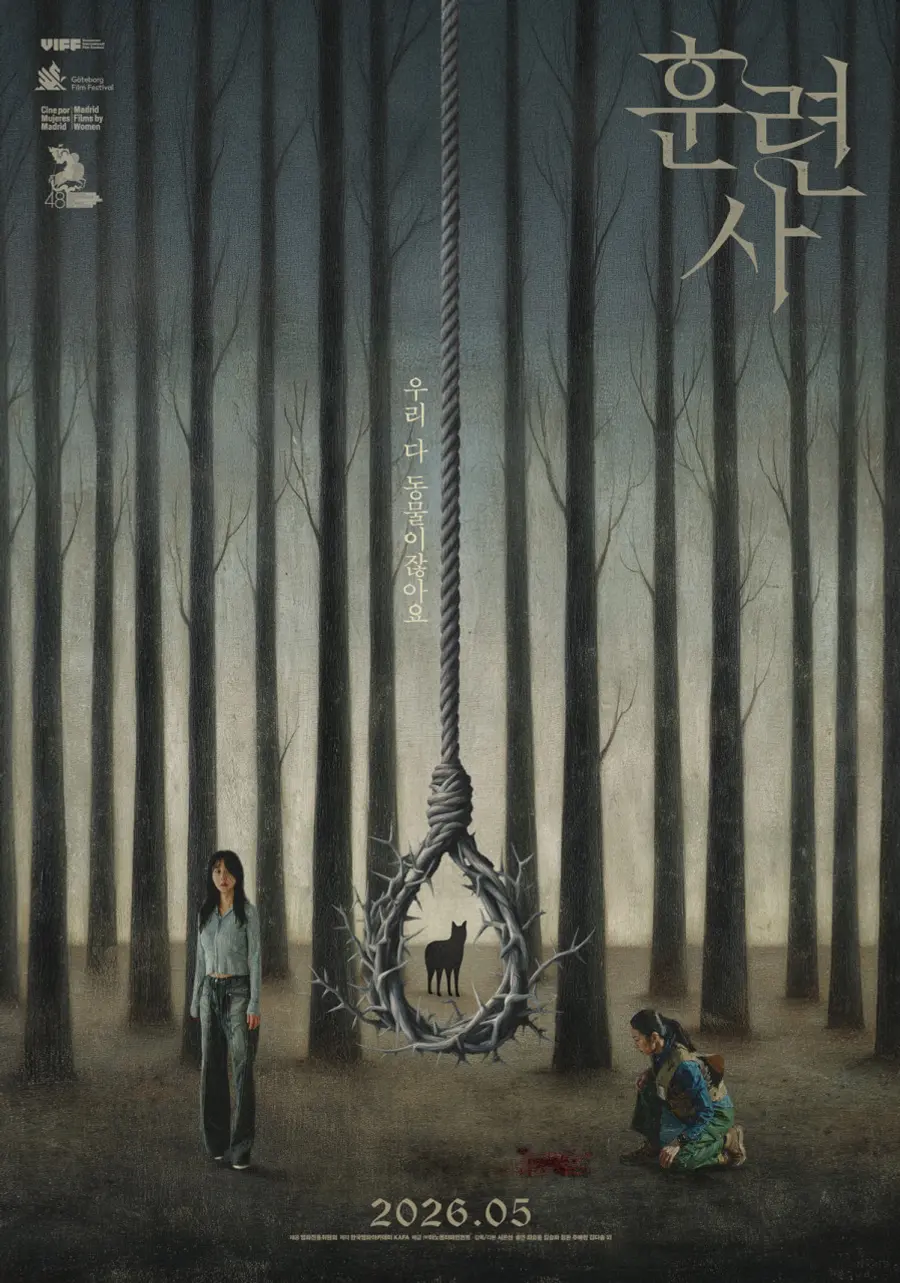
▶〈Trainer〉 Seo Eun-seon, the director’s interview continues from Part 1.
Their relationship, full of mutual hostility, keeps creating tension in the film—and gives it a reason for incidents to happen.
Yes. It feels like they each hold the other’s leash. Ha-yeong is afraid of Sora because of the past. And Sora knows Ha-yeong’s weak spots. At the same time, Ha-yeong also has a sense of responsibility for Sora. It’s a relationship where each controls the other.
We use “sexual tension” as a device that heightens the tension between sisters—like the insinuation of sexuality involving Ha-yeong’s husband and Sora, as well as Ha-yeong and her ex-girlfriend.
I thought this story, in the end, is about instinct. I think people have a desire inside relationships to be tempted instinctively. And ultimately it’s also a desire to take the upper hand within the relationship—and I felt it connects to the instinct for survival, too. Humans try to pull things in their favor by using their own charm.
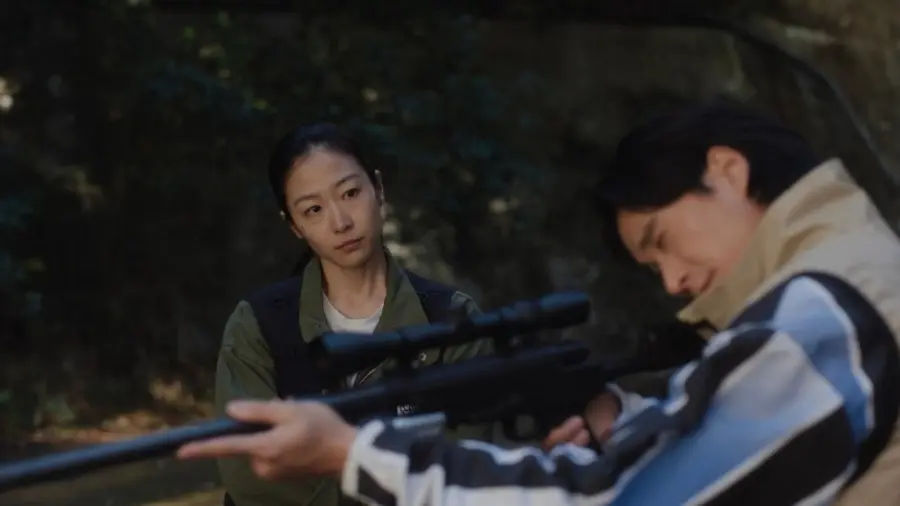
It feels like primal desires and sexual depictions are disappearing from the screen. In that sense, it read to me as a daring setup.
When I think back to the moments when I was captivated by movie theaters as a kid, I feel like that kind of tension was there. That sense of, “What am I actually watching right now?”—in the theater. I wanted to put that primal feeling into the film. These days, there really aren’t many movies like that anymore. It’s almost like they’re nearing extinction.
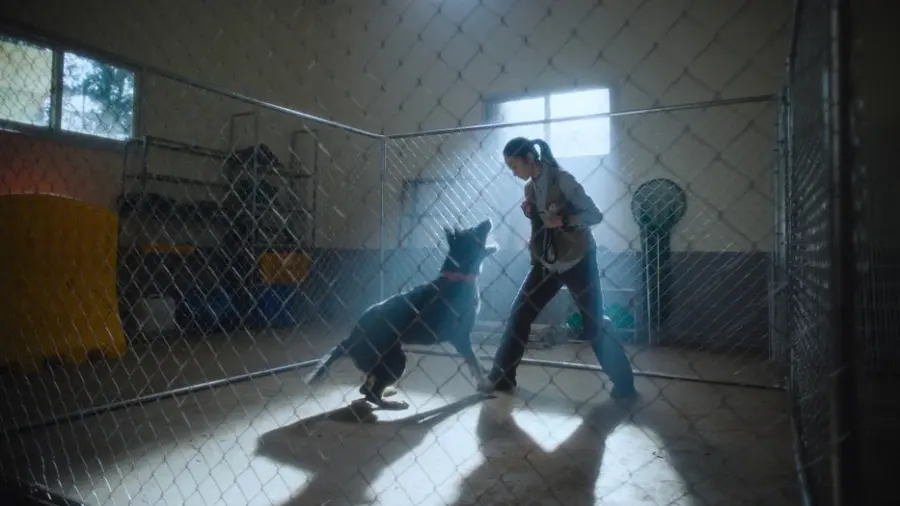
We see the arrival of a complex and multifaceted female character in many ways. The casting, with the contrast between the two actors, really stands out. First, actor Choi Seung-yun, as Ha-yeong, builds not only the character design but also the overall tone of the film through a blank-faced mask and restrained movement. It was an actor showing that ability in the close-up shot of the first scene facing a vicious dog.
Actor Choi Seung-yoon’s expressionless face and the bearing of someone who’s been trained for a long time were incredibly appealing. Since he majored in dance, he was physically lean, but you could still feel a solid presence—so it fit Ha-yeong really well. At first, I thought of him as someone with a physically strong image. But as time went on, I realized the important thing was that he was someone whose emotional ups and downs don’t show. They say if your emotions shift when you have a standoff with a dog, you lose. So I needed a mysterious face—someone who feels close yet distant. That kind of expression—like Isabelle Huppert—could be seen in Seung-yoon’s performances.
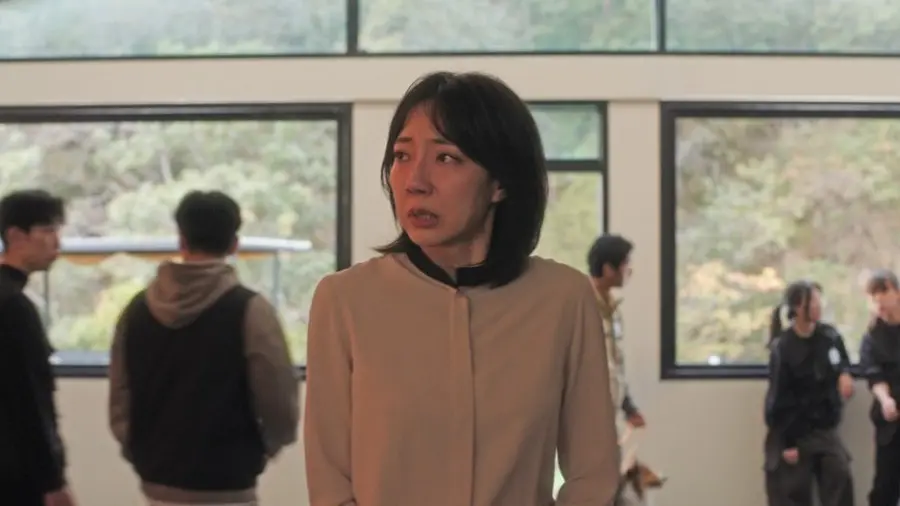
On the other hand, Sora is a character with a much hotter temperature—someone bold and forward. Actor Kim Seung-hwa expresses a problematic figure through provocative expressions and actions. You probably imagined something like a wild dog that brings danger to the humans in the film.
Unlike Ha-yeong, Sora had to be far more sudden and primal. When I met Seung-hwa, the weird and unpredictable feeling was so fun. There are parts you can discover—subtly, but if you watch the film, you’ll find them. He prepared those small elements himself, like deliberately sniffling to eat, or making something hard-sounding and noises like that. When we edited, we maximized those aspects. We could create a sense that something dirty has entered a perfectly controlled space—along with a presence that feels intrusive—together with Seung-hwa’s acting.
The way the space where the story unfolds is also interesting. First of all, the space itself is very limited, and the residential space is also set up in a highly minimal way.
As for the space, it was basically structured around only the training center, the house, and the yard. The training center is also divided into an interior space and a practice ground. When I was filming, I realized that out of the first 24 shooting rounds, up to the 11th round was almost entirely indoors. House scenes were close to half of the shoot. Since the film progressed almost like an indoor drama, what we kept talking about with the cinematography director was eventually “acting.” It was important how we would capture emotions within this restricted space. The storyboard was planned in advance, but on set we tried to be a bit more flexible to match the actual emotions the actors felt.
The layout of Ha-yeong’s house is interesting—it has a two-story structure. After the clear appearance of Sora, who functions as an unmistakable “intruder,” the characters move secretly between upstairs and downstairs. In the end, the house’s layout is used as a device that creates genre-level tension. It also brings to mind Director Kim Ki-young’s 〈The Housemaid〉..
I found it fascinating to look at the two-story structure in films like Director Joseph Losey’s 〈The Servant〉 (The Servant, 1963). In the film, the two-story space is originally the only space of Yoon-ho, Ha-yeong’s husband. Before Ha-yeong arrived, it was meant to be used like a baby room instead of a workshop—but in the end, it becomes Sora’s room. It’s an isolated space, but because it’s located upstairs, you can also look down below. It’s a space someone stays in like a guest, yet at the same time it’s somewhere you can spy from above—or even dominate. Honestly, I think we could have used the stairs more actively visually.
When it comes to elements that intensify discomfort, we can’t leave out the film’s music. It dramatizes the dramatic tension with ambient sound. How did you approach finding the tone?
From the beginning, I agreed with the music director on “There’s no ‘gentle melody.’” I didn’t want the music to explain emotions or comfort them. I wanted it to feel like noises coming from outside. We restrained music meant to stir up feelings, and we tried to actively use music that pushes the situation itself forward.
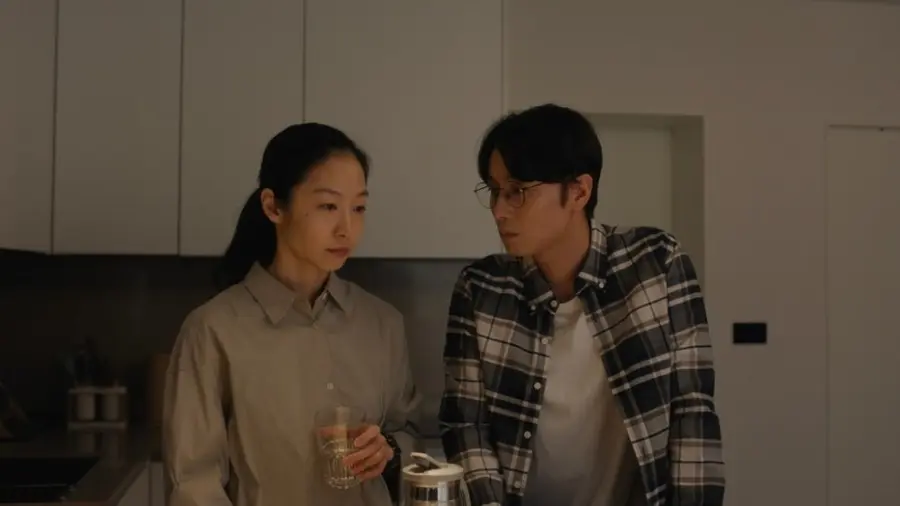
In the end, this film could very well be a story about a famous trainer experiencing frustration—as a trainer—in her own life.
Yes. You get bitten by the dog, and the couple’s relationship collapses too, and she realizes that the life she built is an illusion. But I want Ha-yeong to feel freedom through that failure. Because she fails at control—she finally feels a sense of liberation.
I think the “threads” of hidden feelings—like desires that come from deprivation and greed—are the consistent materials the director developed starting with the short film. And you can also see points where that connects with the provocative portrayal in 〈Tropical Night〉, about a neighbor woman being tempted.
Yes. I feel like I want to keep expressing that tension of stealing something. People don’t want to show others feelings like deprivation or greed. But it definitely exists. I think the moment it becomes visible is what’s interesting.
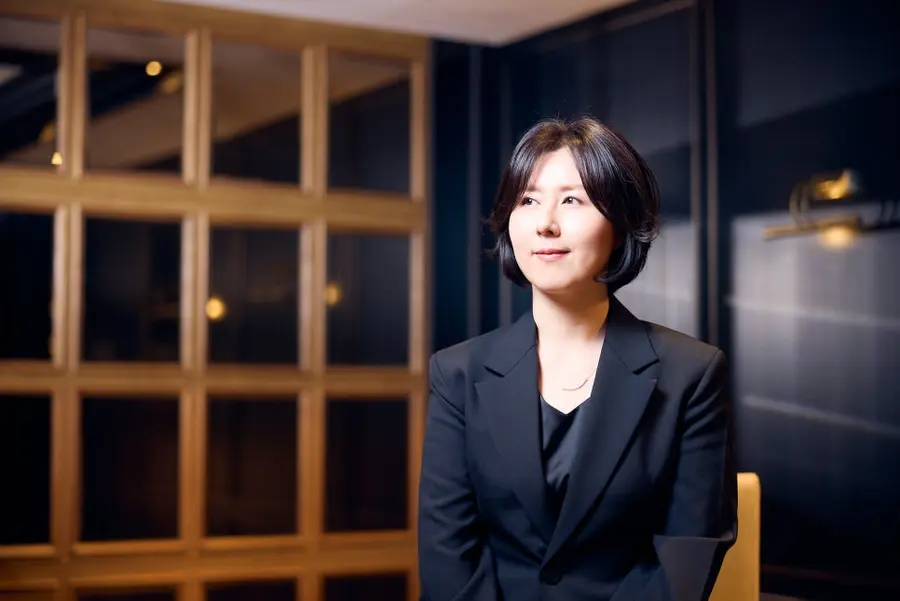
In that sense, I think the film itself, 〈Trainer〉, is like a “film that can’t be controlled,” fully revealing that kind of point.
I graduated from the Korea Film Academy (KAFA) in 2015. For almost 10 years I prepared for feature-length work, and I kept asking, “Why does my film have to be made?” In the end, I came to think that if you reveal the parts you want to hide, it becomes convincing. I felt that the story that I personally connect with—and the story I feel pulled toward and curious about—would seem different to the audience as well. I think instead of stories everyone empathizes with and cheers for, we need stories that are more uncomfortable and strange—again and again. Even if those are just a small number of films, I hope the world of film becomes more diverse. I want to keep making those kinds of films, too.
Cineplay Ewa Jeong, Guest Reporter
![[New Film] ‘Dreaming Adventure’ Defies Its 3.7 Rating: Female Archaeologist Hunts Mafia](https://cdn.www.cineplay.co.kr/w300/q75/article-images/2026-09-26/a997a8ef-efa1-4792-a1c2-e0d80fa10092.jpg)
![[Interview] “I’m Drawn to Dangerous, Problematic ‘Unknown Women’” Director Seon-sun Seo of ‘The Trainer’ ①](https://cdn.www.cineplay.co.kr/w160/q75/article-images/2026-05-13/24e7f271-fe14-482a-9c62-230a7198f1c8.jpg)
댓글 (0)
댓글 작성
댓글을 작성하려면 로그인이 필요합니다.
로그인하기