


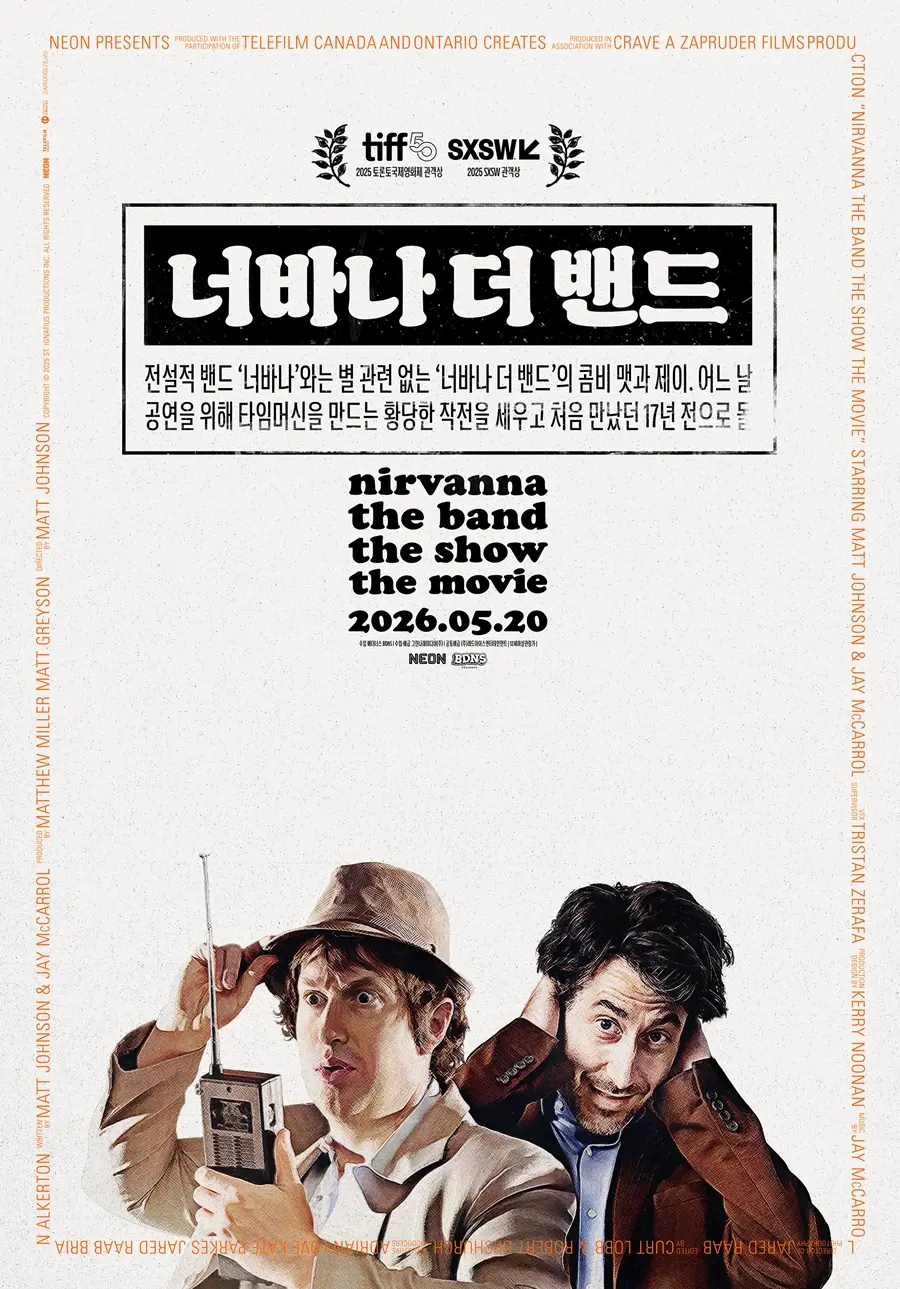
After searching for more than a year through Cannes, Los Angeles and Hong Kong for the best comedy film, BDNS leader Mun Sang-hoon settled on a single title: 〈Nirvana the Band: Not related to the legendary band ‘Nirvana’ — the duo Matt and Jay. One day they hatch an absurd plan to build a time machine to put on a show and are sent back 17 years, to when they first met〉 — or simply 〈Nirvana the Band〉. The story follows the oddball duo Matt and Jay, who hatch an absurd plan to build a time machine to make a show happen and are sent back 17 years, to the time when they first met. Canadian-born musician Tablo translated the subtitles, adding another point of interest for audiences. Mun left two pieces of advice for anyone who wants to get the most out of the film: first, see it on a big screen with your best friend; second, don’t look for any more information beforehand — watch it first, then enjoy the thrill of telling people about it. With that, here is a review of 〈Nirvana the Band〉 — and a warning to be ready to laugh before you walk into the theater.

The story centers on the duo Matt (Matt Johnson) and Jay (Jay McCarroll), a wildly effective comic pairing comparable to SpongeBob and Squidward or to the off‑the‑wall pairing Haha and Soo from the show Infinite Challenge. When Matt launches his ludicrous schemes — when Matt rolls out what feels like his 2,134,542,343rd absurd plan — Jay supplies the perfect musical accompaniment on piano, creating a seamless comic rapport. They trade jokes without pause and have been friends for 17 years. The pair have long fought to perform at Toronto club the Rivoli, but rather than pursue realistic paths to that stage they keep dreaming up outlandish plots: a skydiving stunt off the CN Tower EdgeWalk that aims to land them inside the Rogers Centre dome using parachutes; a scheme to convert a camper into a time machine and travel through time. Matt’s harebrained plans repeatedly fall apart, and after 17 years of nothing to show for their efforts, Jay realizes his situation and decides to strike out on his own. Then, suddenly, their time machine activates and the 2025 Matt and Jay are sent back to 2008. Confronted with younger, purer, more optimistic versions of themselves, they begin to reassess their band, their friendship and the choices they made.
An unusual mix of low-budget mockumentary and sci‑fi
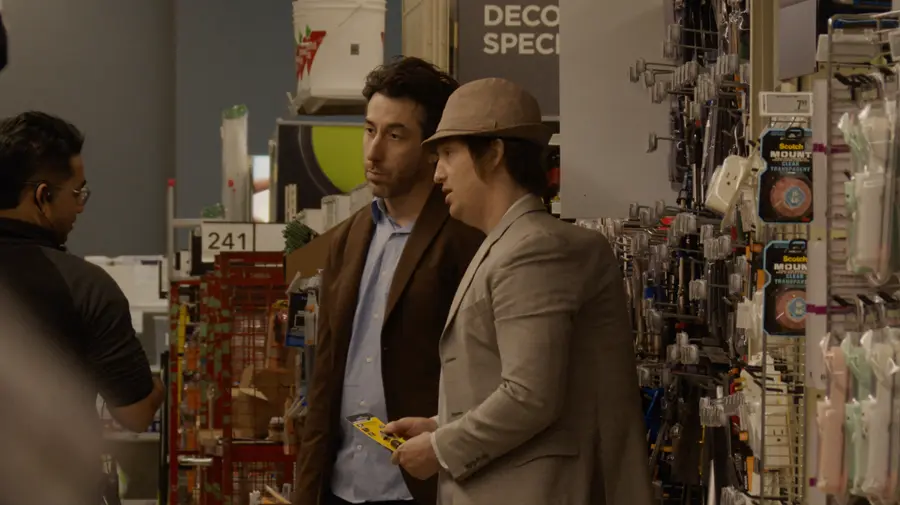
〈Nirvana the Band〉 did not spring into being overnight. It expands a creative project that has spanned nearly two decades into a feature film. The work began with the 2008 web series Matt Johnson and Jay McCarroll produced themselves, titled Nirvana the Band the Show. That web series evolved into a television series, and this film brings that whole history together while pushing into a new form. Director Matt Johnson took the mockumentary roots of the web series and layered on a sci‑fi premise: time travel via a homemade time machine. The meeting of mockumentary — which intentionally mimics documentary filmmaking techniques to mirror reality — and a more fantastical strand of science fiction feels fresh and distinctive. Shot in a guerrilla style, the film constantly blurs the line between reality and fabrication. Repeated scenes show Matt and Jay explaining their ridiculous plans to people they encounter in public places and shops, leaving the viewer unsure how much of their banter is improvised and how much is scripted.

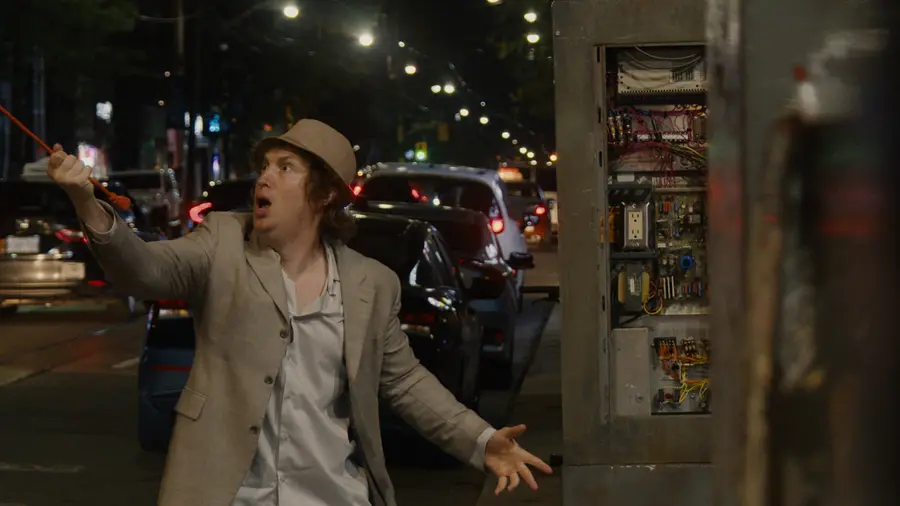
The film’s transformation into a time‑travel story owes a great deal to Robert Zemeckis’s Back to the Future (1985). The movie borrows and reshapes both the broad plot structure and many small details from Back to the Future. The camper converted into a time machine in 〈Nirvana the Band〉 evokes the DeLorean, and, like the DeLorean’s reliance on plutonium, their camper runs on an odd beverage called Orbitz. The plot — in which changes to the past alter the present and force the characters to return to the past again to fix mistakes — encompasses the spirit of both Back to the Future Parts I and II. Above all, the sequence that uses lightning to power the time machine directly recalls Back to the Future’s iconic scene.
Humor that reads the times

In 〈Nirvana the Band〉 humor is both the engine of entertainment and a tool for measuring how comedy ages. The director blends the time‑travel premise with comedy to show how sensitive humor is to the social context of an era. When Matt and Jay travel back to 2008, they end up watching The Hangover (2009) in a theater, an intentionally anachronistic moment. The film quotes one of The Hangover’s many scenes in which a character uses the slur “homo” as part of a joke. Jokes that denigrated people based on race, gender or sexual orientation were mainstream in the 2000s but are now widely seen as ignorant and lacking empathy. Unable to endure an audience guffawing at humor that no longer fits contemporary sensibilities, Matt storms out of the theater. The sequence doubles as Matt’s self‑reflection on how he might once have accepted such humor uncritically. The film also addresses the weight of jokes through scenes in which Matt and Jay discuss Russell Peters’s racial comedy and through satire of Will Smith’s assault on Chris Rock. 〈Nirvana the Band〉 treats humor not as mere gag‑making but as a social mechanism that must continually renew collective agreement about what is acceptable. At the same time, humor produces shared laughter while also revealing who is being othered — acting as a litmus test for the society that produces it. In this way, 〈Nirvana the Band〉 keeps sight of comedy’s evolving value and the ethical role comedians must consider.

![[2026 BIFF] Ann Hui wins Camellia Award, Michelle Yeoh named Asia Filmmaker of the Year as 31st Busan International Film Festival opens](https://cdn.www.cineplay.co.kr/w300/q75/article-images/2026-10-08/cdb085ec-1961-4308-b456-2b2fc4a48a9e.jpg)

![[Photo &] Padagnus’ Moon Sang-hoon Personally Imports Cannes Film Works…‘Nirvana the Band’ Opens on the 20th, Press Screening Site](https://cdn.www.cineplay.co.kr/w160/q75/article-images/2026-05-06/e6ac2bc6-6f9d-4a1a-b019-972a7c1e9675.jpg)


![[Photo &] Christian Mungiu wins his second Palme d’Or at the 79th Cannes Film Festival with “Fjord,” while Na Hong-jin’s “Hope” misses out](https://cdn.www.cineplay.co.kr/w160/q75/article-images/2026-05-24/7fd306e4-dacf-4d41-be5b-247f1aaf081d.jpg)

댓글 (0)
댓글 작성
댓글을 작성하려면 로그인이 필요합니다.
로그인하기