


![Actor So Ji-sub [Captured from SBS official website. No redistribution or DB use]](https://cdn.www.cineplay.co.kr/w900/q75/article-images/2026-07-09/6b559168-5cff-4540-9ad8-8dc69f6dce28.jpg)
The syndrome sparked by 'Father's Wrath'—grabs both local living-room audiences and the world
SBS weekend-and-holiday drama 'Kim Bu-jang' is unleashing an unprecedented surge by devouring not only the local living-room drama scene but also the global OTT ecosystem. The series, which started airing on the 26th of last month, broke through the so-called "ratings barrier" of '20%' in just four episodes, instantly rewriting this year's top box-office record among domestic dramas.
The global reaction has been explosive as well. After being made available worldwide via Netflix, it grabbed the No. 1 spot in the non-English TV category on the official site Tudum within just its second week, once again proving the staying power of K-content. Based on a popular webtoon of the same name, the series is a 'hard-boiled revenge drama' in which a man who has been living as an ordinary father—hiding a dark past as a former special agent—finally unleashes the suppressed instincts to save his missing daughter. Actor 'So Ji-sub,' who plays the lead, following Netflix predecessor 'Gwangjang,' also perfectly brought to life an intense action rooted in a webtoon adaptation, drawing overwhelmingly enthusiastic praise from viewers.
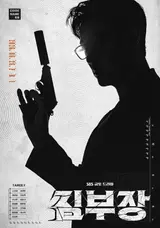
!['Kim Bu-jang' poster [Provided by SBS. No redistribution or DB use]](https://cdn.www.cineplay.co.kr/w900/q75/article-images/2026-07-09/77feaa96-895c-4ed6-8d2f-83f45406aa92.jpg)
Compressed 10-episode narrative and the birth of 'Lawless Middle-Aged Man'… breaks past the limits of pure thrill
At the core of this hit is a rapid-fire development that strips out any unnecessary elements, along with heavy-handed action direction that delivers a punch even down to viewers' bones. The show boldly broke with the typical practice of miniseries being set at 12 to 16 episodes, compressing everything into 10 episodes to maximize narrative density and push momentum to the extreme.
The premise that an old-fashioned dad, who once sipped canned beer in sloppy T-shirt attire and was so out of touch that even social media felt unfamiliar, suddenly awakens the power of a sealed killing machine for the kidnapped daughter offers a deep catharsis. While it brings to mind Hollywood masterpieces like 'Commando' and 'Taken,' the show laid a foundation of distinctly Korean paternal love underneath, substantially lowering the barrier for viewers to step in. The fantasy thrill of an ordinary father tormented by harsh everyday life becoming the strongest powerhouse in the universe has been winning explosive support from middle-aged viewers.
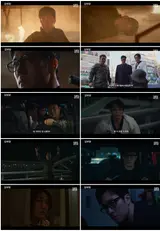
In the drama, he was a legendary black agent whose work both Koreas' sides guarded against at the same time, but he awakens into a merciless 'Lawless Middle-Aged Man' by rousing the instincts he had kept under control. Harsh action sequences where he handles weapons like axes and knives without hesitation and takes out enemies are devices that visually maximize the fierce rage of a father who has lost his daughter. Here, 'So Ji-sub' fully shows his side as a human weapon through his signature sharp movements and chilling-eyed acting.
![Actor So Ji-sub [Captured from SBS official website. No redistribution or DB use]](https://cdn.www.cineplay.co.kr/w900/q75/article-images/2026-07-09/2be2244f-32b6-4402-933e-6695dfe5ea24.jpg)
The evolution of terrestrial TV: unites audiences of all generations with an OTT-level scale
'Kim Bu-jang' is being seen as a win for smart planning that combines the genre's thrill—once considered the exclusive domain of OTT platforms—with terrestrial TV's inherently high accessibility. From terrestrial channels that reach a wide range of viewers, it presents 'global OTT'-level intensity and an overwhelming scale, delivering a powerful sense of immersion to viewers.
These audacious experiments were immediately proven through ratings. According to SBS, the four-episode run recorded a 30% share among men in their 30s, soaring by a staggering six times compared with the first episode, and male viewers in their 20s also surpassed 50%. Drawing in the 20s-to-30s male group—reportedly the demographic farthest from TV—was an exceptional achievement. In addition, it also recorded high audience shares among women in their 30s and 50s (46%) and women in their 20s (44%), achieving a complete generational-mixing hit.
Kim Heon-sik, a critic of popular culture, said, "It's the optimal result where the channel power of SBS and the advantages of Netflix-style high-intensity direction come together," adding that, "By intelligently blending familiar cliched elements for the public, such as inter-Korean cooperation or a protagonist who hides his strength, the show raised the genre's thrill." The studio S CEO Hong Seong-chang also stressed, "If the fun intrinsic to the content is certain, it proves that viewers still gather in front of TV," noting that the universal fatherhood narrative sparked a shared resonance with viewers around the world.
!['Kim Bu-jang' poster [Provided by SBS. No redistribution or DB use]](https://cdn.www.cineplay.co.kr/w900/q75/article-images/2026-07-09/836b070e-a644-4a7c-a376-cc5ac9a96640.jpg)
"Is it a genre thrill, or did it cross the line into cruelty?" … lingering deliberation controversy
Behind the syndrome-level box office, there are also sharp concerns about overly brutal direction. Graphic scenes aired and sparked controversy, including moments where a person's scalp is damaged, teeth are forcibly pulled, and boiling potatoes are forced into their mouths. Immediately after broadcast, viewer message boards filled with criticism calling for intensity adjustments, along with doubts over the 15-and-up viewing rating standard.
A person familiar with the broadcasting industry said, "It's clearly a masterpiece that hits the peak of the 'dark hero' genre attempted by terrestrial broadcasters, but in the process of maximizing visual stimulation, it is skirting—and sometimes narrowly evading—the boundary of violence."
In response, SBS said the decision reflected viewers' heightened standards and the genre's characteristics, calling it inevitable. The source said, "To maximize the urgency of the situation, the show included intense action, but direct depictions of physical harm were excluded as much as possible, and tension was created through directing techniques such as lighting, angles, and editing." The company also brushed aside the controversy over the decision to rate the show for audiences aged 15 and older, saying, "It was the result of strictly complying with the broadcaster's own review guidelines and relevant laws and regulations."
![[First reactions] 'Look Back' Cineplay reporters' star ratings](https://cdn.www.cineplay.co.kr/w300/q75/article-images/2026-09-29/86caa45d-4319-4803-92b7-38b58935b7d3.jpg)
![[On the Ground at BIFF] “Art Is Art”: Zhang Yimou Breaks Silence on Historical Controversy Over “Assassins”; Top Asian Film to Be Named on 15th](https://cdn.www.cineplay.co.kr/w300/q75/article-images/2026-10-07/c4d38025-dc2a-4cf0-919a-792227afc5f5.jpg)



댓글 (0)
댓글 작성
댓글을 작성하려면 로그인이 필요합니다.
로그인하기