


Director Ahn Pan-seok of “White Tower” Dies on the 12th… The Real Legacy the 38-Year Veteran Left Behind
After debuting in 1987 and producing landmark works such as “The Lady in Dignity,” he died after a battle with a cerebral hemorrhage
Director Pan-seok Ahn, who left a major mark on South Korea’s broadcasting industry through works including the TV drama “White Tower” (2007) and “Pretty Noona Who Buys Me Food” (2018), died on the 12th after battling a cerebral hemorrhage. The news of the passing of the veteran filmmaker—praised by the public for his razor-sharp insight into the times and his signature lyrical direction—sent the entire broadcasting world into deep sorrow.
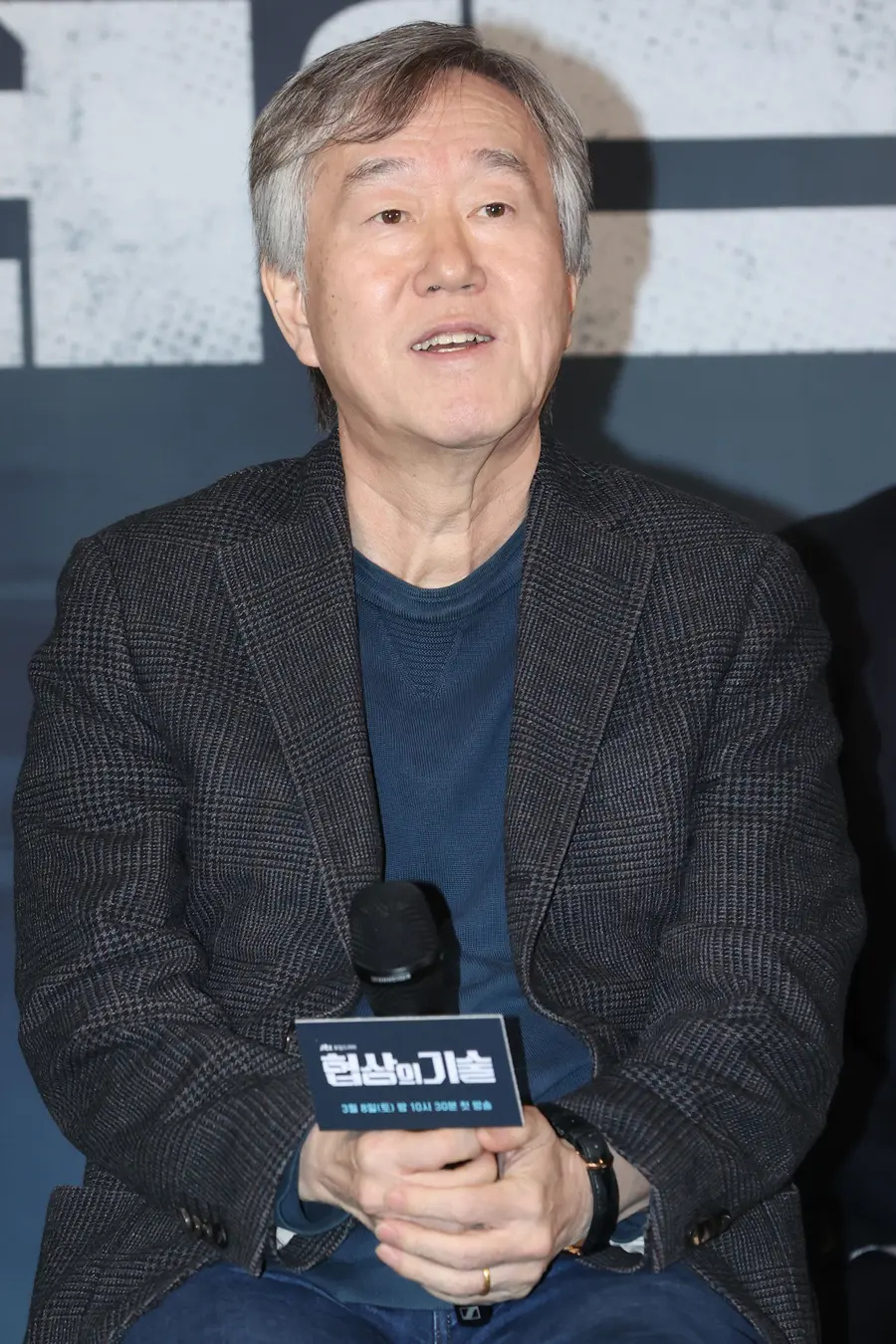
From “White Tower” to “The Lady in Dignity,” the Master of Hyperrealism That Cuts Through Society’s Realities
After joining MBC in 1987 and taking the helm behind the camera, director Pan-seok Ahn built his creative universe on a firm philosophy: “All dramas must be real.” In particular, his signature work “White Tower” broke the existing mold that treated hospitals merely as a backdrop for romance or humanism, and opened a new horizon for Korean-style medical dramas by portraying, in dense detail, people’s raw desires for power and the political power dynamics between them.
Even afterward, his keen eye for society remained steady as he tackled “Rose and Beans” (1999), which pointed out contradictions in patriarchy; “Auntie” (2000), which exposed the hypocrisy of intellectuals; and “The Lady in Dignity” (2014) and “A Word of Mouth Heard” (2015), which peeled back the bare face of the upper class. Even in emotionally driven melodramas such as “Pretty Noona Who Buys Me Food”, “Spring Night” (2019), and “Graduation” (2024), he captured characters’ inner lives with precision and delivered weighty social messages. His hyperrealism techniques—guided by Aristotle’s “Poetics” and actively using long takes and full shots—created an unmistakable brand known as the “Ahn Pan-seok drama”.
![Director Ahn Pan-seok [Provided by SBS. No resale or DB use]](https://cdn.www.cineplay.co.kr/w900/q75/article-images/2026-08-13/bdc63127-4ca8-4bfe-b0ec-27c7130fdb44.jpg)
“Human Rights on Site,” as Testified by Actors and Staff—The Dignity of a True Adult
Pan-seok Ahn was a leader who led innovation even behind the camera. Even amid harsh production conditions, where rushed scripts and all-night shoots were common, he ensured that actors and staff could take their rest time—backed by meticulous advance preparation. On set, instead of one-way directives, he completed scenes through endless conversation.
Actor Son Ye-jin, at a past production press conference, praised him without reservation, describing his set as “a set with human rights.” Actor Kim Hye-soo, who appeared in the late director’s drama “Jjak” (1994–1998), mourned him, saying, “Until the very last moment, you never let go of the tight grip as a director. I express my deep respect for the fact that you devoted your entire life to directing.” Actor Kim Hye-eun, who worked with “The Lady in Dignity”, also shared her grief, saying he was “the person who grew the key to my heart.” The late director’s final work, “Negotiation Techniques” (2025), and Kim Young-no, the cinematographer who worked on “Love Doctor”, recalled his burning passion, saying, “A truly precious adult who personally taught the attitude that a worker should have.”
![Director Ahn Pan-seok [Yonhap News photo for reference. No resale or DB use]](https://cdn.www.cineplay.co.kr/w900/q75/article-images/2026-08-13/195f18ff-8117-4c68-b47f-12cc12d1c188.jpg)
A 38-Year Run of Drama, Transformed Into Visual Art—A Record of “Genre Paintings of Customs”
A person at an entertainment production agency referred to the late director as a “master fisherman”, saying that after hearing the news, actors became so overcome with sadness that it was difficult for filming to proceed.
Yoon Seok-jin, a professor in the Department of Korean Literature at Chungnam National University, said of Pan-seok Ahn that he is “a director who wove the most delicately crafted depiction of human nature—one that collides with the environment amid periods of social change,” adding that he “constantly posed the weighty question to the public of ‘how should we live.’” He continued, “He left behind a kind of ‘genre painting of customs’ that records the customs of the era on film, and he is a leading figure who elevated television dramas to the realm of independent visual art.”
After recently collapsing from a cerebral hemorrhage, director Pan-seok Ahn, who had been battling illness, entered eternal rest on the 12th. A wake was set up in Room 1 of the Seoul National University Hospital funeral hall. The many masterful scenes and philosophies he left behind will be remembered forever in the hearts of the public and fellow colleagues as “masterpieces.”
![[Chuseok Holiday Box Office] Yoo Hae-jin and Park Hae-il's 'Assassins' and 'Tazza 4' knock out 'The Odyssey,' draw 130,000 on opening day for No. 1](https://cdn.www.cineplay.co.kr/w300/q75/article-images/2026-09-26/9f21ef55-2288-4c72-b030-b8b00587e464.jpg)




댓글 (0)
댓글 작성
댓글을 작성하려면 로그인이 필요합니다.
로그인하기