


“If horizontal film is a landscape painting, the vertical frame is a portrait. You can focus more deeply on a character’s inner life, and on set every actor gets a solo shot — it becomes a kind of liberated space for cinema where everyone stands equal. That shift also connects with the evolution of modern civilization, in which mass media disintegrates and becomes thoroughly individualized.”
Lee Joon-ik
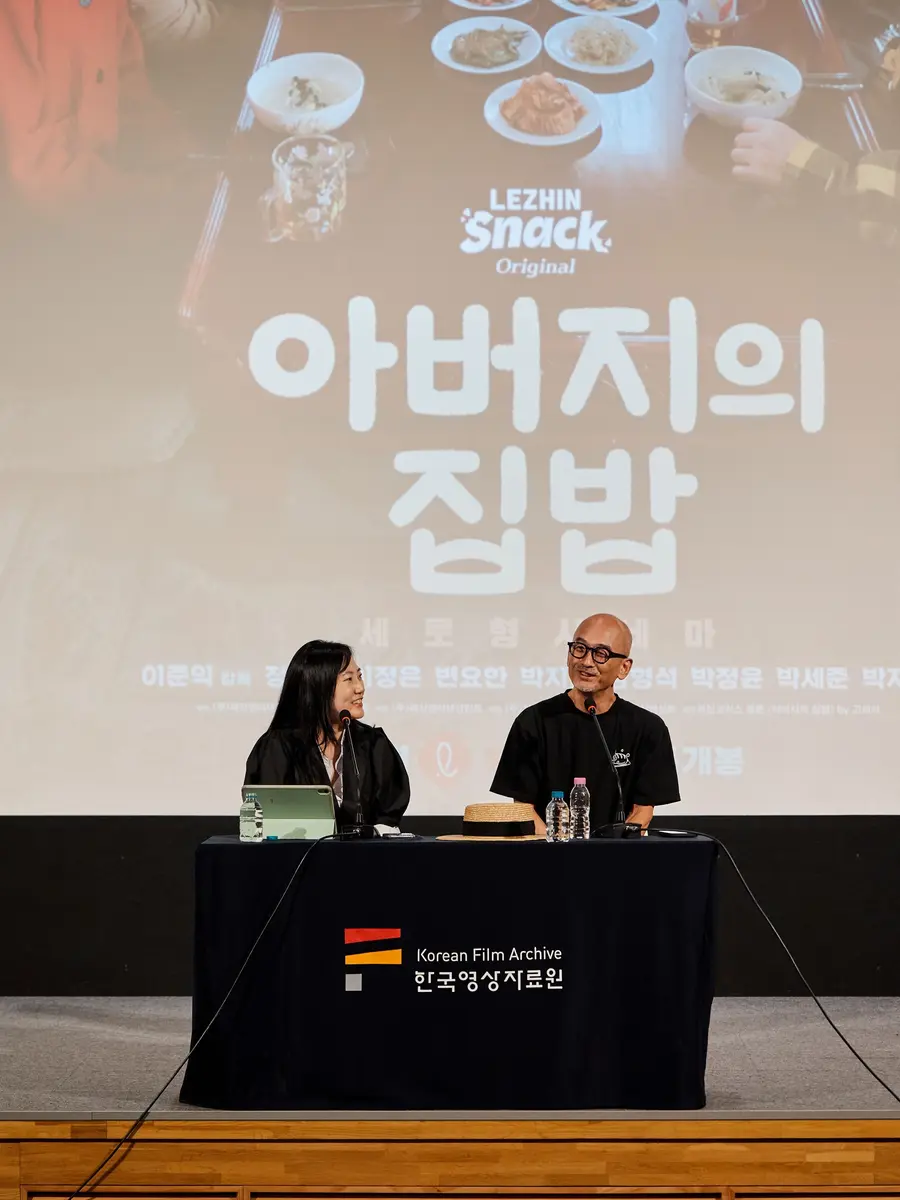
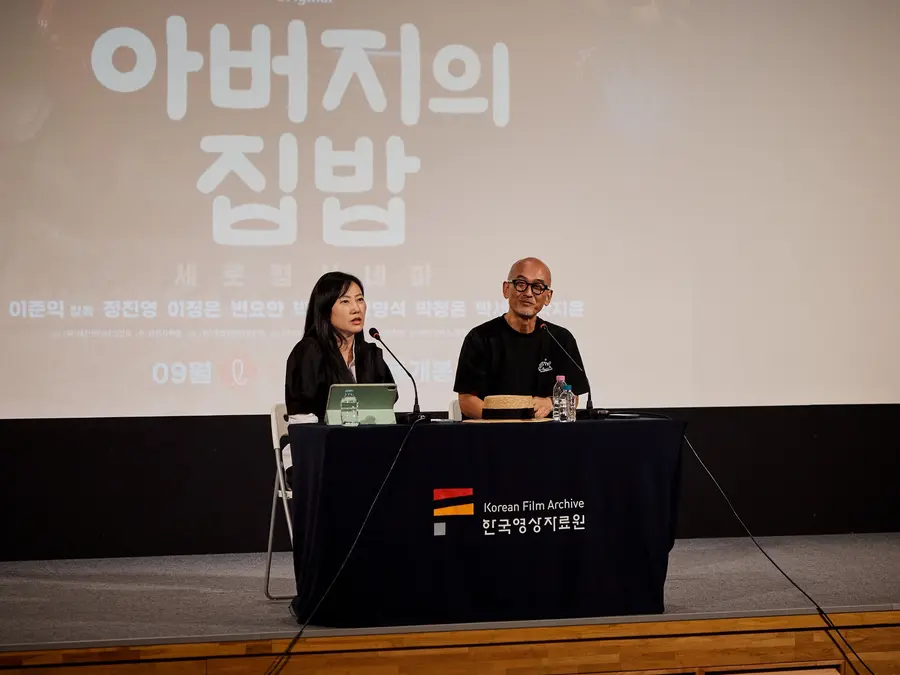
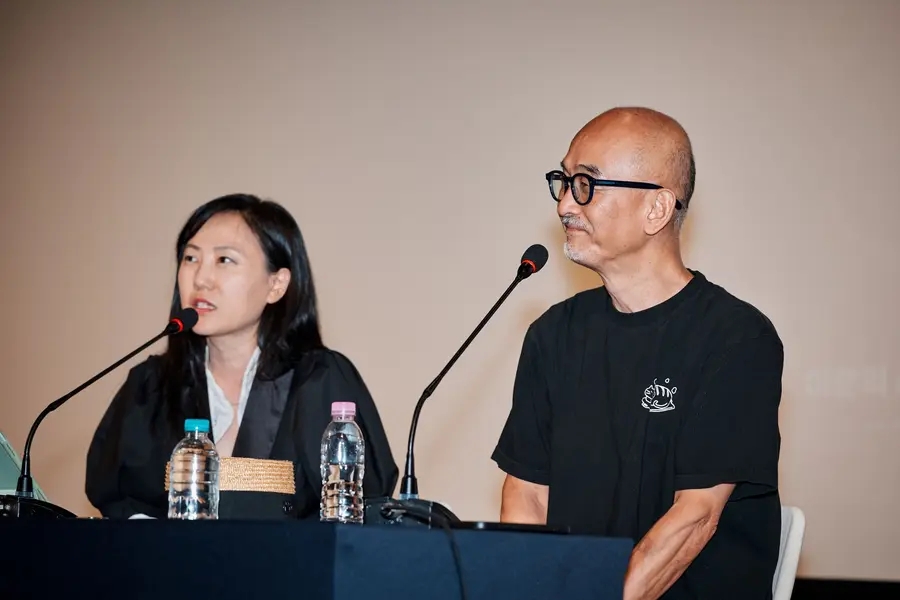
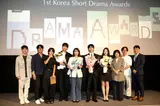
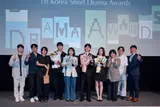
Director Lee Joon-ik said vertical short dramas offer a more intimate, actor-centered form of filmmaking during a Q&A for 〈Father's Home Cooking〉 at Part 1 of the 1st Korea Short Drama Awards on the afternoon of the 29th.
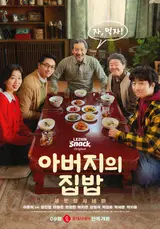
On the afternoon of the 29th, KOFA Cinematheque 1 at the Korean Film Archive hosted Part 1 of the 1st Korea Short Drama Awards, including a screening of Lee Joon-ik's 〈Father's Home Cooking〉 and a post-screening conversation with the audience. Selected as an invited work for the awards and with a theatrical release set for Sept. 9, the film is Lee Joon-ik's first short drama; he directed films such as 〈The King and the Clown〉, 〈The Throne〉, 〈Dongju: The Portrait of a Poet〉, and 〈The Book of Fish〉. The short is based on the webtoon of the same name by Gorita.
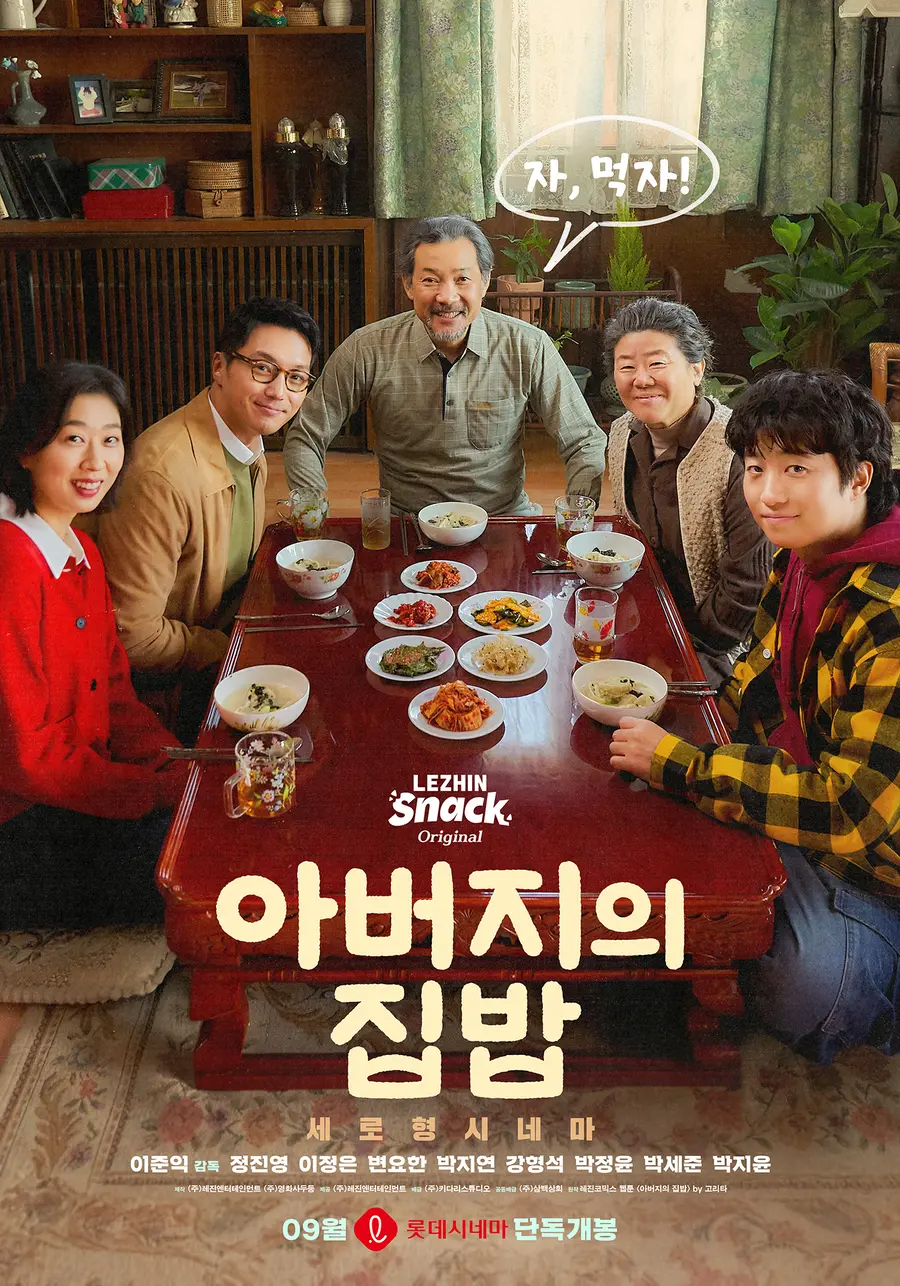
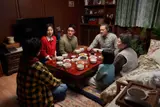
〈Father's Home Cooking〉 follows Ha-eung (played by Jung Jin-young), who must cook at home for the first time after his wife, Soon-ae (Lee Jung-eun), becomes unable to cook. Ha-eung, who has always believed a day must start with a hearty breakfast of soup and stew and who never once skipped the morning meal, had never recognized his wife's daily labor and sacrifice. Only after she collapses does he come to understand the weight of "home-cooked meals" and the true meaning of the household members who share those meals — the concept of "sikgu" (食口), people who eat together under one roof.
After the screening, the Q&A was moderated by film journalist Lee Hwa-jeong. The conversation ranged from why Lee Joon-ik chose to direct a short drama to his reflections on the new challenge and questions from audience members, producing an in-depth exchange about the unfamiliar vertical format.
Relentless experimenter Lee Joon-ik: "For an industry to expand, storytellers must widen the frame"
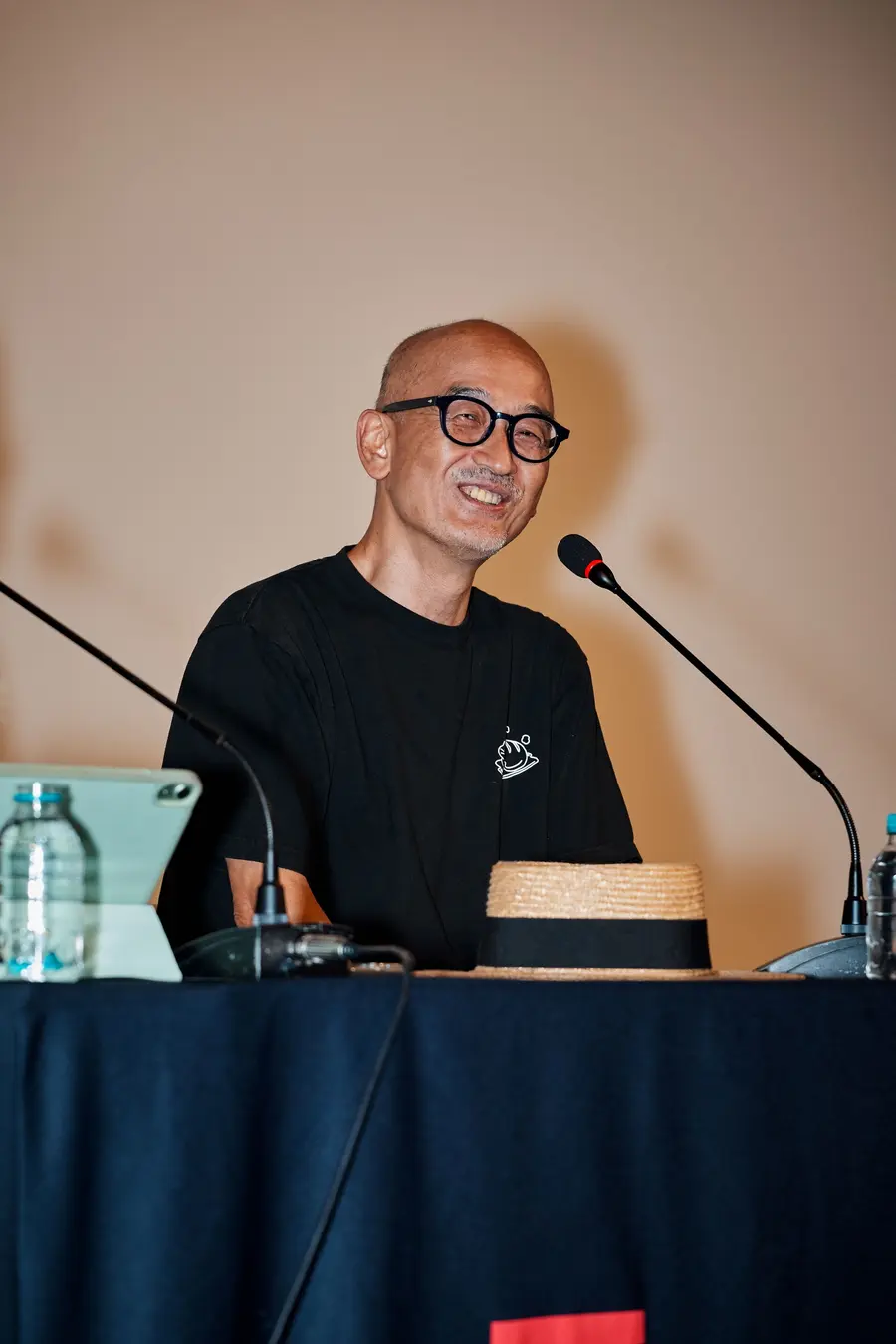
“I’ve directed 14 films so far and I’m preparing to start my 15th next month, but releasing 〈Father's Home Cooking〉 makes me the most nervous,” Lee Joon-ik said. Since debuting in 1993 with 〈Kid Cop〉, he has spent decades experimenting. After drawing 10 million viewers with the audacious period approach of 〈The King and the Clown〉 in 2005, he continued to subvert familiar commercial film grammar, directing 〈Dongju: The Portrait of a Poet〉 in 2016 and 〈The Book of Fish〉 in 2021 in black-and-white. From 2011 for five years he served as executive director of the country's first smartphone film festival, the Olleh Smartphone Film Festival, putting his interest in new media into practice; in 2022 he directed his first OTT drama, the TVING original 〈Yonder〉, even venturing into science fiction. He has consistently put stories into new formats regardless of form or genre.
On that filmography, Lee said with a laugh, “People often call it ‘challenge,’ but it’s actually the result of a responsibility complex — I’ve been pushed, I couldn’t run away, and I ended up taking on the challenge.” He noted that most existing short dramas relied on sensational situational sketches, and that he inevitably wanted to make a family movie about family. He said conveying a family story in short situational pieces lasting roughly 1 minute 30 seconds to two minutes might not suit younger audiences, but he decided to direct with the belief that "for a medium to expand healthily and industrially, one of the roles of filmmakers is to constantly broaden the range of stories."
From landscapes to portraits: Lee Joon-ik's theory of the vertical
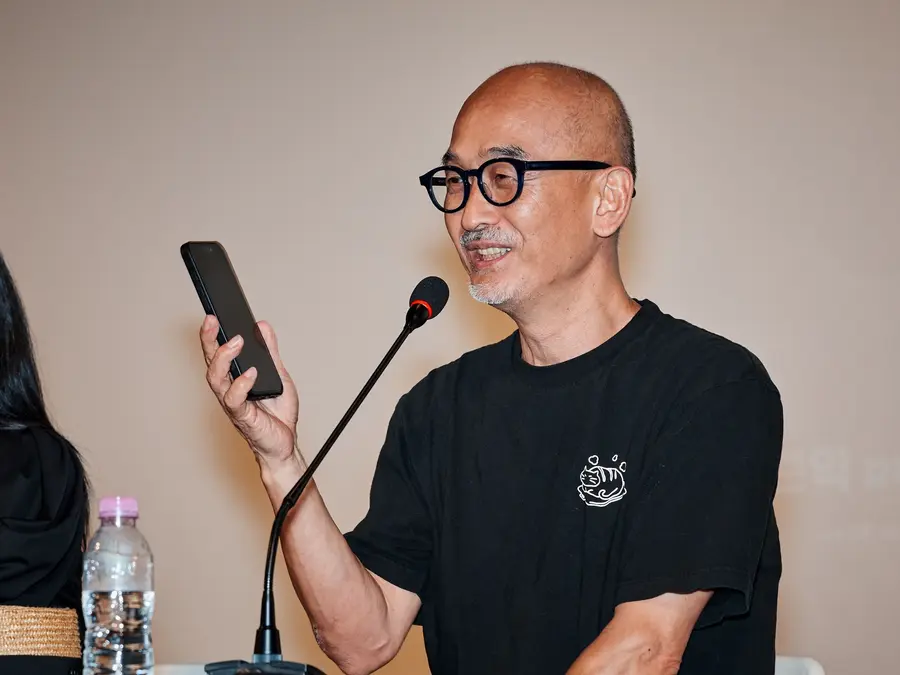
The session's most in-depth discussion centered on Lee Joon-ik's view of horizontal and vertical frames. He began, "I’m someone who has long shot films horizontally, but horizontal and vertical relate not just to film format — they also touch the painting styles we’ve been familiar with for a thousand years." He pointed out that horizontal canvases have traditionally been used for landscapes, while vertical canvases have been used for portraits and figure painting. "In a horizontal frame, an actor’s performance comes along with the information of their surroundings," he said. "By contrast, the vertical frame excludes the background and leaves the viewer face-to-face with the figure itself — a mode of consumption that focuses on one person alone." He added, "When the frame is horizontal, two or three people often appear simultaneously and the film becomes information about 'the outward side of relationships.' Vertical, however, strips away the background and leaves the viewer face-to-face with that one person." He underscored the vertical frame's immersive power, saying, "If viewers watched 〈Father's Home Cooking〉 without feeling bored for two and a half hours, it’s because they were able to feel each character’s interior closely and follow the detail."
Lee suggested the novelty of the vertical form might actually be better suited to an increasingly individualized modern civilization and could be seen as a more evolved format. He argued the rise of vertical short dramas can be explained not just by changes in theatrical environments but as part of broader civilizational change. In a context where mass media shifts to personal media and even the institutional power of film dismantles, vertical short dramas’ strict focus on inner life aligns with an inevitable change in civilization, he said.
A liberated space where every actor displays equal presence
Lee cited the look of the set as another major difference between horizontal and vertical filmmaking. "A horizontal film has five social classes: protagonist, lead supporting, supporting, minor supporting and bit parts," he said. "Most films are dominated 70–80% by solo shots of the protagonist; supporting actors are often filmed as objects rather than agents." On a vertical shoot, however, things change: after briefly introducing a space where several people gather, each character must receive an individual solo shot. Lee said, "In short dramas, whether you’re a supporting actor or a bit player, you must get a one-shot. In that moment you are completely the lead. It becomes a very anarchic set," calling short dramas a "liberated space for cinema" where characters become independent, equal presences. He praised the format as one in which newcomers and supporting actors can focus fully on their performances and freely show their skills.
Cost efficiency and unlimited scalability
Finally, he mentioned a practical advantage of short dramas: cost efficiency. "There are fewer cast members than in films, and staff sizes are typically less than a third, so costs and time shrink dramatically. That doesn’t mean the scale of the story is small," he emphasized. He added that compared with feature films, which face high cost barriers, short dramas can be a low-cost opportunity for creators and artists to develop their talent — offering an alternative for emerging creators shut out by the industry's barriers.
Closing the Q&A, Lee reflected on the notably older audience in attendance. "At the Bucheon Film Festival screening two months ago, the average audience age was in their 20s to 30s, but today it was the opposite: people older than me sat quietly through the final scene and then rose from their seats. I don’t know if it was because of the content of 〈Father's Home Cooking〉, but being in the same space and breathing the same air with people of a similar generation felt like a rare happiness," he said.
Lee Joon-ik’s 〈Father's Home Cooking〉, which, through the shortest form of short drama, demonstrated the greatest potential for expansion, opens in theaters on Sept. 9.
댓글 (0)
댓글 작성
댓글을 작성하려면 로그인이 필요합니다.
로그인하기