


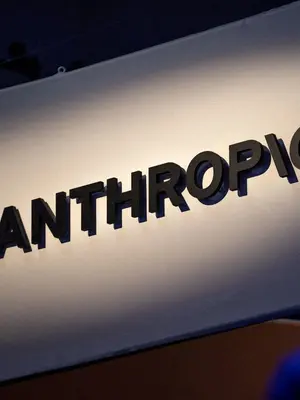
![Anthropic [REUTERS/Yonhap News file photo]](https://cdn.www.cineplay.co.kr/w900/q75/article-images/2026-10-17/23760fe7-9746-48ee-aaff-2b22f92dbeab.jpg)
Global AI firms’ voracious appetite for data puts K-literature in the spotlight
It has been confirmed that U.S. artificial intelligence (AI) company Anthropic used English-language editions of works by leading Korean authors, including Han Kang, Hwang Sok-yong and Kim Young-ha, without permission to train its AI chatbot, Claude.
The Literature Translation Institute of Korea said on the 17th that it had found 21 books by Korean authors on the list of works eligible for compensation in connection with a recent copyright infringement class action against Anthropic. The institute immediately notified the authors of the infringement and began informing them about available remedies.
Anthropic had faced a major class-action lawsuit in the United States over allegations that it illegally downloaded and used vast quantities of copyrighted works to train its AI models. A U.S. court recognized copyright infringement involving about 500,000 works, and the lawsuit was settled last July, with Anthropic agreeing to pay $1.5 billion (about 2 trillion won).
Under the settlement, compensation is set at about $3,000 (about 4.35 million won) per work. Korean authors, too, can receive appropriate compensation if they take part in the claims process by the deadline.
Key works exposed to unauthorized use for training include Han Kang’s Human Acts and two other books; Kim Ae-ran’s My Brilliant Life; Kim Young-ha’s Empire of Light and three other books; Kim Soom’s One Person; Shin Kyung-sook’s Please Look After Mom and two other books; Hwang Sun-mi’s The Hen Who Dreamed She Could Fly; and Hwang Sok-yong’s The Guest. This suggests that core works representing Korean literature were indiscriminately consumed as data by global AI companies.
The institute said it would work closely with copyright-related organizations and provide all-around support, including legal action if necessary, to help authors reclaim their rights and receive compensation.
Meanwhile, anxiety in the publishing industry is growing as overseas AI companies move to buy Korean books in bulk to secure training data. The Korean Publishers Association issued an official appeal the previous day, criticizing the sacrifices of creators obscured by the growth of the AI industry and strongly calling for a fair compensation system.
“Without books, AI could not exist,” the association said, adding: “The creators who made the books do not even know when, how or in which AI models their works are being used. Without transparent disclosure, they cannot ask questions, refuse or demand fair compensation. This unreasonable system must be changed.”
![[Culture&]](https://cdn.www.cineplay.co.kr/w160/q75/article-images/2026-03-05/36c6ae04-7269-451a-ab16-6c712651f052.jpg)



댓글 (0)
댓글 작성
댓글을 작성하려면 로그인이 필요합니다.
로그인하기