



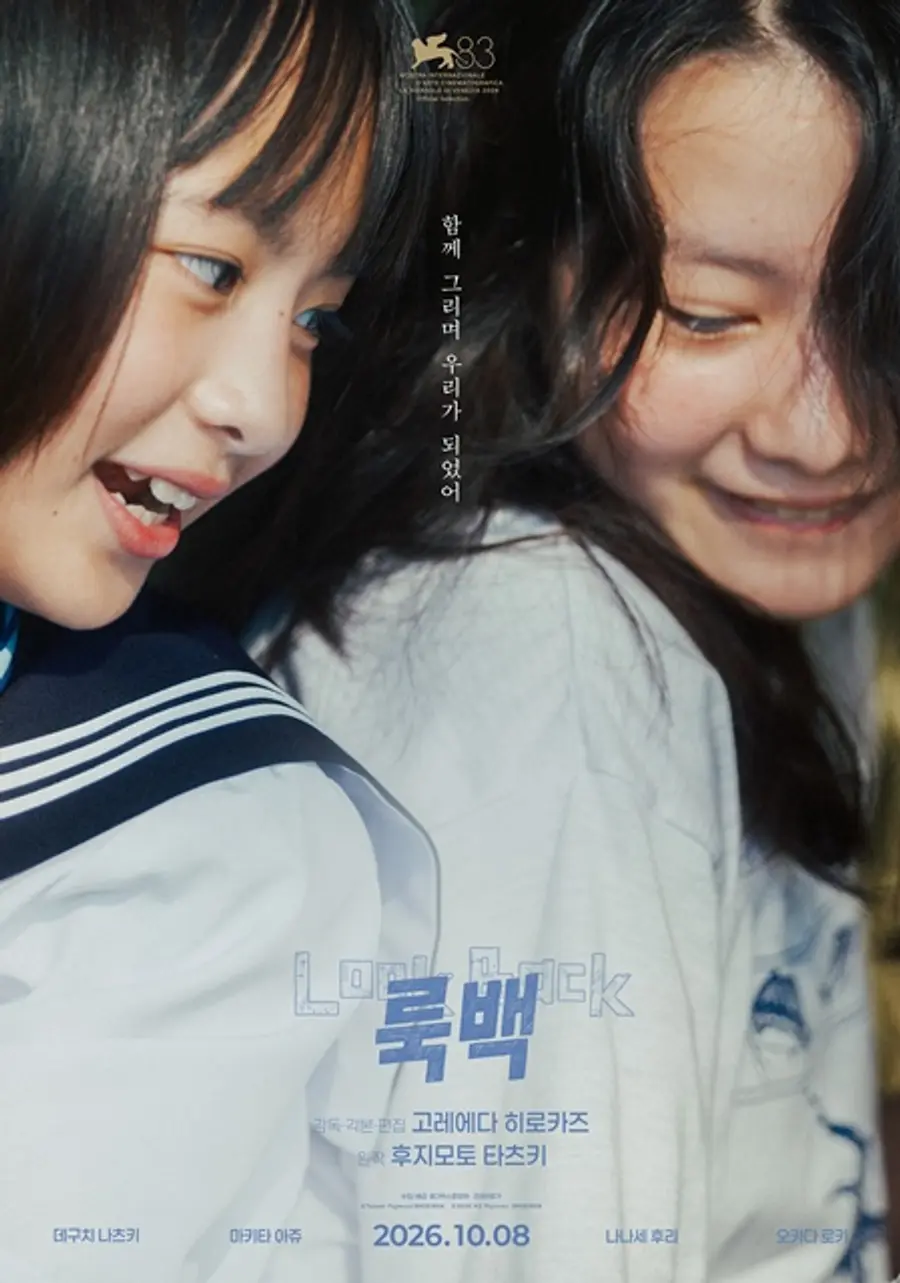
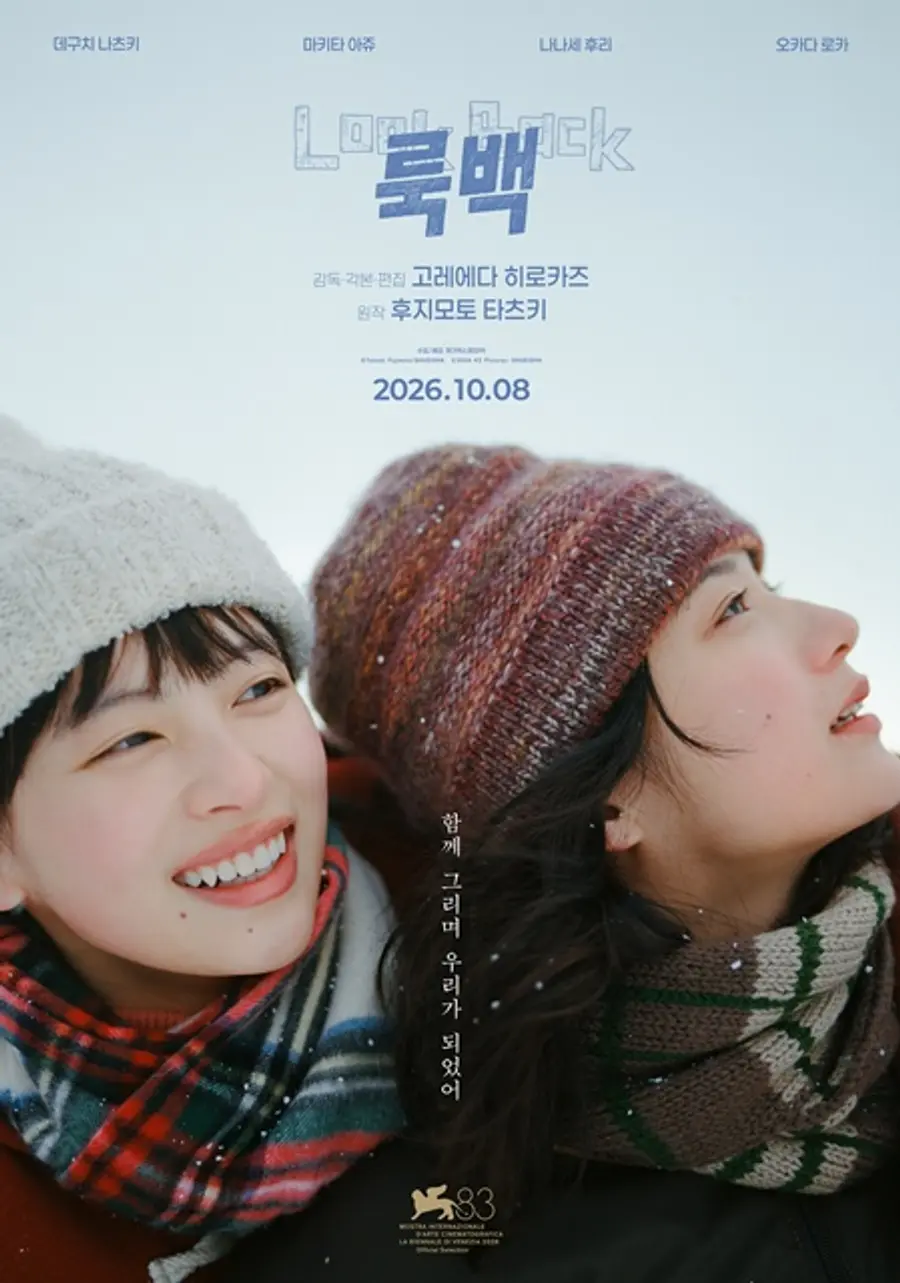
Just five years. That is how long it took for the one-shot manga 「Look Back」 to move beyond Japan and capture readers around the world. Tatsuki Fujimoto published the short manga in 2021. It follows Fujino Ayumu and her truant classmate Kyomoto, an exceptionally gifted artist, and what happens when they meet. Upon release, 「Look Back」 drew rave reviews, including ranking No. 1 in the men’s edition of the year’s "This Manga Is Amazing!" list. Director Kiyotaka Oshiyama and Studio Durian then adapted it into an animation that swept global audiences in 2024. Among those taken with 「Look Back」 was director Hirokazu Kore-eda, one of Japan’s best-known filmmakers. Kore-eda said he felt compelled to make the film and brought the acclaimed story back to the screen. Seen at a press screening on Sept. 28, Hirokazu Kore-eda’s live-action 〈Look Back〉 preserves the original’s emotional core while adding finer detail through setting, sound and performance.
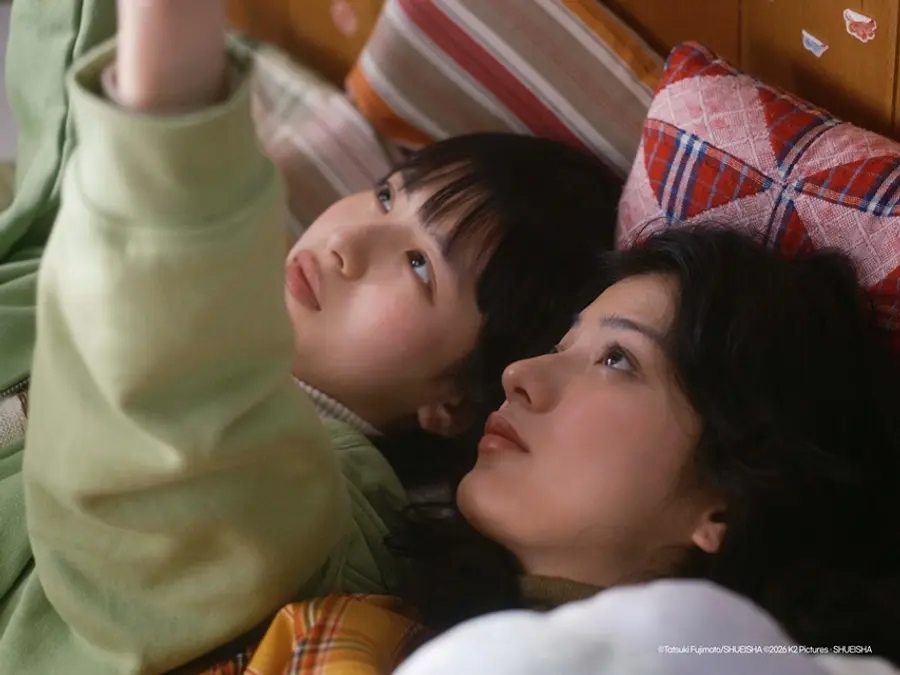
When news broke that 〈Look Back〉 would be adapted into live action, the biggest question among existing fans was whether it could sustain a full-length runtime. The source is a short manga published as a single volume, and the 2024 animation ran for less than an hour. The live-action version’s running time, however, is 100 minutes—about 40 minutes longer than the animation. Still, that added length does not mean the film departs dramatically from the original. The arc in which Fujino and Kyomoto meet, create manga together, and experience changes in their relationship remains largely intact. The clearer difference in running time reflects, instead, the tempo differences between animation and live action and Kore-eda’s more meticulous, observational touches.
Kore-eda made several changes in adapting 〈Look Back〉. The most subtle yet resonant shift is that Fujino’s surrounding environment is more fully rendered. Lines exchanged with a teacher are expanded, Fujino’s older sister’s dialogue appears more often, and Fujino’s parents—who in the original sometimes appeared like incidental landscape—show up with greater frequency. Scenes and characters that may have been omitted for reasons of authorial choice or workload are given more space here, which makes the world of 〈Look Back〉 feel more lived-in and realistic.
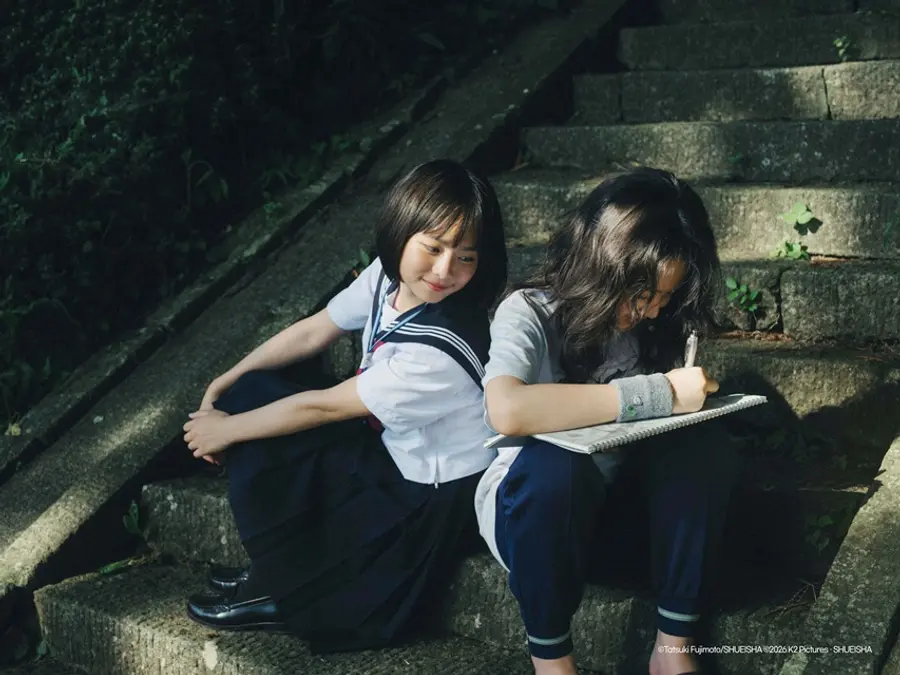

One of the production’s biggest efforts was to capture Akita Prefecture, the film’s setting, in rich detail. Kore-eda filmed 〈Look Back〉 in Akita Prefecture, original author Tatsuki Fujimoto's hometown, in the Tohoku region, which the manga uses as its setting. He spent nearly a year on location. Hirokazu Kore-eda unveiled two new works in 2026—〈The Sheep in the Box〉 and 〈Look Back〉—but that sequence of releases is not the result of quick shooting; rather, it’s a coincidental outcome of having spent a year shooting 〈Look Back〉. The extended time in Akita was intended to capture the passage of time that Fujino and Kyomoto experience and to more beautifully record how they change and grow amid the surrounding natural environment. Even viewers divided on the film itself are likely to admire its vistas of Akita.
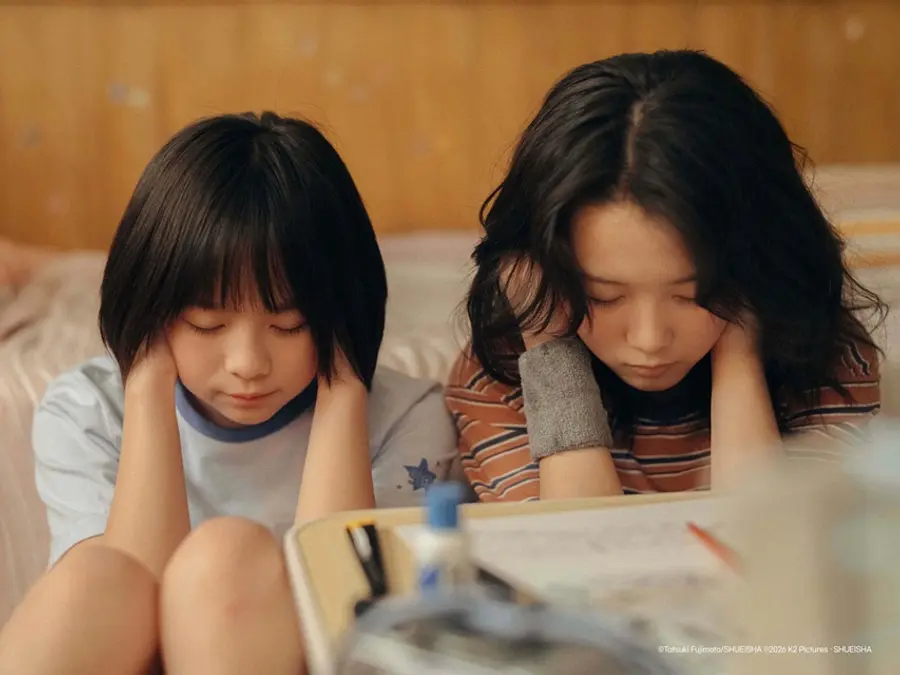

Compared with the original, the film’s more detailed depiction of the surrounding world extends to its portrayal of manga as a central element. Lead actors Natsuki Deguchi and Aju Makita trained to draw actual manga before filming, and the film shows the two characters discussing their craft in more granular detail than previous versions. Viewers in middle age who once dreamed of becoming manga artists—even before tablets—may feel a rush of nostalgia watching this film. The film pays as much attention to the workspace as it does to the natural scenery: the sound of a pen nib touching paper, the sound of an inked pen tracing the sketch lines, the busy clatter of tools in an artist’s hands. Those environmental sounds are recorded with near-ASMR fidelity. Composer Yuta Bando even included those sounds on the film’s OST, so the ambient audio reinforces 〈Look Back〉’s mood and leaves a strong impression on the audience.
That said, the addition of finely observed detail does not make it easy to argue that 〈Look Back〉 is categorically superior to the earlier works. The reason lies in the medium: manga and animation can omit or exaggerate elements with relative ease, but film inevitably presents the real. Kore-eda pares back showy camerawork and stylized direction to home in on the piece’s emotional core, a choice that may feel muted to fans familiar with the originals. In the climax, the underlying structure is the same, but the directorial treatment diverges, which may disappoint viewers who come to it expecting a live-action rendering of the earlier works. Conversely, viewers expecting a fully Kore-eda-styled take on 〈Look Back〉 may find the largely faithful adaptation underwhelming.
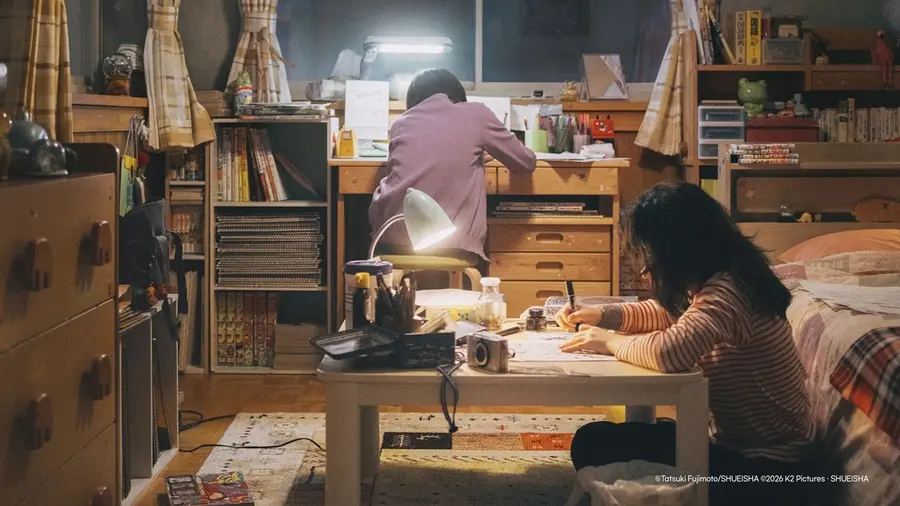
Still, by honoring the original’s emotional tone and recreating it on screen, 〈Look Back〉 aims to convey a distinct beauty through Akita’s landscapes, immersive sound design, and the ensemble work of its four principal actors. 〈Look Back〉 opens in theaters on Oct. 8.



![[First reactions] 'Look Back' Cineplay reporters' star ratings](https://cdn.www.cineplay.co.kr/w160/q75/article-images/2026-09-29/b2da4bff-488e-47cf-9d62-26e995321f7e.jpg)


![[Busan International Film Festival (BIFF)] Maggie Gyllenhaal's 'Flesh Impact' ... Monroe's truth awakened after 100 years:](https://cdn.www.cineplay.co.kr/w160/q75/article-images/2026-10-08/cc063719-e22f-4207-ac3e-49ca73930baf.jpg)
댓글 (0)
댓글 작성
댓글을 작성하려면 로그인이 필요합니다.
로그인하기