


I get hooked on music in films. Music often reveals intimate emotions that images and dialogue alone cannot fully convey. It can serve as a window into a creator's hidden intentions. For me, understanding film music has been one route into the movie itself. "Choo A-young's Music Box" listens closely to a film's voice through its music. (P.S. I hope you listen to the music while you read.)
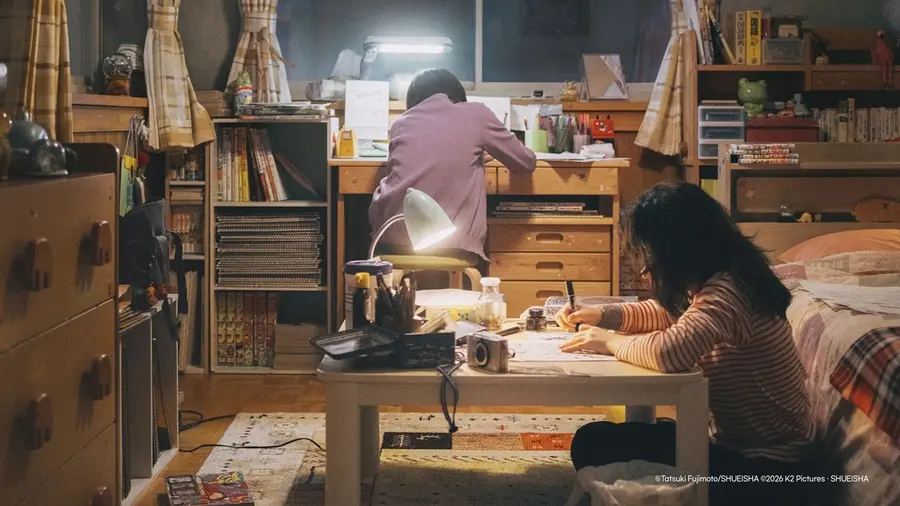
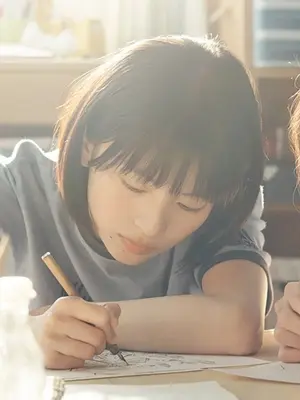
Hirokazu Kore-eda's new film 〈Look Back〉 departs from the familiar tracks of a coming-of-age story based on Tatsuki Fujimoto's original manga. Rather than charting two girls' straightforward path to becoming manga artists, the film traces how creativity does not end inside a single person but continues to transform as it passes through others and the world. Fujino (Natsuki Deguchi, Huri Nanase) and Kyomoto (Aju Makita, Roka Okada) share the same dream, but they approach it in different ways. Fujino moves forward conscious of other people's gaze; Kyomoto draws a private line, shutting herself off from the outside. Only after discovering each other's drawings and forming a bond do they begin to find their bearings.
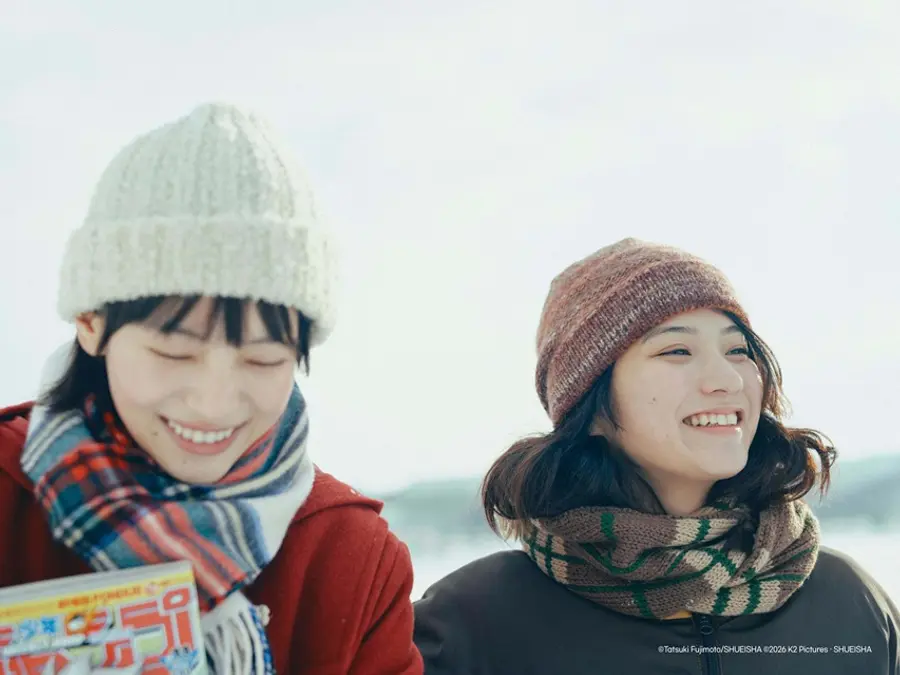
Their pursuit of a shared dream acquires new meaning when it meets Hirokazu Kore-eda's ecological gaze. 〈Look Back〉 repeatedly depicts the cycle of the four seasons. In the film, seasonal landscapes are not mere backdrops that decorate characters' emotions. They situate human life and death, meeting and loss, within a larger natural cycle. The girls' creativity is likewise not an isolated personal achievement; it is portrayed as a small ecosystem formed by intertwined senses, times, and traces of the world. Here, the music by Yuta Bando audibly translates the film's sense of cyclical motion.
The ecology of creativity
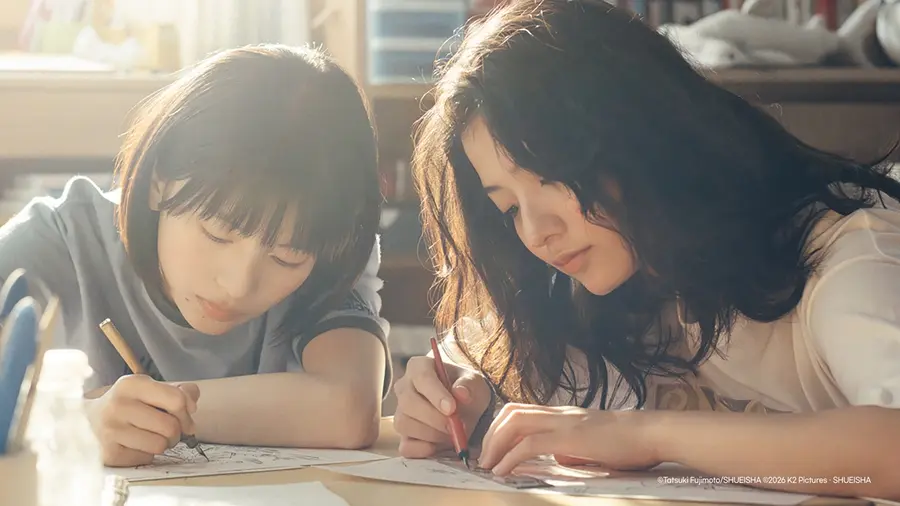
The relationship between Fujino and Kyomoto, who move toward the same dream together, cannot be reduced to just friendship or rivalry. Seeing Kyomoto's drawings, Fujino realizes that the solitude she believed in is actually part of a larger world. Kyomoto, too, emerges outward through Fujino's presence. Their relationship becomes an environment that inspires each other's creativity while preserving each person's possibilities. That structure resembles an ecosystem. In an ecosystem, life does not complete itself independently but is sustained through relationships with other beings. In 〈Look Back〉, creative ability does not exist as a finished talent inside an individual. It gains vitality only through the processes of seeing each other's drawings, showing work to others, collaborating, and sharing time. The pieces the two make together retain each other's different perspectives. Fujino continues to draw after losing Kyomoto to avoid extinguishing the creative ecosystem they formed together.
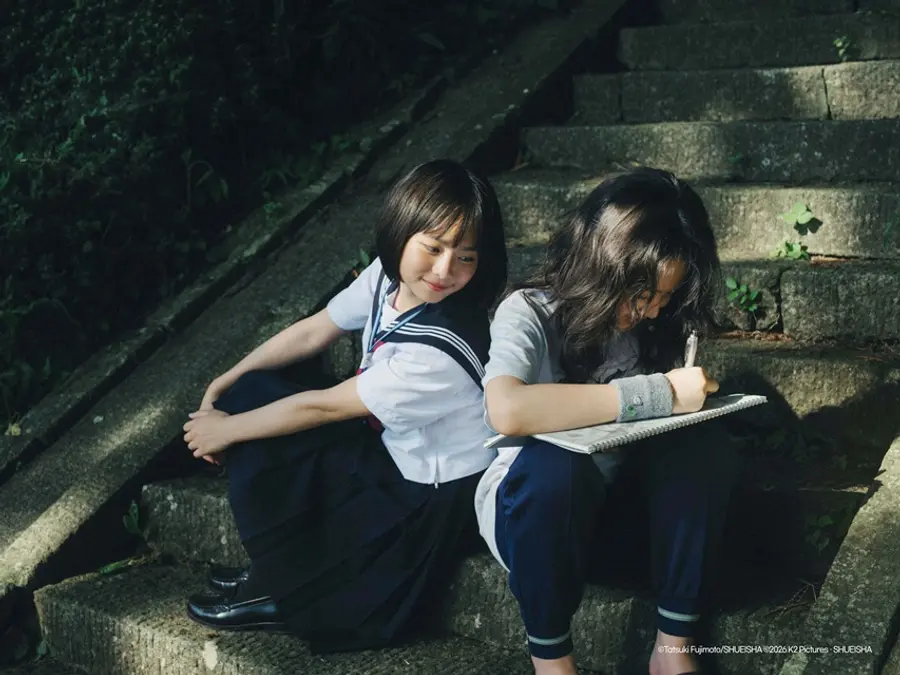
Hirokazu Kore-eda consistently applies his ecological perspective to the creative process. Drawing manga is not an act of completely occupying the world with human language. The scratch of a pencil on paper, light slipping in from outside the window, a street buried under snowfall, the passage of birds across the sky—natural elements beyond human control enter the sensibility of the drawing. Creating manga, and art more broadly, is not about reproducing reality; it is about arranging traces of humans, nature, and the world together in a single frame. The lines Fujino and Kyomoto draw begin in their interior selves but never become solely their own. That is the ecology of creativity that 〈Look Back〉 describes.
The music of Yuta Bando
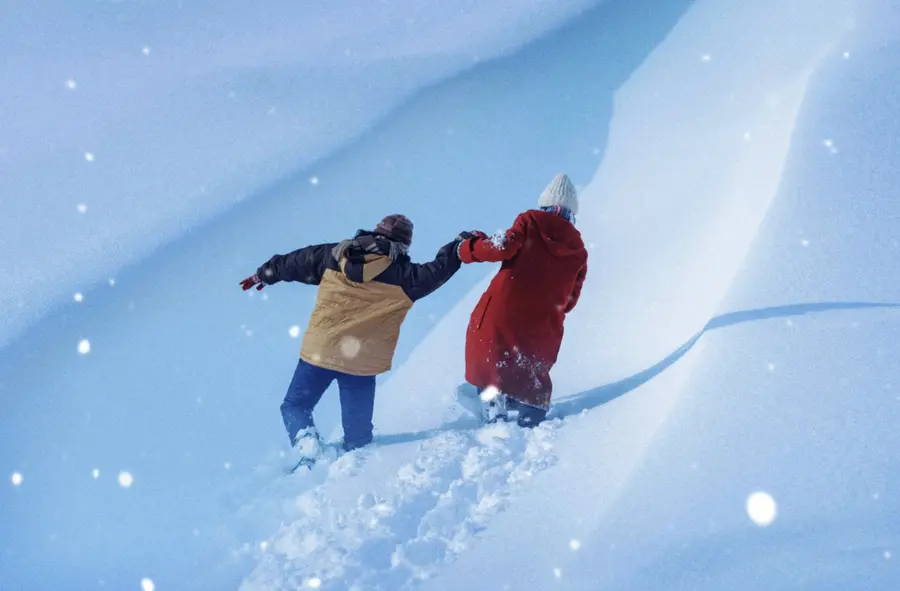
In 〈Look Back〉, Yuta Bando's score shapes in sound how the act of creating connects with nature's cycles rather than directly depicting nature itself. At the center of that sound world is not the piano but the classical guitar. Bando chose the classical guitar as the musical backbone of the film, and that choice layers the tactile scratch of a pencil on paper with the feeling of a creator's fingers plucking strings. Yuta Bando said in an interview, "The guitar carries a much greater sense of the fingers' presence in its sound than the piano does." When translating the physical act of drawing into music, the plucked guitar proved to be the optimal instrument. Where the piano produces relatively complete resonance and vertical harmony, the classical guitar's tones contain the pressure and friction of the fingers and the subtle tremor of the string. The vibrations from those string tremors contribute significantly to the film's lyricism. A guitar note, unlike a piano tone that flows smoothly, reveals within itself the process of being born at the fingertip and dying away.
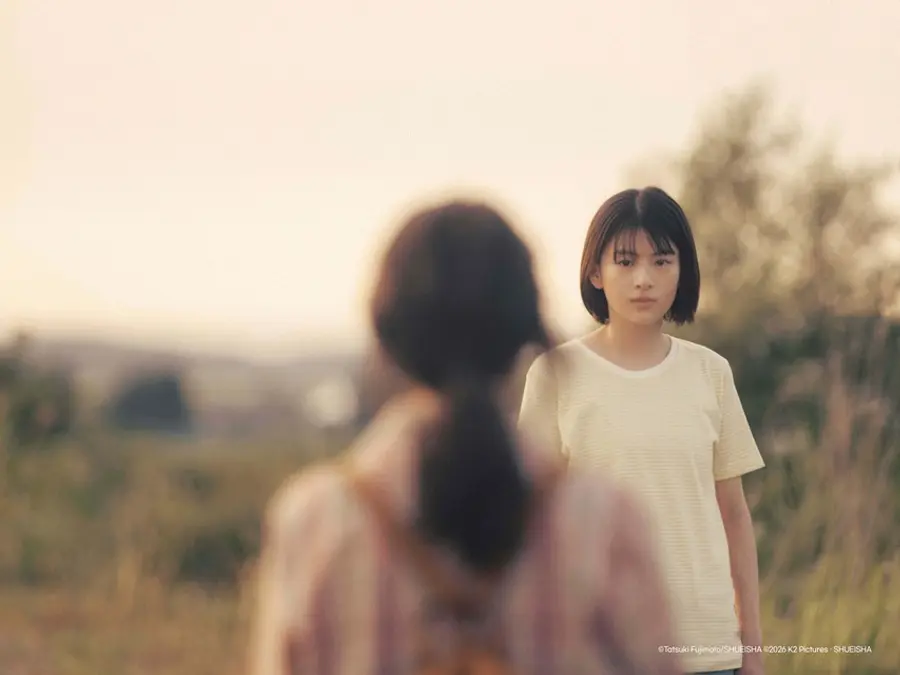
As noted earlier, 〈Look Back〉 repeatedly and clearly depicts the cycle of the four seasons. That cycle shows that even a world marked by loss keeps turning. In particular, the piece titled “Look Back” Main Theme conveys this cycle through rises and falls in musical motion. The swelling and subsiding of the strings' resonance do not push emotion into a linear climax. Instead of forcing loss into a narrative of triumph, this music lets sadness take a place within life's rhythm in another form. It is a metaphor for a world that keeps moving even while holding loss.
Response to Kyomoto's question
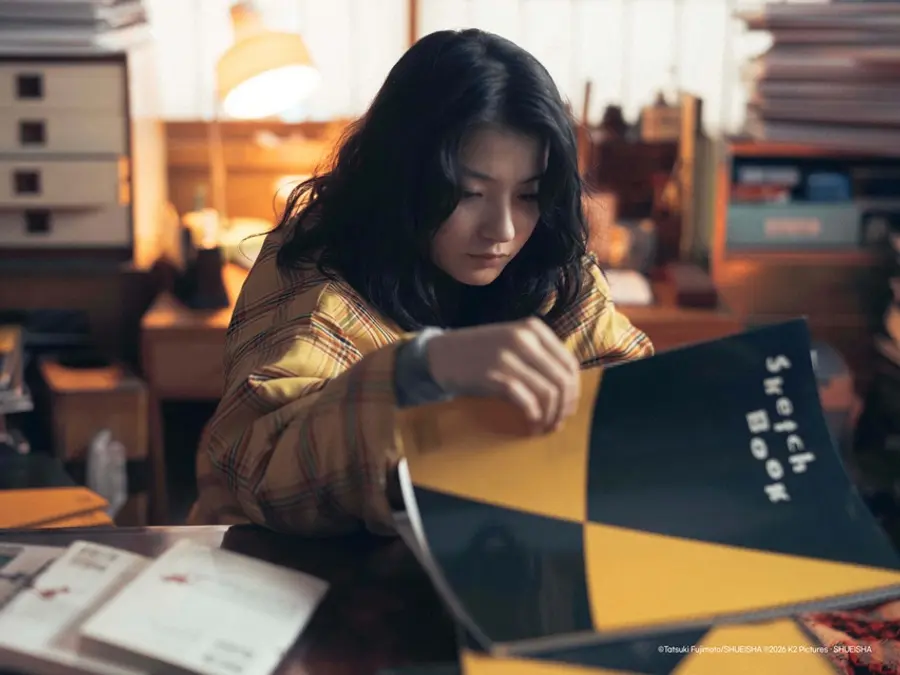
Kyomoto asks Fujino, who says she does not like drawing manga, "Then why do you draw manga?" The film never lets us hear Fujino's answer to Kyomoto's question. Instead, it answers with the image of Fujino beginning to draw manga again in her studio after the hiatus. Feeling guilty about Kyomoto's death, Fujino imagines an alternative world in which she never drew Kyomoto out of her room. But Fujino's imagination cannot erase the loss in reality. In one sense, Fujino's imagined scenario mirrors Hirokazu Kore-eda's own creative practice. Kore-eda has long dealt with loss in his films, but creation cannot reverse what happened in reality nor recapture time gone by or bring back what has disappeared. Still, Fujino begins to draw again. Memories of Kyomoto that initially felt only like pain eventually become the engine of creation and shift into a capacity to relate again to someone else—the reader.
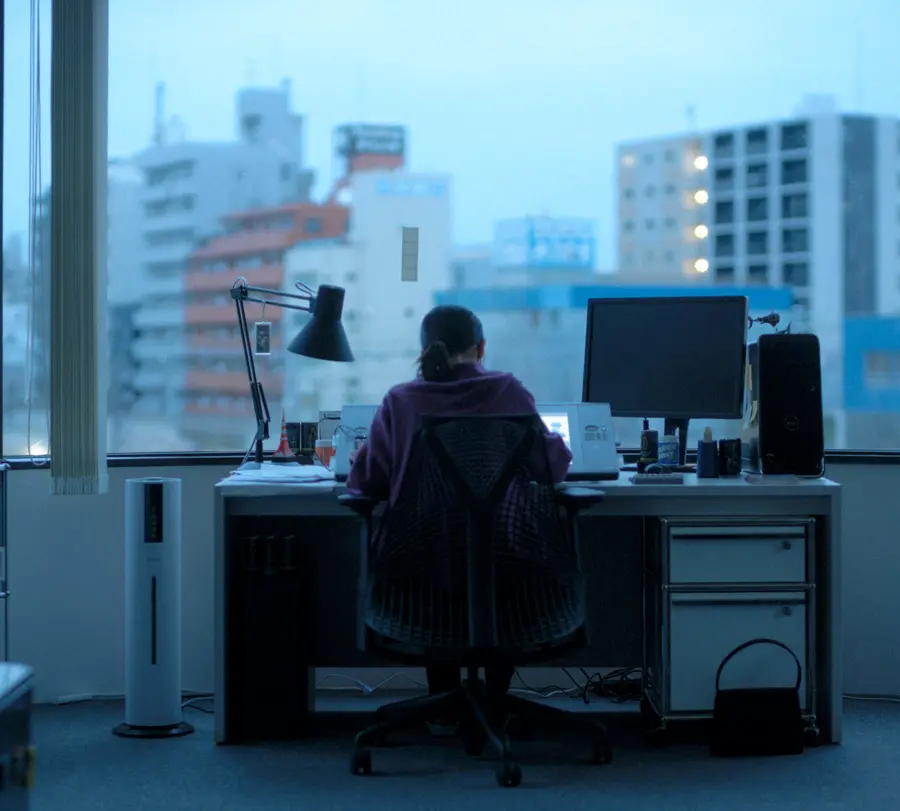
Kyomoto's question returns to Hirokazu Kore-eda himself. Kore-eda has repeatedly said in interviews that this adaptation of Tatsuki Fujimoto's original work began when, after the COVID-19 pandemic brought everything to a halt, it reminded him why he makes stories and films. So Fujino's act of beginning to draw again is also the director's answer to Kyomoto's question. He does not make films to erase loss or recklessly restore what has been lost. He makes films to stay close to someone's loss and to help heal it through a relationship with the audience. For him, creation becomes a way to reconnect with others even while holding loss. 〈Look Back〉 is a film that declares, in its most beautiful images, the view of art he seized again at the end of a period of global despair.
![[Choo A-young’s Music Box] After Anger, ‘Oasis: Don’t Look Back in Anger’ Sings Again](https://cdn.www.cineplay.co.kr/w160/q75/article-images/2026-09-10/93921b18-781e-4236-b1ef-360bc41540ee.jpg)
![[Seong Chan-eol’s Comics] Not a Lone Crane, but One Cat Among Rats: 〈Cat Nancy〉](https://cdn.www.cineplay.co.kr/w160/q75/article-images/2026-09-11/9085899d-38f1-4078-91e1-11df4135c2cc.jpg)
![[First reactions] 'Look Back' Cineplay reporters' star ratings](https://cdn.www.cineplay.co.kr/w160/q75/article-images/2026-09-29/b2da4bff-488e-47cf-9d62-26e995321f7e.jpg)
![[Kim Ji-yeon's Gem Box] 38-Year 'Rookie' Actor Nam Kwon-a of 'Tazza: The Song of Belzebub' and 'Gyeongju Trip'](https://cdn.www.cineplay.co.kr/w160/q75/article-images/2026-10-06/a02643a4-5810-431d-a65f-d9f0165c85cd.jpg)
댓글 (0)
댓글 작성
댓글을 작성하려면 로그인이 필요합니다.
로그인하기