


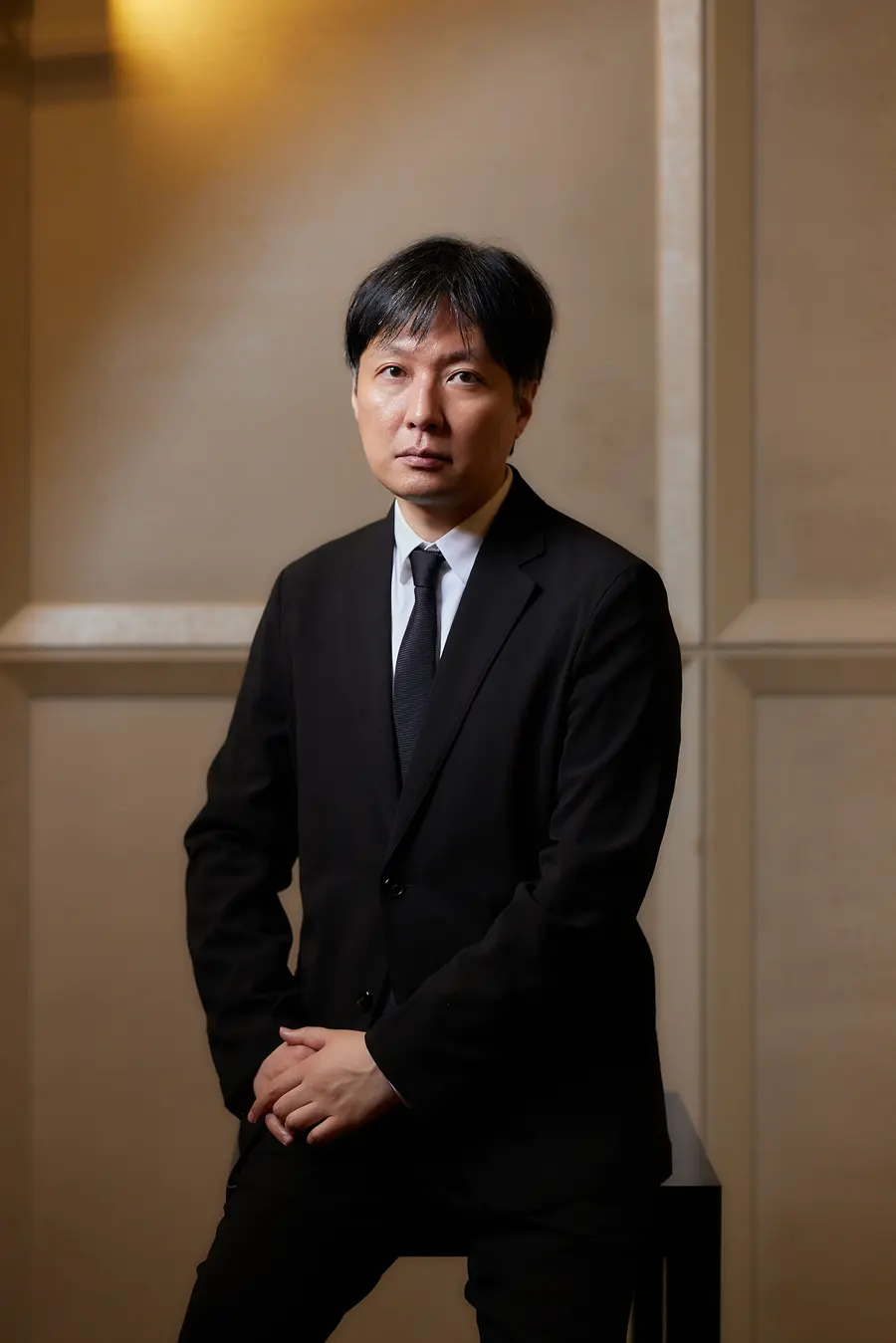
Director Kim Byung-woo of 〈PMC: The Bunker〉 and 〈The Terror Live〉 solves the most difficult problems in the simplest way. While adapting the vast world of the web novel 'Omniscient Reader' by author Sing Shong into a film, he unfolds the story centered around the most important essence of the original work. The film boldly eliminates anything that distracts from the core message, yet it does not lose the essence of the original, which is the sense of solidarity and human free will. Even amidst the dazzling visual effects showcased through VFX work, the humble yet grand message of the original remains alive. I met with Director Kim Byung-woo to discuss this work and the process of working with various star actors.
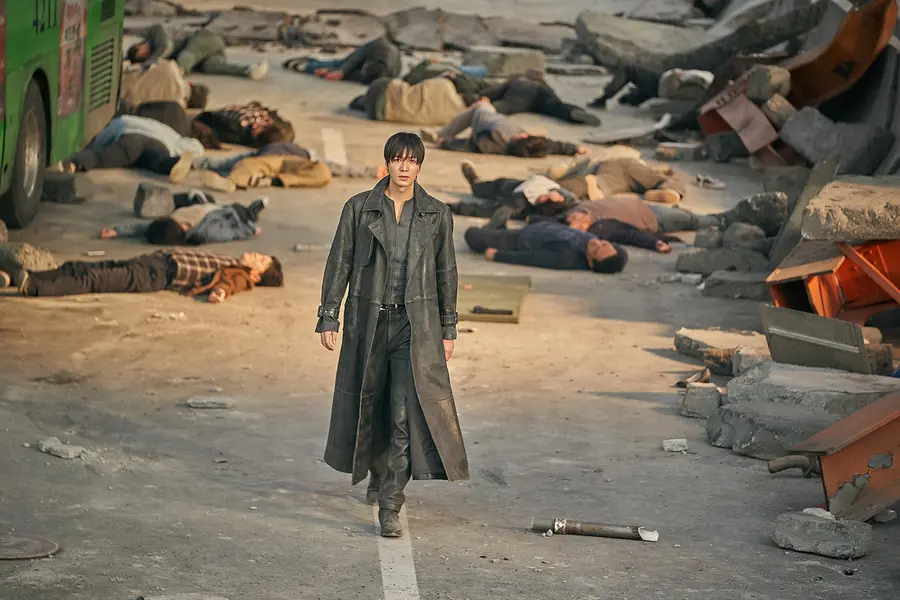
I've heard that you were doing final work up until the day before the preview and press conference for 〈Omniscient Reader: The Prophet〉. I'm curious about what parts you modified.
In fact, films with a lot of VFX cannot be edited at the last minute. We worked on improving the quality of the VFX cuts.
It must have been difficult given the vast world of the work, but I'm curious why you chose to direct this piece.
I actually thought it would be too difficult, so I wanted to do it. When I first received the proposal and read the original work, I found it very interesting. At that time, the web novel was still being serialized, and there was no webtoon yet. While reading, I found it fun, but at the same time, I was worried. 'How should I make this?' I had a lot of concerns, but after thinking about it for about two years, I felt that it would be fun to make it this way. After that, I said I would do it.
I thought it was important to understand the characteristics of the medium. Nowadays, many popular web novels or webtoons are adapted into dramas or films, so I thought that if I did this work, it would help internalize that process. In the case of films, they convey a story with a beginning, middle, and end to the audience within about two hours of running time. When I said I would make it into a story with that structure, there was a big question of 'what criteria should I set to create it?'
To do that, I needed to establish an important principle, and based on that principle, I had to gather events to create a single story. While revisiting the original work to set that standard, the keyword 'solidarity' stood out significantly in the early part of the novel. I thought this keyword would be the most suitable for conveying the epic narrative of the original. I built the story around the idea that 'the reader, who was alone, meets companions, and together they combine their strengths to solve difficult events and ultimately succeed.'
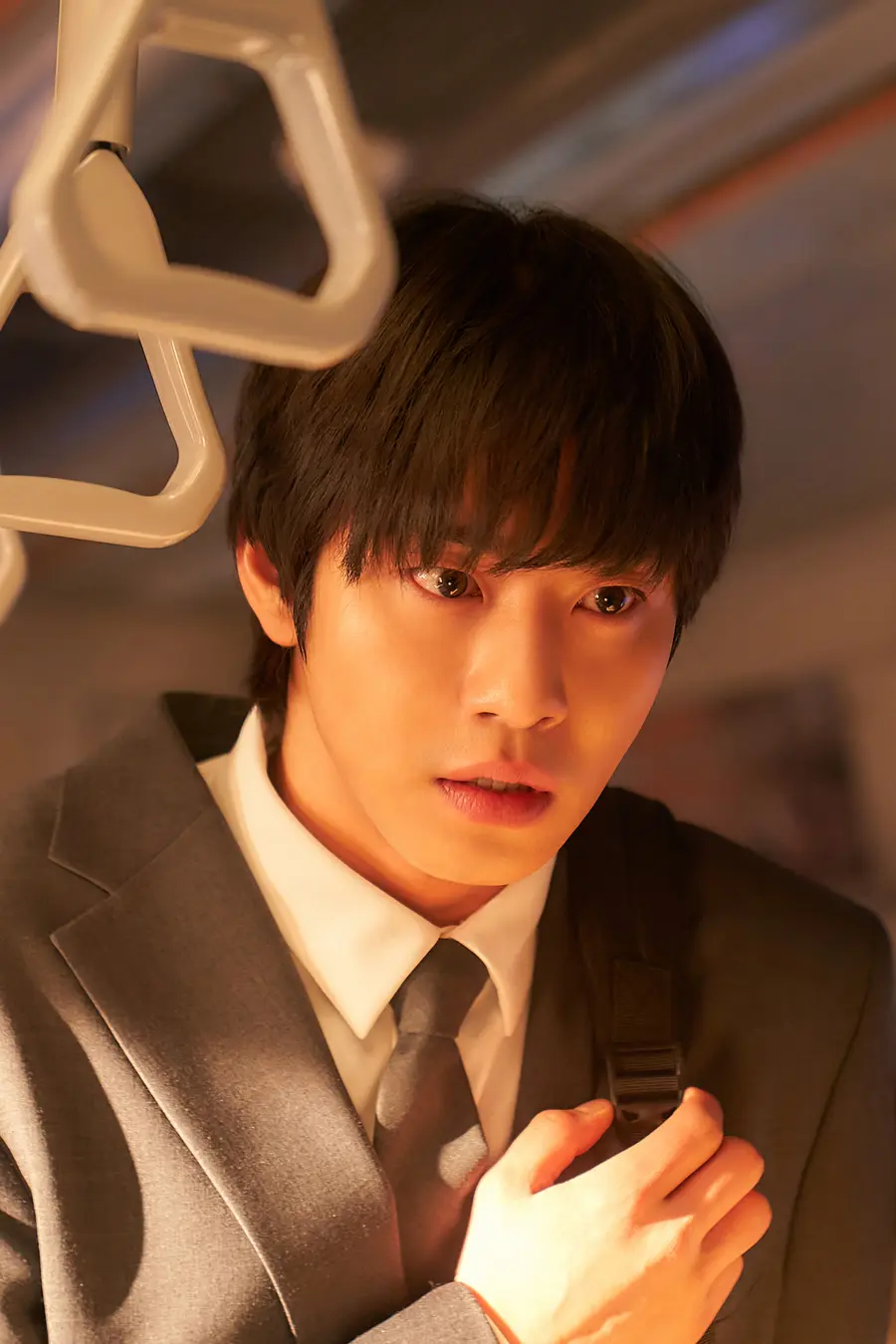
I'm curious about the reason for casting actor Ahn Hyo-seop as the character Kim Dokja.
First of all, there was a standard that it should match the freshness of the film or the story. And I thought it would be good to have a young person. So, while searching for actors, I came across Ahn Hyo-seop, even though I hadn't seen many dramas before. I had seen 〈Romantic Doctor, Teacher Kim〉 but hadn't watched all of his previous works. However, Kim Dokja needs to possess both universality and specificity, and Ahn Hyo-seop fit that.
Lee Min-ho's character Yoo Joong-hyuk is important, but I'm curious about the reason for giving him less screen time in the film.
I believe the story of the film should be cohesive. The cohesion (the process in which Kim Dokja joins forces with his companions to fight) is what I mentioned earlier. Anything that deviates from that will eventually be discarded, even if it is written and filmed. I also wanted to see more of Yoo Joong-hyuk, but I thought it was right to focus on the essence that the story pursues.
Still, in the scenes where Yoo Joong-hyuk appears, I tried to elevate the weight as much as possible. It was important to make a strong impression every time he appeared. Of course, even when Lee Min-ho stays still, his face is already a genre, and it's great because it's fantasy, but I did have some concerns about that.
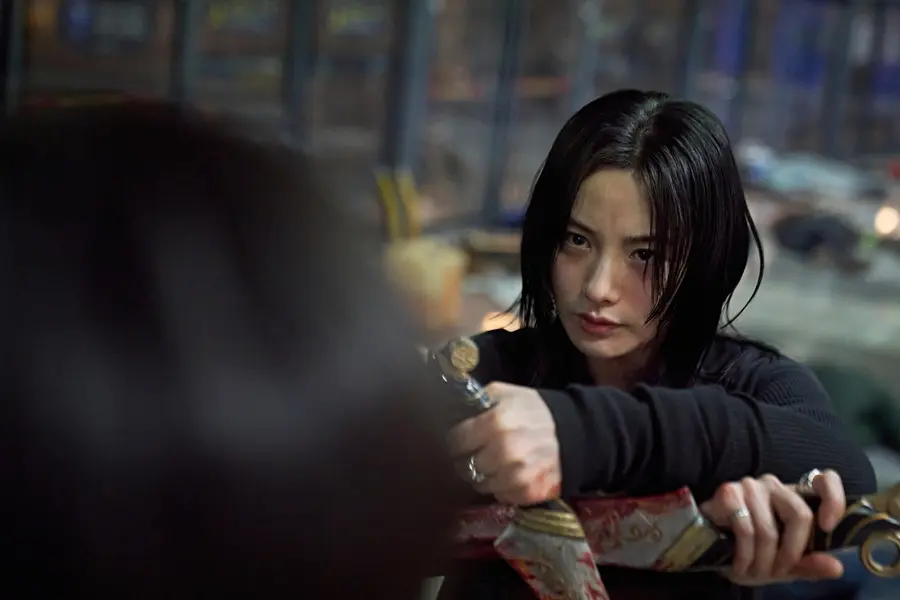
The action of actress Nana in this work was impressive. What was it like working with her?
Nana surprised all of us on set. It was early in the filming when we were shooting the action scenes, and I thought, 'Can she really do this well?' I had mentioned beforehand that there are ways to shoot action in segments, but especially when a female actor does action, it is much more advantageous to see the lines rather than the power, and I thought that would look much cooler. If that's the case, I told her that to show the lines clearly, we need to pull the camera back a bit and shoot for a longer time. I didn't want to cut too much. That way, it could look more realistic. But she fulfilled my wishes so well that we didn't even shoot that many takes.
Not only the lead actors but also supporting actors Jung Sung-il and Park Ho-san played their roles well. I'm curious about the reason for casting these actors and how you directed their performances.
The film can be seen as a roadmap, so we can divide it into chapters by space. The story progresses as the space changes. However, the two main axes are Geumho Station and Chungmuro Station. Since subway stations look quite similar, I was concerned about how to differentiate them. While there are changes in the setting of props and lighting, I thought it was most important to create a color for the two roles of Cheon In-ho (Jung Sung-il) and Gong Pil-du (Park Ho-san), who become the main figures of that station.
These days, there are relatively many overpowered characters. However, in 〈Omniscient Reader: The Prophet〉, in the Chungmuro Station battle scene, the protagonist fights alongside his companions. Although this scene is also in the original work, I'm curious why you chose to keep it as is.
As I mentioned earlier, to align with the point of solving problems together, I thought it would be better to emphasize the battle scene at Chungmuro Station. It is a more spectacular action, but I thought it would be valuable to give meaning within the action scene rather than just ending with spectacle.
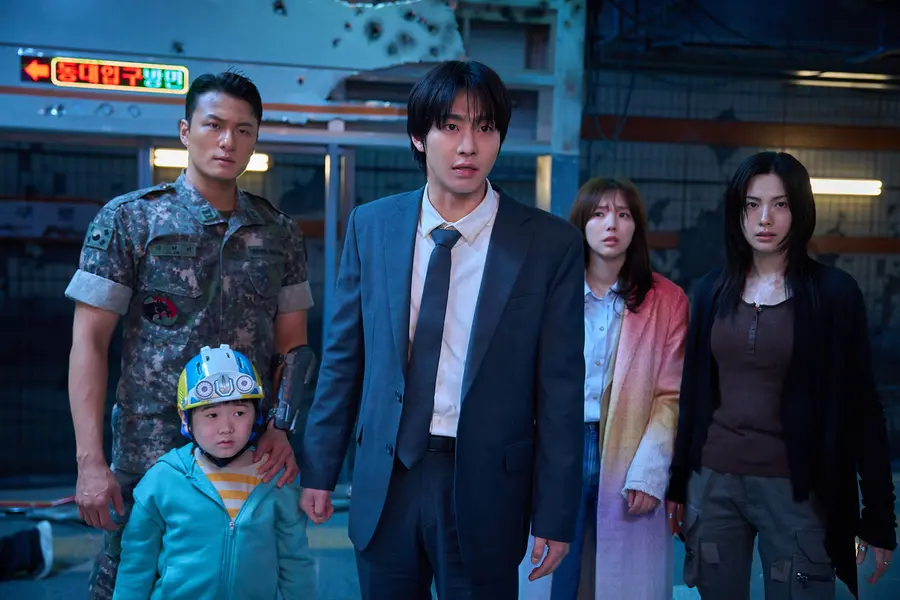
It seems that people's reactions to the character Bi-hyung are divided. Some say, 'The Bi-hyung I imagined doesn't look like that.' How was the character design for Bi-hyung created?
Bi-hyung can speak and communicate, unlike other creatures. He is a character with emotions. In the beginning, he shows a sense of threat and even kills people with lasers, but later he plays the role of a hidden friend to the reader. There are conflicting elements like this, so I pondered how to define the appearance of this character and how to give it life when adding dialogue.
Moreover, I was curious about why the original author chose to use a goblin. Although 〈Omniscient Reader〉 has various modifiers, I think it is also a story about stories. It is a journey of the reader discussing 'the method of survival' (an abbreviation of the novel title 'Three Ways to Survive in a Ruined World'). In old folktales and oral traditions, goblins are often depicted as beings that love stories, and there has been that perception for a long time. I think that might be the point they captured. In our film, the goblin also serves as a medium to convey stories to the constellations, saying, "I will tell you many interesting stories." So, I made the goblin's bag like a story pouch.
I think the established scenario of 〈Omniscient Reader: The Prophet〉 connects to the concept of determinism. If Yoo Joong-hyuk is a character who follows a predetermined sequence or fate, the reader tries to break this. I'm curious about how you aimed to highlight the differences between these two characters.
That's right. I also caught that at some point while reading the original work. This work speaks about determinism and human free will, clashing the two values. The 'method of survival' itself signifies determinism. As the character Kim Dokja intervenes in the story, it speaks of human free will. If I could make a sequel, I don't think I could avoid that point.
![[Interview] Yoo Min-ho from 'Omniscient Reader: The Prophet' says,](https://cdn.www.cineplay.co.kr/w160/q75/article-images/2025-07-21/fba93a59-738f-4054-b7ea-59f11551b474.jpg)
댓글 (0)
댓글 작성
댓글을 작성하려면 로그인이 필요합니다.
로그인하기