



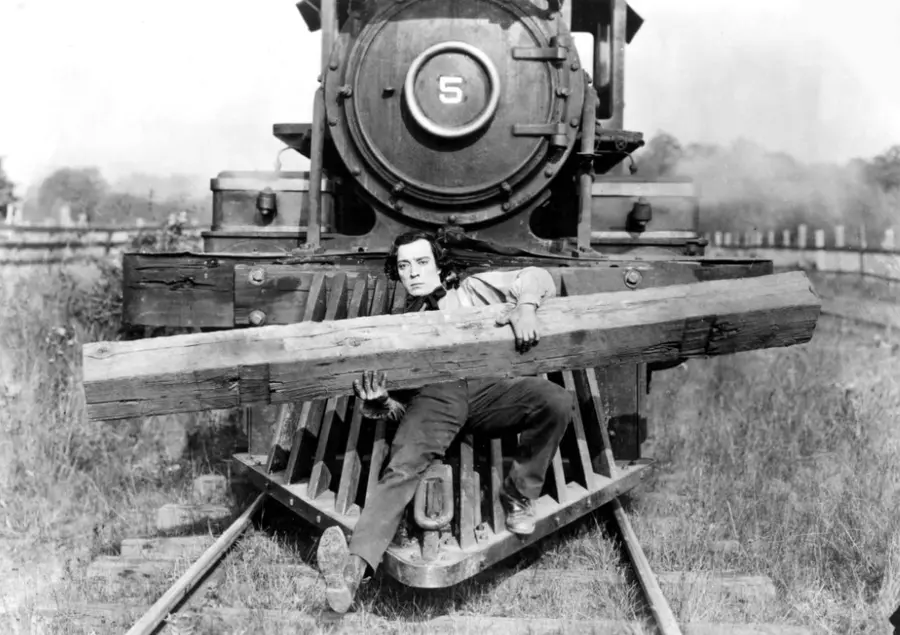
Buster Keaton is one of the great artists who fully invented a brand-new film language of his own. Film scholar David Bordwell, in 「Film Art」, speaks about the comedy of Keaton’s “space” — the kind of freedom-to-move that he demonstrates — saying, “David Bordwell’s slapstick comedy confirms André Bazin’s observation that it begins with the ‘relationship’ between us and the objects and environment around us.” In this way, Buster Keaton — praised to the same degree by André Bazin and David Bordwell, both film theorists and critics who represent France and the United States — shows the very limits of motion images that film as a medium can employ, through the infinite use of the human body and space. Interestingly, even within such extreme motion images, the director and star, Buster Keaton, has no particular expression to speak of. When asked why he doesn’t laugh, he replied, “Because I know another way to express that I’m happy.”
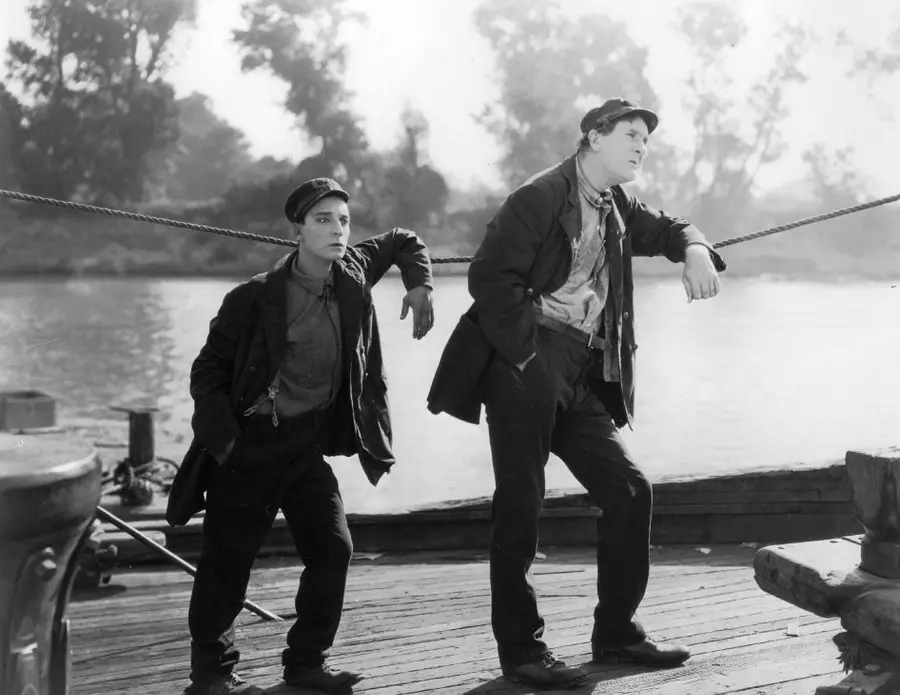
In Buster Keaton’s view, an actor’s “expression” is something far too easy for conveying emotion and circumstance. He is a person who realized early on that film is “the art of the body and of movement” and put that insight into practice. In addition to André Bazin and David Bordwell, there were other notable figures who praised him. Gilles Deleuze — the French philosopher, sociologist, and writer whose influential works consistently spanned philosophy, literature, and popular culture as a whole — was also among those who were captivated by Buster Keaton. In silent films, where dialogue and sound are absent, the actor’s body itself becomes “language.” Buster Keaton was a magician of that body-language. In Deleuze’s eyes, the reason Keaton’s film language excites contemporary cinephiles is that he stages every aspect of a character’s ordeal and fall, crisis and reassurance, and every form of human relationship, using the body’s kinetic energy — and thereby ultimately causes laughter.
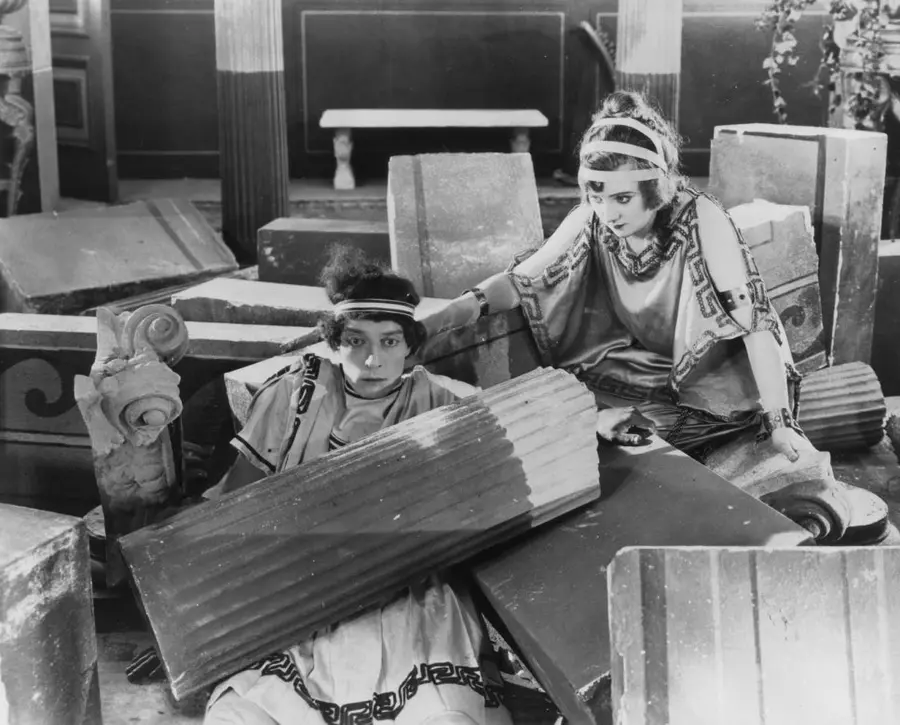
Buster Keaton (1895–1966) and Charlie Chaplin (1889–1977) dominated the 1920s like two sides of the same coin. Along with the shorts of such giants who lit up Hollywood’s classic era — like Mack Sennett, Harold Lloyd, Harry Langdon, and the Laurel and Hardy duo — they became a veritable fountainhead of comedic film traditions across the world. Not only were they devoted to comedy; they also led film — an art of movement-language — into a break from classical theater. While the seeds of montage theory were taking root in the Soviet Union, in the United States Keaton and Chaplin sublimated the rhythm of mime into the rhythm of the film medium. Through 〈The Birth of a Nation〉 (1915), they gave new flexibility to the film grammar of D. W. Griffith, who is often called the creator of modern film language, and also, as Griffith’s collaborator, they completed a systematic comedic aesthetic. By the way, Keaton’s first feature-length film, 〈Three Ages〉 (1923), is a parody of Griffith’s 〈Intolerance〉 (1916), which simultaneously moved among stories that took place in different periods. Meanwhile, while Charlie Chaplin also could provoke laughter through his distinctive walk and whimsical facial expressions, Buster Keaton consistently stuck to a “Great Stone Face” that paid no heed to the surrounding situation — turning him into a uniquely recognizable figure all his own.
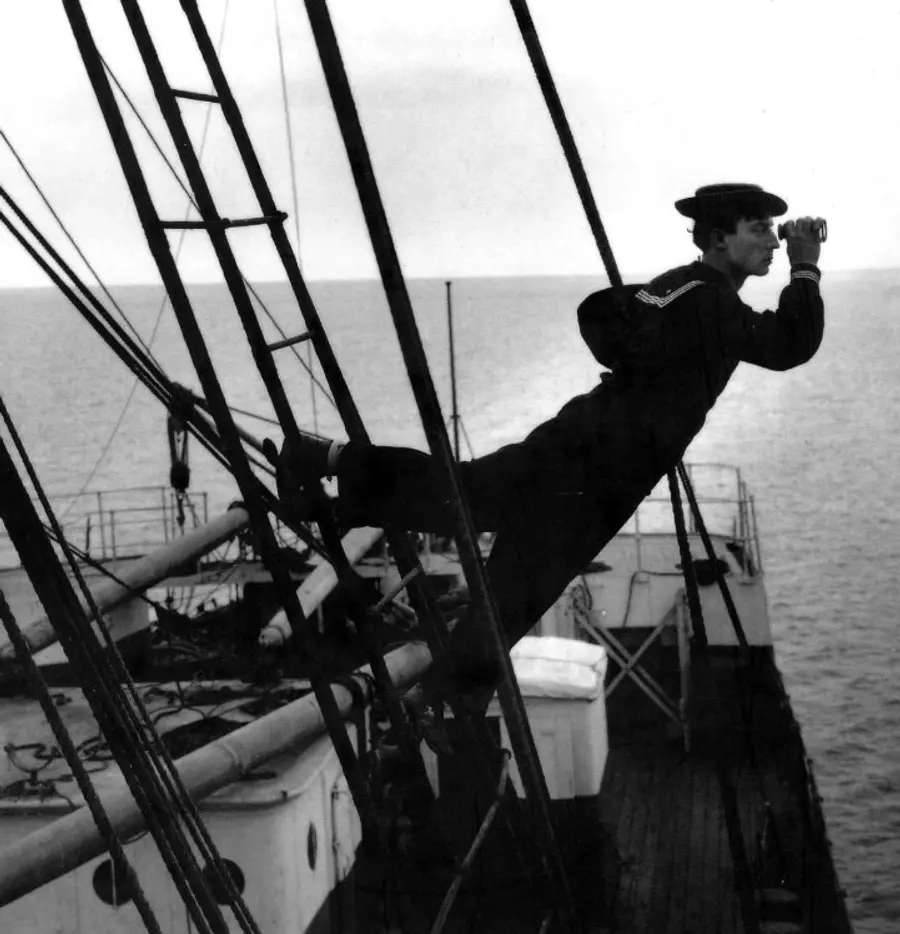
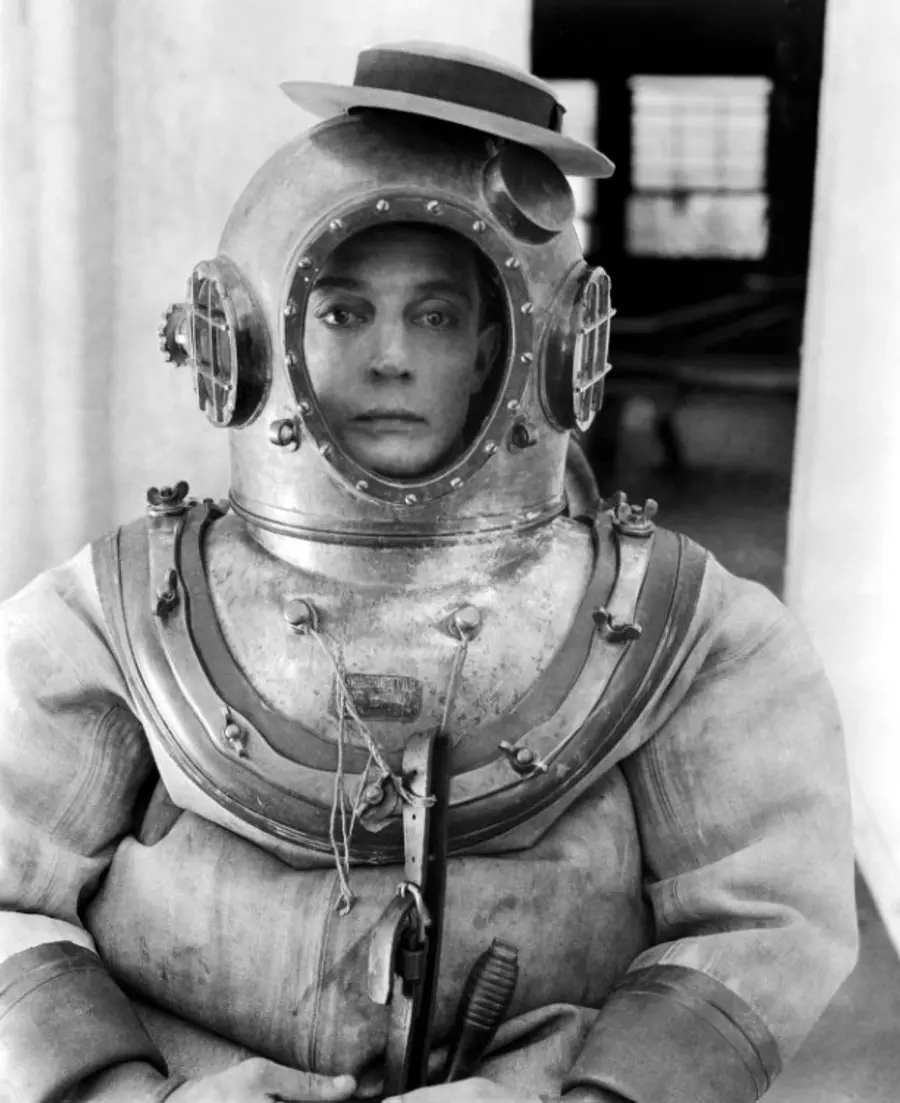
Born in 1985 in the United States, Buster Keaton learned acrobatic performance through shows that combined juggling and circus acts on vaudeville stages, following his parents, who were performers. After completing his military service in France, he returned and, in the early 1920s, directly appeared as the lead in the comedy series he himself directed, which brought him enormous popularity through slapstick performances with an expressionless face. By the late 1920s, he typically made about two films per year; works such as 〈Our Hospitality〉 (1923), 〈Sherlock Jr.〉 (1924), 〈The Navigator〉 (1924), 〈Seven Chances〉 (1925), 〈The General〉 (1926), and 〈Steamboat Bill Jr.〉 (1928) are remembered as his representative titles. Along with Charlie Chaplin and others like Harold Lloyd, they helped lead the heyday of silent film. With tense, inventive direction and superb motion images; with witty cinematography and lighting that support a crisp narrative; with the use of space and props that go beyond imagination; and with bold, creative slapstick performances, he opened up “the era of Buster Keaton.” But as the golden age of silent film was nearing its end, unable to adapt to the sound-film era, he gave up his small studio in 1928 and entered MGM as a hired director, setting him on a downward path. It was because, at the time, the technological capability was insufficient for his superhuman acrobatic performances to fully fuse with dialogue.
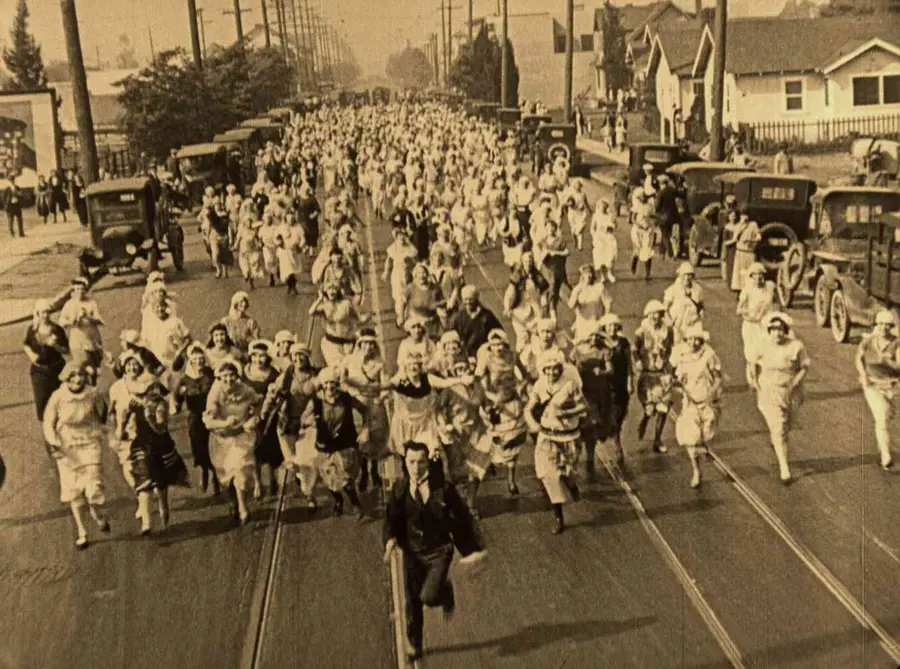
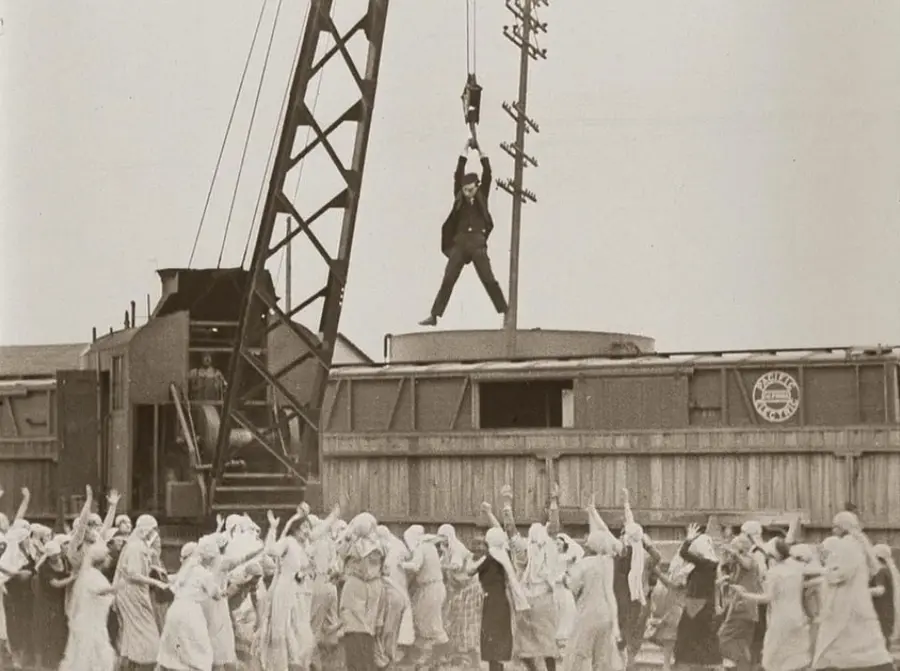
Charlie Chaplin, too, fell into a slump after the introduction of sound films, but in 1919 he worked under better conditions by founding the distribution company “United Artists” together with D. W. Griffith, Mary Pickford, and Douglas Fairbanks. Meanwhile, barely surviving from one day to the next, Buster Keaton later made cameo appearances in Billy Wilder’s 〈Sunset Boulevard〉 (1950) as a forgotten silent-film star who somehow gives off a self-reflective vibe, and in Charlie Chaplin’s 〈Limelight〉 (1952) he was cast as Chaplin’s assistant, still showcasing acting skills that never seemed to rust. But now, in Hollywood, he could no longer be seen in the beautiful rhythm of his own body. It became a fate like Keaton’s — as in 〈Go West〉 (1925) — when he couldn’t adapt to life in New York and had to return to his hometown. After that, however, his films were constantly the subject of homage, from Jacques Tati and Orson Welles to Jim Jarmusch, and even up to Hong Kong’s Jackie Chan. Critics and scholars such as André Bazin, David Bordwell, Roger Ebert, and Gilles Deleuze had a far-reaching impact not only on scholars but also on artists who transcended boundaries, from Salvador Dalí to David Bowie.
▶ The article about Buster Keaton continues in the second piece below.



댓글 (0)
댓글 작성
댓글을 작성하려면 로그인이 필요합니다.
로그인하기