



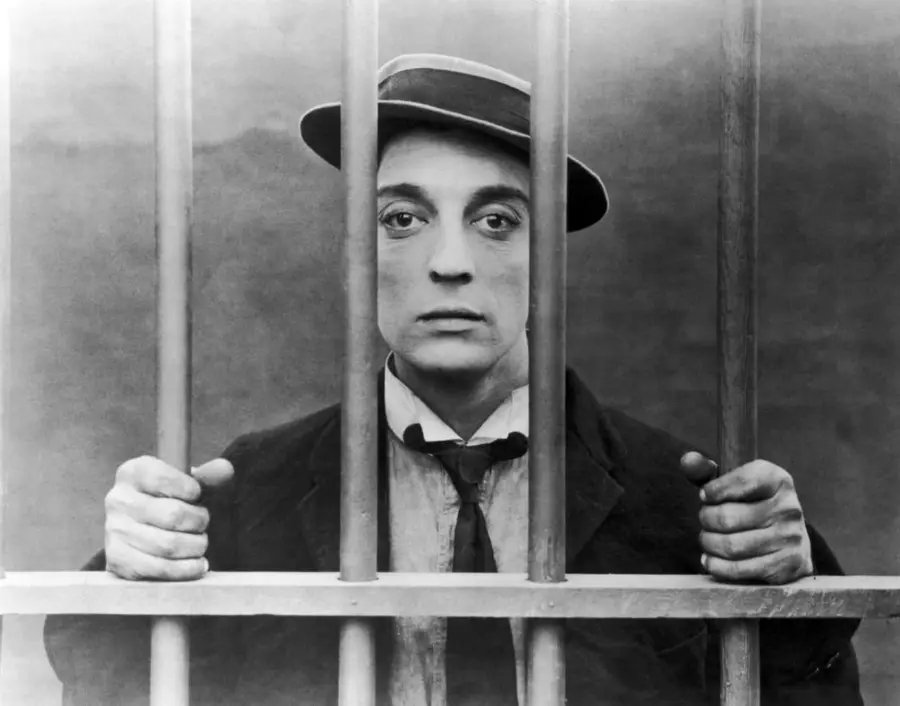
Buster Keaton doesn’t smile—so why do we laugh when we see him? In film, action images are always a subject of curiosity, and also something we keep investigating—an inquiry that never truly stops. Our eyes automatically respond while watching films, trying to harmonize the many formal elements used in the framing composition into a single unified whole. If we consider how the human eye can detect multiple elements at once, then saying that the death of action imagery is, in effect, the death of cinema is no exaggeration at all. So even if a film has an intricate symbolic structure and a discourse system at a higher level, it ultimately starts from the sensory experience of action imagery. By representing movement through signs, we try to make it present in the here and now. But this “making present” happens only within a framework of perpetual lack. That’s because the use of signs always presupposes the absence of the very thing that the sign is meant to reflect.
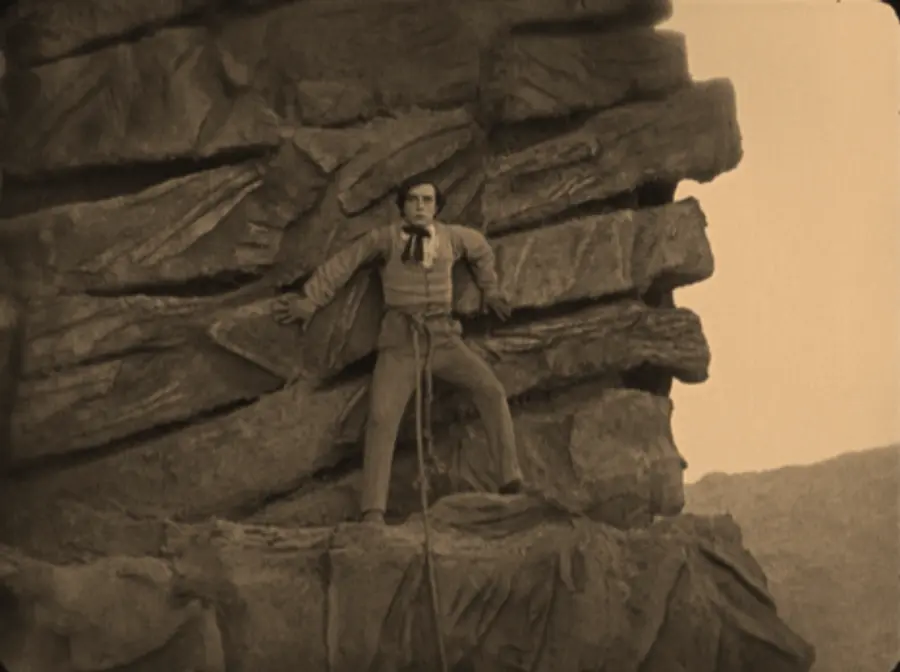
Strangely, historically, action imagery seemed to belong not to those extremes where culture could exert control—i.e., not to “culture” or “institutions,” but to “nature.” In other words, it seemed to be completely separate from “language.” And so action imagery was thought to be a fall away from language—an imagined return to the pre-symbolic space of infancy, ruled by primal impulse. Perhaps human beings tried to incorporate action imagery into language precisely because they recognized the “otherness” of action imagery. But sensory perception and awareness of action imagery go further: they become the foundation for every order and symbol within film. Just think: film history began with silent cinema. Film is made entirely of action imagery. And proof of that is exactly the work of Buster Keaton.
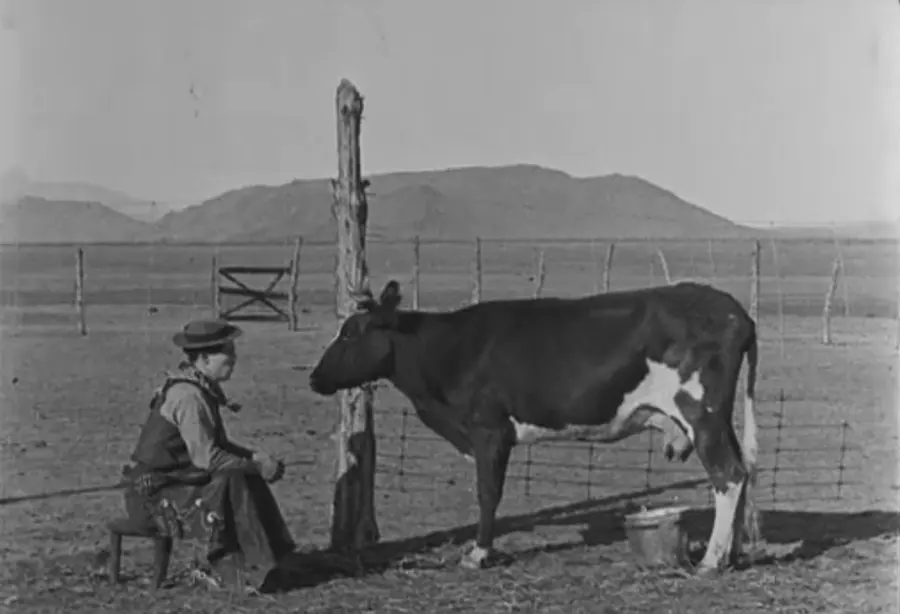
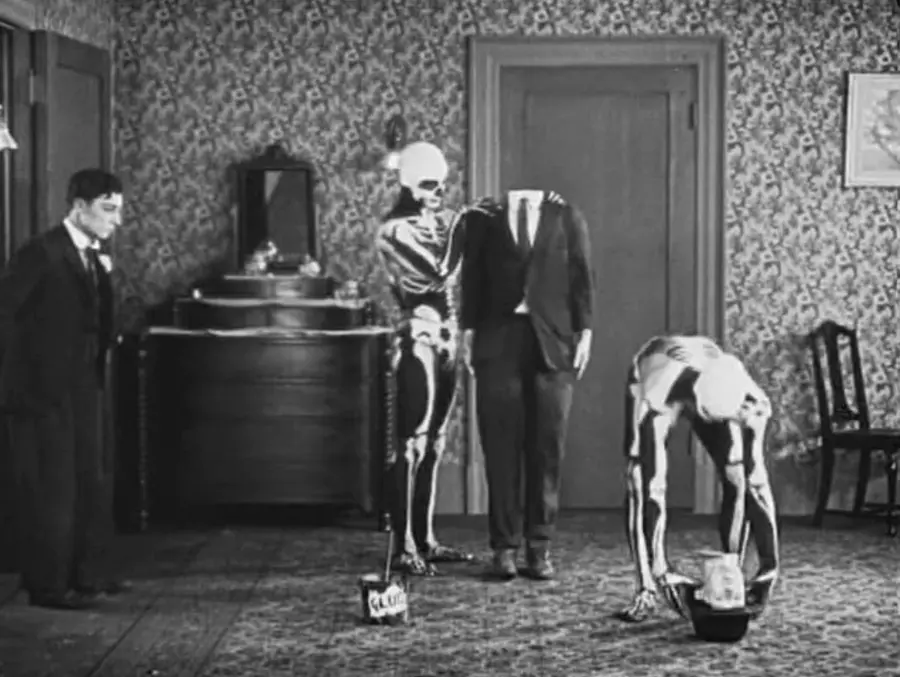
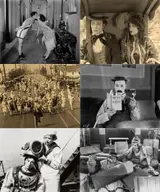
In other words, Buster Keaton’s films reveal, to the extreme, the process by which action imagery becomes the central element in the moment when a text gains meaning—that is, the way meaning is brought to life through action imagery. And the reason his films are still continually being revisited is precisely because of those distinctly modern aspects. Keaton’s camera first keeps the audience at a distance from the protagonist, who gets thrown into trouble—then, at some point, it shifts so the audience can’t help but identify with him, and ends up making them admire him. In 〈Pigs to the Rescue〉(1933) where a man tries to escape with the help of a pig, and in 〈The Haunted House〉(1921) where the protagonist accidentally spills glue and—despite seeing the situation—can’t chase the culprit because his hand has stuck to his pocket; in 〈The Sacrifice〉(1921) where he’s mistaken for “Dan, the Executioner” and is pursued by the chief of police—here, the viewer initially can’t easily fuse emotionally with the protagonist. That’s because Keaton’s trademark cool, unflinching expression and the parody effect of his eclectic mix of styles trigger a strong emotional process of differentiation.
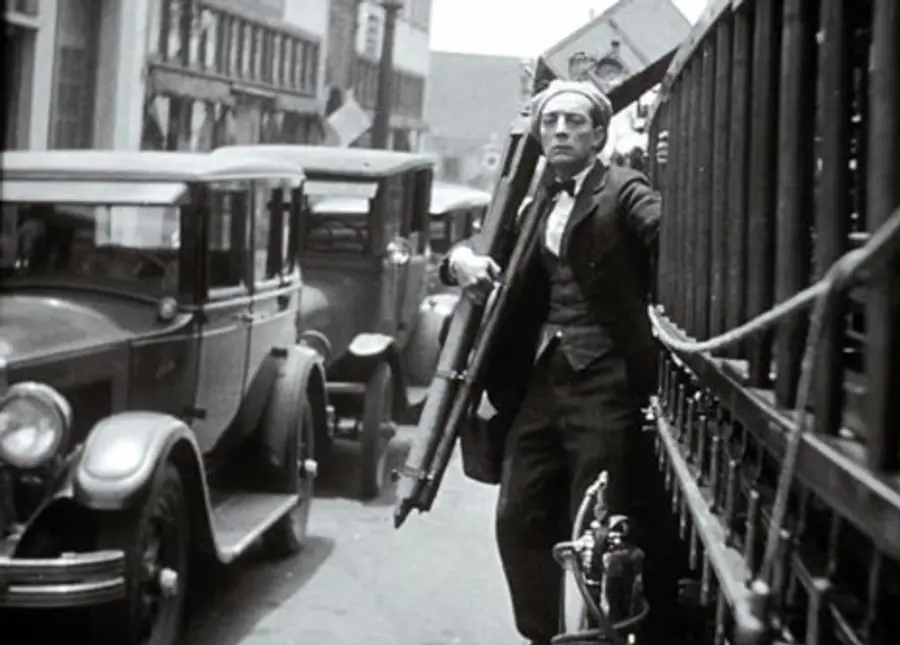
Gilles Deleuze wrote in 「Cinema 1」 that, “One of Buster Keaton’s most important paradoxes is that he fits comedy directly into a grand form. It’s true that comedy belongs in a grand form in essence, but Keaton has something incomparable—something even Charlie Chaplin, who was able to conquer the grand form only through a kind of relative deletion of the discursive form and the comedic trait, can’t be compared to. ” Through the combination of comic action and tragic circumstance, Buster Keaton reintroduced and thought through comedy in film. In realism, knowing is seeing, and representation is depiction. Moreover, realism’s basic premise is that you can never grasp a human being apart from the environment surrounding them.
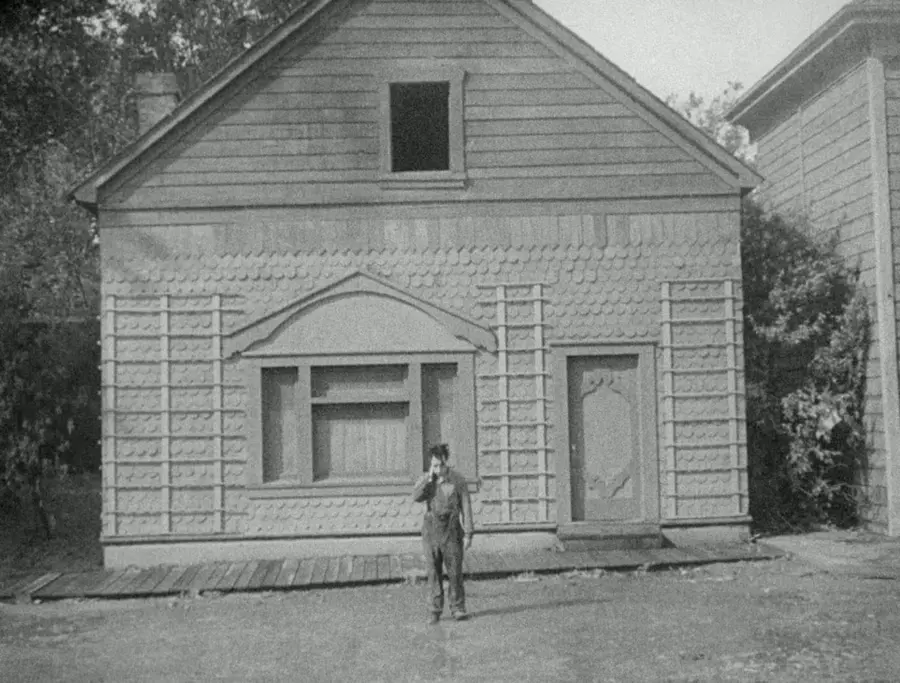
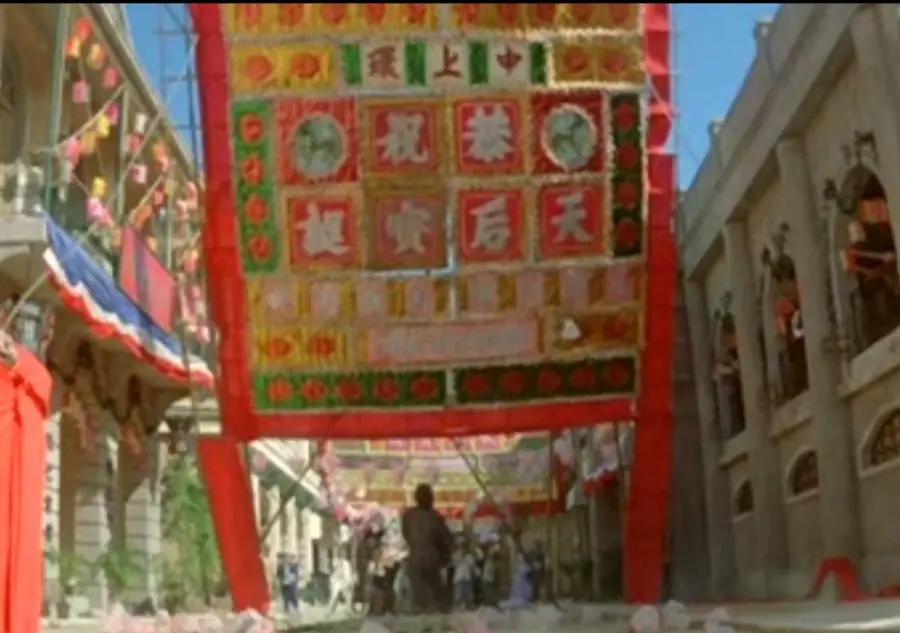
As Deleuze puts it, Buster Keaton is like a tiny dot surrounded—within the films he both starred in and directed—by vast, catastrophic environments. Consider 〈The Navigator〉(1924), where slapstick comedy unfolds freely within the limited space of a “ship,” and 〈The General〉(1926), where he is left alone in enemy territory and fights a lonely one-versus-many battle. But Keaton’s boundless originality lies in his excessive productivity and affinity: he turns unfamiliar environments into his own space, pulls in the surrounding terrain and objects, and keeps transforming them into comedic contraptions. In 〈Steamboat Bill, Jr.〉(1928) (where Jackie Chan copied it directly in his 1987 film 〈Project A〉), the aesthetics he shows are like the craft of a stuntman surviving in the narrow opening of a collapsing building’s window frame—his aesthetics are a survival aesthetics that transcends reconciliation and assimilation with the environment. For Deleuze, that survival aesthetics is the most important aspect that can distinguish the worlds of Chaplin and Keaton.
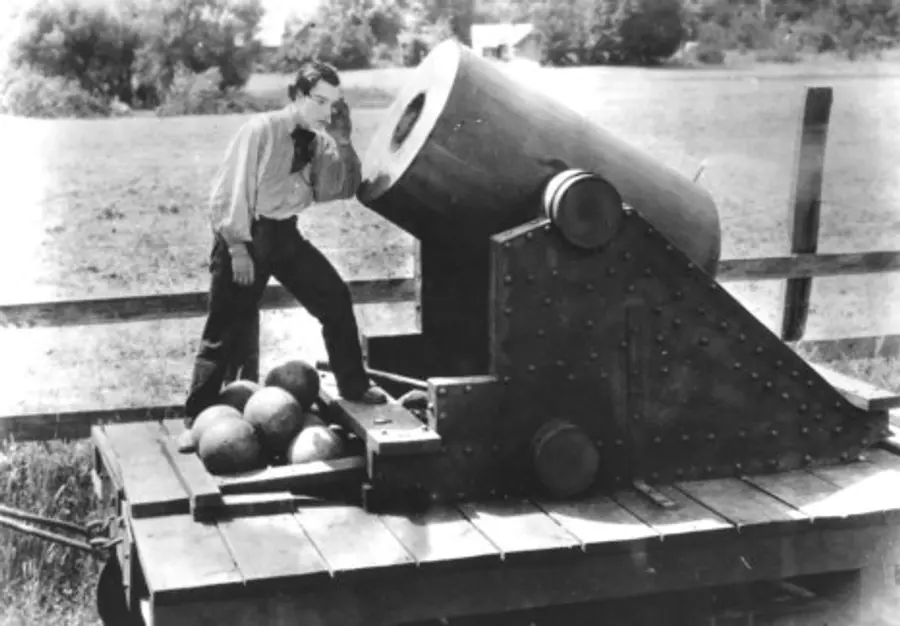
In 〈The General〉(1926), Johnny (Buster Keaton) sits listlessly on the wheel’s locking iron of the train General; as the train moves slowly, his body begins to trace the wheel’s motion, gradually drawing circles. The scene where comedy and tragedy coexist demonstrates the power of fate—turning regardless of his will. If Chaplin in 〈Modern Times〉(1936) confronts the machine, then Keaton turns machines into his most precious partners. His visual technique is sophisticated and elegant, yet also functional, simple, and direct. Buster Keaton’s comedy is fundamentally spatial, and its humor arises from the relationships between objects within a unified space. His chain of action imagery with no end in sight, and the exquisite bodily geometry he forms with the surrounding environment inside a limited frame, is “modern” in the truest sense, transcending the boundaries of its era. That is exactly why Buster Keaton is a legend across time.
▶ The article about Buster Keaton continues in the third installment.



댓글 (0)
댓글 작성
댓글을 작성하려면 로그인이 필요합니다.
로그인하기