


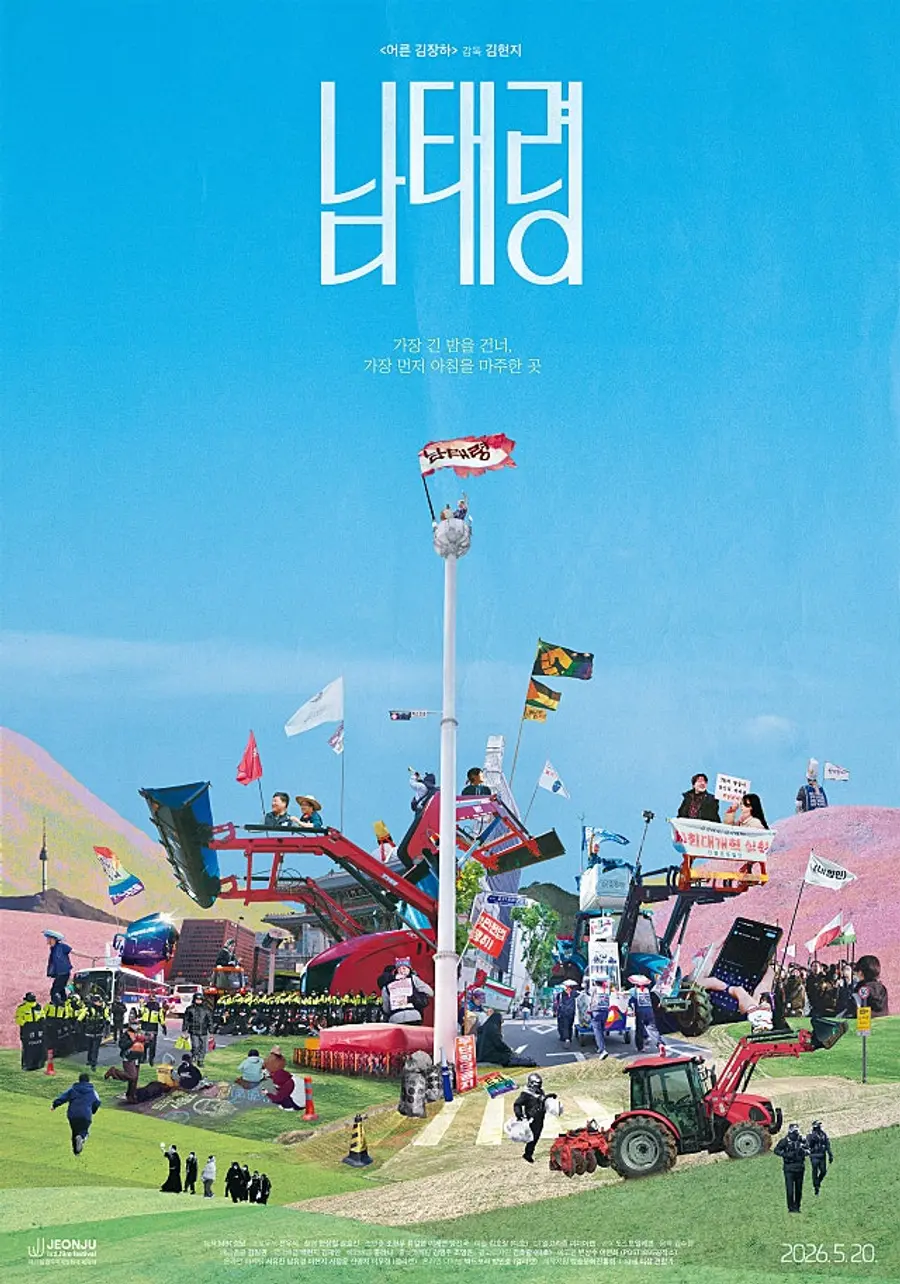
Since that unbelievable day—December 3, 2024, when the president declared a state of emergency—another day continued with nights full of uncertainty and anxiety. Seventeen tractors belonging to the Korean National Federation of Farmers’ Clubs (JeonNong), advancing to confront the president’s coup in the guise of “martial,” were blocked by police at Namtaeryeong in Seocho-gu, Seoul, and the court banned the tractors from entering Seoul. Those trying to get in and those trying to stop them—amid the long history of countless crackdowns, it was a scene that was, frankly, not strange at all, something we’ve seen countless times.
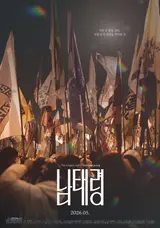
On December 21, that day, something magical happened that changed the image of this resistance. In the moment when the farmers were isolated in subfreezing cold of 20 degrees below zero, there was a stretch of time that the existing media didn’t notice and simply passed over. Users of the social platform X awakened, spread the news, and rose up determinedly to move. After work, going home; finishing a part-time job; preparing for exams—young people in their 20s and 30s didn’t avoid the news that the media wasn’t paying attention to. They turned their steps toward the scene where farmers were fighting alone in loneliness. A record of one night and two days in which everyone became “comrades” toward the “normality” of the Republic of Korea contained in the slogan “Yoon Seok-yeol, resign.” This documentary 〈Namtaeryeong〉 is a record of people who, in frigid weather cold enough to freeze the body, became one with the same heart.
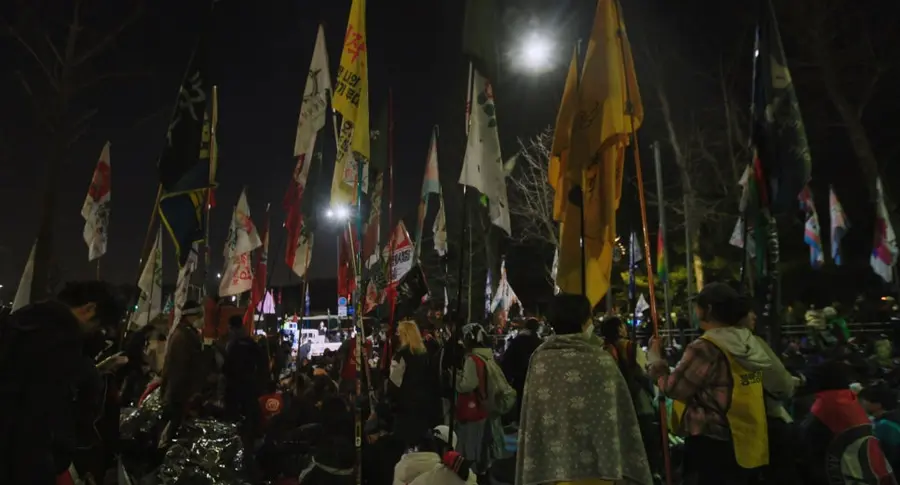
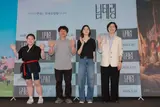
Director Kim Hyun-ji, who directed the documentary 〈Adult Kim Jang-ha〉, captured that “magic moment” that took place at Namtaeryeong for 28 hours, turning the history of change into a single documentary. For Director Kim Hyun-ji—who was following the news on X about farmers entering Seoul—X also became the channel that delivered the Namtaeryeong updates that day. “When I refreshed X at home, I could feel a surge of hot energy,” he said, deciding that he had to record “the time of Namtaeryeong,” a period in which everyone shared, achieved, and united amid “the time of the coup attempt.” The documentary 〈Namtaeryeong〉, which vividly contains the difficult yet joyful experience, vibe, and energy of coming together at Namtaeryeong, surprisingly conveys a hot, moving atmosphere like you’re there at the plaza with that day’s crowd—no, it makes you want to join again if another Namtaeryeong unfolds.
His previous work 〈Adult Kim Jang-ha〉 (2022) was a documentary that prompted reflection on what the value of one “superhuman” individual is in changing Korean society, and it was also a record that uses the definition of “adults” in our society. Through the records of many people who gathered spontaneously at Namtaeryeong that day, Director Kim Hyun-ji observes, records, and delivers the energy that our society needs in order to move forward again. In a space where people believed they were suffering from generational divides and polarization, hatred and discrimination—so badly that they thought communication would no longer be possible—face-to-face conversations happened. In those conversations, they spoke about their own differences, and others replied, “I see—good to know.” The moment when one documentary testifies to that electrifying thrill through a single scene goes beyond a cinematic moment and also points in the most future-oriented direction: that the Republic of Korea’s democracy can advance further through offline gatherings. In this “newly written” history, the dictionary definition of “Namtaeryeong” becomes not just an interchange or crossroads, but “the world we will meet again.”
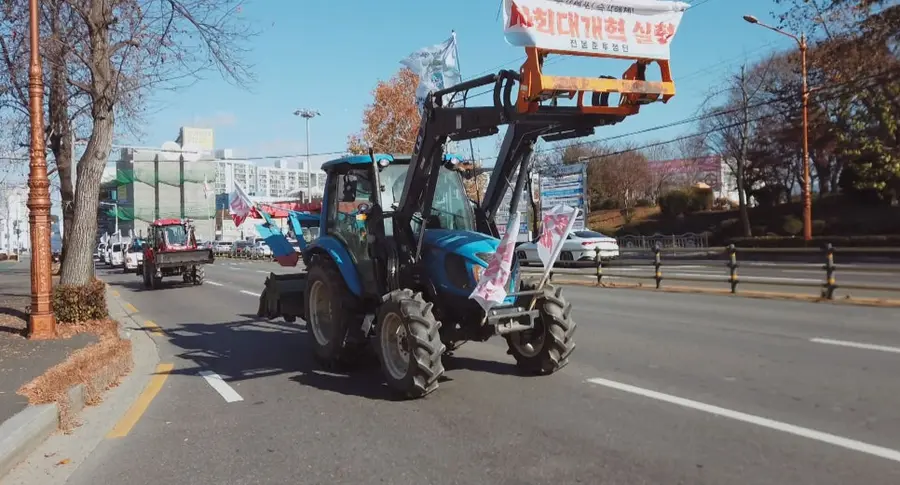
〈Namtaeryeong〉 should be defined as the first documentary that records the free flow of a new generation’s democracy—one that can transform any place into a “plaza” if people gather not beyond the physical spaces of Gwanghwamun and Yeouido, but with an intention, a “purpose,” created to build a proper society. I arranged this meeting to ask what Director Kim Hyun-ji wanted to convey through the time of 〈Namtaeryeong〉. Director Kim Hyun-ji emphasized the need for this documentary by saying, “Rather, I learned through them—and I have to keep learning.”

You recently met with audiences first as the closing film at the Jeonju International Film Festival—so it sounds like you also received responses that made it worthwhile to create the work.
One of the reasons the Jeonju International Film Festival selected it as the closing film was, “Most of all, it was fun.” That line became the biggest source of strength for me. I had hoped that this film wouldn’t feel overly grim or like it was trying to teach people, and instead would be easy for many people to approach—while also being a film you wouldn’t get tired of just by sitting and listening. When I heard that, I thought, “So my intention came through.” And a lot of people said they felt, “This is my story,” which made me really happy.
This is also something that the participating journalist, Lee Seul-gi, mentioned: it seems like you may have had concerns about how to keep the tone from “over-idealizing” the place of Namtaeryeong.
When I wrote the initial project proposal, I definitely had that surge of emotion—but I could intuitively tell that if I over-idealized it the way you described, it would make what comes next difficult. We already know, to some extent, through firsthand experience, that our history has twists and turns. If you have memories of victory, then it’s especially grueling when we fight each other as those who scrape and feed off those victory memories. Yet in every interview I met with, people told the same story in their own ways. “I hope Namtaeryeong keeps repeating. I don’t want it to be a presence that just hangs on a museum wall as one myth. If it doesn’t repeat again in our real world, it would be too unbearable.” Those were the kinds of words they said. I could confirm that shared feeling in that way.
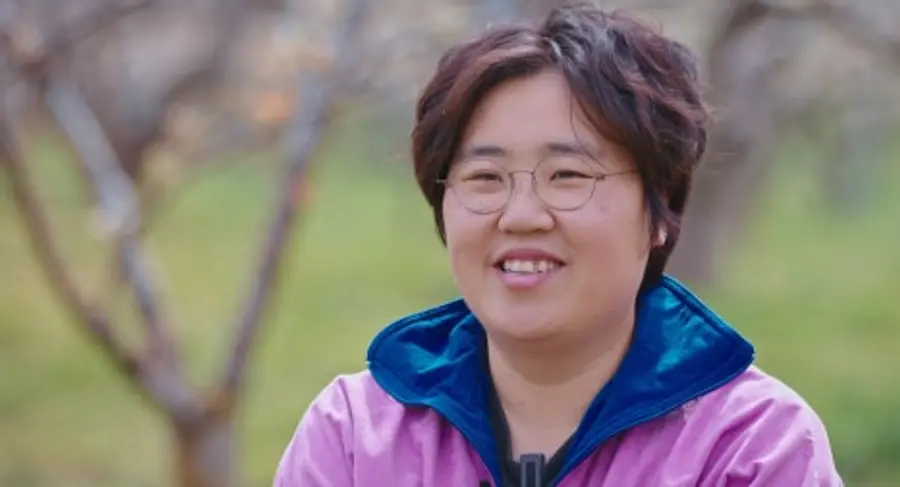
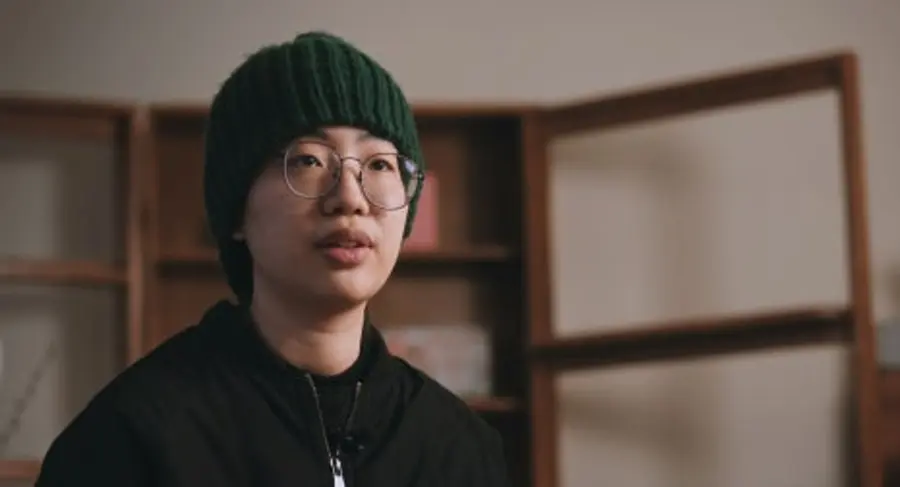
As a local PD, was it how you started by continuously following the farmers’ struggle?
Yes. Because I was in the region, even from the moment tractors blocked by state power were making their way up in Jinju, it was a major issue in our area. The local media kept covering it, and we also kept connecting by phone with the farmers as they were moving up and down, from time to time. It was an extremely important issue for us. Naturally, it was heartbreaking that our local people drove the tractors all the way to the entrance to Seoul, got stopped there, and were beaten. It made me think, “So farmers can’t go to Seoul?” While they camped out overnight and I was watching, wondering if it might not work, many citizens came, and the struggle continued throughout the night; the next day, even more people came. Every single moment was moving. It felt like what I had been frustratedly thinking—“Why are we fighting each other?”—was what burst out that day, and it felt like I had found some clue toward a resolution. If I were to pick one point from the entire process of the coup attempt and make a documentary, it felt like it had to be that.
▶ The interview with Director Kim Hyun-ji continues in Part 2.

![[Interview] “From ‘Adult Gimjangha’ to ‘Namtaeryeong,’ the Plaza Evolves.” Director Hyunji Kim ②](https://cdn.www.cineplay.co.kr/w160/q75/article-images/2026-05-19/11469996-47ce-462c-a97e-a9d85e765cc1.jpg)
댓글 (0)
댓글 작성
댓글을 작성하려면 로그인이 필요합니다.
로그인하기