


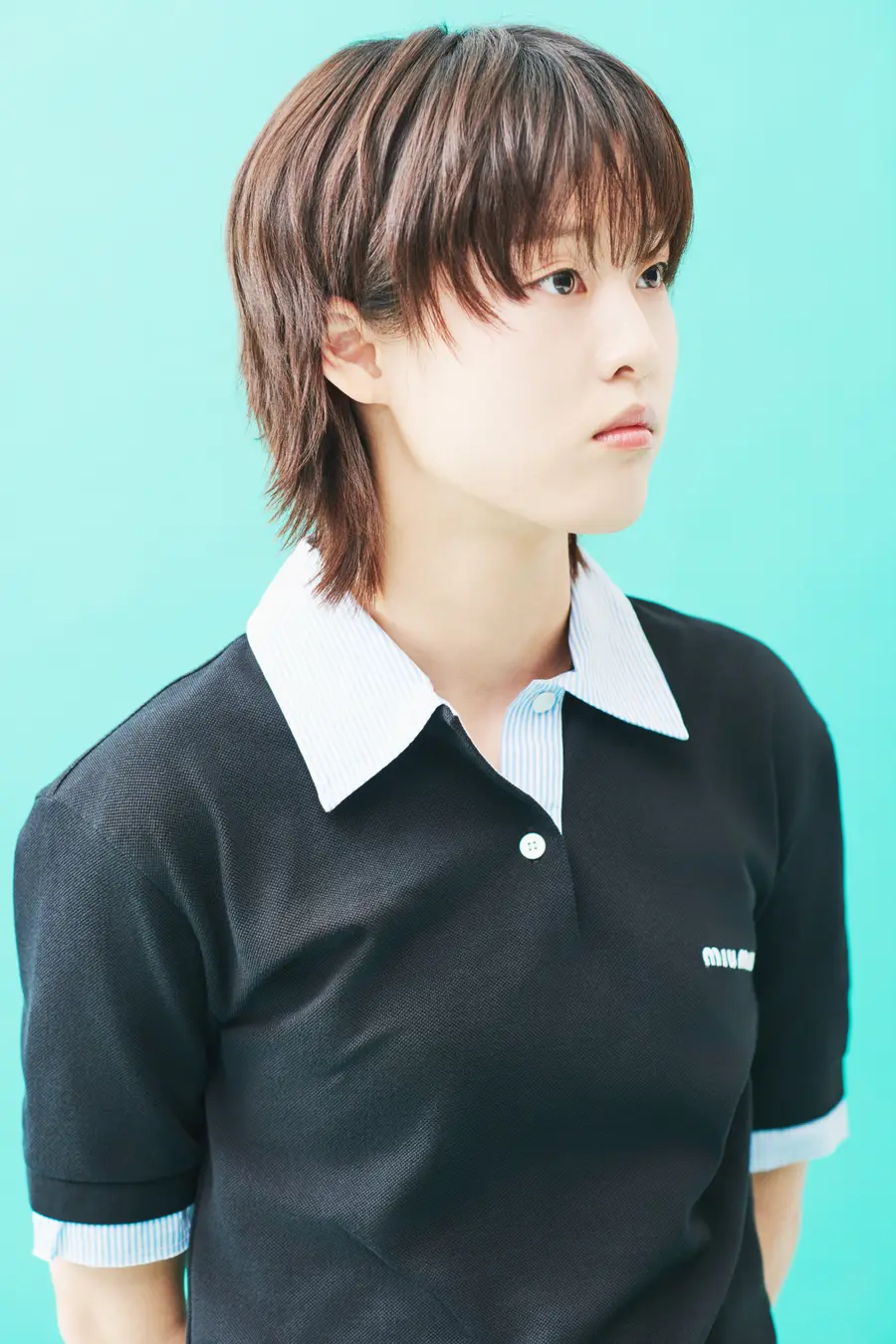
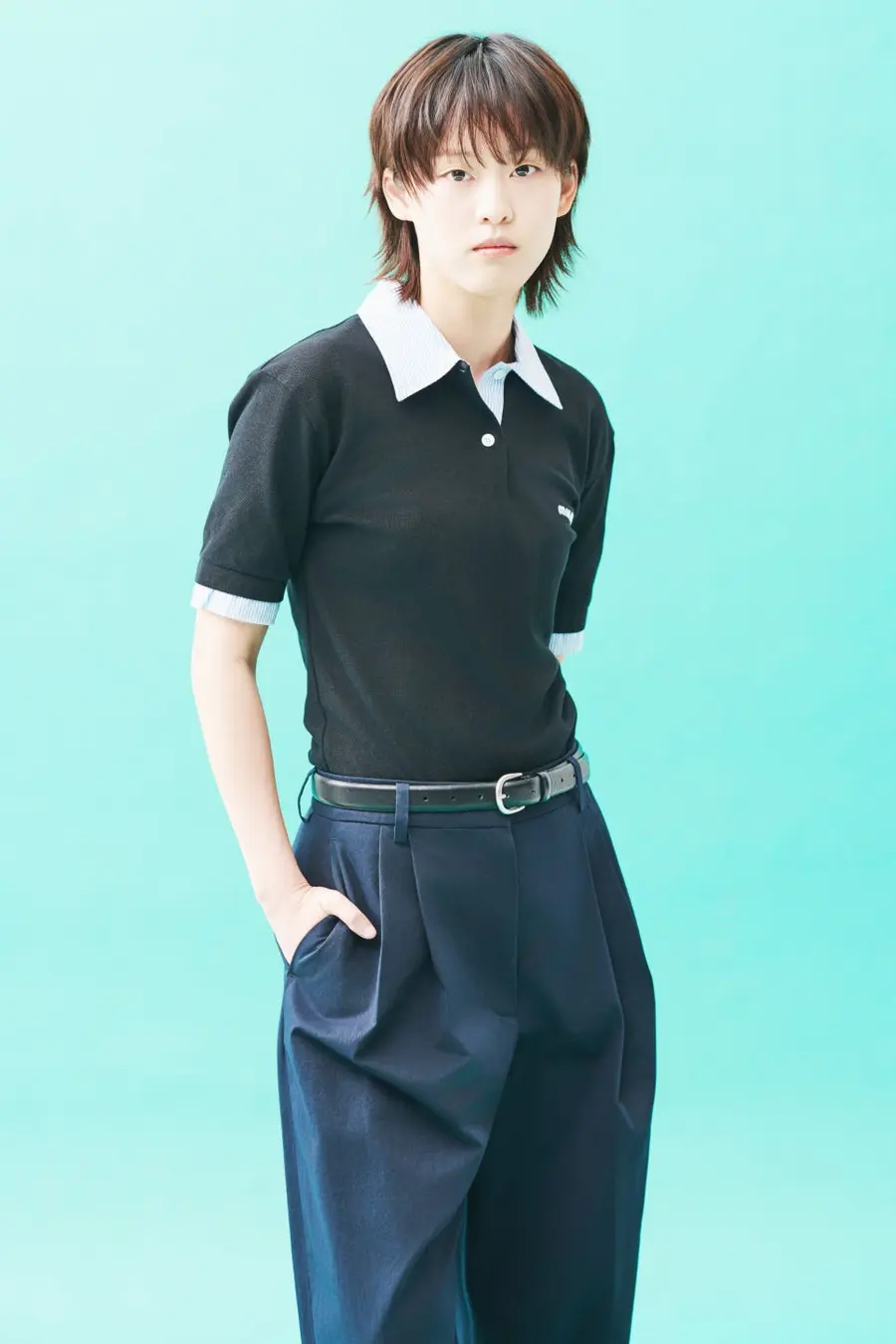
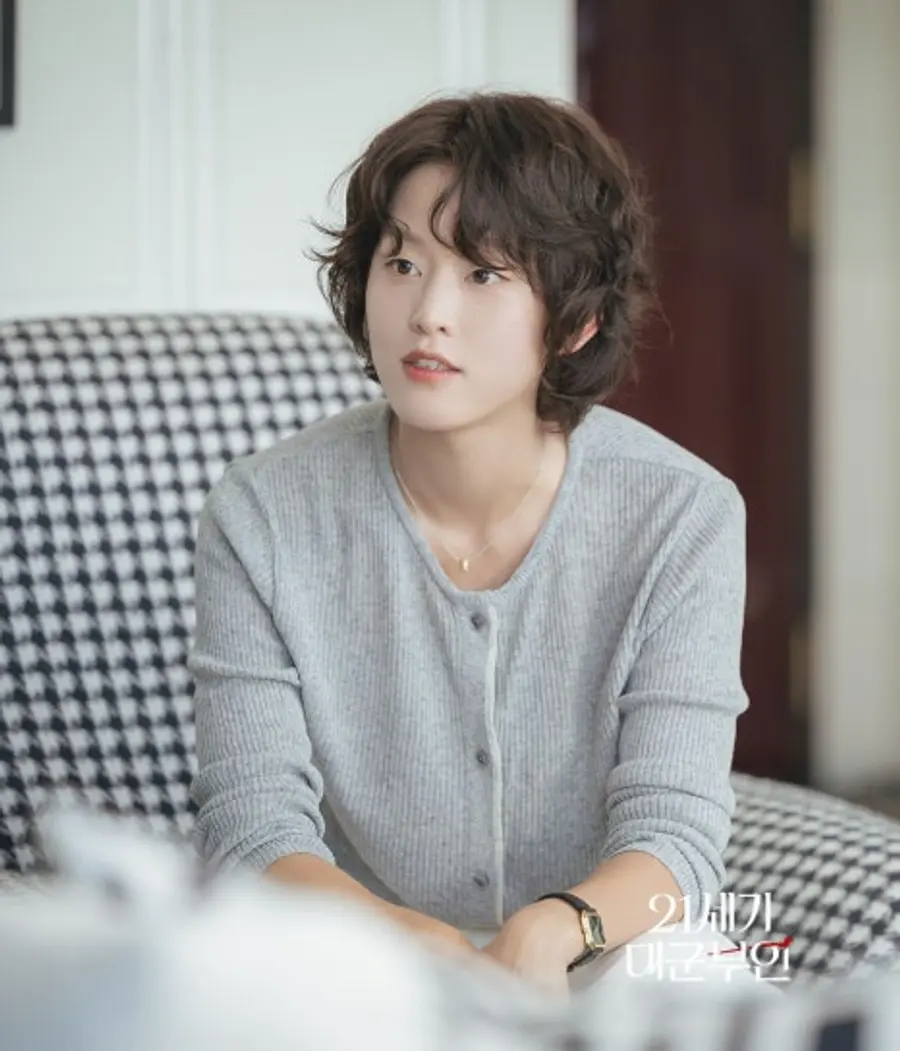
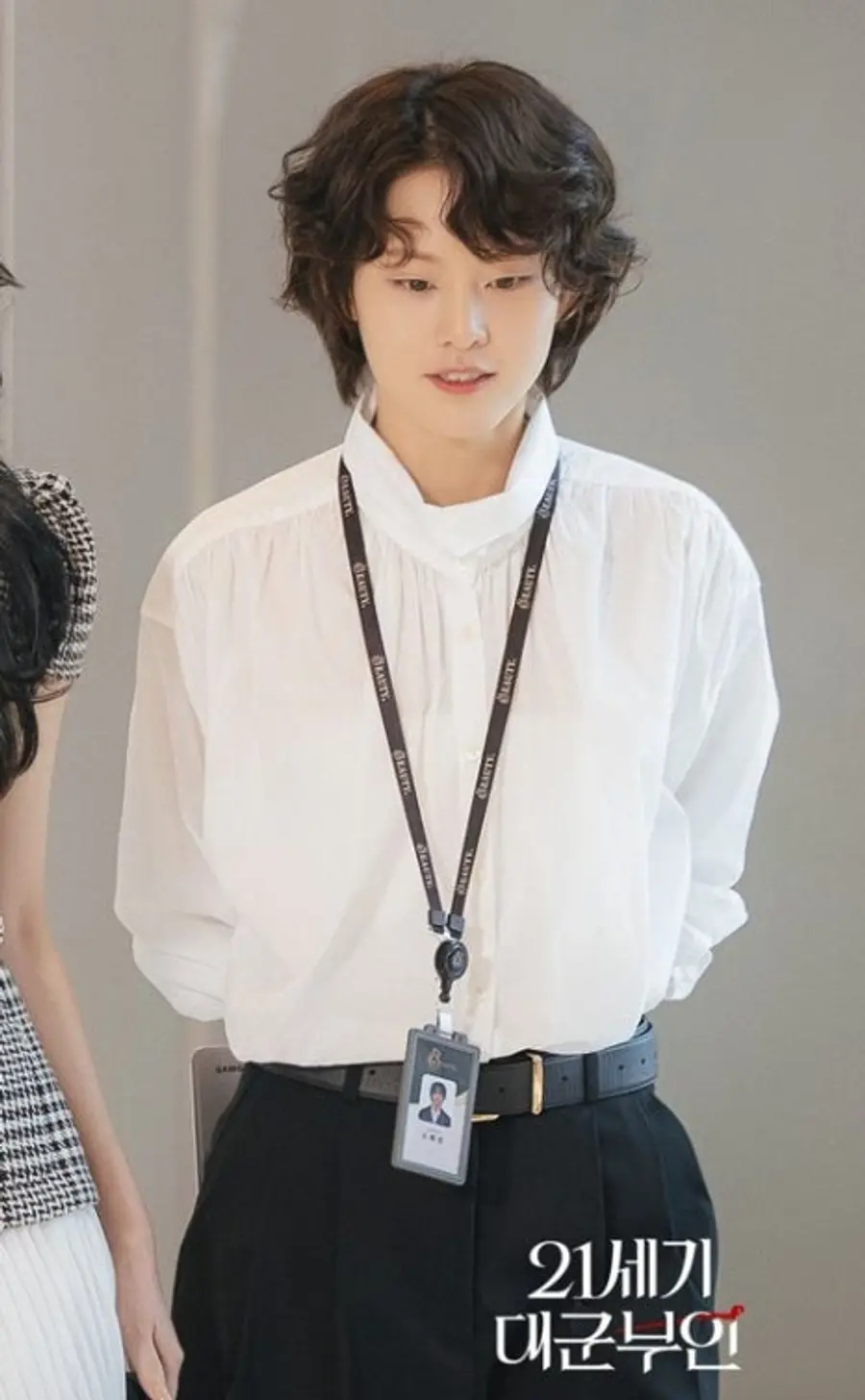
“I should get paid a really big amount of money.” Borrowing a line from Dobby-seo, she delivered a compliment aimed at the Dobby-seo of 〈the Dynasty Lady of the 21st Century〉. Lee Yeon’s performance, which breaks the mold of what a typical secretary in a drama looks like, gives off a lively, bouncy energy. Naturally, it makes you want to watch only Dobby-seo as a separate spin-off. “Really? My mom only says that Senior Byun Woo-seok is cool, and she doesn’t really praise my acting much.” (laughter) Families are notoriously stingy when it comes to compliments. What can you do. From her boyish styling—matching slacks and a polo shirt instead of a stiff suit with a short, bowl-like haircut—admiration came instantly. Lee Yeon’s Dobby-seo has nothing unnatural in any respect. Both her interpretation of the work and the realization of her performance are “the times” versions that step outside the existing box. With Lee Yeon’s entrance, romance-comedy takes on a new, 21st-century sensibility. Honestly, she really should get paid that big.
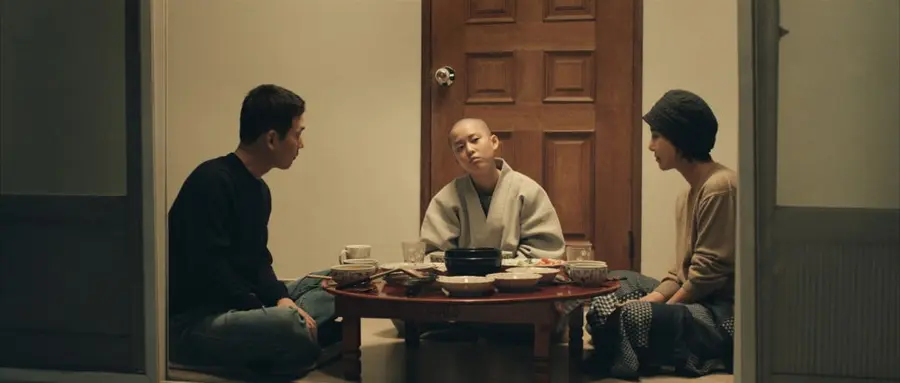
Before 〈the Dynasty Lady of the 21st Century〉, Lee Yeon’s stake in a number of anticipated OTT titles was solid, including the Netflix series 〈D.P.〉 (2021) and 〈소년심판〉 (2022), the film 〈Gil Bok-soon〉 (2023), and the TVING series 〈After School War Activities〉 (2023). In fact, the first time people really noticed Lee Yeon was with the indie film 〈PAGO〉 (2019). Lee Yeon, playing a girl who lives trapped on an island after losing her parents, is remembered for the power she had—even within that darkness—to move viewers. That was her first feature debut. After that, she captured the audience’s heart as the lead in 〈The Vines That Climb〉 (2020), a bold romance that doesn’t read the room, portraying a same-sex love story. Then, in 〈Jeolhaego-do〉 (2023), she pulled off something close to a one-person-two-roles performance, handling both the complex image of a teenager and the steady presence of a mature monk. Around this time, as the roster of actors who had started seeing success after coming from indie films—such as Jeon Yeo-bin, Koo Kyoo-hwan, and Park Jong-hwan—got updated, Lee Yeon’s name began to come up more often, too.
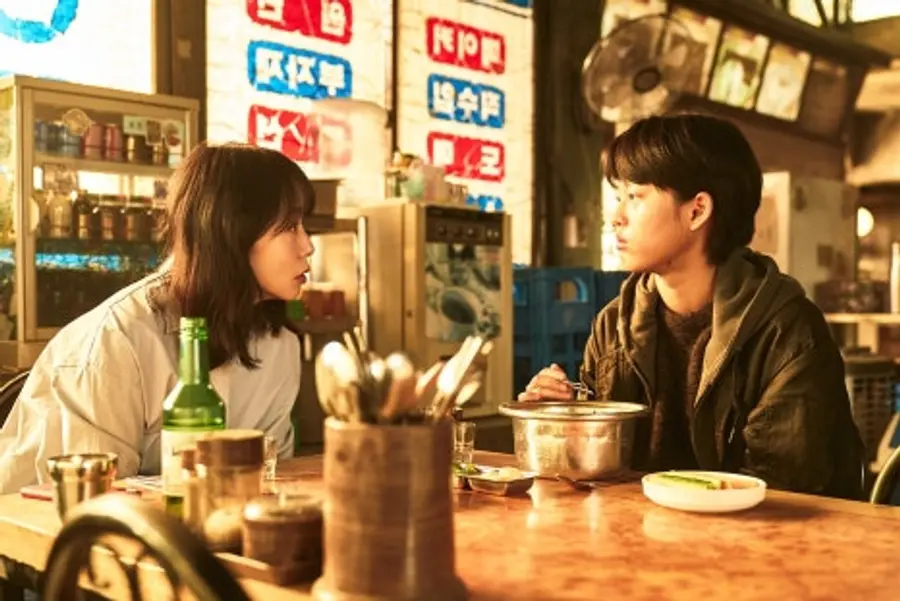
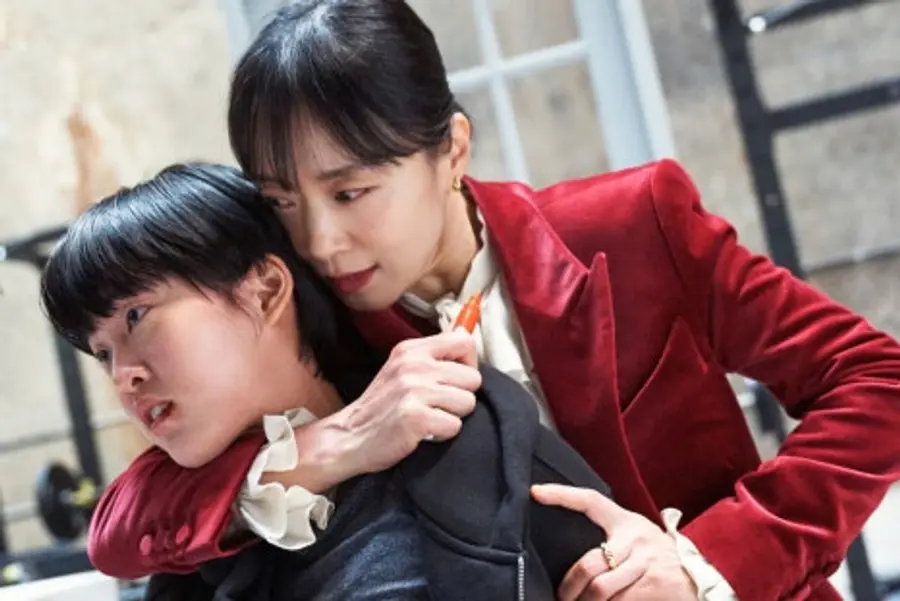
With the vocabulary of “androgynous” from the previous generation, Lee Yeon is simply too new. Even with short hair and thin lines, Lee Yeon’s body is bundled with solid muscle. She’s an actress who isn’t confined to a single “feminine” category—or one who doesn’t need to be. Like Gene Seberg in 〈Breathless〉 (1960) or Winona Ryder in 〈Reality Bites〉 (1994), even in the lineage of short-hair actresses that the screen loves, Lee Yeon’s hair sticks out with a slightly spiky strand here and there—it’s the style you see these days. Starting right off with short hair, she entered both the cinephile crowd and the mainstream, and while she hasn’t bothered to reshape herself, she’s been performing a wide variety of roles within that range.
The arrival of a new kind of actor—someone who dreams of throwing viewers and TV audiences off balance by freely crossing the lines of gender and age, good and evil, genre, and platform. When Lee Yeon played a 14-year-old boy who had killed an 8-year-old child in Netflix series 〈the Teenage Judgment〉 and then smiled brazenly, people saw “a devil” in Lee Yeon. She was different, and because she was different, she was fresh—and because she was different, she was needed. In today’s OTT content market, which draws heavily from notable indie-film creators, Lee Yeon is undoubtedly an intriguing card that producers and directors with a good “feel” are unlikely to overlook.
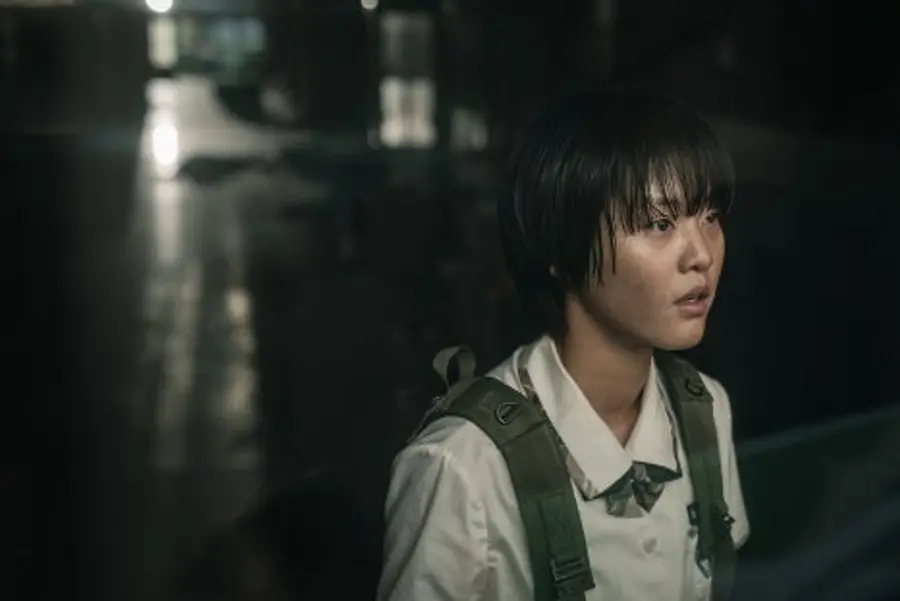
Seven years since 〈PAGO〉. In 〈소년심판〉 she was the actor who made Kim Hye-soo’s heart pound the moment she appeared, and in 〈Gil Bok-soon〉, she worked with actress Jeon Do-yeon. While hearing compliments like “a genius at acting,” they found a rhythm together. From when the year 2019 began, I have Lee Yeon’s photos saved—so many that they fill my photo folder. I reached out because I wanted to share Lee Yeon’s current thoughts. “Do you want to do an interview with us?” Lee Yeon said it without hesitation about what came before or after. “That sounds great. I’m so excited. When should we meet?” Back came a crisp, go-straight answer that felt very much like Lee Yeon. That’s how this interview started.
Not long ago, I laughed a lot while watching MBC 〈The In-Law’s Show—PD’s Point of View〉. She shows everything without hesitation. (laughter) I didn’t know that failing to renew a driver’s license would become such a big topic.
I thought you’d edit those parts out, but everything really aired. (laughter) Once I thought about how, by not renewing my driver’s license, I had been turned into a fool by the entire nation, I couldn’t help but think, “I probably shouldn’t have said that.” I could have just said, “I don’t have a license.” There had also been a remark we prepared after talking with the public relations team, but I completely forgot it.
You basically showed your real personality as-is. When you meet through a role, there’s always that one layer of a curtain called “character,” no matter what. But this felt completely different.
Because it is the truth. The fact is, I’m not even a person who’s that pretty, and I’m more like little spiky wildflowers or trees. I wondered whether it’s really the truth if you take that and trim it down and put it out for people to see. If someone sees “I’m making my emotions prettier,” do they really think that’s the real thing? Once you start refining, you have to keep refining endlessly. You still have to keep working and doing activities, and I don’t think I could be responsible for that polished version. Actors act with their own philosophy and their own life, don’t they. When I showed the real me, the feedback was real, too. It was fun and exhilarating, and it felt like real communication.
It also sounds similar to how you approach selecting projects and acting.
I think acting is one of the processes that makes life a bit more abundant for me. So acting is something I can just keep going without feeling burdened. My purpose is one thing only. I hope I won’t regret it when I die. It seems to be a standard that carries over into how I choose projects, too. I think the most cowardly thing is not to do something. Senior actors always say, “You should try it.” They say it’s better “to try it first, feel it, and then know why you shouldn’t.” So I think, “Let’s not say anything without trying.” No matter what genre, or whatever director.
You’ve said you’ve felt the selection is bold when you watch and consider various characters, like those who are sexual minorities, monks, and boys. Among those, weren’t there any works that made you weigh the decision heavily?
Actually, when I decided to do 〈the Dynasty Lady of the 21st Century〉, I was thinking hard about the romantic comedy genre. I had been thinking I wanted to do it one day, but I didn’t think it would happen this quickly. In the end, I decided it was something I had to do. I prefer my first time in a field where I’m the first one, rather than one where everyone else has already done it. When I’m the first, I can learn. Everyone else had people who were already good—so when I meet my first time in a place where they can pull me along even if I’m a little clumsy, there’s stability and I end up working even harder. This project was like that for me.
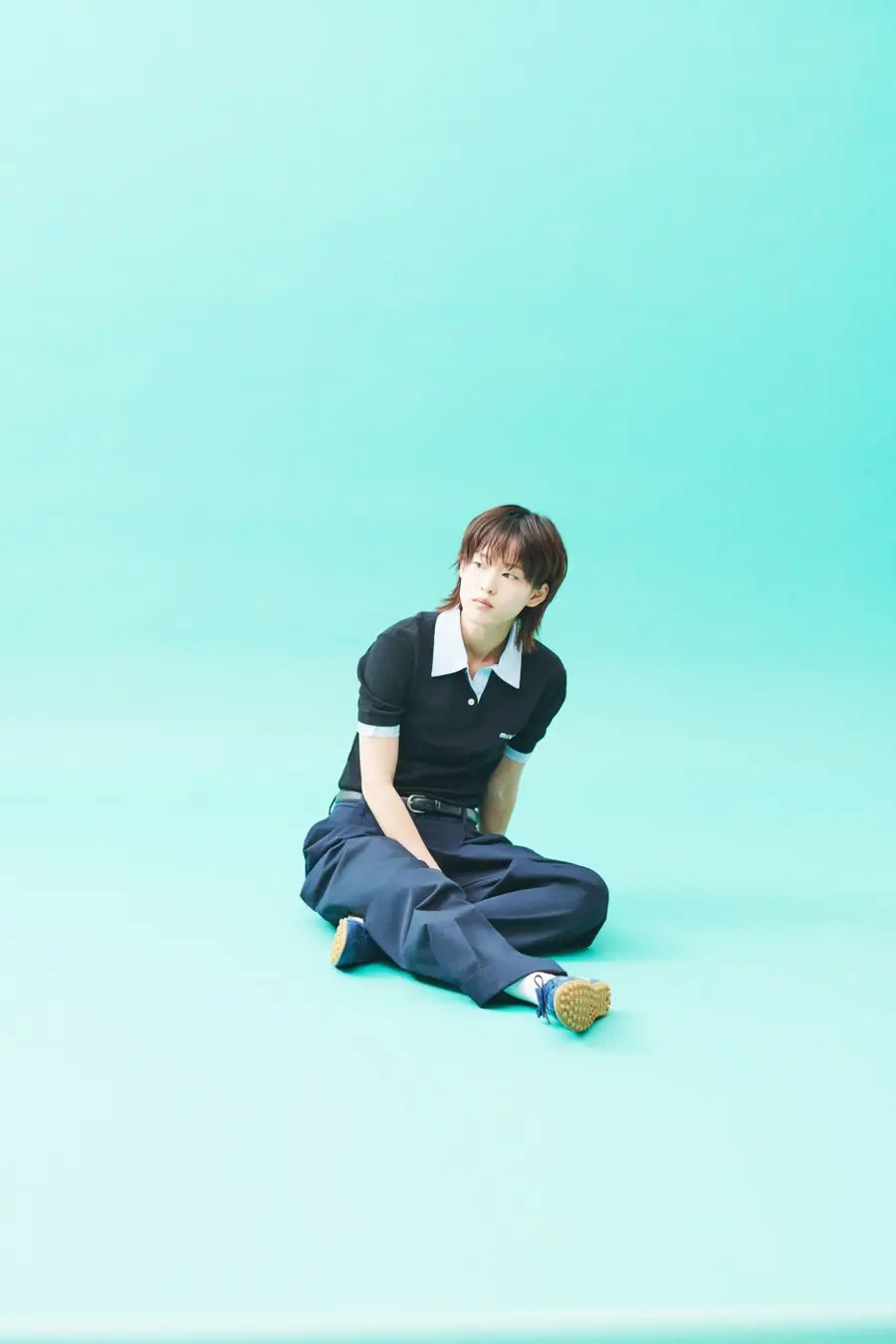
Dobby-seo moved beyond the typical secretary role and showed Lee Yeon’s own color. It was thrilling to watch the “feel” Lee Yeon somehow found—how to interpret the given character and express it anew.
The director also wanted something new, so they gave me a lot of responsibility. “You do it in a way that feels comfortable for you. If it’s too much or not enough, I’ll grab it.” I thought that was the most important part. When someone sets the line, it actually seems you can spread out even more freely. My pursuit in acting is exactly like what that role looks like—nothing more, nothing less. Even this time, I kept researching how to make it keep looking like that person, for real.
The result you’d imagine seems like it would have been produced by a dedicated secretary who built her career like a real person who studied abroad—down to her styling, personality, and way of speaking. Were there any specific references?
It just seems to have started with “If it were me?” Dobby-seo isn’t a high-education person; she just sticks in objective facts. If I went to study in Britain, and I was capable even though I was young, and I was keeping close relationships with a young female CEO while working as her secretary—what kind of attitude would I take? I kept researching how we could both become comfortable with each other. It doesn’t seem like I ever took anything from other characters. Instead, I watch lots of documentaries and observe real people a lot. On my way somewhere, I think, “What kind of life would that person live?” And in the end, it feels like she believes in me. When you look at me from a distance, I think I’m also a part of someone else’s life. So it feels like I’m always being dressed up—or becoming something derived within me. That’s why it was a bit hard for me in works like 〈the Teenage Judgment〉 or 〈PAGO〉.
▶ Lee Yeon’s meeting with the interviewer continues in Part 2.
![[Lee Hwa-jung’s Deep Detox] “I want to be a giant seedless grape, not a strawberry.” Meeting actor Lee Yeon, Part ② of “The 21st-Century Crown Princess,” “Tango at Dawn,” and “Gyeongju Trip”](https://cdn.www.cineplay.co.kr/w160/q75/article-images/2026-05-29/8ec170af-f5a7-4b81-8ff1-d02a957187ff.jpg)
![[Lee Hwa-jeong’s Deep Detox] “Keep Running Without Rest With an Athlete’s Grit.” Meeting Actress Yeon Lee, Star of “Tango at Dawn” and “Gyeongju Trip” ③](https://cdn.www.cineplay.co.kr/w160/q75/article-images/2026-05-29/bb099990-05ed-4cb6-b48a-0d6df2baa1f9.jpg)
댓글 (0)
댓글 작성
댓글을 작성하려면 로그인이 필요합니다.
로그인하기