



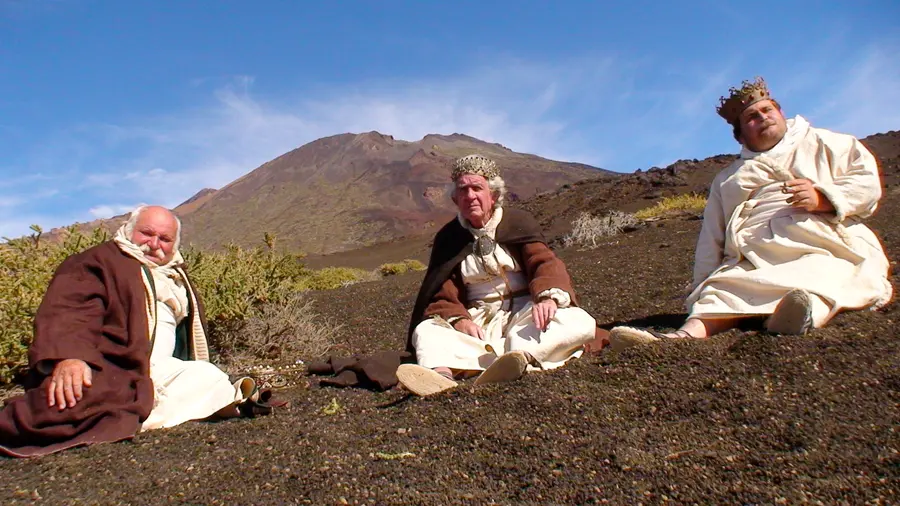
〈Waiting for Sancho〉’s production process and behind-the-scenes stories are included in a documentary he made himself: the film critic Mark Peranson, who serves as editor of the film magazine “Cinemascop,” appeared in the movie as the character Joseph. Taking part as an actor for five days on Gran Canaria, Spain—the film’s shooting location—he meticulously recorded the kind of on-set work that moves between fiction and documentary, including director Albert Serra’s signature long takes, his collaborations with nonprofessional actors, and even on-the-fly directing. His conclusion is that each scene, each moment, resists—to the maximum extent possible—existing standards of film aesthetics. That is, even though in 〈Birds of Passage〉, Mary, who appears before the wise men, says, “It’s impossible, and worthless, to confront him (perhaps some realm of art).”
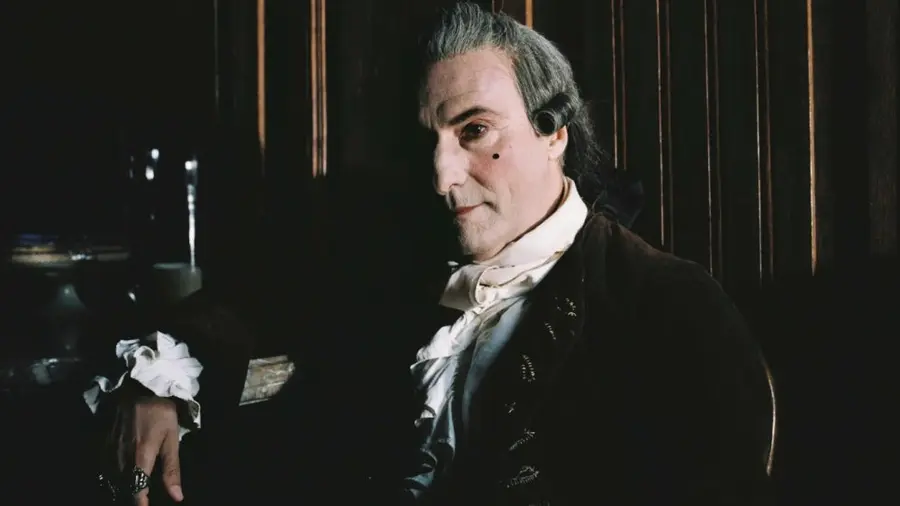
By the time 〈My Deadly Story〉 arrives, it launches an extreme inquiry meant to overturn the concepts of beauty and truth. The reason the film sets up the surreal meeting between Casanova and a vampire is, as the director himself puts it, to cast doubt on the proposition that “Truth is beautiful, and beauty is truth.” Like the protagonists of his previous films, it centers on Casanova, a figure who wanders on. But Albert Serra throws him into a provocative question: whether he was a “pioneer” of the aesthetics of his time. In fact, Casanova was also an intellectual at the top level in Europe—one whose knowledge penetrated the politics and culture of 18th-century European society directly, letting him travel and experience across Europe without pause. Casanova’s autobiography, 「My Life Story」, published domestically under the title 「The Temptation of Immortality」, is also a valuable source document that vividly records European culture of the era beyond mere love affairs.
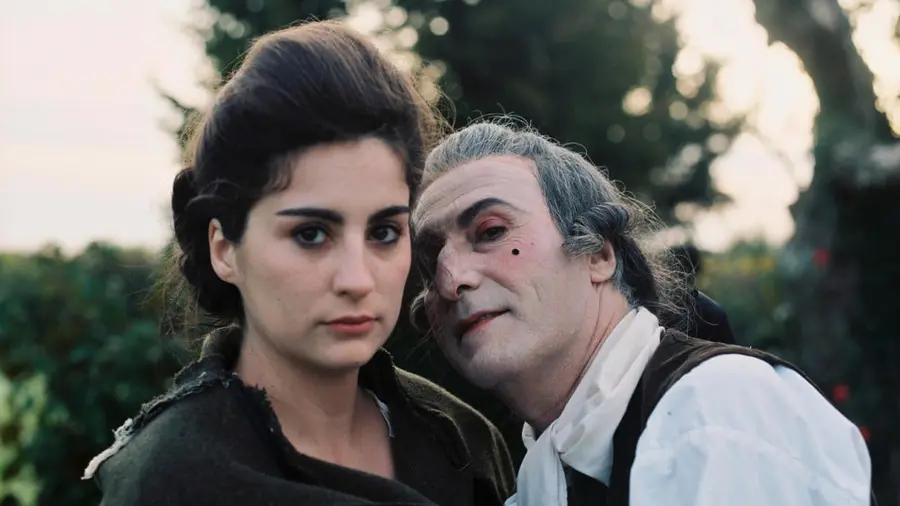
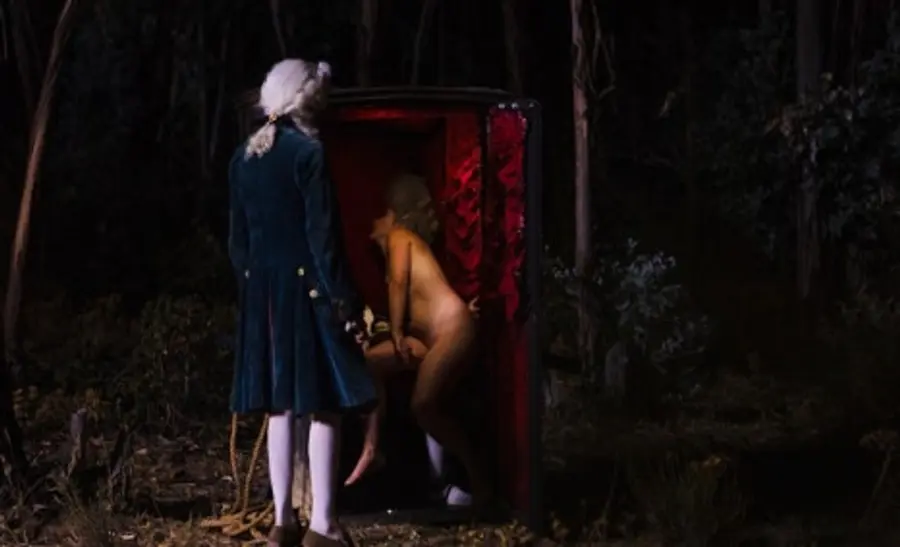
But as has always been the case, even while carefully reading and studying Casanova’s memoirs, there isn’t really any specific conversation that the film “brings in.” What holds his attention above all is Casanova’s “fall.” Because he spent the dusk of his life wandering across Europe, the mood of Albert Serra’s own “wandering” overlaps with it—and in the end, Casanova becomes the vampire’s offering after being drained of blood. In the original work, “life” is filled with “death.” Amid the alluring images of decadence and aestheticism, an intense tension fills the screen. If his films up to then were endlessly empty, 〈My Deadly Story〉 is overwhelmingly full. The landscape of that desire and exhaustion—shown through the crossing paths of Casanova, who dreamed of immortality but could only grow old, and the vampire, alive yet unable to age—stands as evidence that Albert Serra is moving, step by step, into a Luis Buñuel-like world that he respects more than any other Spanish filmmaker.
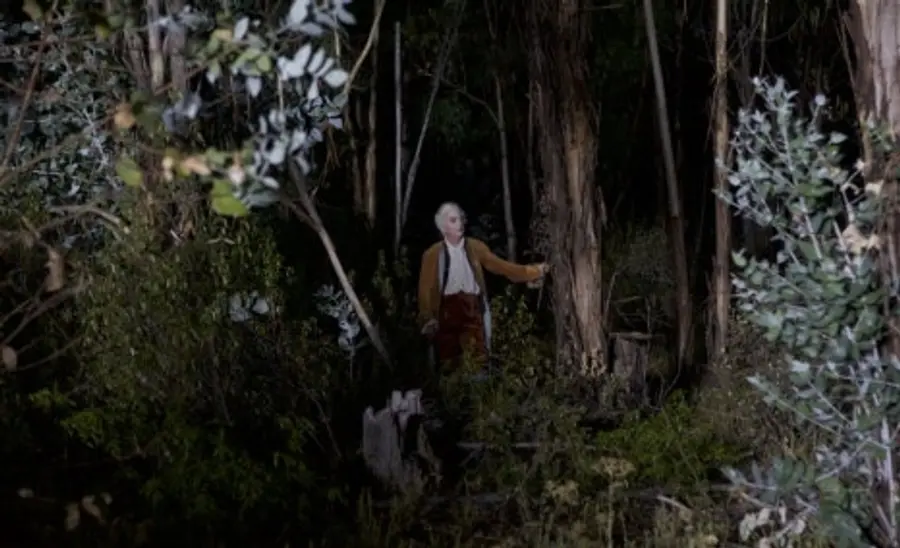
After 〈The Death of Louis XIV〉 (2016) and 〈Liberté〉 (2019), the 〈Pacifiction〉 (2022), invited to the competitive section of the Cannes Film Festival, followed on from 〈In Praise of the Information Service〉 by once again placing in “Cahiers du cinéma”’s Best 10—and it was No. 1. If his movies always used his home country, Spain—and further, Catalonia—as an emotional backdrop, 〈Pacifiction〉 explores political power struggles and class issues in French Polynesia. In truth, this is a remarkable shift within his filmography. In addition to moving the setting, the director—who has always worked with nonprofessional actors—cast France’s star actor Benoît Magimel in the film as a senior civil servant. Earlier, in 〈My Deadly Story〉, Albert Serra also cast Casanova’s role with a major figure from the art world named Vicenç Altaió, who wrote the book 「Visual Culture」 about Catalonia’s provocative and creative views in visual art after the 1970s; but in any case, that person could also be described as a nonprofessional actor regardless of any fame.
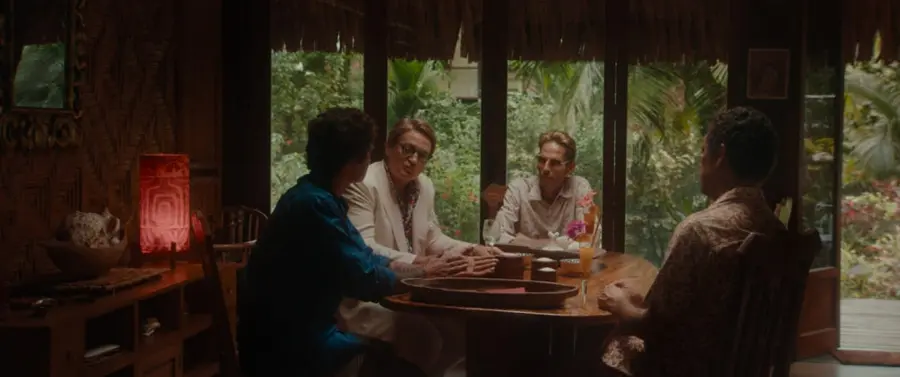
Here, he’s increasingly getting infiltrated by a Buñuel-like world. Even at a glance, 〈Pacifiction〉 isn’t a film made in France. But alongside the casting, it using France as its backdrop also brings to mind how, after entering his 60s, Buñuel made countless masterpieces in France with star actors such as Jeanne Moreau and Catherine Deneuve. Deeply drawn to the Dada and Surrealism movements that swept the era, Buñuel showed an artistic journey: he left Spain for Paris, then (the work he directed at that time was 〈That Obscure Object of Desire〉) later moved on to Mexico again, and then returned to France. In that sense, 〈Pacifiction〉 is “Albert Serra’s 〈The Bourgeois’ Secret Charm〉 (1972).” The bourgeois hypocrisy and lust that can never be filled in Buñuel’s 〈The Bourgeois’ Secret Charm〉 resembles the world of 〈Pacifiction〉, where under beautiful landscapes, the secret prostitution between boys and girls circulates, while French bourgeois figures still exercise corrupt colonial power.
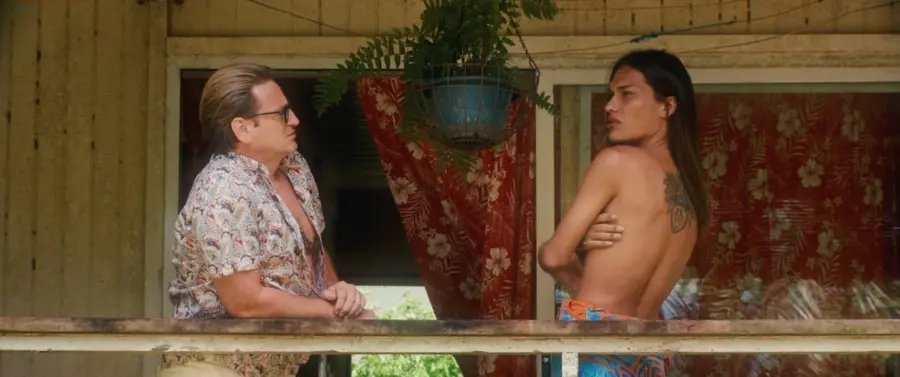
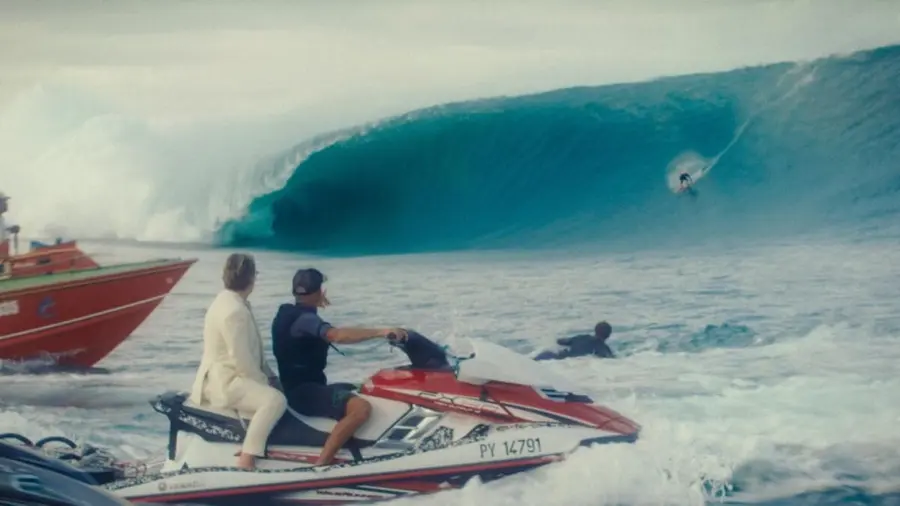
With Freddy Butler’s “I Like Your Style” playing, the strange scene of club staff Indigenous people dancing naked alongside admirals dressed in uniforms is hard to pin down with any single word. The images, too, of white bourgeois people that Albert Serra, who always starts stories in the desert, catches as they surrender to the waves of Polynesia and enjoy surfing and jet skis, are simply overwhelming. Meanwhile, the film’s De Roller (Benoît Magimel) in 〈Pacifiction〉 also resembles Mathieu (Fernando Rey), who falls head over heels for a maid in Buñuel’s last film 〈That Obscure Object of Desire〉 (1977) and continues acting in contradictory ways.
Under extreme minimalism, with its completed narrative and its refusal of polished acting, Albert Serra’s changes like this may be a detour in the Albert Serra Odyssey—one that departs without ever setting a destination. Or they may be the prepared future of an author who has finally, with great difficulty, found a destination. In that light, it is surprising that the next work after 〈Pacifiction〉 is 〈The Afternoon of Solitude〉, a documentary. What’s more, both films pulled off back-to-back feats by landing at No. 1 on “Cahiers du cinéma”’s Best 10 lists. The Don Quixote who, in 〈In Praise of the Information Service〉, shouted to “My Lord, don’t leave me. Give me strength!” learns that “He who speaks the truth must surely be rewarded.” As with that—crying toward the gods of art and seeking to reach the truth of art—Albert Serra’s journey still hasn’t ended.

![[First Impressions] Cineplay Critic Rates 'Heart of the Beast'](https://cdn.www.cineplay.co.kr/w300/q75/article-images/2026-10-21/20b314b3-78d4-4985-a5a5-9a9fb557022c.jpg)

댓글 (0)
댓글 작성
댓글을 작성하려면 로그인이 필요합니다.
로그인하기