



![Poster for the film 'Moana' [provided by Walt Disney Company Korea. Resale and DB prohibited]](https://cdn.www.cineplay.co.kr/w900/q75/article-images/2026-07-08/c80da38b-93cc-4772-b9ef-5b85fd769f01.jpg)
Maui has returned to the screen. Disney's live-action 〈Moana〉 is a live-action film based on the studio's 2016 animated film of the same name. Following the original story—about the chief's daughter Moana and the demigod Maui restoring the Heart of Te Fiti—the live-action keeps that storyline intact on screen. The original Disney Animation, the studio's first feature to draw on Polynesian mythology, earned $700 million worldwide and, alongside 〈Tangled〉 and 〈Frozen〉, completed the Disney Princess lineup of the 2010s. Riding that popularity, 〈Moana〉 joined Disney's live-action series when production began in 2023.
It hit theaters in July 2026, exactly on the film's 10th anniversary. Dwayne Johnson, who voiced Maui in the original, returned as Maui, and the filmmakers cast newcomer Catherine Lagaia in the title role after an audition process similar to how the original voice actress Auli'i Cravalho was discovered. The production also brought in Thomas Kail, a prominent director who won the Tony Award for Best Direction of a Musical on Broadway. Yet neither in Korea nor in North America has 〈Moana〉 matched the feverish response of the original animation. In North America, the film grossed $42 million through its opening weekend, a figure roughly similar to the box-office trajectory of 〈Snow White〉, widely seen as 2025's biggest fiasco. Why has a live-action 〈Moana〉 that so closely matches the original run into trouble? After seeing it, here are the main reasons.
Too close to the original
When Disney turns its animated titles into live-action films, it has taken a variety of approaches. A notable example is 〈Aladdin〉, which added a new solo number for Jasmine—"Speechless"—to strengthen her narrative, a shift the live-action used to deepen her character. There have of course been missteps: the heavily criticized change to "Be Prepared" in 〈The Lion King〉 and the backlash to the very different storyline in 〈Mulan〉 are negative examples. Still, studios often try to give live-action remakes a distinctive identity by introducing new ideas or elements when adapting older works.
In that respect, 〈Moana〉 is among the most conservative of Disney's animated-to-live-action adaptations. It largely reproduces the original's musical structure and plot progression with few significant changes. That approach was signaled early by the involvement of original cast members Dwayne Johnson and Auli'i Cravalho in the production. The issue, however, is that 〈Moana〉 is a relatively recent film. The original came out only ten years ago (and even spawned a sequel in 2024), and fans who were eager enough to wait for a live-action version have likely seen the original multiple times. For those viewers, a live-action version that largely reproduces the original as-is may feel less like a must-see and more like "take my money"—not a compelling reason to go back to the theater. That said, in an era when remakes often mishandle their source material, a faithful adaptation can be a meaningful piece of fan service. But fidelity alone, without any upgrade or new element, is insufficient to draw both new viewers and long-time fans back into cinemas. The end-credits original song "Along the Way" helps to quench that thirst, but it is not enough on its own.
More frightening than refreshing
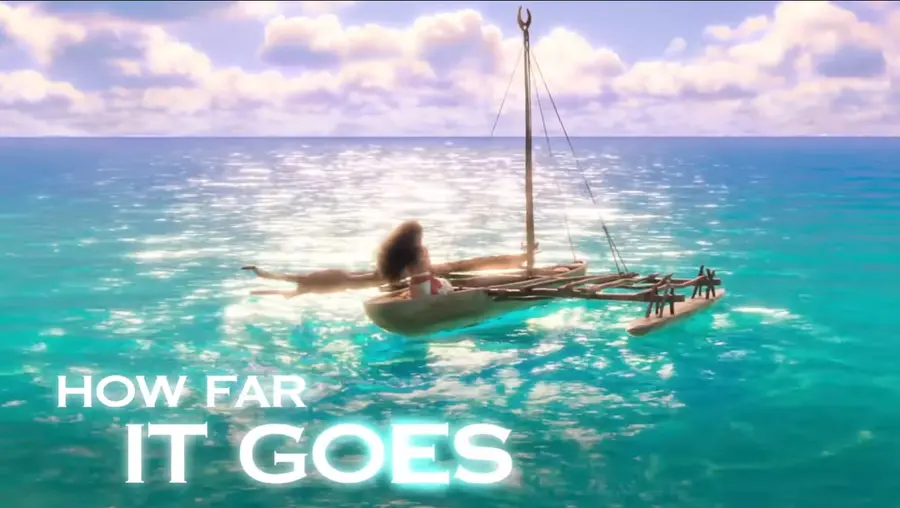
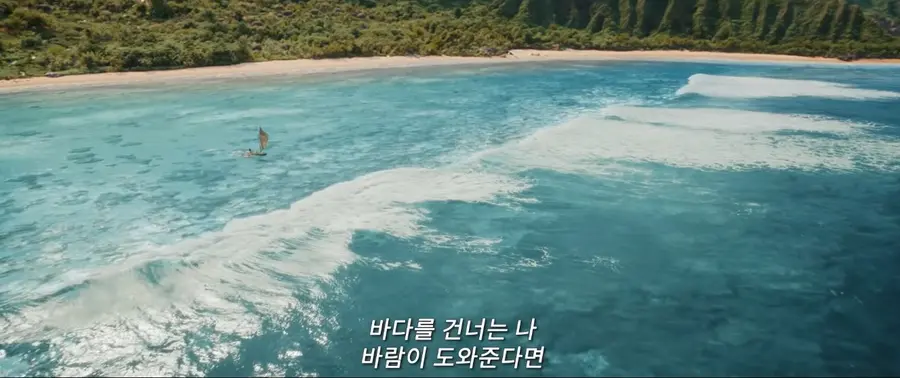
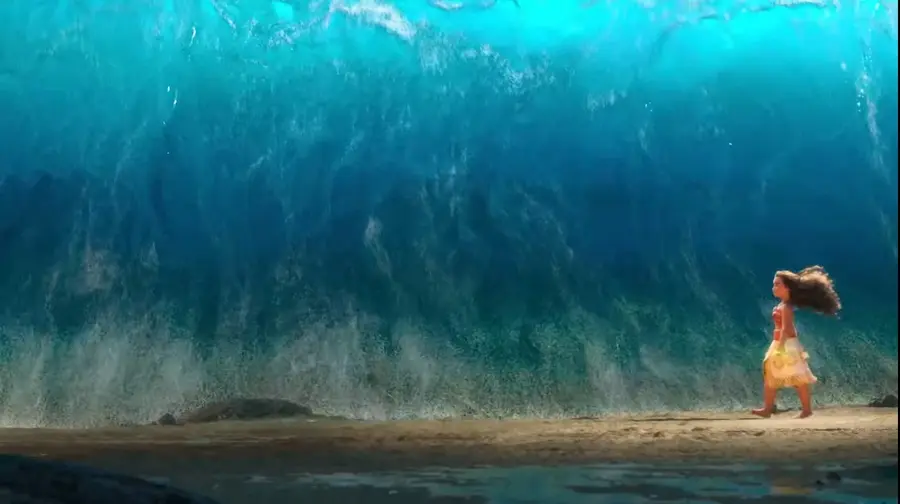
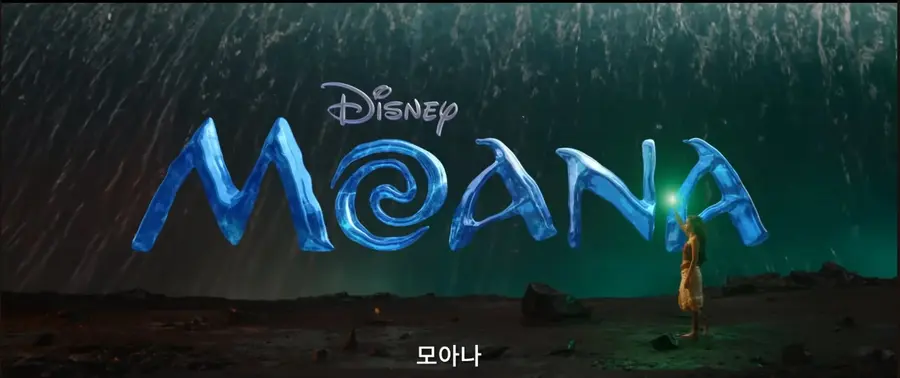
Although the live-action adapts the original generally well, one barrier it runs into is the image the sea conveys. The original, set in Polynesia, captured the sea's bright blue lushness in vivid animation. It wasn't just the ocean; the exotic imagery of skies and landforms added to that feeling. The VFX in 〈Moana〉 are undeniably strong, but they fall short of reproducing the original animation's distinctive freshness. This is less an issue of VFX quality than of the different expressive languages of animation versus live-action CG. In the same storm scenes, the original went only so far as to show the sea surging, while the live-action film depicts the force of the waves and the foam much more realistically, making it feel more frightening. Likewise, there is an unavoidable psychological distance between an animated character going underwater and an actual actor doing so. Because of that, the cool, breezy tone is reduced and a heightened sense of dread can take over, preventing the original's buoyant imagery and jaunty adventure from translating cleanly into 〈Moana〉.
Dwayne Johnson's double-edged role
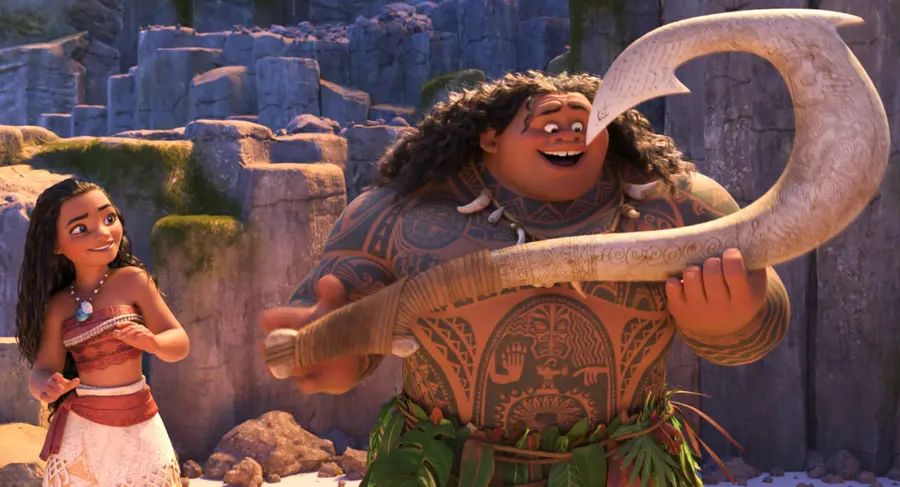
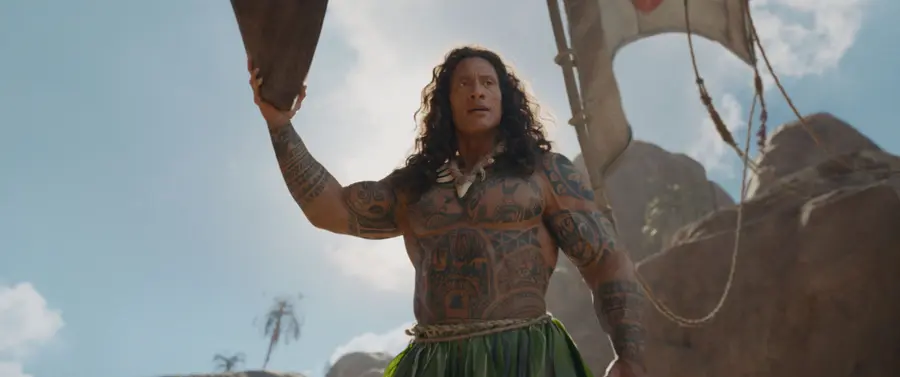
My guess is that Dwayne Johnson's influence helped move this live-action adaptation along so quickly. He has often taken the lead in franchises he has been involved in, and he likely wanted to extend the life of 〈Moana〉, one of his successful projects. Because he returns to the role and has considerable clout, he is both an asset and a liability. Having the familiar original voice actor involved helps avoid dissonance in the Maui role, but Johnson's casting also raises questions about fit. Many viewers have noticed the "wig" issue, but beyond that, Maui's animated design has a large build with a lot of body fat—often described as "bear-like"—whereas Johnson's sculpted, muscular physique can make Maui's affable cheek feel less convincing. Johnson's presence undoubtedly drove early interest in the live-action 〈Moana〉, but it also invites speculation about how the film might have felt if someone else had played Maui.





댓글 (0)
댓글 작성
댓글을 작성하려면 로그인이 필요합니다.
로그인하기