


In an era dominated by exclusive screen access, independent films have launched an all-out counterattack for survival. A nationwide audience coalition project aimed at reclaiming what theaters are for and protecting the value of long-run screenings, the “Slow Cinema” movement, has opened its curtain.
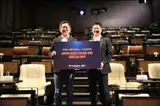
![Launch ceremony for the independent film long-run project 'Slow Cinema' movement [Provided by ROSC. No republication or database use]](https://cdn.www.cineplay.co.kr/w900/q75/article-images/2026-06-19/88bec29b-bd96-4526-8acd-5d596bf1302c.jpg)
A step back from the OTT era, and a stand to protect theaters’ sacred space
The press briefing held on the 19th in Jung-gu, Seoul, was more than a routine event—it was a declaration meant to shift the paradigm of South Korea’s independent film ecosystem. Directors at the forefront, including Park Bong-nam, Yang Hee, and Lee Ran-hee, along with the Korea Film Producers Association and the Korea Art Film Theaters Association, rallied to formalize long-run screening solidarity.
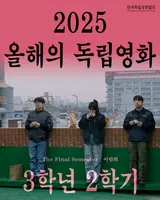
The lead works in this bold project are three standout films that made waves in theaters last year: 1980 Sabuk, Second Semester of Third Grade, and The Words That Wind Carries. They will continue to share an on-screen rhythm with audiences in theaters through the end of December. The rationale behind the creators’ decision is unambiguous. They say they want to extend the life of these works through in-person screenings, theater rental bookings, and audiences’ voluntary financial support.
Choi Nak-yong, chairman of the Korea Art Film Theaters Association, pointed to a painful reality. “Last year, independent and art films made up nearly 18% of domestic releases, but the art-film-only screens allowed to them account for only 2% of the total,” he said, adding that the project’s goal is to dismantle the lopsided structure in which screenings are limited to just one showing per day across 40 to 50 screens.
![Launch ceremony for the independent film long-run project 'Slow Cinema' movement [Provided by ROSC. No republication or database use]](https://cdn.www.cineplay.co.kr/w900/q75/article-images/2026-06-19/2329600d-7dda-422c-9de2-1fc0eb95a2d2.jpg)
A recovery of community—and a decision by creators who forsake second-window rights
The actions of the three directors who joined this coalition are striking. They have drawn a line in the sand by fully rejecting distribution of online video services (OTT) and VOD channels such as IPTV through year-end. The decision is aimed at safeguarding the irreplaceable value of community viewing made possible by large screens and darkened spaces.
Director Yang Hee of The Words That Wind Carries, which captures the artistic spirit of composer Kim Hee-gap, emphasized immersion through the overwhelming audio system unique to theaters. Director Lee Ran-hee of Second Semester of Third Grade, which puts into a screen the realities faced by students at specialized high schools, also said she wanted to keep the public forum in front of the screen open, where peers can band together and explore career paths.
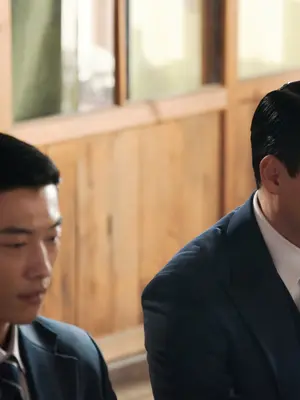
What draws the most attention is the screening run of 1980 Sabuk, a work that deals with the pain of the 1980 Sabuk uprising. Director Park Bong-nam said he has grappled with the heavy responsibility that comes with recreating violence and bearing witness through survivors’ testimony, and he completely excluded second-window rights distribution from the planning stage onward. He said, “To stop indiscriminate secondary harm and lead genuine healing in the local community, shared viewing in a safe, controlled theater environment is absolutely essential.”
This coalition does not end with just three films. The organizers laid out a blueprint for continuously expanding the territory of the Slow Cinema movement, powered by public support and participation from the film community.
Baek Jae-ho, an executive director at the Korea Independent Film Association, said the movement was “sparked by a grim sense of mission—to keep the lights on in the theater until it reaches audiences,” and added that “this steadfast solidarity will become a powerful engine that opens a new avenue for communication in a barren independent film ecosystem.”



댓글 (0)
댓글 작성
댓글을 작성하려면 로그인이 필요합니다.
로그인하기