



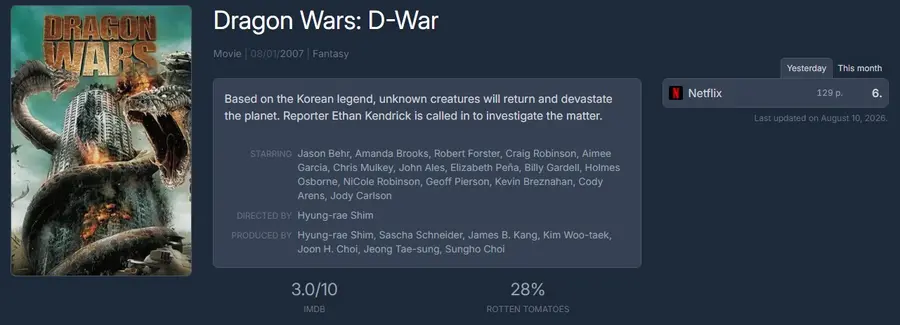
The 2007 South Korean film 〈D-War〉 (also listed as 〈Dragon Wars〉) has reappeared on Netflix: after being released in 19 countries on Aug. 10, it reached No. 6 on FlixPatrol's movie popularity rankings. Its arrival on the streaming service was notable for several reasons. We revisit 〈D-War〉, a 2007 release that provoked massive debate at home and abroad, and examine why viewers around the world sought it out.
Surpassed 8 million admissions and sparked debate on 〈100-Minute Debate〉
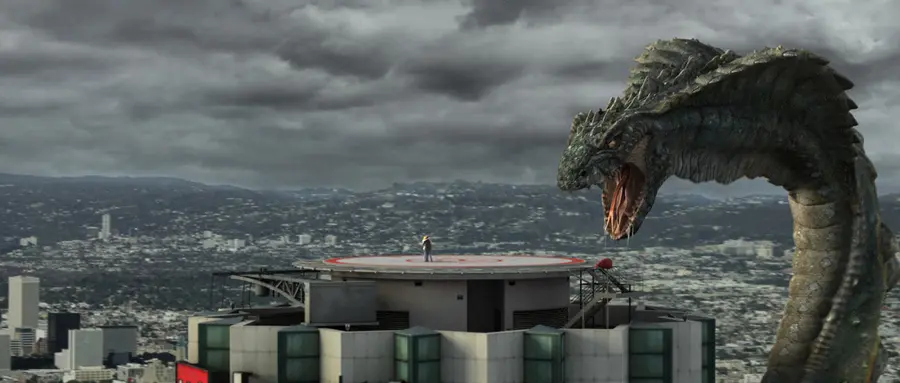
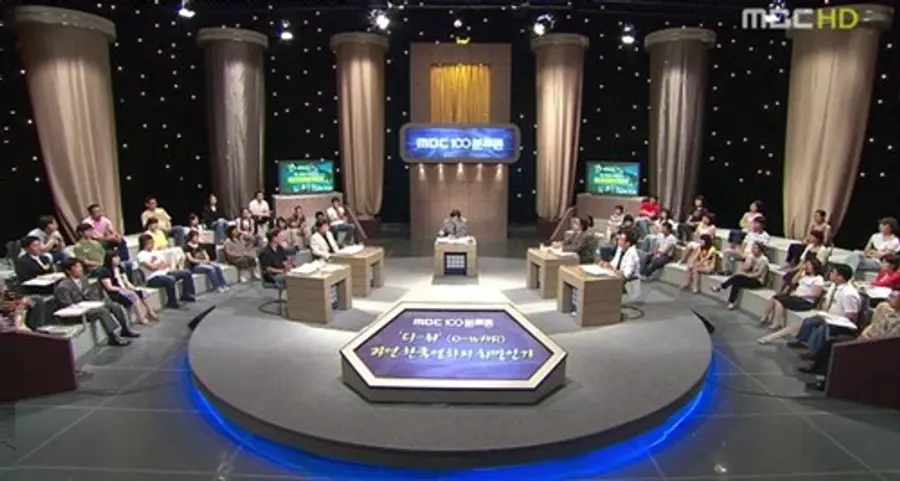
〈D-War〉 was released on August 1, 2007. The film posits that the chaos unfolding in downtown Los Angeles is actually a repeat of events from 500 years earlier in Joseon, and follows the imugi legend in which an evil imugi and a benevolent imugi clash over the mystical yeouiju. At the time, 〈D-War〉 provoked strong reactions for two main reasons: it cast foreign actors and was filmed overseas (only the shooting was abroad—this was a Korean production financed with Korean capital), and it was director Shim Hyung-rae's major follow-up to Yonggary. The film's release sent ripples through South Korean society. It even became the subject of debate on 〈100-Minute Debate〉, a program that normally tackles political and current affairs issues. In particular, the inclusion of the folk song "Arirang" in the end credits and a letter from director Shim Hyung-rae (included only in the domestic release) sparked heated argument over whether the moves amounted to nationalistic marketing.
That buzz translated into box-office power: the film drew more than 8 million admissions and was recorded as that year's biggest box-office hit by admissions. But alongside commercial success came sharp criticism of the film's craftsmanship, and audiences repeatedly debated "popular entertainment vs. artistic quality." Recently, both The Host (directed by Bong Joon-ho) and 〈D-War〉 were reexamined following the release of 〈Hope〉; The Host was brought up because it similarly features an unknown creature throwing society into chaos, while 〈D-War〉 returned to the conversation because viewers remain sharply split in their reactions to it.
It's important to be clear: 〈D-War〉 was not an unqualified runaway hit. The production company Younggu Art Movie was later sued by employees for failing to pay wages on time, and investors who could not recover their money had to resolve disputes in court. While 8 million admissions is normally enough for a commercial film to turn a profit, the film's enormous production scale and costs sunk into technical development meant it was reported to have barely broken even. Once those issues were reported in the news, the feverish reaction around 〈D-War〉 faded; the film is now remembered more for the range of reactions and fallout than for the work itself.
Why Netflix viewers may be seeking out the film now
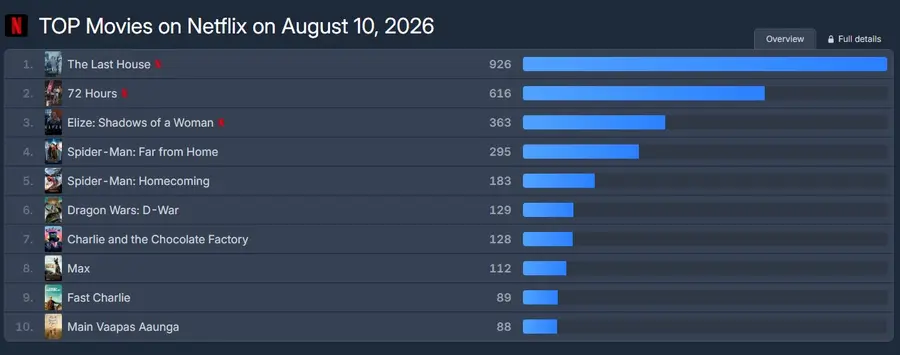
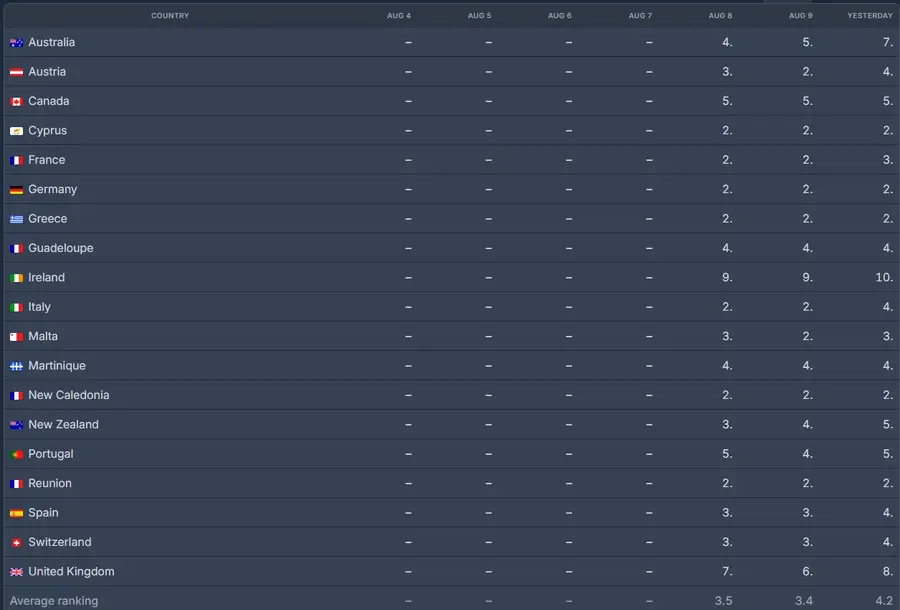
A high position on Netflix does not necessarily mean a title aligns with foreign viewers' tastes. On Letterboxd, a popular review platform in the West, 〈D-War〉's average score is only 1.8, which suggests overseas audiences did not embrace it as a critical favorite. The surge on Netflix may instead reflect how streaming platforms surface lesser-known titles: with broad catalog access, unfamiliar films can attract viewers through a striking synopsis or novelty and suddenly spike in popularity. 〈D-War〉 may also have benefited from being a Korean title at a moment of heightened global interest and from being a creature feature whose premise crosses cultural boundaries.
The clash between dragons and modern weaponry may be part of the appeal.
Another factor in its renewed attention is how long 〈D-War〉 remained hard to find. For many years, the film was not listed on global streaming platforms. Domestic viewers could access it via VOD or local OTT services, but international viewers had little access unless they purchased DVDs or Blu-rays. Netflix's decision to add 〈D-War〉 to its catalog without extra cost and make it widely available created renewed interest. In several European territories—including France, Germany, Greece and Italy—it climbed as high as No. 2.
In any case, 〈D-War〉 has pulled off a comeback more than a decade later. Director Shim Hyung-rae, who once expressed strong intent to produce a sequel, still hopes to make 〈D-War 2〉. During a TV appearance in February 2026 he said, "I will hold a production press conference within this year (2026)." Whether Netflix's renewed interest in 〈D-War〉 will help realize that plan is uncertain, but the prospects may become clearer once viewers' reactions are more fully measured.








댓글 (0)
댓글 작성
댓글을 작성하려면 로그인이 필요합니다.
로그인하기