


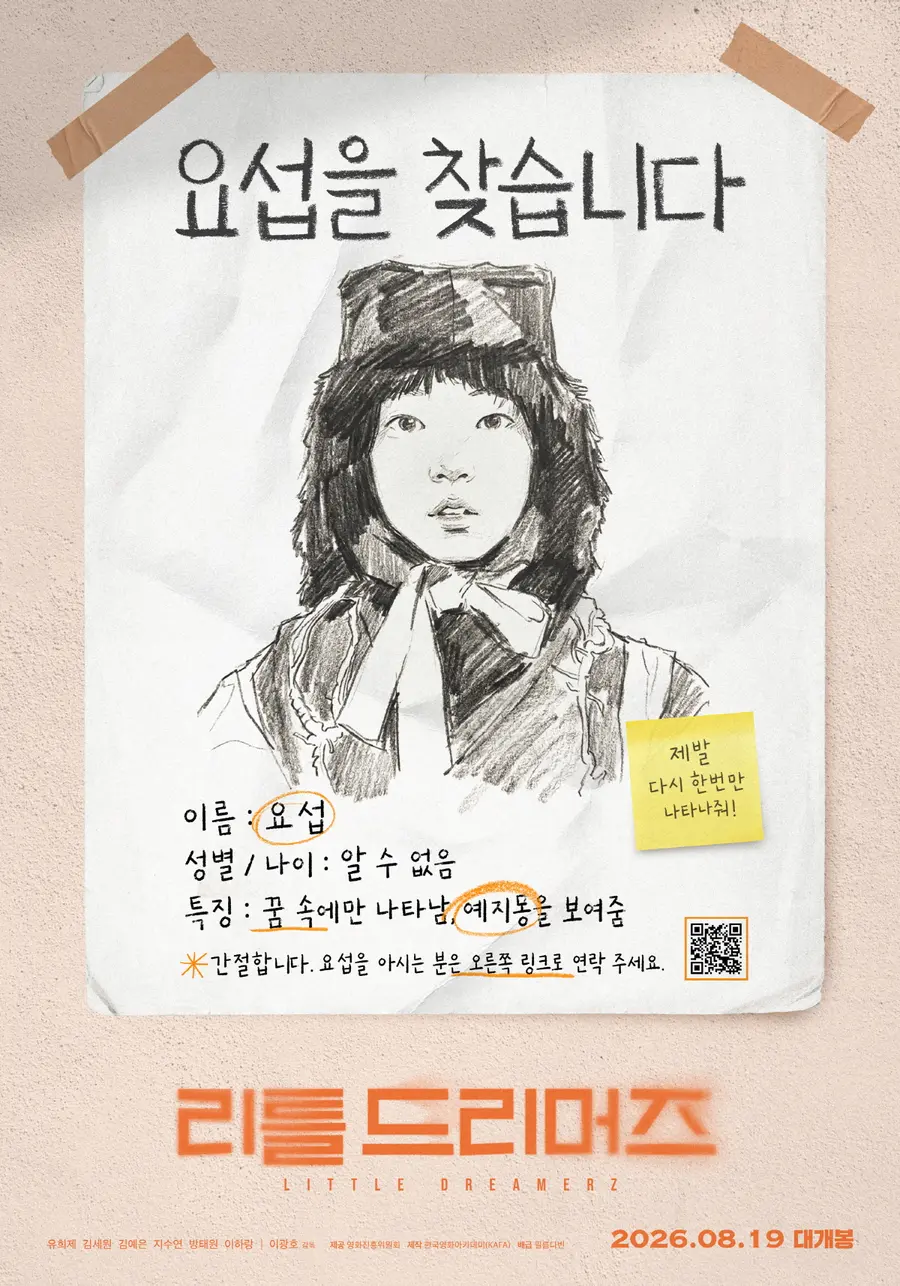
⮕ The interview with 〈Little Dreamers〉 director Lee Kwang-ho and actors Yoo Hee-je and Kim Se-won continues in Part 1.
You became the architect of this dream. How did you develop the ideas for building the dream world? Did you have any references?
Director Lee Kwang-ho Of course, I thought of Michel Gondry’s 〈The Science of Sleep〉. I also thought of films centered on dreams, such as 〈Inception〉. But I wanted to make this film without relying on references as much as possible. Dreams are truly random. Friends suddenly appear, or you find yourself transformed into a giant. That is the world of dreams, and I wanted to bring it to life.
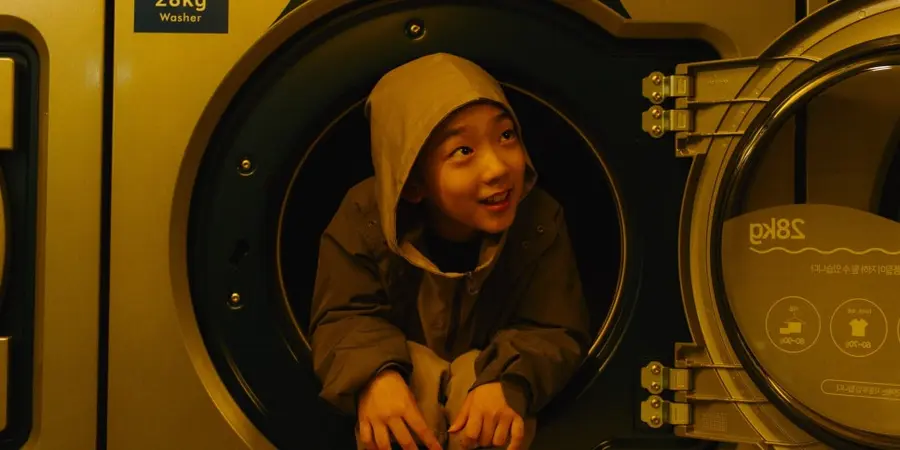
The entrance to the fantasy world is the door of a washing machine. The circular door connects with the circle of the bell, completing the passage into the fantasy world.
Director Lee Kwang-ho I wanted to create just enough points for audiences, who all see things differently, to follow along little by little. I chose the circle because it focuses well and invites a choice. I felt that something rotating, a cyclical image, suited the film. I designed the golden bell shape so that people could enter it easily.
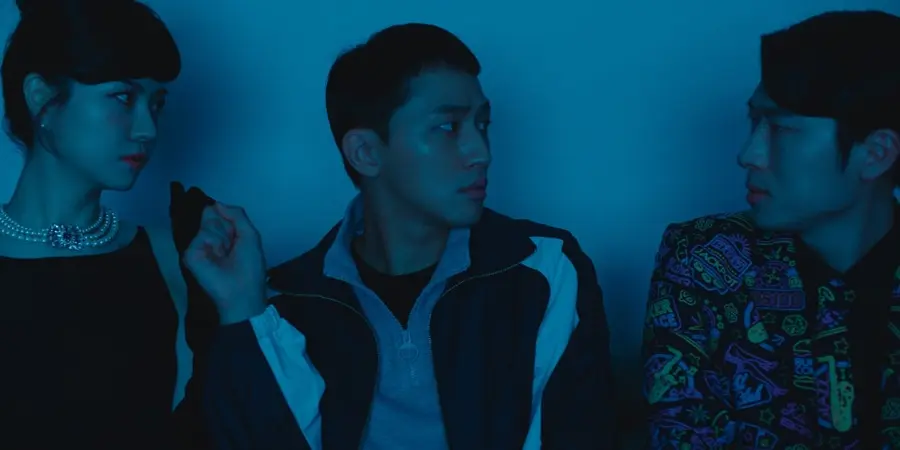
Yosep (Lee Ha-rang), the figure who leads Gun-woo and Mina into their dreams, takes the form of a young child. You created a distinctive character unique to this film, adding elements drawn from Eastern traditions and folklore.
Director Lee Kwang-ho Yosep is a character who governs dreams. He is a divine being, meant to evoke the feeling that we may ultimately be playing in the hands of a god. He looks like a child, but he could actually be 990 years old. When I was developing Yosep, many people suggested depicting him as an old man or a dwarf, but I did not want to be influenced by what felt like overly Western clichés.
The most striking visual concept in the fantasy world was its Korean, folk-rooted quality. Yosep’s hanbok-like costume and the bells reinforce that idea.
Director Lee Kwang-ho That was the one thing I specifically asked of the production designer: “Just don’t make it Western.” I have always felt that way. This is a work made in Korea, and I thought it was important for it to have an identity of its own rather than relying on the Western imagery we have always seen. I wanted to find inspiration in Korean culture without being bound by any particular era. The production designer had many ideas. They love studying history and brought in a wide range of references. The bell’s shape also came from combining several ideas into the form you see today.
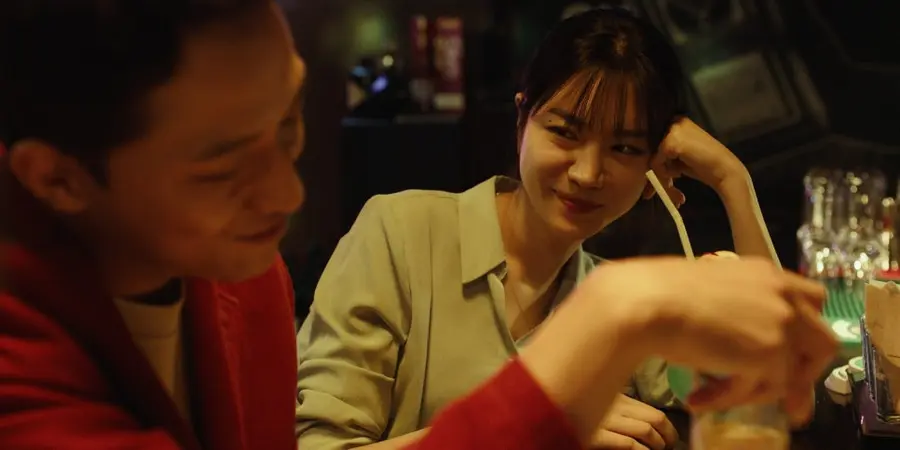
I’m also curious about how you developed the characters. How was the chemistry between the two actors?
Director Lee Kwang-ho We tried to keep them from meeting as much as possible, so they even did their script readings separately. They would only briefly come by to say hello once a day. After the full read-through, we treated them as if they were living in different worlds.
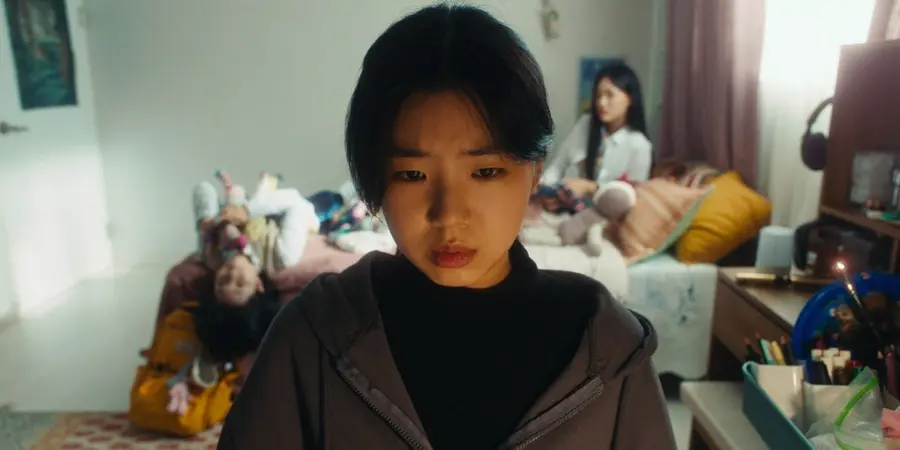
I’m also curious about how each of you approached your character.
Kim Se-won I wanted Mina to come across as someone who fights against the world. Rather than showing her as simply weak, I wanted to reveal both her stubborn determination to keep fighting on her own and the pain of her loss. I thought about it a lot. Then I suddenly wondered what song Mina would listen to when she was alone. Teenagers spend a lot of time by themselves, and it is also an age when people often become deeply immersed in music. I asked the director, and he shared a song with me. It was “Hideaway,” a song from an animated film. As soon as I heard it, I understood what kind of girl Mina was. Things began to fall into place after that.
Yoo Hee-je Playing Gun-woo made me look back on my own childhood. I thought a lot about my experience of quitting sports and how I felt at the time.
Director Lee Kwang-ho Because Hee-je was a former baseball player, his details were precise. Even during the costume fitting, he said, “Kids who play sports don’t wear this kind of tracksuit,” and brought about 30 outfits of his own. (Laughs) We considered many actors during casting. I could find the pathetic, unemployed quality, but I couldn’t find the athletic side Gun-woo was supposed to have. Then I asked a friend of mine, who is also a director, “Show me every actor who looks like they’re about to break out.” (Laughs) He has a good eye. That is how we met, and I could sense an athletic energy coming through the pathetic unemployed exterior.

What was the casting process for Kim Se-won like?
Director Lee Kwang-ho We auditioned about 100 people for Mina. I met Se-won nearly at the end. During the audition, I asked her to perform the scene in which Mina finds the golden bell in the washing machine, and she did it with such unapologetic boldness. I immediately felt Mina’s confidence and nerve. I knew at once that we had found Mina.
Beyond meeting in the real world, the two characters eventually enter each other’s dreams and experience each other’s roles. The scenes were presented in a fascinating way, almost as if they could be used as material for psychological counseling.
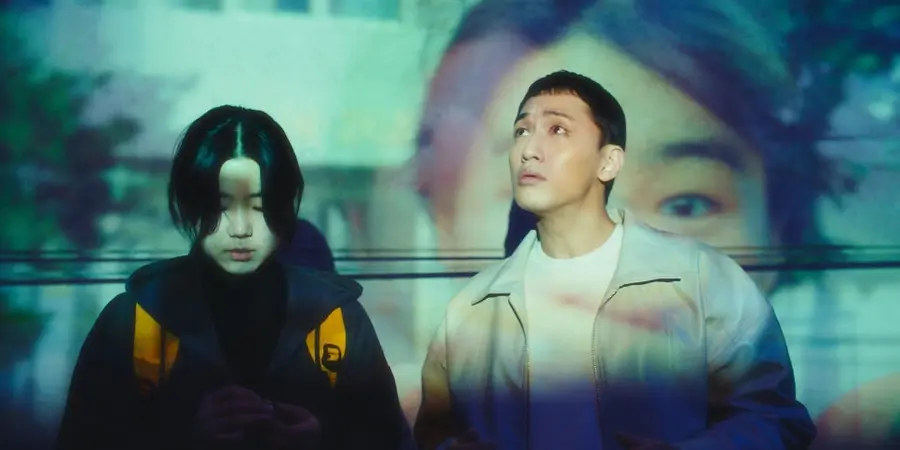
Director Lee Kwang-ho To tell a story about dreams, I felt the two characters ultimately had to go there. We could have expressed it through dialogue, but that would have been difficult. So Gun-woo experiences the period after he quit baseball, while Mina experiences the pressure of coming to live at her aunt’s house. They enter each other’s dreams without knowing who they are, and they become confused. I think this is where my theme lies. The theme of identity seems to recur throughout my work. I was born in the United States and lived there for about 10 years before coming to Korea in elementary school. Until I came to think of myself as completely Korean, there was a period when I did not know whether I was American or Korean. I also felt unsure of where I belonged between my older and younger brothers. That confusion over identity seems to have found expression in my work.
This is a new kind of film in a Korean independent cinema scene dominated by realism-based movies. What were the challenges and achievements?
Yoo Hee-je There was excitement at taking on my first leading role in a feature, but it was also a major responsibility. I wondered whether I could carry the film. I also spent a lot of time thinking about how to connect the boundary between dreams and reality. I think I made it this far by following the director and crew closely on set. When I saw the finished film, I gained confidence from realizing that I am an actor who can carry—or be carried through—an hour and a half. (Laughs)
Kim Se-won I felt strongly that I had to make the story convincing through my role. Scenes such as fighting in a wrestling ring and running across a baseball field while saying what I wanted to say to my aunt were quite challenging for me. I worried about whether they would be convincing and whether people would trust me. In the end, I kept going with the belief that if I trusted it first and acted with conviction, people would trust me, too. I don’t know if I achieved it 100%, but I feel that I left something behind and did a good job. (Laughs)
Director Lee Kwang-ho In Korean cinema, science fiction and fantasy are genres that directors continue to challenge and explore. Ultimately, I want to keep working with this kind of world-building. If I move into commercial films, I would also like to make a zombie film. (Laughs) I do hope there can be more freedom for diverse forms of creativity.
Finally, what would you like to say to audiences who will see the film?
Yoo Hee-je The set was so busy that we shot the film without even having time to dream ourselves. Movie runtimes have gotten quite long these days, but ours is not long. I hope audiences will watch it with an open mind, thinking, “Why not relax and lose myself in a fresh, new world?”
Kim Se-won I think I fell asleep as soon as my head hit the pillow after filming ended. (Laughs) We worked hard without knowing whether it was a dream or reality. I hope audiences will enjoy this new atmosphere, unlike anything they have seen in independent film.
Director Lee Kwang-ho Of course, this is a time when I worry about how audiences will respond. Still, I hope we can meet the people who love our work in theaters. I made this film, but more than anything, I hope people will come to see these two actors.
![[On the Ground at BIFF] “It Wasn’t Your Birth Mother’s Fault”: ‘Home Sick’ Director Sørensen’s First Confession Reveals Truth Behind 56 Falsified Adoptions](https://cdn.www.cineplay.co.kr/w300/q75/article-images/2026-10-10/6dca361c-d923-44a5-9b83-86299ab17f64.jpg)

댓글 (0)
댓글 작성
댓글을 작성하려면 로그인이 필요합니다.
로그인하기