



Now is exactly the right time to write about actor Lee Hyun-kyun. Granted, I should have written about him while 〈The Dream Life of Mr. Kim〉 was airing. But perhaps missing that window, one way or another, meant I was supposed to write about him now.
Why bring out an actor who should have been in everyone’s treasure box long ago? With the film 〈Paradise Lost〉 opening on the 21st, the recently concluded dramas 〈The Ordinary Jackpot〉 and 〈New Recruit 4: Sabotage〉, and the drama 〈Final Table〉 set to premiere on the 24th, Lee’s work is perhaps reaching more moviegoers and viewers than ever before.
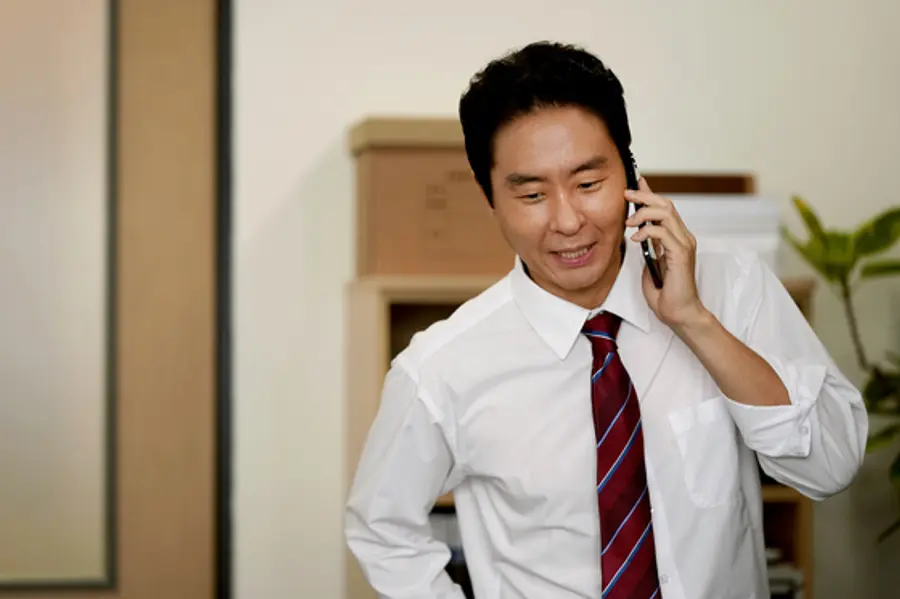
Choi Jae-hyuk, the HR team leader in JTBC’s 〈The Dream Life of Mr. Kim〉 (hereafter 〈Mr. Kim〉), prompted a flood of reactions asking whether the show had recruited a real HR chief from some major corporation. He was a new kind of villain, one rarely seen on screen: all the more cruel for never being openly vicious. When he urges his senior colleague Kim Nak-su (Ryu Seung-ryong) to resign, he does not shout like a villain. Instead, he subtly mixes polite and casual Korean speech to get his way, instantly reversing their positions in the hierarchy. Pressing Kim to hand over a list of employees eligible for voluntary retirement, he says, “I’m doing this because I’m really desperate. I’ve never gone this far before.” He deftly walks the line between abusing his authority and making what sounds like a heartfelt appeal. One moment he calls Kim “senior”; the next, he switches to the more familiar “hyung” to gain a psychological advantage. This utterly ordinary villain felt chillingly real to viewers.
Viewers said he gave them “PTSD,” but Lee himself saw Choi Jae-hyuk not as a bad person, but as someone doing his job from the position he occupied. Lee has said he tried not to go too far with the character’s emotions, fearing that would make him seem bad by nature. By portraying, without the exaggeration of a stock villain, a Korean office worker willing to become ruthless to survive as a cog in the system, he became a major reason the drama’s realism cut so sharply.
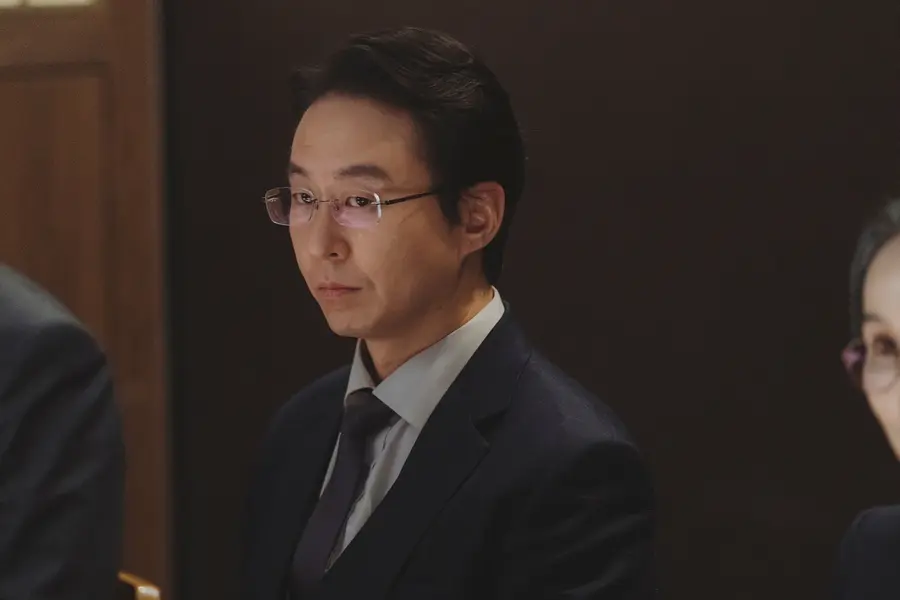
And then he went to work again—this time at Hongseong International in the recently concluded TVING original 〈The Ordinary Jackpot〉 (hereafter 〈Jackpot〉). Lee plays Jang Gyeong-cheol, a seemingly prickly boss whose true feelings are hard to read: Is he at odds with Gong Eun-tae (Lee Jun-hyuk), or does he care about him more than anyone? After winning the lottery jackpot, Gong finally lets out everything he has been holding back, saying, “It’s not as if this company belongs to you, Deputy Manager.” Jang responds in the unmistakable voice of a real-world boss: “Hey, Gong Eun-tae. Team leaders, deputy managers, department heads—we’re all company employees who do what we’re told at work. If you can’t do that, don’t work for a company. Start your own business. What, did you win the lottery or something?” Yet he is also a warm person who cares enough about his subordinate to visit a temple and pray for Gong’s well-being. Perhaps, across 〈Mr. Kim〉 and 〈Jackpot〉, Lee has found his way to the human instinct to put on a coolheaded office worker’s face when survival demands it.

Come to think of it, Lee has mastered not just the corporate world but organizations of every kind. Take his new battalion commander, Byun Hyuk-jin, in 〈New Recruit 4: Sabotage〉 (hereafter 〈New Recruit 4〉). He makes an entrance by refusing all congratulatory flower arrangements for his appointment, asking for rice instead so he can donate it where it is needed. In the rigid military, he proves a rare capable commander. “While I’m here, I’ll change everything,” he declares, then pushes a campaign to stop smoking and gives merchants in the area around the base a piece of his mind. The soldiers whisper, “He doesn’t seem like a soldier. He seems like an HR team leader at some major corporation”—an actor-specific joke for anyone familiar with Lee’s filmography.
Looking back, it was the film 〈1987: When the Day Comes〉 that first brought Lee to wider attention. He played Oh Yeon-sang, the doctor who first told the world about the torture-related death of Park Jong-chul. He is the doctor performing CPR on Park after his breathing has stopped in the film’s opening scene. At the time, Lee had stepped away from theater after working with a troupe and had spent a year personally handing out his profile. An assistant director who had seen an article about a theater festival award contacted him, saying he resembled the real-life figure. Lee auditioned, waited three months and got the part. It was then, reportedly, that he signed with an agency for the first time.

Lee may also be the actor who reports most faithfully to the workplace called “Yeon Sang-ho.” From the Netflix film 〈JUNG_E〉 to the series 〈Hellbound〉, 〈Parasyte: The Grey〉 and 〈The Bequeathed〉, the films 〈The Ugly〉 and 〈Colony〉, and now 〈Paradise Lost〉—at this point, he might as well be a permanent employee of the Yeon Sang-ho universe. In 〈Paradise Lost〉, opening on the 21st, Lee plays Oh Gyeong-won, a reporter following Seon-woo (Bae Hyun-sung), the son of Ryu So-young (Kim Hyun-joo). He may be the character closest to the audience in 〈Paradise Lost〉. In this thriller about a son who returns after nine years but somehow seems unfamiliar, he works alongside the audience to unravel the mystery surrounding Seon-woo, moving step by step toward a shocking truth.
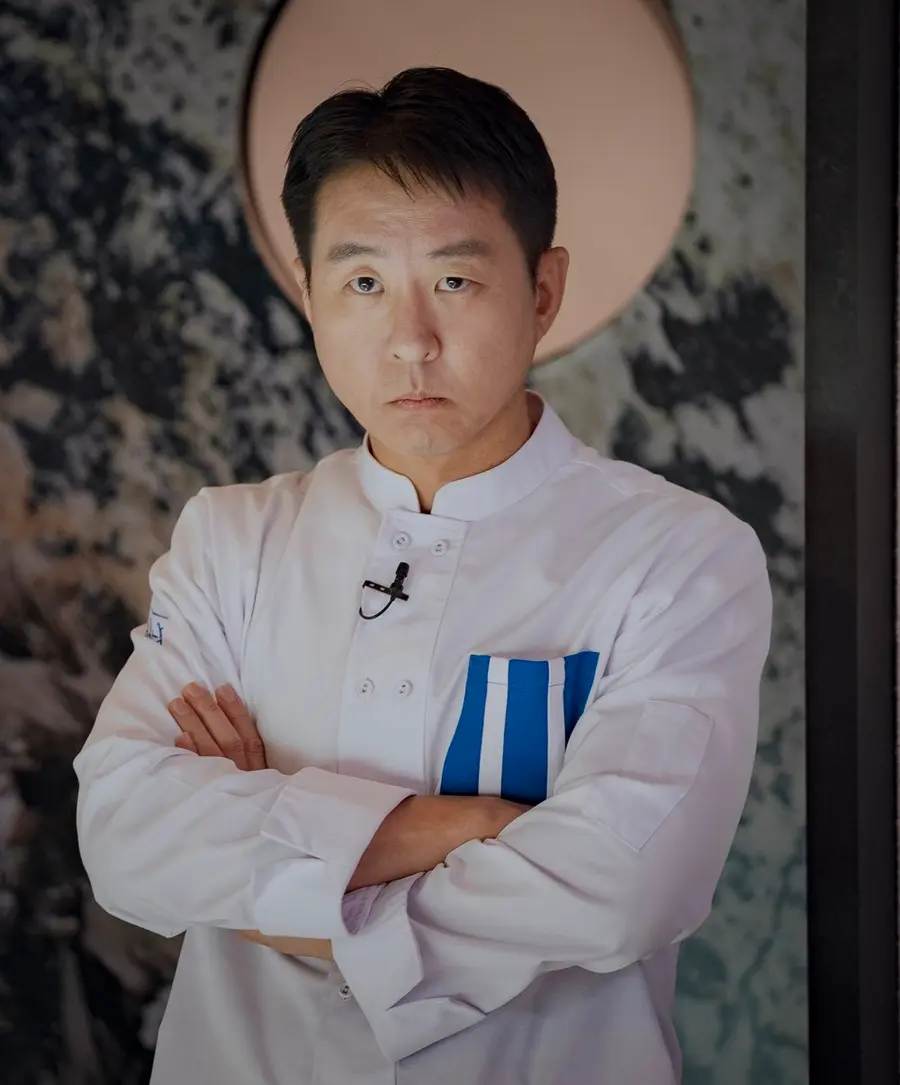
In JTBC’s 〈Final Table〉, set to premiere on the 24th, he is a chef. Lee’s character, Park Jae-hyun, is a Korean resident of Japan who became a naturalized citizen after following his Korean wife and seeks to discover who he is through cooking. After an HR team leader, a deputy manager and a battalion commander, now a kitchen—there are apparently still organizations left for this actor to master.










댓글 (0)
댓글 작성
댓글을 작성하려면 로그인이 필요합니다.
로그인하기