



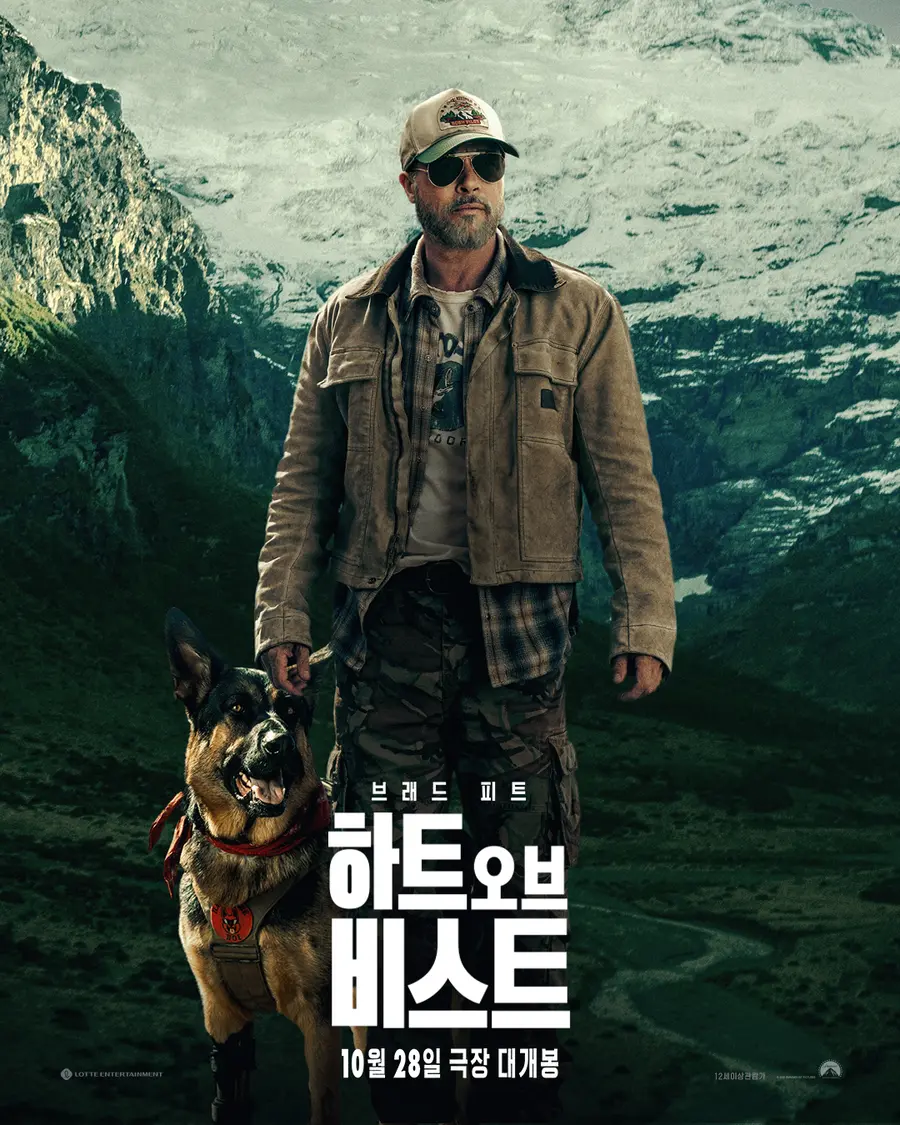
Talk about a bolt from the blue. Veteran James (Brad Pitt) and his military dog, Odin, are stranded in the middle of the wilderness after their plane makes an emergency landing. The nearest road is 80 kilometers away, and they must survive the cold, wild animals and everything else nature throws at them.
Starring and produced by Brad Pitt, who reunites with 〈Fury〉 director David Ayer, 〈Heart of the Beast〉 focuses on a man and an animal left in the wilderness. In a remote stretch of Alaska where no one comes or goes, they must rely on each other to make it back. Can the two partners complete their journey? Ahead of its October 28 release, here are my impressions of 〈Heart of the Beast〉 from an October 21 press and distributor screening.
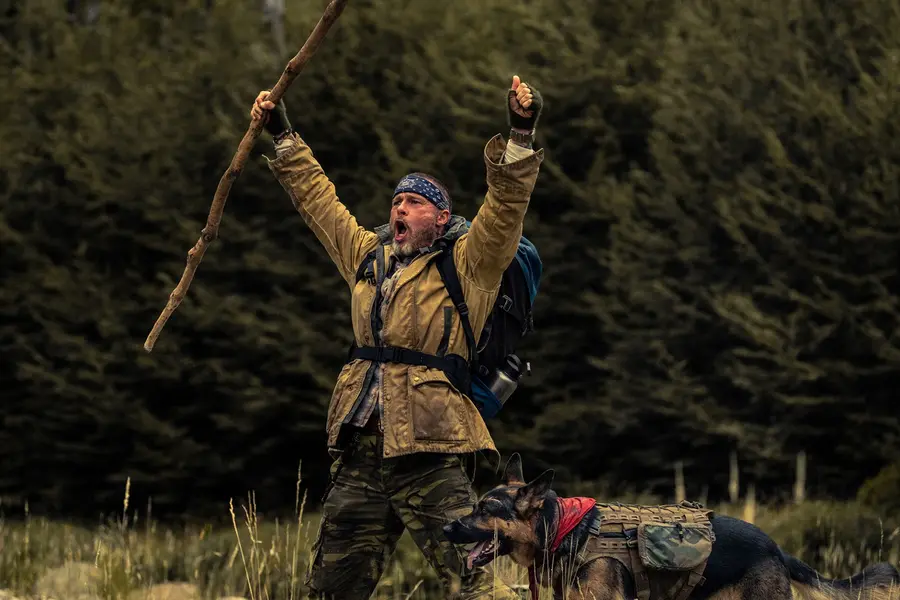
Three things carry 〈Heart of the Beast〉: Brad Pitt, Odin—played by Uber and three other dogs—and nature. With its travelers stranded in the wilderness, the film relies on those three elements from beginning to end. The familiar face of J.K. Simmons appears briefly, but his character exits before the story gets fully underway, leaving Pitt effectively alone to carry the film. He handles that considerable responsibility admirably. Even as he portrays a body worn down by age, he conveys a soldier’s flashes of ingenuity and regret over the past, steadily holding the audience’s interest.
What also distinguishes 〈Heart of the Beast〉 is that his partner, Odin, is a military dog. The film opens with a view of nature through Odin’s eyes, emphasizing that this is Odin’s story as much as James’s. Like James, Odin experiences PTSD, at times hearing gunfire in his sleep. That scene alone is enough to make your heart sink at what military dogs endure. The canine performers bring their talents to scenes throughout the film. By contrast, 〈Heart of the Beast〉 also makes room for the peaceful, expansive landscape. James and Odin may have to overcome nature as an adversary, but nature itself simply exists; it is not inherently harmful. The film conveys that distinction by taking in its vastness.
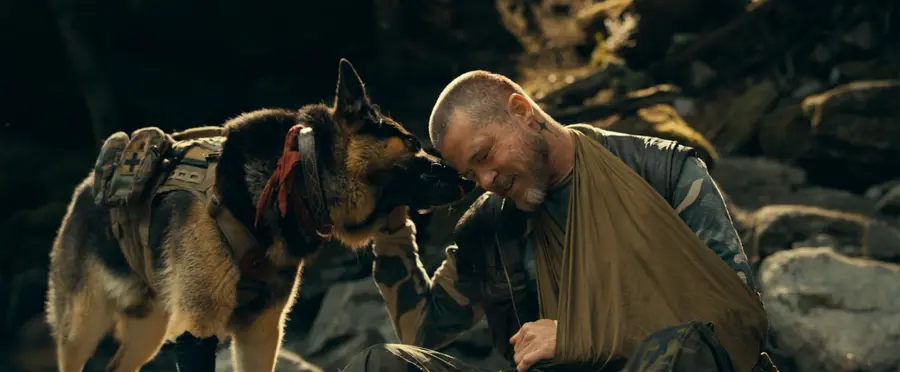
Though it broadly follows the conventions of a survival film, 〈Heart of the Beast〉 is also a road movie centered on two protagonists who spent time on the battlefield. Their ultimate goal, after all, is to reach a road 80 kilometers away. Along the way, both are haunted by their time at war and draw on those experiences to survive. The film does not tell their entire backstory, but its striking sights and sounds allow audiences to imagine what they went through. Having endured those hardships and found peaceful days, they now face another crisis. It is hard not to root for them to overcome it.
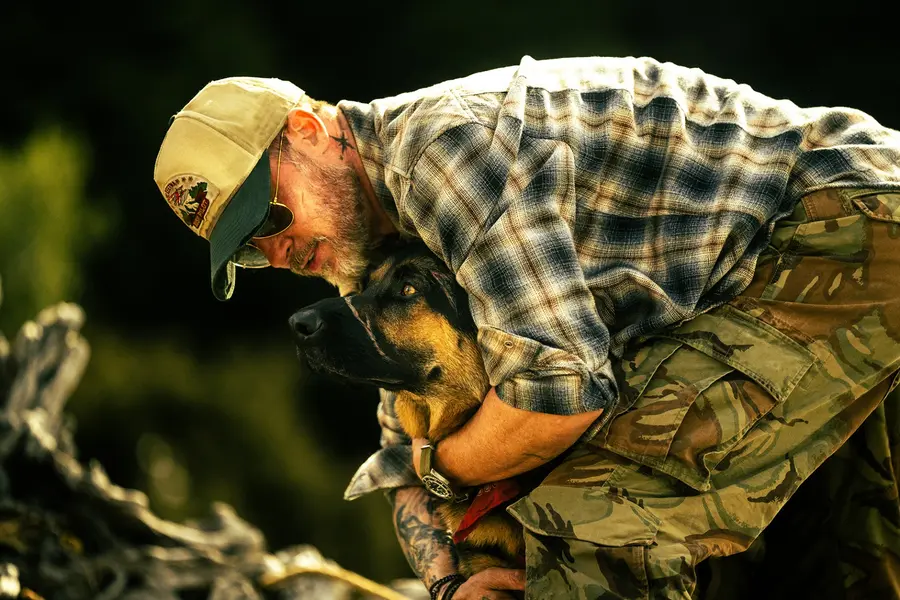
Yet 〈Heart of the Beast〉 has clear limitations. As noted, it plays more like a road movie than a survival thriller that relentlessly escalates the danger, and it does not devise many novel or varied predicaments. It gives some weight to realism, but that also means the situations the pair face—and their solutions—will be familiar from other survival films. Fans hoping for something fresh from the genre may find that disappointing. The story of a soldier and military dog surviving PTSD ultimately becomes a tribute to those who fought for their country. Because they served in the U.S. military, that tribute may feel a little excessive to Korean audiences.
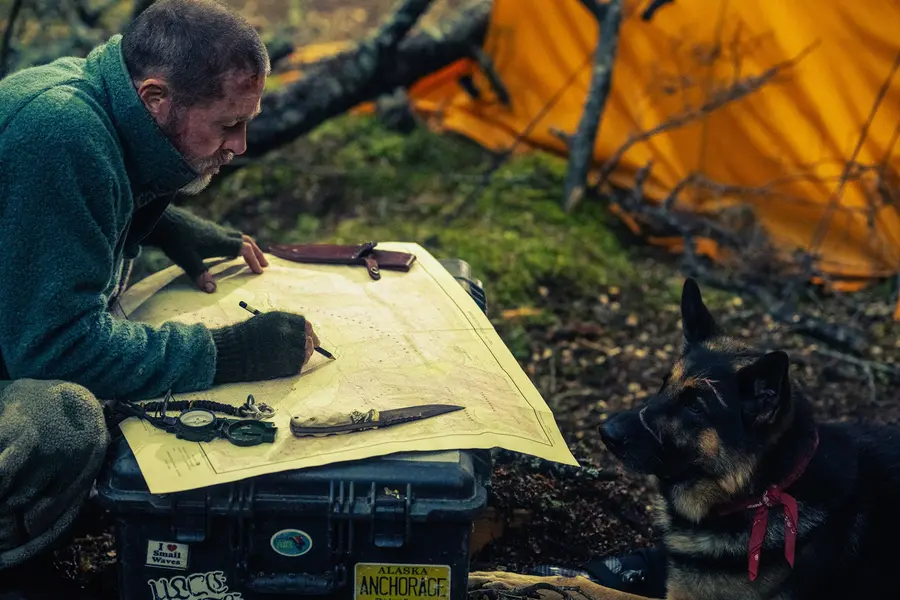
〈Heart of the Beast〉 is plainly ambitious. It clearly aims to use the simple premise of a struggle to survive in nature to heighten its themes of life and connection. By making a veteran and a military dog its protagonists, it also seeks some broader public benefit, taking on a range of themes. In the process, though, its neglect of certain aspects of the genre it promises is likely to divide viewers sharply. As director David Ayer insists, “All the physical pain you see is real.” The pain of their ordeal is undeniable, but the film does not quite find the right balance between delivering an exciting genre experience and using that experience to give shape to its message.
Featuring Brad Pitt’s committed performance, the partnership between a soldier and his military dog, and the chilly but beautiful Alaskan wilderness, 〈Heart of the Beast〉 opens October 28.
Cineplay reporter Sung Chan-eol







댓글 (0)
댓글 작성
댓글을 작성하려면 로그인이 필요합니다.
로그인하기