


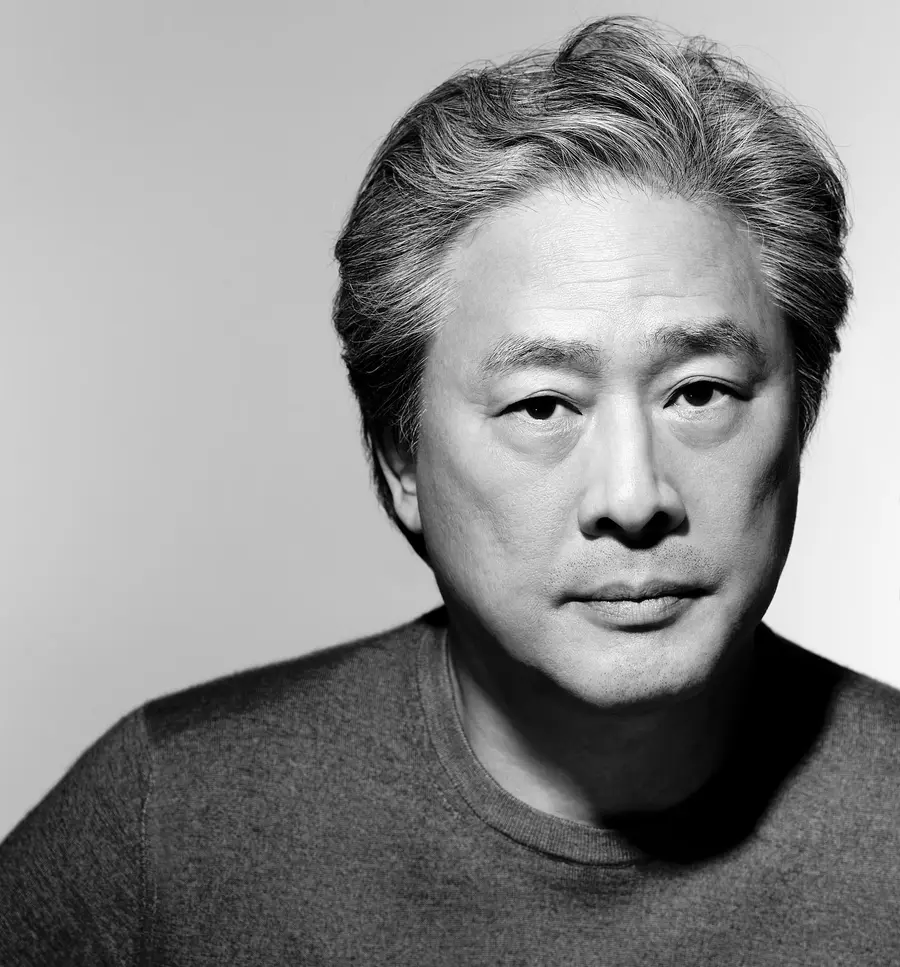
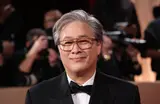
한국 영화의 거장 박찬욱 감독이 제79회 칸 국제영화제 경쟁 부문 심사위원장으로 위촉됐다. 한국인이 칸 영화제 심사위원장을 맡는 것은 이번이 역사상 처음이다.
칸 영화제 집행위원회는 12편의 장편 영화를 통해 현대 영화계에서 가장 매혹적인 인물로 자리매김한 박찬욱 감독이 오는 2026년 열리는 제79회 영화제의 심사위원장을 맡게 됐다고 발표했다. 박 감독은 비평가와 관객 모두에게 국제적인 찬사를 받아온 연출가이자 각본가, 제작자다.
박찬욱 감독과 심사위원단은 오는 5월 23일 뤼미에르 대극장에서 열리는 폐막식 무대에서 2026년 황금종려상의 주인공을 선정하게 된다.
이리스 크노블로흐 칸 영화제 조직위원장과 티에리 프레모 집행위원장은 "박찬욱 감독의 독창성과 시각적 탁월함, 그리고 기묘한 운명을 지닌 인물들의 다층적인 충동을 포착해내는 능력은 현대 영화에 잊을 수 없는 순간들을 선사해왔다"며 "그의 엄청난 재능과 더불어 우리 시대의 질문에 깊이 관여하는 한국 영화를 기념하게 되어 기쁘다"고 전했다.
박찬욱 감독과 칸의 인연은 깊다. 2004년 '올드보이'로 심사위원대상을 수상하며 세계적인 명성을 얻기 시작한 그는 이후 '박쥐'(2009년 심사위원상), '아가씨'(2016년 경쟁 부문 진출), '헤어질 결심'(2022년 감독상) 등 칸에 초청된 거의 모든 작품으로 수상의 영예를 안았다. 이처럼 칸 뤼미에르 대극장에 그가 선다는 것은 박찬욱과 칸 영화제 사이의 굳건한 신뢰를 증명한다.
박찬욱 감독은 이번 수락 연설을 통해 영화에 대한 깊은 애정을 드러냈다. 그는 "영화관이 어두운 것은 우리가 영화의 빛을 보기 위함이다. 우리는 영화라는 창을 통해 영혼을 해방시키기 위해 극장 안에 스스로를 가둔다"며 "서로 미워하고 분열하는 시대에, 영화관에 모여 하나의 영화를 함께 보며 숨결과 심장 박동을 맞추는 단순한 행위야말로 감동적이고 보편적인 연대의 표현이라 믿는다"고 밝혔다.
이번 박찬욱 감독의 심사위원장 위촉은 칸 영화제가 한국 영화에 대해 가지고 있는 깊은 애정을 상징한다. 2002년 임권택 감독의 감독상 수상부터 2019년 봉준호 감독의 황금종려상 수상, 그리고 전도연과 송강호의 연기상 수상에 이르기까지 한국 영화는 칸의 역사와 함께해왔다. 박찬욱 감독은 이러한 한국 영화의 위상을 정점에서 증명하게 됐다.
전 세계 영화인들의 이목이 집중될 제79회 칸 국제영화제는 오는 5월 12일 개막한다.
〈아래는 칸 영화제 사무국 공식 발표 원문〉
Park Chan-wook
President of the Jury of the 79th Festival de Cannes / FEBRUARY 26, 2026
Twelve spectacular feature films have established him as one of the most fascinating figures in contemporary cinema.
Internationally acclaimed by critics and audiences alike, South Korean director, screenwriter and producer Park Chan-wook will preside over the Jury for Feature Films in Competition at the 79th Festival de Cannes. This is a first for Korean cinema.
On Saturday, May 23, on the stage of the Grand Théâtre Lumière, Park Chan-wook and his jury will award the 2026 Palme d’Or as the successor to last year’s, presented by Juliette Binoche to Iran's Jafar Panahi for It was Just an Accident.
Visceral, subversive and baroque, Park Chan-wook's films are bold in every way —in script, in style and in morality. Yet the virtuoso director never strays from a symbolic social message or from his audience, whom he immerses in dark, disturbing worlds on journeys that are sometimes terrifying, sometimes exhilarating, sometimes erotic... or all of these together.
"Park Chan-wook's inventiveness, visual mastery, and penchant for capturing the multiple impulses of women and men with strange destinies have given contemporary cinema some truly memorable moments," said Festival President Iris Knobloch and Director Thierry Frémaux. “We are delighted to celebrate his immense talent and, more broadly, the cinema of a country deeply engaged with the questioning of our time."
For Park Chan-wook, it all began in Cannes with Old Boy, which won the Grand Prix in 2004. Since then, almost all of his films selected for the Competition have earned him awards: Thirst (Jury Prize 2009), The Handmaiden (2016), and Decision to Leave (Best Director 2022), so many films with extraordinary heroines… His presence at the Palais des Festivals testifies to the mutual loyalty that exists between Park Chan-wook and the Festival de Cannes.
He is often compared to filmmakers such as Tarantino, De Palma, and Fincher for artistry in composing images whose formal beauty is matched only by their moral rigor. He also cites Kurosawa, Bergman, Visconti, and Hitchcock as models.
Though he developed a passion for cinema at a very young age and had a brief career as a critic, Park Chan-wook dreamed of becoming a film director after discovering Vertigo by Alfred Hitchcock. The English master has permeated his work, down to the composition of certain shots and sets, with a sense of aesthetics tinged with surrealism. Park Chan-wook drew freely on Shadow of a Doubt for his family drama Stoker(2013), his American escapade starring Nicole Kidman and Mia Wasikowska. And Hitchcock's influence is once again strikingly evident in his Decision to Leave, a seductive and vertiginous thriller in which obsession is taken to the extreme.
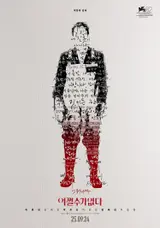
Obsession is a recurring theme in all his films, right up to his latest, No Other Choice(2025). This jubilant satire with its macabre humor lampoons the deadly quest for success that consumes Korean capitalist society, as well as male vanity, which was already fiercely exposed in his feminist film The Handmaiden. Revenge is also the blood-red thread running through Park Chan-wook's deeply pictorial filmography. It is the subject of a trilogy that began in 2002 with Sympathy for Mister Vengeance, continued in 2004 with Old Boy, which established him on the international scene, and that was completed in 2005 with Lady Vengeance. In this cinema of excess, treasure hunts and massacres alternate between unease and comedy, heartbreak and the grotesque in an art of crazed but perfectly mastered contrast. The plunge into the depths of a human soul torn between the impulses of love and death remains nonetheless harrowing…
The work of Park Chan-wook —whose third film, JSA (Joint Security Area), broke the national box office record in 2000— embodies the DNA of contemporary Korean cinema in every way: free from conventions, audience-oriented, ambitious, deliberately provocative, and sophisticated without being intellectualized.
Park Chan-wook's presidency symbolizes the Festival's early and deep attachment to Korean cinema, whose creativity has been revealed by the Official Selection. Korea is a great film-making country whose treasures are being restored year after year; it has shown that it can produce major contemporary works that attract millions of theatergoers in a space that celebrates its film-makers.
At the turn of the new millennium, a new generation swept onto the Croisette, led by veteran Im Kwon-taek, Cannes’ first Korean winner with the 2002 Best Director award for Chi-hwa-seon (Strokes of Fire). Often selected for Un Certain Regard, the new generation has established a lasting presence in Competition (Hong Sang-soo, Tale of Cinema, 2005; Kim Ki-duk, Breath, 2007; Lee Chang-dong, Poetry, Best Screenplay 2010) and in the Midnight Screenings (Kim Jee-woon, A Bittersweet Life, 2005; Yeon Sang-ho, Train to Busan, 2016; Byun Sung-hyun, The Merciless, 2017; Lee Won-tae, The Gangster, the Cop, the Devil, 2019).
As the crowning glory of this wave, Bong Joon-ho won the first Korean Palme d'Or, awarded by the jury chaired by Alejandro González Iñárritu in 2019.
Finally, while Korean directors are regularly honored by the Festival de Cannes, their actors are equally celebrated, both on juries and in the awards, as evidenced by Jeon Do-yeon (Best Actress, Secret Sunshine, 2007) and Song Kang-ho (Best Actor, Broker, 2022). The latter has appeared in four films directed by Park Chan-wook.
A few months before the 79th Festival, future President Park Chan-wook confided:
"The theater is dark so that we may see the light of cinema. We confine ourselves within the theater so that our souls may be liberated through the window of film. To be enclosed in a theater to watch films, and enclosed again to engage in debate with the members of the Jury, this double, voluntary confinement is something I await with great anticipation. In this age of mutual hatred and division, I believe that the simple act of gathering in a theater to watch a single film together, our breaths and heartbeats aligning, is itself a moving and universal expression of solidarity."
There is no doubt that hearts will be beating intensely on May 12.
![[En el Festival Internacional de Cine de Busan (BIFF)] «No fue culpa de mi madre biológica»: la primera confesión de la directora de «Homesick», Sorensen… La verdad sobre 56 adopciones manipuladas](https://cdn.www.cineplay.co.kr/w300/q75/article-images/2026-10-10/6dca361c-d923-44a5-9b83-86299ab17f64.jpg)
![[포토&] BBC 선정 '2025년 최고의 영화 25편', best films 1위~10위 소개](https://cdn.www.cineplay.co.kr/w160/q75/article-images/2025-12-11/c3aa4a49-3bc5-4a58-a7a1-01393554656a.webp)
![[포토&]](https://cdn.www.cineplay.co.kr/w160/q75/article-images/2025-12-28/7401124e-d563-47ea-ad87-e20aa3c8f24d.jpg)

댓글 (0)
댓글 작성
댓글을 작성하려면 로그인이 필요합니다.
로그인하기