


Cineplay Lee Hwa-jeong Guest Reporter
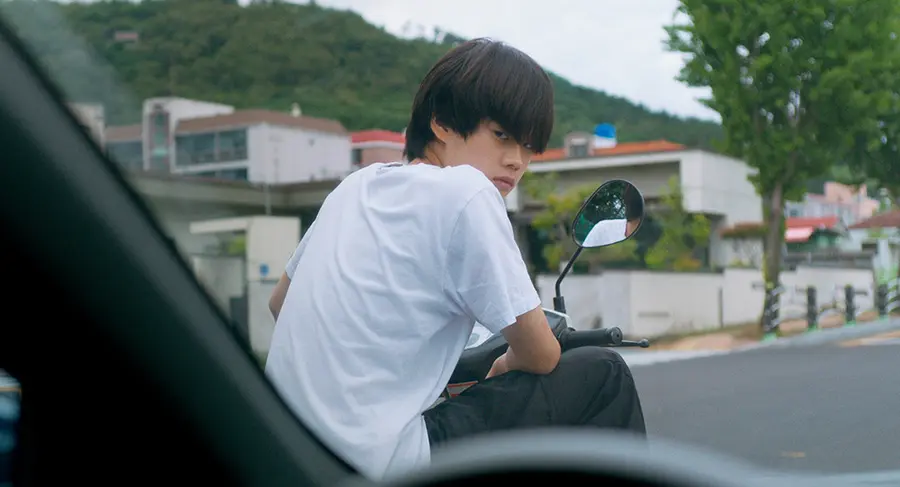
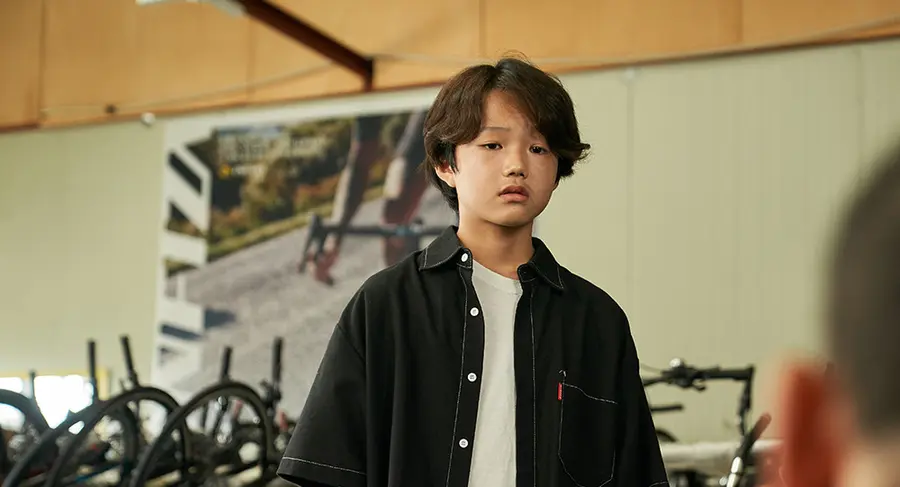
If you are an adult and still fascinated by coming-of-age films, <When Summer Passes> is a film that embodies exactly those elements. Leaving Seoul to benefit from the special admission program for rural areas, 13-year-old Gi-jun (Lee Jae-jun) arrives in a small provincial town where he meets a boy named Yeong-mun (Choi Hyun-jin) who acts like a lawless person without parental protection and gets involved in a world of violence dominated by Yeong-mun. For Gi-jun, who has been growing up steadily according to the 'standards' of adults like exams, success, and apartments, Yeong-mun is a curious existence that he can't help but be drawn to; a boy who lives by his own rules, more adult-like than adults, becomes an object of fascination and awe for Gi-jun, who is unknowingly captivated by him.
In <When Summer Passes>, Yeong-mun becomes both the narrative and the genre of the film. If the world surrounding Yeong-mun resembles the world of violence depicted in <Bleak Night>, the adults he encounters are connected to the world of children that Hirokazu Kore-eda portrays in <Nobody Knows>. In a reality where no one saves Yeong-mun in the ruins suffering from sluggish redevelopment, Director Jang Byeong-ki, who says, "I was Gi-jun at that age," immediately brings up the word 'discomfort' when looking at Yeong-mun through Gi-jun's eyes. Yeong-mun is "the children we once turned away from uncomfortably," and the film sheds light on the past summer of children who became adults without being protected in that state. By bringing in elements of a coming-of-age film, this film becomes one that rejects everything about coming-of-age films. The director does not easily present the future of these children. Instead, he wants to sharply dissect the characters as if he were Michael Haneke, through a world governed by the bitter and cruel laws of noir.
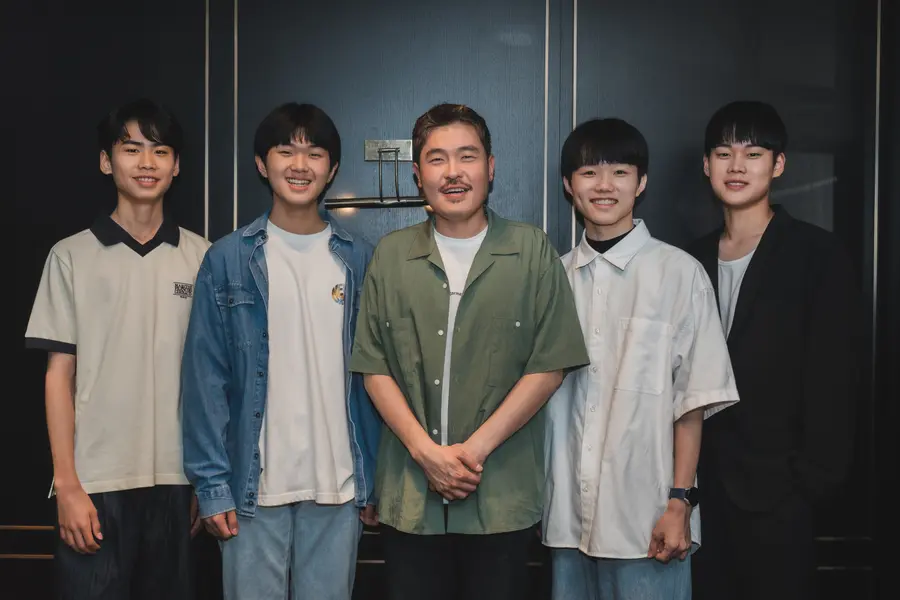
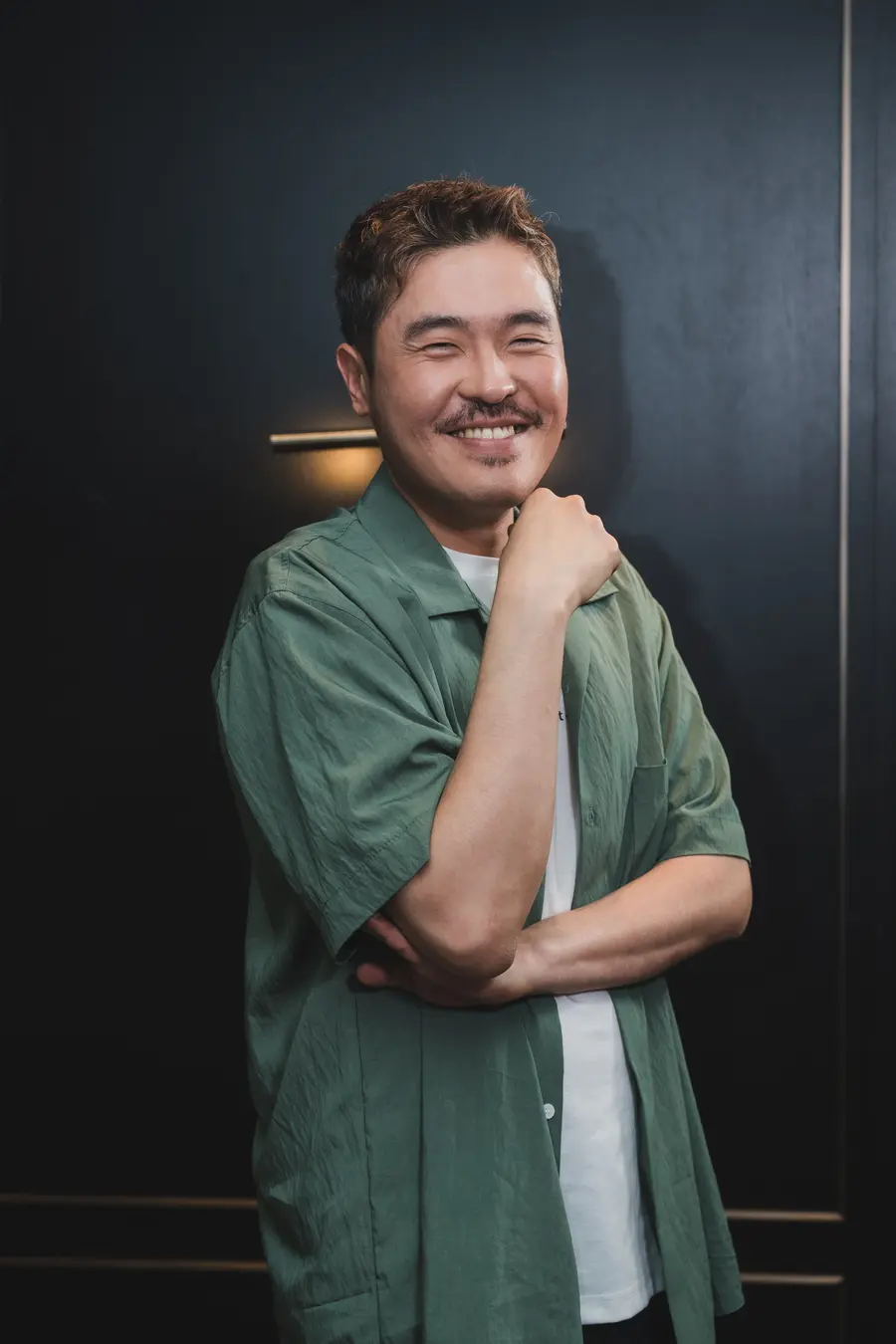
Director Jang Byeong-ki, who won the Grand Prize at the Asiana International Short Film Festival with the short film <If You Have a MacBook, You Can Do Anything> (2017) and directed shorts like <Grandma's Outing> (2019) and <Mr. Jang> (2021), has consistently participated as a staff member in the independent film scene while preparing for feature films, and has completed his first feature with this work. He studied philosophy in college and did not major in film, but until his early 30s, he endured with the optimism that 'if you work hard, the path will open.' "Since I couldn't make a living from films, I worked as a plumber in a semiconductor factory, going in and out whenever there was a film project." He has become quite skilled now and earns a decent income, but he thought that if he settled there, he wouldn't be able to make films, so he devoted himself to feature work. Now, just before the release, he is preparing for his next project while working part-time for 1.2 million won a month through the Daegu Arts Regional Project. "Of course, reality hasn't been easy, but I still don't feel like, 'Should I quit if this doesn't work out?' I think it won't be too late to decide the next path after making one more film."
With his first feature film, which garnered attention at the Jeonju International Film Festival and the Seoul Independent Film Festival last year, he is now facing the audience. The emotional shock that leans more towards collapse than growth, this bitter memory of summer shows that the emerging director Jang Byeong-ki is sharpening his knife, and after the screening, we had an interview with him.
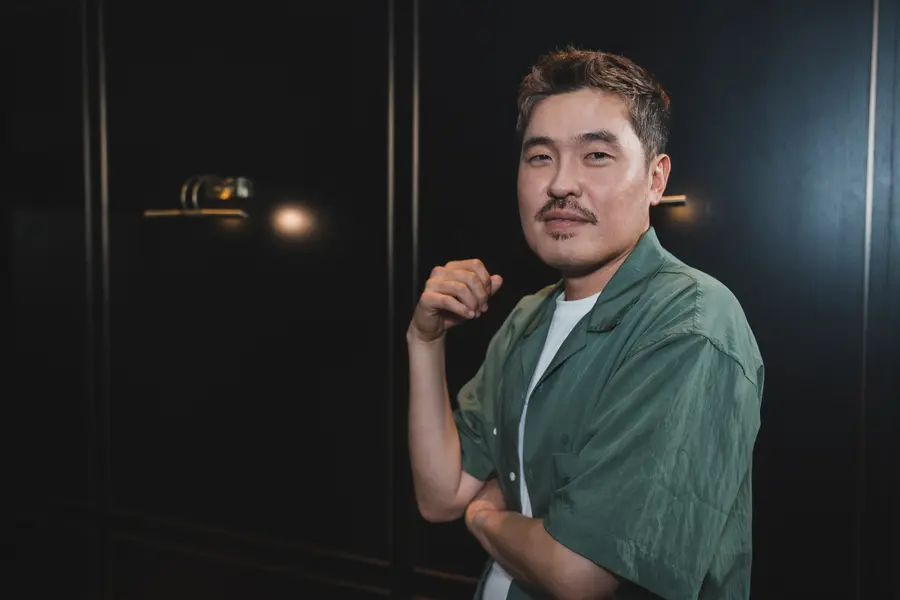
With the release on July 9 approaching, how do you feel about your first feature release?
I can't really feel it. Although it has been screened at film festivals, this is my first official release. Senior directors have warned me that 'release is a completely different experience.' They said things like, "It feels like being naked" or "It's like giving birth to your first child," and those words have all come to me as fear, so I still feel a bit dazed.
You unraveled a growth story through boys caught in social ills. Where did the starting point of the film come from?
I tend to think about 'the story I like' first rather than having a sense of mission to throw a social message. In that process, my upbringing and experiences naturally blend in. <When Summer Passes> started as part of a regional film planning and development project conducted by the Korean Film Council in 2019. I started writing the script then, and I had the image of the last scene in mind from the beginning. It was the image of two boys looking at the stadium while a military sports event was taking place at a public sports field, deciding not to play soccer anymore. I thought of placing this scene as the ending and writing a story that leads up to it. Adults might think, "So, are you saying you won't play soccer?" but for kids of that age, it's a world collapsing. I centered the story around that feeling.
The incident's origin is based on a real reality. Gi-jun's mother transfers him to a small town to take advantage of the 'special admission program for rural areas.' It seems that there have been cases of abuse in the admissions process.
Yes, that was a huge issue when I was in middle and high school. Even if your grades were poor, you could transfer to a rural area and enter a humanities high school, and the special admission program for rural areas was similar. If you cleverly utilized the administrative district boundaries, you could move to a region favorable for admissions. It was a structure that people with money and information could easily exploit. I thought that the loopholes that occurred within this system and the sense of discomfort and class consciousness that arose could be connected to the fracture between Yeong-mun and Gi-jun.
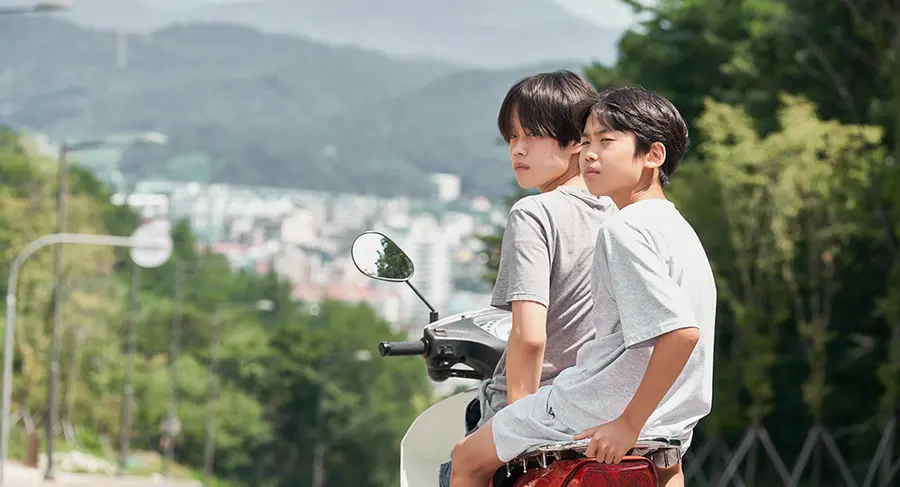
As a result, Gi-jun's confused perspective in an unfamiliar environment becomes the center of the film. The world of adults suffering from the interests surrounding apartment development is depicted as an unstable space. Where was the filming done? The realism of the space was impressive.
We mainly filmed in Ulsan Uljoo. I wanted to find an ambiguous middle ground that is neither the pretty countryside we imagine nor a city. When you get off near the KTX Ulsan Station, you feel like, "What is this neighborhood?" It's not too backward, but it feels somewhat off for a city. I thought that such an ambiguous space would fit well with this story. In addition to Ulsan, we also filmed in the Miryang area.
In that place where Gi-jun arrives, there is a character named Yeong-mun. Unlike Gi-jun, who grew up under parental protection, Yeong-mun is a character abandoned without parents. What background was Yeong-mun born from?
I created him while recalling a neighborhood older brother or friend I was scared of as a child. I remember being scared when that friend suddenly got angry, not knowing what I did wrong. Looking back now, that friend must have been losing something or had been holding back something. Now that I am an adult, when I look back at that Yeong-mun from back then, I can understand it as, "Ah, that's a reaction of someone who has never learned love." I didn't know it then, but now I can sensibly understand that character's deficiency.
If you go beyond the external violence, Yeong-mun's rough behavior seems not just violent but a way of survival, a defense mechanism.
That's right. Yeong-mun has not clearly learned what is okay and what is bad. If he had grown up in an ordinary family, he would have asked his parents and learned ethics and morals through being scolded. But Yeong-mun has a life habit that he has learned on his own. It's delinquent, and on the other hand, he finds fun in showing off to his peers. Since he hasn't learned properly, what's acceptable and what's not is ambiguous. The boundary with the world is blurred, and survival, fun, and defensive instincts overlap ambiguously. Even when he threatens someone or steals money, he has his own logic. For example, when he takes money, he says, "I'll pay you back later." He lives without clearly recognizing that it's theft.
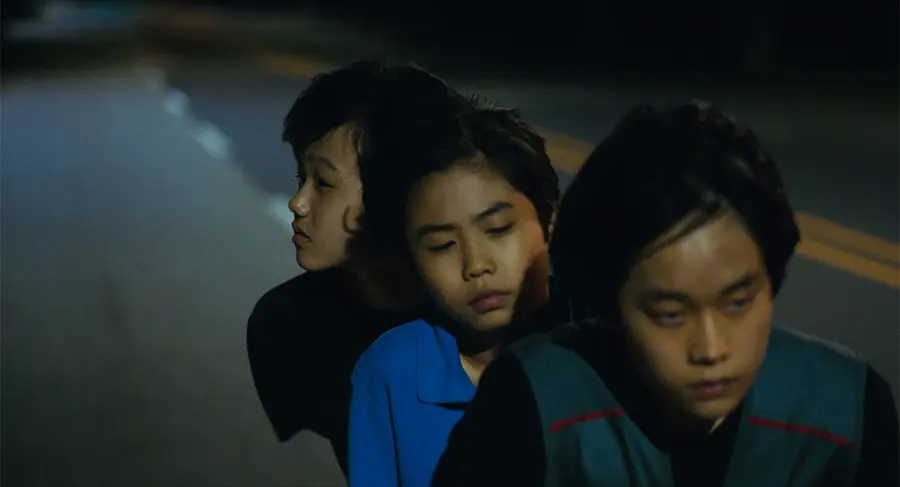
For the audience, it may be a perspective of justification for Yeong-mun. However, the level of Yeong-mun's violent language is quite high, often blocking the audience's emotional identification with him.
While making this work, I was most concerned about not glorifying violence. Yeong-mun is a character that can easily be sympathized with. I made a huge effort to keep a certain distance from Yeong-mun. If I softened the swearing a bit, I would quickly feel sympathy for Yeong-mun. So I intentionally added more swearing and wanted to keep him as a rough and uncomfortable presence until the end. Since the actors were still young, I was cautious in directing them during the shoot. There were many swear words and violent scenes. So I asked (Choi) Hyun-jin, who played Yeong-mun, "Is this kind of acting okay?" and he answered like an adult, "Director, I've done roles worse than this. I know this is acting, so it's fine." Hearing that made me very grateful and gave me trust. Of course, I wanted Yeong-mun to remain an uncomfortable presence until the end. That is the core of this story, and a certain aspect of reality.
Gi-jun quickly falls into the dark world dominated by Yeong-mun. Gi-jun's feelings towards Yeong-mun are mixed with fear and admiration that a boy of his age would have. How do you see Gi-jun as a character?
Gi-jun is a typical middle-class kid. He has received ordinary ethical education and grown up within the protection of his parents. But one day, he is drawn to a character named Yeong-mun. That can be admiration, a sense of superiority, or guilt. I thought Gi-jun was mistaking his life for that of a noir protagonist. By meeting a friend like Yeong-mun, he is under the illusion that "I have gained something." He believes he is becoming stronger by meeting a boss like Yeong-mun, like a gunslinger in a Western. He also learns to use Yeong-mun's violent methods on other kids. But ultimately, in the last scene, he cowardly runs away without taking any responsibility. At that moment, the illusion is shattered, and his noir ends. I like that scene. The mood of the film and the character's life are cut off there. That is the core of what I intended as an 'anti-coming-of-age film.' Gi-jun's noir is so insignificant, and as Gi-jun collapses, the shell of the growth story that this film had disappears.
The relationship between Gi-jun and Yeong-mun, who grew up in such different environments, is interesting. If we delve a little deeper into their feelings, I felt that there is also a melodramatic emotion of attraction between them.
Yes. I also think there is a melodramatic emotion. If you look at it in a broad sense of expressing emotions between humans. However, I didn't clearly have rational curiosity in mind. Gi-jun initially thinks of Yeong-mun as just "a kid who is smarter than others and follows him well," but when Gi-jun's father gives him money, he first feels the 'difference in environment.' That scene marks the beginning of a fracture between the two.
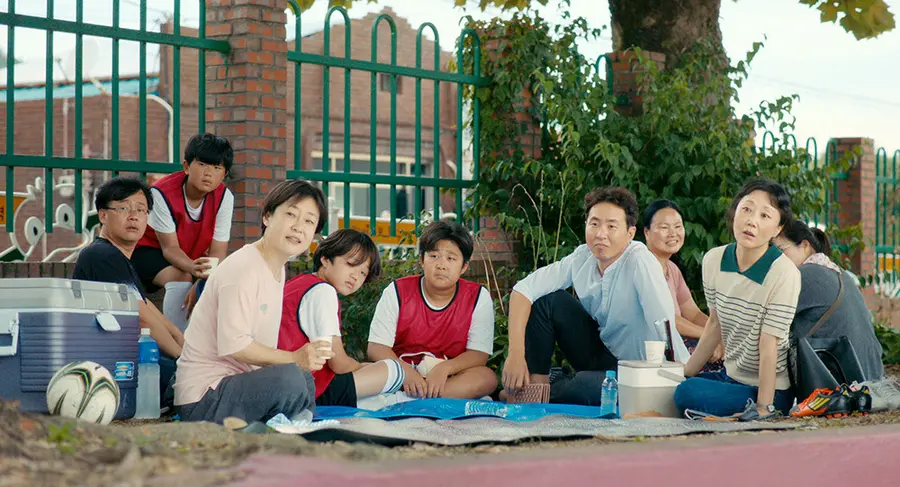
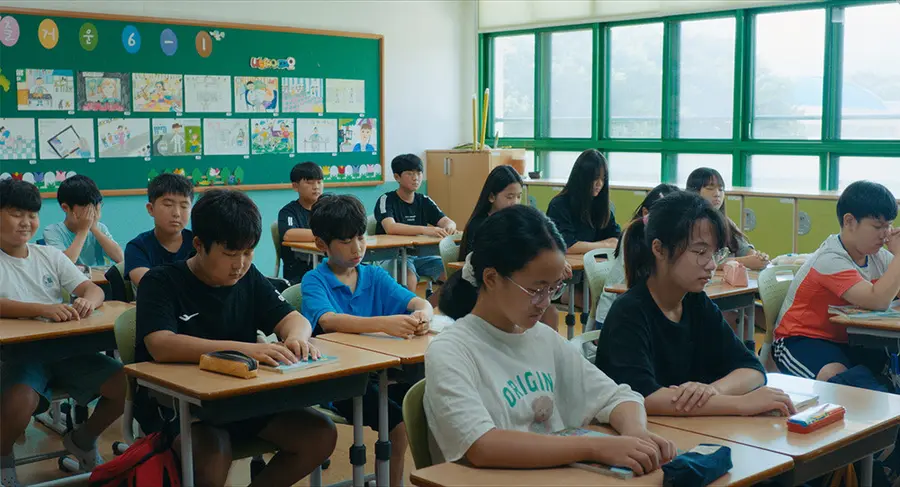
The scene depicting the confusion of Yeong-mun's feelings towards Gi-jun is impressive. He stares at Gi-jun, and when Gi-jun recognizes him, he threatens him and then immediately backtracks, saying it was a 'joke.'
When the actor Choi Hyun-jin, who played Yeong-mun, asked me, "How should I look at him?" I said, "If you were Yeong-mun, you wouldn't really understand the situation right now." The scene where a friend's father gives money to the other kid is an unfamiliar emotion for Yeong-mun. He is in a state of wounded pride that he cannot explain, but he has no language to organize it. So in the next scene, he tries to threaten Gi-jun playfully, but ultimately realizes that he is also confused and that their relationship is not the same as before.
If we observe the roles and actions of adults through Gi-jun's parents, teachers, and neighborhood adults, all the adults in this film are imperfect. The perspective of compassion is all there is, and ultimately, they make Gi-jun realize, 'Do you think you are the same as those kids?' which highlights the differences in class and environment. This perspective of discrimination also provides a form of popular drama. For example, Gi-jun's mother is representative of a scene where she tries to separate Yeong-mun from Gi-jun.
Gi-jun's mother thinks she can help Yeong-mun. She thinks that if she buys him delicious food and advises him, it will be enough. While she has a good heart to want to keep some distance from Gi-jun, Gi-jun's experiences are much higher than what this mother thinks.
Although it borrows all the elements of a coming-of-age film, I felt that the skeptical perspective you mentioned ultimately blocks their growth.
I think this work is not a coming-of-age film. Rather, it is a story of 'collapse disguised as growth.' I thought this story should be uncomfortable to conclude with the word growth. Gi-jun will probably live a life similar to that of his mother if he becomes an adult. Yeong-mun and Yeong-jun, Yeong-mun's younger brother, are children completely pushed out of the social system. The reality itself is already destroyed, and it is a structure that does not even provide comfort. So this film is one that says, 'This world is not beautiful.' All the characters are flawed, hypocritical, and cannot fully save anyone. Both Gi-jun and Yeong-mun are just part of a passing summer. I made this film hoping that it would not be seen as a coming-of-age drama.

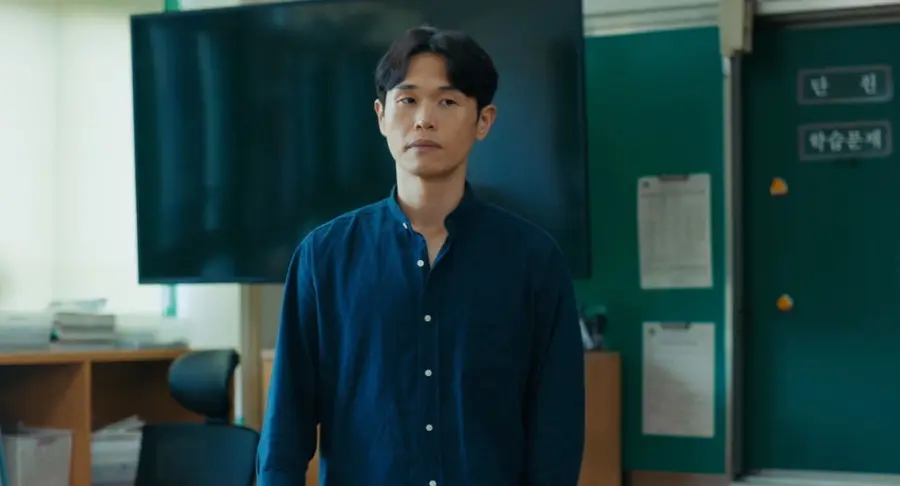
If Yeong-mun's character represents the emotion of this film, I feel that it combines the emotions and genre devices of Hirokazu Kore-eda's <Nobody Knows> and Yoon Sung-hyun's <Bleak Night>.
I like those films a lot. I didn't directly reference them, but I may have been unconsciously influenced. However, I actually really like the film style of (Michael) Haneke. Of course, I like Hirokazu Kore-eda, but my taste leans more towards the dry and unpleasant side. When I was filming, the cinematographer asked for references, so I showed him Haneke's <Happy End> (2017).
The external expressions of the characters are also an important point. Just as Gi-jun is fascinated by Yeong-mun, I think the audience also needed a mysterious or absolute fascination with the adolescent boy Yeong-mun. Yeong-mun's long hair, which covers his eyes and blocks his emotions, is used as a symbol of rebellion and freedom. Gi-jun, who wants to imitate Yeong-mun, also grows his bangs and hears his father's scolding. How did you go about character design?
In the script stage, I set Yeong-mun to have a more 'approachable' impression, rough and realistic. But when we got into pre-production and discussed with the staff, there were many opinions that it would be nice if he looked cool. Eventually, I accepted that direction, and Hyun-jin, who was cast through auditions, started to grow his hair. He originally had short hair, but we decided to grow it for the character. On the other hand, I wanted Gi-jun's hairstyle to change more dramatically. In the middle of the film, there is a scene where Gi-jun shaves his head, which I wanted to express the change of image and the flow of the seasons. However, since the actor was involved in another project, we couldn't completely change his style. So I let his bangs down as much as possible and tried to capture the feeling of wanting to imitate Yeong-mun.
This work was important for the chemistry between the young actors centered around Yeong-mun and Gi-jun. Their natural and detailed acting stands out. How did you direct their acting?
This was my first time working with minor actors. They were 13, 14, and 15 years old, and I felt that these kids were as professional as adults during auditions and readings. It took some time to get used to it, and there were mistakes at first. During the first shoot, I shouted "OK!" loudly to actor Choi Hyun-jin, and the other actors heard it. Naturally, comparisons became inevitable. After that, I was more careful in giving signals. In particular, directions like 'This scene was good, do it like that again' made the actors conscious. So later, I guided them without explaining the reason, saying, "It's good, let's do it once more." Later, the actors even interpreted that 'saying it's good and doing it again means the director is not satisfied yet.' (laughs) It seems that became my signature later. On the last day of shooting, Hyun-jin's mother prepared a surprise gift, and on the ribbon, it said, "It's good. Let's do it once more." The gift was funny and touching. Since I communicated with the child actors in that way, I felt more motivated to shoot well.
How would you define the 'summer' mentioned in the title? It seems that it could be a summer that is so hot it could hurt.
The summer referred to in the film is the summer of Yeong-mun and his brother. For Gi-jun, 'summer' can come again. He can return to Seoul, reset, and start anew under a different name, living a new summer. But for Yeong-mun, this summer is the last. There is no longer a school or a home where he can get free meals. He is a child who no longer plays soccer and has to leave somewhere. So the title 'When Summer Passes' applies to this child. It means that Yeong-mun's summer has ended. It is also a time of losing something in that heat. I think the pain that comes with growth or something irreversible is embedded in summer.
Finally, if you could make an excuse for Gi-jun's cowardice?
I think I could describe Gi-jun more harshly because I was Gi-jun at that age. Now that I am an adult, I was closer to Yeong-mun. If I were to excuse Gi-jun, I think it was unavoidable at that age and in that environment. His mother is harsh, school is cold, and his relationship with Yeong-mun is complicated. Gi-jun also had few options. He just did his best with what he could do. Ultimately, that is also the structural cowardice that reality gives. So I think it's hard to say that Gi-jun's actions are simply bad.
댓글 (0)
댓글 작성
댓글을 작성하려면 로그인이 필요합니다.
로그인하기