


I am captivated by music in film. Music often conveys a character's intimate emotions that images and dialogue alone cannot fully express. It can be a window into a creator's hidden intent. For me, understanding film music is one path to understanding the film itself. "Choo A-young's Music Box" listens to a film's voice up close through its music. (P.S. Please listen to the music while you read.)
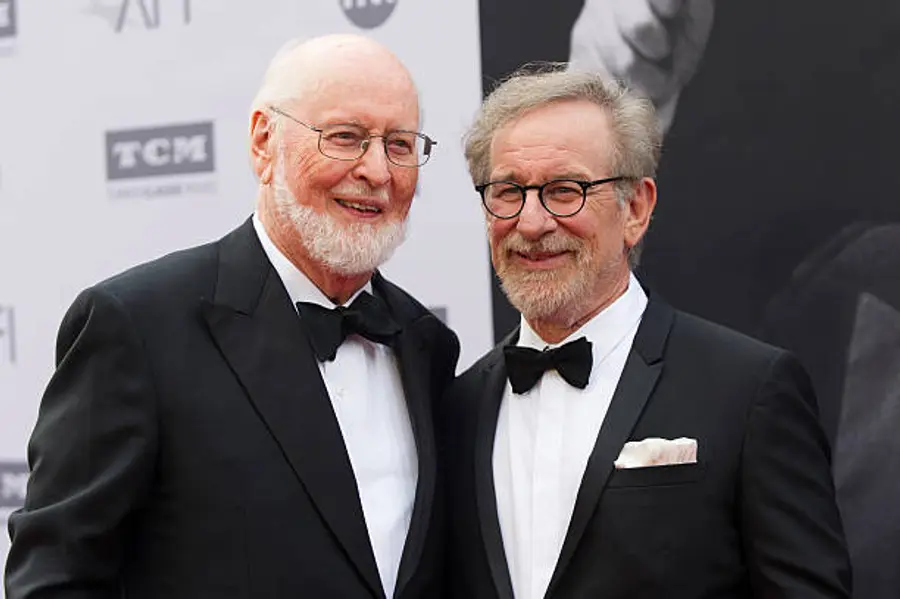
Steven Spielberg and composer John Williams, who have worked together for more than half a century, return with their 30th collaboration, 〈Disclosure Day〉. John Williams has worked with Spielberg on numerous films, from Spielberg's feature debut 〈The Sugarland Express〉 (1974) through 〈Disclosure Day〉. Among those, the music he produced for 〈Jaws〉, 〈Indiana Jones〉, 〈E.T. the Extra-Terrestrial〉, and 〈Jurassic Park〉 remains so indelible that many people immediately hum the melody when they think of the films. Williams's scores have always played a central role in moving audiences and heightening emotion in Spielberg's films. In tribute to John Williams, who received the 2016 AFI Life Achievement Award, Spielberg said of Williams's music: "Without John Williams, the bicycle in 〈E.T. the Extra-Terrestrial〉 wouldn't fly, the brooms in Quidditch wouldn't fly in 〈Harry Potter〉, and the man in the red cape wouldn't fly in 〈Superman〉. There would be no Force in 〈Star Wars〉, and dinosaurs wouldn't walk the Earth in 〈Jurassic Park〉. We wouldn't be awed, we wouldn't cry, and we wouldn't believe." Their latest collaboration invites a fresh look at the path Spielberg and Williams have traveled together and at the many themes Williams wrote along the way.
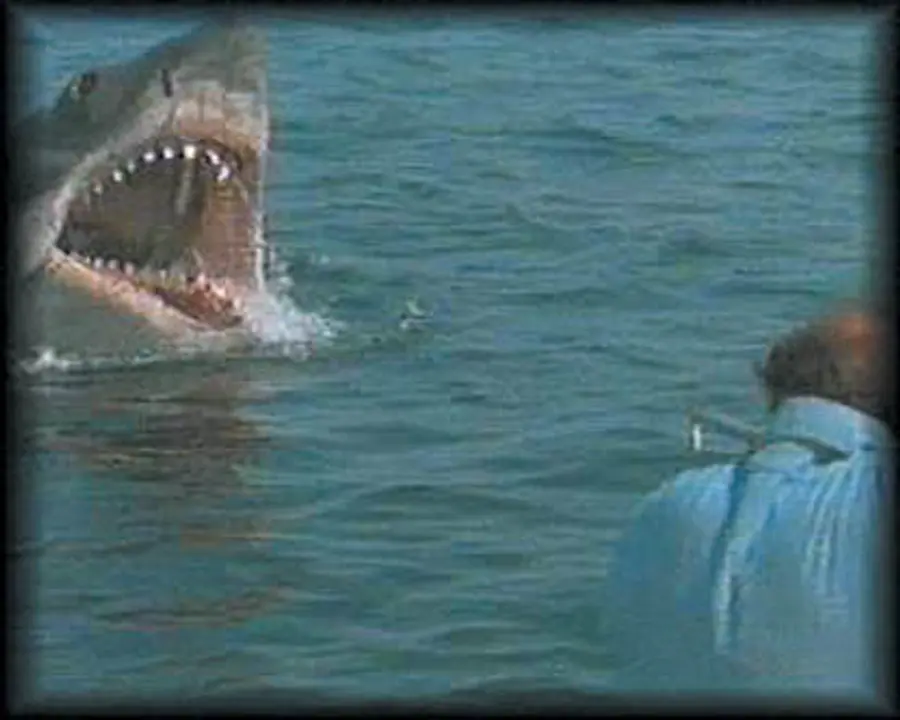
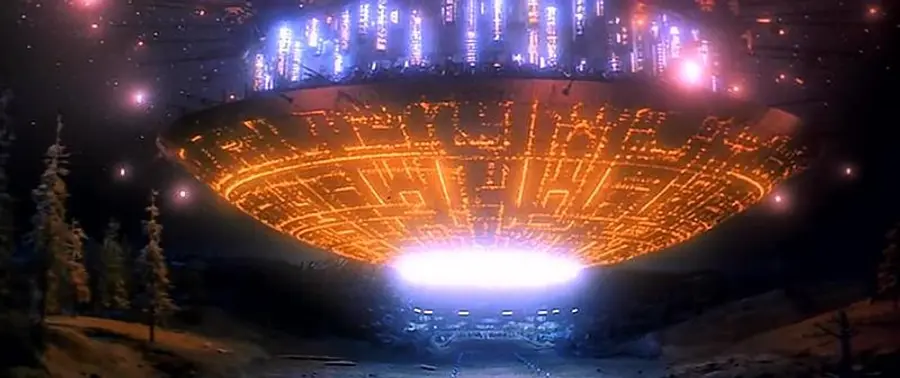
In 〈Jaws〉 (1975), Williams used a repeated two-note ostinato — a musical device in which a motif, melody, or rhythm repeats throughout a piece or passage — in the piece "Main Title (Theme From Jaws)" to chillingly signal the unseen shark's approach. Spielberg admitted that when he first heard the simple motif built on just two notes he thought it was a joke, but the result became one of the most famous ostinatos in film history. The combination of low strings and brass in the piece evokes the primal terror of humans fighting for survival in the underwater camera scene where the shark first appears. Williams's effective use of two notes expands to five in 〈Close Encounters of the Third Kind〉 (1977), creating a wondrous sequence of communication with extraterrestrials. The piece that accompanies the scene in which humans communicate with the UFO mothership for the first time, "Wild Signals," showcases Williams's aesthetic judgment aligned with Spielberg's thematic concerns: he represents human music as tonal while portraying the mothership's sounds atonal, yet he avoids a mechanical synthesizer and uses the tuba to make the mothership sound like a "friendly other."
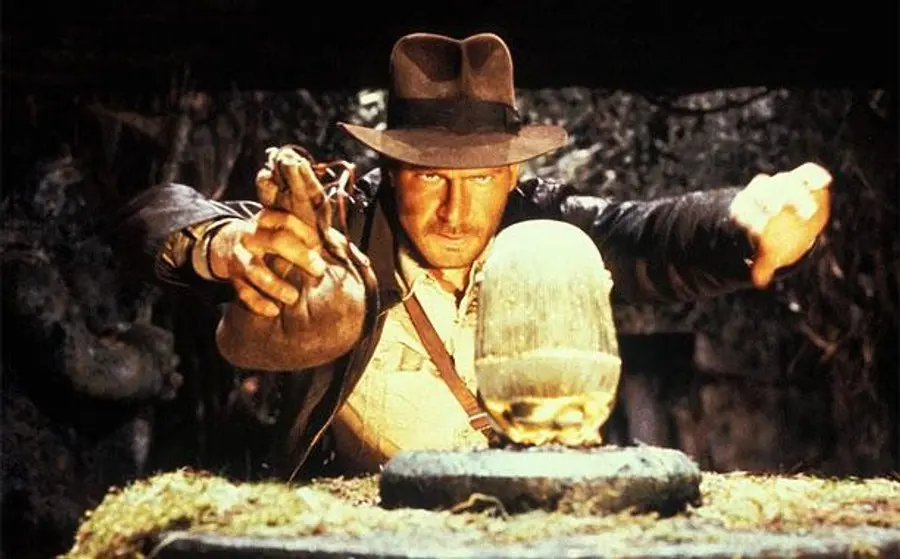
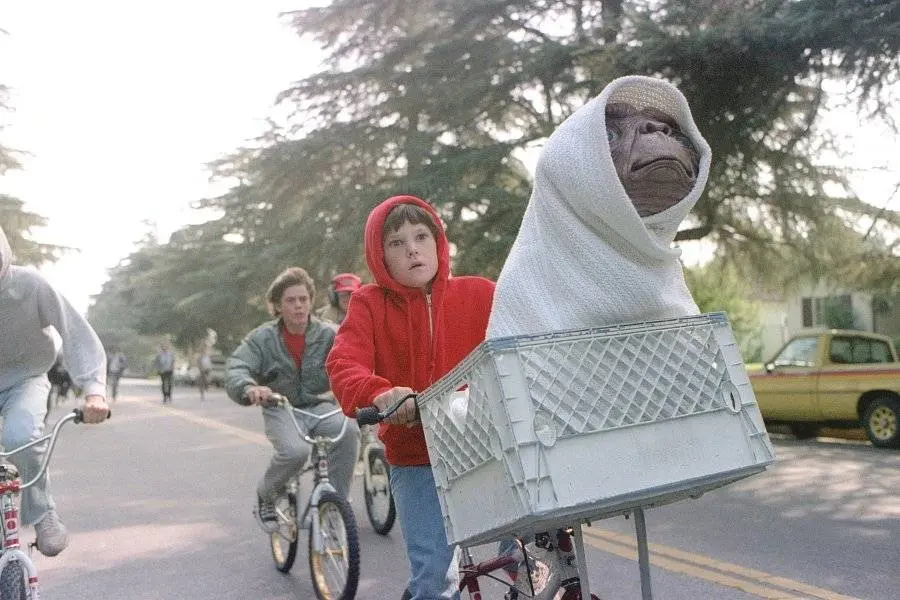
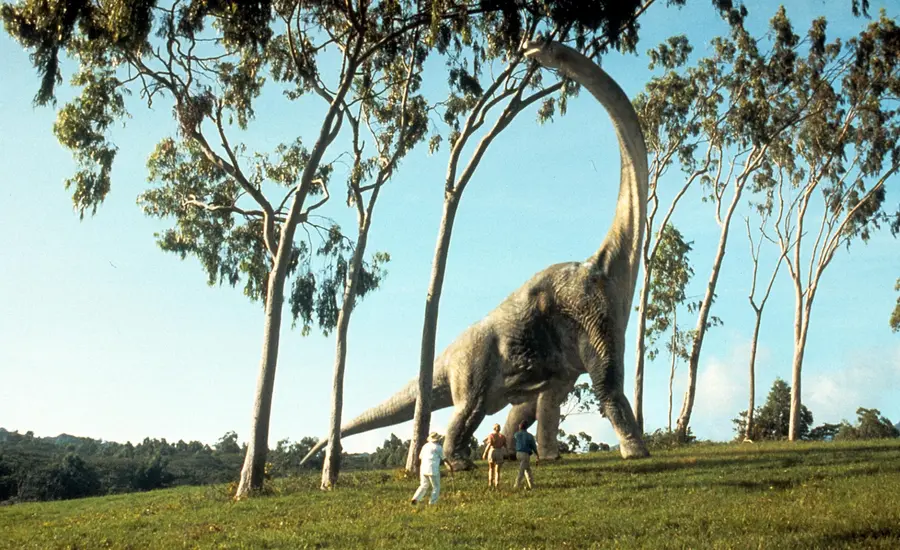
The music "Raiders March" from 〈Indiana Jones〉 (1981–2023) has become an iconic adventure theme in film history. Four trumpets playing the same melody simultaneously produce a firm, martial sound that suggests the stride of a hero marching proudly. Intervening syncopated notes add a bouncy quality that musically expresses Indiana Jones's (Harrison Ford) quick-wittedness in moments of danger. In the films, "Raiders March" typically appears whenever Jones is in action, becoming as closely associated with the character as his whip and fedora. With this single piece, Williams captured the heroism, confidence, humor, and humanity of the character. 〈E.T. the Extra-Terrestrial〉 (1982) is an extreme example of how Williams's music determined a film's structure. Spielberg first had 15 minutes of music recorded for the scene in which Elliott's bicycle flies, then edited the footage to match the music's rhythm. At the moment the bicycle rises into the sky, Williams taps the magic of the Lydian mode: by raising the fourth scale degree (the "F" in a typical scale) by a half step, the Lydian mode adds a subtle change that makes the flying scene feel mysterious and wondrous. At that instant, the orchestra soars into bright, open highs, expressing release from gravity. The music "Theme From Jurassic Park" from 〈Jurassic Park〉 (1993) best captures the sense of wonder that is central to Spielberg's worldview. The theme appears when people enter the park and first see a Brachiosaurus. The majestic horns convey the enormous joy, excitement, and awe of witnessing living dinosaurs. The theme's simple but powerful three-note motif becomes a melody audiences remember. The piece appears throughout the franchise, even in films for which John Williams did not compose the score.
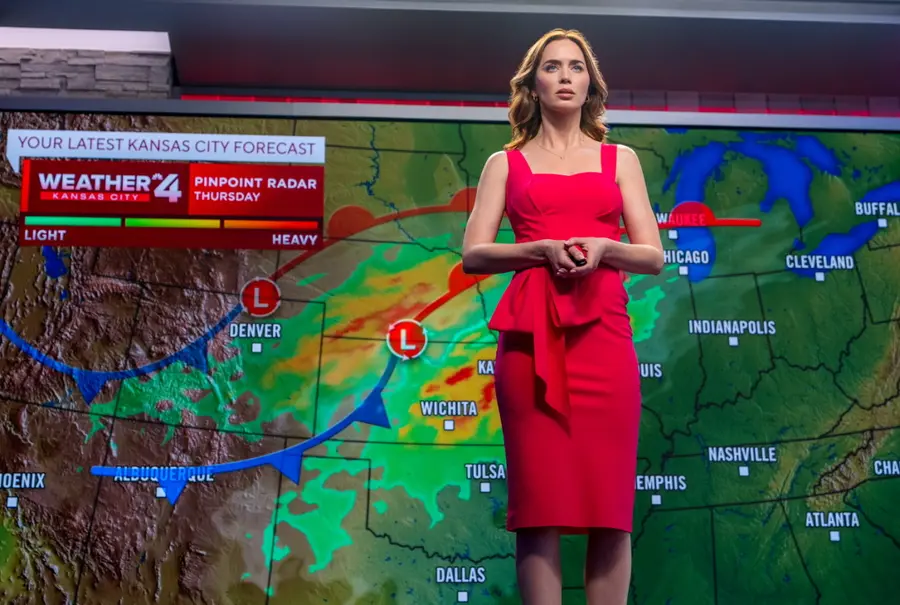
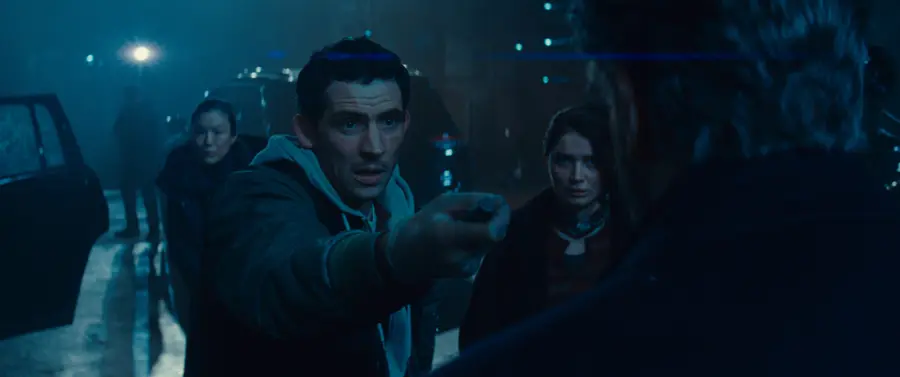
Within Steven Spielberg's filmography, 〈Disclosure Day〉 serves as a kind of coda to the questions he has raised throughout his career about the unknown. It not only recalls his science-fiction films such as 〈Close Encounters of the Third Kind〉, 〈Minority Report〉 (2002), and 〈War of the Worlds〉 (2005), but—because it also exposes a massive governmental cover-up—evokes works like 〈The Post〉 (2017). The film feels like a summation of Spielberg's worldview, recalling many of his earlier works. The film collects and consolidates Spielberg's worldview, so collaborating with John Williams, his partner for decades, was essential. The 94-year-old Williams turned down scoring the film several times, but eventually agreed after Spielberg persuaded him.

As Spielberg has said, he described the score for 〈Disclosure Day〉 as "the most restrained" of the works he and Williams have created together: it primarily supports the images and focuses on shaping the film's atmosphere. Overall, the orchestration—featuring prominent brass and strings—balances grandeur with poignancy. At the center of the soundtrack is the track "listen…," which best embodies the film's theme that "humanity must listen to one another." It opens with a lone brass solo, underscoring the film's portrait of a humanity that cannot see what is coming and fails to listen to one another. The track closes with deep, gentle string passages, layering Williams's characteristic warm texture that is simultaneously melancholy and hopeful. The music of 〈Disclosure Day〉 unites the voices of two giants of cinema who have worked together for half a century.
![[Chua-young's Music Box] The Meta Representation of Subculture 'Cosmic Princess Kaguya!' with 'World Is Mine' and 'Reply'](https://cdn.www.cineplay.co.kr/w400/q75/article-images/2026-02-12/09350b70-b012-4e2f-a254-046f646e2d8d.jpg)
![[Choo A-young’s Music Box] After Anger, ‘Oasis: Don’t Look Back in Anger’ Sings Again](https://cdn.www.cineplay.co.kr/w400/q75/article-images/2026-09-10/323f8c2a-129f-4107-b190-114253e0c827.jpg)
![[Chua-young's Music Box] Why Did 'What If We' Resonate with Today's Youth? The Romance Fantasy of the Non-Dating Generation](https://cdn.www.cineplay.co.kr/w400/q75/article-images/2026-01-28/113b25b0-ce84-47ff-807d-5dc4657e02d2.jpg)
![[Chua-young's Music Box] The Screams of 'The Shining', the Auditory Discomfort Created by Krzysztof Penderecki's Music](https://cdn.www.cineplay.co.kr/w400/q75/article-images/2025-12-17/2667f27c-46b5-45d4-bf2d-7bf2b656ff21.jpg)
![[Chu Ah-young's Music Box] Michael Jackson's 'Thriller' and 'Heal the World' That Tried to Turn Dreams into Reality](https://cdn.www.cineplay.co.kr/w400/q75/article-images/2026-05-21/ffa1b48f-3611-45b6-a14a-e3e0aea5b392.jpg)
![[Chua-Young’s Music Box] Music for the Purification Ritual of Wounded Youth: “Girls Band Cry”](https://cdn.www.cineplay.co.kr/w400/q75/article-images/2026-04-22/10da8998-3cb2-462f-8af6-4063689a916d.jpg)
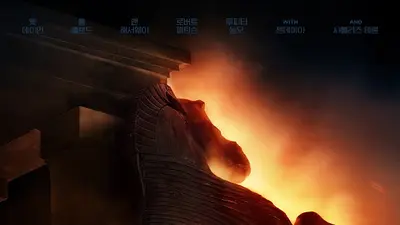
![[Chua-young's Music Box] May Madness Reign on This Land! '28 Years Later: The Bone Temple' and 'The Number of the Beast'](https://cdn.www.cineplay.co.kr/w400/q75/article-images/2026-03-11/1a6d94b0-98c1-4b3b-8f0f-dd2d9ac48c7d.jpg)

![[Chua-young's Music Box] The Music of 'Pavane' Following the Path of Love](https://cdn.www.cineplay.co.kr/w400/q75/article-images/2026-02-26/cc89ea7d-356d-492c-8168-136478d2e26d.jpg)
![[Chua-young's Music Box] The Coexistence of Sorrow and Hope 'Super Happy Forever' and 'Beyond The Sea'](https://cdn.www.cineplay.co.kr/w400/q75/article-images/2026-01-14/2315abe7-c0c7-4f3f-8774-9a2b0f578550.jpg)
![[Chua-Young’s Music Box] ‘Project Hail Mary’—A Story of Humanity’s Trembling at the Brink of the End, and ‘Sign of the Times’](https://cdn.www.cineplay.co.kr/w400/q75/article-images/2026-04-09/23d4b16b-49c1-47dd-a17a-1e939faddd12.jpg)


![[First Reaction] ‘Family Trip’ Cineplay Reporter Star Rating](https://cdn.www.cineplay.co.kr/w300/q75/article-images/2026-09-16/084269eb-f40e-4e00-a301-dfb9b6caf8e7.jpg)
![[Chu Ah-young's Music Box] Michael Jackson's 'Thriller' and 'Heal the World' That Tried to Turn Dreams into Reality](https://cdn.www.cineplay.co.kr/w160/q75/article-images/2026-05-21/1d25aa5b-22b9-4726-a711-46af213e6dbd.jpg)
![[Sung Chan-eol's Comics] 「Kindergarten WARS」 Turns Body Count Into Bizarre Rom-Com Fun](https://cdn.www.cineplay.co.kr/w160/q75/article-images/2026-06-05/221afd8b-f5c6-4783-8701-231772950150.jpg)
![[Joo Seong-cheol’s Locker] Do You Know the Origin of Woody in “Toy Story”?](https://cdn.www.cineplay.co.kr/w160/q75/article-images/2026-06-16/dab26609-a71b-403b-917e-b99ff185949c.jpg)
![[Kim Ji-yeon's Treasure Box] The Actor Buzzworthy Dramas Discovered First: Chae Seo-an of 'Brave New World' and 'The Great Lady of the 21st Century'](https://cdn.www.cineplay.co.kr/w160/q75/article-images/2026-06-16/9bc1efd8-70d1-4036-97f1-1e02f5afcb4b.jpg)
댓글 (0)
댓글 작성
댓글을 작성하려면 로그인이 필요합니다.
로그인하기