


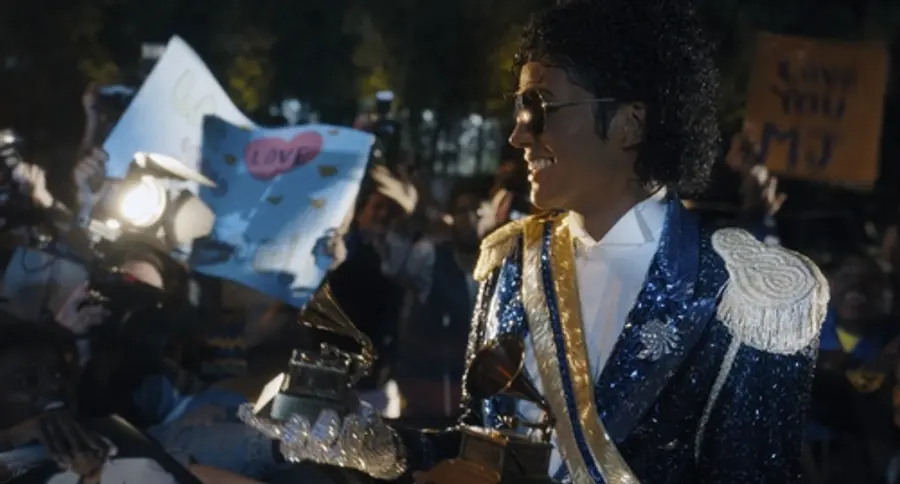
Michael Jackson is an artist who left one of the most powerful marks in the history of pop music. Having taken the stage as a member of the Jackson 5 before he turned ten, he later set a Guinness World Record for the best-selling album of all time with his solo album 'Thriller' and earned the title "King of Pop." Aiming for a unified art form that fused music and dance with music videos and fashion, he was not simply a pop star of his era but a genius artist who reshaped the landscape of 20th-century popular culture. Yet Michael Jackson was always accompanied by scandal as much as praise for his genius—a figure woven together by both worship and revulsion. Antoine Fuqua's film 〈Michael〉 reintroduces this complex person—whose life cannot be defined by a single film—to the public by focusing on two of his many identities. One is the "film-obsessed artist" Michael, who designs dance and stagecraft with gestures and imagination learned from silent-film slapstick, classic musicals, and horror movies on screen; the other is the Michael who loved animals and children and tried to bring a fairy-tale world into reality—the "harmless and pure" Michael. Michael's two faces intersect and sometimes fuse within the film to complete his portrait. Among the many iconic songs that capture Michael's life and values, 'Thriller' and 'Heal the World' each reflect these two aspects well. Centering on these two songs, this piece rereads the film 〈Michael〉 and his life.
The Film-Obsessed Artist Michael
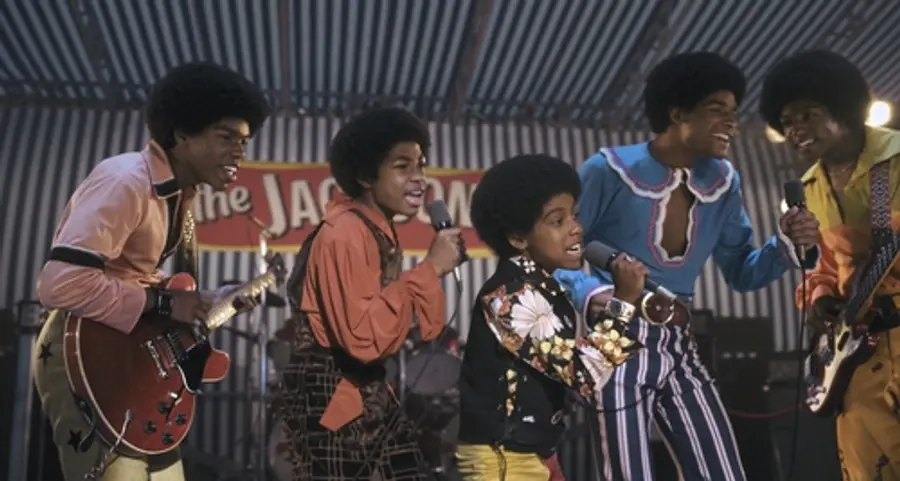
The film goes back to Michael's childhood, when he was performing in pubs and clubs, played by Jaafar Jackson and Juliano Cruvaldi. Despite being tormented day and night by his father Joe's (Coleman Domingo) abusive training and exploitation, Michael genuinely loved singing and dancing. From his early years as an undiscovered gem, he absorbed the energy of contemporary star James Brown by repeatedly practicing Brown's moves. This scene hints at the influence Brown had on him. In fact, Michael refined James Brown's dances and movements with meticulous care and transformed them into his own. He once said that he "found the origin of his performance" in James Brown's shows. In this way, Michael Jackson actively sought inspiration from other artists and pursued an artistic methodology of converting it into his own language. This methodology continued through his engagement with film.
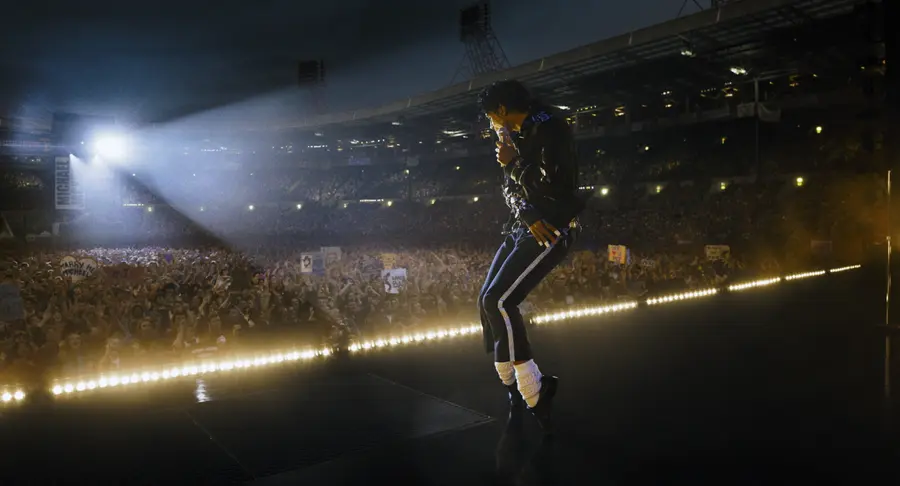
In the film, Michael watches many movies alone or with his mother Katherine Jackson (Nia Long). Michael's rapt attention to Charlie Chaplin's 〈Modern Times〉 (1936) and Gene Kelly's 〈Singin' in the Rain〉 (1952) reveals his affection and respect for them. Chaplin in particular is directly referenced throughout the film. Chaplin deeply influenced Michael Jackson's development of dance as a medium for storytelling. Michael absorbed Chaplin's method from the silent era—eliciting laughter and tears through facial expression, gesture, and gait without dialogue—and attempted to tell emotions through dance and gesture alone. The 'Billie Jean' stage costume—fedora, snug jacket, pants showing the ankles, white socks, and black shoes—evokes Chaplin's tramp character. Michael's iconographic image, solidified by the 'Billie Jean' stage costume, imprinted itself across the globe like Chaplin's tramp. Michael resonated with Chaplin not only on the level of costume and stage movement but on a deeper level: behind Chaplin's slapstick that makes people laugh there is sorrow, and Michael likewise hid his isolation and sadness while performing dazzling dances on stage. Michael said in an interview, "Chaplin knew how to make you laugh and cry at the same time. (...) Sometimes I feel as if I am him." Michael often declared that he carried on Chaplin's art and staked a claim to being his heir, becoming a clown for the public in the same way. Antoine Fuqua goes further than merely showing Michael's affection for Chaplin; by bringing in historical scenes from 〈Modern Times〉, he likens Michael—who was made to work from childhood under his father's exploitation and folded into the gears of the massive music industry—to Charlie Chaplin.
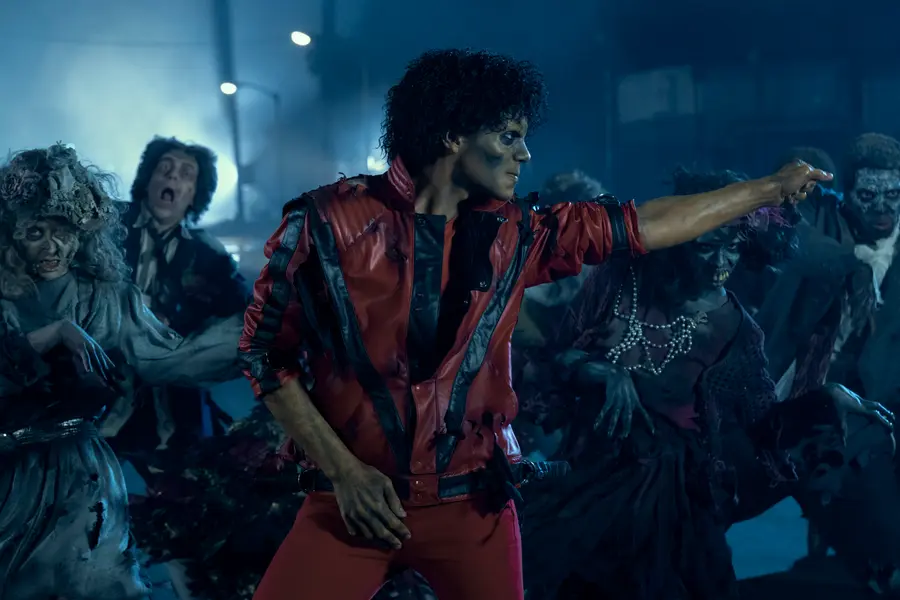
Moreover, 〈Michael〉 references footage from the horror films Michael loved, such as George A. Romero's 〈Night of the Living Dead〉 (1968), 〈House of Wax〉 (1953), and 〈The Fly〉 (1958). Along with those works, Michael was influenced by John Landis's 〈An American Werewolf in London〉 (1981) and the Universal Monsters horror films, which led him to produce the 'Thriller' music video as a short film. John Landis directed the 'Thriller' music video at Michael's request. The 'night of terror' landscape depicted in the lyrics of 'Thriller' is eerie like a scene from Romero's 〈Night of the Living Dead〉, and that atmosphere is reflected in the music video. In fact, Michael—who had trauma from his father Joe dressing up as a robber to frighten him and his brothers in childhood—preferred the campy B-movie flavor of horror rather than strict, orthodox horror films. This taste was reflected in his collaboration with John Landis, who was adept at the comic-horror grammar of B-movies, in the 'Thriller' MV. Reborn as a short horror film, the 'Thriller' MV was recognized as historically, culturally, and aesthetically important and became the first music video ever added to the United States National Film Registry. The work on 'Thriller' and its music video best reveal Michael's cinephile side.
The Neverland He Never Reached
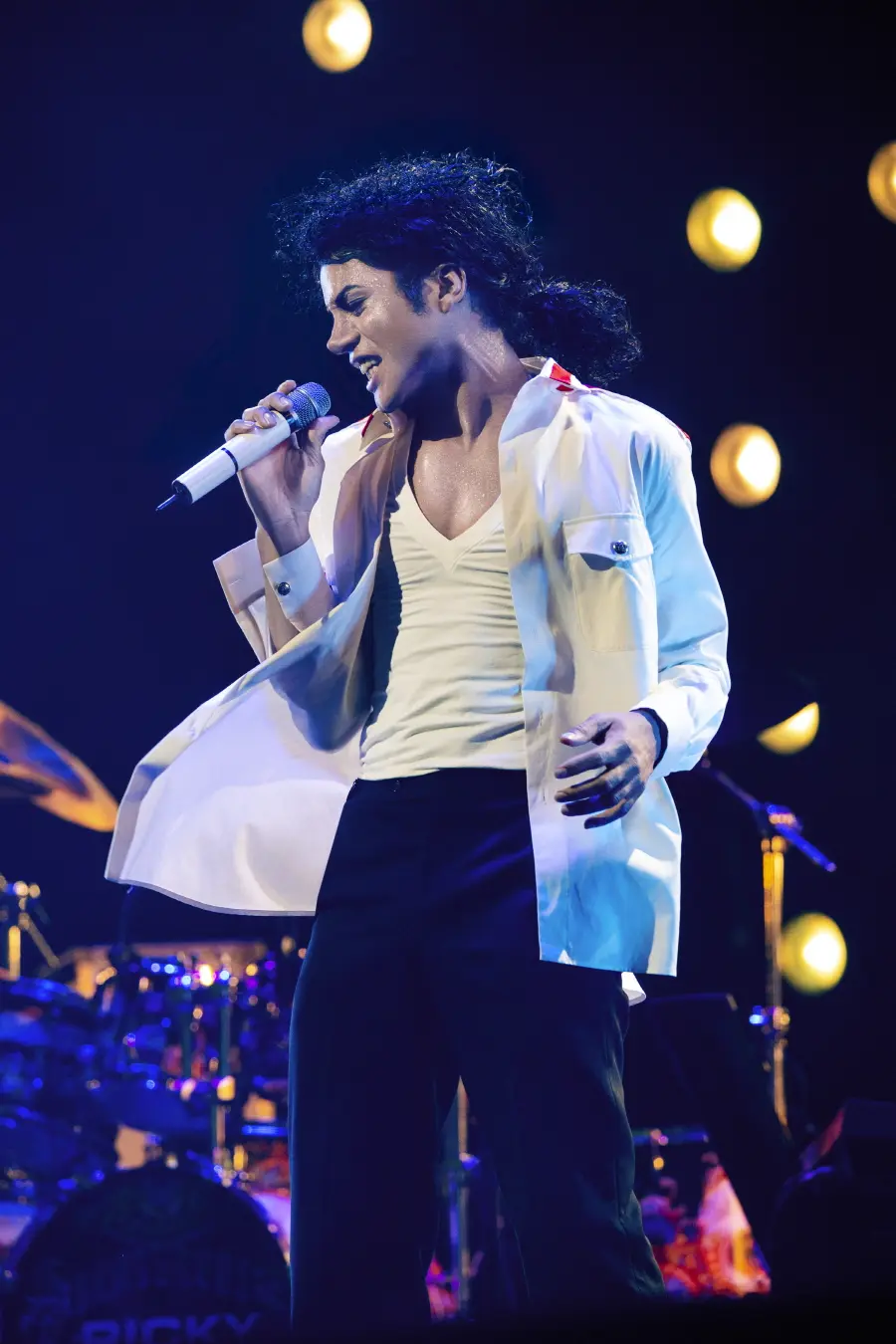
In fact, the song 'Heal the World' does not appear in this film. Michael Jackson wrote the song to make a better world, and the film includes a scene in which Michael, lying in a hospital bed, looks at the storybook 「Peter Pan」 and says he "wants to heal the world." The film frames the conflict between Michael and his father Joe—who abused the children—in a clear good-versus-evil structure and repeatedly shows Michael dreaming of a 'Neverland' that could protect children's happiness. Within the film's narrative development, the scenes in which Michael builds Neverland to realize his dream and the Super Bowl halftime performance where he sings 'Heal the World' with children are "obligatory scenes" that must be witnessed before the story ends. Those moments had to be included in this film for the story's completeness, regardless of whether a sequel would be made. Screenwriter Robert McKee said of obligatory scenes that "because the writer has lured the audience into expecting this moment, the writer has an obligation to keep the promise and show it." The film's failure to provide a complete ending became entangled with a belatedly discovered legal clause in a settlement with the Chandler family, who had accused Michael of child molestation. Nevertheless, the cautious choice to prematurely stitch up the film's ending by turning away from the reality in which Michael achieved his dream leaves a deep sense of regret.
![[Chua-young's Music Box] The Meta Representation of Subculture 'Cosmic Princess Kaguya!' with 'World Is Mine' and 'Reply'](https://cdn.www.cineplay.co.kr/w400/q75/article-images/2026-02-12/09350b70-b012-4e2f-a254-046f646e2d8d.jpg)
![[Choo A-young’s Music Box] After Anger, ‘Oasis: Don’t Look Back in Anger’ Sings Again](https://cdn.www.cineplay.co.kr/w400/q75/article-images/2026-09-10/323f8c2a-129f-4107-b190-114253e0c827.jpg)
![[Chua-young's Music Box] Why Did 'What If We' Resonate with Today's Youth? The Romance Fantasy of the Non-Dating Generation](https://cdn.www.cineplay.co.kr/w400/q75/article-images/2026-01-28/113b25b0-ce84-47ff-807d-5dc4657e02d2.jpg)
![[Chua-young's Music Box] The Screams of 'The Shining', the Auditory Discomfort Created by Krzysztof Penderecki's Music](https://cdn.www.cineplay.co.kr/w400/q75/article-images/2025-12-17/2667f27c-46b5-45d4-bf2d-7bf2b656ff21.jpg)
![[Chua-Young’s Music Box] Music for the Purification Ritual of Wounded Youth: “Girls Band Cry”](https://cdn.www.cineplay.co.kr/w400/q75/article-images/2026-04-22/10da8998-3cb2-462f-8af6-4063689a916d.jpg)
![[Chua-young's Music Box] May Madness Reign on This Land! '28 Years Later: The Bone Temple' and 'The Number of the Beast'](https://cdn.www.cineplay.co.kr/w400/q75/article-images/2026-03-11/1a6d94b0-98c1-4b3b-8f0f-dd2d9ac48c7d.jpg)

![[Chua-young's Music Box] The Coexistence of Sorrow and Hope 'Super Happy Forever' and 'Beyond The Sea'](https://cdn.www.cineplay.co.kr/w400/q75/article-images/2026-01-14/2315abe7-c0c7-4f3f-8774-9a2b0f578550.jpg)
![[Chua-young's Music Box] The Music of 'Pavane' Following the Path of Love](https://cdn.www.cineplay.co.kr/w400/q75/article-images/2026-02-26/cc89ea7d-356d-492c-8168-136478d2e26d.jpg)
![[Chua-Young’s Music Box] ‘Project Hail Mary’—A Story of Humanity’s Trembling at the Brink of the End, and ‘Sign of the Times’](https://cdn.www.cineplay.co.kr/w400/q75/article-images/2026-04-09/23d4b16b-49c1-47dd-a17a-1e939faddd12.jpg)


![[Chua-Young’s Music Box] Music for the Purification Ritual of Wounded Youth: “Girls Band Cry”](https://cdn.www.cineplay.co.kr/w160/q75/article-images/2026-04-22/d8452983-1957-41f1-b93f-c4668dfbe5da.jpg)
![[Seong Chan-eol's Manga Books] A Class-Defying Romance That Slowly Seeps In Like Ink in Water 「Emma」](https://cdn.www.cineplay.co.kr/w160/q75/article-images/2026-04-24/e83f7348-72af-4225-962a-dba3d8b319d3.jpg)
![[Kim Ji-yeon's Jewelry Box] You Already Knew Lee Hyo-je! 'If Wishes Could Kill' Lee Hyo-je](https://cdn.www.cineplay.co.kr/w160/q75/article-images/2026-05-14/da7007d6-b31f-4d1c-9ec3-8e368d13044e.jpg)
![[Joo Seong-cheol’s Lockers] The Great Dancer Turned Film Director Summoned by “Michael”: Bob Fosse’s “All That Jazz”](https://cdn.www.cineplay.co.kr/w160/q75/article-images/2026-05-18/3a98b606-b896-4edb-87a4-a91d1e4f9b95.jpg)
댓글 (0)
댓글 작성
댓글을 작성하려면 로그인이 필요합니다.
로그인하기