


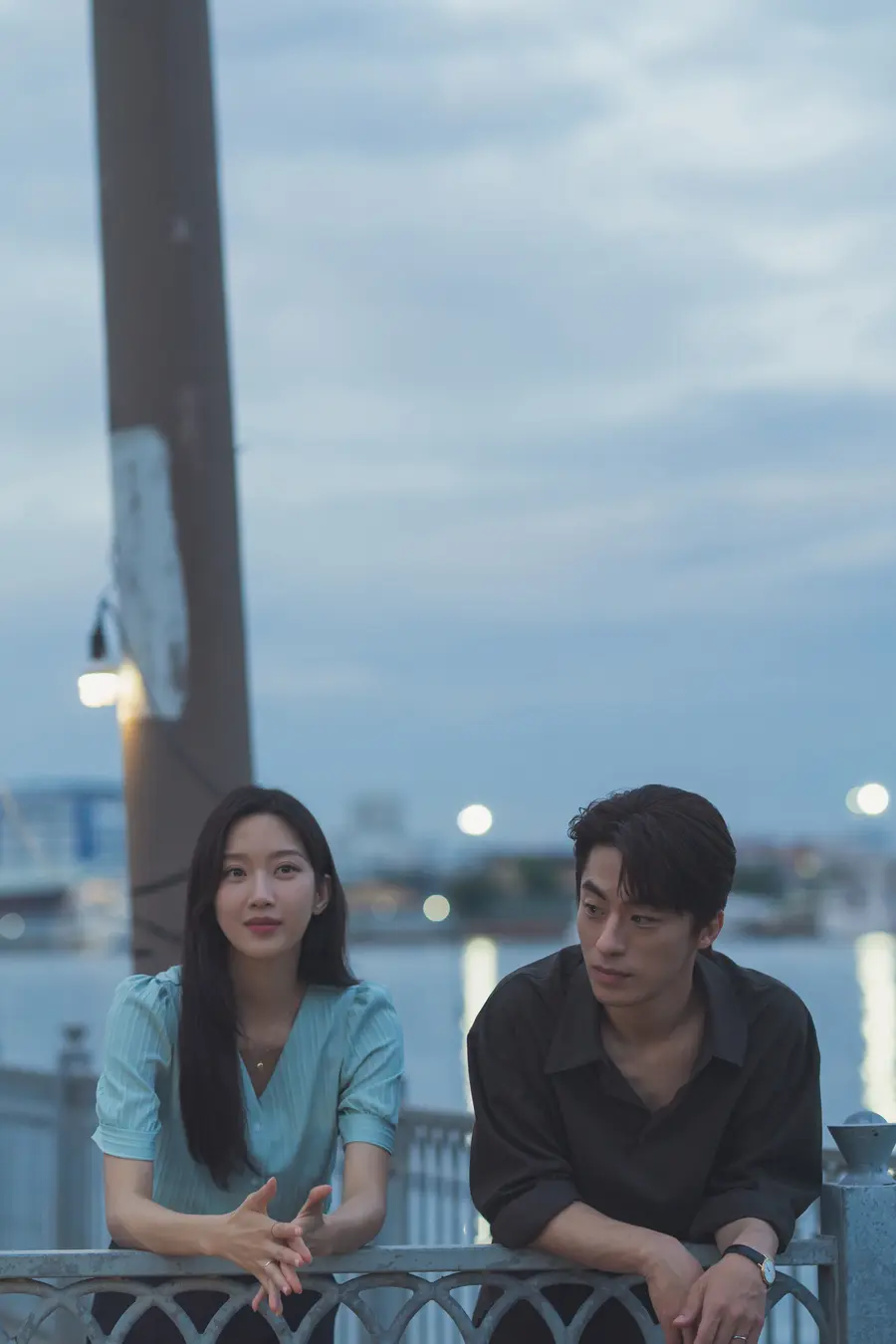
The movie 〈What If We〉 is rewriting the record of Korean melodramas. Starting at number 2 in the box office, the film climbed to number 1 in its second week of release, beginning its resurgence. On social media, the 'Crying Challenge' trend emerged, drawing responses from the youth. A film that gained word-of-mouth from audiences has surpassed 2 million cumulative viewers, breaking the notion in the film industry that traditional melodramas no longer resonate. Thanks to the film's popularity, the OST featuring Lim Hyun-jung's song 'Love is Like Spring Rain... Breakup is Like Winter Rain' (hereafter 'Love is Like Spring Rain') is also making a comeback on the music charts after 23 years. What is the reason that 〈What If We〉 has captured the hearts of today's youth so profoundly?
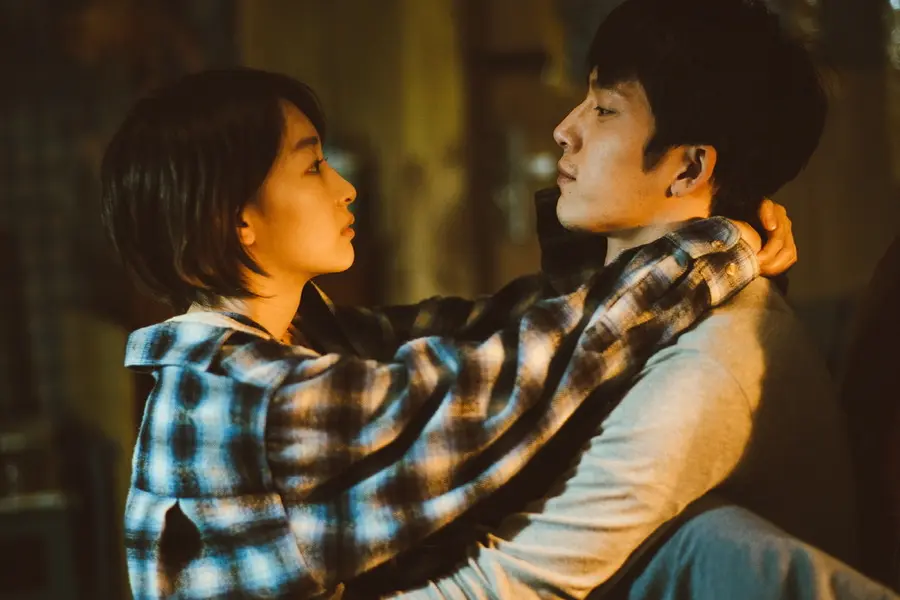
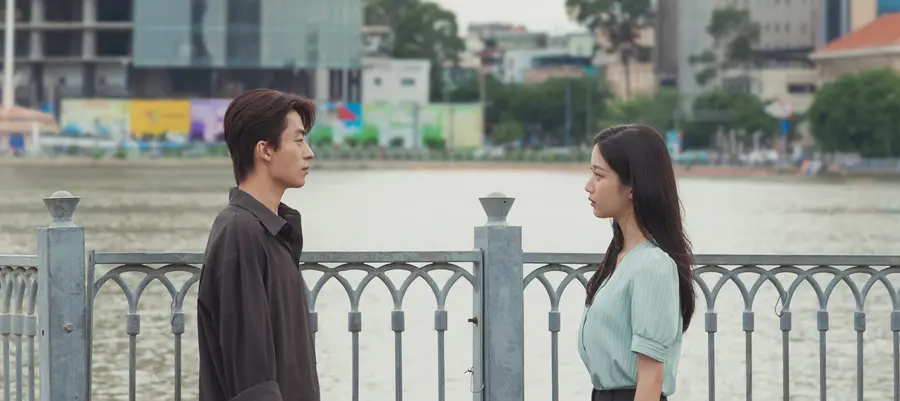
Directed by Yoo Yak-young, 〈What If We〉 is based on the Chinese film 〈In the Distant Future〉 and depicts the realistic romance of young people in their 20s. The film faithfully portrays the cold reality faced by the youth generation depicted in the original work, highlighting the struggles of a generation that cannot secure a home and wanders in a culture centered around the capital. At the same time, it approaches Korean audiences more familiarly through localization that incorporates the zeitgeist of the 2000s and Y2K sentiment. In particular, the discourse surrounding the '88,000 Won Generation' resonates with the current youth's challenging reality, garnering empathy.

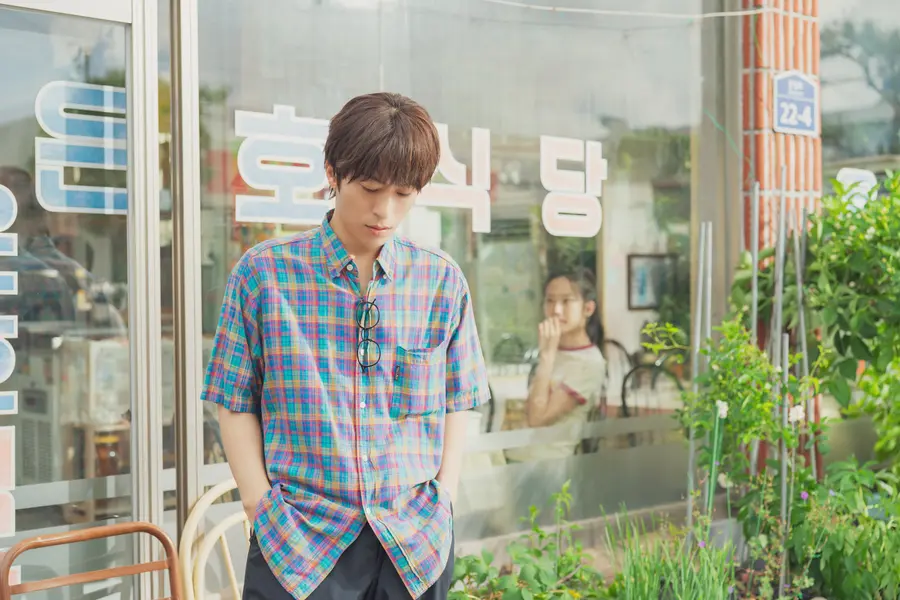
〈What If We〉 unfolds the story of two individuals by alternating between the black-and-white present and the vivid color of the past. Eun-ho (Koo Kyo-hwan) and Jung-won (Moon Ga-young) meet by chance after ten years and share memories of their once passionate love. Having grown up in an orphanage, Jung-won always wanders without a place to call home, desperately wishing to settle somewhere. Her unfulfilled desires and dreams are similar. She enters Seoul with the dream of building a house, but all she is given is a tiny room in a goshiwon. The easy disregard from others and the sunlight that barely enters make Jung-won feel small, and Eun-ho is the one who offers her a home. He is the one who opened the curtains of his room to let the sunlight in. Thus, the love between Eun-ho and Jung-won begins.
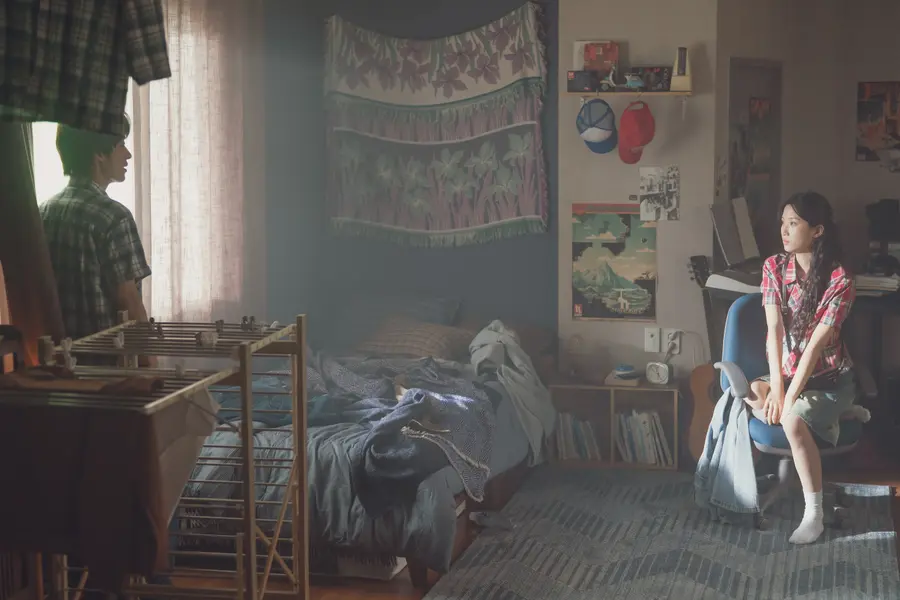
Eun-ho loved Jung-won as if he would give her everything, filled with regret. He had dreams, passion, and ambition to confront the cold reality of the times. He quietly and steadfastly did what he had to do, providing Jung-won with a sense of stability. However, as reality gradually began to invade his heart, Eun-ho started to wander. Unable to love even himself, he became someone who could give Jung-won nothing and acted awkwardly. The Eun-ho who once opened the curtains to let the sunlight in had now drawn them shut, causing the sunlight to disappear, and Jung-won's heart closed off from there.
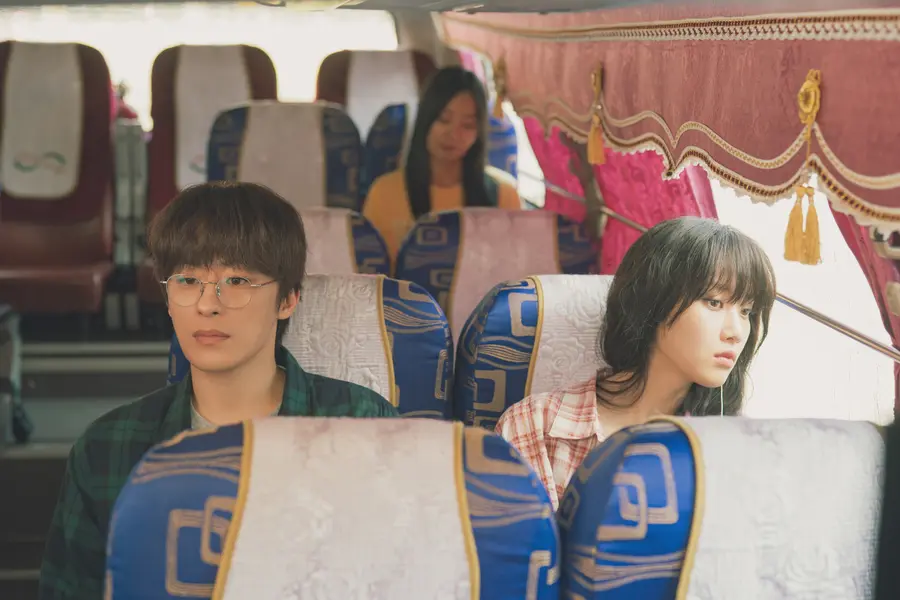
Lim Hyun-jung's song 'Love is Like Spring Rain' serves as a core element that deeply and broadly expands the film's emotional landscape, following the emotional journey of Eun-ho and Jung-won's love from the moment it begins to the moment of their breakup. This song accompanies them from their first meeting. The song that a stranger sitting in her seat on the express bus was listening to soon becomes part of Eun-ho's MP3 playlist. For Eun-ho, this song is the one that connects him to Jung-won. The feelings experienced by the characters—from the excitement of first love to hopes for the future, the hardships of reality, and a mature reunion—are all intricately woven into the melody of the music. Additionally, Lim Hyun-jung's song acts as a bridge connecting the eras, adding to the film's retro sentiment.
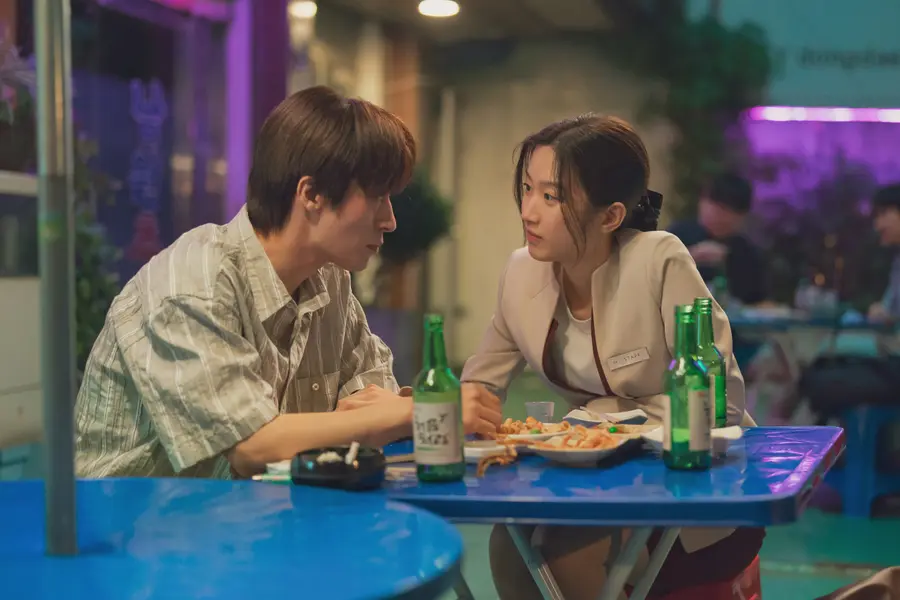
The portrayal of romance faced by Eun-ho and Jung-won reflects the zeitgeist of the times and incorporates the discourse of the 88,000 Won Generation. The term '88,000 Won Generation' originated in 2007 from Woo Seok-hoon and Park Kwon-il. Unlike previous generations, this generation remains in non-regular jobs for a long time after graduating from college due to employment difficulties, viewing marriage and childbirth as options or giving them up altogether. Sociologist Kim Hong-joong pointed out that this group forms a very unique collective that, while biologically 'youth', cannot enjoy 'youth' socioculturally (「Sociological Impact」, Kim Hong-joong, Munhakdongne, 2016, p. 255). This is well reflected in the landscapes that make up the characters' realities in the film. The competition rate for young people aspiring to become civil servants is soaring, and chronic unemployment prevails. The montage of Eun-ho repeatedly being rejected by the companies he applied to reflects this. In fact, Jung-won's desperate dream of “securing a home in Seoul” symbolizes the strong desire held by contemporary youth.
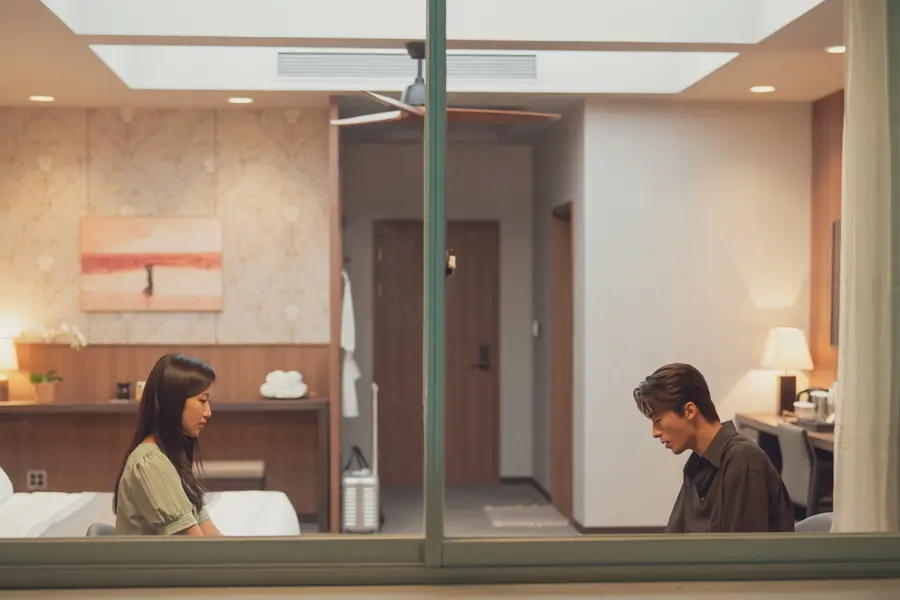
The landscape of employment difficulties, chronic unemployment, and the frustration of securing a home is also the reality faced by today's youth. Jung-won's narrative of living in a goshiwon evokes the reality of 270,000 youths living in 2-pyeong goshiwons. In this way, the film serves to comfort the burdens and feelings of defeat experienced by young people struggling to survive in a crumbling society, containing elements that resonate with today's youth. However, at the same time, the film has limitations as it exists as a romanticized youth narrative and a romance fantasy. Eun-ho and Jung-won dream of a shared survival together, but for today's youth living in a reality that has become harsher after the pandemic, being in a relationship is a luxury. Nevertheless, in the realm of media that represents people's dreams and desires, dating reality shows are continuously produced due to demand. Similarly, 〈What If We〉 functions as a fantasy that allows for vicarious satisfaction without having to take on the risks associated with romance. The success of 〈What If We〉 is evidence of the irony of the times, revealing the love of today's youth.


![[Chua-young's Music Box] The Meta Representation of Subculture 'Cosmic Princess Kaguya!' with 'World Is Mine' and 'Reply'](https://cdn.www.cineplay.co.kr/w400/q85/article-images/2026-02-12/09350b70-b012-4e2f-a254-046f646e2d8d.jpg)
![[Choo A-young’s Music Box] After Anger, ‘Oasis: Don’t Look Back in Anger’ Sings Again](https://cdn.www.cineplay.co.kr/w400/q85/article-images/2026-09-10/323f8c2a-129f-4107-b190-114253e0c827.jpg)
![[Chua-young's Music Box] The Screams of 'The Shining', the Auditory Discomfort Created by Krzysztof Penderecki's Music](https://cdn.www.cineplay.co.kr/w400/q85/article-images/2025-12-17/2667f27c-46b5-45d4-bf2d-7bf2b656ff21.jpg)
![[Chu Ah-young's Music Box] Michael Jackson's 'Thriller' and 'Heal the World' That Tried to Turn Dreams into Reality](https://cdn.www.cineplay.co.kr/w400/q85/article-images/2026-05-21/ffa1b48f-3611-45b6-a14a-e3e0aea5b392.jpg)
![[Chua-Young’s Music Box] Music for the Purification Ritual of Wounded Youth: “Girls Band Cry”](https://cdn.www.cineplay.co.kr/w400/q85/article-images/2026-04-22/10da8998-3cb2-462f-8af6-4063689a916d.jpg)
![[Chua-young's Music Box] May Madness Reign on This Land! '28 Years Later: The Bone Temple' and 'The Number of the Beast'](https://cdn.www.cineplay.co.kr/w400/q85/article-images/2026-03-11/1a6d94b0-98c1-4b3b-8f0f-dd2d9ac48c7d.jpg)
![[Chua-young's Music Box] The Music of 'Pavane' Following the Path of Love](https://cdn.www.cineplay.co.kr/w400/q85/article-images/2026-02-26/cc89ea7d-356d-492c-8168-136478d2e26d.jpg)
![[Chua-young's Music Box] The Coexistence of Sorrow and Hope 'Super Happy Forever' and 'Beyond The Sea'](https://cdn.www.cineplay.co.kr/w400/q85/article-images/2026-01-14/2315abe7-c0c7-4f3f-8774-9a2b0f578550.jpg)
![[Chua-Young’s Music Box] ‘Project Hail Mary’—A Story of Humanity’s Trembling at the Brink of the End, and ‘Sign of the Times’](https://cdn.www.cineplay.co.kr/w400/q85/article-images/2026-04-09/23d4b16b-49c1-47dd-a17a-1e939faddd12.jpg)















![[Seongchan Eol's Comic Book] A Title That Seems Like It Shouldn't Be Said Casually, Except It's Perfect 「Teenage Dragon」](https://cdn.www.cineplay.co.kr/w160/q85/article-images/2026-01-30/0e1ebf12-5748-470b-aa4f-4a1388d707e6.png)

![[Chua-young's Music Box] The Meta Representation of Subculture 'Cosmic Princess Kaguya!' with 'World Is Mine' and 'Reply'](https://cdn.www.cineplay.co.kr/w160/q85/article-images/2026-02-12/9f0aef62-9c40-4e9c-807b-b7fdecafd50a.jpg)

![[Chua-young's Music Box] The Music of 'Pavane' Following the Path of Love](https://cdn.www.cineplay.co.kr/w160/q85/article-images/2026-02-26/9cb41876-dfb6-4ccf-98a8-caac1ca57e4a.jpg)
댓글 (0)
댓글 작성
댓글을 작성하려면 로그인이 필요합니다.
로그인하기