



〈28 Days Later〉(2002) is the authentic sequel to 〈28 Years Later〉(2025), the second installment of 〈28 Years Later: The Bone Temple〉(hereafter 〈The Bone Temple〉). The film is a tribute to British band music. It reveals affection for British band music by incorporating the music of Radiohead, Duran Duran, and Iron Maiden throughout. In particular, Iron Maiden's song 'The Number of the Beast' appears at the climax of the film, exploding the madness that has been gradually built up. I found myself unable to fully capture the madness of that scene and the emotions it evokes in writing, no matter what I did, and I had no choice but to surrender. I just wanted to play a role in guiding the audience to that ecstatic moment when Ralph Fiennes transforms into the master of heavy metal, the lord of fire.
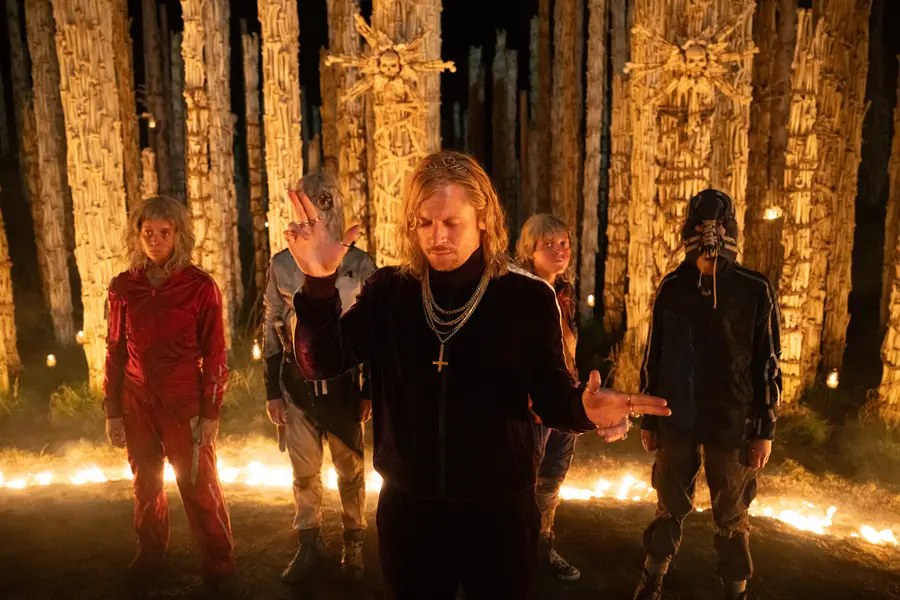
〈The Bone Temple〉 inherits the worldview of 〈28 Years Later〉. Spike (Alfie Williams) becomes a member of a mysterious survivor group called 'Fingers' for survival. The leader of Fingers, Jimmy (Jack O'Connell), rules his followers with fear and commits horrific slaughter and evil deeds with them. Spike desperately struggles to escape from them. Meanwhile, Dr. Kelson (Ralph Fiennes), who has been researching the virus while honoring the dead at The Bone Temple, tries to change the future of humanity by coexisting with the alpha-infected 'Samson'. A member of Fingers mistakes Kelson, who is with the alpha-infected, for Satan. This misunderstanding leads Kelson to confront Jimmy and Fingers.
Singing of Enchanting Horror and Nightmares
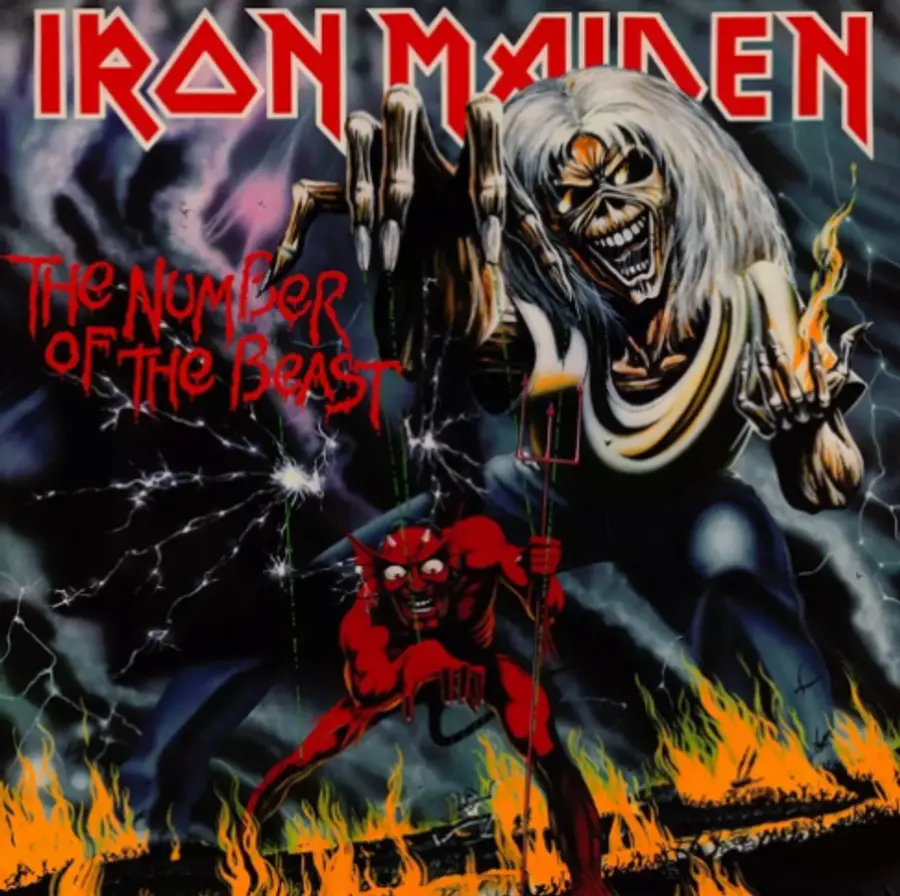
The explosive energy of the British heavy metal band Iron Maiden's song 'The Number of the Beast' was composed by the band's bassist and founder, Steve Harris. He created this song after having a nightmare inspired by the film 〈Omen II〉(1978) that he watched at midnight and the epic poem 'Tam o' Shanter' by British poet Robert Burns. The lyrics reflect the confusion Harris felt after having the nightmare. At the same time, this song resembles the aftermath of a farmer who, after encountering witches in the poem 'Tam o' Shanter', narrowly escapes death. The narrator of the song falls into a state of confusion, unable to distinguish whether what he saw last night was reality or illusion. This is akin to the scene recalled by the farmer from 'Tam o' Shanter', who fled from the witches and warlocks (male wizards) who were having a debauchery surrounded by corpses and traces of evil deeds. This song, a tale of enchanting horror and nightmares, was once condemned as satanic by a religious group in America. However, this controversy actually served to promote the music. Despite this noise, the album featuring 'The Number of the Beast' reached number one on the UK album chart, number 33 on the Billboard 200, and sold 20 million copies worldwide, solidifying Iron Maiden's status as a global star. 'The Number of the Beast' is still regarded as a representative classic of heavy metal, praised for maximizing the dark theatricality of heavy metal, establishing it as a subculture beyond just music.
Completed by Ralph Fiennes' Mad Performance
(Perhaps) This Year's Most Problematic Scene
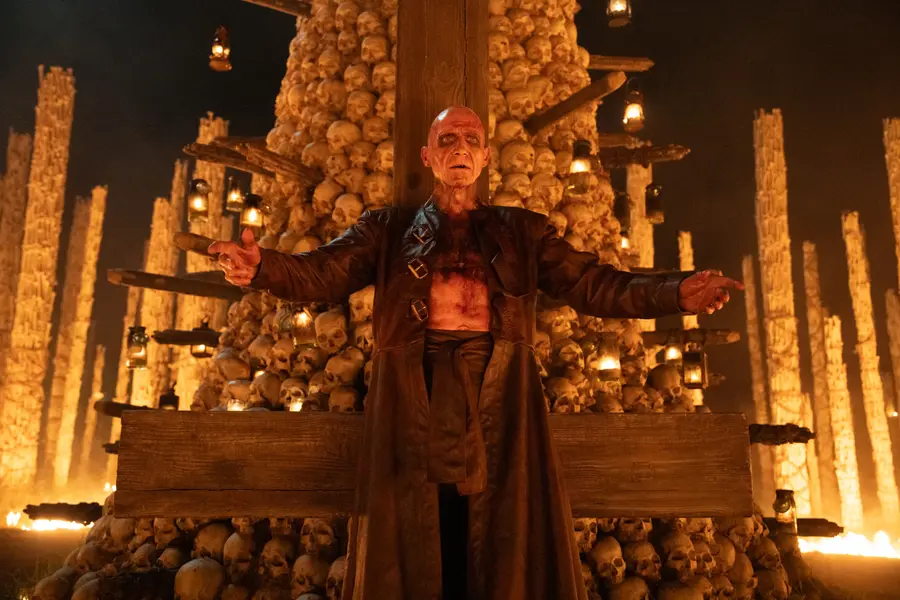
In the film, 'The Number of the Beast' appears in the scene where Kelson pretends to be Satan after having previously conspired with Jimmy. Jimmy tells Fingers that Kelson is the Old Nick, or Satan, whom they worship. Kelson prepares a life-or-death performance to avoid being discovered as not being Satan by the members of Fingers. At the first moment Fingers confronts their Satan, Kelson showcases his true madness against Jimmy's fake madness. As the intro of the music, quoting Revelation 12:12 and 13:18, echoes, it foreshadows the wrath that will be poured out on this land, and at that moment, Kelson slowly walks out from behind the stage. Still eyeing him with suspicion, Fingers finally begins to lose their sanity and enjoy themselves as Kelson throws a torch and unleashes a frenzy of metal. Yes, with a look as if he is cheering in the hellfire of Kelson, and with his bizarre gestures that freely move every joint in his body from head to toe, he overwhelms Fingers. Ralph Fiennes stated in an interview, "I rehearsed with the choreographer to establish a rough choreography, but I drew on the spontaneous energy of the scene." His possessed (?) performance, completed after great effort, presents a scene that will never be forgotten after one viewing. The lip-sync of Ralph Fiennes, along with the flowing 'The Number of the Beast', continuously injects an occult tension into the scene, invigorating a powerful life force.
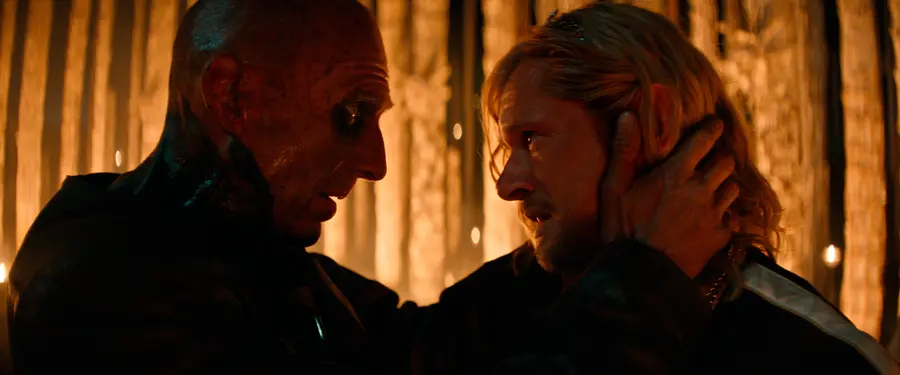
The 〈28 Years Later〉 series allegorizes the pandemic era caused by COVID-19, isolating the UK, which is overtaken by the rage virus, from the European continent. The film warns that in a chaotic society where the virus spreads, isolating each other, and mentally isolating, extremism like fascism can re-emerge. The Satanism of Jimmy in the film is merely a performance. Jimmy is not actually the son of Satan but rather a regressive character who still idolizes the Teletubbies he loved as a child. Jimmy's worship of Satan is a lie to maintain the Jimmy's (Fingers). The film criticizes fascism by likening Jimmy's appearance, which deceives people with lies like a cult leader, to a populist who misleads the public. Fingers are the public who have fallen for the populism of the fascist, and they lose their original names within the system of fascism established by Jimmy, being called 'Jimmy'. Kelson's metal performance becomes a decisive moment that shatters the fiction of Jimmy and Fingers' 'Satan worship', mocking their fanaticism through the theatricality of heavy metal. The film conveys that the Satan they worship does not exist and that the rituals of Satan they are enthusiastic about are merely the theatricality of the heavy metal genre. In the outro of 'The Number of the Beast', the devil, who appears as the narrator, says, "Evil will return." The outro of the song resonates meaningfully with the current world where populism and extremism have risen.
![[Chua-young's Music Box] The Meta Representation of Subculture 'Cosmic Princess Kaguya!' with 'World Is Mine' and 'Reply'](https://cdn.www.cineplay.co.kr/w400/q75/article-images/2026-02-12/09350b70-b012-4e2f-a254-046f646e2d8d.jpg)
![[Chu Ah-young's Music Box] Michael Jackson's 'Thriller' and 'Heal the World' That Tried to Turn Dreams into Reality](https://cdn.www.cineplay.co.kr/w400/q75/article-images/2026-05-21/ffa1b48f-3611-45b6-a14a-e3e0aea5b392.jpg)
![[Choo A-young’s Music Box] After Anger, ‘Oasis: Don’t Look Back in Anger’ Sings Again](https://cdn.www.cineplay.co.kr/w400/q75/article-images/2026-09-10/323f8c2a-129f-4107-b190-114253e0c827.jpg)
![[Chua-Young’s Music Box] ‘Project Hail Mary’—A Story of Humanity’s Trembling at the Brink of the End, and ‘Sign of the Times’](https://cdn.www.cineplay.co.kr/w400/q75/article-images/2026-04-09/23d4b16b-49c1-47dd-a17a-1e939faddd12.jpg)
![[Chua-young's Music Box] The Screams of 'The Shining', the Auditory Discomfort Created by Krzysztof Penderecki's Music](https://cdn.www.cineplay.co.kr/w400/q75/article-images/2025-12-17/2667f27c-46b5-45d4-bf2d-7bf2b656ff21.jpg)
![[Chua-young's Music Box] Why Did 'What If We' Resonate with Today's Youth? The Romance Fantasy of the Non-Dating Generation](https://cdn.www.cineplay.co.kr/w400/q75/article-images/2026-01-28/113b25b0-ce84-47ff-807d-5dc4657e02d2.jpg)
![[Chua-young's Music Box] The Music of 'Pavane' Following the Path of Love](https://cdn.www.cineplay.co.kr/w400/q75/article-images/2026-02-26/cc89ea7d-356d-492c-8168-136478d2e26d.jpg)
![[Choo Ah-young’s Music Box] Magical Moments Made from Clashing Images and Sound in ‘Heaven Knows What’](https://cdn.www.cineplay.co.kr/w400/q75/article-images/2026-10-22/0836072f-bba6-4021-aeb7-a1e173dfaf9f.jpg)
![[Chua-Young’s Music Box] Music for the Purification Ritual of Wounded Youth: “Girls Band Cry”](https://cdn.www.cineplay.co.kr/w400/q75/article-images/2026-04-22/10da8998-3cb2-462f-8af6-4063689a916d.jpg)


![[Chua-young's Music Box] The Coexistence of Sorrow and Hope 'Super Happy Forever' and 'Beyond The Sea'](https://cdn.www.cineplay.co.kr/w400/q75/article-images/2026-01-14/2315abe7-c0c7-4f3f-8774-9a2b0f578550.jpg)



![[Chua-young's Music Box] The Reason for Tears in the Theater... The Emotions Left by the OSTs of 'Wicked' and 'Wicked: For Good'](https://cdn.www.cineplay.co.kr/w160/q75/article-images/2025-11-19/e673146f-efbe-4951-83b8-d8febfa0dcec.png)
![[Chua-young's Music Box] The Aesthetics of Repetition and Variation in 'Asako' and the OST 'netemo sametemo'](https://cdn.www.cineplay.co.kr/w160/q75/article-images/2025-12-03/88b92202-e46c-4843-9883-826a7797960d.jpg)
![[Chua-young's Music Box] The Screams of 'The Shining', the Auditory Discomfort Created by Krzysztof Penderecki's Music](https://cdn.www.cineplay.co.kr/w160/q75/article-images/2025-12-17/90720552-8d91-4d68-9361-4a134660e671.jpg)
![[Chua-young's Music Box] The Coexistence of Sorrow and Hope 'Super Happy Forever' and 'Beyond The Sea'](https://cdn.www.cineplay.co.kr/w160/q75/article-images/2026-01-14/8c4823db-d8a6-4af2-8007-e690eaf7b6ac.jpg)





댓글 (0)
댓글 작성
댓글을 작성하려면 로그인이 필요합니다.
로그인하기