



Following the first film, 〈Girls Band Cry: The Movie—Youth Rhapsody〉 (hereinafter 〈Youth Rhapsody〉), the sequel 〈Girls Band Cry: The Movie, Hey Our Future〉 was released in theaters on April 16. This theatrical release is a compilation film: while it faithfully follows the existing story, it adds newly included scenes and brand-new songs—bringing even more fun that’s unique to a theatrical version. 〈Girls Band Cry〉, a Toei Animation work, quickly became the talk of the town right after it aired in April 2024, positioning itself as a newcomer that continues the lineage of girls-band anime such as 〈K-On!〉, 〈BanG Dream!〉, and 〈Bocchi the Rock!〉. 〈Girls Band Cry〉 once again reignited interest in girls-band stories and became the biggest surprise of the year. It also achieved notable results in Japan’s 2024 anime market with impressive Blu-ray sales, and its insert songs climbed major Japanese music charts such as “Oricon,” sparking a sensation. The five voice actresses who play the band Togenashi Togeari were also active in real life as Togenashi Togeari, earning a lot of love from fans. Their popularity continued in Korea as well, and they even held a concert there this April. We took a closer look at why the anime 〈Girls Band Cry〉, its music, and its live scenes resonate so strongly with people.
Anger and sorrow transformed from within a heart that was suppressed
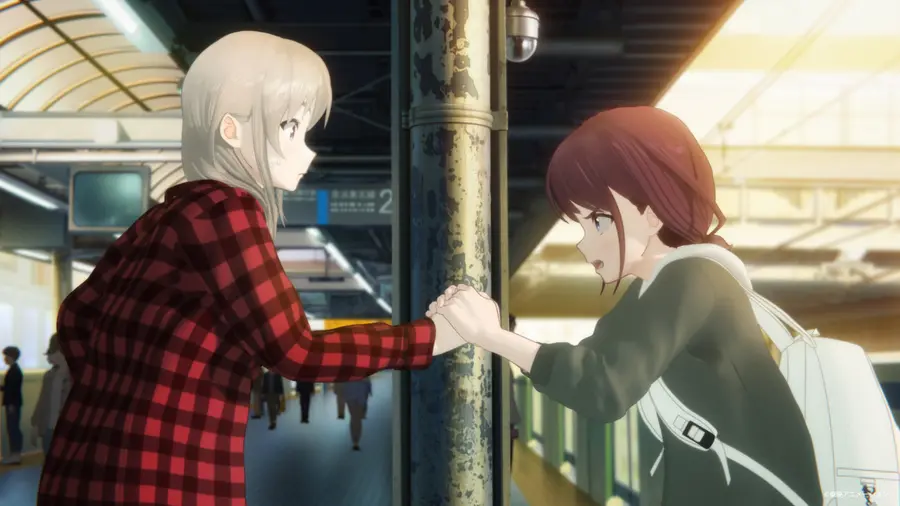
〈Girls Band Cry〉 continues the lineage of girls-band stories, yet it differentiates itself from other works by seeping each character’s extremely dark real-world reality into the characters—pushing realism to an extreme. 〈Girls Band Cry〉 follows Nina Iseri, a girl who moves to Tokyo carrying wounds and anger, forms a band, and sings—finally showing her true self to the world. Nina has been carrying the trauma she suffered from school bullying and the hurt she keeps inside—while also dealing with a family and school situation that constantly minimizes her. She leaves Kumamoto and comes to Tokyo. There, Nina meets Momoka, a musician who has given her courage over a long period of time. As the musical direction of Dia mond Dust—whose band was created with Momoka driving the effort—changes, Momoka leaves the band and becomes a musician on the streets. The two, who share a similar stubborn streak in refusing to ignore the harshness of real life—yet still move forward on their own path despite being terrified—hold onto each other and begin a brand-new journey.
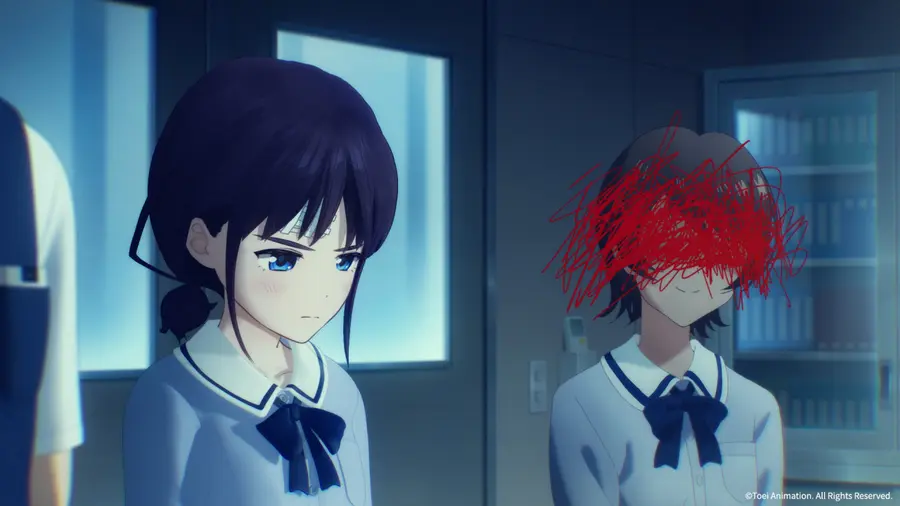

In 〈Girls Band Cry〉, including Nina and Momoka, each character carries different circumstances and deprivations. Subaru, an early member who formed the band together with the two, walks an unwanted path as an actor so as not to disappoint the expectations of a famous elderly actress grandmother—and secretly keeps up with band activities. Tomo survives on her own by working part-time after being neglected by her parents in Tokyo. And in a Japanese society where discrimination against mixed-race people and foreign immigrants is widespread, Rupa is frequently subjected to discrimination and contempt in everyday life—quietly swallowing the anger that results. The deprivations the members of the band Togenashi Togeari face don’t stop at just character backstories. They naturally become conflicts between them. They weren’t a perfect team from the start; only when each of them went beyond their own deprivations and reached toward the others did they become one team. Also, their deprivations provide the inevitable reason they have to make music. They sing to turn wounded, shattered hearts, anger, and sorrow into something meaningful for the world. This is clearly revealed in the live scene of episode 5 (in the theatrical version, 〈Youth Rhapsody〉).

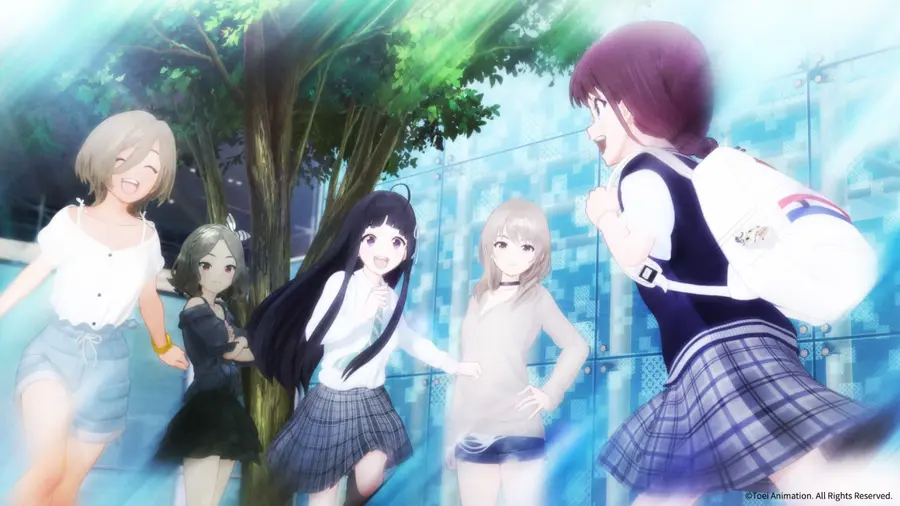
The live scene of “Shiya na Kado o Ochiru Oto” (“A Sound Retreating into One Corner of My Vision”) in episode 5 begins with Nina’s cry: “I’m going to show everything—dissatisfaction, anger, sorrow… even regret!” With that, their repressed energy—those who are “school refusers,” “those who quit,” and “liars”—bursts explosively out of their sealed inner selves. The live scenes of 〈Girls Band Cry〉, where each character’s deprivation heightens emotional intensity for both the characters and the audience, reach their peak in the live scene of episode 11 (in the theatrical version, 〈Hey Our Future〉)—“Empty Space and Catharsis.” The show’s full 3DCG makes dazzling staging possible, like the dynamic camera movements typical of music broadcasts, capturing both the sense of space in the live scenes and the vivid feeling of the venue. And between those live performances, memories of each member—drawn in 2D—are inserted, creating a dramatic contrast between past wounds and the freedom of the present. Their songs and performances, in themselves, are an emotional release. And these live scenes of 〈Girls Band Cry〉 are a purification ritual for wounded youth.
![[Chua-young's Music Box] The Meta Representation of Subculture 'Cosmic Princess Kaguya!' with 'World Is Mine' and 'Reply'](https://cdn.www.cineplay.co.kr/w400/q75/article-images/2026-02-12/09350b70-b012-4e2f-a254-046f646e2d8d.jpg)
![[Chu Ah-young's Music Box] Michael Jackson's 'Thriller' and 'Heal the World' That Tried to Turn Dreams into Reality](https://cdn.www.cineplay.co.kr/w400/q75/article-images/2026-05-21/ffa1b48f-3611-45b6-a14a-e3e0aea5b392.jpg)
![[Choo A-young’s Music Box] After Anger, ‘Oasis: Don’t Look Back in Anger’ Sings Again](https://cdn.www.cineplay.co.kr/w400/q75/article-images/2026-09-10/323f8c2a-129f-4107-b190-114253e0c827.jpg)
![[Chua-Young’s Music Box] ‘Project Hail Mary’—A Story of Humanity’s Trembling at the Brink of the End, and ‘Sign of the Times’](https://cdn.www.cineplay.co.kr/w400/q75/article-images/2026-04-09/23d4b16b-49c1-47dd-a17a-1e939faddd12.jpg)
![[Chua-young's Music Box] The Screams of 'The Shining', the Auditory Discomfort Created by Krzysztof Penderecki's Music](https://cdn.www.cineplay.co.kr/w400/q75/article-images/2025-12-17/2667f27c-46b5-45d4-bf2d-7bf2b656ff21.jpg)
![[Chua-young's Music Box] Why Did 'What If We' Resonate with Today's Youth? The Romance Fantasy of the Non-Dating Generation](https://cdn.www.cineplay.co.kr/w400/q75/article-images/2026-01-28/113b25b0-ce84-47ff-807d-5dc4657e02d2.jpg)

![[Chua-young's Music Box] The Music of 'Pavane' Following the Path of Love](https://cdn.www.cineplay.co.kr/w400/q75/article-images/2026-02-26/cc89ea7d-356d-492c-8168-136478d2e26d.jpg)


![[Chua-young's Music Box] May Madness Reign on This Land! '28 Years Later: The Bone Temple' and 'The Number of the Beast'](https://cdn.www.cineplay.co.kr/w400/q75/article-images/2026-03-11/1a6d94b0-98c1-4b3b-8f0f-dd2d9ac48c7d.jpg)
![[Chua-young's Music Box] The Coexistence of Sorrow and Hope 'Super Happy Forever' and 'Beyond The Sea'](https://cdn.www.cineplay.co.kr/w400/q75/article-images/2026-01-14/2315abe7-c0c7-4f3f-8774-9a2b0f578550.jpg)



![[Chua-young's Music Box] The Aesthetics of Repetition and Variation in 'Asako' and the OST 'netemo sametemo'](https://cdn.www.cineplay.co.kr/w160/q75/article-images/2025-12-03/88b92202-e46c-4843-9883-826a7797960d.jpg)
![[Chua-young's Music Box] The Screams of 'The Shining', the Auditory Discomfort Created by Krzysztof Penderecki's Music](https://cdn.www.cineplay.co.kr/w160/q75/article-images/2025-12-17/90720552-8d91-4d68-9361-4a134660e671.jpg)
![[Chua-young's Music Box] The Coexistence of Sorrow and Hope 'Super Happy Forever' and 'Beyond The Sea'](https://cdn.www.cineplay.co.kr/w160/q75/article-images/2026-01-14/8c4823db-d8a6-4af2-8007-e690eaf7b6ac.jpg)
![[Chua-young's Music Box] Why Did 'What If We' Resonate with Today's Youth? The Romance Fantasy of the Non-Dating Generation](https://cdn.www.cineplay.co.kr/w160/q75/article-images/2026-01-28/f803353b-1b2d-4624-87dd-8fc5057dc6f8.jpg)
![[Chua-young's Music Box] The Meta Representation of Subculture 'Cosmic Princess Kaguya!' with 'World Is Mine' and 'Reply'](https://cdn.www.cineplay.co.kr/w160/q75/article-images/2026-02-12/9f0aef62-9c40-4e9c-807b-b7fdecafd50a.jpg)
![[Chua-young's Music Box] The Music of 'Pavane' Following the Path of Love](https://cdn.www.cineplay.co.kr/w160/q75/article-images/2026-02-26/9cb41876-dfb6-4ccf-98a8-caac1ca57e4a.jpg)
![[Chua-young's Music Box] May Madness Reign on This Land! '28 Years Later: The Bone Temple' and 'The Number of the Beast'](https://cdn.www.cineplay.co.kr/w160/q75/article-images/2026-03-11/92b7a9a0-2aaa-4892-9836-8c2d9dd06d5b.jpg)
![[Chua-Young’s Music Box] ‘Project Hail Mary’—A Story of Humanity’s Trembling at the Brink of the End, and ‘Sign of the Times’](https://cdn.www.cineplay.co.kr/w160/q75/article-images/2026-04-09/cba0e055-8a87-44d0-a7f5-bccf87bfdd78.png)
댓글 (0)
댓글 작성
댓글을 작성하려면 로그인이 필요합니다.
로그인하기