



Boys gather in groups and light firecrackers. The firecrackers soar into the sky with a bang, startling Asako (Erika Karata), who ducks for cover. At this moment, music begins to play, blending with the montage of the city, infusing the film with vitality. The ordinary daily life of the city, transformed by music, wears an inscrutable face as if hiding some kind of secret. This appearance resembles the expression on Asako's face, which throughout the film remains unreadable.
Representative of Modern Japanese Electronic Music

The music that appears in the opening sequence of the film 〈Asako〉 and creates tension is 'netemo sametemo' by tofubeats, a representative of modern Japanese electronic music. 'Netemo sametemo' showcases his cleverness in merging minimalism into his musical world. Tofubeats is a musician who presents a style of music that combines hip-hop, electronic, and dance pop, and he is a DJ who plays in clubs in Japan. He consistently creates electronic music characterized by flashy sounds using 8-bit sounds and synthesizers. In particular, he actively utilizes auto-tune to transform his vocals into an instrument. The song 'RIVER', which plays from the last scene where Asako and Ryohei look at the river to the ending credits, is also sung by him, with his voice transformed through auto-tune. In this way, Tofubeats has presented music with a modern sensibility using electronic sounds.
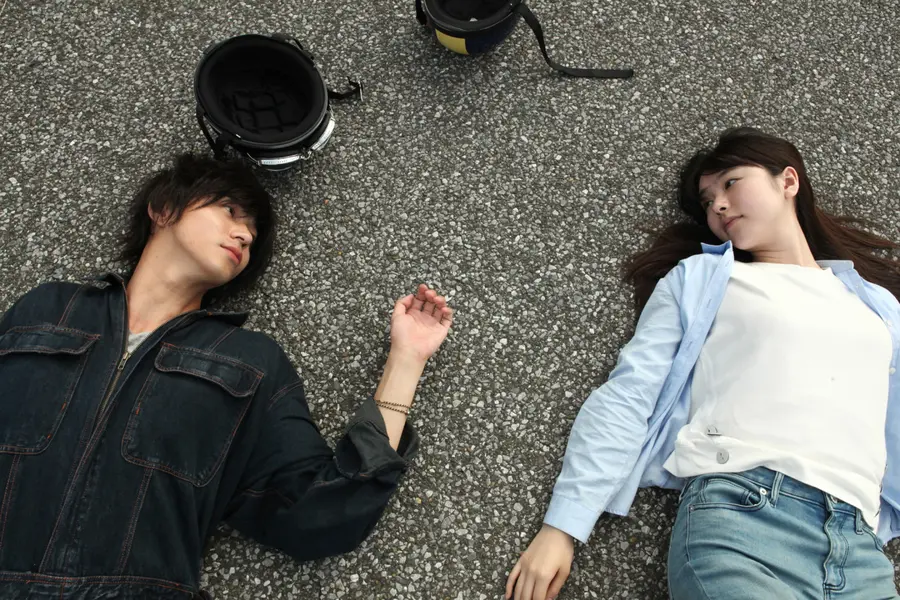
Strictly speaking, 'netemo sametemo' is a piece that fits more into the world of Ryusuke Hamaguchi's films than into Tofubeats' musical world. Unlike Tofubeats' existing tracks, which have clear lines and distinct feelings, this piece evokes a dreamy yet ambiguous atmosphere. This arises from the minimalist characteristics of the piece, which repeats and varies simple melodies and motifs. The constantly repeating motifs instill a transcendent sense of time distortion, as if one is drawn into an infinite cycle, accompanied by a hypnotic immersion. At the same time, the music carries an urban and sophisticated feel, thanks to the electronic sounds created by his signature synthesizers.
Obsessive Love
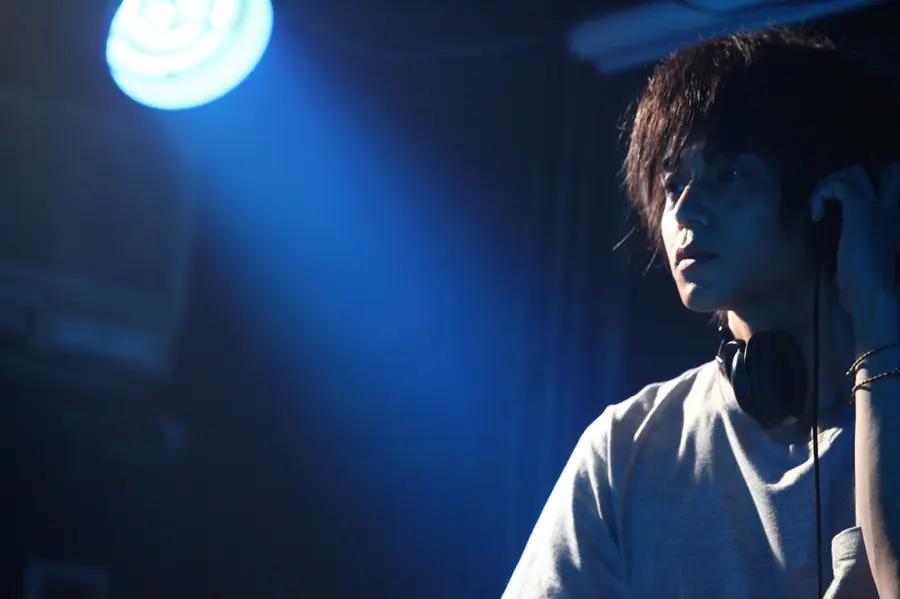
'Netemo sametemo' shares the same name as the original Japanese title of 〈Asako〉. The original title '寝ても覚めても' ('Asleep or Awake') is an idiom used in Japan that means 'an obsessive love that cannot be shaken off whether asleep or awake.' The song 'netemo sametemo' appears only in the opening where Asako meets Baku (Masahiro Higashide) and in the later escape scene, expressing her feelings and emotions towards Baku. At the same time, it serves as a warning about Asako's obsessive love.
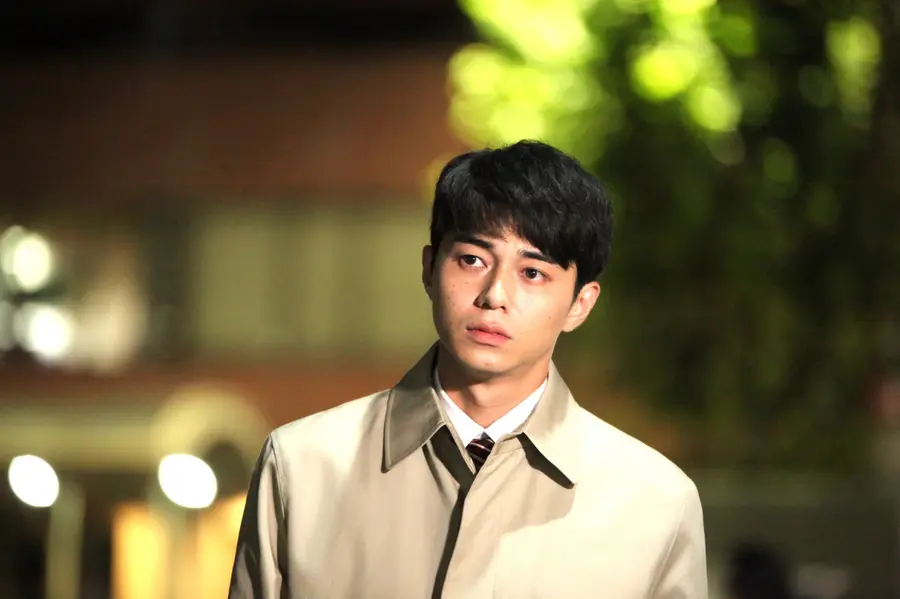
Meanwhile, the original title 'netemo sametemo' evokes two scenes intertwined with Asako's dreams and reality, which are repeated and varied. These two scenes hold a clue to her change of heart as Asako, who was escaping with Baku, decides to return to Ryohei (Masahiro Higashide). The first scene shows Asako and Ryohei returning from Sendai to Tokyo after finishing their volunteer work. Asako, who had fallen asleep, wakes up next to Ryohei, who is driving. This scene is repeated when Asako and Baku are escaping on the road from Osaka to Sendai.

The first scene suggests that the daily life with Ryohei was a dream, existing in a state between sleep and awakening. In this scene, Asako falls asleep during the day and wakes up at night. The darkness outside indicates that she is in a dream state. The time spent with Ryohei still carries the lingering presence of her ex-lover Baku. Even while being with Ryohei, the time when she still has feelings for Baku reveals that she has not grown since their breakup. This is also evident in Asako's dialogue. Asako tells Baku, with whom she is escaping, "I feel like I'm dreaming right now. No, it feels like the time until now has been a long dream. It was an incredibly happy dream. I felt like I had grown. But when I opened my eyes, I realized I hadn't changed at all."
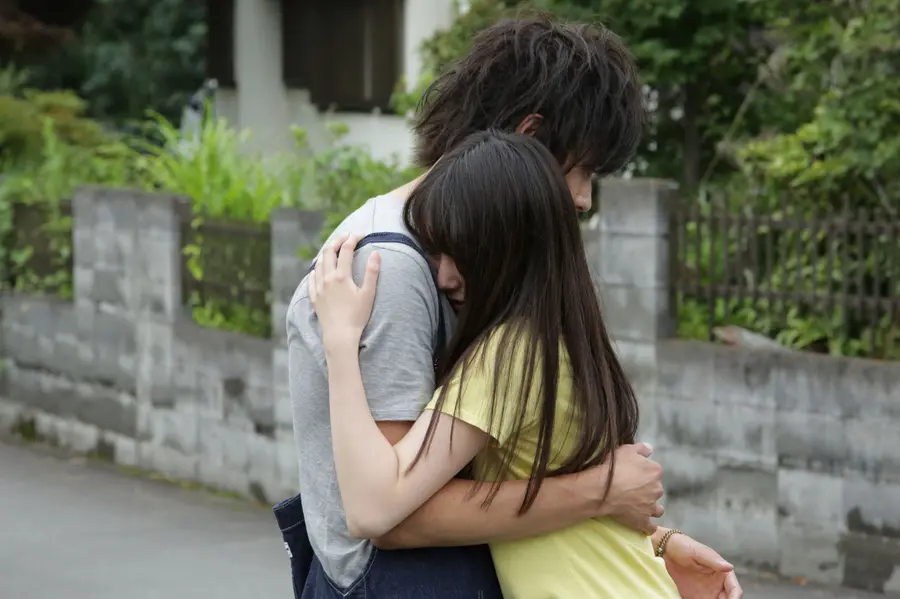
In the second scene, Asako falls asleep at night and wakes up in the morning. This signifies that Asako has awakened from a long sleep and has become aware of reality. Finally free from her obsessive state towards Baku, Asako makes the choice to return to Ryohei. Asako's change of heart, which perplexed the audience, is her awakened choice. Additionally, the 'asa' in Asako's name means morning in kanji, indicating that she has made the most authentic choice for herself.
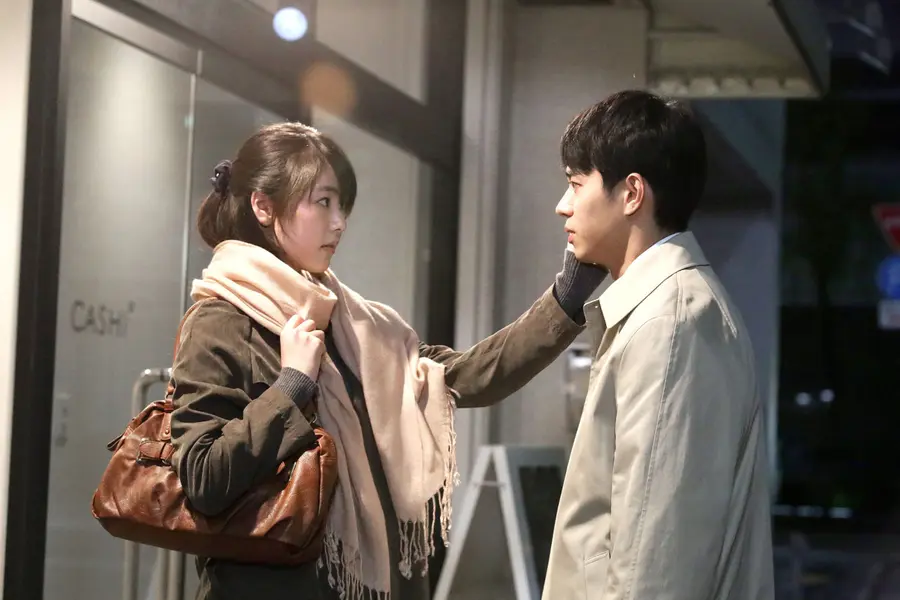
Finally, the fact that Asako's change of heart occurs in Sendai, a region severely affected by the 3.11 Great East Japan Earthquake, intertwines her choice with the emotions, thoughts, and attitudes inscribed in the unconscious of the Japanese people after the disaster. In the film, Baku disappears before the 3.11 Great East Japan Earthquake occurs. Asako's feelings towards him are akin to a desire to return to the time before the disaster. In contrast, the choice to return to Ryohei signifies a will to face the disaster and continue with daily life. In this cinematic world, the music 'netemo sametemo' reliably supports the dreamlike quality of the film that traverses the past and present, dreams and reality, and daily life surrounding the disaster.
***** Starting with 'Joo Seong-cheol's Locker' which assigns excessive meaning to objects in films, the actor's user manual 'Kim Ji-yeon's Jewelry Box' expecting a rise, the film music appreciation room 'Chua-young's Music Box' that moved my heart, and the subculture merchant's purchase log 'Seong Chan-eol's Comic Books', Cineplay reporters will begin bi-weekly serialization with their own tastes and perspectives. *****








댓글 (0)
댓글 작성
댓글을 작성하려면 로그인이 필요합니다.
로그인하기