


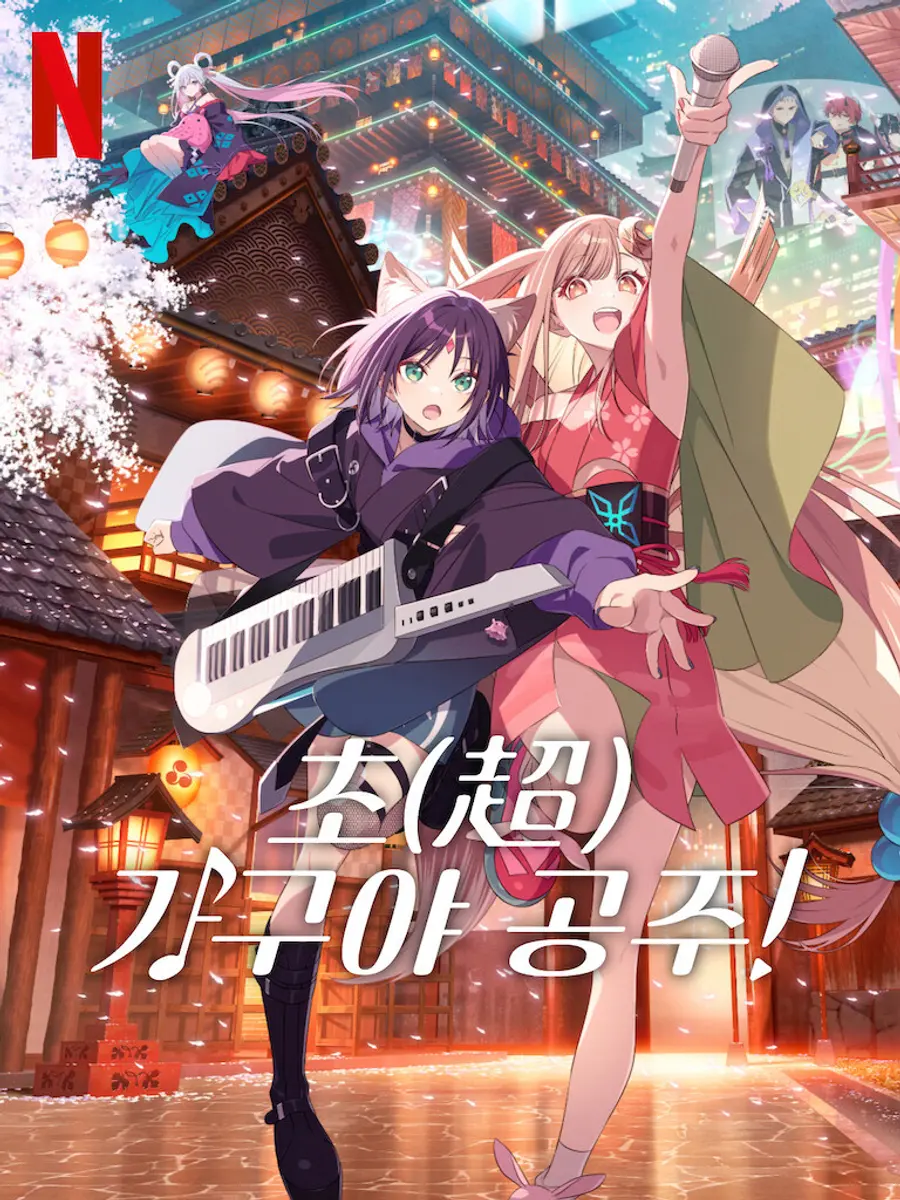
Japanese animator Shingo Yamashita, who gained recognition for directing various movie openings such as 〈Naruto: Shippuden〉, 〈Jujutsu Kaisen〉 Season 1, and 〈Chainsaw Man〉, has created his ambitious debut work. The Netflix feature animation 〈Cosmic Princess Kaguya!〉 is a modern reinterpretation of the classic Japanese folktale 'The Tale of Princess Kaguya.' The worldview that encompasses both the classic folktale and modern internet culture is vast. The juxtaposition of classical and modern images, the virtual world created by VR, and subcultures like Vocaloid are also key settings in the film. Moreover, Yamashita has created a work that cannot be easily defined by collaging various genres of animation. In this chaotic world, the OSTs 'World Is Mine' and 'Reply' form the two pillars at the center of the film. 'World Is Mine' is a song rearranged from an existing Vocaloid track, symbolizing the culture of Vocaloid and secondary creation. 'Reply' connects the emotional lines of the two main characters, penetrating the film's yuri code. Together, these two songs serve as guides to prevent getting lost in the film's chaotic world.
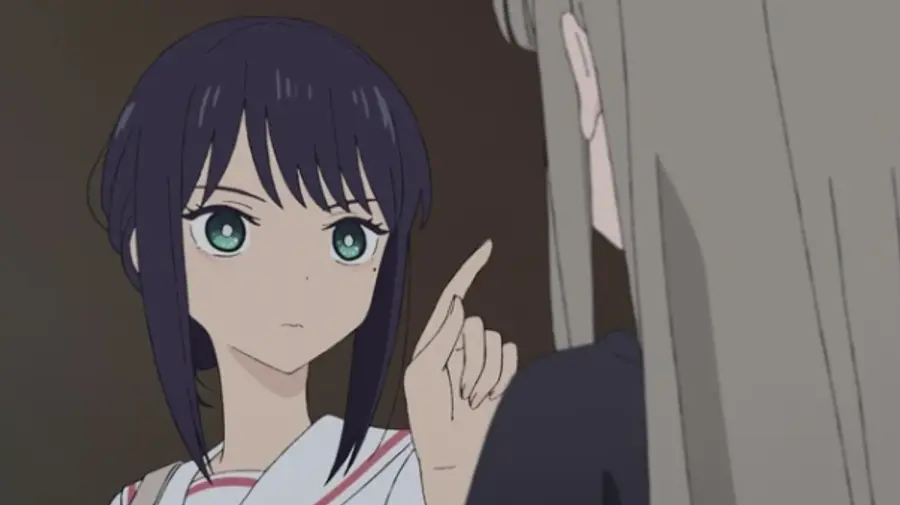

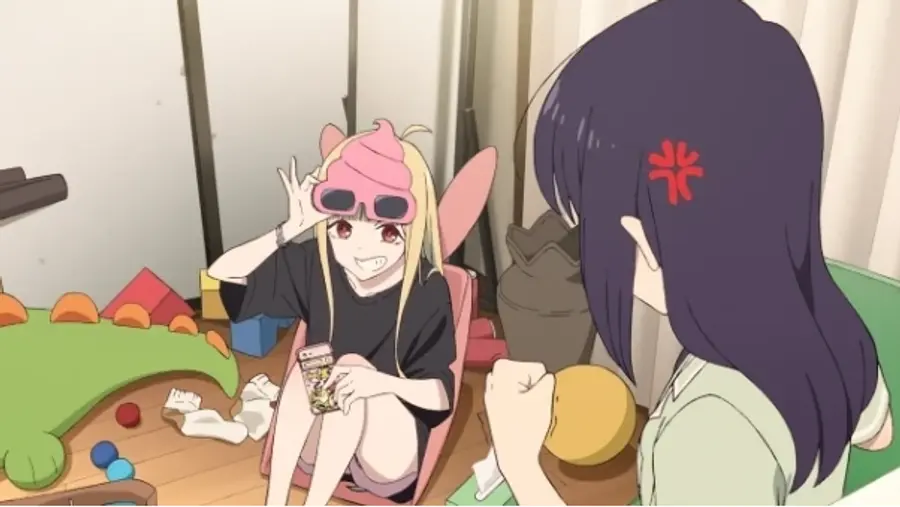
〈Cosmic Princess Kaguya!〉 is a story about an ordinary high school girl Iroha and the free-spirited Princess Kaguya, who escapes from the moon and shares dreams and friendships in a virtual world. Iroha, who moved to Tokyo alone due to a clash with her mother, works diligently at part-time jobs to continue her studies and livelihood. One day, while living a busy life, Iroha discovers a baby shining with rainbow colors on a gaming utility pole and takes it home. The mysterious child Kaguya grows rapidly and brings vitality to Iroha's daily life while causing trouble. Iroha takes Kaguya to the world of Tsukuyomi, which has become a comfort in her tiring life. There, they create Tsukuyomi and meet the popular AI liver Yachiyo, who is the object of admiration for all streamers. Iroha participates in the Yachiyo Cup, where the winner gets the chance to collaborate on stage with Yachiyo, due to Kaguya's reckless declaration.
Representation of Vocaloid Culture
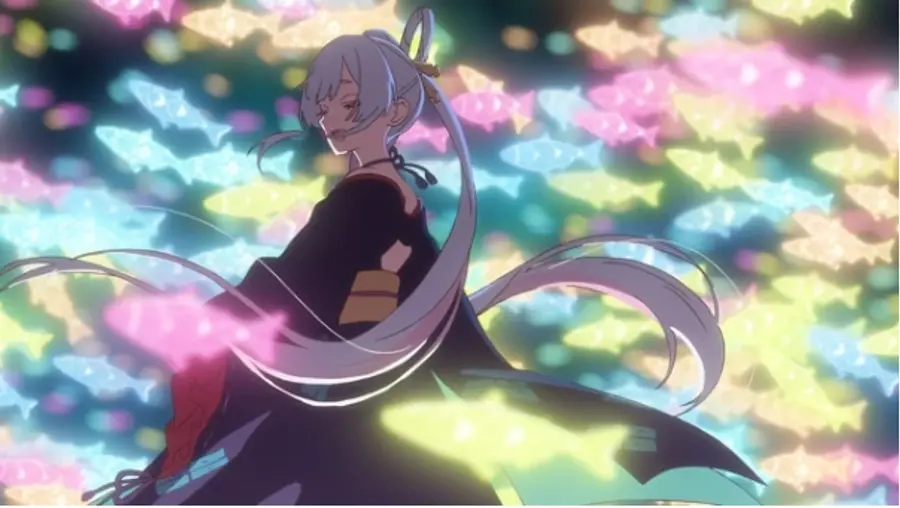

The world of Tsukuyomi, where joy, emotion, and money are exchanged equivalently, closely resembles modern streamer culture. In the film, people continue a cycle of giving inspiration to others and supporting their favorite creators with the money they earn. In particular, the popular AI liver Yachiyo, who created this world, evokes the image of Hatsune Miku, a representative character of Vocaloid, bringing Vocaloid culture into the film. Shingo Yamashita pays homage to Miku, who is at the center of Vocaloid culture, by incorporating Miku's long pigtails into Yachiyo's character design. Vocaloid is a type of voice synthesis software that allows anyone to compose and arrange music, essentially creating a virtual vocalist. This Vocaloid culture has established itself as a major cultural phenomenon in Japanese subculture through interactions with Vocaloid producers (VocaloP), who are both fans and creators. Anonymous VocaloPs create songs by adding melodies and lyrics to Vocaloids and upload them to platforms like Nico Nico Douga or YouTube, initiating a cycle of secondary creation where fans add their own stories. This phenomenon embodies the essence of internet culture—sharing, transforming, and collective intelligence—capturing the sentiments of young otaku in the late 2000s and completely captivating their hearts.
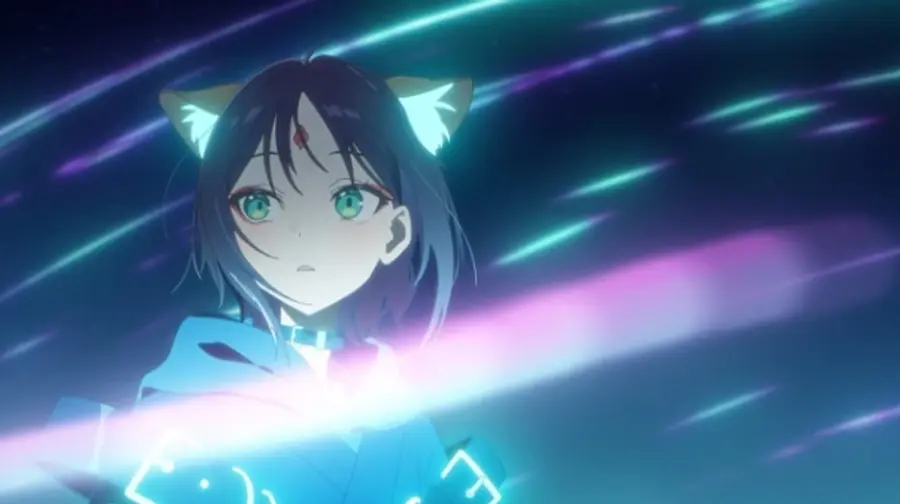
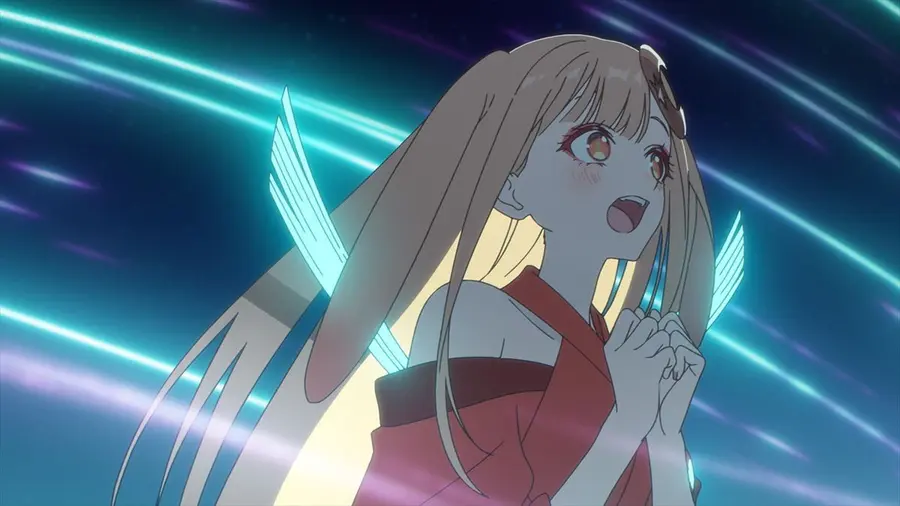
If Yachiyo evokes the symbolic presence of Vocaloid Hatsune Miku, then Iroha evokes the image of VocaloP. After meeting Kaguya, Iroha's dedication to composing mirrors that of VocaloPs, who continue their creations through synthesized Vocaloid voices. Thus, the Tsukuyomi in the film represents the essence of Vocaloid culture, where anonymous creators project emotions onto synthesized voices, and fans revive them through secondary creations. Additionally, the depiction of livers (creators who deliver various content like music live or games in real-time) competing for views in a virtual world centered around Yachiyo encapsulates the overall streamer culture.

In this regard, the director's introduction of the song 'World is Mine' during the first live scene of Iroha, Kaguya, and Yachiyo is akin to declaring a comprehensive exploration of Vocaloid culture. This song, a representative track of VocaloP 'ryo', reimagines Hatsune Miku from a simply cute princess character to a cute yet self-centered princess character, twisting the male gaze. This unexpected gap has instead triggered fans' secondary creations, surpassing 10 million views and becoming a massive hit. Yamashita presents a rearranged version of the existing song in this work, compressing and reproducing the culture of secondary creation in Vocaloid. The live scene, effectively conveying the atmosphere of the virtual space with neon signs and holograms of Tsukuyomi, showcases overwhelmingly high-quality animation and direction. The live scene of 'World is Mine' is a moment that maximizes the participatory experience of subculture fandom and transcends classic folktales through modern internet culture.
Heartfelt Response 'Reply'

〈Cosmic Princess Kaguya!〉 is a yuri work that primarily deals with the relationship between two girls intertwined with romantic feelings and friendship. The yuri code, which was weak in the early part, gradually reveals itself as the story progresses. Particularly, the song 'Reply', performed by Kaguya during her graduation live stage before leaving for the moon, condenses the melodramatic emotional lines of the two characters. Kaguya decides to return after being invaded by the lunar army to take her back. Iroha, facing separation, tries to fight against the lunar army to not let Kaguya go. Yachiyo and the members of Black Onyx join her in the fight. The live scene of 'Reply' amplifies the poignant emotions by intertwining Kaguya's live stage with the actions of those trying to protect her.
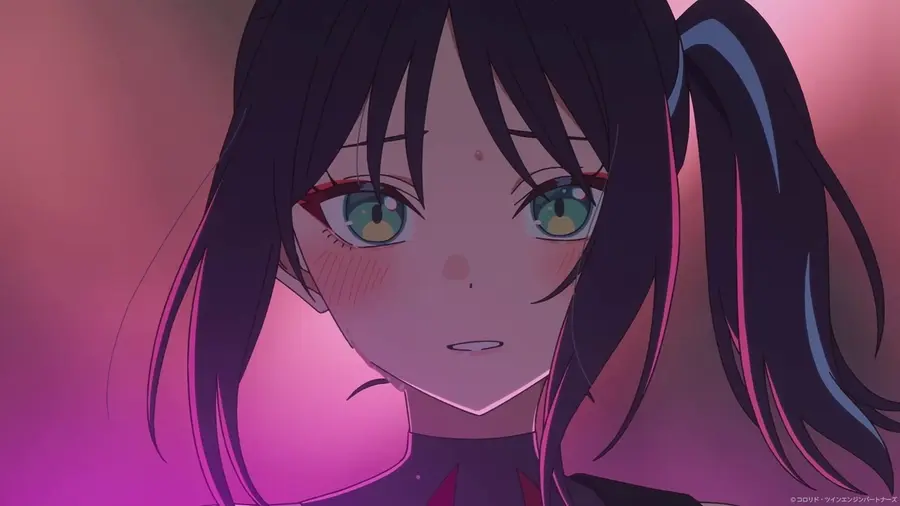
Kaguya's final performance of 'Reply' reappears in the latter part as a response from Iroha to Kaguya, who is on the moon. The song 'Reply', filled with memories shared with Iroha's father, is completed only when combined with the memories shared with Kaguya. The version sung by Kaguya during the graduation live is still an incomplete version, revealing Kaguya's feelings of cherishing the memories with Iroha while accepting the separation from her perspective. Iroha's response, with different lyrics, conveys the heartfelt truth she couldn't express and suggests changing the story's ending and continuing it anew.
※ Spoilers for this work start from here.
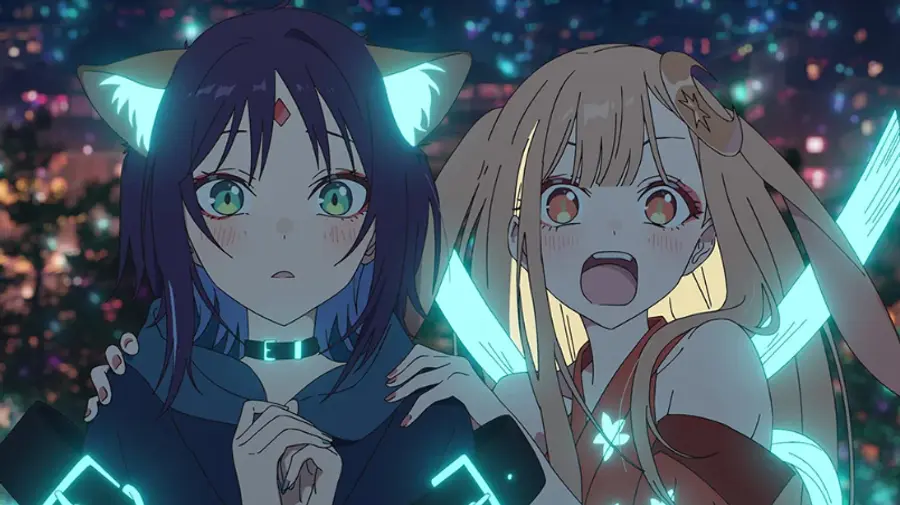
After hearing Iroha's response, Kaguya attempts to return to Earth. However, due to the Urashima effect (a phenomenon in Japan where time dilation according to the theory of relativity causes time to flow differently in space and on Earth), too much time has passed on Earth, and she collides with a meteor on her way back, arriving in the past 8,000 years ago. Kaguya can only exist in the body of a sea snail named 'Hushi', not her own body, and endures for 8,000 years to meet Iroha again. In fact, this process is a cycle of reincarnation that Kaguya has undergone repeatedly from the past to meet Iroha again. As time passes, an era of networks connecting countless people arrives, and Kaguya finally meets Iroha again as Yachiyo in a virtual world similar to the moon's world. Kaguya's lunar world is repeatedly depicted in the film like an arcade game image, paralleling the virtual world. The poignant sadness that arises as Kaguya returns to the moon evokes the sentiment of Vocaloid's disappearance, which vanishes into the digital world of 0s and 1s if one stops searching after turning off the computer. The setting of Kaguya, who has existed since Japan's Jomon period, transforming into the virtual world's Yachiyo revives the animistic worldview of the Jomon people through the process of an ancient spirit reincarnating as a modern subcultural virtual idol. This is not merely a time travel narrative but a transference of animistic thought, where nature, tools (=technology), and spirit are intertwined into the digital space. Shingo Yamashita seems to trace the origins of subculture back to Japan's Jomon period, finding animism and totemism deeply embedded in the thoughts of the Jomon people. He also expands the worldview to the dimension of storytelling, the oldest cultural art in subculture, stating that stories have always been with us through generations.
![[Choo A-young’s Music Box] After Anger, ‘Oasis: Don’t Look Back in Anger’ Sings Again](https://cdn.www.cineplay.co.kr/w400/q75/article-images/2026-09-10/323f8c2a-129f-4107-b190-114253e0c827.jpg)
![[Chua-young's Music Box] Why Did 'What If We' Resonate with Today's Youth? The Romance Fantasy of the Non-Dating Generation](https://cdn.www.cineplay.co.kr/w400/q75/article-images/2026-01-28/113b25b0-ce84-47ff-807d-5dc4657e02d2.jpg)
![[Chua-young's Music Box] The Screams of 'The Shining', the Auditory Discomfort Created by Krzysztof Penderecki's Music](https://cdn.www.cineplay.co.kr/w400/q75/article-images/2025-12-17/2667f27c-46b5-45d4-bf2d-7bf2b656ff21.jpg)
![[Chu Ah-young's Music Box] Michael Jackson's 'Thriller' and 'Heal the World' That Tried to Turn Dreams into Reality](https://cdn.www.cineplay.co.kr/w400/q75/article-images/2026-05-21/ffa1b48f-3611-45b6-a14a-e3e0aea5b392.jpg)

![[Chua-Young’s Music Box] Music for the Purification Ritual of Wounded Youth: “Girls Band Cry”](https://cdn.www.cineplay.co.kr/w400/q75/article-images/2026-04-22/10da8998-3cb2-462f-8af6-4063689a916d.jpg)
![[Chua-young's Music Box] May Madness Reign on This Land! '28 Years Later: The Bone Temple' and 'The Number of the Beast'](https://cdn.www.cineplay.co.kr/w400/q75/article-images/2026-03-11/1a6d94b0-98c1-4b3b-8f0f-dd2d9ac48c7d.jpg)

![[Chua-young's Music Box] The Music of 'Pavane' Following the Path of Love](https://cdn.www.cineplay.co.kr/w400/q75/article-images/2026-02-26/cc89ea7d-356d-492c-8168-136478d2e26d.jpg)
![[Chua-young's Music Box] The Coexistence of Sorrow and Hope 'Super Happy Forever' and 'Beyond The Sea'](https://cdn.www.cineplay.co.kr/w400/q75/article-images/2026-01-14/2315abe7-c0c7-4f3f-8774-9a2b0f578550.jpg)
![[Chua-Young’s Music Box] ‘Project Hail Mary’—A Story of Humanity’s Trembling at the Brink of the End, and ‘Sign of the Times’](https://cdn.www.cineplay.co.kr/w400/q75/article-images/2026-04-09/23d4b16b-49c1-47dd-a17a-1e939faddd12.jpg)



![[Joo Seong-cheol's Locker] The Aesthetics of Jongmyo That Captivated Masters of Martial Arts from Ho Kim-jun to John Woo, Jackie Chan, and Sammo Hung](https://cdn.www.cineplay.co.kr/w160/q75/article-images/2025-12-16/49670e36-abd5-467e-a880-3f3be177e1d0.jpg)
![[Kim Ji-yeon's Jewelry Box] 2025 Presence of the Year Award, 'Typhoon Company' Lee Sang-jin from 'Fine: Country Bumpkins'](https://cdn.www.cineplay.co.kr/w160/q75/article-images/2025-12-16/d6b82afe-d118-455b-92a0-eff7c6967d50.jpg)
![[Chua-young's Music Box] The Screams of 'The Shining', the Auditory Discomfort Created by Krzysztof Penderecki's Music](https://cdn.www.cineplay.co.kr/w160/q75/article-images/2025-12-17/90720552-8d91-4d68-9361-4a134660e671.jpg)
![[Chua-young's Music Box] The Coexistence of Sorrow and Hope 'Super Happy Forever' and 'Beyond The Sea'](https://cdn.www.cineplay.co.kr/w160/q75/article-images/2026-01-14/8c4823db-d8a6-4af2-8007-e690eaf7b6ac.jpg)

![[Chua-young's Music Box] Why Did 'What If We' Resonate with Today's Youth? The Romance Fantasy of the Non-Dating Generation](https://cdn.www.cineplay.co.kr/w160/q75/article-images/2026-01-28/f803353b-1b2d-4624-87dd-8fc5057dc6f8.jpg)
![[Seongchan Eol's Comic Book] A Title That Seems Like It Shouldn't Be Said Casually, Except It's Perfect 「Teenage Dragon」](https://cdn.www.cineplay.co.kr/w160/q75/article-images/2026-01-30/0e1ebf12-5748-470b-aa4f-4a1388d707e6.png)
![[Joo Seong-cheol's Locker] Tony Leung Sometimes Wants to Hold an Ashtray.](https://cdn.www.cineplay.co.kr/w160/q75/article-images/2026-02-09/07564a08-8660-45c9-902d-bad2226672b3.jpg)







![[Sungchan Eol's Comic Book] Did I, Who Became a Pigeon Overnight, End Up Living with My Classmate?! 「Seongbuk-gu Pigeon Lee Heon-seo」](https://cdn.www.cineplay.co.kr/w160/q75/article-images/2026-02-13/b0ebaaa7-a2ae-4018-af58-52b9a410845c.jpg)
댓글 (0)
댓글 작성
댓글을 작성하려면 로그인이 필요합니다.
로그인하기