



I'm obsessed with subculture. I check out anything that handles fresh stories, ideas, or characters—not only films but webtoons, games, comics, and animation. Having opened the door to the world of 'geek' through printed manga, I now read comics on e-books and webtoons on my smartphone—I've become a kidult (a childlike adult) who still loves this stuff. But it's less fun alone. I present "Seong Chan-eol's Manga Books" from the perspective of an all-around geek to share things that are more fun when experienced together.
It's literary, cinematic, and yet most distinctly manga-like. When I think of Kaoru Mori's debut work 「Emma」, I wonder which words are most suitable to convey it. Completed between 2002 and 2006—ten volumes over four years (the main story concludes in seven volumes)—「Emma」 came to mind perhaps because a certain currently airing drama talks about 'upward mobility.' Watching a drama set in a fictional Republic of Korea, I found myself recalling a scene from 19th-century London.
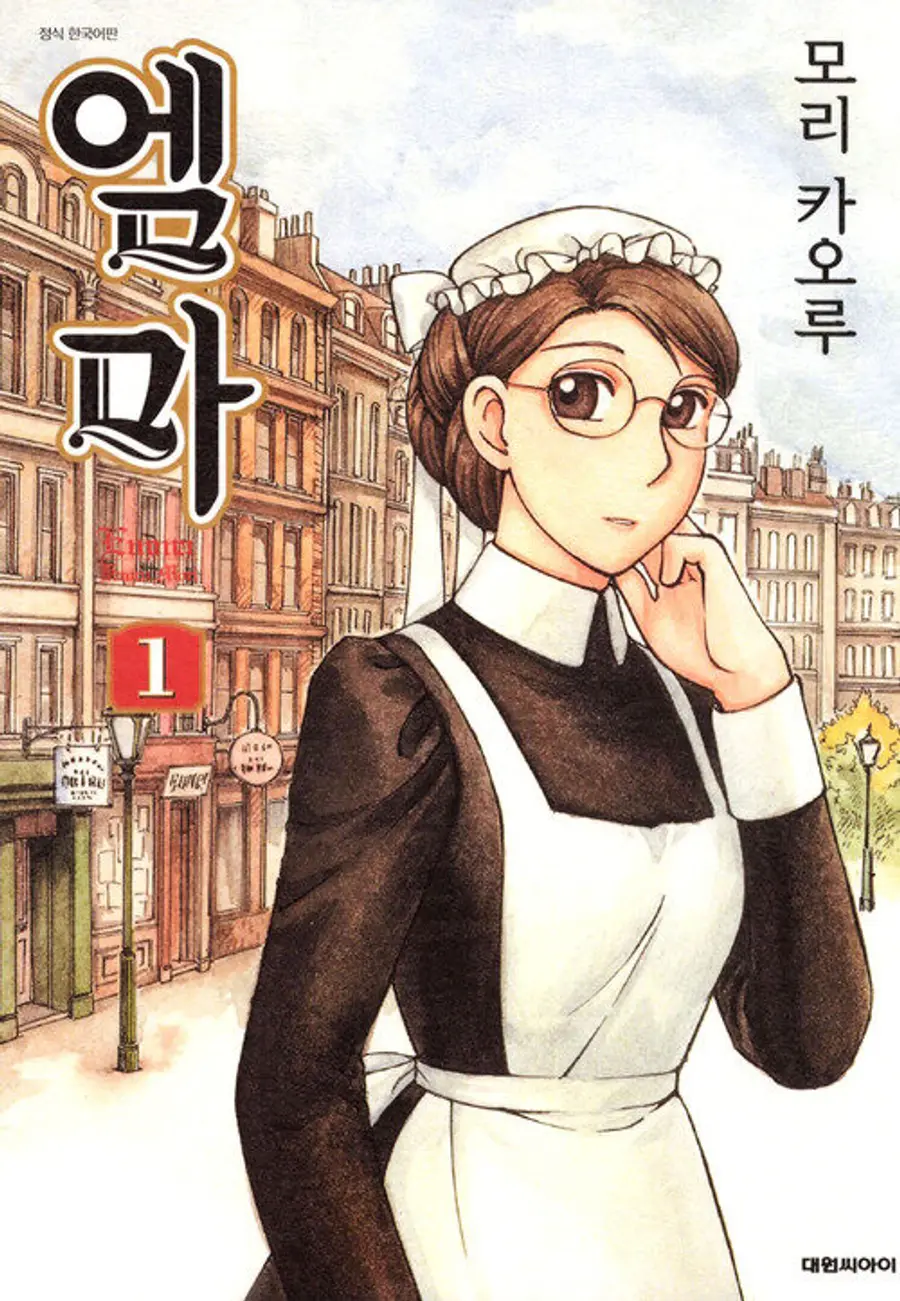
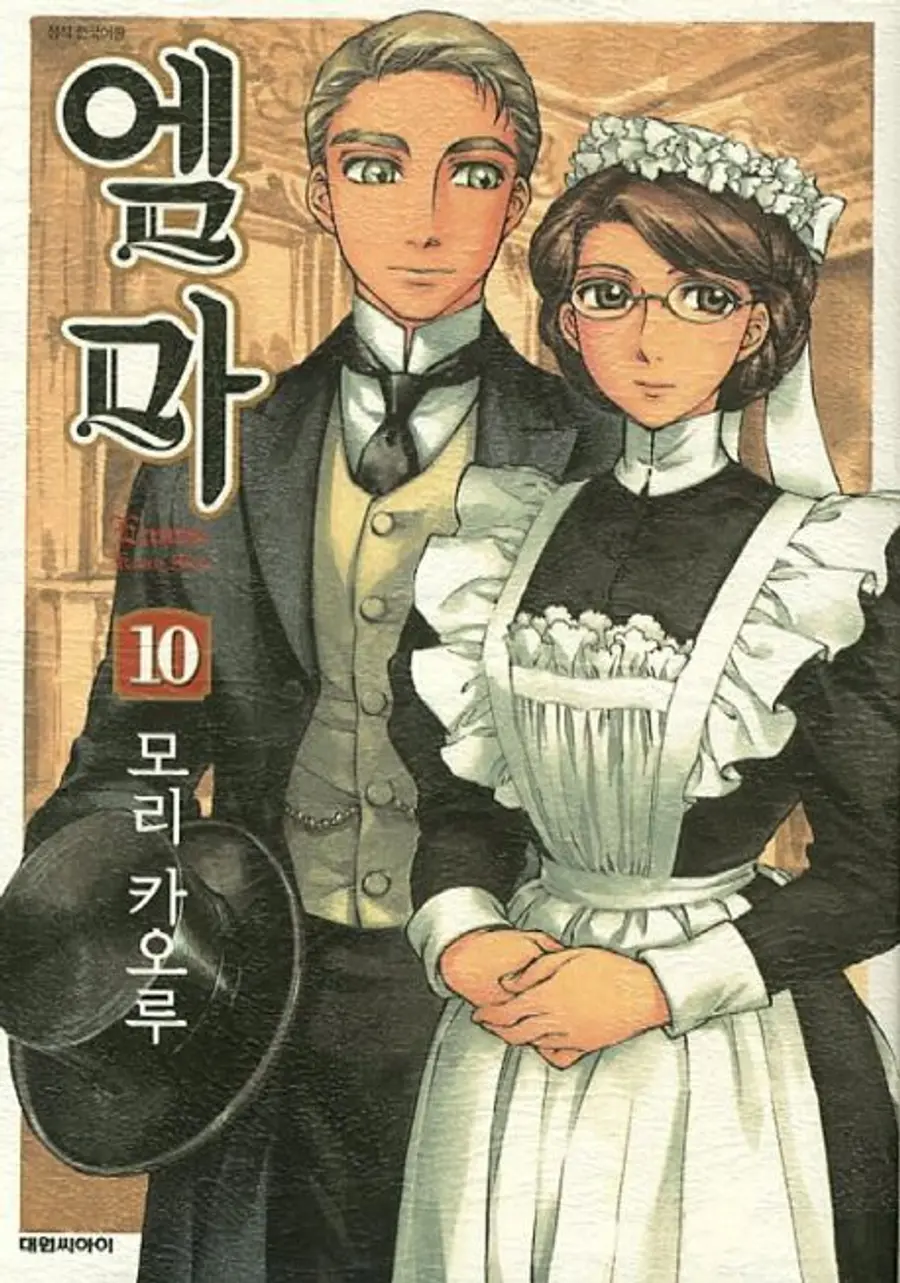
「Emma」 depicts events in 19th-century London. Set at the height of modernity known as the Victorian era, it traces how young William and his maid Emma fall in love. The problem is that William is the eldest son of an upper-class family while Emma is merely a maid. Yes—this classic romantic trope of love that transcends social status is the core plot of 「Emma」. You might think, "What’s so special about such a predictable love story?" but 「Emma」 moved countless readers and industry professionals—so much so that it was included in the 2006 Japan Media Arts 100 in the manga category. In short, 「Emma」 is at least on a different plane from run-of-the-mill, clichéd romances about transcending class barriers.
To explain why 「Emma」 is so remarkable, first note how the era and the class system are precisely woven into the romance. Kaoru Mori has a fanatical tendency to delve deeply into what she becomes obsessed with, and even before 「Emma」 she was deeply absorbed in the setting of 19th-century Victorian England and the theme of maids. As a result, her depiction of the era's changes and of maids as a profession is outstanding. Beyond the maid image consumed in Japanese subculture, she faithfully portrays a maid's everyday duties—dutifully responsible for her employer's household—and accurately captures the ambiguous social position in a society where remnants of the aristocracy and the rise of capitalist society coexist.
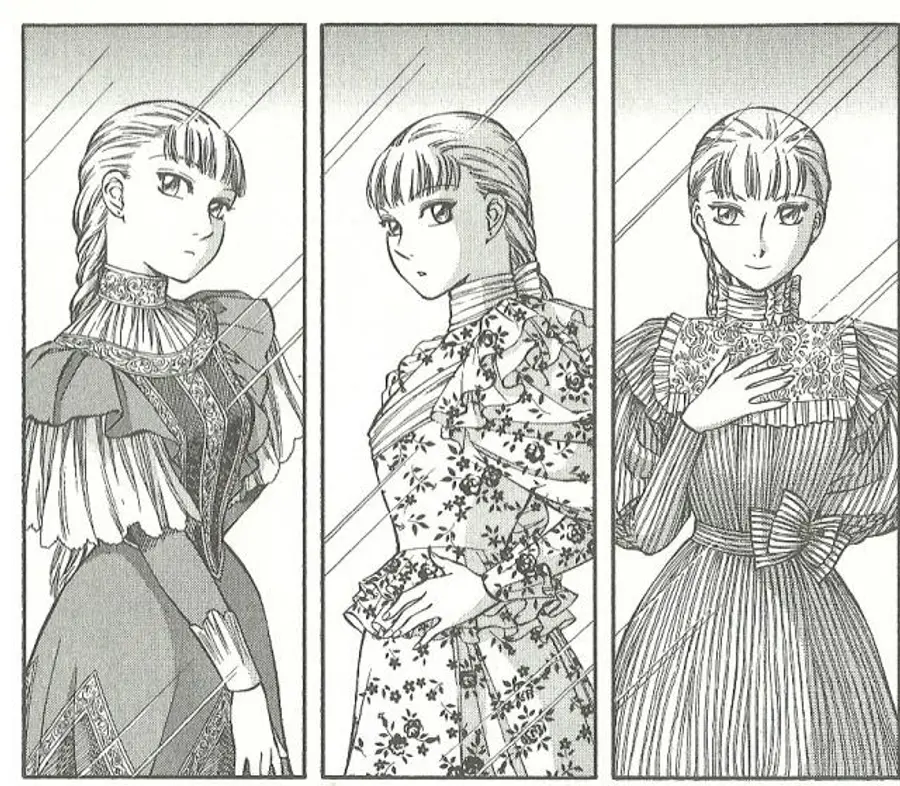
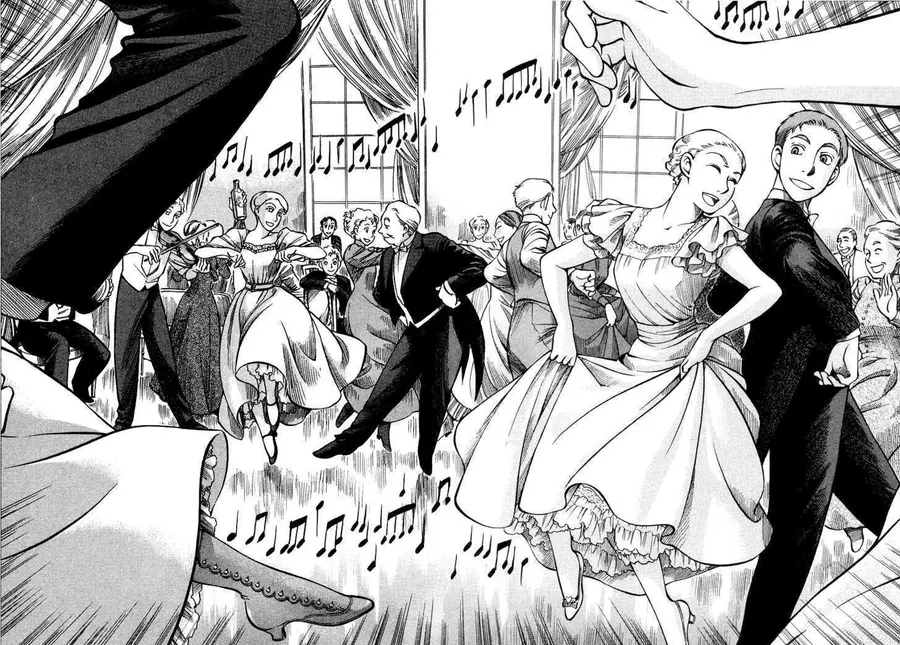
In this process, characters from various classes—upper-class families, traditional aristocracy, educated commoners, and foreign royalty—sometimes represent society and sometimes resist it, and their stories are subtly woven into the romance. While typical romance plots introduce a character who obstructs the couple and develop into multi-way romantic entanglements, 「Emma」 places less emphasis on that structure and instead focuses on the social prejudices Emma and William face because of their class difference. Because of this, the story is notable for its lack of sensational developments; what could have become a flat plot point is instead layered with diverse characters, settings, and social dynamics that bring the era vividly to life. Although the main story ends in seven volumes, the nature of the work allowed for three volumes of side stories to be published.
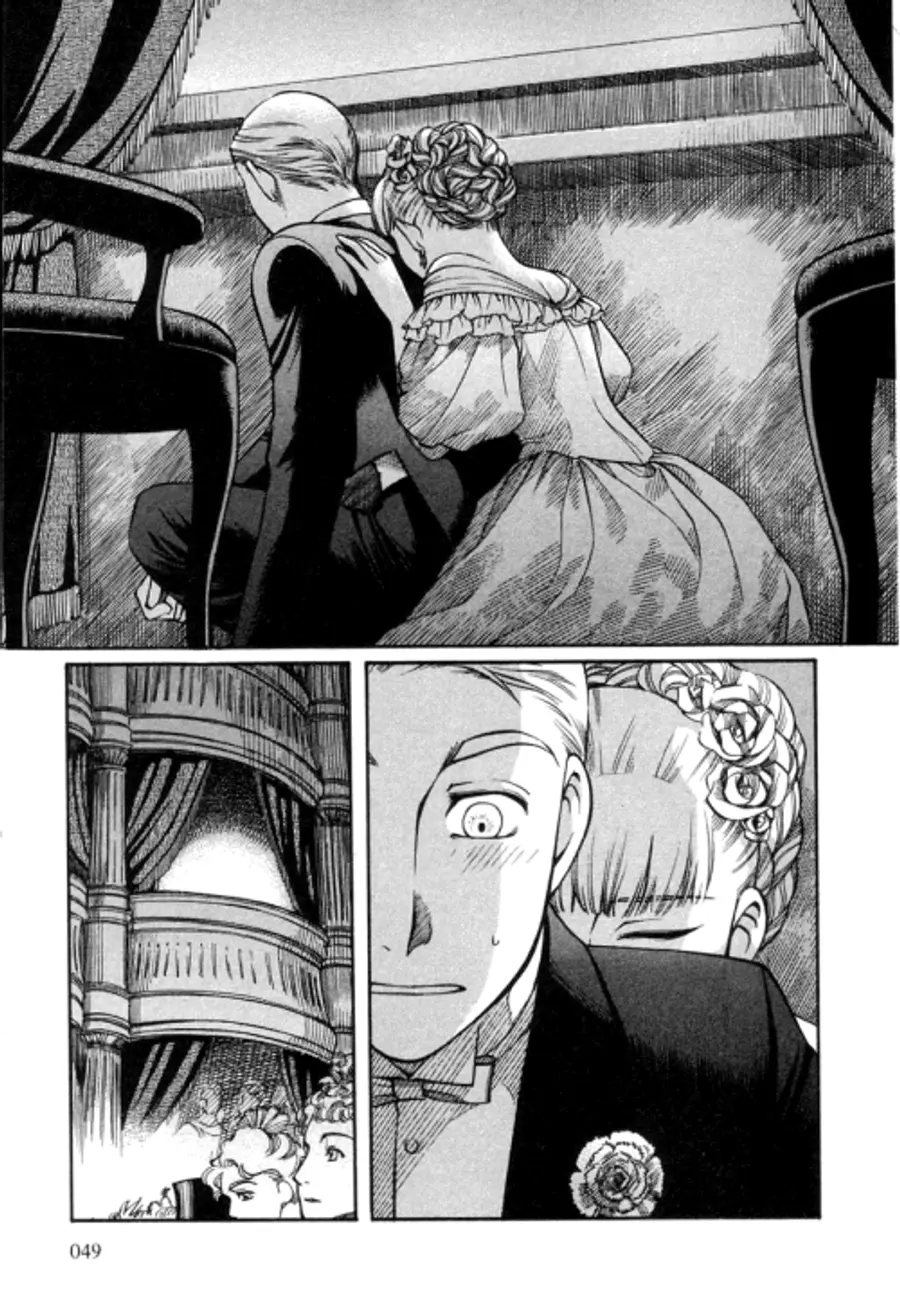
And what completes this delicate story is Kaoru Mori's artistic growth. In fact, comparing volume 1 of 「Emma」 with the final volume reveals differences so pronounced you might think it was drawn by a different artist. The somewhat flat drawing style becomes more three-dimensional, and the previously static staging develops into pacing with almost literary breath. It's the obsessive dedication to what she loves and the meticulous professionalism with which she draws every detail that makes even readers unfamiliar with art admire it.
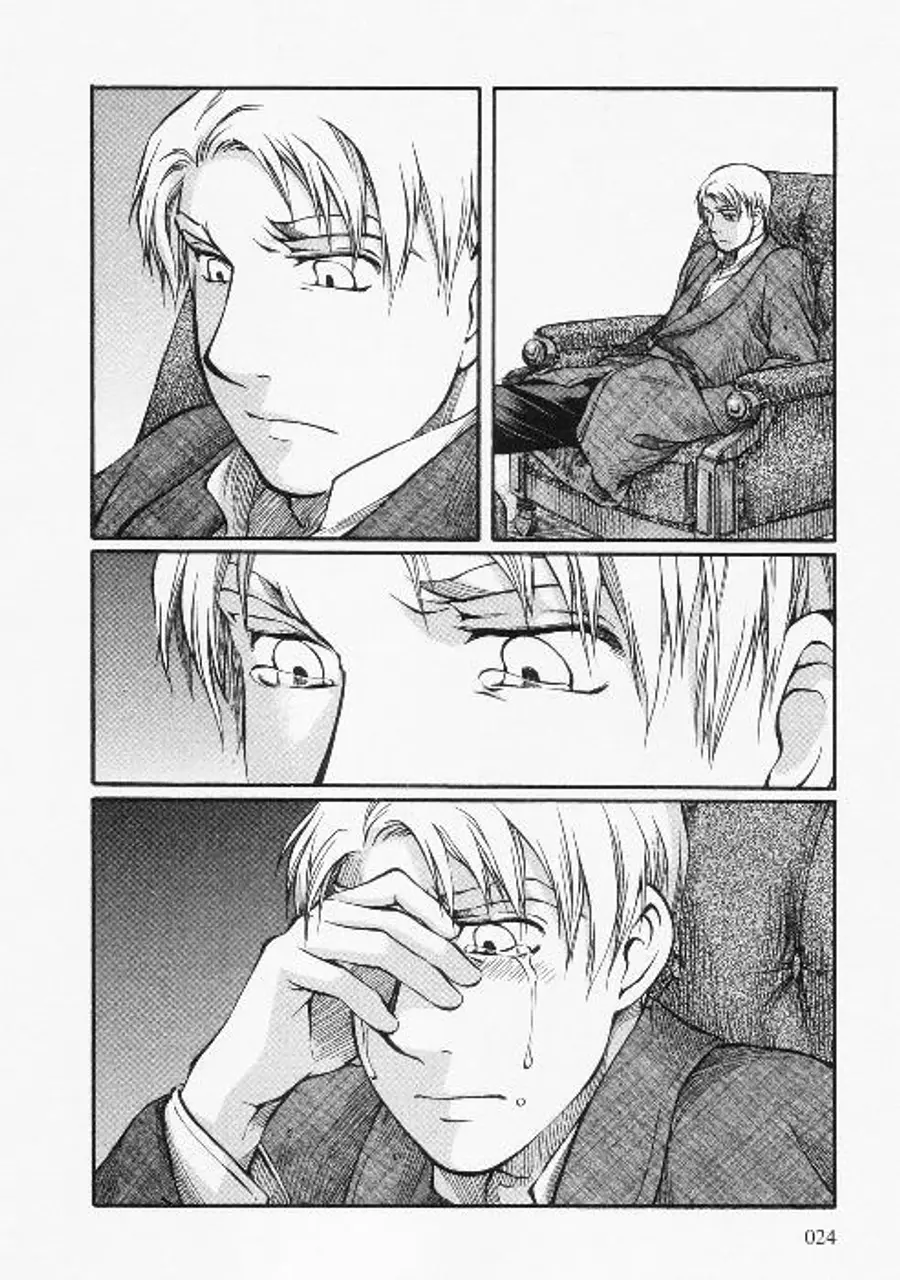
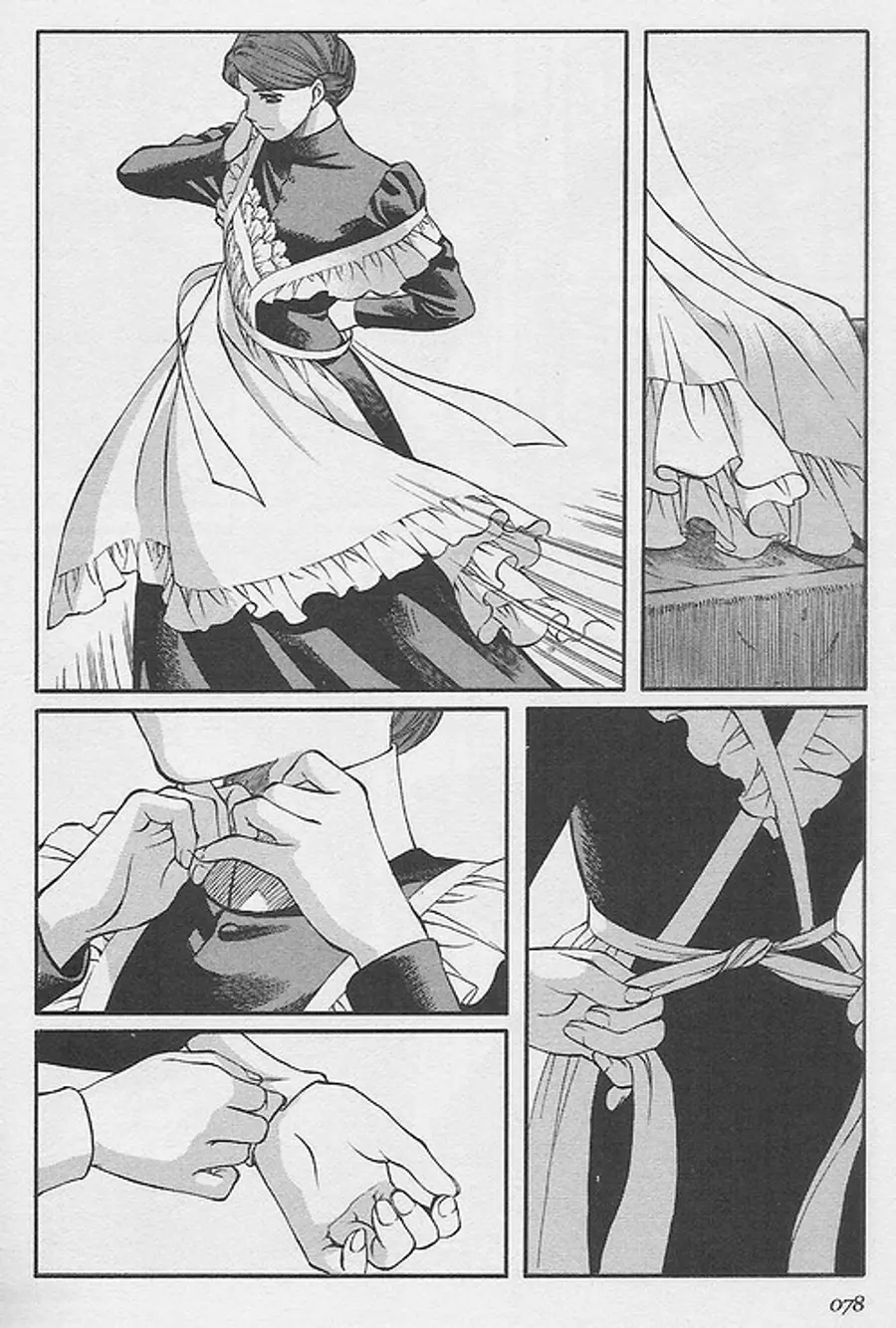
As the artwork reaches this level of completion, 「Emma」 grows even richer because characters' psychological states are revealed through expression and action alone. That's why I used the terms 'literary' and 'cinematic' at the start. With little dialogue, Kaoru Mori captures the exchange of glances and the shifting of expressions in painstaking detail, and her panel direction makes the reader's heart race.
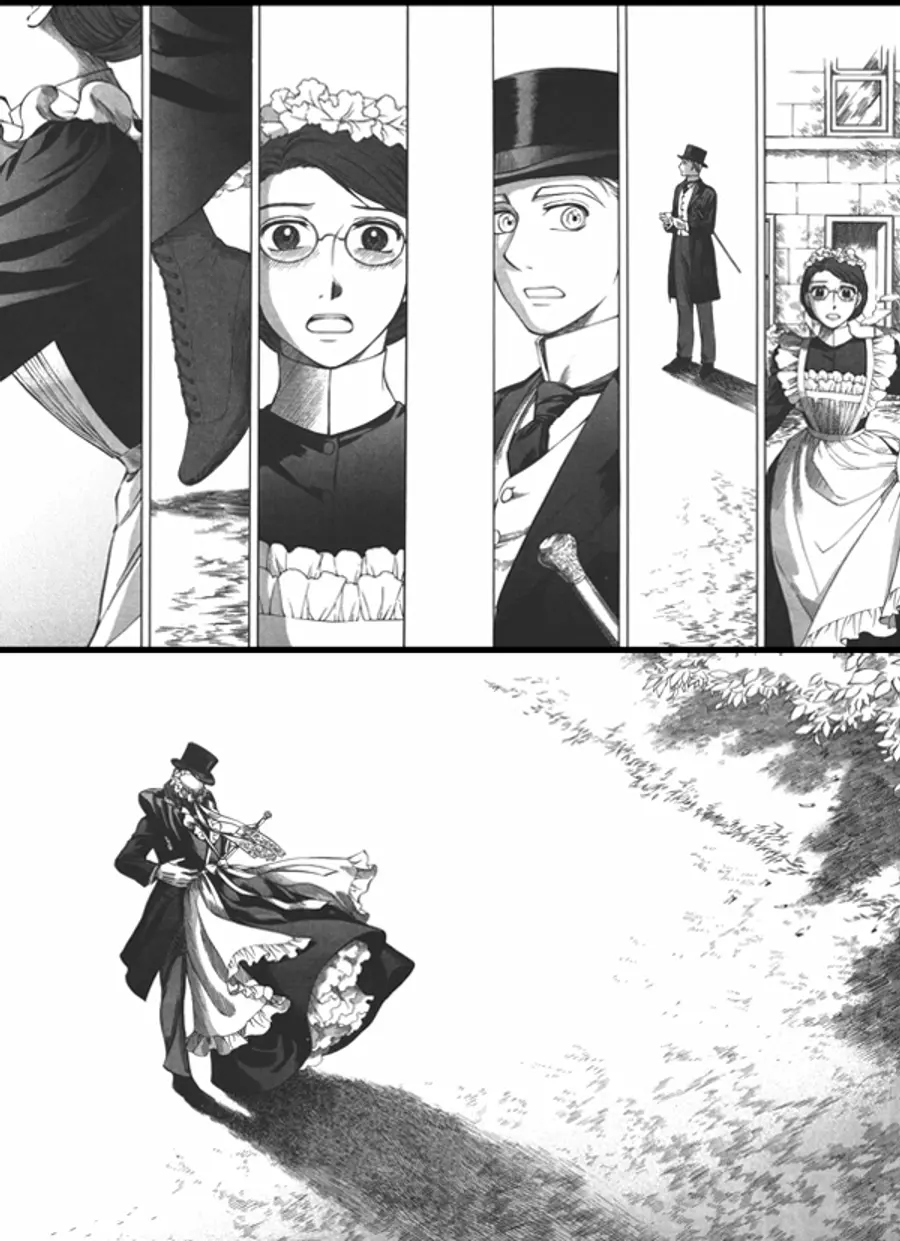
The film 〈Decision to Leave〉 has a line: "Some people are overwhelmed by sorrow like a crashing wave, while others are slowly stained, like ink spreading in water." If you replace 'sorrow' with 'love,' there's no sentence that describes 「Emma」 more accurately. Their love is not the kind of passionate upheaval typical of romances about transcending class barriers. Rather, like ripples gently spreading across the surface, it quietly expands and ultimately transforms them into true companions beyond social status. I guarantee—if you've had your fill of the hot, burning romances of today where only the two leads seem to be on fire, I recommend using 「Emma」 as a bit of a detox.
Starting with "Joo Seong-chul's Locker," which assigns excessive meaning to objects in films; the guide to actors poised for a breakout, "Kim Ji-yeon's Jewelry Box"; the listening room for film music that moved me, "Chu Ah-young's Music Box"; and the omnivorous subculture fan's purchase diary, "Seong Chan-eol's Manga Books," Cineplay journalists will begin a biweekly series in which each writer contributes based on their own tastes and perspectives.
![[Sung Chan-eol's Comics] 「Kindergarten WARS」 Turns Body Count Into Bizarre Rom-Com Fun](https://cdn.www.cineplay.co.kr/w400/q75/article-images/2026-06-05/7b0c094b-0172-4553-948d-ed73e70c7547.jpg)
![[Seongchan Eol's Comic Book] A Mystery Comic Born in the Same Year as 'One Piece'... No, You Should Read This Science Comic 「Q.E.D. Proof Complete」](https://cdn.www.cineplay.co.kr/w400/q75/article-images/2026-01-16/a6c97793-e7aa-4dd4-9332-21db30d7cae2.jpg)
![[Sung Chan-yeol’s Comics] In 〈He and the Moon〉, a Big Family Feels Both Close and Far Away](https://cdn.www.cineplay.co.kr/w400/q75/article-images/2026-07-31/c8c3c7bb-dc52-4dee-b464-08883293a856.jpg)
![[Seong Chan-eol’s Comics] I hesitated to recommend it, but 30,000 moviegoers leaves me saying ‘Give it a try’: 「The Dangers in My Heart」](https://cdn.www.cineplay.co.kr/w400/q75/article-images/2026-06-19/96b3f202-dd11-4424-81ac-8087cccaa179.jpg)
![[Sungchan Eol's Comic Book] Did I, Who Became a Pigeon Overnight, End Up Living with My Classmate?! 「Seongbuk-gu Pigeon Lee Heon-seo」](https://cdn.www.cineplay.co.kr/w400/q75/article-images/2026-02-13/20128ffc-1352-49db-a835-8da1e4b53d86.jpg)
![[Seong Chan-eol's Comics] Can’t Die Even After Death? An XP Fever Time in ‘The Knight Only Lives Today’](https://cdn.www.cineplay.co.kr/w400/q75/article-images/2026-07-16/d573bcd8-039f-4de6-a0cb-e326a424ade5.jpg)
![[Sungchan Eul's Comic Book] Capturing Academics, Dreams, Love, and Friendship in 'Skip and Loafer'](https://cdn.www.cineplay.co.kr/w400/q75/article-images/2025-12-18/d3c8033a-9c18-4a26-82c5-1c32990719c6.jpg)

![[Seongchan Eol's Comic Book] Capture the 'Yokai' Beauty that Destroys the Country and Establish a New Dynasty 「Fengshen Yanyi」](https://cdn.www.cineplay.co.kr/w400/q75/article-images/2026-02-27/defeff57-c09b-48c0-9715-fda5d1275699.jpg)
![[Seongchan Eol's Comic Book] A Title That Seems Like It Shouldn't Be Said Casually, Except It's Perfect 「Teenage Dragon」](https://cdn.www.cineplay.co.kr/w400/q75/article-images/2026-01-30/2624488d-8a9c-4c30-91c9-87bb33d22a20.png)
![[Seong Chan-eol’s Comics] Read 「The Princess](https://cdn.www.cineplay.co.kr/w400/q75/article-images/2026-10-08/f07ab331-2d69-474f-87e6-a302dcc7265d.jpg)
![[Sungchan-eol’s Comic Book] The “Happy” Adventure of Circus Cutie Donuts, “Donuts and the Circus”](https://cdn.www.cineplay.co.kr/w400/q75/article-images/2026-04-09/82e93b96-5b25-458a-b773-0966563ee236.webp)


![[Interview] A Love Letter to Life, Humanity and Korea: ‘Journey There’ Star Justin H. Min, Part 2](https://cdn.www.cineplay.co.kr/w300/q75/article-images/2026-10-22/f97b0baf-32b0-4b5c-983b-df3166e84990.jpg)
![[Seongchan Eol's Comic Book] Read This When You're Feeling Down, A Middle Schooler's Innocent First Love 「The Girl I Like Forgot Her Glasses」](https://cdn.www.cineplay.co.kr/w160/q75/article-images/2026-03-12/b03d1348-3958-4296-8a0b-2bf4f2d3db57.jpg)
![[Sungchan-eol’s Comic Book] The “Happy” Adventure of Circus Cutie Donuts, “Donuts and the Circus”](https://cdn.www.cineplay.co.kr/w160/q75/article-images/2026-04-09/92844b0f-9952-4f4e-9e0c-a0a86d090f79.webp)
![[Joo Seong-cheol’s Lockers] Lee Cronin’s The Mummy and Murderous People Season 2 — and a Scorpion Jacket That Feels Like the Rise of Drive](https://cdn.www.cineplay.co.kr/w160/q75/article-images/2026-04-20/61eadb57-0a15-4f1a-9ef0-70e6bdc5604d.jpg)
![[Kim Ji-yeon's Jewel Box] The Film's Biggest Discovery, 'Jjanggu' Jo Beom-gyu](https://cdn.www.cineplay.co.kr/w160/q75/article-images/2026-04-21/cbe7c643-6e04-445c-8a66-b4a9725818c8.jpg)
![[Chua-Young’s Music Box] Music for the Purification Ritual of Wounded Youth: “Girls Band Cry”](https://cdn.www.cineplay.co.kr/w160/q75/article-images/2026-04-22/d8452983-1957-41f1-b93f-c4668dfbe5da.jpg)
댓글 (0)
댓글 작성
댓글을 작성하려면 로그인이 필요합니다.
로그인하기