



Watching 〈Lee Cronin’s The Mummy〉 , you can feel the full-on force of Blumhouse as it revives a franchise that seemed long dead: 〈Mummy〉. The first 〈Mummy〉 (1932), powered by the charisma of actor Boris Karloff, was basically the flagship of the “Universal Horror” era. After that came 〈The Mummy〉 (1999) and 〈The Mummy Returns〉 (2001) with Brendan Fraser, then 〈The Mummy: Tomb of the Emperor〉 (2008)—which even brought in Jet Li and Michelle Yeoh—and finally 〈The Mummy〉 (2017) by Tom Cruise, which rebooted the series. By then, the 〈Mummy〉 movies had already become synonymous with run-of-the-mill “entertainment blockbuster” fare.
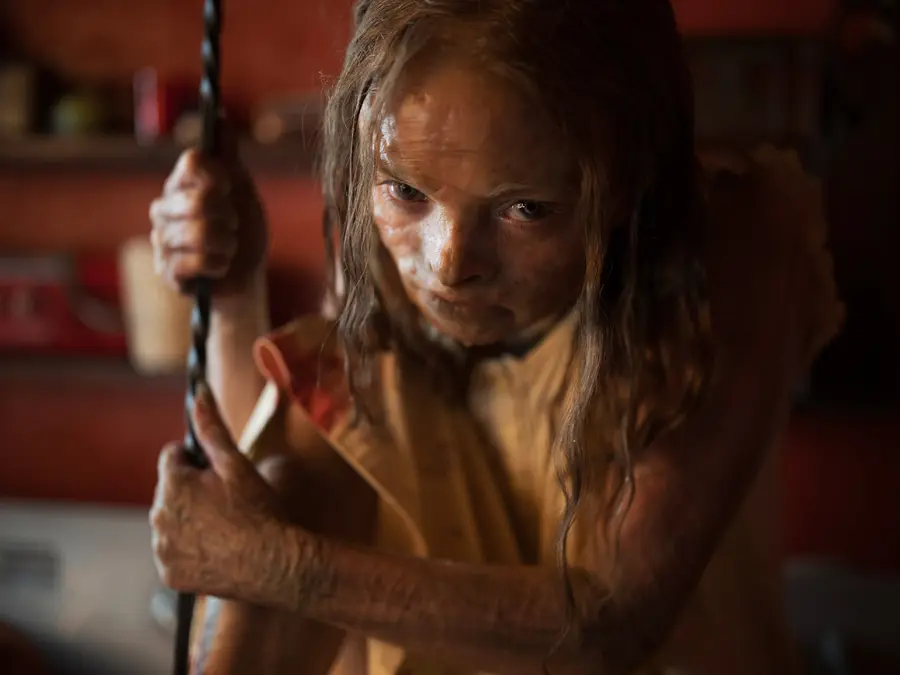
Director Lee Cronin, who made his feature debut 〈Hole in the Ground〉 (2019), won Best New Director at the Fantastic Film Festival. Later, after Sam Raimi personally picked it as “a pick,” Cronin went on to direct 〈Evil Dead Rise〉 (2023), the fifth entry in the 〈Evil Dead〉 series. Drawing inspiration from 〈The Exorcist〉 (1973) and dialing things up even more with 〈Hereditary〉 (2018), he unleashes a full-on feast of orthodox B-horror—so intense you can’t look away for a single second. With hard gore—mutilation and severed limbs—at 134 minutes, it may feel like heaven to some viewers and the opposite to others. In any case, unlike Universal Studios’ old-school classic IP, and unlike the well-worn lane of familiar entertainment blockbusters, Lee Cronin and Blumhouse just keep driving you forward for more than two hours—in their own unique language and style.
Whether it was Steven Spielberg’s 〈Raiders〉 franchise—or in director Barry Levinson’s 〈The Fear of the Pyramid〉 (original title: Young Sherlock Holmes, 1985), which came from the idea that his production would focus on young Sherlock Holmes’s life, drawn from Conan Doyle’s mystery novels—whenever Egypt’s pyramids show up, one thing never gets left out: the scorpion. Even in 〈Lee Cronin’s The Mummy〉, where the tone and manners are completely different from the existing 〈Mummy〉 series, you can’t ignore that “fear of the scorpion.” And like a sad animal with a long neck—a giraffe—the scorpion, too, is sad because it carries poison. For that simple reason, in countless horror films where not only Egypt’s pyramids but also desert regions appear, the scorpion shows up like a “messenger of evil spirits”—how unfair is that, right?
Scorpions that trace back to the Silurian Age of the Paleozoic Era are, as arthropods, a general term covering all species within the order Scorpiones. Since they have big pincers, at first glance they look no different from crayfish or other crustaceans—but because they have small heads and deadly venom, they developed the kind of reputation they have today. Compare them with the gentle, affectionate crustacean Sebastian from Disney’s animated 〈The Little Mermaid〉 franchise (though plenty of people mistakenly think Sebastian is a lobster—the correct species name is “Trinidad crab,” but call it what you like).
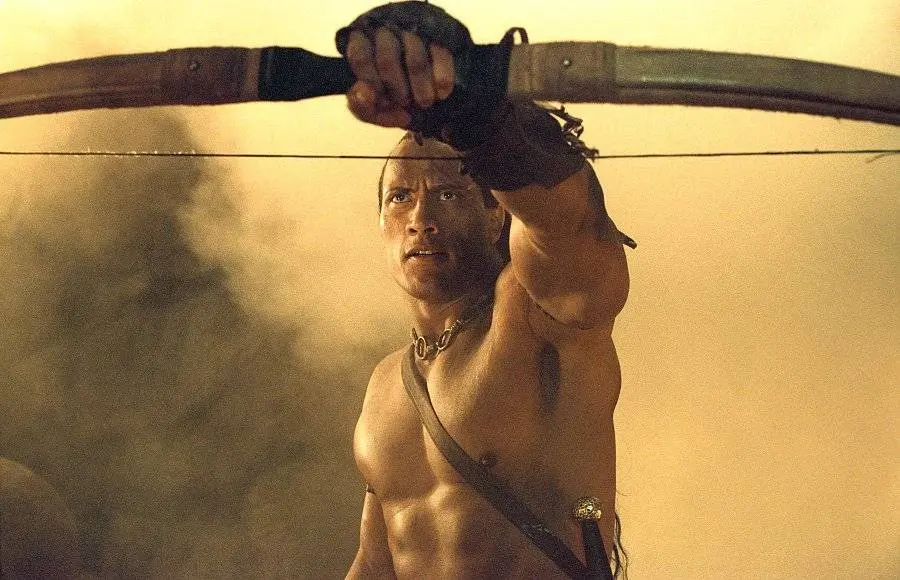
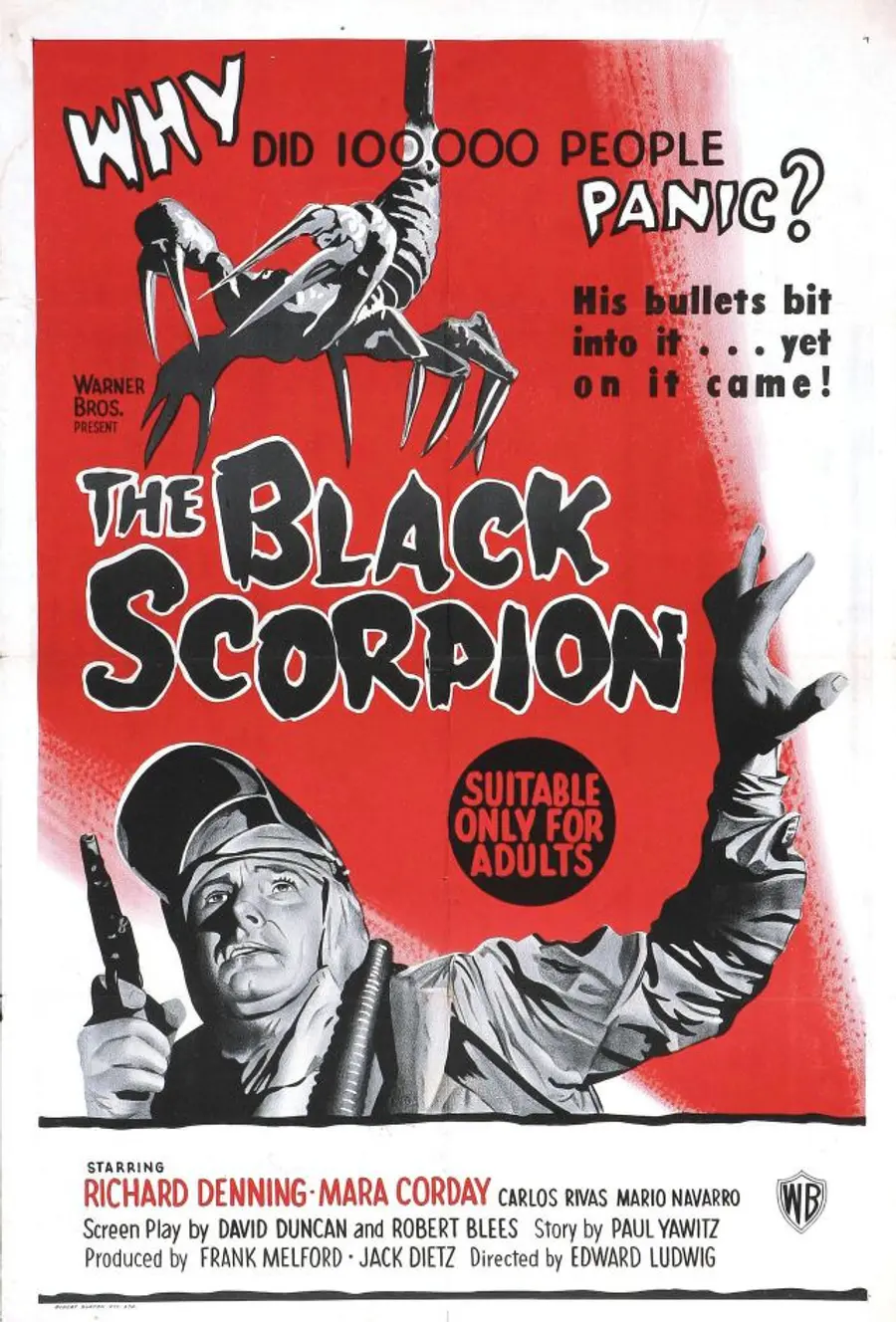
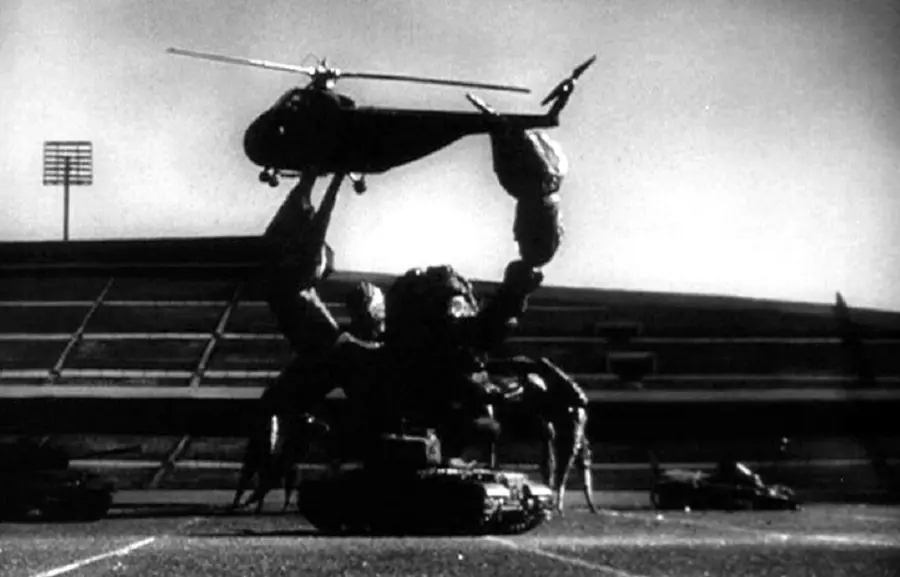
The first movie to feature scorpions as a giant monster was none other than the 1957 film 〈Black Scorpion〉. In it, enormous scorpions that had been sleeping underground due to volcanic eruptions awaken and attack the city. Their movement—brought to life through stop-motion animation—was astonishing. Giant scorpions fighting tanks and snapping the ends off helicopters with their pincers—what a sight! Years later, 〈The Scorpion King〉 (2002), starring Dwayne Johnson, was made as a spin-off of the 〈Mummy〉 franchise.
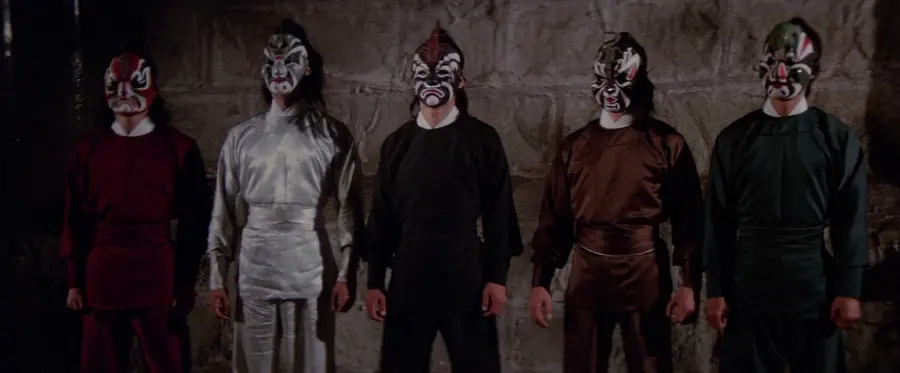
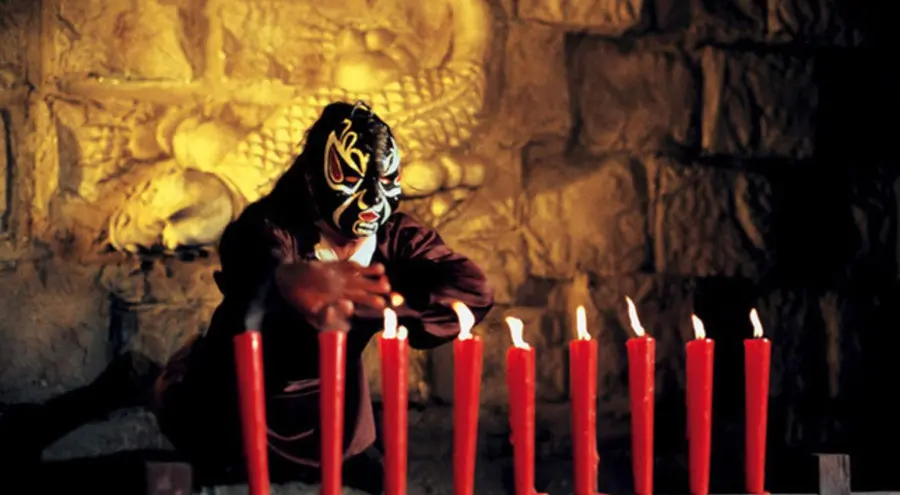
If you get into Hong Kong cinema, its distinct shape and movement are a big wellspring of inspiration. There’s a film by director Chang Cheh, 〈The Five Venoms〉 (The Five Venoms, 1978), which essentially took over the settings—while Quentin Tarantino later reworked the 〈Kill Bill〉 universe. In the sect known as the “Venom School,” there are five martial-arts masters: each one practices the skills of a centipede, a snake, a scorpion, a gecko, and a toad. They survive by hiding their identities.

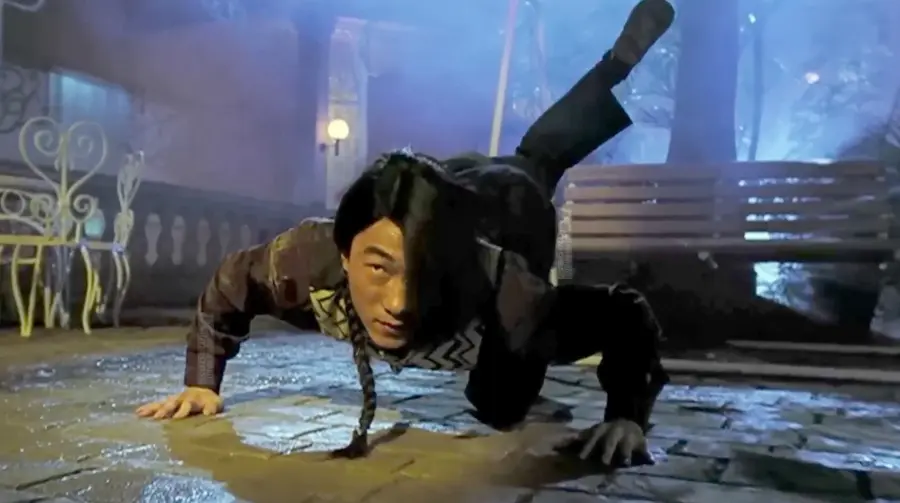
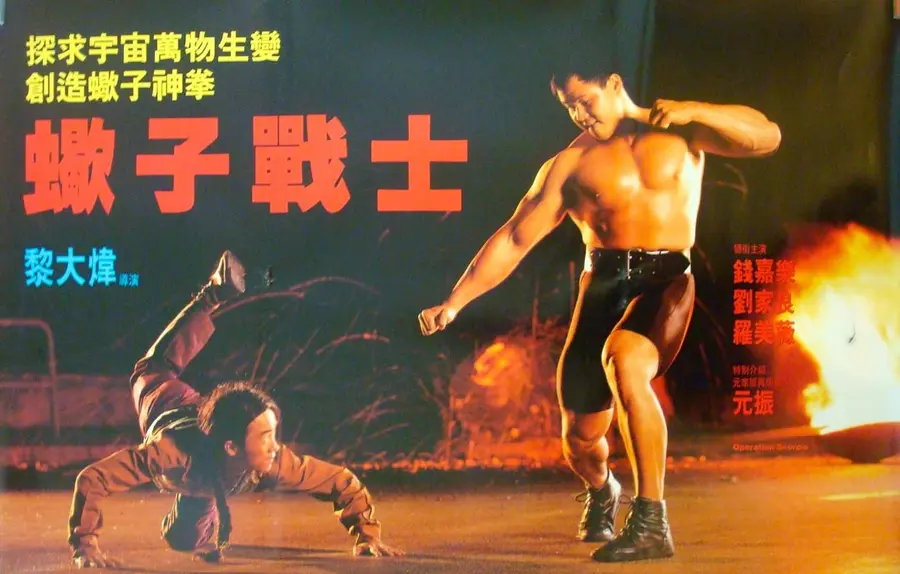
When talking about the “Scorpion Fist,” you can’t skip 〈Operation Scorpio〉 (Operation Scorpio, 1992), produced by Golden Harvest, starring Korean action star Won-jin and portraying the scorpion’s movements as faithfully as possible. He also served as a martial arts director on films like 〈Goddess of Mercy〉 (1996) and 〈A Fistful of Vengeance〉 (2001), and even in 〈The Suspect〉 (2013) and 〈The Tiger of Dragon Tooth〉 (2022), he delivered standout action performances. At one point, he was shuttling actively between Hong Kong and Korea—and in 〈Operation Scorpio〉, he shows off flashy kicking technique, swinging his legs with the freedom of a scorpion.

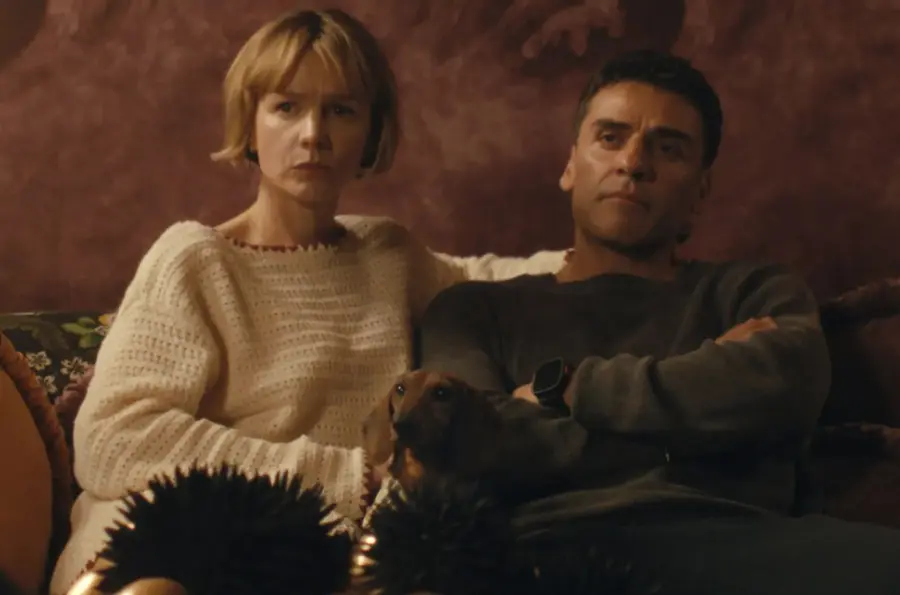
The moment I thought of scorpions was when I watched Netflix’s series 〈Murderous People〉 Season 2, released on April 16. Watching the couple—Joshua “Josh” (Oscar Isaac) and Lindsey (Carey Mulligan)—bicker and fight the instant they meet while managing a resort reminded me of the film 〈Drive〉 (2011), where they played a couple 15 years earlier. What was also notable was that in 〈Inside Llewyn Davis〉 (2013), they’d already played lovers—and then, 15 years later, met again as a married couple.
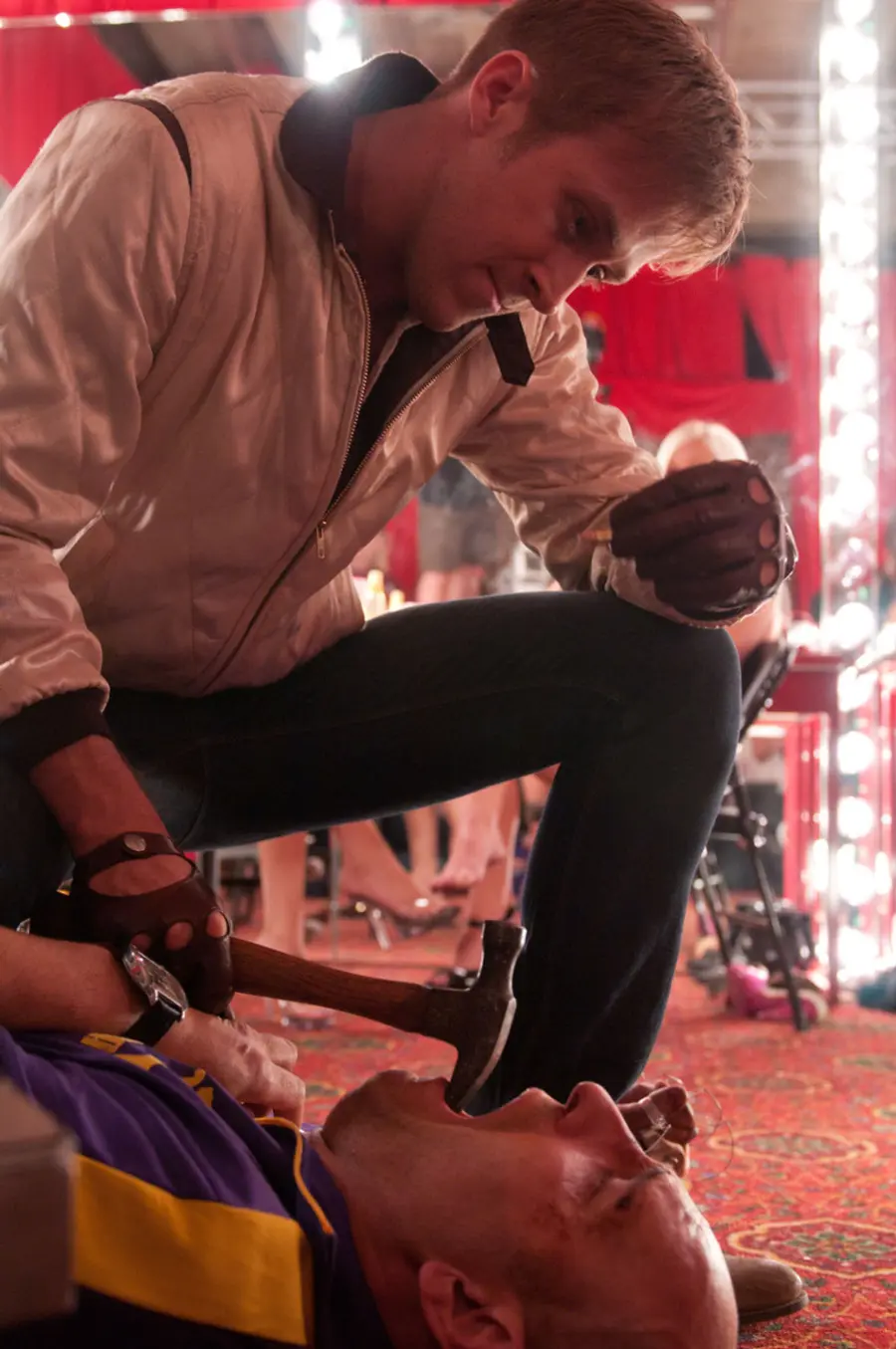
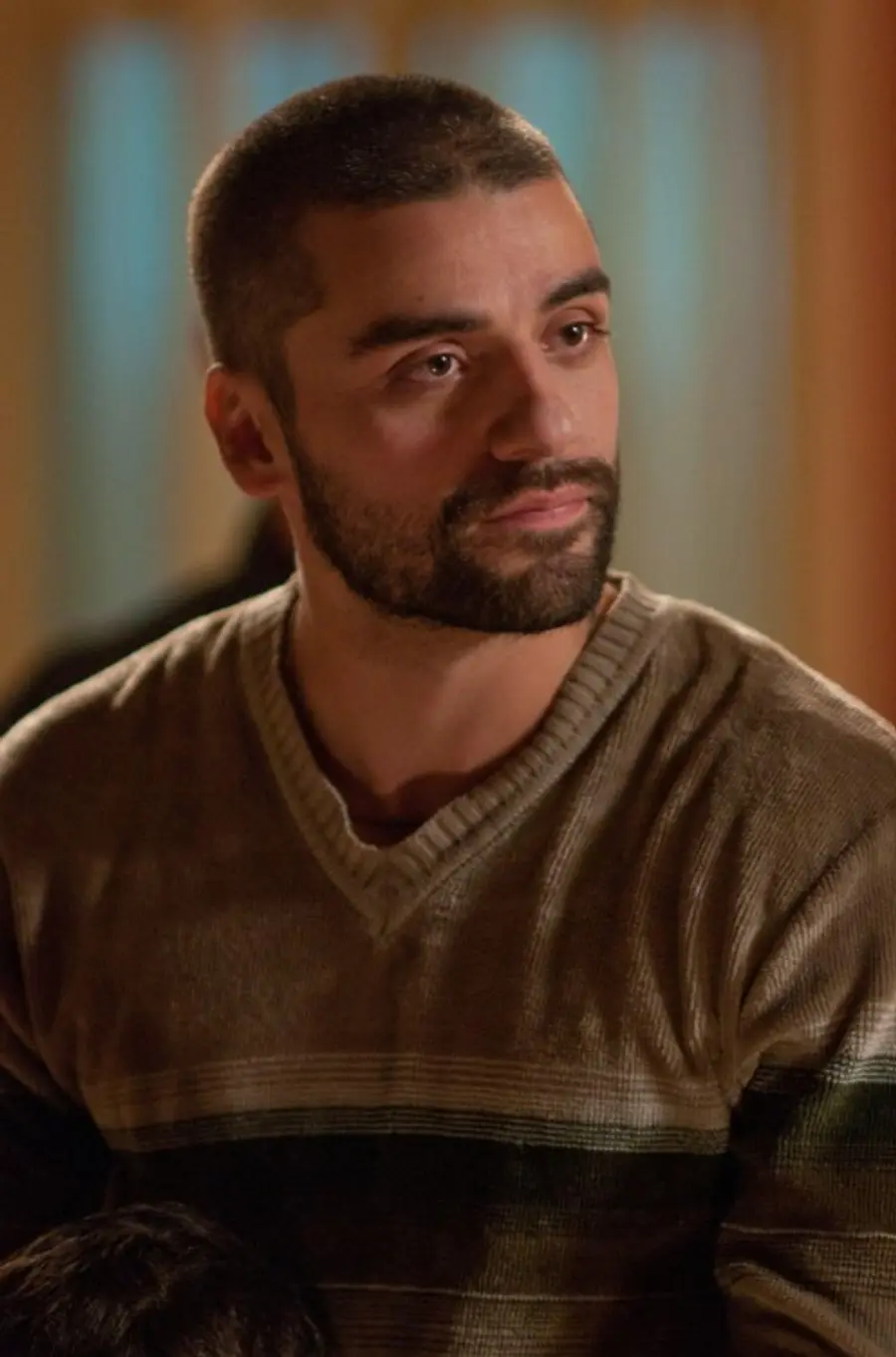
In 〈Drive〉, Irene (Carey Mulligan), a woman living next door to one man (Ryan Gosling), gradually develops tender feelings—and once Irene’s husband, Stan (Oscar Isaac), gets released from prison, a strange relationship takes shape. That nameless man, who used to work as a freelance driver between criminal organizations, risks everything to protect Irene.
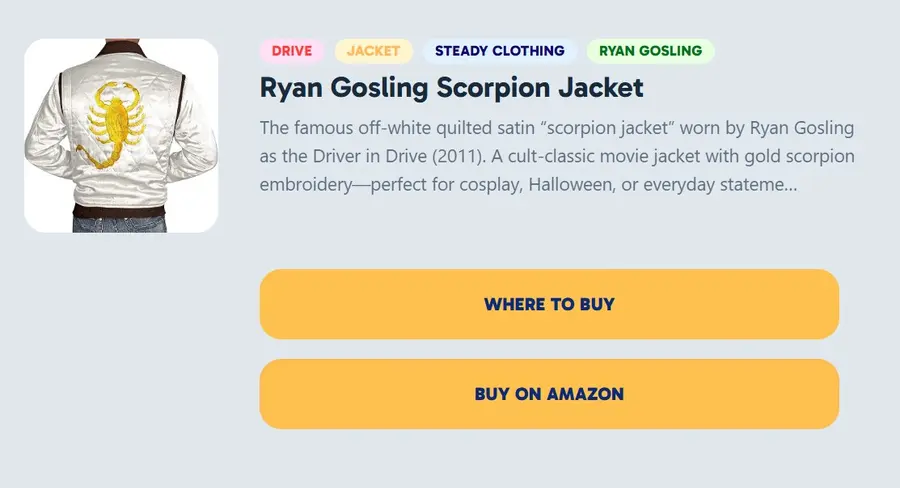
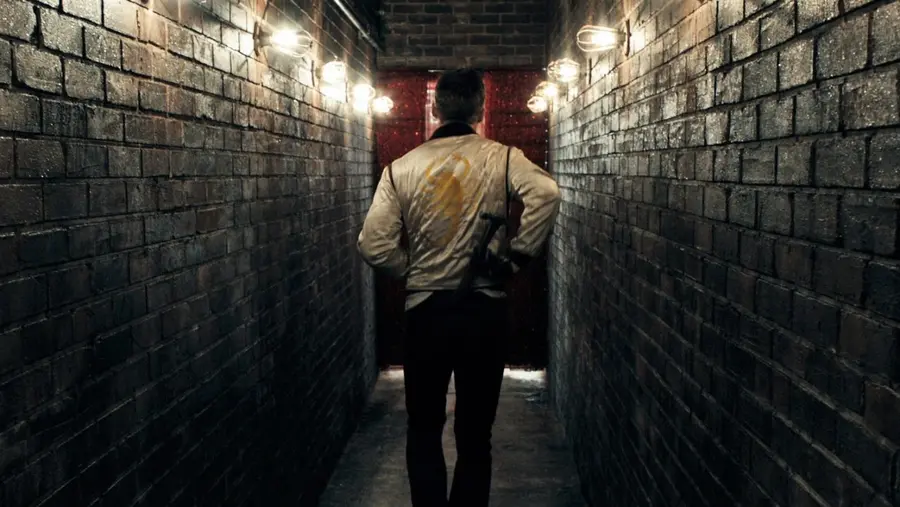
Of course, scorpions don’t actually show up in 〈Drive〉—but Ryan Gosling does walk around in a jacket covered in a huge golden scorpion across his back. It’s an animal that fits his character perfectly. You could even say it nods to director Park Chan-wook’s 〈Oldboy〉 (2003) and its “jangdori sin” motif—though that element can also look like a scorpion’s pincers. Either way, the scorpion jacket in 〈Drive〉 was made specifically for the movie—and yet plenty of fans wanted to buy it. So, using materials and forms that were fairly close, it’s been sold on Amazon under the name “Ryan Gosling Scorpion Jacket.”
![[Joo Seong-cheol's Locker] The Black Speaker of 'Sirat' and the Monolith of '2001: A Space Odyssey'](https://cdn.www.cineplay.co.kr/w400/q75/article-images/2026-02-23/01816f3a-b433-4072-887b-e760357e6cc7.jpg)
![[Joo Seong-cheol's Locker] The 'Canned Cart Camera' that Changed the History of World Cinema with 'Nouvelle Vague'](https://cdn.www.cineplay.co.kr/w400/q75/article-images/2026-01-27/563f1a4c-20b8-460b-8523-f31511911bd5.jpg)
![[Joo Sung-cheol's Locker] Ahn Sung-ki is Born, I am Ahn Sung-ki](https://cdn.www.cineplay.co.kr/w400/q75/article-images/2026-01-13/362be897-34af-4524-9a57-6b9935666a0a.jpg)
![[Jusungcheol’s Locker] Odyssey’s one-eyed giant Cyclops and Ray Harryhausen’s “The Seventh Voyage of Sinbad”](https://cdn.www.cineplay.co.kr/w400/q75/article-images/2026-08-10/5faf400e-cf0b-466c-a3d7-31a8bbb38075.jpg)
![[Joo Seong-cheol’s Locker] See ‘Hope’ Again Through the Driver-Grade Cap Joo Seong-cheol Wears While Racing Across Seong-gi Bridge in ‘The Yellow Sea’ and ‘Goksung’](https://cdn.www.cineplay.co.kr/w400/q75/article-images/2026-07-28/7bf74e36-337d-4fd0-8cec-b890f5604345.jpg)
![[Joo Sung-cheol’s Locker] Watching “Marty Supreme,” Recalling Yoon Nam-gyu’s Penholder Table Tennis Racket](https://cdn.www.cineplay.co.kr/w400/q75/article-images/2026-06-29/0dc02383-0dc9-4ea1-9de5-f1eaffbeb9b9.jpg)
![[Joo Seong-cheol's Locker] The Aesthetics of Jongmyo That Captivated Masters of Martial Arts from Ho Kim-jun to John Woo, Jackie Chan, and Sammo Hung](https://cdn.www.cineplay.co.kr/w400/q75/article-images/2025-12-16/4d8670a7-ef95-4635-8d0c-34313f13dd52.jpg)
![[Joo Seong-cheol's Locker] The King Lear of Korea and Japan, Lee Soon-jae and Nakadai Tatsuya, Two Masters Rest](https://cdn.www.cineplay.co.kr/w400/q75/article-images/2025-12-01/3e753af3-e8d5-41df-83cf-00e9ddfdaae7.jpg)
![[Joo Seong-cheol's Locker] When Trees Comfort Trees, the Cello of 'The Moment the Bell Rings' and 'Can't Help It'](https://cdn.www.cineplay.co.kr/w400/q75/article-images/2025-11-18/52034c54-93dc-4b4c-ac9f-5f9b7946fb23.jpg)
![[Joo Seong-cheol's Locker] What Beer Did Sergio (Benicio Del Toro) Always Carry in 'One Battle After Another'?](https://cdn.www.cineplay.co.kr/w400/q75/article-images/2025-11-04/0794fe08-e847-46a1-ba4c-445f814803a8.jpg)
![[Joo Seong-cheol’s Locker] Do You Know the Origin of Woody in “Toy Story”?](https://cdn.www.cineplay.co.kr/w400/q75/article-images/2026-06-16/eb2c5055-d2de-4464-b9e2-eceeca8c7759.jpg)
![[Joo Seong-cheol's Locker] Tony Leung Sometimes Wants to Hold an Ashtray.](https://cdn.www.cineplay.co.kr/w400/q75/article-images/2026-02-09/8b9ac9f0-6899-4ce2-a562-5594a5b06d61.jpg)
![[Chu Sung-cheol’s Lockers] Who Spat on Leslie Cheung in “Farewell My Concubine”?](https://cdn.www.cineplay.co.kr/w400/q75/article-images/2026-04-06/7b608cd9-af6c-4c1d-8e87-38c2d2619d55.jpg)
![[Joo Sung-chul's Locker] What Are the Improvised Explosive Devices (IEDs) in 'Warfare' and 'The Hurt Locker'?](https://cdn.www.cineplay.co.kr/w400/q75/article-images/2026-08-24/ae200e60-2be9-478e-8ab4-72a860903979.jpg)
![[Joo Seong-cheol’s Locker] Zombie Things That Don’t Flinch Even When Shot: Korea’s First Zombie Film, “Kwe-si” (1981)](https://cdn.www.cineplay.co.kr/w400/q75/article-images/2026-06-01/26c56ce7-1ddb-46bd-ae67-f71a1ba9e276.jpg)

![[Joo Seong-cheol’s Locker] David’s Stone That Took Down Goliath, “David” All the Way Through](https://cdn.www.cineplay.co.kr/w400/q75/article-images/2026-07-13/524bb041-0e4e-4f59-824b-21d2f7df60a9.jpg)
![[Joo Sung-chul's Locker] If it's hard to visit Cheongnyeongpo of Deposed King Danjong, head to Geumseongdang of Prince Geumseong!](https://cdn.www.cineplay.co.kr/w400/q75/article-images/2026-03-10/7ddd3634-6a13-4eef-870c-e4e6dbcdac04.jpg)
![[Joo Seong-cheol’s Lockers] The Great Dancer Turned Film Director Summoned by “Michael”: Bob Fosse’s “All That Jazz”](https://cdn.www.cineplay.co.kr/w400/q75/article-images/2026-05-18/922af142-be9f-4f1c-98d1-4a7a6667943c.jpg)



![[First Reactions] 'Project Hail Mary' Cineplay Reporter Star Rating](https://cdn.www.cineplay.co.kr/w160/q75/article-images/2026-03-10/032ac75a-504b-4459-b206-530bdfdc43ba.jpg)
![[First Look on the Scene] Cineplay Reporter Star Ratings for “The Mummy” by Lee Cronin](https://cdn.www.cineplay.co.kr/w160/q75/article-images/2026-04-17/88364412-6416-425d-8b6b-200fe8edc805.jpg)
![[OTT Ratings] Netflix Series ‘Beef’ Season 2 Cineplay Reporter Ratings](https://cdn.www.cineplay.co.kr/w160/q75/article-images/2026-04-20/b5a47db1-e501-4f3a-a8a3-eaeefe78c8a5.jpg)
댓글 (0)
댓글 작성
댓글을 작성하려면 로그인이 필요합니다.
로그인하기