



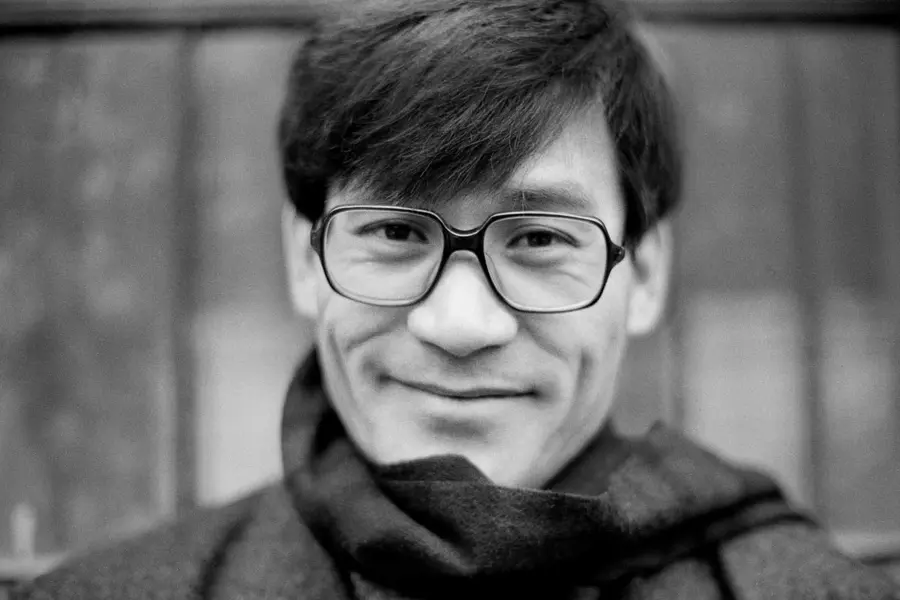
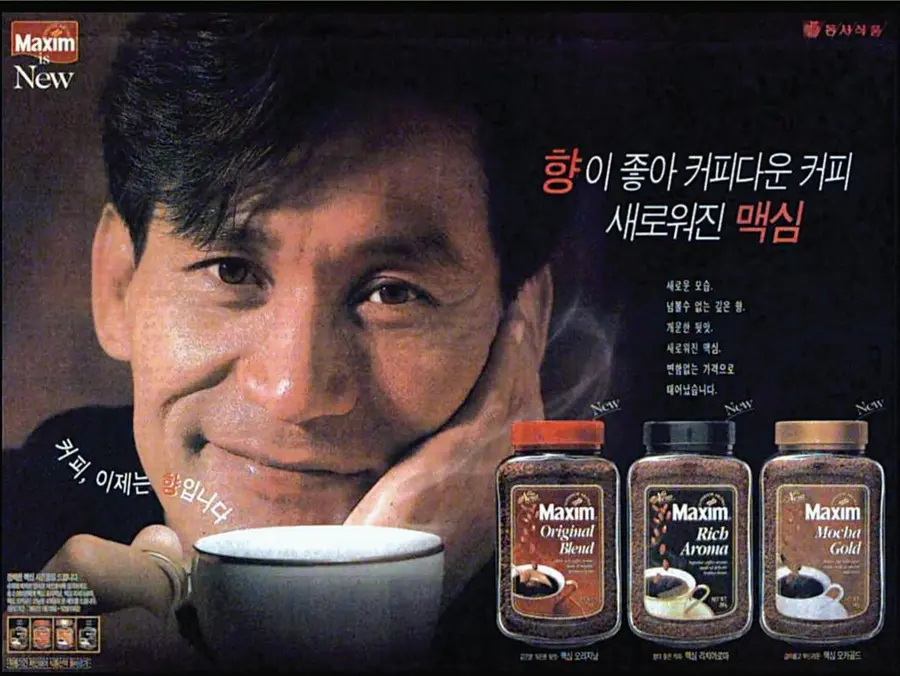
I cannot help but talk about actor Ahn Sung-ki, so I ask for your understanding once again, and this series is also 'Joo Sung-cheol's Character Locker.' There is a record that can prove how much love he has received for a long time, which can be said to be the origin of the expression 'national actor.' It is the remarkable record of being the advertising model for Maxim Coffee for 38 years. From 1983 to 2021, he worked as a model for a single product for an astonishing 38 years with the copy "Coffee, now it's 'aroma.'" He surpassed the record of actress Kim Hye-ja, who remarkably worked as the advertising model for the seasoning Dashida for 27 years from 1975 to 2003 with the copy "Yeah! This is the taste!" The couple of actors Lee Na-young and Won Bin, who were expected to follow, ended their contracts as advertising models for Maxim Mocha Gold for 24 years and Maxim T.O.P for 16 years, respectively. Actor Gong Yoo, who has been active as a model for Dongseo Kanu since 2011, still has a long way to go.
Looking at his presence as a movie actor, it is even more astonishing. As a 'national actor,' Ahn Sung-ki has been the 'face of Korean cinema' since the 1980s. If we call an actor who reveals the creator's perspective and themes through their face and body a 'persona,' then Ahn Sung-ki can be said to be the 'persona of Koreans,' not anyone else's persona. He has played kings and presidents simultaneously in 〈Eternal Empire〉(1995) as King Jeongjo, 〈The King's Affection〉(2008) as King Sejong, and in 〈The President Who Plays the Piano〉(2002) and 〈The Korean Peninsula〉(2006) as a president. He also played a court eunuch in director Lee Doo-yong's 〈The Court Eunuch〉(1986), a monk in 〈Mandala〉(1981), and a priest in 〈The Exorcist〉(1998) and 〈Lion〉(2019), making him the only actor in the world to transcend class and religion, playing kings, court eunuchs, monks, and priests.
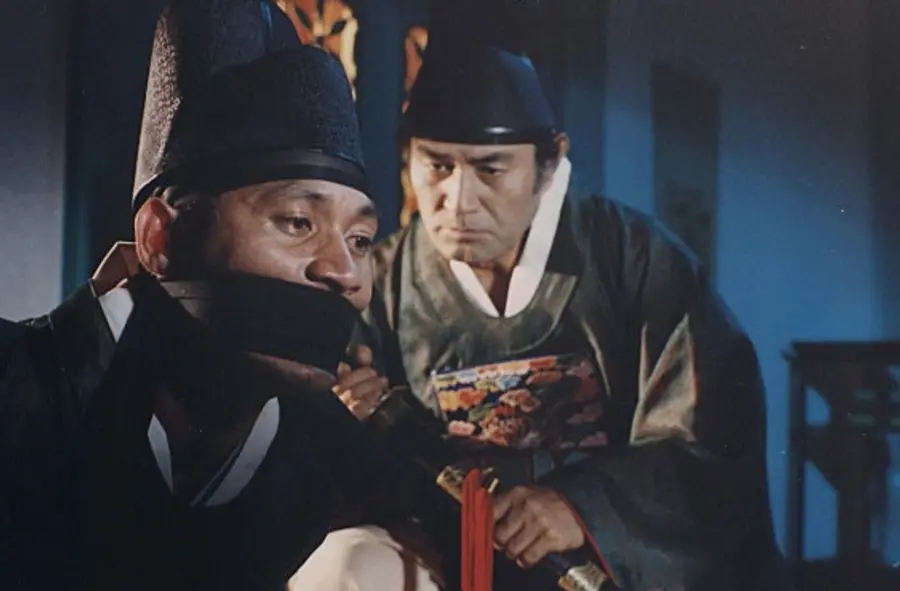
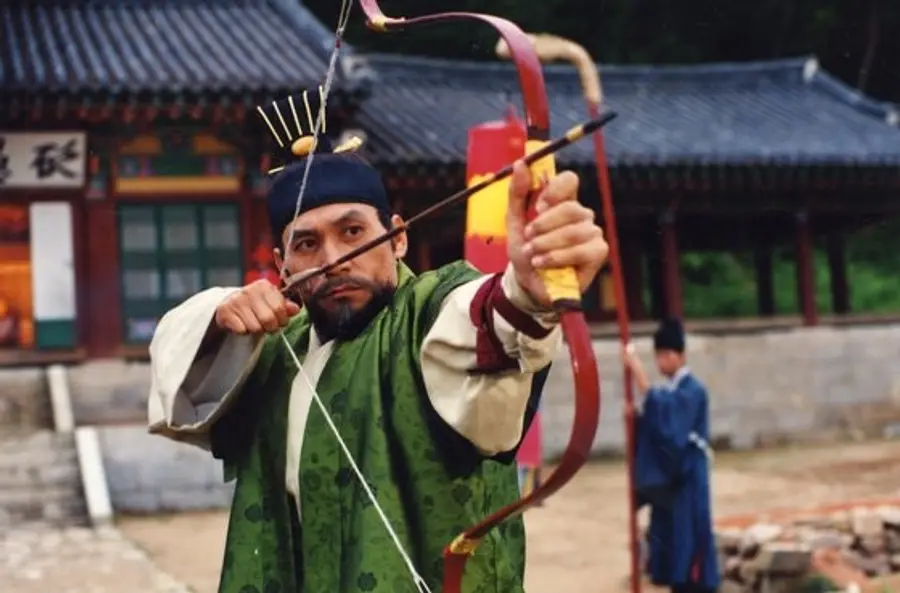
Moreover, there is no world or profession that he has not embodied as a movie character. First, he has played various types of 'soldiers.' In 〈The White War〉(1992) and 〈Silmido〉(2003), he portrayed regular army soldiers as a sergeant and a warrant officer, respectively; in 〈A Splendid Vacation〉(2007), he played a civilian army; in 〈Southern Army〉(1990), he was a guerrilla; in 〈Mookgong〉(2006) and 〈Noryang: The Sea of Death〉(2023), he played a general; in 〈Warrior〉(2001), he was a leader of a death squad and a mercenary; and in 〈Detective: Duelist〉(2005), he was a constable. In court, he played a lawyer in 〈Claim for Damages by a Widow〉(1998), a prosecutor in 〈Truth Game〉(2000), and a defendant and professor in 〈Broken Arrow〉(2012). Additionally, he has played a beggar in 〈Fog Village〉(1983), a thug in 〈Kilimanjaro〉(2000), a police officer in 〈My New Partner〉(2008), a delivery man for a Chinese restaurant in 〈A Good Day for the Wind〉(1980), a manager in 〈Radio Star〉(2006), a master in 〈Arahan: The Great Action of the Wind〉(2004), a fire chief in 〈Tower〉(2012), a marathon coach in 〈Pacemaker〉(2012), and as a comedian in 〈Comedian〉(1989), a hairdresser in 〈Hairdresser〉(1995), and a sleeping man in 〈The Sleeping Man〉(1996). From his childhood acting in director Kim Ki-young's 〈The Housemaid〉(1960) to the present, he has crossed genres and professions, embodying every character.
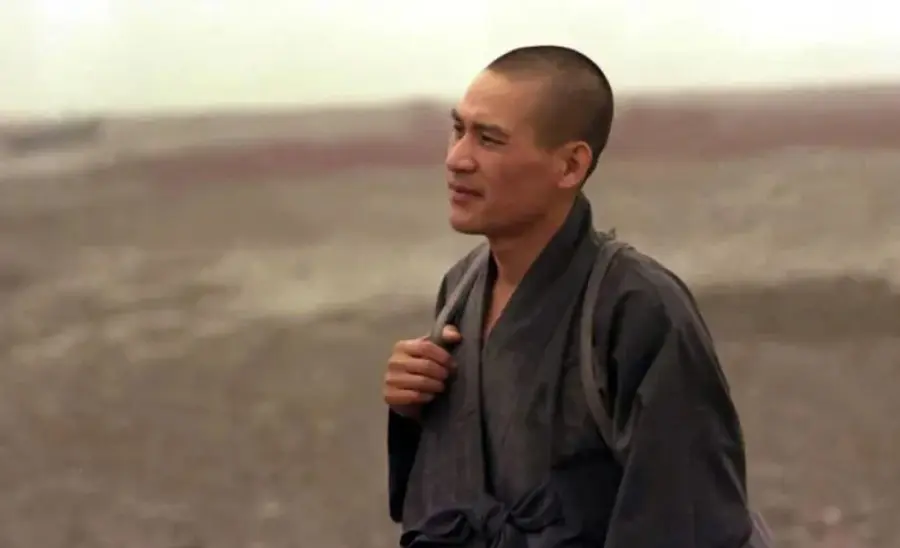
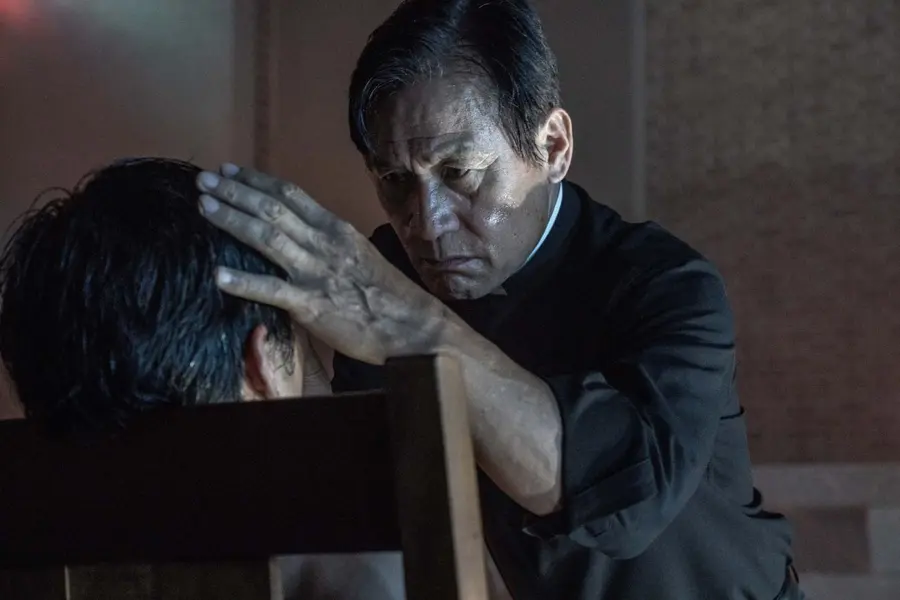
Given this, I suddenly recall a meeting with a foreign critic I met at an international film festival. He became interested in Korean cinema through director Park Chan-wook's 〈Oldboy〉(2003) and was recommended various Korean films he must see by several filmmakers around him. He ended up watching nearly 20 modern Korean films and discovered something strange. Despite the fact that the directors, eras, and styles were all different, one actor kept appearing. That actor was Ahn Sung-ki. He jokingly remarked, 'Was there a law in the Korean film industry that required casting Ahn Sung-ki? Was there a so-called 'Ahn Sung-ki quota'?' The intertwining of one actor's history with the history of the film industry is so special that it is hard to find a parallel in the history of world cinema. Therefore, it would be correct to say that Ahn Sung-ki acted as a Korean. Ahn Sung-ki is born, I am Ahn Sung-ki.
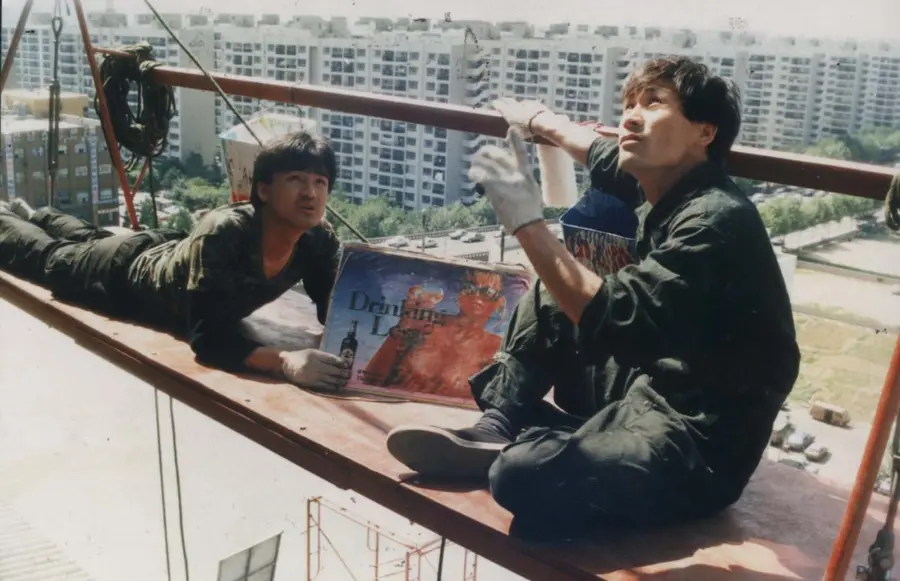
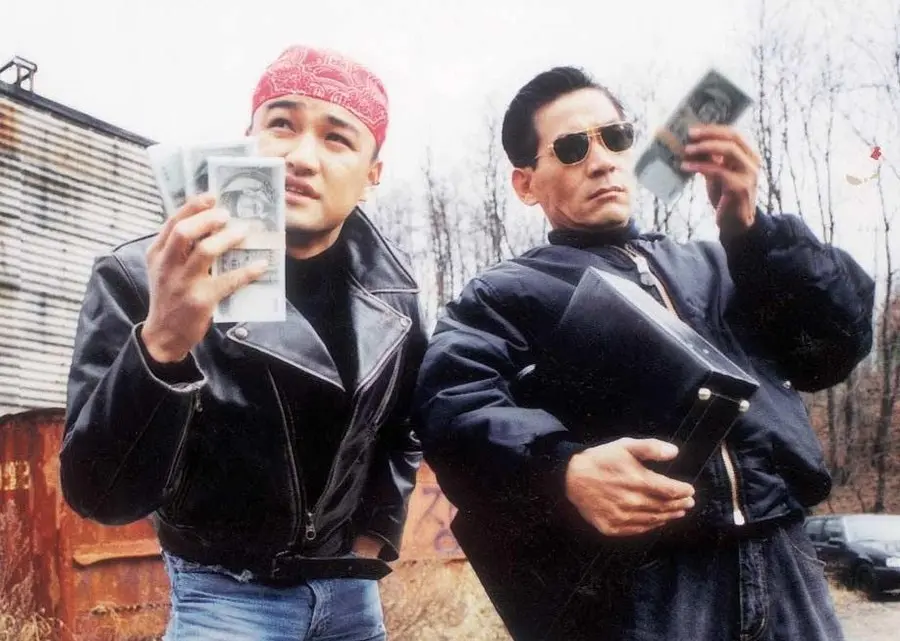
Nevertheless, if I had to pick three different films that can encapsulate Ahn Sung-ki's long career, they would be the socially critical film 〈Chilsu and Mansu〉(1988) directed by Park Kwang-soo, the comedy film 〈Two Cops〉(1993) directed by Kang Woo-suk, which recorded an enormous box office success to the extent that it could be called an 'unofficial ten million film,' and the film 〈No Mercy for the Rude〉(1999) directed by Lee Myung-se, where he appeared in a weighty supporting role and encountered a new style of film. These three films can also be seen as dividing lines in Korean cinema's 'before' and 'after.' From socially conscious films to traditional comedies, and as he entered his 50s, he enjoyed ensemble performances with younger actors, contributing to the further growth of Korean cinema. Outside of films, he appeared in various movements for the stable growth of Korean cinema, such as the 'screen quota' movement to maintain the market share of Korean films and the 'Good Downloader' campaign to encourage legal downloads. Such external trust and sincerity likely contributed to the creation of the phrase 'national actor Ahn Sung-ki.'
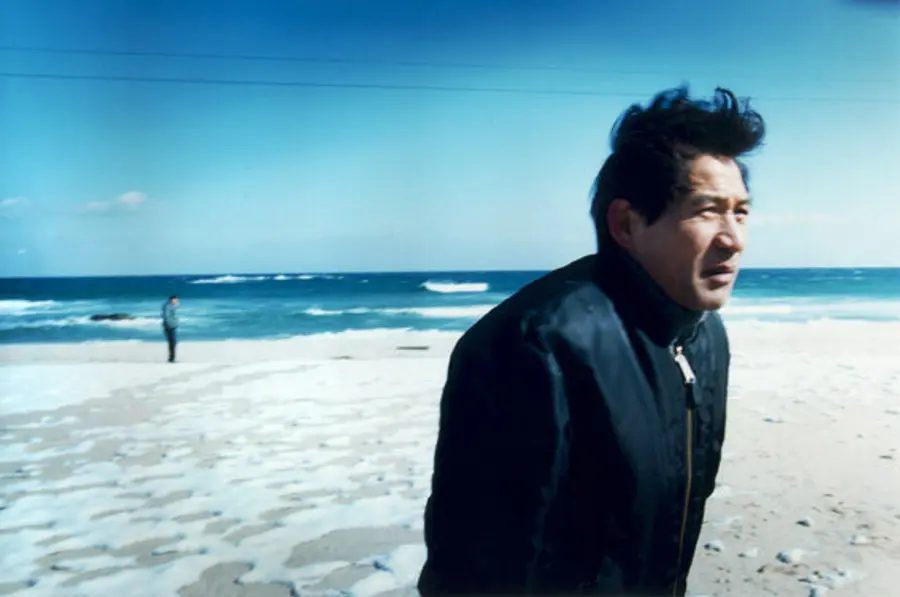
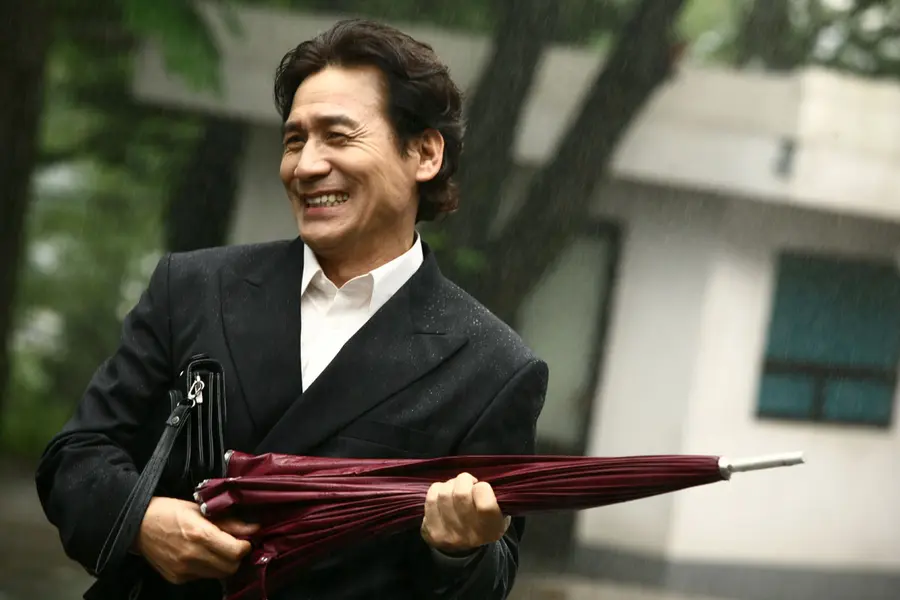
The significant changes in the era that overlap with the long history of Korean cinema and Ahn Sung-ki's unfortunate departure signify the arrival of the OTT era. Until now, Ahn Sung-ki has never appeared in TV dramas. Actors Park Joong-hoon and Kang Soo-yeon, who share similar aspirations as movie actors, have crossed that boundary through the dramas 〈Faraway Songba River〉(1993) and 〈Women of the World〉(2001), respectively, and actor Song Kang-ho, who had never appeared in TV dramas, also participated in the OTT series 〈Uncle Samsik〉(2025) last year, highlighting a decisive difference from Ahn Sung-ki and his contemporaries. However, he has worked on the KBS drama 〈Barefoot Mitsubishi Debonair〉, which is scheduled to air this year. Is it fortunate that Ahn Sung-ki's only TV drama appearance and essentially his last work still remains? Returning to his long-standing model advertisement, the phrase "Coffee, now it's 'aroma'" symbolizes that entertainers, who were always called 'dandara,' have gained a new 'elegance' along with the changes of the times. Ahn Sung-ki is the person who changed all of that. It is truly regrettable that we could not experience his new aroma beyond films, dramas, and OTT. I will continue to miss him. I pray for the repose of his soul.
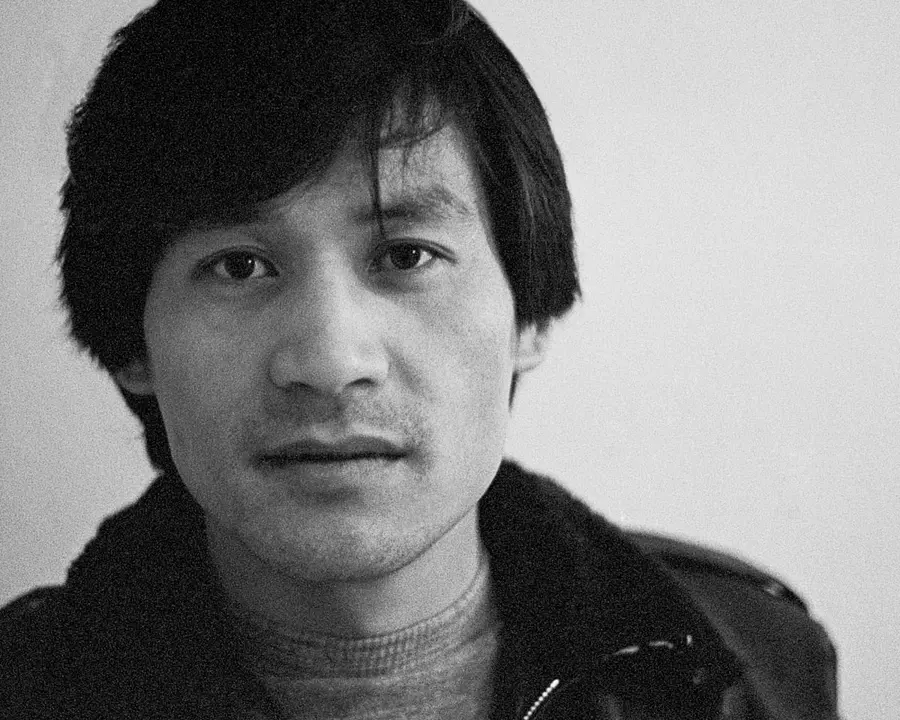
![[Joo Seong-cheol's Locker] The Black Speaker of 'Sirat' and the Monolith of '2001: A Space Odyssey'](https://cdn.www.cineplay.co.kr/w400/q85/article-images/2026-02-23/01816f3a-b433-4072-887b-e760357e6cc7.jpg)
![[Joo Seong-cheol's Locker] The 'Canned Cart Camera' that Changed the History of World Cinema with 'Nouvelle Vague'](https://cdn.www.cineplay.co.kr/w400/q85/article-images/2026-01-27/563f1a4c-20b8-460b-8523-f31511911bd5.jpg)
![[Jusungcheol’s Locker] Odyssey’s one-eyed giant Cyclops and Ray Harryhausen’s “The Seventh Voyage of Sinbad”](https://cdn.www.cineplay.co.kr/w400/q85/article-images/2026-08-10/5faf400e-cf0b-466c-a3d7-31a8bbb38075.jpg)
![[Joo Seong-cheol’s Locker] See ‘Hope’ Again Through the Driver-Grade Cap Joo Seong-cheol Wears While Racing Across Seong-gi Bridge in ‘The Yellow Sea’ and ‘Goksung’](https://cdn.www.cineplay.co.kr/w400/q85/article-images/2026-07-28/7bf74e36-337d-4fd0-8cec-b890f5604345.jpg)
![[Joo Sung-cheol’s Locker] Watching “Marty Supreme,” Recalling Yoon Nam-gyu’s Penholder Table Tennis Racket](https://cdn.www.cineplay.co.kr/w400/q85/article-images/2026-06-29/0dc02383-0dc9-4ea1-9de5-f1eaffbeb9b9.jpg)
![[Joo Seong-cheol's Locker] The Aesthetics of Jongmyo That Captivated Masters of Martial Arts from Ho Kim-jun to John Woo, Jackie Chan, and Sammo Hung](https://cdn.www.cineplay.co.kr/w400/q85/article-images/2025-12-16/4d8670a7-ef95-4635-8d0c-34313f13dd52.jpg)
![[Joo Seong-cheol's Locker] The King Lear of Korea and Japan, Lee Soon-jae and Nakadai Tatsuya, Two Masters Rest](https://cdn.www.cineplay.co.kr/w400/q85/article-images/2025-12-01/3e753af3-e8d5-41df-83cf-00e9ddfdaae7.jpg)
![[Joo Seong-cheol's Locker] When Trees Comfort Trees, the Cello of 'The Moment the Bell Rings' and 'Can't Help It'](https://cdn.www.cineplay.co.kr/w400/q85/article-images/2025-11-18/52034c54-93dc-4b4c-ac9f-5f9b7946fb23.jpg)
![[Joo Seong-cheol's Locker] What Beer Did Sergio (Benicio Del Toro) Always Carry in 'One Battle After Another'?](https://cdn.www.cineplay.co.kr/w400/q85/article-images/2025-11-04/0794fe08-e847-46a1-ba4c-445f814803a8.jpg)
![[Chu Sung-cheol’s Lockers] Who Spat on Leslie Cheung in “Farewell My Concubine”?](https://cdn.www.cineplay.co.kr/w400/q85/article-images/2026-04-06/7b608cd9-af6c-4c1d-8e87-38c2d2619d55.jpg)
![[Joo Seong-cheol’s Locker] Do You Know the Origin of Woody in “Toy Story”?](https://cdn.www.cineplay.co.kr/w400/q85/article-images/2026-06-16/eb2c5055-d2de-4464-b9e2-eceeca8c7759.jpg)
![[Joo Seong-cheol’s Lockers] Lee Cronin’s The Mummy and Murderous People Season 2 — and a Scorpion Jacket That Feels Like the Rise of Drive](https://cdn.www.cineplay.co.kr/w400/q85/article-images/2026-04-20/1df79cf4-44ef-48e4-a6b4-46f6e35c4eb5.jpg)
![[Joo Seong-cheol's Locker] Tony Leung Sometimes Wants to Hold an Ashtray.](https://cdn.www.cineplay.co.kr/w400/q85/article-images/2026-02-09/8b9ac9f0-6899-4ce2-a562-5594a5b06d61.jpg)
![[Joo Sung-chul's Locker] What Are the Improvised Explosive Devices (IEDs) in 'Warfare' and 'The Hurt Locker'?](https://cdn.www.cineplay.co.kr/w400/q85/article-images/2026-08-24/ae200e60-2be9-478e-8ab4-72a860903979.jpg)
![[Joo Seong-cheol’s Locker] Zombie Things That Don’t Flinch Even When Shot: Korea’s First Zombie Film, “Kwe-si” (1981)](https://cdn.www.cineplay.co.kr/w400/q85/article-images/2026-06-01/26c56ce7-1ddb-46bd-ae67-f71a1ba9e276.jpg)
![[Joo Seong-cheol’s Locker] David’s Stone That Took Down Goliath, “David” All the Way Through](https://cdn.www.cineplay.co.kr/w400/q85/article-images/2026-07-13/524bb041-0e4e-4f59-824b-21d2f7df60a9.jpg)
![[Joo Sung-chul's Locker] If it's hard to visit Cheongnyeongpo of Deposed King Danjong, head to Geumseongdang of Prince Geumseong!](https://cdn.www.cineplay.co.kr/w400/q85/article-images/2026-03-10/7ddd3634-6a13-4eef-870c-e4e6dbcdac04.jpg)

![[Joo Seong-cheol’s Lockers] The Great Dancer Turned Film Director Summoned by “Michael”: Bob Fosse’s “All That Jazz”](https://cdn.www.cineplay.co.kr/w400/q85/article-images/2026-05-18/922af142-be9f-4f1c-98d1-4a7a6667943c.jpg)

![[First Reaction] ‘Family Trip’ Cineplay Reporter Star Rating](https://cdn.www.cineplay.co.kr/w300/q85/article-images/2026-09-16/084269eb-f40e-4e00-a301-dfb9b6caf8e7.jpg)
![[Photo&] Jung Woo-sung and Lee Jung-jae, Acting as Mourner at the Late Ahn Sung-ki's Funeral](https://cdn.www.cineplay.co.kr/w160/q85/article-images/2026-01-06/126685fc-a804-43d0-b9ef-afcd5a6b2f03.jpg)
![[Photo &] 'National Actor Late Ahn Seong-ki's Final Journey' Jung Woo-sung Holding the Portrait, Lee Jung-jae with the Medal](https://cdn.www.cineplay.co.kr/w160/q85/article-images/2026-01-09/04cb0f9d-2d18-4b8d-8b72-2b4f66684cbd.jpg)
![[Seongchan Eol's Comic Book] A Mystery Comic Born in the Same Year as 'One Piece'... No, You Should Read This Science Comic 「Q.E.D. Proof Complete」](https://cdn.www.cineplay.co.kr/w160/q85/article-images/2026-01-16/c3b2afc1-03e2-4709-8b1b-7a78b153f5a0.jpg)
![[Photo &]](https://cdn.www.cineplay.co.kr/w160/q85/article-images/2026-02-05/36eecac1-c2bc-4e52-bbb6-8cad232318f4.jpg)
![[Film Festival Issue] The Unfamiliar Face of “Nation’s Actor” Ahn Sung-ki… Special Retrospective at the Jeonju International Film Festival](https://cdn.www.cineplay.co.kr/w160/q85/article-images/2026-03-27/0bb32c6f-2ece-4bdf-b8e7-11621b607df5.jpg)
댓글 (0)
댓글 작성
댓글을 작성하려면 로그인이 필요합니다.
로그인하기