



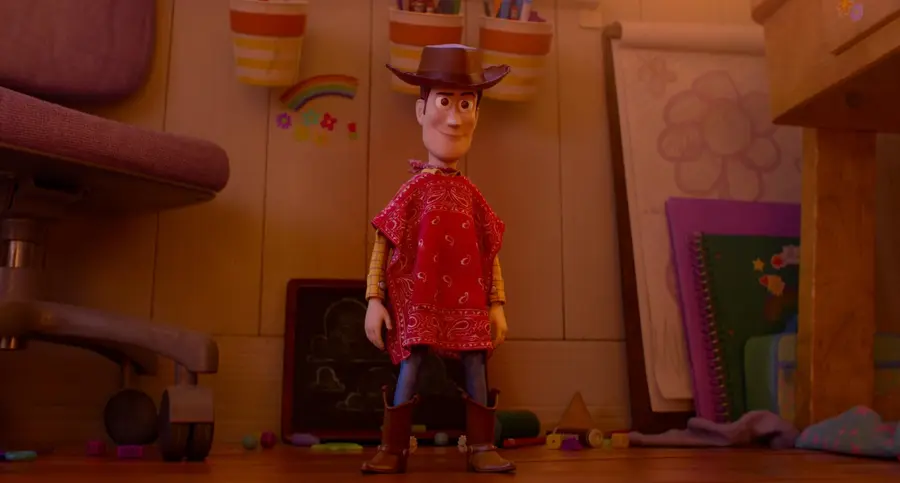
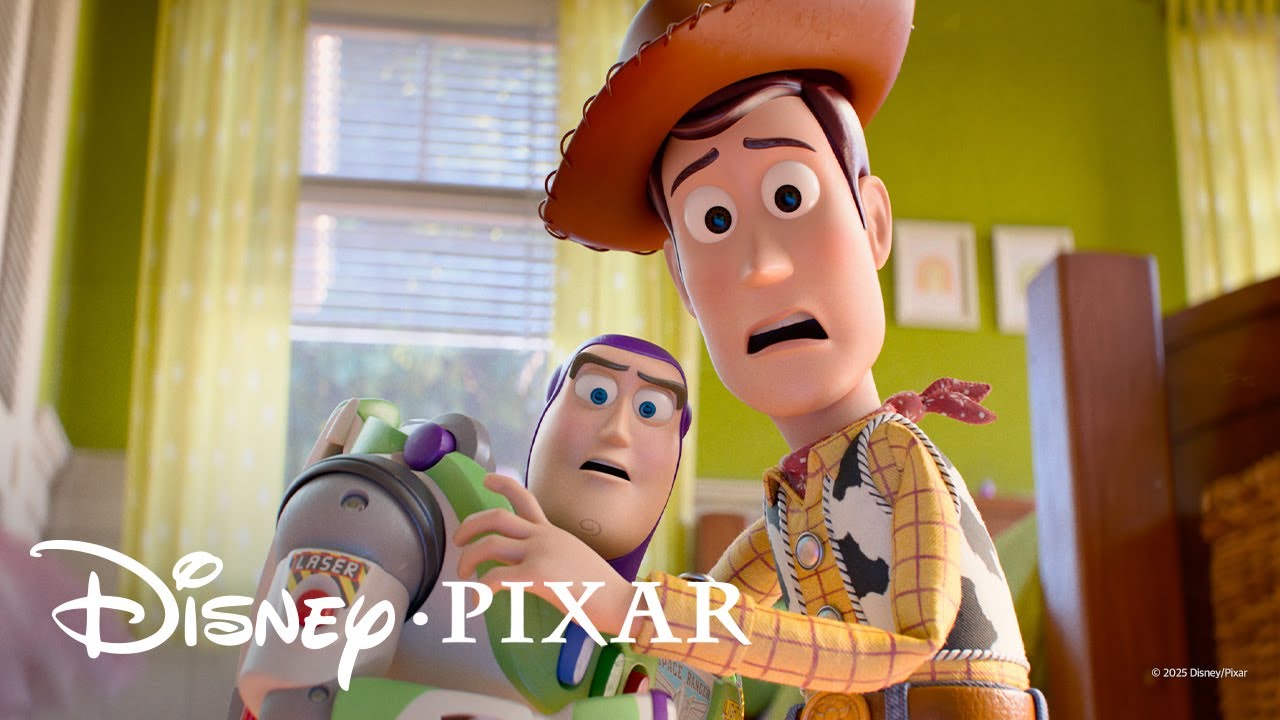
〈Toy Story 2〉 (1999)’s opening begins as if it were a scene from the 〈Star Wars〉 series. And in the moment of crisis, Woody (Tom Hanks) recites the lines “Think about it, think about it,” like the way Dong-su (Kim Sang-kyung) does in 〈Theater Jeon〉 (2005) or Yeon-hong (Son Ye-jin) does in 〈No Secrets〉 (2016). Woody himself stays the same, but as Andy grows up, he gradually starts to keep his distance from him. That’s how he comes to understand the sadness of a toy being discarded. Then, by the time we reach the third film, Andy is already 17, and he sinks into a deep worry: “When later Andy goes to college, gets married, and goes on a honeymoon, will he really take me along?” I thought Woody had matured after the second movie, but those kinds of imagined scenarios still weigh on him.
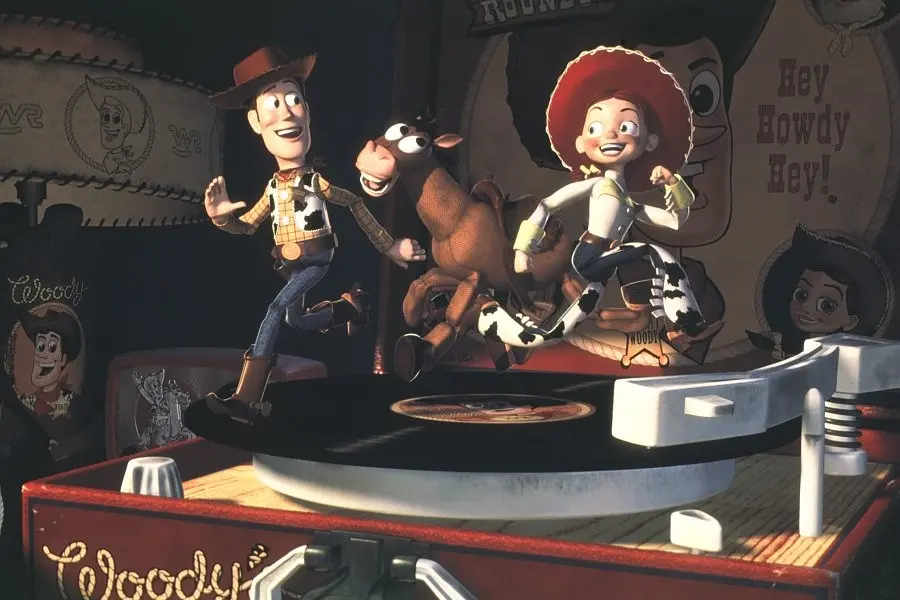
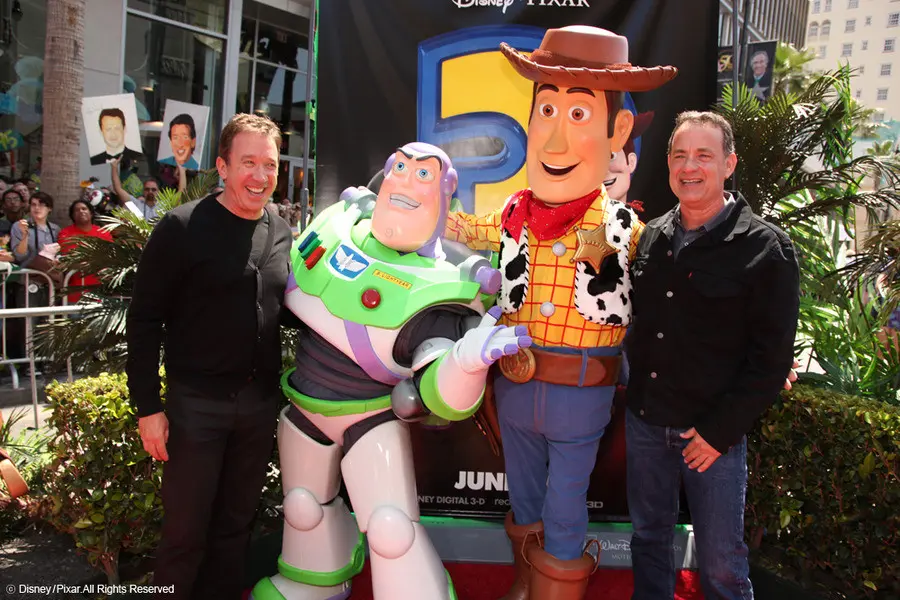
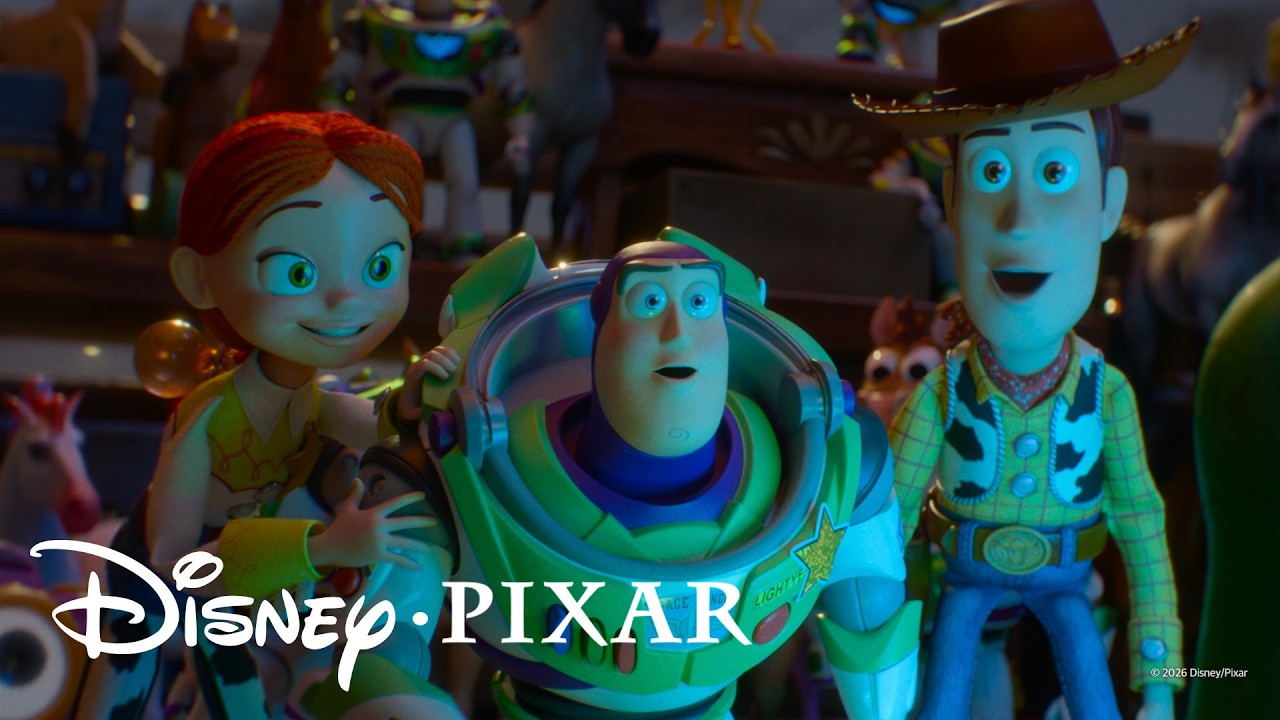
〈The Toy Story〉 series, taken broadly, is an adventure buddy movie featuring Woody and Buzz (Tim Allen). The two are unique friends—and true partners. The stark contrast between a cowboy from the era of Western expansion and a space warrior is one such example. Because of the gap in their times, the two figures can never be together in the real world, but in the “world of objects,” that becomes possible. Still, the core of the series is really Woody’s coming-of-age story. If the 1995 first film is where Woody, who worries he’ll be pushed aside whenever Andy receives a new gift and who envies Buzz, ultimately learns what real friendship is, then the key to the second film is Woody’s story as he comes to understand the fate of toys. It’s hard to overstate that the whole journey of the 〈Toy Story〉 series is the process of overcoming that primal fear of possibly being abandoned.
The feeling that you might be left behind, abandoned, oddly enough, carries over into another Pixar animation series, 〈Monsters, Inc.〉 (2001), which begins after 〈Toy Story 2〉. Even those monsters, living like dolls in the human world, worry: what happens if I’m thrown out when we move? What if I get a brand-new dinosaur doll for my birthday—what happens to me then? So if you ask me to pick one song from across the entire 〈Toy Story〉 series that really strikes the deepest chord, it’s “When She Loved Me,” sung by Sarah McLachlan in 〈Toy Story 2〉. That year, it won the Grammy Awards subject-song category, and it was also nominated for the Academy Awards and the Golden Globe Awards (Best Original Song).
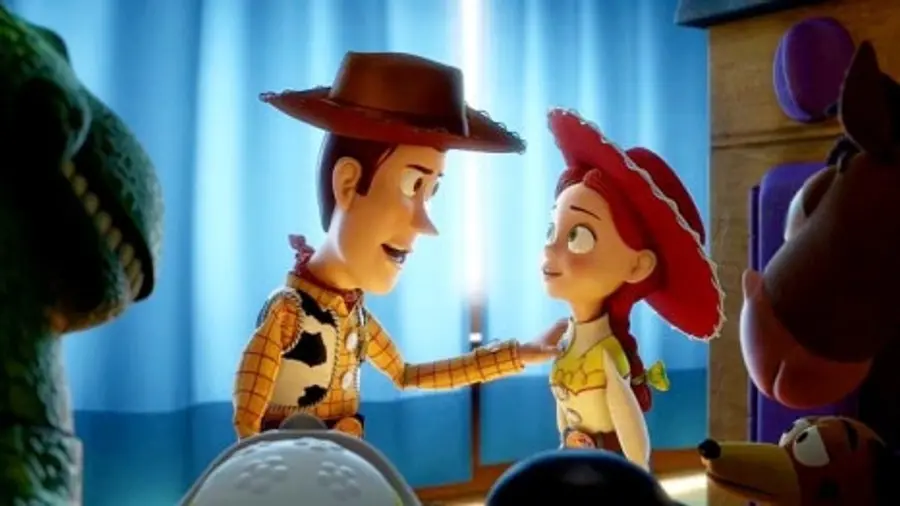
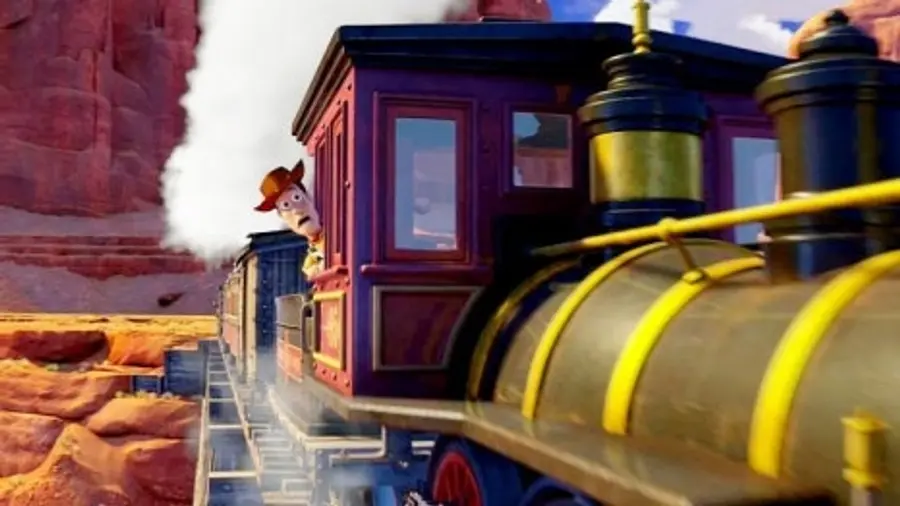
In 〈Toy Story 2〉, the cowboy Woody and cowgirl Jessie (Joan Cusack) they meet have a strangely mismatched relationship. Woody wants to return to Andy with his friends, but Jessie, who has spent so long living locked up in a storage room, likes the fresh air from outside and resents Woody for wanting to leave. She refuses to be abandoned again and left behind in the storage space. So when, in scenes where Jessie recalls the past, she sings, “When somebody loved me, everything was beautiful,” the tears are hard to hold back. And then in the opening of 〈Toy Story 3〉 (2010)—how exhilarating it was when Woody and Jessie stop the train heist by the one-eyed couple, the Potato family thieves. And just as 〈Star Wars〉 nods like the one mentioned earlier are woven in, whenever 〈Toy Story〉 dresses up each installment’s opening with variations on a familiar genre, the third film’s opening is all the more meaningful because it’s a Western that fits Woody’s original character as a sheriff.
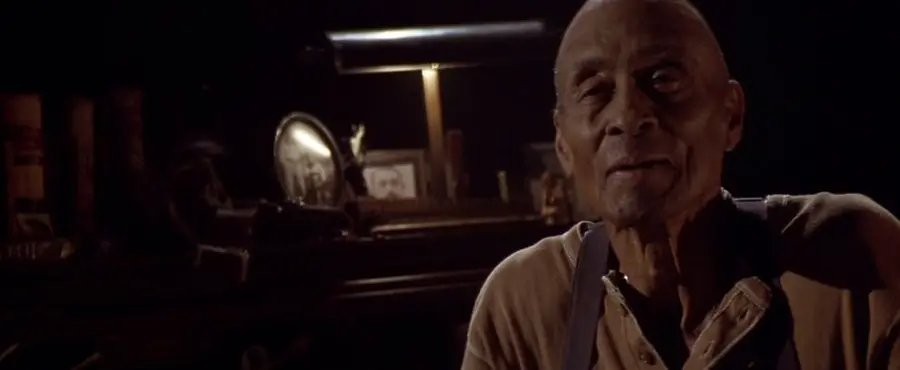
That’s right— the name of the protagonist “Woody” in 〈Toy Story〉 comes from the Western genre. He is Woody Strode, the first Black man to become a Western gunslinger actor. If you watch Quentin Tarantino’s 〈Django Unchained〉 (2012), with Django (Jamie Foxx), and 〈The Hateful Eight〉 (2018), with Marcus Warren (Samuel L. Jackson), both of which proudly feature Black characters as the leading gunslinger, you suddenly wonder which Black gunslinger in the Western genre it could be—and that’s when you realize there was an actor named Woody Strode. When Mario Van Peebles’ 〈Pazzy〉 (1993) kicked off in the 1990s, sparking attention as Black gunslingers showed up in large numbers, it plays like a scene from a documentary: an older Black man appears and says, “History is funny.” He adds, “One-third of the cowboys in the past were Black. Once the enslaved were freed, they all rushed west, and among LA settlers, more than half were Black. But that kind of history is hidden,” and he sighs. The actor who appears as that older man is none other than Woody Strode. Mario Van Peebles made 〈Pazzy〉, with a Black cowboy as the lead, as an homage he paid to Woody Strode.
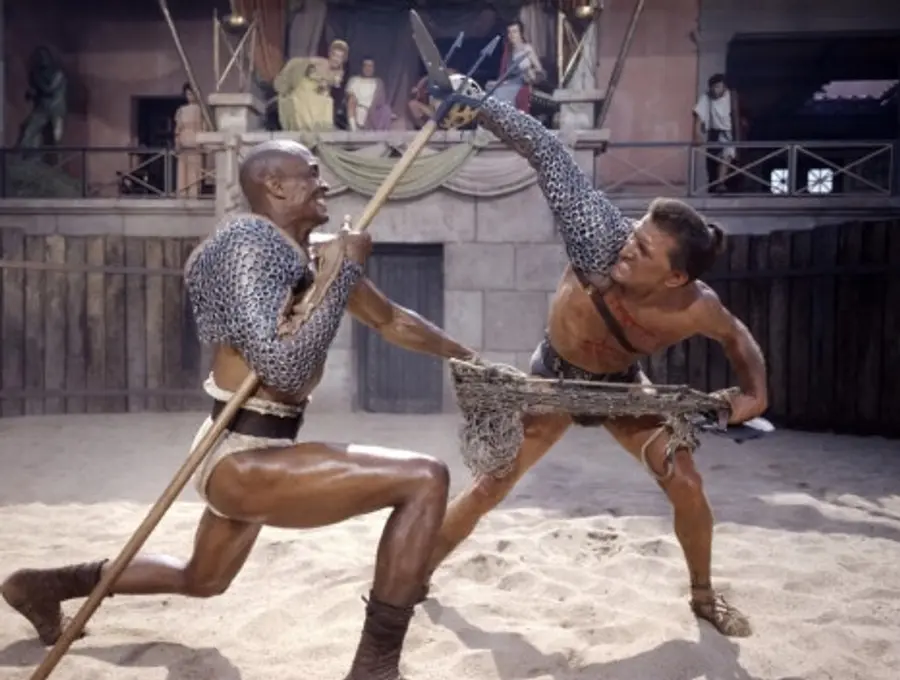
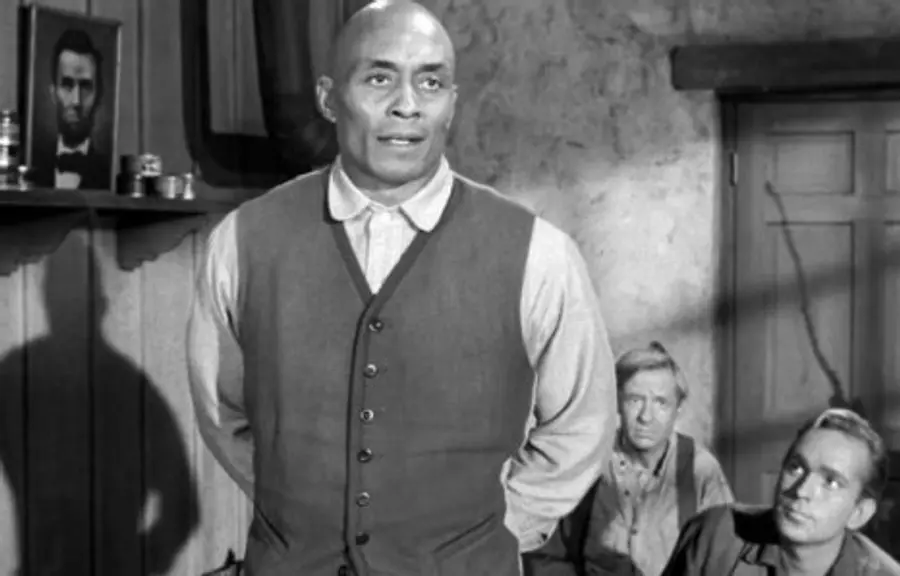
Born in 1914, Woody Strode—the former American football player—was a Black actor who helped shape the era, alongside Sidney Poitier (born 1927), the first Black performer to win the Academy Award for Best Actor for 〈Lilies of the Field〉 (1964). In Stanley Kubrick’s 〈Spartacus〉 (1960), he made a powerful impression even though he battled Spartacus (Kirk Douglas) while holding a trident in the net and won—yet he still couldn’t bring himself to kill him, and then he charged at the king and met a righteous death as “Draba.” After that, he made numerous films with John Ford. In John Ford’s 〈The Man Who Shot Liberty Valance〉 (1962), he appeared in a role that helps John Wayne’s character, then carried the injured James Stewart on his arms and flew him away. Afterward, he grabbed major parts in action films. In Richard Brooks’ 〈The Professionals〉 (1966), he played a warrior skilled in archery. In 〈SaloCo〉 (1968), he worked with Sean Connery. And in Sergio Leone’s 〈Once Upon a Time in the West〉 (1968), he was one of the three gunmen sent in at the beginning to kill Charles Bronson.
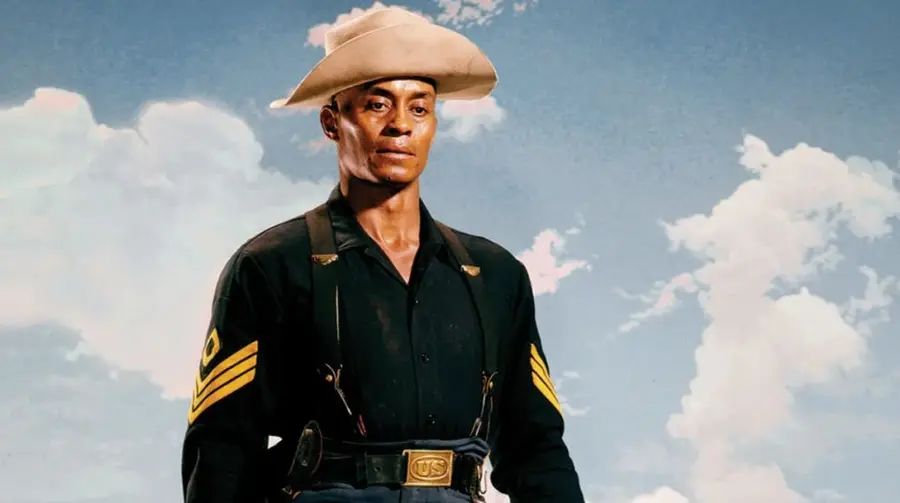
Years passed, and he also appeared in a cameo in 〈Quick and Dead〉. The most memorable work, however, is John Ford’s 〈Sergeant Rutledge〉 (Sergeant Rutledge, 1960), released under the title 〈Sergeant Rutledge〉. He plays a Black soldier in the U.S. cavalry who is put on trial after being accused of raping and murdering a white girl, using the film to deliver a critique of racism. What’s interesting is that he also appeared alongside the original Django—Franco Nero—in 〈Keoma〉 (1976), which was released domestically under the title 〈The Outsider of the West〉. Of course, he appears as his former enslaved man “George,” but the thrill of scenes in which he takes down villains together with him was considerable. Unfortunately, he died in 1994, the year after his cameo appearance in 〈Pazzy〉. Perhaps if he had lived to 100, around the time 〈Django Unchained〉 was being made, Quentin Tarantino would surely have captured both Woody Strode and Frank Nero in one more shot. If that were the case, maybe the loneliness felt when Frank Nero—the “original Django,” long before—appeared alone in a cameo in 〈Django Unchained〉 would have been less harsh.
An over-interpretation of the objects in films, starting with the “Joo Seong-cheol’s Locker” that sets the bar for expectations—an actor’s usage guide “Kim Ji-yeon’s Jewelry Box” that promises a breakout; a room to listen to movie music that moved my heart, “Choo A-young’s Music Box”; and even a purchase log for cartoon books by a subculture oddball, “Sung-chan-eol’s Comic Books.” CinePlay reporters begin a biweekly series with their own tastes and viewpoints.
![[Joo Seong-cheol's Locker] The Black Speaker of 'Sirat' and the Monolith of '2001: A Space Odyssey'](https://cdn.www.cineplay.co.kr/w400/q85/article-images/2026-02-23/01816f3a-b433-4072-887b-e760357e6cc7.jpg)
![[Joo Seong-cheol's Locker] The 'Canned Cart Camera' that Changed the History of World Cinema with 'Nouvelle Vague'](https://cdn.www.cineplay.co.kr/w400/q85/article-images/2026-01-27/563f1a4c-20b8-460b-8523-f31511911bd5.jpg)
![[Joo Sung-cheol's Locker] Ahn Sung-ki is Born, I am Ahn Sung-ki](https://cdn.www.cineplay.co.kr/w400/q85/article-images/2026-01-13/362be897-34af-4524-9a57-6b9935666a0a.jpg)
![[Jusungcheol’s Locker] Odyssey’s one-eyed giant Cyclops and Ray Harryhausen’s “The Seventh Voyage of Sinbad”](https://cdn.www.cineplay.co.kr/w400/q85/article-images/2026-08-10/5faf400e-cf0b-466c-a3d7-31a8bbb38075.jpg)
![[Joo Seong-cheol’s Locker] See ‘Hope’ Again Through the Driver-Grade Cap Joo Seong-cheol Wears While Racing Across Seong-gi Bridge in ‘The Yellow Sea’ and ‘Goksung’](https://cdn.www.cineplay.co.kr/w400/q85/article-images/2026-07-28/7bf74e36-337d-4fd0-8cec-b890f5604345.jpg)
![[Joo Sung-cheol’s Locker] Watching “Marty Supreme,” Recalling Yoon Nam-gyu’s Penholder Table Tennis Racket](https://cdn.www.cineplay.co.kr/w400/q85/article-images/2026-06-29/0dc02383-0dc9-4ea1-9de5-f1eaffbeb9b9.jpg)
![[Joo Seong-cheol's Locker] The Aesthetics of Jongmyo That Captivated Masters of Martial Arts from Ho Kim-jun to John Woo, Jackie Chan, and Sammo Hung](https://cdn.www.cineplay.co.kr/w400/q85/article-images/2025-12-16/4d8670a7-ef95-4635-8d0c-34313f13dd52.jpg)
![[Joo Seong-cheol's Locker] The King Lear of Korea and Japan, Lee Soon-jae and Nakadai Tatsuya, Two Masters Rest](https://cdn.www.cineplay.co.kr/w400/q85/article-images/2025-12-01/3e753af3-e8d5-41df-83cf-00e9ddfdaae7.jpg)
![[Joo Seong-cheol's Locker] When Trees Comfort Trees, the Cello of 'The Moment the Bell Rings' and 'Can't Help It'](https://cdn.www.cineplay.co.kr/w400/q85/article-images/2025-11-18/52034c54-93dc-4b4c-ac9f-5f9b7946fb23.jpg)
![[Joo Seong-cheol's Locker] What Beer Did Sergio (Benicio Del Toro) Always Carry in 'One Battle After Another'?](https://cdn.www.cineplay.co.kr/w400/q85/article-images/2025-11-04/0794fe08-e847-46a1-ba4c-445f814803a8.jpg)
![[Chu Sung-cheol’s Lockers] Who Spat on Leslie Cheung in “Farewell My Concubine”?](https://cdn.www.cineplay.co.kr/w400/q85/article-images/2026-04-06/7b608cd9-af6c-4c1d-8e87-38c2d2619d55.jpg)
![[Joo Seong-cheol’s Lockers] Lee Cronin’s The Mummy and Murderous People Season 2 — and a Scorpion Jacket That Feels Like the Rise of Drive](https://cdn.www.cineplay.co.kr/w400/q85/article-images/2026-04-20/1df79cf4-44ef-48e4-a6b4-46f6e35c4eb5.jpg)
![[Joo Seong-cheol's Locker] Tony Leung Sometimes Wants to Hold an Ashtray.](https://cdn.www.cineplay.co.kr/w400/q85/article-images/2026-02-09/8b9ac9f0-6899-4ce2-a562-5594a5b06d61.jpg)
![[Joo Sung-chul's Locker] What Are the Improvised Explosive Devices (IEDs) in 'Warfare' and 'The Hurt Locker'?](https://cdn.www.cineplay.co.kr/w400/q85/article-images/2026-08-24/ae200e60-2be9-478e-8ab4-72a860903979.jpg)
![[Joo Seong-cheol’s Locker] Zombie Things That Don’t Flinch Even When Shot: Korea’s First Zombie Film, “Kwe-si” (1981)](https://cdn.www.cineplay.co.kr/w400/q85/article-images/2026-06-01/26c56ce7-1ddb-46bd-ae67-f71a1ba9e276.jpg)
![[Joo Seong-cheol’s Locker] David’s Stone That Took Down Goliath, “David” All the Way Through](https://cdn.www.cineplay.co.kr/w400/q85/article-images/2026-07-13/524bb041-0e4e-4f59-824b-21d2f7df60a9.jpg)
![[Joo Sung-chul's Locker] If it's hard to visit Cheongnyeongpo of Deposed King Danjong, head to Geumseongdang of Prince Geumseong!](https://cdn.www.cineplay.co.kr/w400/q85/article-images/2026-03-10/7ddd3634-6a13-4eef-870c-e4e6dbcdac04.jpg)

![[Joo Seong-cheol’s Lockers] The Great Dancer Turned Film Director Summoned by “Michael”: Bob Fosse’s “All That Jazz”](https://cdn.www.cineplay.co.kr/w400/q85/article-images/2026-05-18/922af142-be9f-4f1c-98d1-4a7a6667943c.jpg)


![[Interview] 'Ignore the Number 5': Four 'Toy Story 5' Stars on the New Film](https://cdn.www.cineplay.co.kr/w160/q85/article-images/2026-06-12/1245fc0b-2750-43a9-9e55-3b82b12e4be6.jpg)
댓글 (0)
댓글 작성
댓글을 작성하려면 로그인이 필요합니다.
로그인하기