



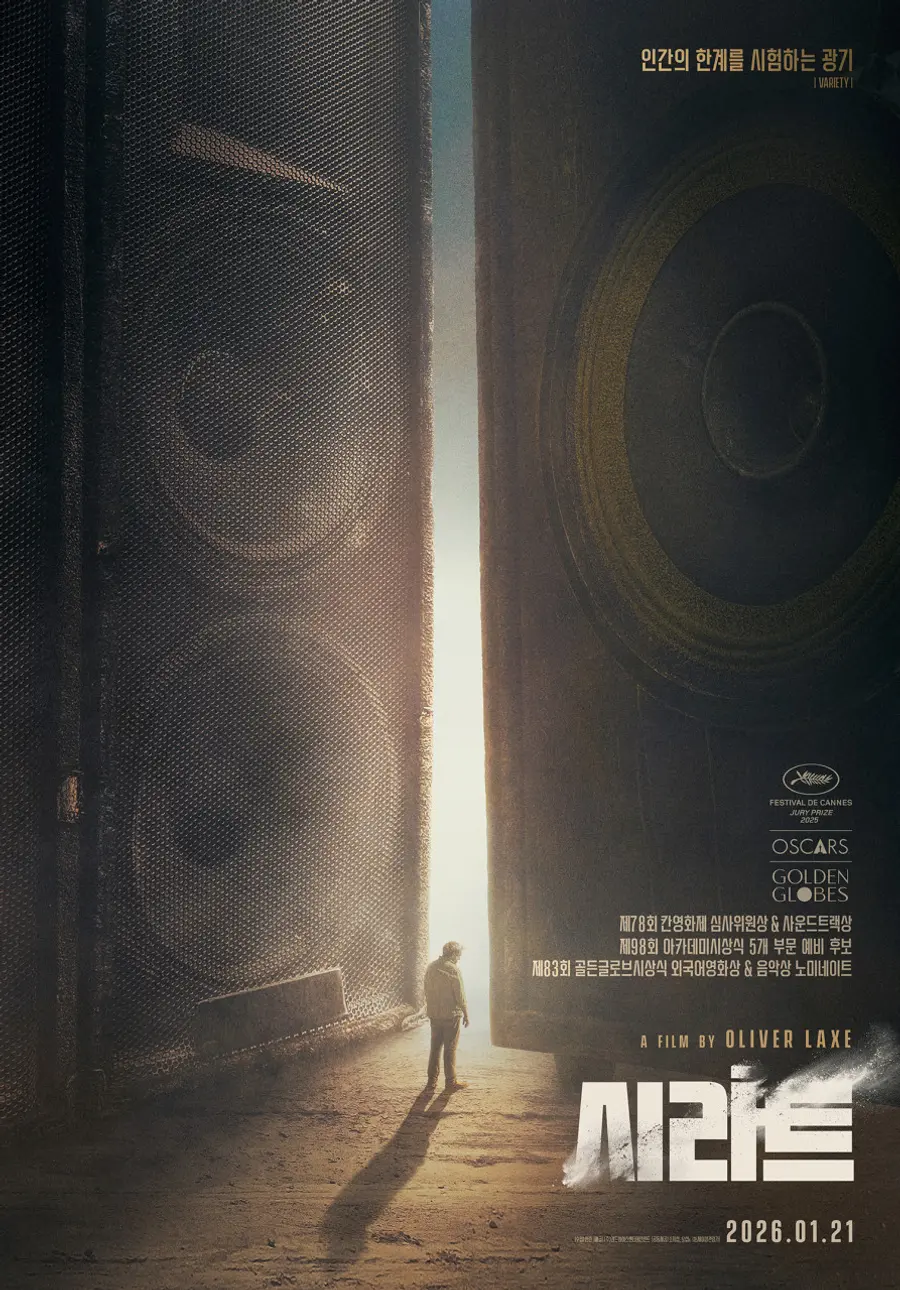
Where is salvation, and can we really find it? Among the recent releases, the most overwhelming 'object' is undoubtedly the black rectangular speaker of 〈Sirat〉. The poster, which expresses the theme of the film by making that huge speaker even larger and placing it side by side to let light in from afar, encapsulates the film's essence. Sirat, explained in the film's opening credits, refers to a narrow bridge in Islam that leads to heaven over hell, one that is thinner than a hair and sharper than a blade. The metaphor of having to cross that bridge to reach heaven parallels the difficult journey of the protagonist and his son. This could be called the most metaphysical yet tension-filled road movie of the year.
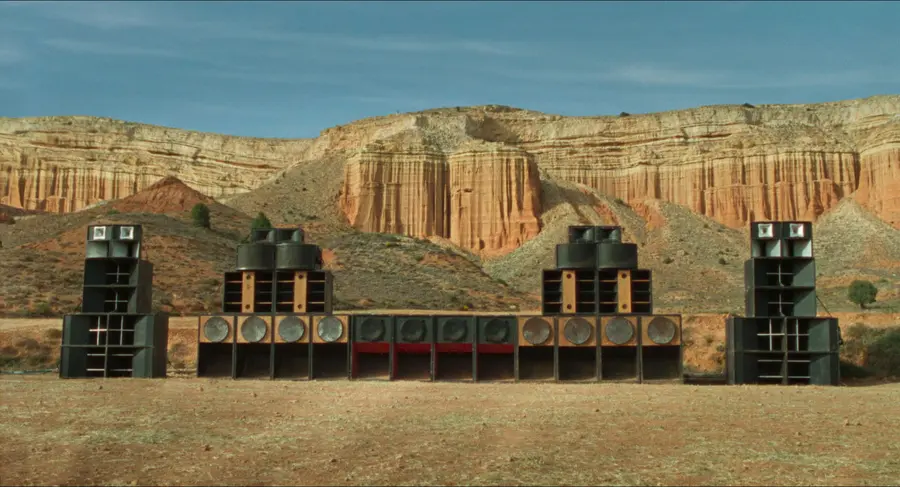
In the middle of the Moroccan desert, a rave party is held with techno music blasting. Among the people dancing in front of the giant speaker, father Luis (Sergi López) and son Esteban (Bruno Nuyens) distribute flyers in search of their missing daughter, who had been looking for that rave party. However, they find themselves in a situation where they must forcibly leave the desert due to law enforcement, and father and son follow a group heading to another rave party, deviating from the procession. Unlike the massive trucks or buses of that group, the small van of the Luis family struggles immensely to cross rivers and traverse the desert. Still, they join the group with a single-minded determination to find their daughter.
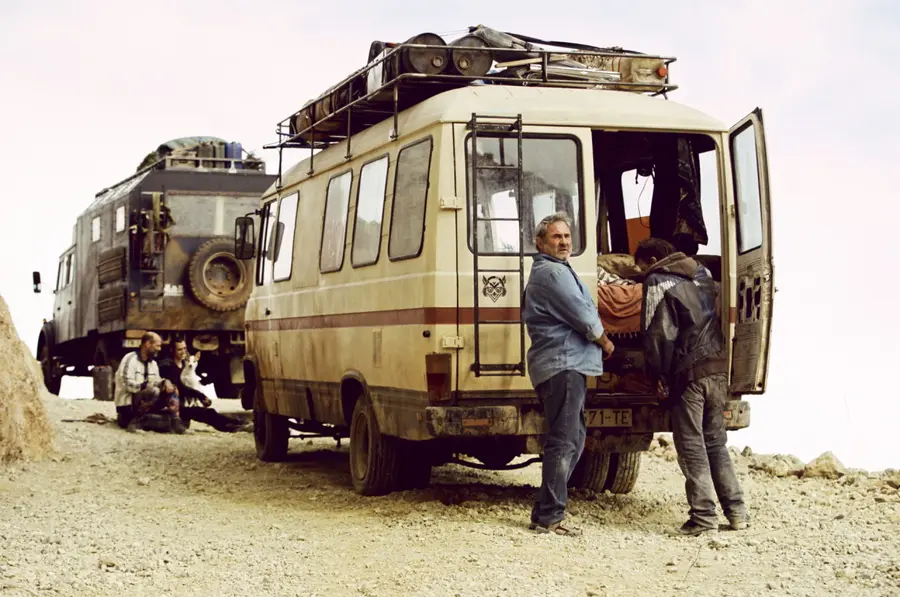
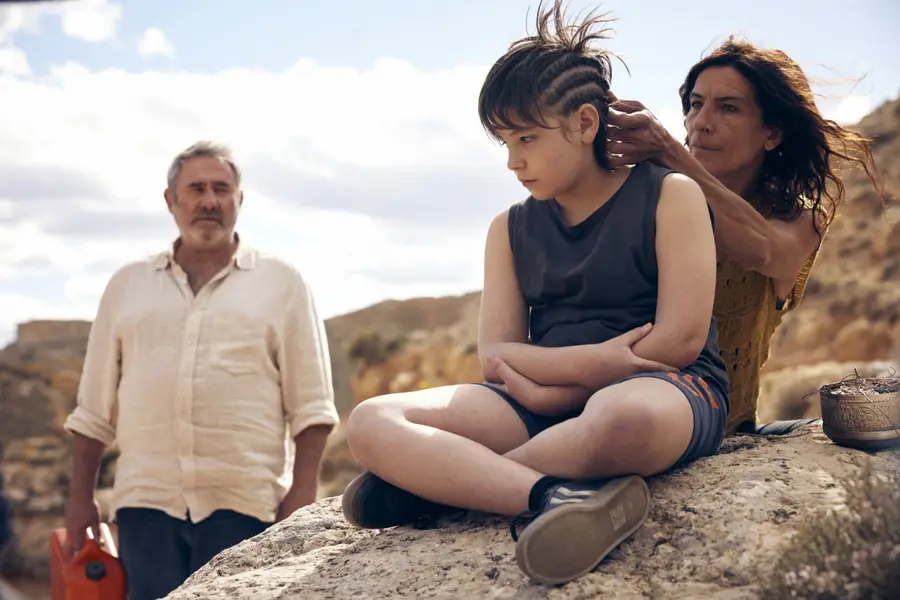
The film then takes an entirely unexpected turn. While recalling the narrative of confronting dark truths in the process of searching for their daughter, the music grows louder and the beat reaches its peak, and then a landmine explodes. Literally, a real landmine explodes, and the desert, where music echoes, suddenly transforms into a life-and-death boundary that must find Sirat. Rather than explaining events, 〈Sirat〉 conveys emotions through overwhelming EDM sound while excellently visualizing Sirat, dedicating most of its runtime to scenes of movement, and just when you feel they have 'settled,' it tests the characters.
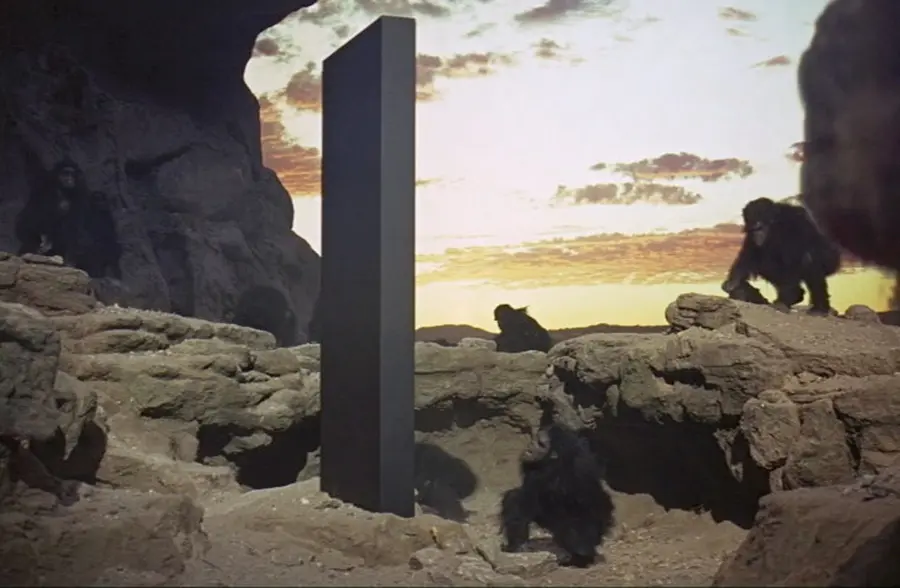
In the clash of the desert and mountains, the black speaker evokes the Monolith from Stanley Kubrick's 〈2001: A Space Odyssey〉 (1968). The Monolith, inspired by Arthur C. Clarke's short story 「Sentinel」, which was co-written with Stanley Kubrick, derives its name from the Greek word meaning 'one stone' or 'isolated rock,' and takes the form of a long black rectangular prism like the speaker in 〈Sirat〉. The Monolith appears at crucial moments of human evolution in 〈2001: A Space Odyssey〉, serving as a milestone that leads to intellectual leaps. While many films often compare 'some unidentified, massive, sacred black square' to the Monolith, 〈Sirat〉 directly connects it by featuring footage of the Kaaba in Mecca, the Islamic holy site in Saudi Arabia. The massive black stone Kaaba is said to have turned black after coming into contact with human sins, and Muslims wear white pilgrimage garments and circle the Kaaba seven times, touching or kissing the black stone. In the way it embodies a form of unilateral enthusiasm and worship towards a single entity, the speaker of 〈Sirat〉 shares symbolic meaning beyond mere formal similarity with the Kaaba.
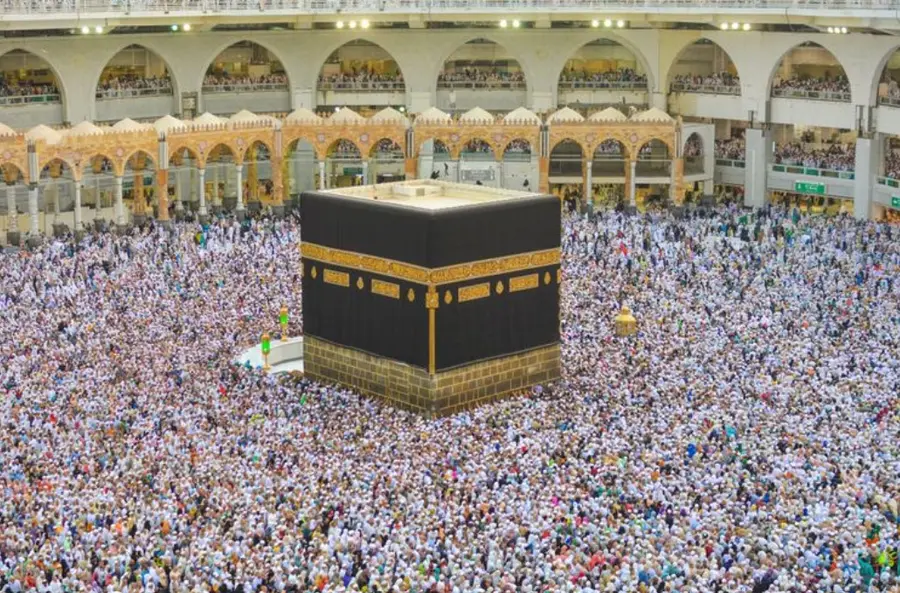
Above all, in terms of being a massive and smooth black rectangular prism, the Monolith, the Kaaba, and the speaker can be visualized as representations of a sacred and absolute existence. In fact, Stanley Kubrick aimed to express the fear and awe felt by humans when encountering a transcendent being through the Monolith, and it is a significant logical inference to compare the Kaaba and the Monolith, given that the Monolith originally described in 「Sentinel」 was depicted as a transparent crystal and was changed to its appearance in the film. Initially, they intended to create the Monolith as transparent, but due to reflections from studio lights diluting its mystery, they designed it as an imposing black rectangular prism. Many also draw comparisons between the Monolith and Stonehenge, a circle of standing stones in England's Salisbury Plain, but Stanley Kubrick has never specifically mentioned this.
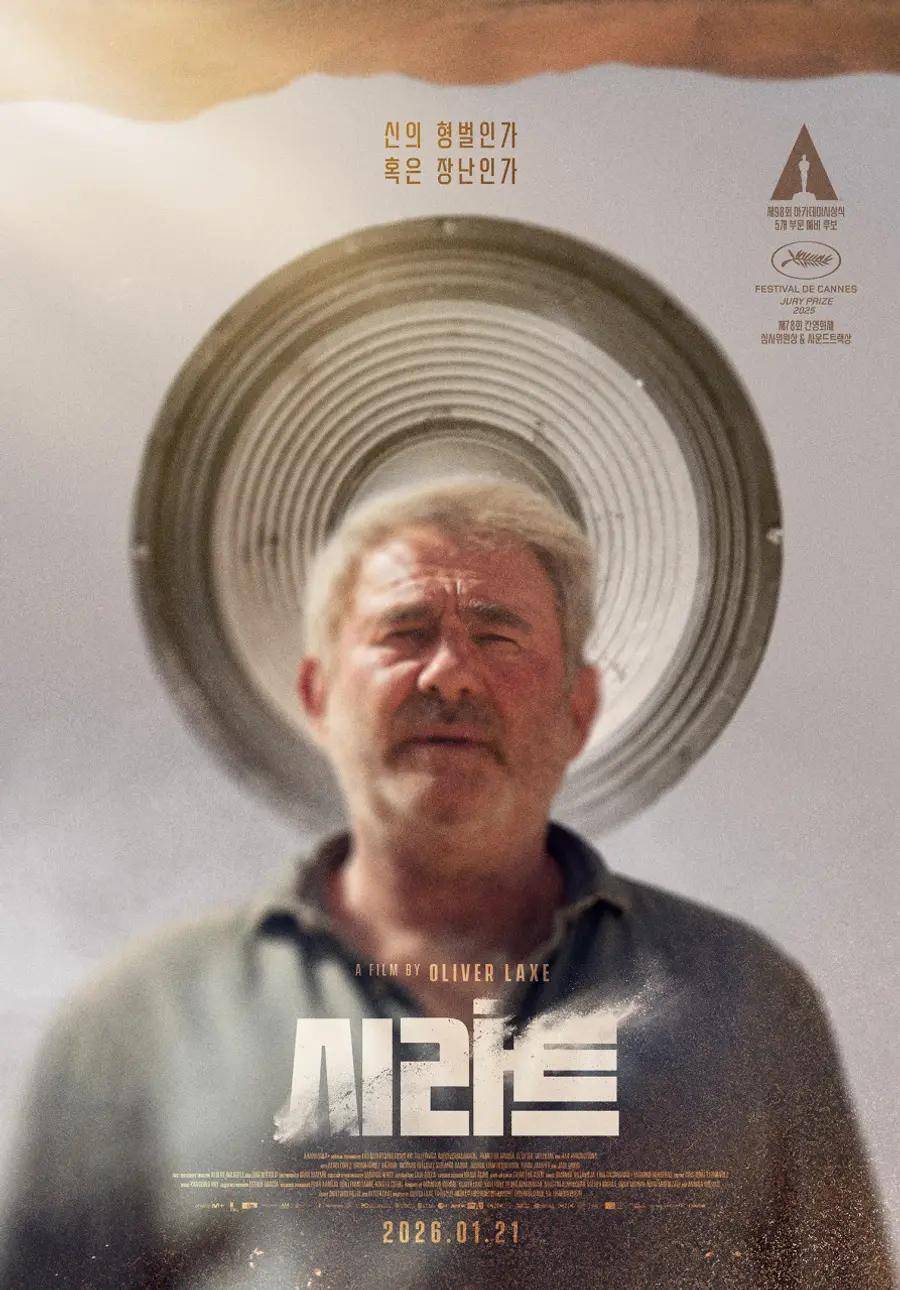
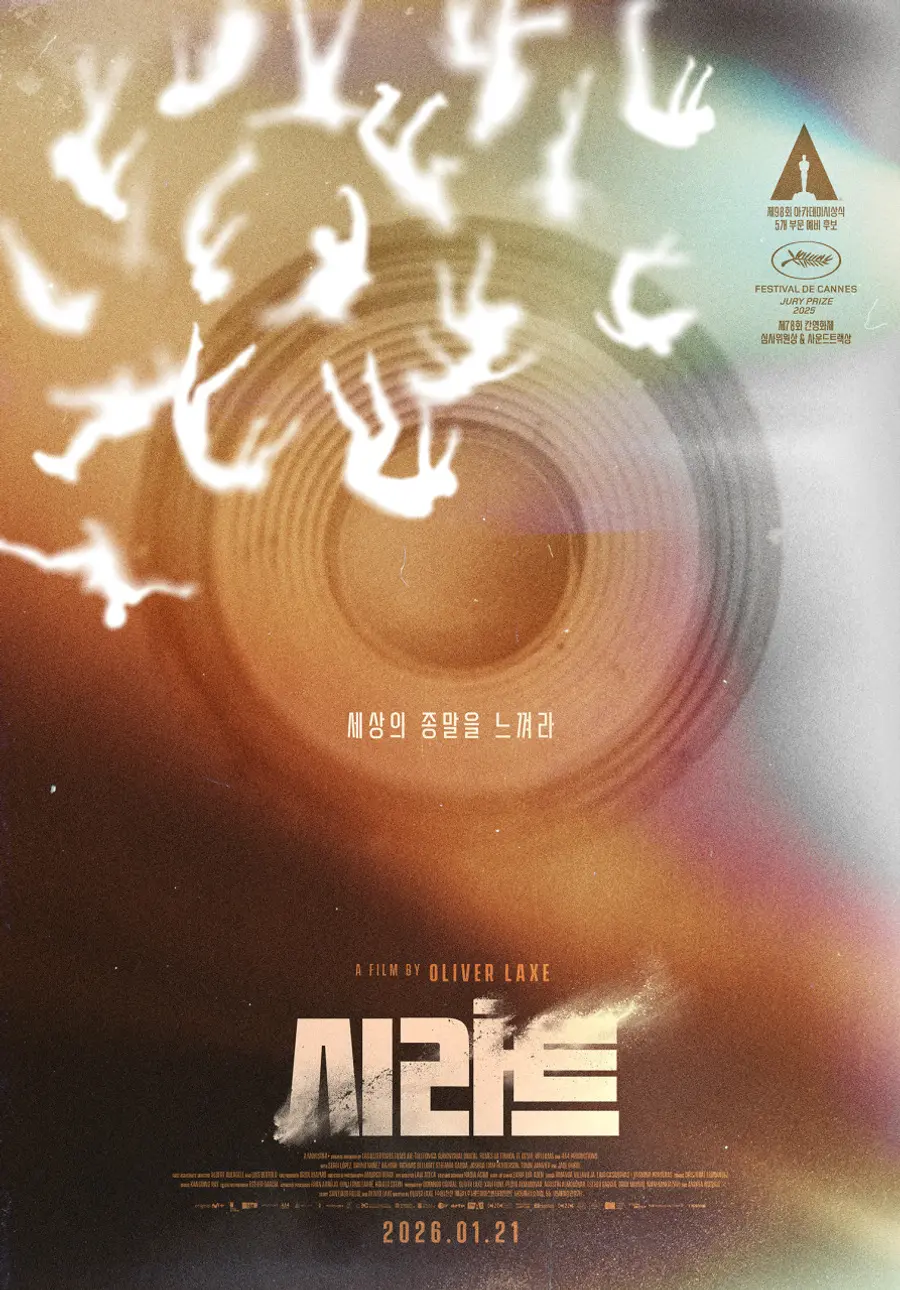
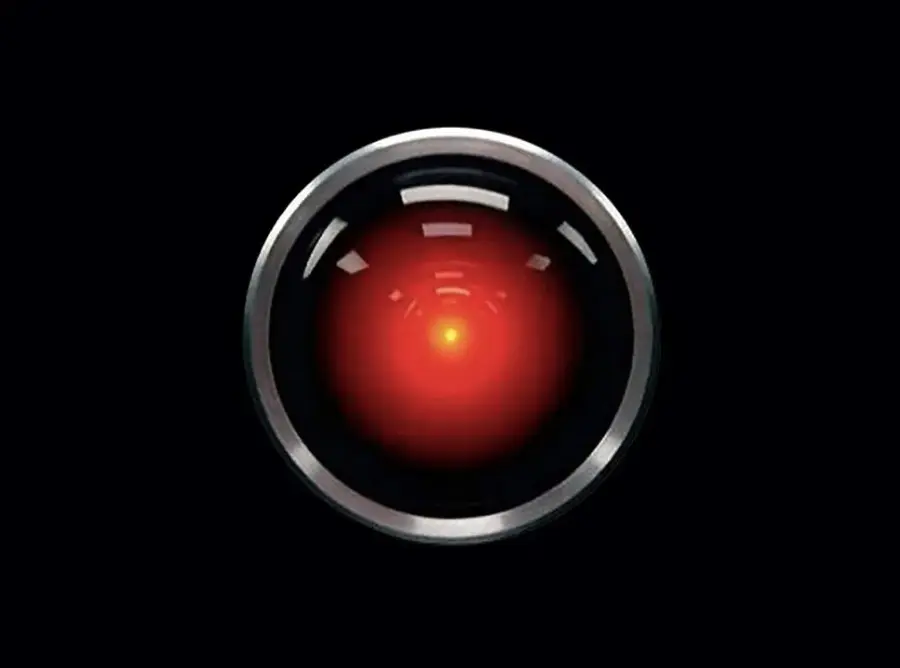
The thought that 〈Sirat〉 is visually even more astonishing and exceptional arises from the fact that it overlays the character of HAL (the artificial intelligence computer) from 〈2001: A Space Odyssey〉. The central round dome shape of the large speaker is called the Dust Cap, and in 〈Sirat〉, it is made to resemble the gaze of a god looking down on the characters. As soon as I saw it, I thought of HAL, the artificial intelligence that exists only as a red circular image and sound in 〈2001: A Space Odyssey〉, who was the first in film history to talk back to humans and refuse commands. When the crew discussed separating HAL from the spaceship, HAL read their lips and understood the entire conversation, leading to a rebellion where he killed the crew members. He turned off the life support systems of the hibernating crew and caused a crew member who went out to replace a module to drift into space. As if foretelling a grim future of the AI era, HAL's famous line from the 1968 film, "I'm afraid I can't do that," was created. Standing under the speaker's Dust Cap is father Luis, and as many people look at the falling poster image, I thought, 'The Monolith and HAL from 〈2001: A Space Odyssey〉 meet in 〈Sirat〉.' It is truly an astonishing imagination that sends chills down my spine.
![[Joo Seong-cheol's Locker] The 'Canned Cart Camera' that Changed the History of World Cinema with 'Nouvelle Vague'](https://cdn.www.cineplay.co.kr/w400/q75/article-images/2026-01-27/563f1a4c-20b8-460b-8523-f31511911bd5.jpg)
![[Joo Sung-cheol's Locker] Ahn Sung-ki is Born, I am Ahn Sung-ki](https://cdn.www.cineplay.co.kr/w400/q75/article-images/2026-01-13/362be897-34af-4524-9a57-6b9935666a0a.jpg)
![[Jusungcheol’s Locker] Odyssey’s one-eyed giant Cyclops and Ray Harryhausen’s “The Seventh Voyage of Sinbad”](https://cdn.www.cineplay.co.kr/w400/q75/article-images/2026-08-10/5faf400e-cf0b-466c-a3d7-31a8bbb38075.jpg)
![[Joo Seong-cheol’s Locker] See ‘Hope’ Again Through the Driver-Grade Cap Joo Seong-cheol Wears While Racing Across Seong-gi Bridge in ‘The Yellow Sea’ and ‘Goksung’](https://cdn.www.cineplay.co.kr/w400/q75/article-images/2026-07-28/7bf74e36-337d-4fd0-8cec-b890f5604345.jpg)
![[Joo Sung-cheol’s Locker] Watching “Marty Supreme,” Recalling Yoon Nam-gyu’s Penholder Table Tennis Racket](https://cdn.www.cineplay.co.kr/w400/q75/article-images/2026-06-29/0dc02383-0dc9-4ea1-9de5-f1eaffbeb9b9.jpg)
![[Joo Seong-cheol's Locker] The Aesthetics of Jongmyo That Captivated Masters of Martial Arts from Ho Kim-jun to John Woo, Jackie Chan, and Sammo Hung](https://cdn.www.cineplay.co.kr/w400/q75/article-images/2025-12-16/4d8670a7-ef95-4635-8d0c-34313f13dd52.jpg)
![[Joo Seong-cheol's Locker] The King Lear of Korea and Japan, Lee Soon-jae and Nakadai Tatsuya, Two Masters Rest](https://cdn.www.cineplay.co.kr/w400/q75/article-images/2025-12-01/3e753af3-e8d5-41df-83cf-00e9ddfdaae7.jpg)
![[Joo Seong-cheol's Locker] When Trees Comfort Trees, the Cello of 'The Moment the Bell Rings' and 'Can't Help It'](https://cdn.www.cineplay.co.kr/w400/q75/article-images/2025-11-18/52034c54-93dc-4b4c-ac9f-5f9b7946fb23.jpg)
![[Joo Seong-cheol's Locker] What Beer Did Sergio (Benicio Del Toro) Always Carry in 'One Battle After Another'?](https://cdn.www.cineplay.co.kr/w400/q75/article-images/2025-11-04/0794fe08-e847-46a1-ba4c-445f814803a8.jpg)
![[Joo Seong-cheol’s Locker] Do You Know the Origin of Woody in “Toy Story”?](https://cdn.www.cineplay.co.kr/w400/q75/article-images/2026-06-16/eb2c5055-d2de-4464-b9e2-eceeca8c7759.jpg)
![[Joo Seong-cheol's Locker] Tony Leung Sometimes Wants to Hold an Ashtray.](https://cdn.www.cineplay.co.kr/w400/q75/article-images/2026-02-09/8b9ac9f0-6899-4ce2-a562-5594a5b06d61.jpg)
![[Chu Sung-cheol’s Lockers] Who Spat on Leslie Cheung in “Farewell My Concubine”?](https://cdn.www.cineplay.co.kr/w400/q75/article-images/2026-04-06/7b608cd9-af6c-4c1d-8e87-38c2d2619d55.jpg)
![[Joo Sung-chul's Locker] What Are the Improvised Explosive Devices (IEDs) in 'Warfare' and 'The Hurt Locker'?](https://cdn.www.cineplay.co.kr/w400/q75/article-images/2026-08-24/ae200e60-2be9-478e-8ab4-72a860903979.jpg)
![[Joo Seong-cheol’s Locker] Zombie Things That Don’t Flinch Even When Shot: Korea’s First Zombie Film, “Kwe-si” (1981)](https://cdn.www.cineplay.co.kr/w400/q75/article-images/2026-06-01/26c56ce7-1ddb-46bd-ae67-f71a1ba9e276.jpg)
![[Joo Seong-cheol’s Locker] David’s Stone That Took Down Goliath, “David” All the Way Through](https://cdn.www.cineplay.co.kr/w400/q75/article-images/2026-07-13/524bb041-0e4e-4f59-824b-21d2f7df60a9.jpg)
![[Joo Sung-chul's Locker] If it's hard to visit Cheongnyeongpo of Deposed King Danjong, head to Geumseongdang of Prince Geumseong!](https://cdn.www.cineplay.co.kr/w400/q75/article-images/2026-03-10/7ddd3634-6a13-4eef-870c-e4e6dbcdac04.jpg)
![[Joo Seong-cheol’s Lockers] The Great Dancer Turned Film Director Summoned by “Michael”: Bob Fosse’s “All That Jazz”](https://cdn.www.cineplay.co.kr/w400/q75/article-images/2026-05-18/922af142-be9f-4f1c-98d1-4a7a6667943c.jpg)
![[Joo Seong-cheol’s Lockers] Lee Cronin’s The Mummy and Murderous People Season 2 — and a Scorpion Jacket That Feels Like the Rise of Drive](https://cdn.www.cineplay.co.kr/w400/q75/article-images/2026-04-20/1df79cf4-44ef-48e4-a6b4-46f6e35c4eb5.jpg)



![[Photo &] 6 Films Invited to the '2025 Cannes Film Festival', Producing 19 Nominations for the '98th Academy Awards'... List Released](https://cdn.www.cineplay.co.kr/w160/q75/article-images/2026-01-23/65bcdc63-e407-42d7-a361-84d0c3a9246a.jpg)



댓글 (0)
댓글 작성
댓글을 작성하려면 로그인이 필요합니다.
로그인하기