



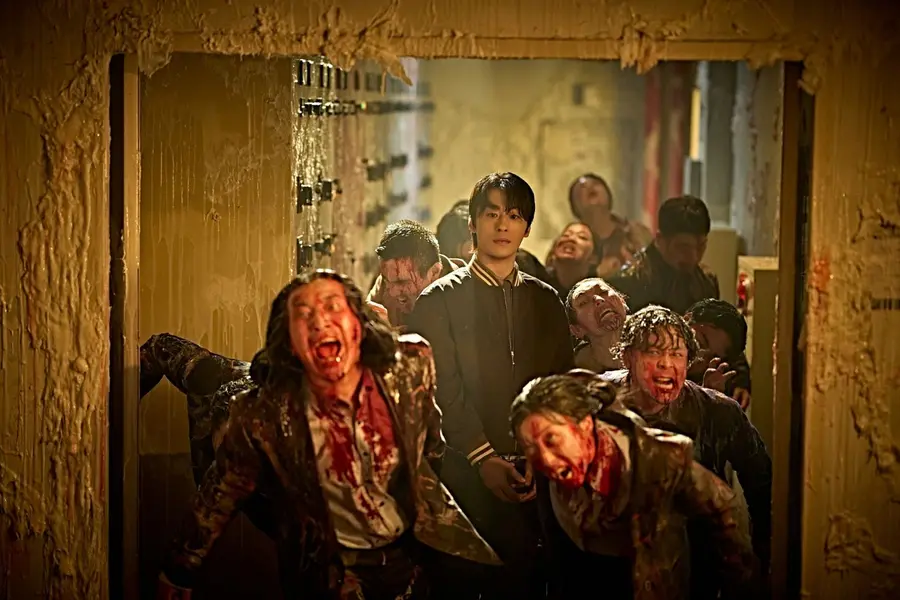
〈Gun-chae〉surpassed 3 million viewers in just 10 days. According to the Korean Film Commission’s integrated computer network, it reached the 3 million mark on May 30, its 10th day after release, four days earlier than 〈King and the Man〉, which drew 16 million viewers. That is why talk of “10 million admissions” is already starting. 〈Gun-chae〉 was especially intriguing, starting with the title “Gun-chae” (群體, Colony) built around the motif of “mass infection.” When you deal with zombies—or, for that matter, lifeless objects—that have somehow grown into an entire genre, creators inevitably develop a desire to refer to them with different names. Think about it: in virtually every zombie film, when a zombie appears, it is usually called “the infected,” not “a zombie.” It’s an irony: a mysterious being whose identity nobody has ever heard of—and whose actions are strange—defines every zombie piece of content as “the first one you meet in the world.” For example, in the zombie TV series 〈The Walking Dead〉, which began in 2010 and ran for as many as 11 seasons, the zombies are called “Walkers” rather than zombies. Audiences all know zombies as zombies, but in the movies, you can’t call them zombies. In other words, in zombie films, zombies are always “strangers for the first time.”
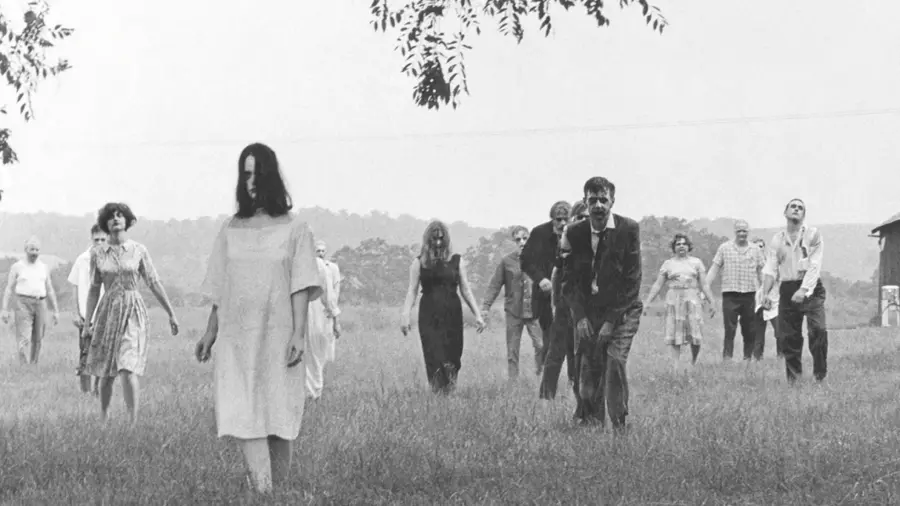
Generally, zombies are described in a Haitian Vodou legend as “beings who fall into a deathlike state and are controlled.” More specifically, they are monsters in the form of corpses that rise from death and move. Like a virus infection, they attack other people, bite them, and turn them into disgusting zombies like themselves. The first time the word “zombie” appeared was in Italian director Lucio Fulci’s 〈Zombie 2〉 (1979). After a film that re-edited and released George Romero’s 〈Dawn of the Dead〉 succeeded massively in Italy, it was released by deceiving audiences into thinking it was like that sequel. That means the original didn’t use the expression “zombie,” but rather George Romero’s 〈Night of the Living Dead〉 (1968). As you can see from the English title 〈Night of the Living Dead〉, they were called “the living dead,” and Romero wanted to call them “gouls,” flesh-eating monsters often depicted as supernatural creatures similar to zombies in Arab or Islamic regions. But in the end, they hardened into “zombies,” the term that became the mainstream expression among audiences. Maybe, instead of “zombie films,” it might have been “goul films.”
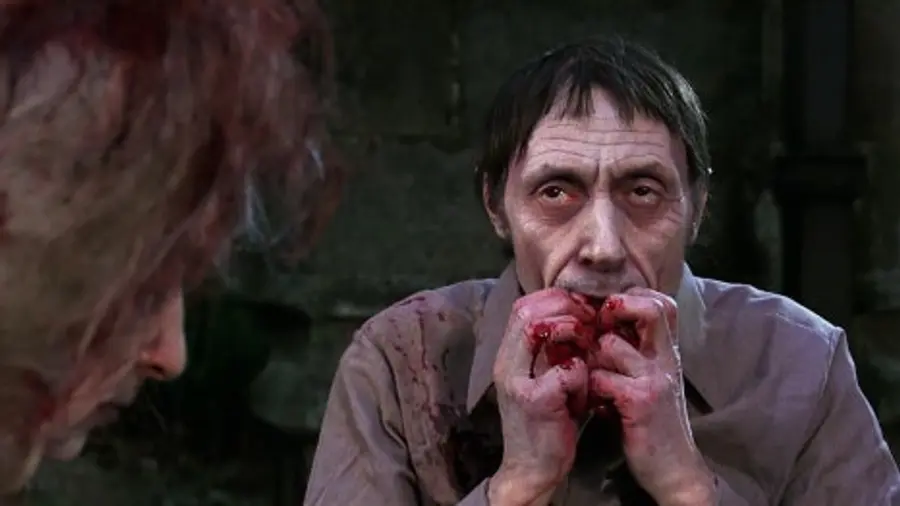
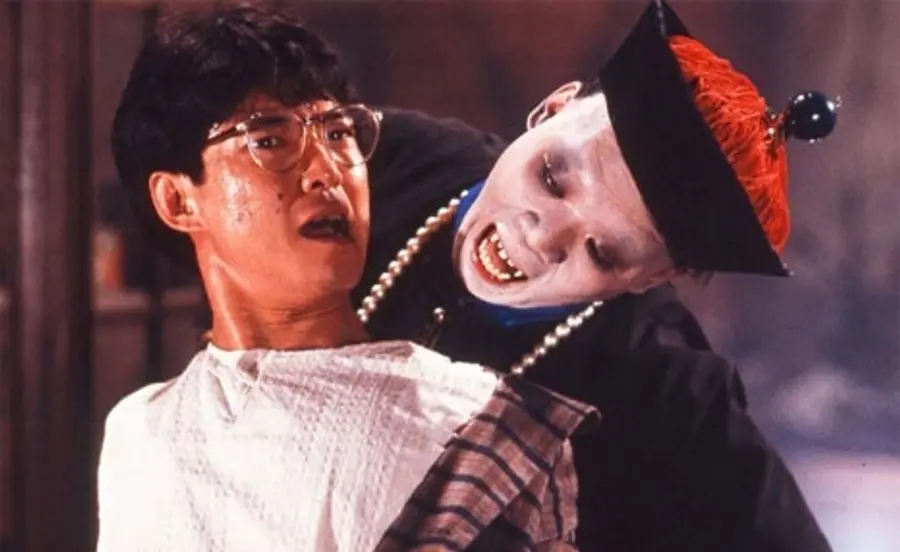
The movie that comes to mind when you see the expression 〈Gun-chae〉 is, without question, 〈Kwe-si〉 (怪屍, 1981), recorded as Korea’s first zombie film. It is also similar in wording to “jiangshi” (僵尸), which can be described as a “Chinese version of a zombie”—a “corpse” that has “fallen over” because of “the character for ‘to fall’” and yet stands “stiffly” because of “the character for ‘stiff.’” In other words, it’s as if it reflects the fierce localization desires of East Asian directors—wanting to carve out their own terms, however they can, within the zombie-film genre where zombies can’t be called “zombies,” and instead creating distinct labels such as jiangshi, Kwe-si, and Gun-chae.
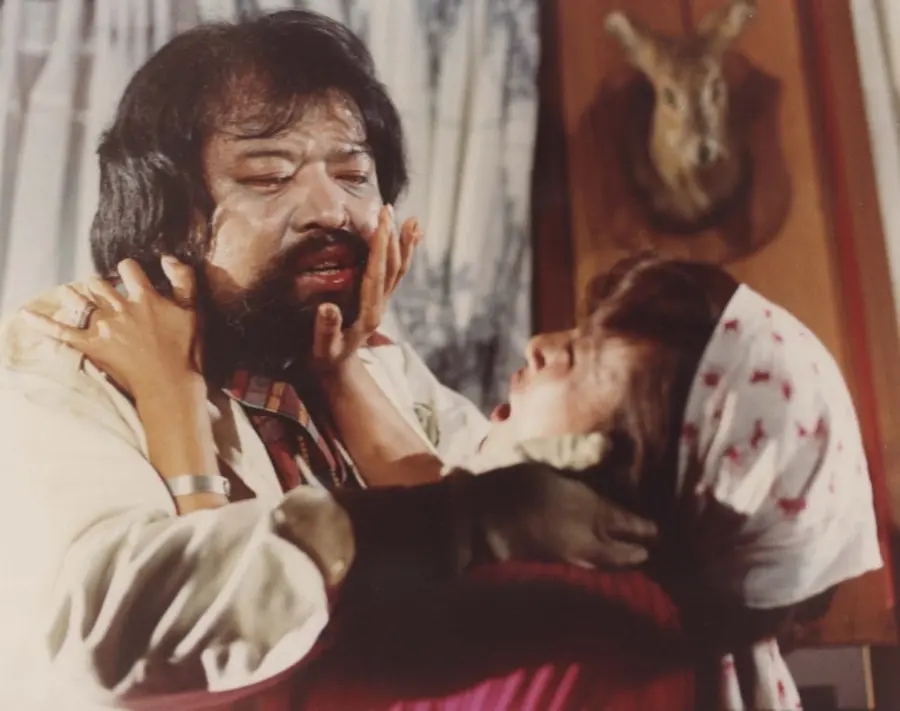
In the days when there was basically no concept of copyright, 〈Kwe-si〉 was effectively a copy of the Italian-Spanish co-production 〈Let Sleeping Corpses Lie〉 (Let Sleeping Corpses Lie, 1974), but with various Korean circumstances and variations added to it, it is recognized as Korea’s first zombie film. Kang Myeong, from Taiwan, ends up riding Su-ji’s car on the way to Baekdamsa Temple in Gangwon-do. Living in the United States, Su-ji is on her way to a villa in Suri Village to meet her sister after five years. Her sister is staying in Gangwon-do with her husband for recovery due to health issues. Then, when the car reaches an unfamiliar place, while Kang Myeong steps out to look around the road, Su-ji encounters the first zombie in the valley—no, the “Kwe-si.”
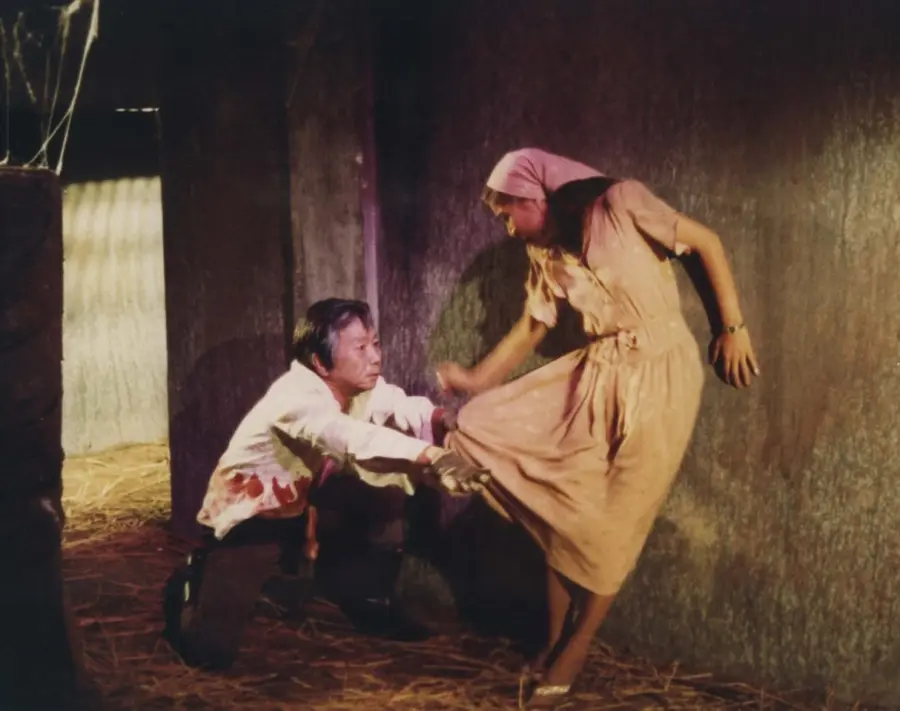
After that, they learn his identity through villagers’ talk and a police investigation: Yong-dol, who died three days earlier. But nobody believes Su-ji’s story that the dead man has come back to life. In the end, Kang Myeong and Su-ji go to the burial site within the cemetery, where there is not even Yong-dol’s body—and they are attacked by corpses that have revived there. Meanwhile, both the detective who has been tailing Kang Myeong and Su-ji and Su-ji’s brother-in-law, who left the house, also turn into zombies. That is how the entire village is thrown into terror by the Kwe-si.
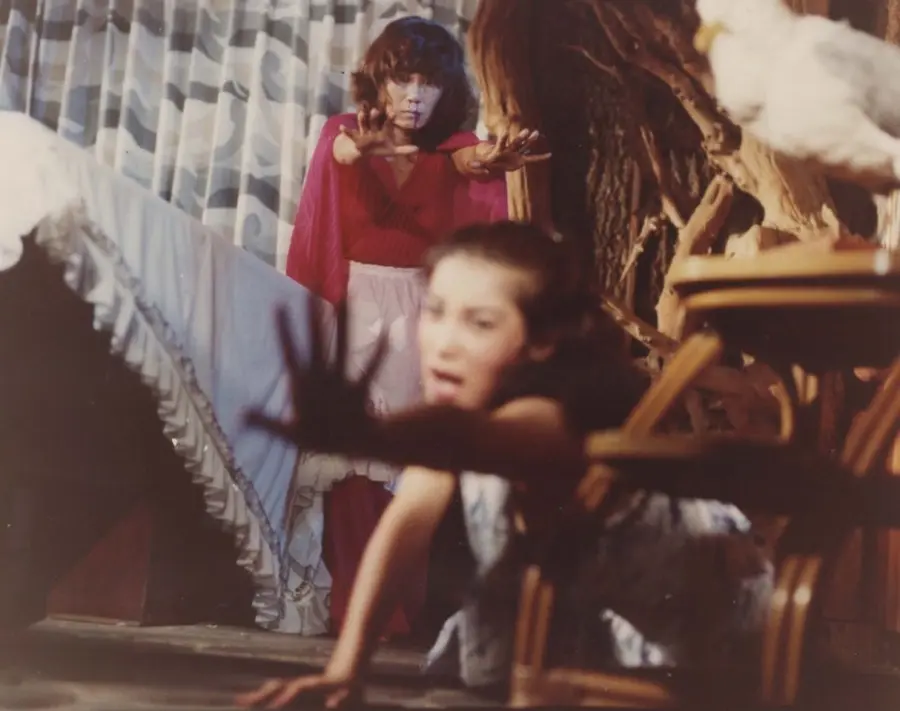
More than anything, in terms of filmmaking, the title itself—Kwe-si (怪屍)—gives off something strange yet distinct. And what matters is how 〈Kwe-si〉 injects an interesting imagination into the existence of zombies, which can be called a complete cinematic creature in movie history. You can compare it even with 〈World War Z〉 (2013), which helped turn the zombie genre into commercial blockbuster scale, or with the TV series 〈The Walking Dead〉, which made Steven Yeun a star overnight, yet in film history, 〈Kwe-si〉 probably introduces the most durable, almost unstoppable zombie monster. Even when Su-ji’s brother-in-law, who has turned into a zombie, is run over by a car, he gets up without flinching. Even if police shout like “Who are you?!”—as Dae-su’s character Oh Dae-su does in 〈Oldboy〉—and fire their guns at the zombie, it still doesn’t flinch. In zombie films, blowing off a zombie’s head with a handgun is always the “most certain way to remove” it, but in 〈Kwe-si〉, that is impossible. Has there ever been a zombie that kept going even after shots were fired? Perhaps that is exactly where today’s viewers—or fans of zombie films—find their attraction.
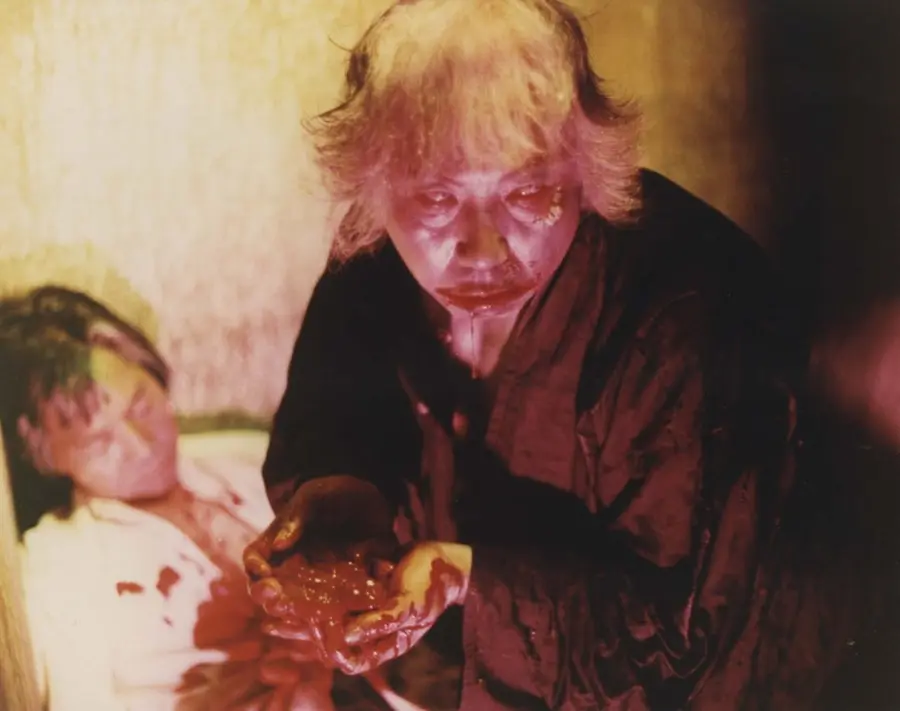
But what brings the corpses back to life is science experiments. The ultrasound generated in a laboratory researching ultrasonic waves to kill pests ends up touching the nerves of the corpse and reviving it. What’s more, there were reports even before that that malformed babies were being born in Suri Village, but scientists dismissed it. The protagonist, who learns the reason behind the zombie outbreak, goes to the lab and tells them, “Turn off the machine that kills people right now.” But everything is contained in the response: they treat him as just a crazy man and shout, “We’re scientists!” Usually, zombie films rarely dig into how the outbreak begins. In 〈World War Z〉, which combined the problem of a new virus and even led to vaccines being developed, 〈Kwe-si〉 also moves toward an environmental destruction issue, just like the original’s setup. You can find the common ground between 〈Kwe-si〉 and 〈Gun-chae〉 not only in the obsession with creating unique terms for zombies, but also in the way they fuse the theme with science. Just like Su-ji’s outcry, “The corpses came back to life!”—that is how the Korean version, 〈Night of the Living Dead〉, was made.
※ Excessive meaning attachment to the objects in the film—starting with the actor’s user guide “Joo Seong-cheol’s Locker,” which invites expectations for a big rise, up to the actress’s purchase log of subculture miscellany “Sung-chan-eol’s comic book,” and everything in between: Cineplay reporters begin their every-other-week series with their own tastes and perspectives.
![[Joo Seong-cheol's Locker] The Black Speaker of 'Sirat' and the Monolith of '2001: A Space Odyssey'](https://cdn.www.cineplay.co.kr/w400/q75/article-images/2026-02-23/01816f3a-b433-4072-887b-e760357e6cc7.jpg)
![[Joo Seong-cheol's Locker] The 'Canned Cart Camera' that Changed the History of World Cinema with 'Nouvelle Vague'](https://cdn.www.cineplay.co.kr/w400/q75/article-images/2026-01-27/563f1a4c-20b8-460b-8523-f31511911bd5.jpg)
![[Joo Sung-cheol's Locker] Ahn Sung-ki is Born, I am Ahn Sung-ki](https://cdn.www.cineplay.co.kr/w400/q75/article-images/2026-01-13/362be897-34af-4524-9a57-6b9935666a0a.jpg)
![[Jusungcheol’s Locker] Odyssey’s one-eyed giant Cyclops and Ray Harryhausen’s “The Seventh Voyage of Sinbad”](https://cdn.www.cineplay.co.kr/w400/q75/article-images/2026-08-10/5faf400e-cf0b-466c-a3d7-31a8bbb38075.jpg)
![[Joo Seong-cheol’s Locker] See ‘Hope’ Again Through the Driver-Grade Cap Joo Seong-cheol Wears While Racing Across Seong-gi Bridge in ‘The Yellow Sea’ and ‘Goksung’](https://cdn.www.cineplay.co.kr/w400/q75/article-images/2026-07-28/7bf74e36-337d-4fd0-8cec-b890f5604345.jpg)
![[Joo Sung-cheol’s Locker] Watching “Marty Supreme,” Recalling Yoon Nam-gyu’s Penholder Table Tennis Racket](https://cdn.www.cineplay.co.kr/w400/q75/article-images/2026-06-29/0dc02383-0dc9-4ea1-9de5-f1eaffbeb9b9.jpg)
![[Joo Seong-cheol's Locker] The Aesthetics of Jongmyo That Captivated Masters of Martial Arts from Ho Kim-jun to John Woo, Jackie Chan, and Sammo Hung](https://cdn.www.cineplay.co.kr/w400/q75/article-images/2025-12-16/4d8670a7-ef95-4635-8d0c-34313f13dd52.jpg)
![[Joo Seong-cheol's Locker] The King Lear of Korea and Japan, Lee Soon-jae and Nakadai Tatsuya, Two Masters Rest](https://cdn.www.cineplay.co.kr/w400/q75/article-images/2025-12-01/3e753af3-e8d5-41df-83cf-00e9ddfdaae7.jpg)
![[Joo Seong-cheol's Locker] When Trees Comfort Trees, the Cello of 'The Moment the Bell Rings' and 'Can't Help It'](https://cdn.www.cineplay.co.kr/w400/q75/article-images/2025-11-18/52034c54-93dc-4b4c-ac9f-5f9b7946fb23.jpg)
![[Joo Seong-cheol's Locker] What Beer Did Sergio (Benicio Del Toro) Always Carry in 'One Battle After Another'?](https://cdn.www.cineplay.co.kr/w400/q75/article-images/2025-11-04/0794fe08-e847-46a1-ba4c-445f814803a8.jpg)
![[Joo Seong-cheol’s Locker] Do You Know the Origin of Woody in “Toy Story”?](https://cdn.www.cineplay.co.kr/w400/q75/article-images/2026-06-16/eb2c5055-d2de-4464-b9e2-eceeca8c7759.jpg)
![[Joo Seong-cheol's Locker] Tony Leung Sometimes Wants to Hold an Ashtray.](https://cdn.www.cineplay.co.kr/w400/q75/article-images/2026-02-09/8b9ac9f0-6899-4ce2-a562-5594a5b06d61.jpg)
![[Chu Sung-cheol’s Lockers] Who Spat on Leslie Cheung in “Farewell My Concubine”?](https://cdn.www.cineplay.co.kr/w400/q75/article-images/2026-04-06/7b608cd9-af6c-4c1d-8e87-38c2d2619d55.jpg)
![[Joo Sung-chul's Locker] What Are the Improvised Explosive Devices (IEDs) in 'Warfare' and 'The Hurt Locker'?](https://cdn.www.cineplay.co.kr/w400/q75/article-images/2026-08-24/ae200e60-2be9-478e-8ab4-72a860903979.jpg)

![[Joo Seong-cheol’s Locker] David’s Stone That Took Down Goliath, “David” All the Way Through](https://cdn.www.cineplay.co.kr/w400/q75/article-images/2026-07-13/524bb041-0e4e-4f59-824b-21d2f7df60a9.jpg)
![[Joo Sung-chul's Locker] If it's hard to visit Cheongnyeongpo of Deposed King Danjong, head to Geumseongdang of Prince Geumseong!](https://cdn.www.cineplay.co.kr/w400/q75/article-images/2026-03-10/7ddd3634-6a13-4eef-870c-e4e6dbcdac04.jpg)
![[Joo Seong-cheol’s Lockers] The Great Dancer Turned Film Director Summoned by “Michael”: Bob Fosse’s “All That Jazz”](https://cdn.www.cineplay.co.kr/w400/q75/article-images/2026-05-18/922af142-be9f-4f1c-98d1-4a7a6667943c.jpg)
![[Joo Seong-cheol’s Lockers] Lee Cronin’s The Mummy and Murderous People Season 2 — and a Scorpion Jacket That Feels Like the Rise of Drive](https://cdn.www.cineplay.co.kr/w400/q75/article-images/2026-04-20/1df79cf4-44ef-48e4-a6b4-46f6e35c4eb5.jpg)






![[Photo&] Jeon Ji-hyun and Koo Kyo-hwan… Sang-ho Yeon’s “K Zombie” ‘Hive’ draws 5 minutes of standing ovation at Cannes](https://cdn.www.cineplay.co.kr/w160/q75/article-images/2026-05-17/02dfc0a8-c7d9-475a-9e1a-af8cbcf37e72.jpg)
![[Photo&] Yeon Sang-ho’s New Work ‘Swarm’ Earns High Praise at Cannes…The Joy of Cannes, the Return of a Master, and Park Chan-wook’s Embrace, Birth of an ‘Evolved Zombie’](https://cdn.www.cineplay.co.kr/w160/q75/article-images/2026-05-17/2f43a23e-7661-4301-a482-2c71f54e54ac.jpg)
![[First Press-Screening Reactions] 'Colony' Cineplay Critics' Ratings](https://cdn.www.cineplay.co.kr/w160/q75/article-images/2026-05-20/452c0988-e945-4a36-b7f9-1fc529600a3a.jpg)


![[Weekend Theater Scene] Jun Ji-hyun and Koo Kyo-hwan’s “Swarm” Dominates the Box Office…300 Million Won? Breakthrough Likely This Weekend](https://cdn.www.cineplay.co.kr/w160/q75/article-images/2026-05-27/1fc04f0c-bd3b-4be1-8817-fa2e452aad5d.jpg)



댓글 (0)
댓글 작성
댓글을 작성하려면 로그인이 필요합니다.
로그인하기