




Surpassing 3 million viewers within 10 days of its release, Colony is indisputably the most popular film in theaters right now. Yet despite that box-office success, reactions to Colony are sharply divided — a split that was evident even among Cineplay reporters at a press screening. We at Cineplay revisited Colony to pinpoint the elements that produce such contrasting reactions. Viewers who have seen Colony may recognize many of these responses.
Kim Ji-yeon, Reporter
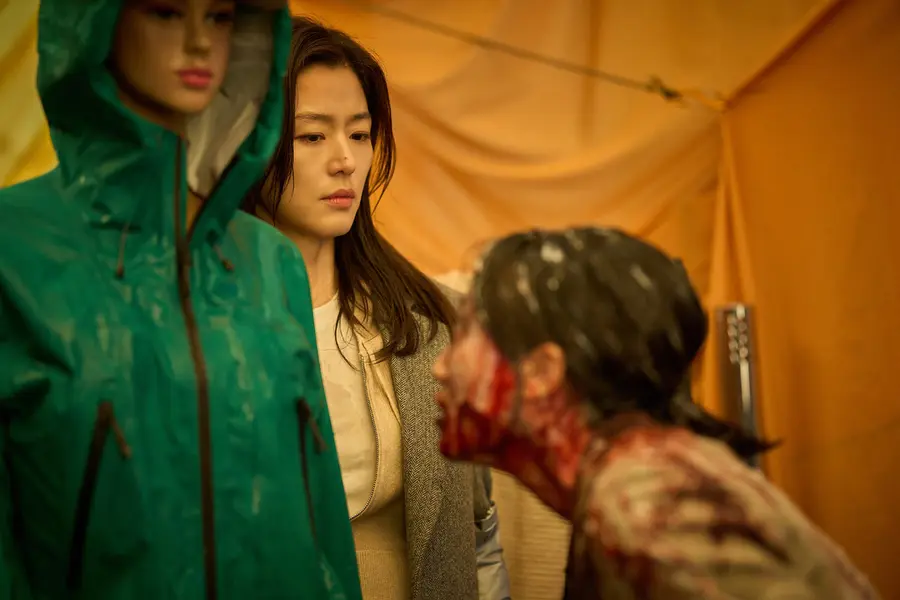
(+) The thrill of a locked-room thriller that emphasizes psychological dread over physical horror
Zombie horror is usually physical: speed, numbers, the immediate threat of flesh being torn. Director Yeon Sang-ho has taken the locked-room thriller he does best and layered a new kind of threat on top of it. Set inside a vast, laboratory-like enclosure, Yeon experiments with a novel zombie mechanism to provoke unfamiliar fear in audiences. The movements of these zombies, which operate like a single organism through collective intelligence, deliver an unsettling, uncanny chill more akin to encountering an unknown life-form than to the straightforward physical terror of being bitten.
At this point Yeon’s films can be compared to Marvel superhero movies. The “recipe” is familiar, but Yeon smartly twists that formula to create fresh pleasures that, even when anticipated, still surprise. Because the story drives forward with a relentless single goal — escape — the film’s lapses in minor detail don’t grate. That momentum produces the pleasure of a well-crafted Yeon Sang-ho–style hero movie.

(-) Flat portrayals of the human characters
If Colony excels at depicting a new species of “colony,” it falls short in portraying the human ensemble. From Kwon Se-jeong (Jun Ji-hyun) to Han Gyu-seong (Go Soo) and Gong Seol-hee (Shin Hyun-bin), the characters are coded into archetypes needed to drive the plot: overly altruistic, always prioritizing the greater good, or conversely selfish. In a hero movie, a character who is almost purely selfless can be forgiven as a trope; within the genre framework of a Yeon Sang-ho–style hero movie it’s understandable. But on closer inspection, the film’s character building feels disappointingly two-dimensional.
Seong Chan-eol, Reporter
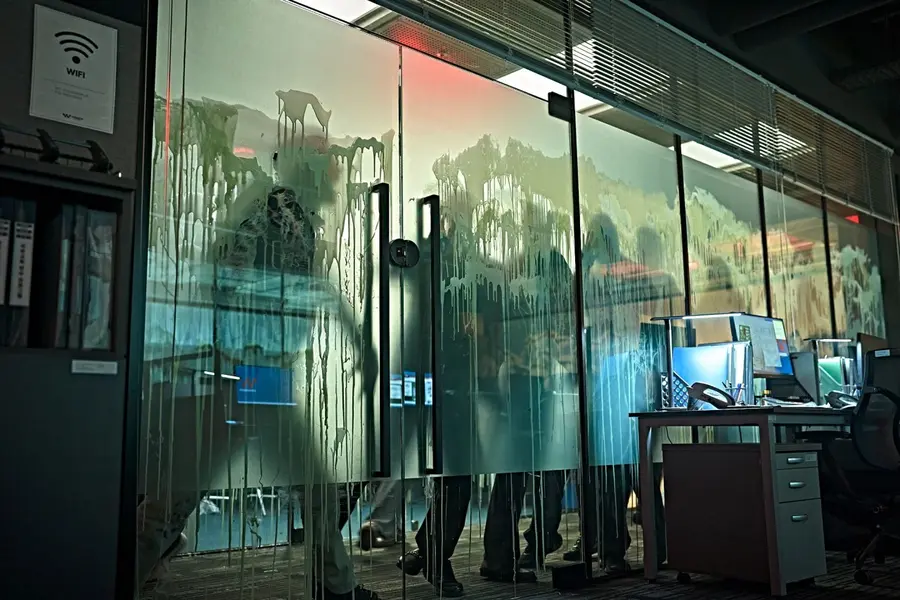
(+) The delight of a new visual shock
Visually, it’s fair to call this a leap forward. At a moment when zombie films are evolving into a broader genre rather than pure horror, the zombies in Colony provoke fear through striking visuals. True to their inspiration from swarm creatures, the instant they all cry out and seem to switch modes at once is a harbinger of fear unique to this film. That effect makes viewers share the characters’ fear rather than wait for them to fight back. The most memorable element of Colony is the zombies’ mucus. Blood in zombie films has long ceased to shock; mucus is different. This slimy matter provokes disgust while creating a less graphic but extraordinarily memorable image. In that regard, Colony confirms Yeon Sang-ho’s reputation as a director with deep genre thinking and original ideas.
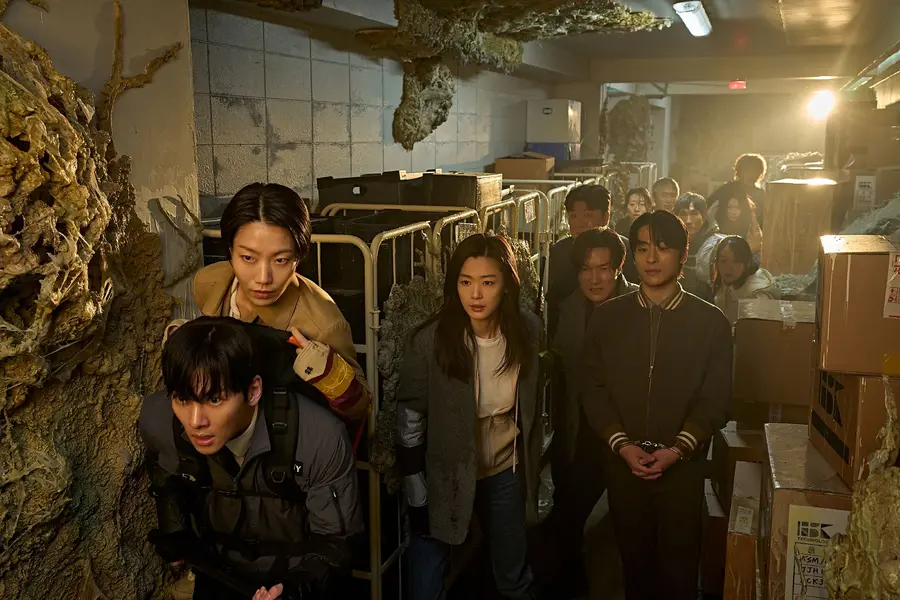
(-) Emphasis on selfishness rather than individuality
To be honest, if I had to name the viewer most impressed by Colony and the viewer most disappointed by it, I could volunteer for both. I marveled at almost every moment through the first half, and I lamented almost every moment from the second half onward. When the weight of the film shifts from the new zombie traits to human drama, Colony loses power. Yeon Sang-ho said he wrote the story assuming individuality equates to humanity. Yet in this film individuality comes across as little more than selfishness. The characters’ choices don’t add up to a concept of interwoven individuality; instead, the endless selfishness of a few people drives the survivor group to collapse. If individuality were rendered properly, the ambiguity that makes humans neither wholly good nor wholly evil would surface: a person who does harm once need not remain selfish forever, and someone who sacrifices once need not act benevolently always. These tolerances might be forgivable as genre clichés, but in today’s context the overly flat depiction of the ensemble makes the ‘colony’ zombies appear more compelling.
Ju Seong-cheol, Editor-in-Chief
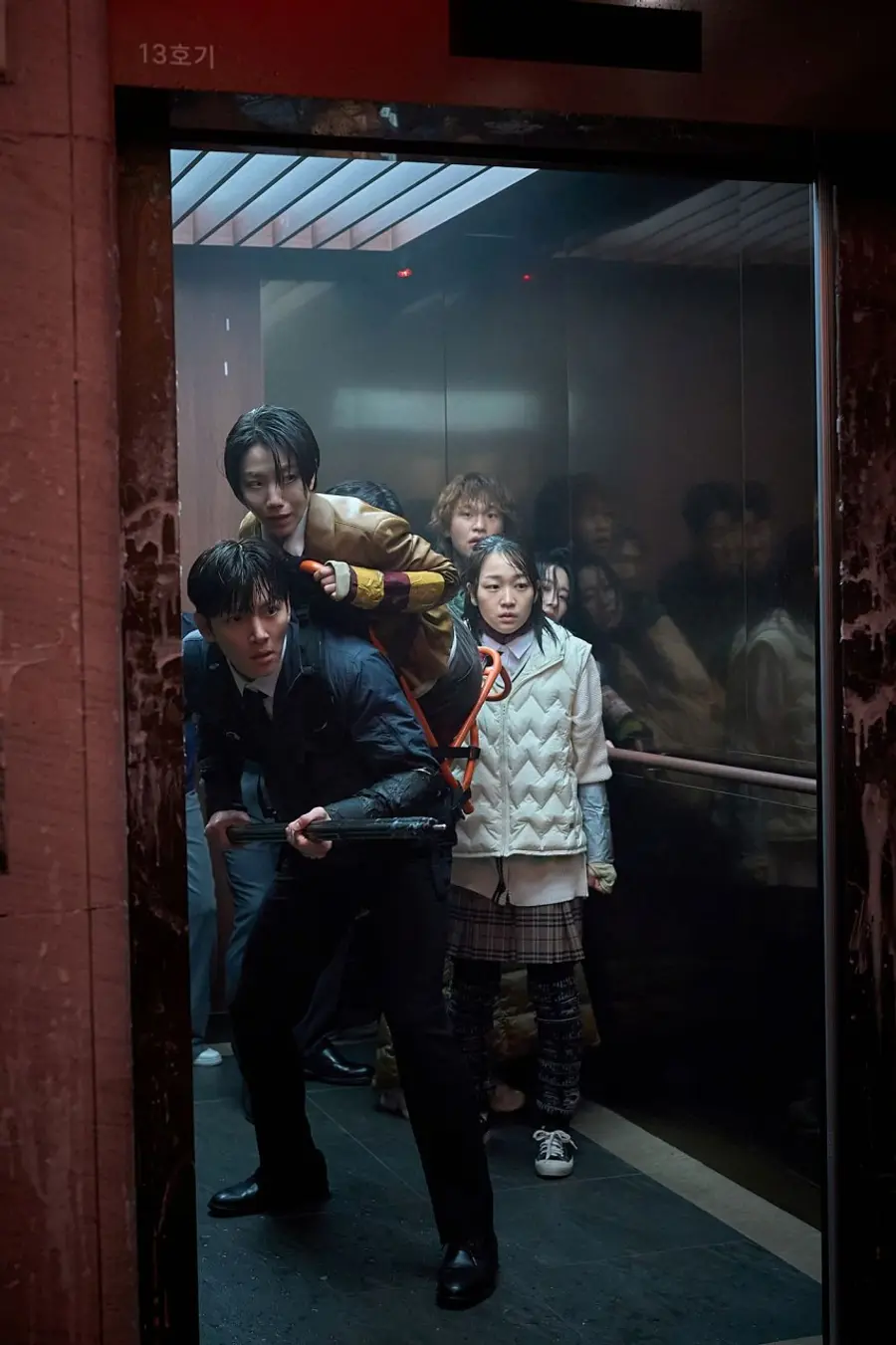
(+) An ambition to write a new chapter in zombie cinema
Zombies, jiangshi, vampires, werewolves — all are products of imagination. None of the common traits ascribed to them — fear of light, vulnerability to sound, infection by bite — are scientifically proven. Any strange, exaggerated premise is permissible so long as it entertains. Historically, zombies have often been read as metaphors for crowds in modern society. Director George A. Romero, often called the originator of zombie cinema with Night of the Living Dead (1968), featured zombies that could not leave the shopping mall in the sequel Dawn of the Dead (1978). That line of thought also continued into Yeon Sang-ho’s Peninsula (2020). In Colony, which features zombies that seem to have evolved almost from the apes of Rise of the Planet of the Apes (2011), the film feels like a zombie movie for the AI era: zombies that move with disciplined coordination, as if following rules. Faced with a new species that communicates and evolves like multiple individuals sharing telepathic signals, the surviving humans respond with frantic KakaoTalk messages. When the film even shows the ant mill phenomenon — a deadly spiral in which creatures follow the lead ant around and around until they cannot stop — the moment is genuinely chilling. Among the many small details a zombie film can produce, the scene in which Hyeon-seok (Ji Chang-wook) fashions a carrying frame to move his sister Hyeon-hee (Kim Shin-rok), who has difficulty walking, is an inspired bit of plotting.

(-) Acting lapses that can’t be overlooked
What ultimately undermines Colony’s brilliant concepts and ideas is not the zombies but the people. Converting the horizontal plane of train-set movement in Train to Busan (2016) into the vertical geography of a shopping mall in Colony is a fresh idea, but the composition and character density are weaker than in Train to Busan. Notably, among Kwon Se-jeong’s (Jun Ji-hyun) group there are some conspicuous weak spots in the performances that many viewers have pointed out. And, with great reluctance toward criticizing any actor personally, the resemblance of actor Choi Kwang-il — who plays the Minister of the Interior and Safety — to former minister Lee Sang-min during the recent insurrection is so strong that it’s hard to say whether that’s a positive or negative.





![[First Press-Screening Reactions] 'Colony' Cineplay Critics' Ratings](https://cdn.www.cineplay.co.kr/w160/q75/article-images/2026-05-20/452c0988-e945-4a36-b7f9-1fc529600a3a.jpg)


![[Interview] Yeon Sang-ho on 〈Colony〉: ‘I Drew Inspiration From the Extreme Game Mechanics of Escape Rooms and the Operating Principles of AI’](https://cdn.www.cineplay.co.kr/w160/q75/article-images/2026-05-26/a17af74d-0d4e-411c-b9a4-5a85f72a6040.jpg)

댓글 (0)
댓글 작성
댓글을 작성하려면 로그인이 필요합니다.
로그인하기