


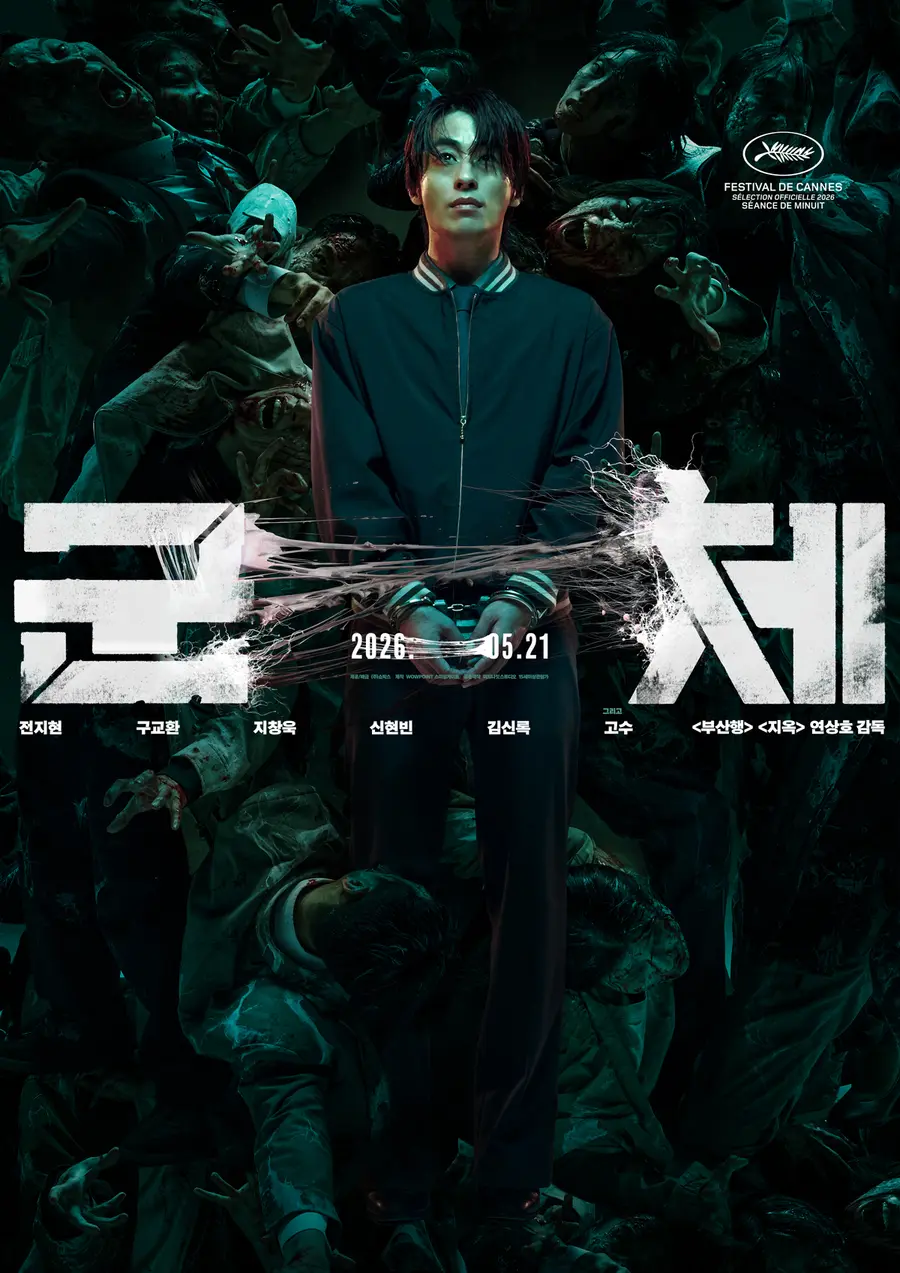
It’s fair to call this "Gu Kyo-hwan’s year." From 《If We》, which helped spark a melodrama boom, to the recently ended series 《Everyone Is Fighting Their Own Sense of Worthlessness》 (hereafter 《Mojamussa》), and the film 《Colony》, released on May 21 and which has surpassed about 2.5 million viewers (as of May 29). Across these projects — from Eun-ho in 《If We》, to Hwang Dong-man in 《Mojamussa》, to Seo Yeong-cheol in 《Colony》 — Gu Kyo-hwan has been everywhere, carving out a singular space and firmly cementing his place as an irreplaceable actor.
Released May 21, 《Colony》 is directed by Yeon Sang-ho. The film is set inside a building sealed off by an unexplained infection, where isolated survivors confront infected people who evolve in unpredictable ways. In the film, Gu plays a complex villain, Seo Yeong-cheol, whose inscrutable expressions conceal his intentions. Seo Yeong-cheol is a genius biologist who once worked at Chains Bio and created an unknown virus that he spreads through the Dunguri Building.
Gu’s Seo Yeong-cheol—with grotesque gestures, an iconic visual presence and overwhelming charisma—has prompted international outlets to dub him the "K-Joker," and has marked the arrival of a striking new villain. How is Gu spending this moment? Describing himself as "the number-one superfan who loves the work I do most," he said he’s enjoying every day of it while sharing this entertaining story of Seo Yeong-cheol with a wide audience. On May 28, to mark the release of 《Colony》, Cineplay met Gu Kyo-hwan to talk about behind-the-scenes moments from 《Colony》, the recently concluded 《Mojamussa》, and an honest conversation about Gu as both director and actor. We sat down with Gu Kyo-hwan for a wide-ranging interview. Below is the full conversation.

《Colony》 has passed 2 million viewers and reactions have been intense. As a leading actor, this must feel special.
I feel really good. The reason we made 《Colony》 was that everyone involved wanted to share this fun with as many people as possible—share this entertaining story of Seo Yeong-cheol. I’m so happy that many people enjoy this new take on infected beings, and I’m enjoying every day of it.
Audiences seem to be offering a wide range of reactions and reviews to 《Colony》. What do you make of that?
It’s an honor. We made this film hoping for many different impressions, not a single unified take. For creators, having multiple interpretations of a film is an honor.
What about 《Colony》 do you think invites so many interpretations?
It speaks to the present moment. It tackles contemporary issues through genre. The film presents its story in a very accessible way, but it still leaves room for questions. That’s one of director Yeon Sang-ho’s most attractive qualities.
Director Yeon called you an actor who "changes the paradigm." What do you think of that?
It feels like a lie. (laughs) I’m joking—he and I are close. I don’t act to change any paradigm. I don’t have such a grand ambition. I act because I want to keep doing it. I hope acting stays fun, and I want to express characters in the ways I like.
What did you enjoy most about playing Seo Yeong-cheol in 《Colony》?
There’s so much. One of the biggest pleasures was that I didn’t perform Seo Yeong-cheol alone. I had to build Seo Yeong-cheol in tandem with 100 infected performers. There’s a Seo Yeong-cheol on the third floor and another on the seventh. Not even Hong Gil-dong moves like that. (laughs) Even in scenes where Seo Yeong-cheol doesn’t appear, there’s a suspense as if he’s watching. Among the performers who played the infected were modern dancers, trained actors, and people who do popping and breakdancing. I watched their performances and was influenced by them in my own acting. I would tell them how I moved, and we were connected. So if you get a favorable review about Seo Yeong-cheol, I want to say it was made together. I’m not pretending to be humble—that’s sincere.
How did the actors playing the infected influence your performance?
To paraphrase Hwang Dong-man (the character from 《Mojamussa》), Seo Yeong-cheol is a figure with a thousand eyes. Even if he covers his eyes with a tie, the audience sees him as watching. I thought that was really interesting and that it would create psychological pressure for viewers. As a villain, Seo Yeong-cheol needs to be an obstacle for others. I got a lot of help from them; it was mutual.
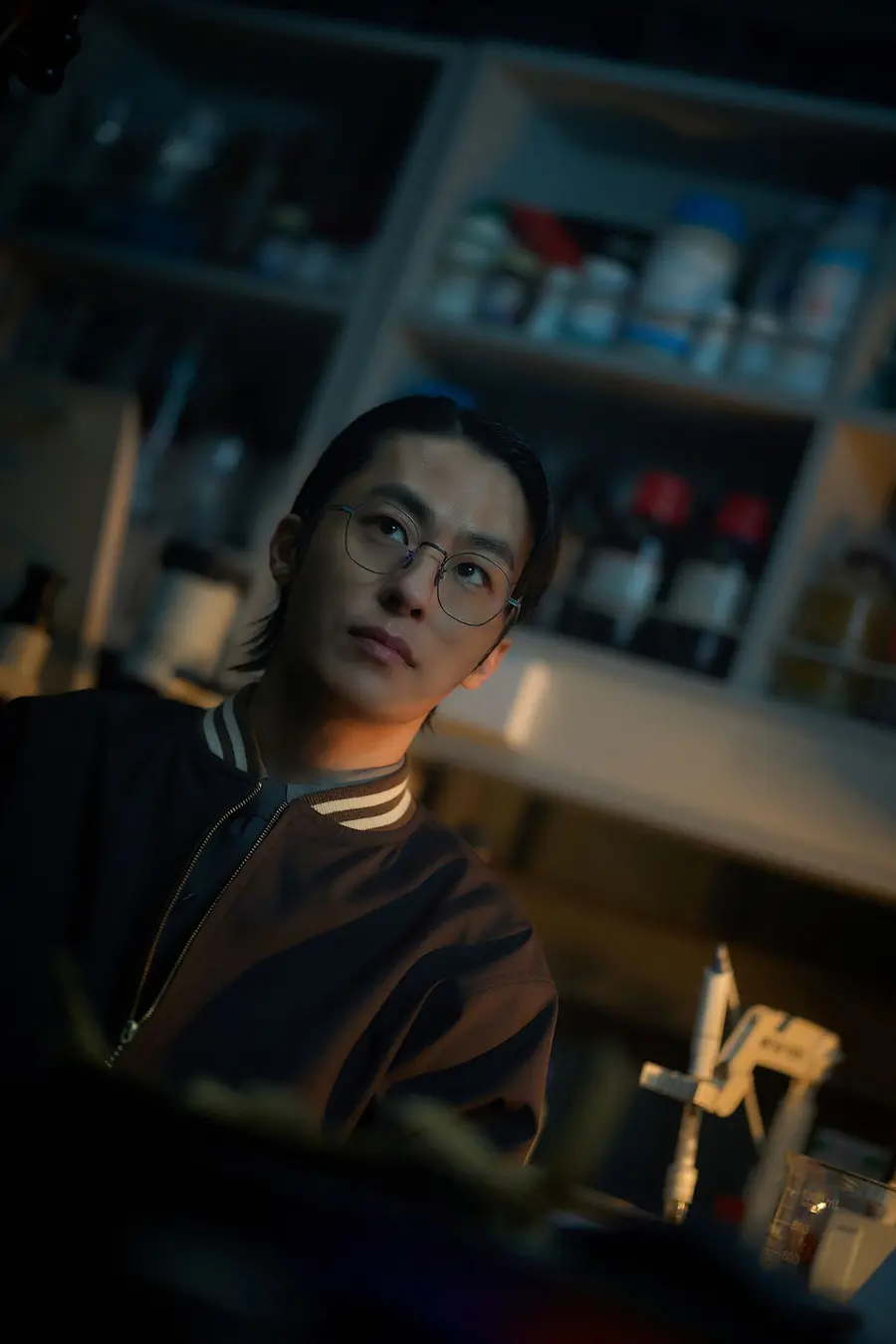
Seo Yeong-cheol’s peculiar gestures have become a talking point—his neck movement and the detailed work on his facial muscles were very distinctive. How did you prepare?
Director Yeon’s vision was written into the script’s stage directions. He wanted highly distinctive physical gestures and showed them directly. He also set the levels and intensity for those behaviors. When communication was down—say, when the Wi-Fi showed only one bar—he wanted more muscle strain and struggling to try to reconnect. When movement was more composed, the communication level changed, too. So I moved according to the director’s direction.
《Colony》 has an unusually large number of iconic images. As an actor in the film, which scene stands out most for you?
My impressions keep changing. I just thought of one. When I first read the script there was a stage direction: ‘Seo Yeong-cheol drifts smoothly among the infected.’ I thought that was a great phrase, and viewers have called that scene one of the ‘three great walks’ (a fan nickname). (laughs) It was fascinating to see that the moments I loved and found interesting connected with the audience—that the way he strolls calmly came through. It reminded me that I need to be genuinely curious and interested for that to reach viewers. If I find something funny, the audience will laugh. I learned that again.
Actor Jeon Ji-hyun praised you as someone who has lots of ideas. How do you respond?
There’s a word—chemistry. Ideas don’t come from one person alone. They’re exchanged. If Jeon Ji-hyun throws something out, I throw something back, and we go back and forth. It’s not something that comes from a single person. Frankly, if I’d been interviewed first, I think she would have said I had lots of ideas.
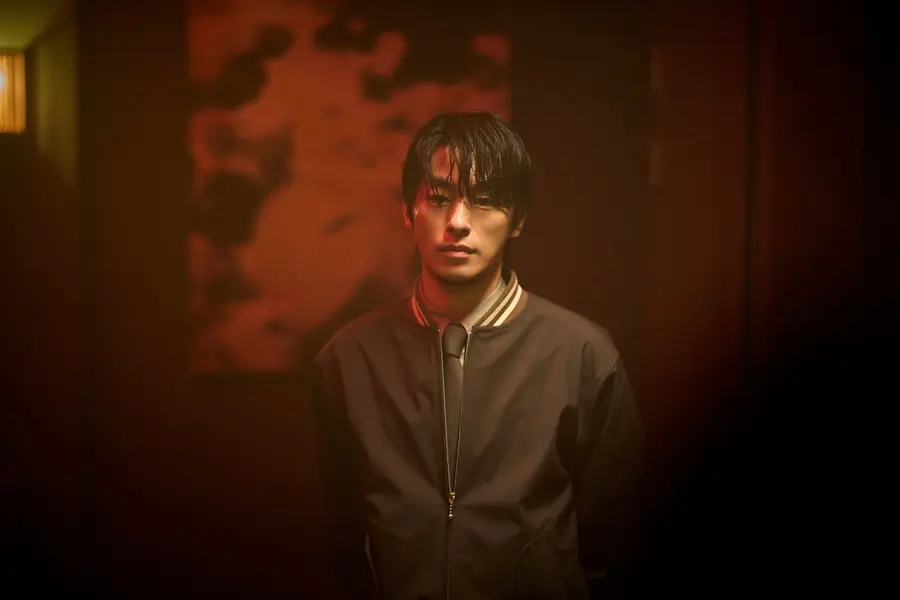
Seo Yeong-cheol is a complete villain whom audiences can’t empathize with. As an actor, you still had to inhabit him. How did you understand the character?
I didn’t try to understand him from his own point of view. When playing a villain, I act from Kwon Se-jung’s perspective. How can I make Kwon Se-jung annoyed and see him as an obstacle? If I act from Seo Yeong-cheol’s side, I end up protecting the character. So when I play a villain I always think from the other side’s perspective; I played Seo Yeong-cheol as if I were playing Kwon Se-jung. One of the fun reviews about 《Colony》 lately is, “I want to beat up Seo Yeong-cheol,” and I think that means we succeeded.
Seo Yeong-cheol’s pomade hairstyle was striking. Did you have input on that styling? Also, his power comes from a unique charisma unlike other villains—did you focus on anything specific to create that force?
I had joked with the director that I wanted to put on pomade and comb my hair. He actually prepared it, so I thought I shouldn’t joke with him anymore. (laughs) We’re friends from the neighborhood and usually don’t talk about work, but I said, “What if I try combing my hair with pomade for Seo Yeong-cheol?” When I arrived on set, the directing team handed me a comb. That’s how it happened. For a film like 《Colony》, you don’t know the full scale and power until you’re on set and experience it. The production helped a lot. At the end, when Seo Yeong-cheol walks out of the Dunguri Building and strides through the intersection, the infected walking beside him suddenly make the group overwhelming. So I think Seo Yeong-cheol’s force is thanks to the production. 《Colony》 is truly a film powered by its production.
From 《Peninsula》 and 《Parasyte: The Grey》 to 《Colony》, this is your third collaboration with director Yeon Sang-ho as a filmmaker. Why do you think Yeon keeps bringing you back?
Why is that? (laughs) If I had to guess, we both work hard without burdening each other. On set you feel the time the director prepared for the scenes—the director’s history—and I go and prepare to realize that. But we don’t show off about it; we trust each other and see what happens on the first take. Maybe it’s because of that quiet dedication to the work.
You’re a director as well. How do you see Yeon Sang-ho as a creator?
I really like Yeon Sang-ho’s stories, and I know exactly where his strengths lie. The reason I respond to his work is that he chases entertaining stories while also embedding the times within them. He always frames his own questions; I like his storyteller’s stance. He doesn’t stop at merely entertaining—he makes stories that let audiences share the questions. And he doesn’t preach. After the end credits roll and audiences head home, people can talk about those questions with each other. He’s a born storyteller. As a director myself, he’s someone I really want to emulate. When I was making 《Parasyte: The Grey》, I overheard him faintly mention an idea for 《Colony》 and said, “I want to be part of that project.” 《Colony》 had been planned for a long time, and I’m sure Yeon has multiple story tracks in development. It’s impressive that these aren’t just flash-in-the-pan projects. I’m a little jealous—the vitality it takes to keep pouring out stories.
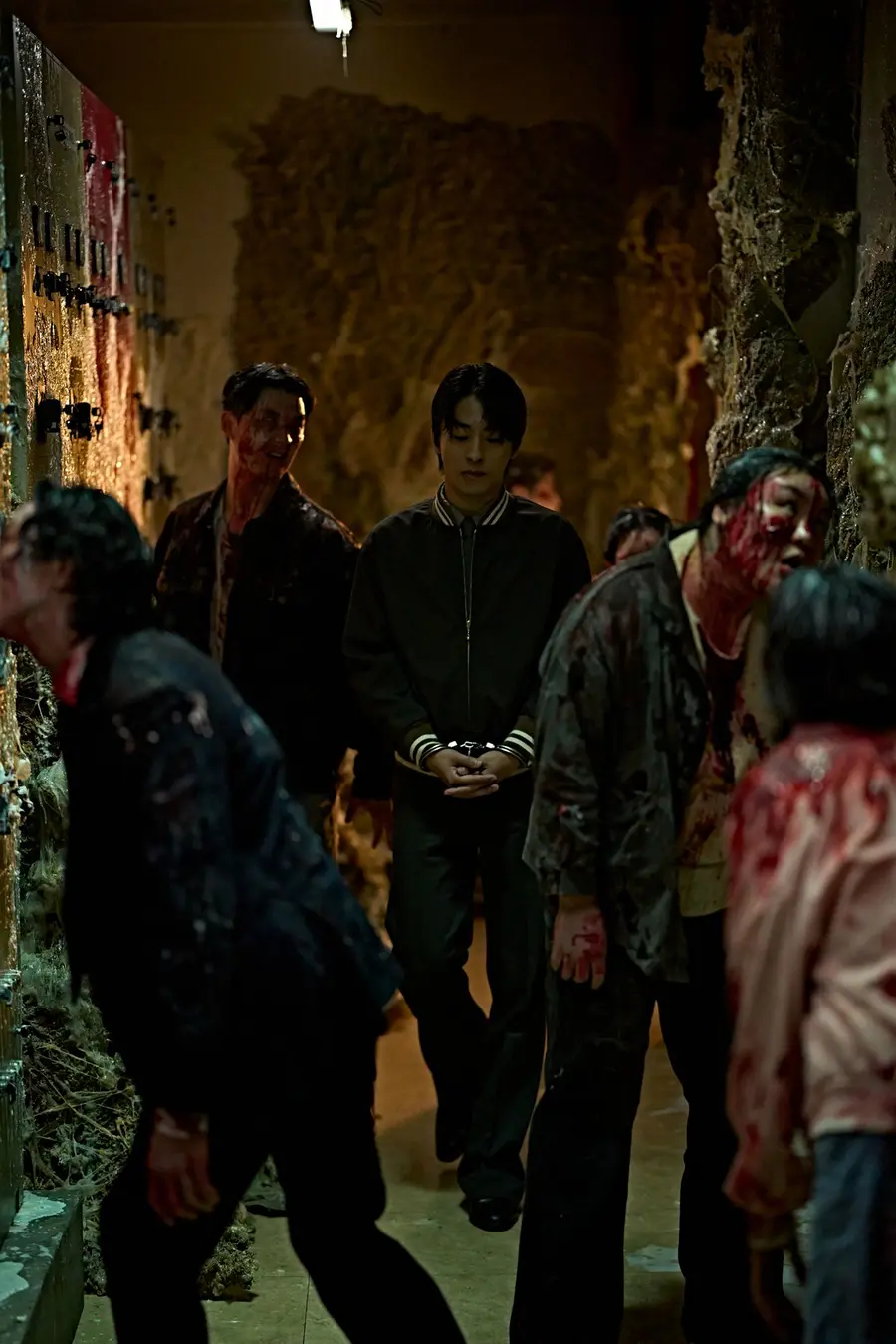
These days, many people encounter works through challenges and memes. Many are imitating the moment Seo Yeong-cheol "updates" himself in 《Colony》. How do you view that reaction?
Friends have sent me a lot of those clips. I love seeing people enjoy it like a meme and treat it like play. (demonstrating Seo Yeong-cheol’s neck movement) This is actually good for your health. If you hold your neck and do this, it stimulates the lymph nodes. You can use it as a stretch.
《Colony》 also asks questions about AI and collective intelligence. Which AIs do you, Gu the person and Gu the actor-director, use?
Siri. I tell Siri, “Siri, set an alarm for 4:30.” (When Gu spoke, Siri replied, “Okay.”) I use it a lot for daily tasks. Recently I directed the trailer for the Mise-en-scène Short Film Festival and had to explain the kind of concept art I wanted to the staff. Because it wasn’t a big-budget film, I asked Gemini to generate concept images. But what reminded me of human greatness was that the results didn’t match the concept exactly. Content evolves like a living thing; edits change things, and the final decision is mine. AI is a support in the workflow, and how you use it is crucial. Relying solely on AI isn’t interesting. We also used AI on aespa’s “Rich Man” trailer: the interior was shot in live action, and we used AI for the exterior driving footage. If the director can maintain control, it’s important to use AI well. Like VFX, it’s simply another element that composes a film. It gives filmmakers one more tool to express a movie.
Just as the infected in 《Colony》 update themselves, I’m curious what updates you’ve undergone as an actor and director through this project.
Change happens every moment, with every project. For me, I want to say that I have one more project that I truly love.
![[Parliamentary Audit] Historical Controversy Over 'Assassins' ... Why KOCCA Really Gave It A Grades in 10 Categories](https://cdn.www.cineplay.co.kr/w300/q75/article-images/2026-10-12/ddd6571c-9fe2-4ade-8947-a3aae1c296fb.jpg)
![[First Press-Screening Reactions] 'Colony' Cineplay Critics' Ratings](https://cdn.www.cineplay.co.kr/w160/q75/article-images/2026-05-20/452c0988-e945-4a36-b7f9-1fc529600a3a.jpg)


![[Interview] Yeon Sang-ho on 〈Colony〉: ‘I Drew Inspiration From the Extreme Game Mechanics of Escape Rooms and the Operating Principles of AI’](https://cdn.www.cineplay.co.kr/w160/q75/article-images/2026-05-26/a17af74d-0d4e-411c-b9a4-5a85f72a6040.jpg)
댓글 (0)
댓글 작성
댓글을 작성하려면 로그인이 필요합니다.
로그인하기