



A must-do itinerary on a trip to Hong Kong is Victoria Peak on Hong Kong Island. When you take the Peak Tram up, you’re treated to a stunning view: Hong Kong Island’s skyline in the foreground, with the Kowloon Peninsula stretching out far in the distance. For most people who visit Hong Kong, this is where their favorite nightscape comes from. As tourist numbers kept growing, they even built a crescent-shaped observatory for higher-altitude views. And the very first movie to feature this place is none other than Leslie Cheung’s starring film 〈The King of Masks〉 (1999). In 〈Red Bean〉 (1994), there was also a scene where he holds a business meeting at a now-gone café called ‘Café Deco’—a place that represents Victoria Peak—so it’s also a great spot to reminisce about Leslie Cheung. Plus, Carina Lau, Chow Yun-fat’s wife, is famous for jogging almost every day on the “Lugard Road” that runs here and for posting “photo check” shots on social media. Maybe, if you visit early and take a stroll, you might even bump into Carina Lau.
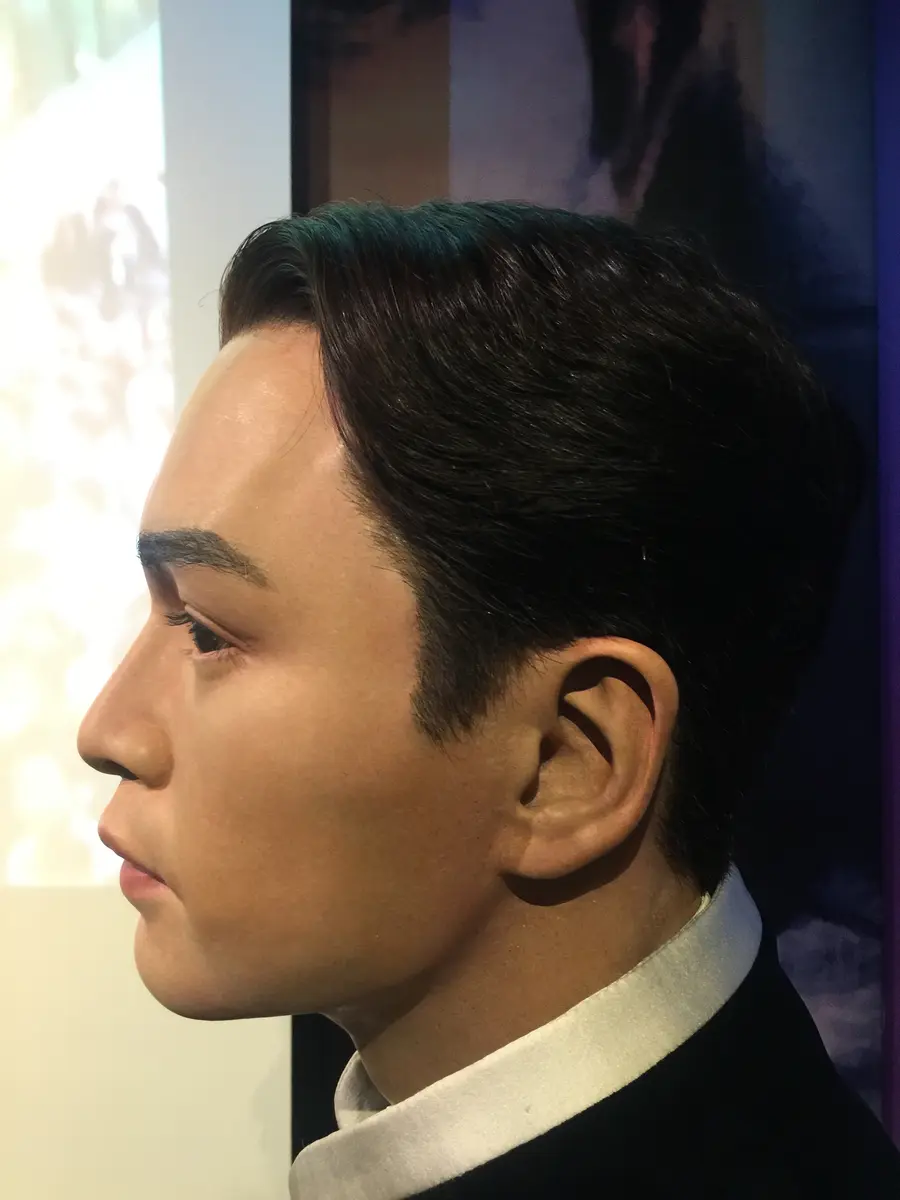
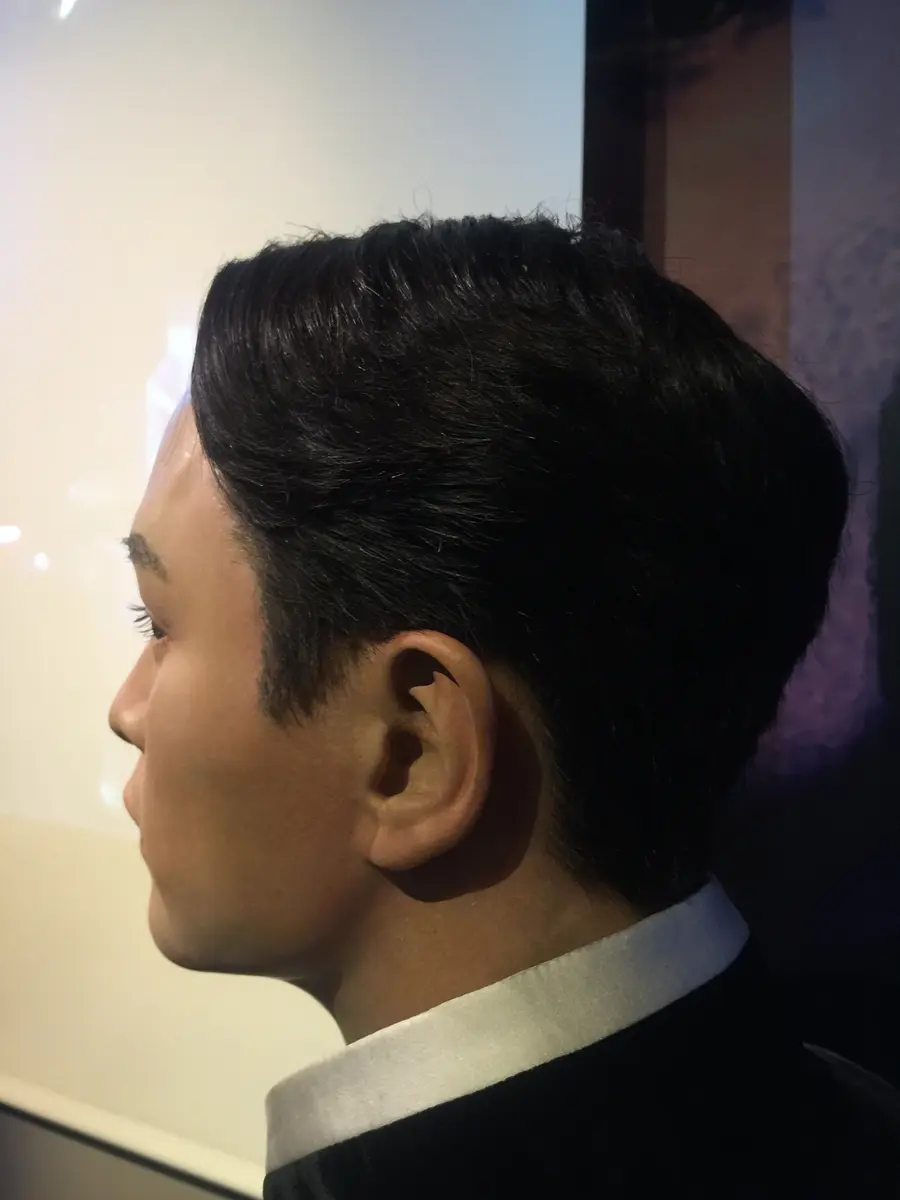
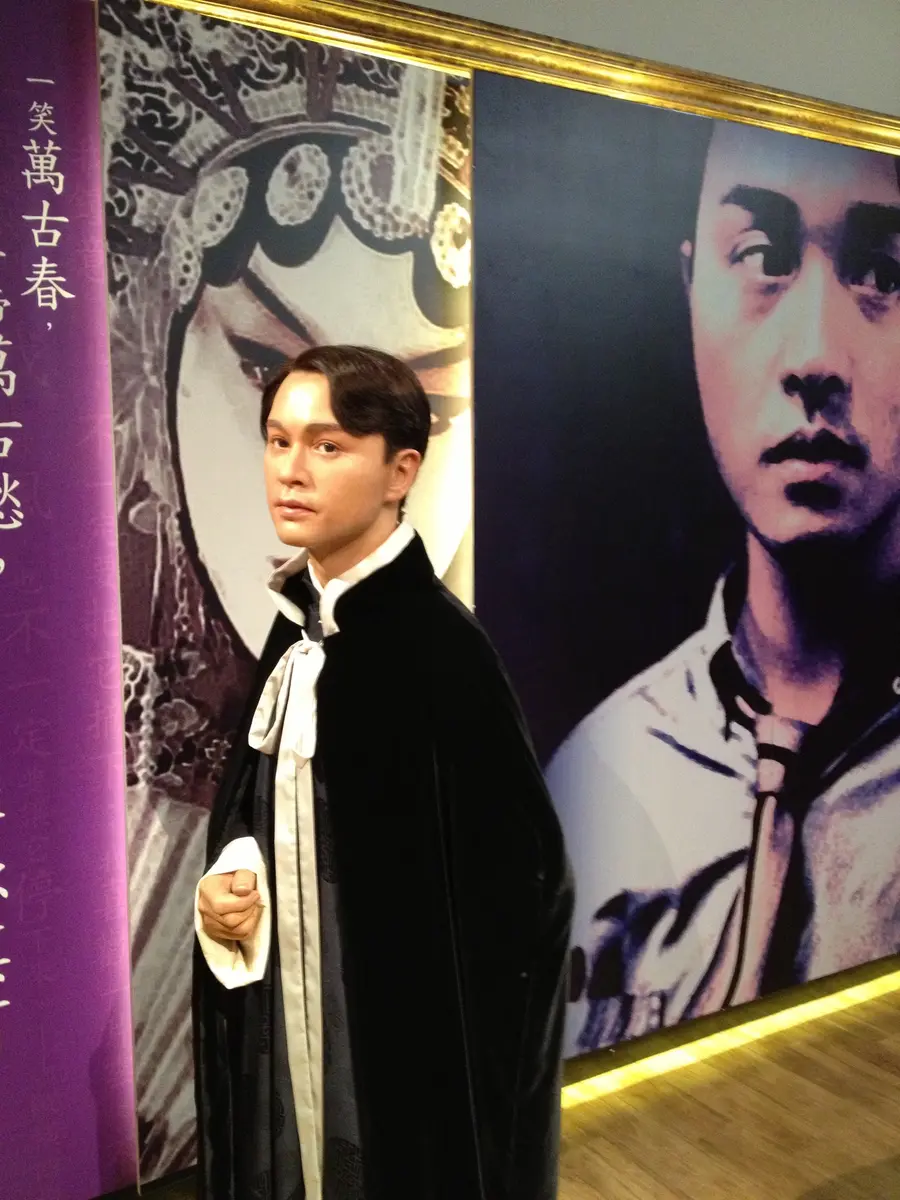
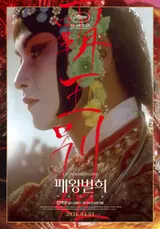
At Victoria Peak Tower, there is the “Madame Tussauds Museum,” where world-class stars and celebrities are displayed as wax figures. Their faces and body types are crafted with astonishing precision, based directly on real people. And right here is the controversial object(?)—a wax figure of Leslie Cheung. This year marked the 23rd anniversary of Leslie Cheung’s death, and many people visited to pay their respects. Earlier, in Korea, 〈Red Bean〉 (1987) premiered for the first time on March 25, and then on April 1, 〈Farewell My Concubine〉 (1993) was re-released, with the atmosphere gradually turning more intense. April is, after all, Leslie Cheung’s season. But every time I look at the wax figure of Leslie Cheung, I feel sad—because in 〈Farewell My Concubine〉, it’s Leslie Cheung’s wax-figure version in the most heartbreaking scene.
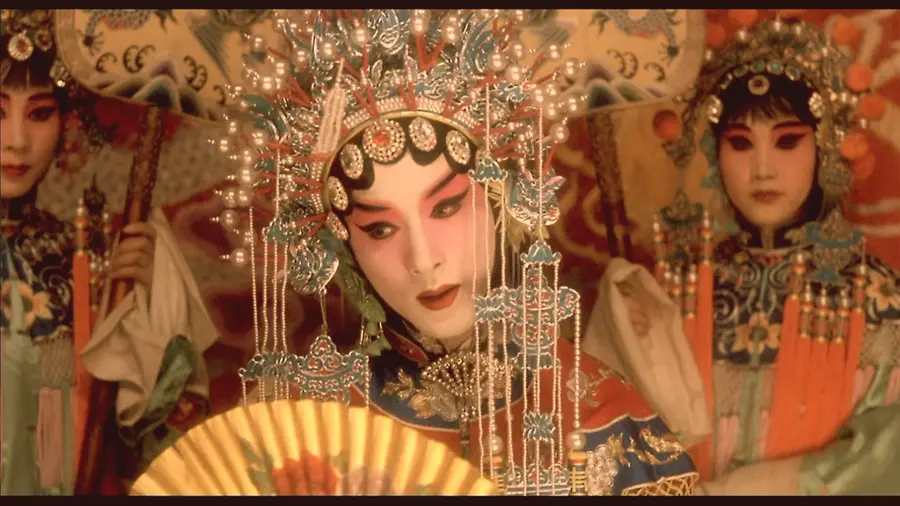
When people talk about Leslie Cheung’s personal story, many fans say the one point where everything seems to converge is the film 〈Farewell My Concubine〉. That’s because lingering memories of his mother and his full self-awareness as an artist fill 〈Farewell My Concubine〉 from beginning to end. Even in 〈The Story of Qiu Ju〉 (1990)—as if he were abandoned the moment he was born—〈Farewell My Concubine〉’s Erzi (played by Leslie Cheung) is also abandoned when he’s still young. He even stares clearly at the back of his mother as she abandons herself and leaves—of course, outwardly she hands him over to a Peking Opera school and walks away. From the moment he was born, Erzi in 〈Farewell My Concubine〉 had an extra finger. When his mother (played by Zhang Wen-li) begs the teacher at the opera school—saying, “I can’t take care of a grown boy in Hongdeng Lane—please take him”—the teacher responds, “Your child is a ‘six-finger.’ He’ll never become an actor. His face looks fair and fine, but once the audience sees that hand, won’t they be startled?” The moment she hears it, his mother immediately cuts off that extra little finger—along with the smaller finger that sticks out from it—with a blade. Without even turning her head, she steps out into the snow-covered street and then returns to Hongdeng Lane.
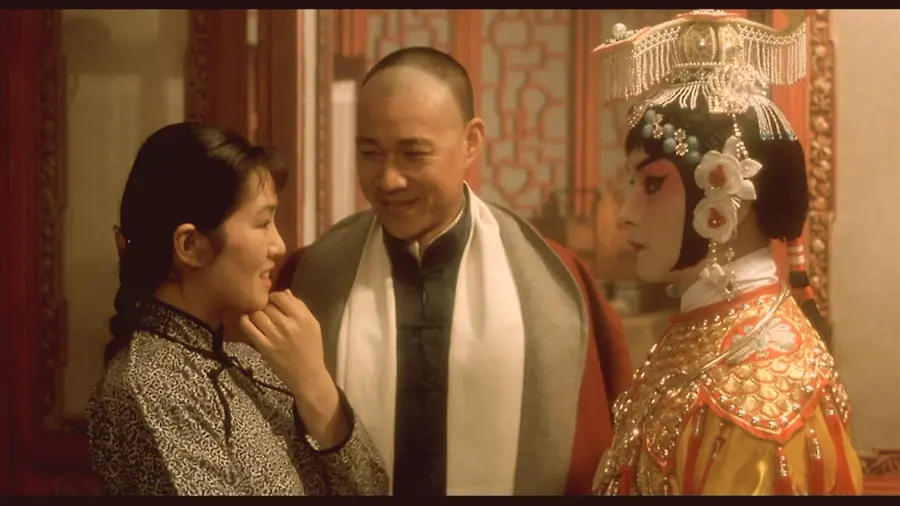
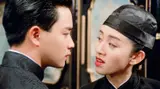
After that, Erzi meets Shi Tou (played by Zhang Feng-yi) at the opera school and grows into a leading-tier actor as an unbeatable younger brother and elder brother. Even so, Erzi carries a quiet, unspoken romance for Shi Tou—his lover on stage, as if it were real life too. But Shi Tou’s heart is stolen by Zhu Shanshan (played by Gong Li), and because of that, Erzi gets swept up in a whirlwind of emotions. Before long, Shi Tou and Zhu Shanshan hold an impromptu engagement ceremony. When Erzi finds out, he erupts: “Did you forget what the master said—that we should stay together until we die? You have to be together for life. One day, one minute, one second isn’t enough for a whole lifetime!” Then Shi Tou tells Erzi, “Separate opera from reality!” After that, during the period of Japanese colonial rule, opera actors are ordered to stage performances for the Japanese military. When the actors are treated with something close to mockery, a conflict breaks out between the hot-blooded Shi Tou and the Japanese military—and eventually Shi Tou is thrown into prison. The only way to get Shi Tou out is through humiliating means, but Erzi has to perform in front of senior Japanese military officials. That’s how Shi Tou is released, and Erzi goes to meet him. He hopes Shi Tou will say things like, “I’m sorry” or “Thank you,” but instead Shi Tou spits in his face, saying, “A top Peking opera performer can’t put on a show for the Japanese military without any pride at all.”
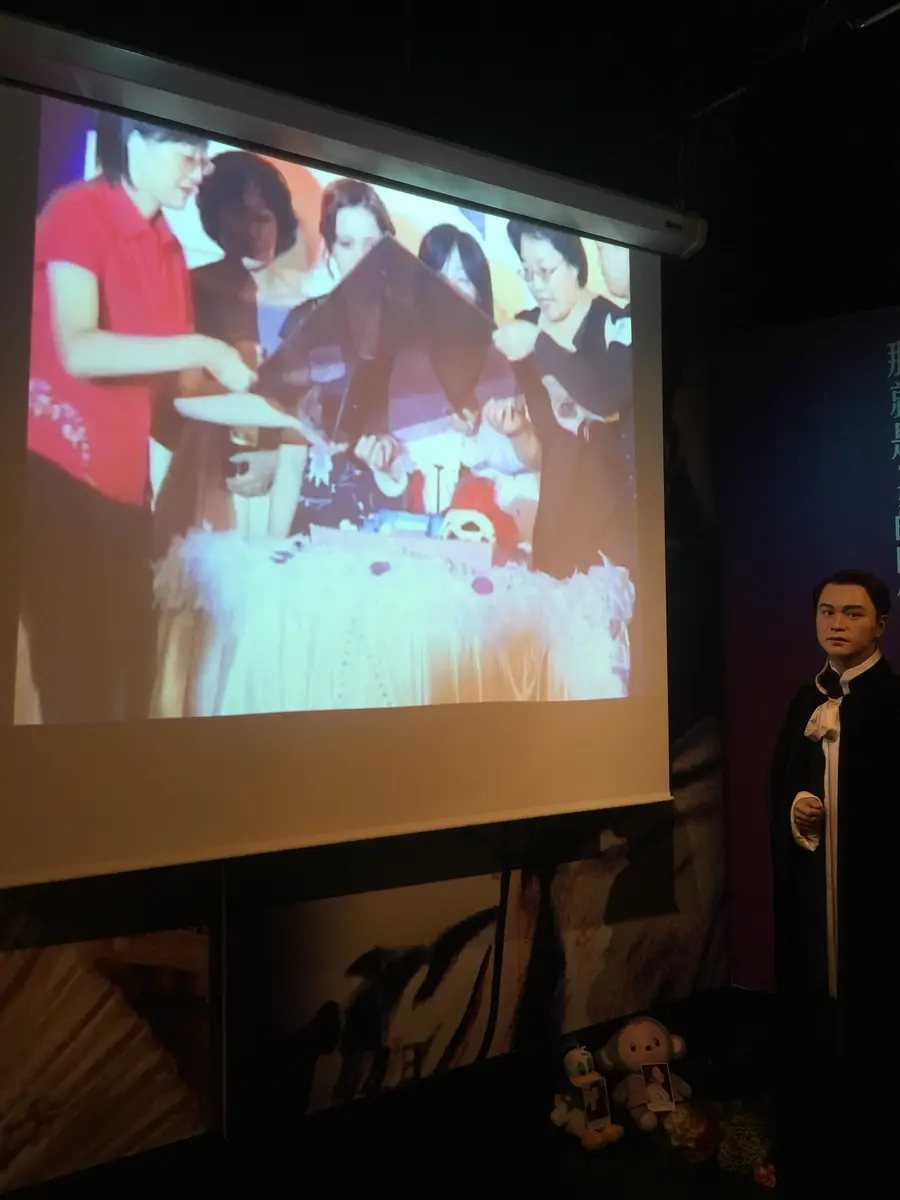
At the Madame Tussauds Museum, the Leslie Cheung figure is made as a wax likeness of Erzi from 〈Farewell My Concubine〉—the one who gets spit on like that and is left alone, heartbreakingly sad. In 〈Farewell My Concubine〉, the only time he wears an outfit meant for going out—this exact look—is when he receives saliva from his beloved Shi Tou. It’s one of the most heartbreaking moments among Leslie Cheung’s many film scenes, as heartbreaking as the scene in 〈The Story of Qiu Ju〉 where he returns without being able to meet his real mother. It’s a memorable moment, but I also can’t help thinking it goes too far. When I first visited this place, I felt a mix of complicated emotions. But the sadder part is this: after the exhibit opened in 2000, Leslie Cheung’s space was quite expansive—there were even separate screens playing tribute videos—but later, as more and more new stars from Korea (like Suzy and Jung Hae-in) moved in, that space kept shrinking. Maybe that’s the most heartbreaking part of all.
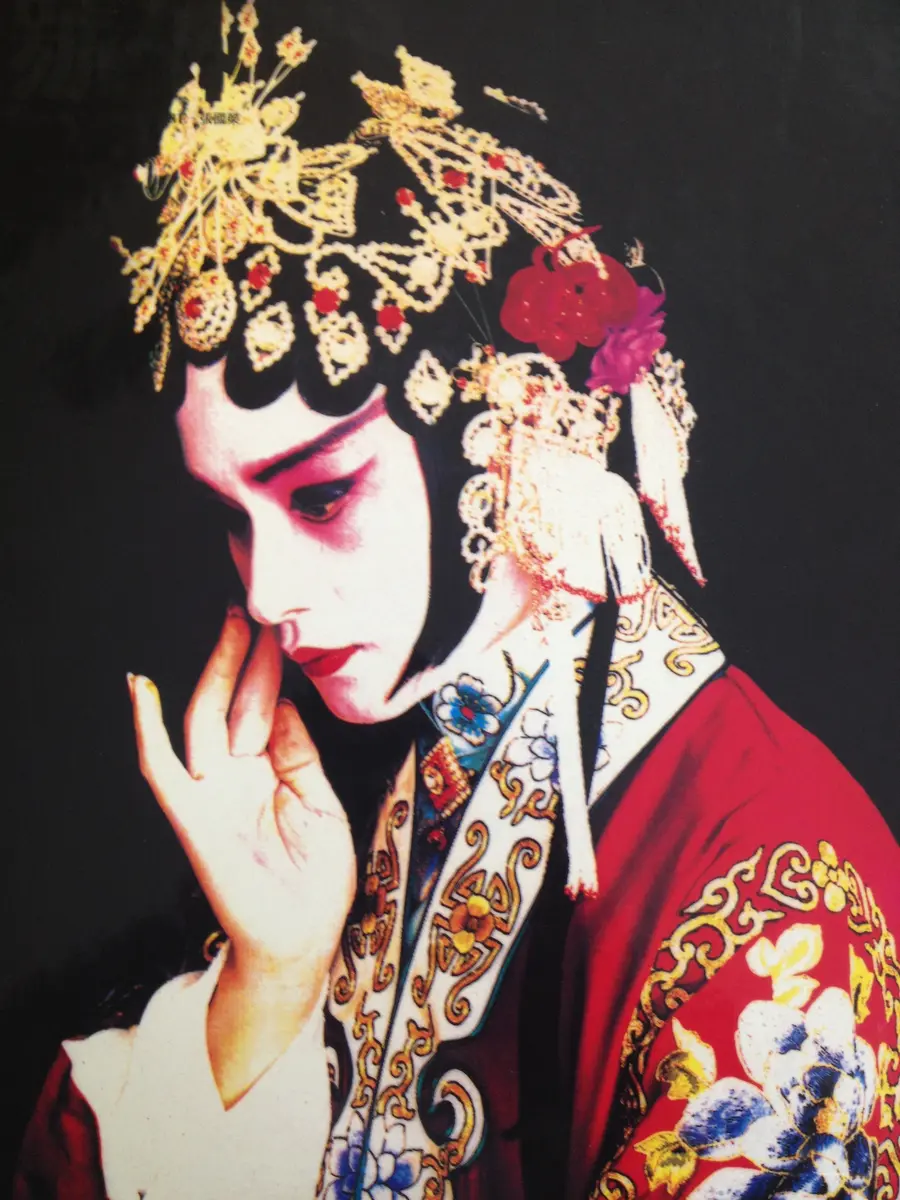
There’s another prop that comes to mind when I watch 〈Red Bean〉 and 〈Farewell My Concubine〉, which were recently re-released in Korea. It’s the 30th-anniversary issue of Hong Kong’s representative cultural magazine 〈The Outsider〉 (號外). Since 〈The Outsider〉 was launched in 1976, it’s been famous for stylish cover photos of Hong Kong stars like Leslie Cheung during the 1980s and 1990s. For the 30th anniversary, a survey was conducted, and the cover featuring Leslie Cheung dressed as a Peking opera performer was voted the best cover of all time. And not only that—inside photos showing Leslie Cheung turning back as the light hits him are also among my favorite shots. That’s how the 30th-anniversary box set was made. They called it “a Peking opera performer’s makeup” because, at first glance, this cover might seem like the kind of cover that would be published around the time 〈Farewell My Concubine〉 was released. But surprisingly, it was a cover shoot before he had even been cast. You can never find Leslie Cheung wearing this look in 〈Red Bean〉 or 〈Farewell My Concubine〉. In 〈Farewell My Concubine〉, Leslie Cheung plays the Peking opera roles of Yu Ji in 〈Farewell My Concubine〉, Yang Guifei in 〈The Peony Pavilion〉, and Du Yulang in 〈The Peony Pavilion〉—three characters in total—but the makeup used on the cover is actually that of Bai Suzhen in 〈White Snake Legend〉. In fact, the Peking opera he liked most was exactly 〈White Snake Legend〉, and he had wanted to turn it into a film someday. Director Tsui Hark 〈The Heroic Ones〉 (1993) had Wang Zhaoxian play Bai Suzhen, the thousand-year-old woman.
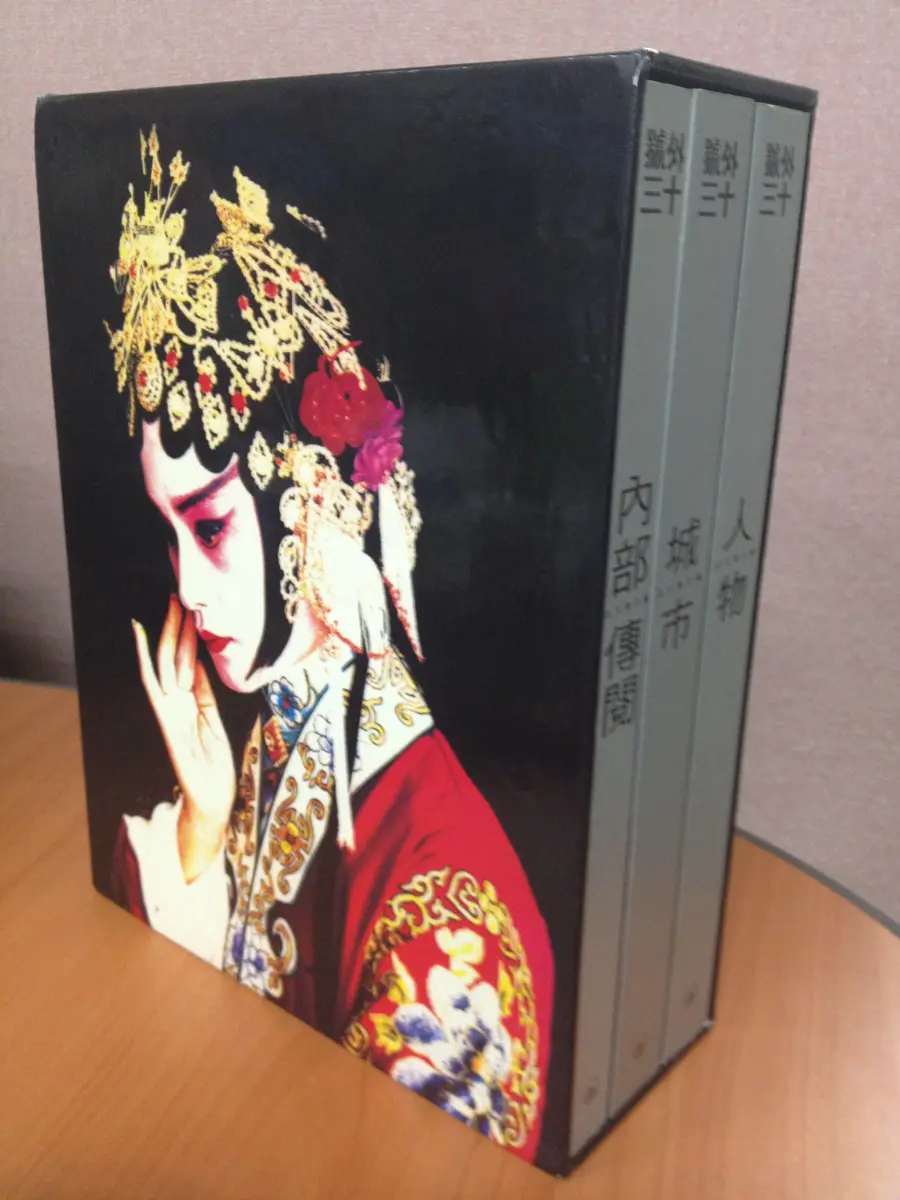
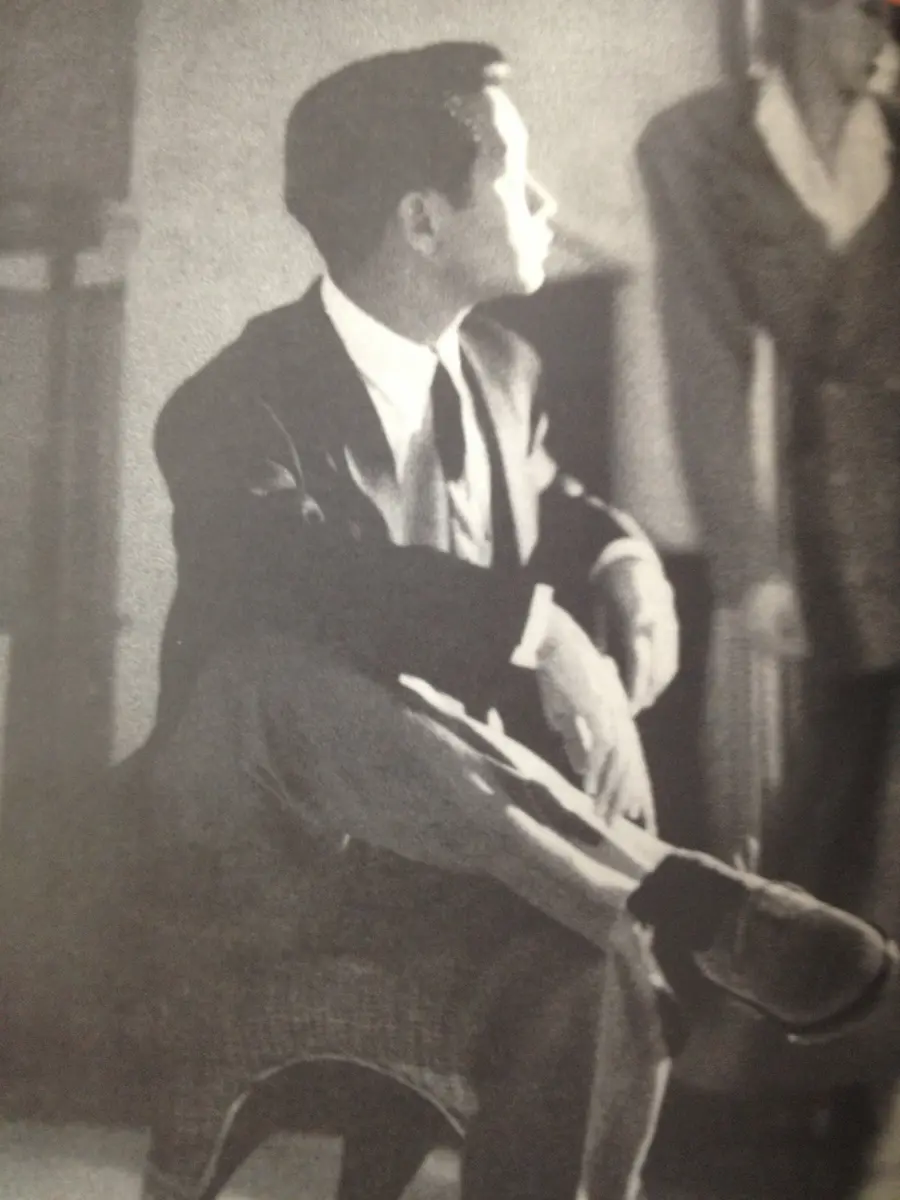
The cover of the 〈The Outsider〉 30th anniversary issue was shot by Leslie Cheung as a way to show he was a perfect fit for the role—long before 〈Farewell My Concubine〉 casting was decided. Director Chan Kaige originally had John Lone in mind, who played the last Qing emperor “Puyi” in his film 〈The Last Emperor〉 (1988) that he also worked on. However, due to all sorts of circumstances, the casting couldn’t be finalized. In that gap, Leslie Cheung managed to step in and ended up winning the role. It might look like it was just a last-minute rescue to fill an empty slot, but take another look at 〈Farewell My Concubine〉. In the opening credits, Leslie Cheung’s name appears before Gong Li’s or Zhang Feng-yi’s.
![[Joo Seong-cheol's Locker] The Black Speaker of 'Sirat' and the Monolith of '2001: A Space Odyssey'](https://cdn.www.cineplay.co.kr/w400/q75/article-images/2026-02-23/01816f3a-b433-4072-887b-e760357e6cc7.jpg)
![[Joo Seong-cheol's Locker] The 'Canned Cart Camera' that Changed the History of World Cinema with 'Nouvelle Vague'](https://cdn.www.cineplay.co.kr/w400/q75/article-images/2026-01-27/563f1a4c-20b8-460b-8523-f31511911bd5.jpg)
![[Joo Sung-cheol's Locker] Ahn Sung-ki is Born, I am Ahn Sung-ki](https://cdn.www.cineplay.co.kr/w400/q75/article-images/2026-01-13/362be897-34af-4524-9a57-6b9935666a0a.jpg)
![[Jusungcheol’s Locker] Odyssey’s one-eyed giant Cyclops and Ray Harryhausen’s “The Seventh Voyage of Sinbad”](https://cdn.www.cineplay.co.kr/w400/q75/article-images/2026-08-10/5faf400e-cf0b-466c-a3d7-31a8bbb38075.jpg)
![[Joo Seong-cheol’s Locker] See ‘Hope’ Again Through the Driver-Grade Cap Joo Seong-cheol Wears While Racing Across Seong-gi Bridge in ‘The Yellow Sea’ and ‘Goksung’](https://cdn.www.cineplay.co.kr/w400/q75/article-images/2026-07-28/7bf74e36-337d-4fd0-8cec-b890f5604345.jpg)
![[Joo Sung-cheol’s Locker] Watching “Marty Supreme,” Recalling Yoon Nam-gyu’s Penholder Table Tennis Racket](https://cdn.www.cineplay.co.kr/w400/q75/article-images/2026-06-29/0dc02383-0dc9-4ea1-9de5-f1eaffbeb9b9.jpg)
![[Joo Seong-cheol's Locker] The Aesthetics of Jongmyo That Captivated Masters of Martial Arts from Ho Kim-jun to John Woo, Jackie Chan, and Sammo Hung](https://cdn.www.cineplay.co.kr/w400/q75/article-images/2025-12-16/4d8670a7-ef95-4635-8d0c-34313f13dd52.jpg)
![[Joo Seong-cheol's Locker] The King Lear of Korea and Japan, Lee Soon-jae and Nakadai Tatsuya, Two Masters Rest](https://cdn.www.cineplay.co.kr/w400/q75/article-images/2025-12-01/3e753af3-e8d5-41df-83cf-00e9ddfdaae7.jpg)
![[Joo Seong-cheol's Locker] When Trees Comfort Trees, the Cello of 'The Moment the Bell Rings' and 'Can't Help It'](https://cdn.www.cineplay.co.kr/w400/q75/article-images/2025-11-18/52034c54-93dc-4b4c-ac9f-5f9b7946fb23.jpg)
![[Joo Seong-cheol's Locker] What Beer Did Sergio (Benicio Del Toro) Always Carry in 'One Battle After Another'?](https://cdn.www.cineplay.co.kr/w400/q75/article-images/2025-11-04/0794fe08-e847-46a1-ba4c-445f814803a8.jpg)
![[Joo Seong-cheol’s Locker] Do You Know the Origin of Woody in “Toy Story”?](https://cdn.www.cineplay.co.kr/w400/q75/article-images/2026-06-16/eb2c5055-d2de-4464-b9e2-eceeca8c7759.jpg)
![[Joo Sung-chul's Locker] What Are the Improvised Explosive Devices (IEDs) in 'Warfare' and 'The Hurt Locker'?](https://cdn.www.cineplay.co.kr/w400/q75/article-images/2026-08-24/ae200e60-2be9-478e-8ab4-72a860903979.jpg)
![[Joo Seong-cheol's Locker] Tony Leung Sometimes Wants to Hold an Ashtray.](https://cdn.www.cineplay.co.kr/w400/q75/article-images/2026-02-09/8b9ac9f0-6899-4ce2-a562-5594a5b06d61.jpg)
![[Joo Seong-cheol’s Locker] Zombie Things That Don’t Flinch Even When Shot: Korea’s First Zombie Film, “Kwe-si” (1981)](https://cdn.www.cineplay.co.kr/w400/q75/article-images/2026-06-01/26c56ce7-1ddb-46bd-ae67-f71a1ba9e276.jpg)
![[Joo Seong-cheol’s Lockers] The Great Dancer Turned Film Director Summoned by “Michael”: Bob Fosse’s “All That Jazz”](https://cdn.www.cineplay.co.kr/w400/q75/article-images/2026-05-18/922af142-be9f-4f1c-98d1-4a7a6667943c.jpg)
![[Joo Seong-cheol’s Lockers] Lee Cronin’s The Mummy and Murderous People Season 2 — and a Scorpion Jacket That Feels Like the Rise of Drive](https://cdn.www.cineplay.co.kr/w400/q75/article-images/2026-04-20/1df79cf4-44ef-48e4-a6b4-46f6e35c4eb5.jpg)
![[Joo Seong-cheol’s Locker] David’s Stone That Took Down Goliath, “David” All the Way Through](https://cdn.www.cineplay.co.kr/w400/q75/article-images/2026-07-13/524bb041-0e4e-4f59-824b-21d2f7df60a9.jpg)
![[Joo Sung-chul's Locker] If it's hard to visit Cheongnyeongpo of Deposed King Danjong, head to Geumseongdang of Prince Geumseong!](https://cdn.www.cineplay.co.kr/w400/q75/article-images/2026-03-10/7ddd3634-6a13-4eef-870c-e4e6dbcdac04.jpg)





댓글 (0)
댓글 작성
댓글을 작성하려면 로그인이 필요합니다.
로그인하기