



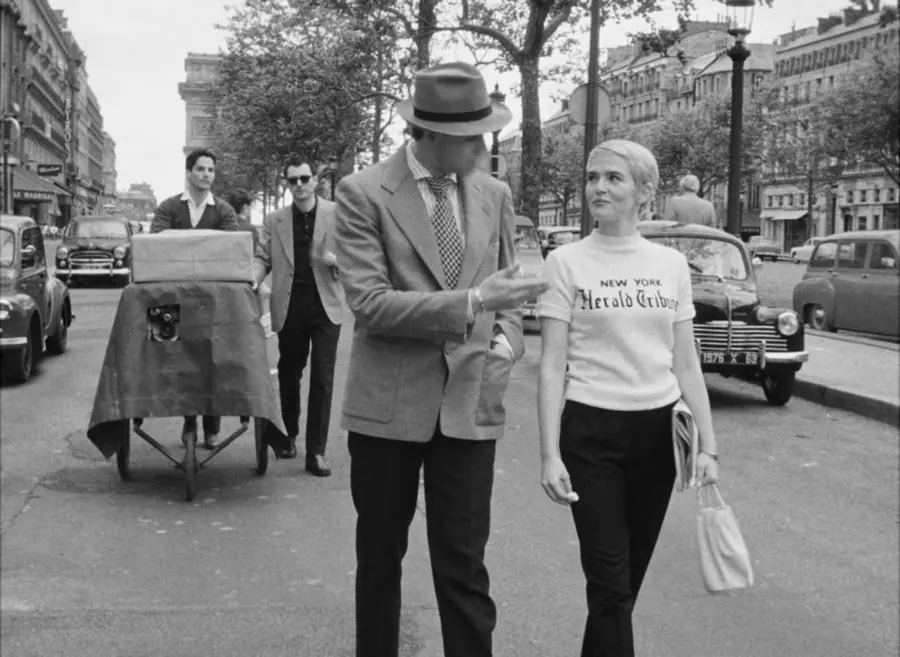
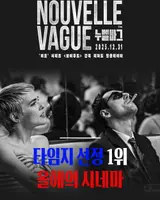
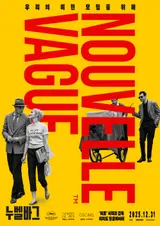
"Keep shooting, because only we can do it!" 〈Nouvelle Vague〉 is a film set in Paris in 1959, depicting the process of Jean-Luc Godard (Guillaume Marbeck), a passionate young film critic for the French film magazine 'Cahiers du Cinéma', shooting his debut film 〈Breathless〉 (1959). From 〈Before Sunrise〉 (1995) to 〈Before Sunset〉 (2004) and 〈Before Midnight〉 (2013), Richard Linklater has created a unique cinematic world, including the unprecedented project 〈Boyhood〉 (2014), which recorded the aging of actors over a remarkable 12 years. The film instantly transports us to Paris in 1959.
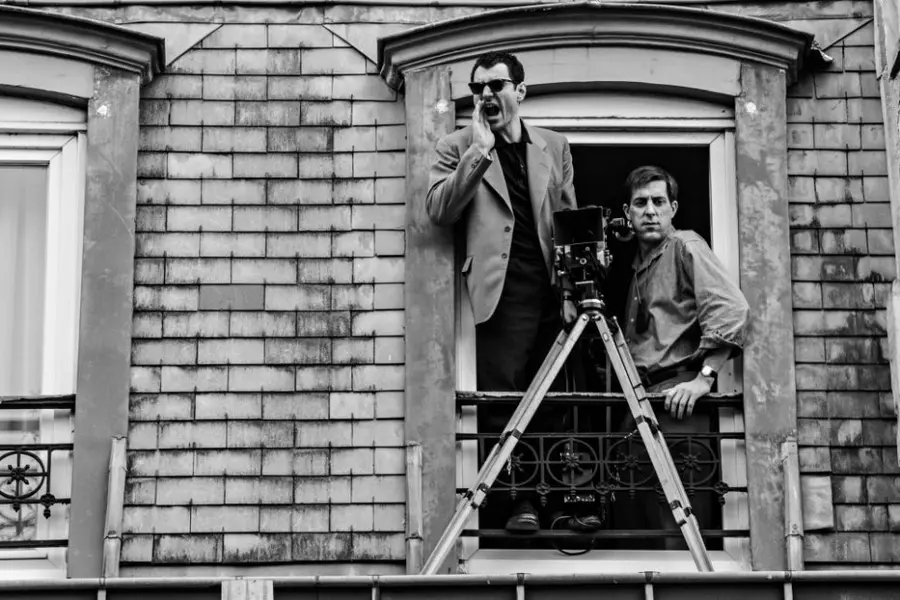
What catches the eye in the film is the various filming equipment that was unimaginable at the time. It's not that they look expensive and impressive, but rather the thought of 'Is that possible?' comes to mind. Among them, the most fascinating was a device that resembled a garbage cart used for incinerating waste in the streets of Paris. This was the very camera that followed Michel (Jean-Paul Belmondo) and Patricia (Jean Seberg) down the Champs-Élysées in the 1959 film 〈Breathless〉. A box-shaped cart modified from a wheelchair was covered with curtains and sealed, allowing cinematographer Raoul Coutard (Matthieu Pansina) to enter while the staff pushed it to capture the characters on camera. The continuous shots along cafes and shops naturally led outdoors, enabling artistic freedom and experimentation. Viewed from today's perspective, such simple and easy-to-operate equipment could be seen as an early attempt at smartphone filming. With Raoul Coutard's handheld camera, French cinema finally broke free from the studio and encountered open cinema.
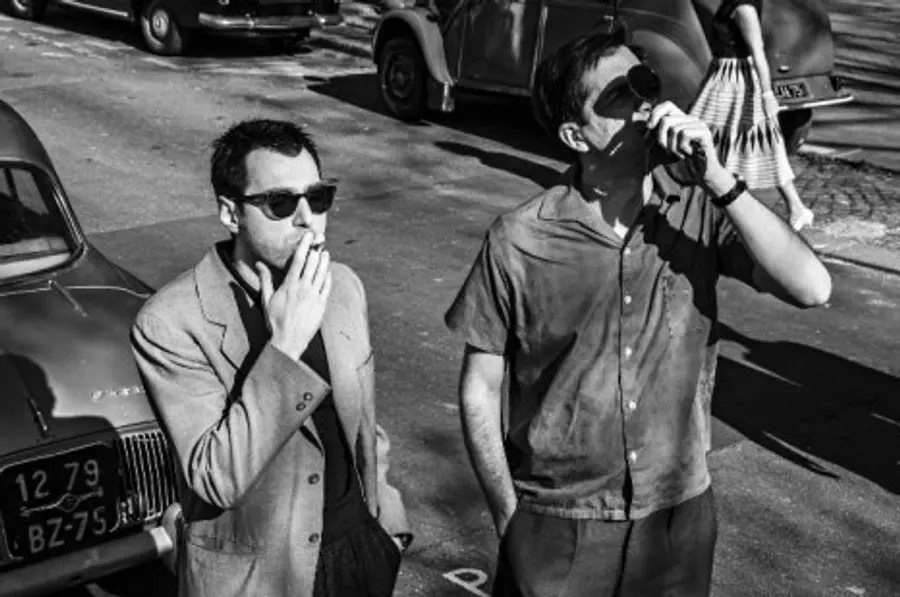
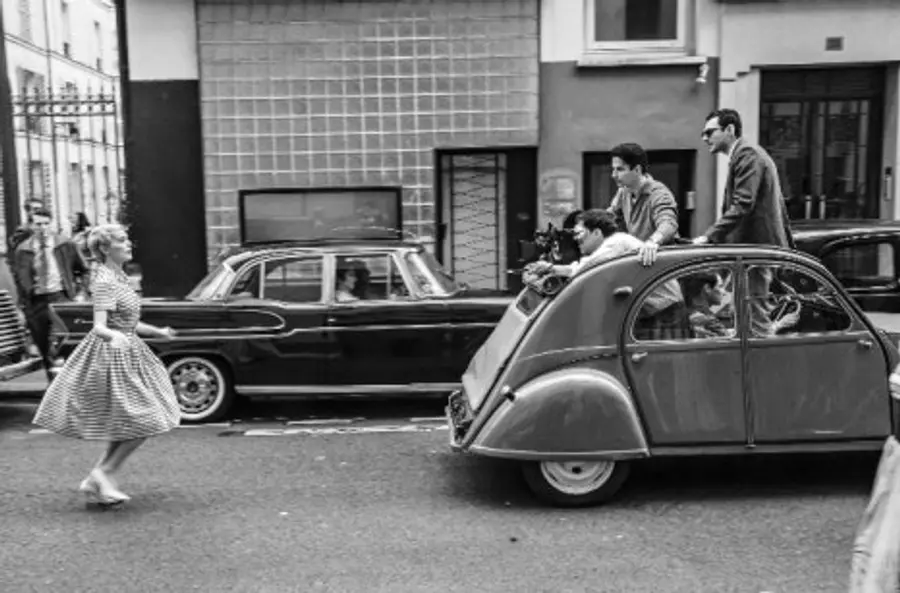
〈Nouvelle Vague〉 features numerous real figures surrounding the French Nouvelle Vague movement at the time. Along with Godard, Jean-Paul Belmondo, and Jean Seberg, there are also Godard's close friends François Truffaut and Agnès Varda. Claude Chabrol, as well as respected senior directors like Jean-Paul Belmondo and Robert Bresson, also appear. Cinephiles reminiscing about the Nouvelle Vague will undoubtedly be moved by the real figures that constantly appear throughout the film. The most notable figure among them is cinematographer Raoul Coutard. He worked as a war photographer in Vietnam for 11 years starting in 1946. While freelancing for military magazines during France's occupation of Vietnam, he returned to France and stepped into the film industry. According to reports, Godard initially had another cinematographer in mind and had no intention of working with Raoul Coutard. As a passionate leftist critic, Godard did not want to work with a war photographer who had returned from the French imperialist war. However, as depicted in the film, producer Borgard (Bruno Dreifurst), who owed a great debt to Raoul, chose him as the cinematographer as a form of repayment.
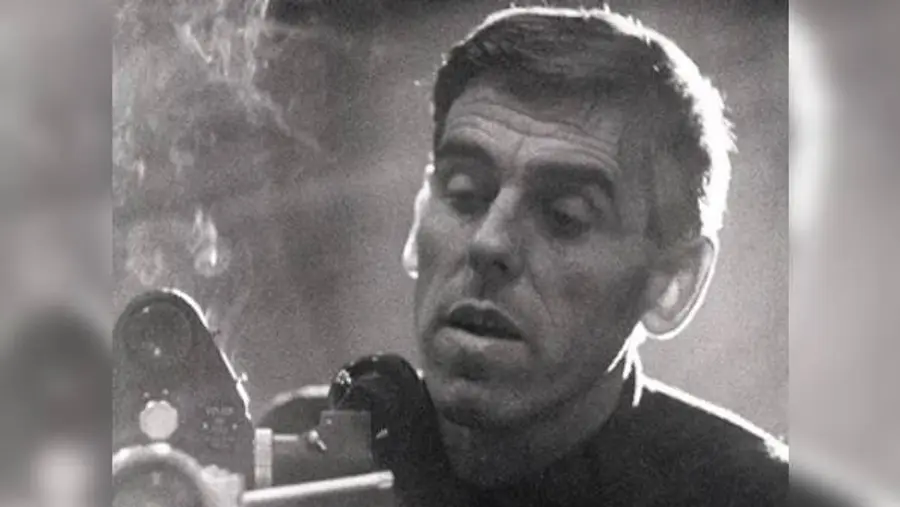
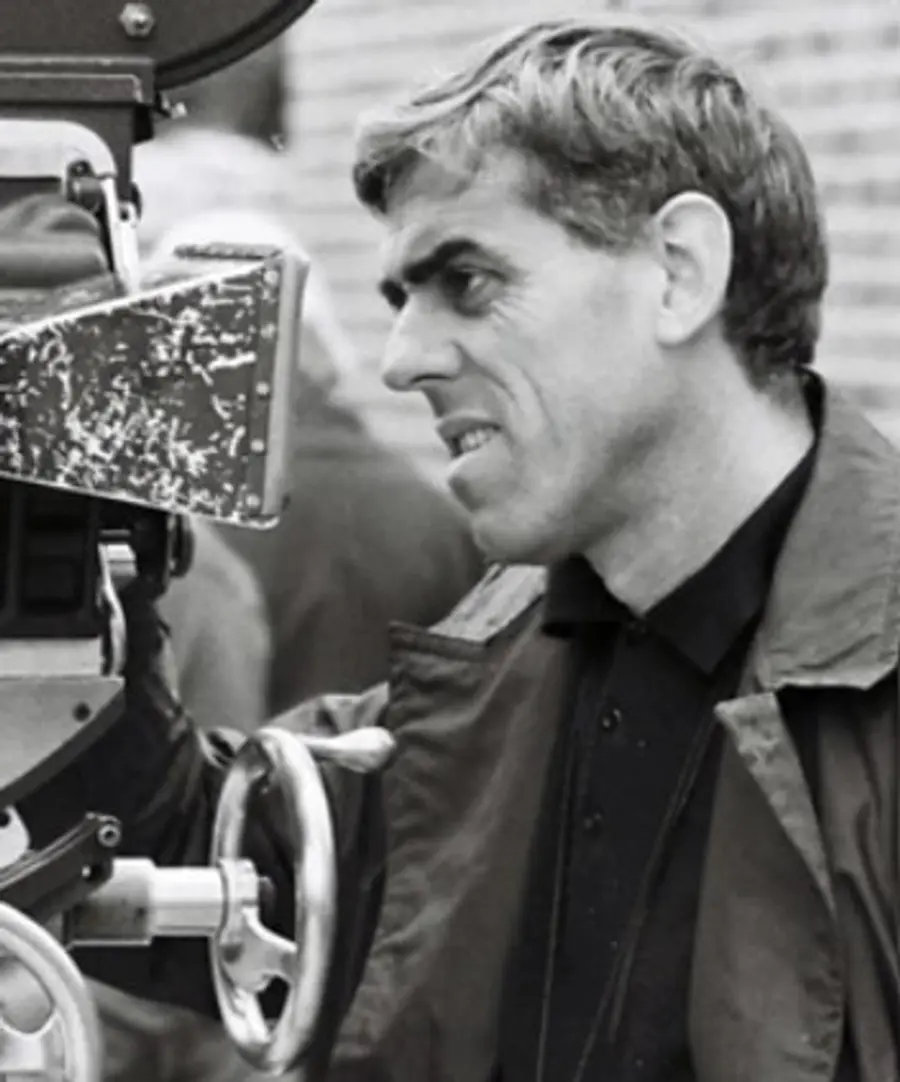
As a result, Godard, who thought it was fine to change cinematographers midway, began to make unreasonable demands to obtain the scenes he envisioned. For Raoul, who had experienced the hardships of war, there was no way to refuse those demands. At that time, it seemed difficult to manage the exposure differences in continuous shots without large lighting equipment, but Raoul was accustomed to focusing himself and was also skilled at adjusting the aperture when lighting conditions changed. Thus, sitting in a wheelchair, he and Godard would hold a thick Camflex 35mm film camera, focusing with one finger of his right hand while adjusting exposure with his left index finger, allowing for radical techniques that traversed the boundaries of light and darkness. This later led to the street chase scene in 〈Jules and Jim〉 (1962). After 〈Breathless〉, he worked on Godard's masterpieces such as 〈Vivre Sa Vie〉 (1962), 〈Contempt〉 (1963), 〈Pierrot le Fou〉 (1965), and 〈Weekend〉 (1967), and also collaborated with François Truffaut on films like 〈Shoot the Pianist〉 (1960) and 〈Jules and Jim〉, becoming the 'heart of Nouvelle Vague'.
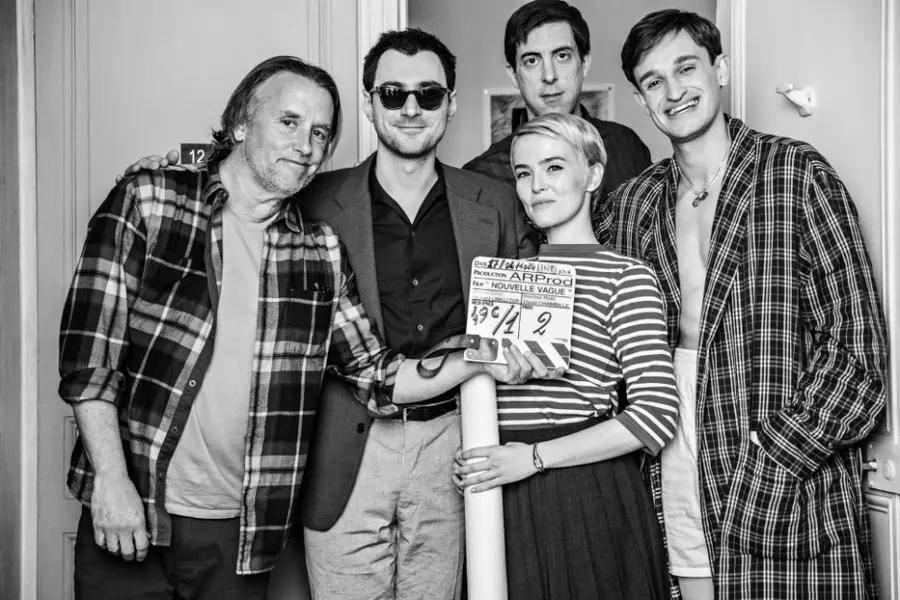
What stands out the most in 〈Nouvelle Vague〉 is Raoul Coutard's tall stature and robust physique. Having only seen him in photos, I don't know his exact height, but he doesn't seem to stand out in pictures with fellow directors. However, the actor who portrayed him, comedian and actor Matthieu Pansina, stands at an impressive 189 centimeters tall. He can be considered the tallest actor in the film. There aren't particularly high-angle shots that utilize his height, so why did Richard Linklater cast him? Perhaps it was to show him crammed into the wheelchair cart carrying the camera, almost like a 'big uncle' or 'Yogi Daniel'. Just that scene alone felt like an 'incredibly difficult and ingenious shoot'. Thus, the revolution in film history began with the aforementioned 'canned cart'. Finally, it may be a story that can be connected to the conclusion of 〈Nouvelle Vague〉, but Raoul Coutard once reflected in an interview about the filming of 〈Breathless〉 saying, "We felt we were doing something revolutionary, but we had no idea where it was all heading."
![[Joo Seong-cheol's Locker] The Black Speaker of 'Sirat' and the Monolith of '2001: A Space Odyssey'](https://cdn.www.cineplay.co.kr/w400/q75/article-images/2026-02-23/01816f3a-b433-4072-887b-e760357e6cc7.jpg)
![[Joo Sung-cheol's Locker] Ahn Sung-ki is Born, I am Ahn Sung-ki](https://cdn.www.cineplay.co.kr/w400/q75/article-images/2026-01-13/362be897-34af-4524-9a57-6b9935666a0a.jpg)
![[Jusungcheol’s Locker] Odyssey’s one-eyed giant Cyclops and Ray Harryhausen’s “The Seventh Voyage of Sinbad”](https://cdn.www.cineplay.co.kr/w400/q75/article-images/2026-08-10/5faf400e-cf0b-466c-a3d7-31a8bbb38075.jpg)
![[Joo Seong-cheol’s Locker] See ‘Hope’ Again Through the Driver-Grade Cap Joo Seong-cheol Wears While Racing Across Seong-gi Bridge in ‘The Yellow Sea’ and ‘Goksung’](https://cdn.www.cineplay.co.kr/w400/q75/article-images/2026-07-28/7bf74e36-337d-4fd0-8cec-b890f5604345.jpg)
![[Joo Sung-cheol’s Locker] Watching “Marty Supreme,” Recalling Yoon Nam-gyu’s Penholder Table Tennis Racket](https://cdn.www.cineplay.co.kr/w400/q75/article-images/2026-06-29/0dc02383-0dc9-4ea1-9de5-f1eaffbeb9b9.jpg)
![[Joo Seong-cheol's Locker] The Aesthetics of Jongmyo That Captivated Masters of Martial Arts from Ho Kim-jun to John Woo, Jackie Chan, and Sammo Hung](https://cdn.www.cineplay.co.kr/w400/q75/article-images/2025-12-16/4d8670a7-ef95-4635-8d0c-34313f13dd52.jpg)
![[Joo Seong-cheol's Locker] The King Lear of Korea and Japan, Lee Soon-jae and Nakadai Tatsuya, Two Masters Rest](https://cdn.www.cineplay.co.kr/w400/q75/article-images/2025-12-01/3e753af3-e8d5-41df-83cf-00e9ddfdaae7.jpg)
![[Joo Seong-cheol's Locker] When Trees Comfort Trees, the Cello of 'The Moment the Bell Rings' and 'Can't Help It'](https://cdn.www.cineplay.co.kr/w400/q75/article-images/2025-11-18/52034c54-93dc-4b4c-ac9f-5f9b7946fb23.jpg)
![[Joo Seong-cheol's Locker] What Beer Did Sergio (Benicio Del Toro) Always Carry in 'One Battle After Another'?](https://cdn.www.cineplay.co.kr/w400/q75/article-images/2025-11-04/0794fe08-e847-46a1-ba4c-445f814803a8.jpg)
![[Chu Sung-cheol’s Lockers] Who Spat on Leslie Cheung in “Farewell My Concubine”?](https://cdn.www.cineplay.co.kr/w400/q75/article-images/2026-04-06/7b608cd9-af6c-4c1d-8e87-38c2d2619d55.jpg)
![[Joo Seong-cheol’s Locker] Do You Know the Origin of Woody in “Toy Story”?](https://cdn.www.cineplay.co.kr/w400/q75/article-images/2026-06-16/eb2c5055-d2de-4464-b9e2-eceeca8c7759.jpg)
![[Joo Seong-cheol’s Lockers] Lee Cronin’s The Mummy and Murderous People Season 2 — and a Scorpion Jacket That Feels Like the Rise of Drive](https://cdn.www.cineplay.co.kr/w400/q75/article-images/2026-04-20/1df79cf4-44ef-48e4-a6b4-46f6e35c4eb5.jpg)
![[Joo Seong-cheol's Locker] Tony Leung Sometimes Wants to Hold an Ashtray.](https://cdn.www.cineplay.co.kr/w400/q75/article-images/2026-02-09/8b9ac9f0-6899-4ce2-a562-5594a5b06d61.jpg)
![[Joo Sung-chul's Locker] What Are the Improvised Explosive Devices (IEDs) in 'Warfare' and 'The Hurt Locker'?](https://cdn.www.cineplay.co.kr/w400/q75/article-images/2026-08-24/ae200e60-2be9-478e-8ab4-72a860903979.jpg)
![[Joo Seong-cheol’s Locker] Zombie Things That Don’t Flinch Even When Shot: Korea’s First Zombie Film, “Kwe-si” (1981)](https://cdn.www.cineplay.co.kr/w400/q75/article-images/2026-06-01/26c56ce7-1ddb-46bd-ae67-f71a1ba9e276.jpg)
![[Joo Seong-cheol’s Locker] David’s Stone That Took Down Goliath, “David” All the Way Through](https://cdn.www.cineplay.co.kr/w400/q75/article-images/2026-07-13/524bb041-0e4e-4f59-824b-21d2f7df60a9.jpg)
![[Joo Sung-chul's Locker] If it's hard to visit Cheongnyeongpo of Deposed King Danjong, head to Geumseongdang of Prince Geumseong!](https://cdn.www.cineplay.co.kr/w400/q75/article-images/2026-03-10/7ddd3634-6a13-4eef-870c-e4e6dbcdac04.jpg)
![[Joo Seong-cheol’s Lockers] The Great Dancer Turned Film Director Summoned by “Michael”: Bob Fosse’s “All That Jazz”](https://cdn.www.cineplay.co.kr/w400/q75/article-images/2026-05-18/922af142-be9f-4f1c-98d1-4a7a6667943c.jpg)

![[Photo &] Cannes Captivates with 'Figure Boy' and 'Godard'… New Year Hits Theaters](https://cdn.www.cineplay.co.kr/w160/q75/article-images/2025-12-28/7727cedc-d64b-49f4-a397-cff9e65fe6b7.jpg)
![[Seongchan Eol's Comic Book] A Title That Seems Like It Shouldn't Be Said Casually, Except It's Perfect 「Teenage Dragon」](https://cdn.www.cineplay.co.kr/w160/q75/article-images/2026-01-30/0e1ebf12-5748-470b-aa4f-4a1388d707e6.png)
댓글 (0)
댓글 작성
댓글을 작성하려면 로그인이 필요합니다.
로그인하기