


I'm drawn to film music. Sometimes music communicates a character's intimate emotions that images and dialogue alone cannot convey. It can become a window onto a creator's hidden intent. For me, understanding film music has been one way into a movie. "Choo Ah-young's Music Box" listens to a film's voice up close by following its music. (P.S. Please listen to the music while you read.)
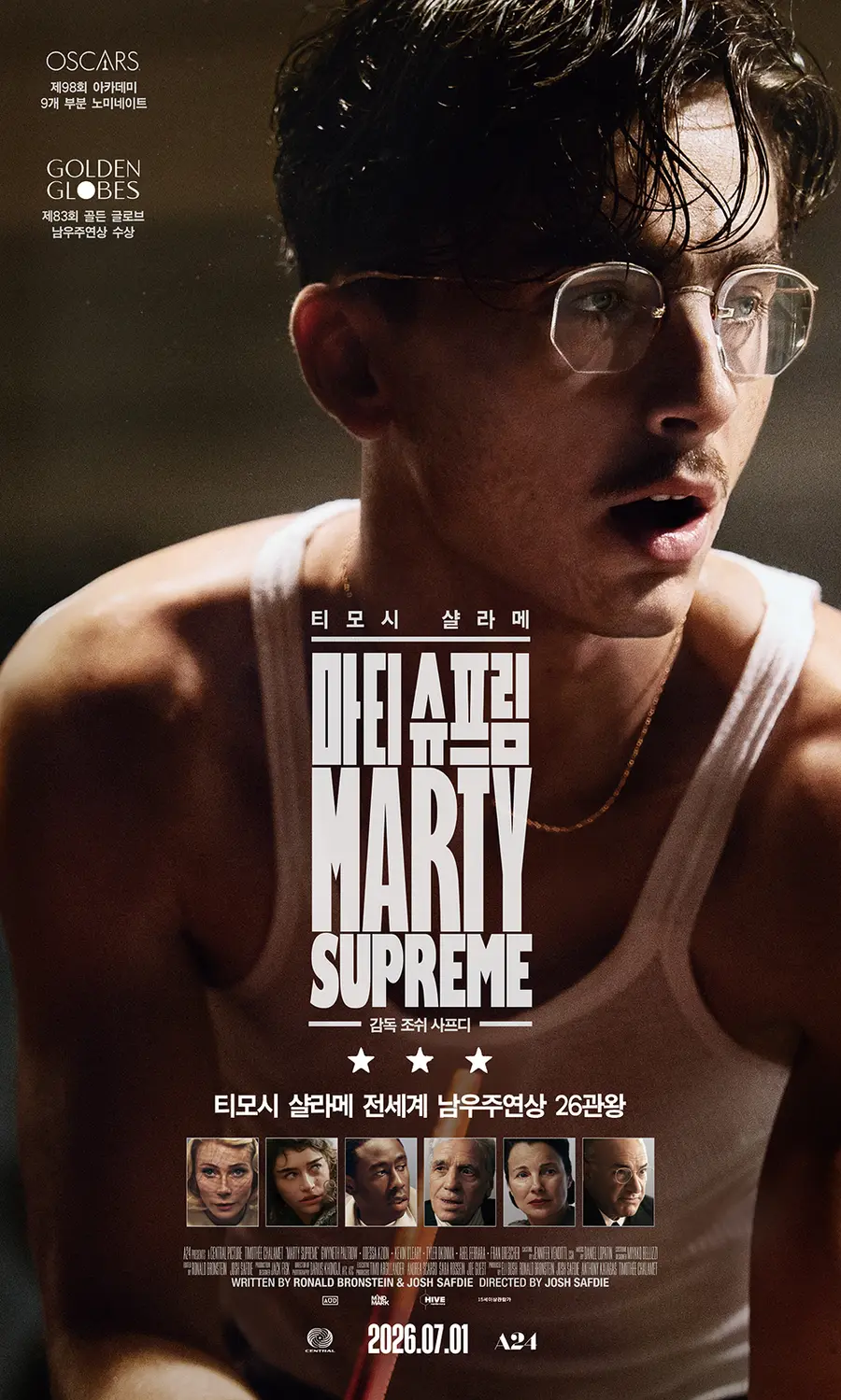
Josh Safdie's first solo-directed film 〈Marty Supreme〉 extends the world he helped build with his brother Benny Safdie in earlier films such as 〈Heaven Knows What〉 (2014), 〈Good Time〉 (2017) and 〈Uncut Gems〉 (2019). The characters' desperate need to prove themselves and the film's unpredictable plot keep the tension taut and the energy racing. As in 〈Good Time〉 and 〈Uncut Gems〉, composer Daniel Lopatin's score fuses with the drama to create a kind of cinematic magic.
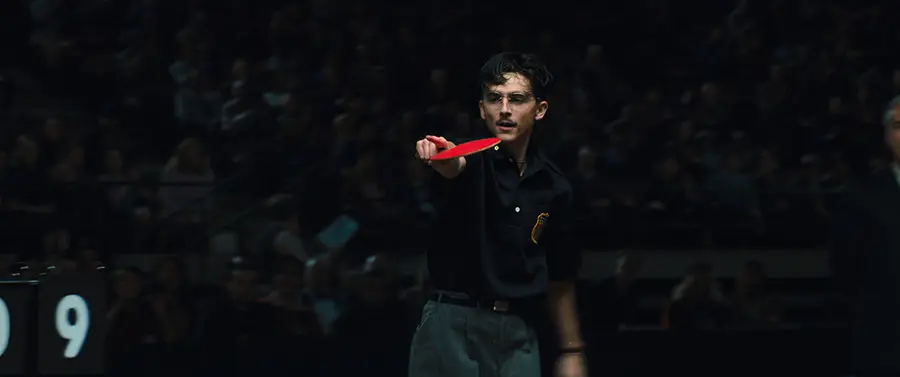
Alongside Daniel Lopatin's score, 〈Marty Supreme〉 features popular 1980s pop and new wave tracks. Josh Safdie weaves 1980s songs by the British band Tears for Fears — including "Everybody Wants To Rule The World," "Forever Young" and "I Have the Touch" — into a film set in the 1950s. That choice is more than stylistic; it deliberately expresses the film's themes and Marty's inner life. Chief among those selections is the track that closes the film and its end credits, "Everybody Wants To Rule The World," a song that channels Cold War anxieties and human appetite for power and that cuts to the heart of 〈Marty Supreme〉's thematic core.
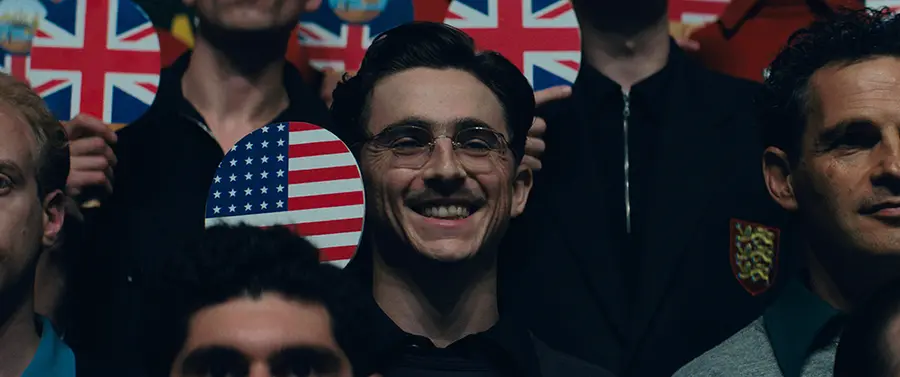
It is 1952 in New York. Ambitious Marty (Timothée Chalamet) dreams of conquering the world stage in table tennis and becoming a sports legend. But at the British Open final, where he arrives full of hope, he suffers a humiliating loss to the Japanese player Endo (Goto Kawaguchi) and once again faces others' dismissal of his dreams and mounting financial pressure. Rockwell (Kevin O'Leary), the head of an ink company, even offers him money — on the condition that Marty throw the match against Endo at a promotional event. Prideful Marty refuses Rockwell's proposal and returns to New York after earning money for the world championships by performing circus-like trick table tennis. Back in New York, however, his family takes his money as they try to make him give up table tennis. To make matters worse, his girlfriend Rachel (Odessa A'zion) claims she is pregnant, forcing the self-centered Marty into a situation where he must answer for someone other than himself.


Josh Safdie sees 1980s America as a time when the sense of the American Dream — individual success, ambition and self-belief — was particularly vivid. Marty’s overweening confidence and obsession with success stem from that American Dream. The film was originally conceived at an early stage as a story in which an older Marty in the 1980s recalls his youth, and "Everybody Wants to Rule the World" was set to appear in those central flashback scenes. Although those memory sequences and a planned scene were cut in the final edit, the song remains, expressing Marty’s American Dream and reinforcing the film's themes.
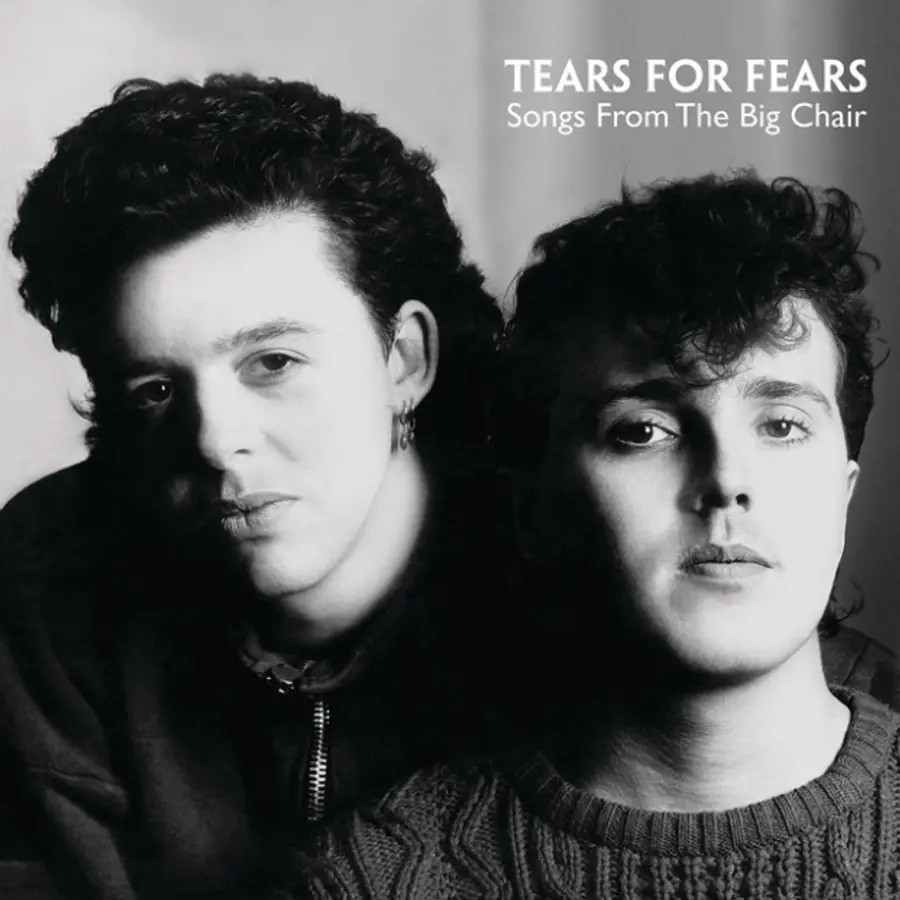
"Everybody Wants to Rule the World" is a complex piece that hides the darker shadow of the Cold War behind a bright melody. The song appeared on Tears for Fears' 1985 single album 'Songs from the Big Chair' and grew out of two chords Roland Orzabal played on acoustic guitar. The bright, polished sounds of synthesizers and drum machines, the jaunty shuffle rhythm and the repeating, ascending arpeggios give the music a lively energy. In contrast, the lyrics probe the hunger for power, control and the tragedies that war inflicts. The song's working title was originally "Everybody Wants to Go to War," but the band changed it because they felt the lyrics were too preachy. Curt Smith said the song reflects the political tension of the second Cold War and fears of a potential nuclear war, describing it as "about everyone wanting power and the pain that war causes." The combination of weighty subject matter and musical vitality in "Everybody Wants to Rule the World" criticizes and warns against the appetite of those who would rule the world. That appetite echoes the desires of the characters on screen.
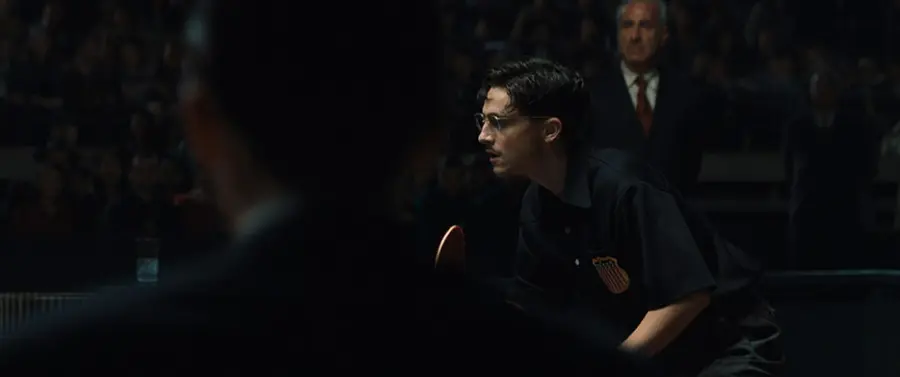
Marty’s desire, as an American player, to win the world championship resembles the United States' post-World War II ambition to intervene in international affairs and secure global dominance. Josh Safdie said in an interview, "The victory in World War II lit the American Dream's idea that an individual can change the world, and that you can find glory no matter where you come from." Marty is an embodiment of that postwar American confidence; the greatness he chases is an imprint that the nation's postwar promises left on individual consciousness.
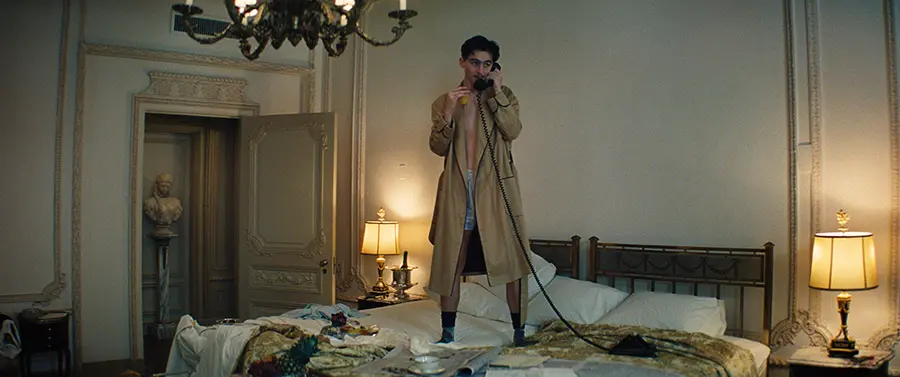
The capitalist Rockwell, who has built his own "pen empire," reveals his desire more cunningly. In the film Rockwell tells Marty, "I was born in 1601. I'm an immortal vampire," a reference to the rise of global capitalism following the founding of the East India Company (established December 31, 1600). Rockwell personifies the vampiric aspects of parts of capitalism that accumulate wealth through exploitation. He says he has met people like Marty Mauser for centuries and has not disappeared, a metaphor for capitalism's durable immortality. Their relationship starkly illustrates the symbiosis between capitalism and meritocracy. On the narrative's surface, Marty's personal drive is not free from Rockwell's ambitions. Despite Marty's extraordinary talent, his dreams are ultimately at the mercy of Rockwell's choices. Endo, who lost his hearing in the Tokyo firebombing, suffers physical damage from war and yet is reduced to a mascot promoting the ballpoint pens of an American company that once belonged to an enemy nation. The way capable individuals like Marty and Endo are absorbed into the logic of capital depicts the illusion of meritocracy: the belief that status and reward follow ability. The staged second match between Marty and Endo, which looks like a fair contest, is in fact a scripted performance shaped by the capitalist who controls the market. That scene demonstrates how meritocratic ideology under capitalism convinces people the market is a space of fair competition, thereby legitimizing the inequalities capital produces. 〈Marty Supreme〉 and "Everybody Wants To Rule The World" each sharply reveal how personal ambitions for dominance persist within the logic of capital.
![[Chua-young's Music Box] The Meta Representation of Subculture 'Cosmic Princess Kaguya!' with 'World Is Mine' and 'Reply'](https://cdn.www.cineplay.co.kr/w400/q75/article-images/2026-02-12/09350b70-b012-4e2f-a254-046f646e2d8d.jpg)
![[Choo A-young’s Music Box] After Anger, ‘Oasis: Don’t Look Back in Anger’ Sings Again](https://cdn.www.cineplay.co.kr/w400/q75/article-images/2026-09-10/323f8c2a-129f-4107-b190-114253e0c827.jpg)
![[Chua-young's Music Box] Why Did 'What If We' Resonate with Today's Youth? The Romance Fantasy of the Non-Dating Generation](https://cdn.www.cineplay.co.kr/w400/q75/article-images/2026-01-28/113b25b0-ce84-47ff-807d-5dc4657e02d2.jpg)
![[Chua-young's Music Box] The Screams of 'The Shining', the Auditory Discomfort Created by Krzysztof Penderecki's Music](https://cdn.www.cineplay.co.kr/w400/q75/article-images/2025-12-17/2667f27c-46b5-45d4-bf2d-7bf2b656ff21.jpg)
![[Chu Ah-young's Music Box] Michael Jackson's 'Thriller' and 'Heal the World' That Tried to Turn Dreams into Reality](https://cdn.www.cineplay.co.kr/w400/q75/article-images/2026-05-21/ffa1b48f-3611-45b6-a14a-e3e0aea5b392.jpg)
![[Chua-Young’s Music Box] Music for the Purification Ritual of Wounded Youth: “Girls Band Cry”](https://cdn.www.cineplay.co.kr/w400/q75/article-images/2026-04-22/10da8998-3cb2-462f-8af6-4063689a916d.jpg)
![[Chua-young's Music Box] May Madness Reign on This Land! '28 Years Later: The Bone Temple' and 'The Number of the Beast'](https://cdn.www.cineplay.co.kr/w400/q75/article-images/2026-03-11/1a6d94b0-98c1-4b3b-8f0f-dd2d9ac48c7d.jpg)
![[Chua-young's Music Box] The Music of 'Pavane' Following the Path of Love](https://cdn.www.cineplay.co.kr/w400/q75/article-images/2026-02-26/cc89ea7d-356d-492c-8168-136478d2e26d.jpg)
![[Chua-young's Music Box] The Coexistence of Sorrow and Hope 'Super Happy Forever' and 'Beyond The Sea'](https://cdn.www.cineplay.co.kr/w400/q75/article-images/2026-01-14/2315abe7-c0c7-4f3f-8774-9a2b0f578550.jpg)
![[Chua-Young’s Music Box] ‘Project Hail Mary’—A Story of Humanity’s Trembling at the Brink of the End, and ‘Sign of the Times’](https://cdn.www.cineplay.co.kr/w400/q75/article-images/2026-04-09/23d4b16b-49c1-47dd-a17a-1e939faddd12.jpg)




![[Seong Chan-eol’s Comics] I hesitated to recommend it, but 30,000 moviegoers leaves me saying ‘Give it a try’: 「The Dangers in My Heart」](https://cdn.www.cineplay.co.kr/w160/q75/article-images/2026-06-19/0d685797-1908-45a2-9bb1-a0a5f1000e2c.jpg)

![[Joo Sung-cheol’s Locker] Watching “Marty Supreme,” Recalling Yoon Nam-gyu’s Penholder Table Tennis Racket](https://cdn.www.cineplay.co.kr/w160/q75/article-images/2026-06-29/6d43e8be-1f8f-4c69-85c5-0bc635b36926.jpg)

댓글 (0)
댓글 작성
댓글을 작성하려면 로그인이 필요합니다.
로그인하기