


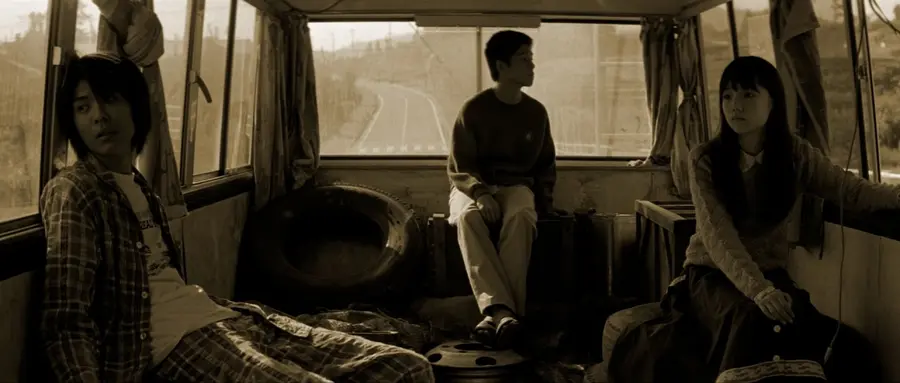
Director Aoyama Shinji's film 〈Eureka〉 is a road movie about wounded people who travel an endless road in search of the possibility of healing and renewal. The characters, survivors of a terror that shattered ordinary life, set out on a trip to escape the trauma of the incident. Aoyama Shinji said, "This film is a kind of prayer for contemporary people who are looking for the courage to keep living… I wanted to capture the process of them setting sail for rebirth from the edge of despair." Jim O'Rourke's 'Eureka' marks the starting point of that voyage. While writing the screenplay, the director played O'Rourke's acclaimed album Eureka on repeat as he shaped the film's overall mood and themes. The film's title takes its name from the album and its title track, underscoring how absolute a source of inspiration that music was for him. Jim O'Rourke's 'Eureka' also appears in the film, functioning as a root of the work itself.
Jim O'Rourke: an innovative figure in contemporary music

Born in the United States in 1969, Jim O'Rourke is an innovative artist across the indie and avant-garde music scenes. As a composer, producer, and mixing and mastering engineer, he has worked across roles to build a vast musical world that refuses to be confined to a single genre—avant-garde, rock, jazz, ambient and more. He made his name in the Chicago scene and cemented his reputation with the post‑rock and experimental work he presented as a member of Gastr del Sol. While expanding the boundaries of experimental music, he also took on projects with a more accessible sensibility. In that vein, he served as an official member of the legendary rock band Sonic Youth from 1999 to 2005, overseeing the album-making process as a whole. He is also recognized for bringing a relatively mainstream feeling to indie rock through lyrical melody. His work strikes a delicate balance between experimental approaches and popular elements.
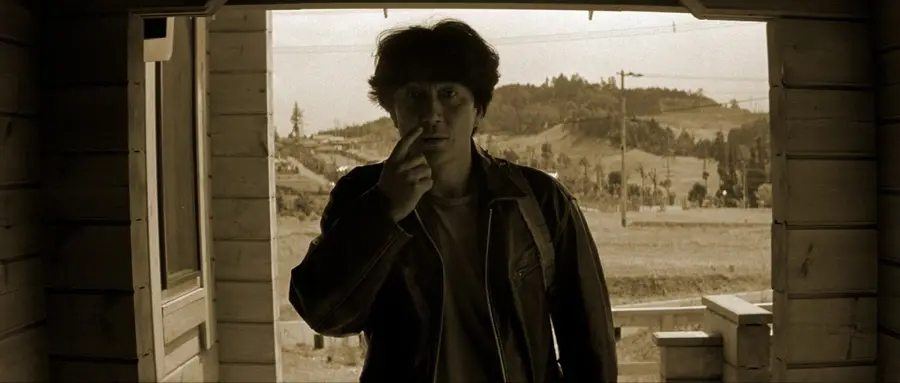
O'Rourke has collaborated with several film directors through his film music work. He co-composed the music for Olivier Assayas's film 〈Demonlover〉 (2002) with Sonic Youth, and he wrote the score for Japanese maverick director Wakamatsu Koji's film 〈United Red Army〉 (2007). He also served as a music advisor on 〈School of Rock〉 (2003). O'Rourke won praise for a series of solo albums named after films by Nicolas Roeg—'Bad Timing,' 'Eureka,' and 'Insignificance'—and among them the album Eureka, which inspired Aoyama Shinji, remains O'Rourke's most celebrated record.
Lifted from the edge of despair
A small discovery
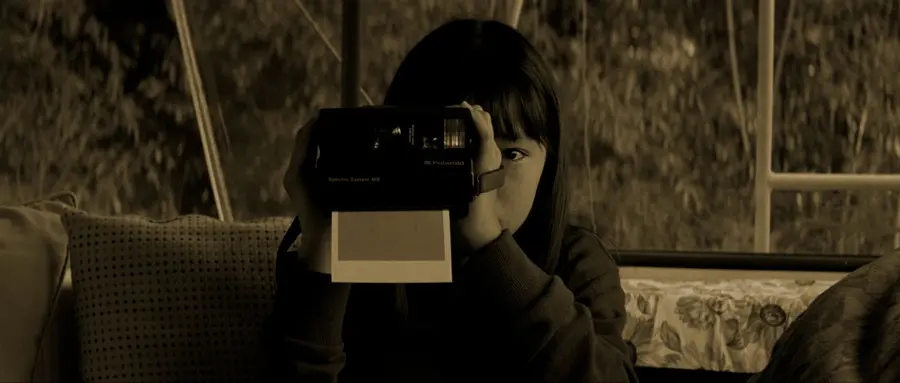
With the title track 'Eureka,' O'Rourke preserves his experimental roots while fully embracing a pop sensibility. Organ-like analog instruments and acoustic guitar create a calm atmosphere. Over it drifts a minimal, psychedelic ambient texture that showcases O'Rourke's avant-garde method of breaking sound apart and examining it, creating a hypnotic, dreamlike effect for the listener. The harmony of these disparate elements helps shape the film's overall mood, one that speaks to the darkness of a violent society and the hope of healing through communication. Genre-wise, 'Eureka' sits in chamber pop—the fusion of familiar pop melodies with classical chamber-music textures—and its orchestration of diverse instruments stands out. A variety of instrumental colors build rich yet refined sonic layers, deepening the music. That orchestration, rendered with acoustic textures, offers a synesthetic experience in which a faded landscape gradually fills with color—an effect that connects directly to the film's finale as sepia tones give way to color.
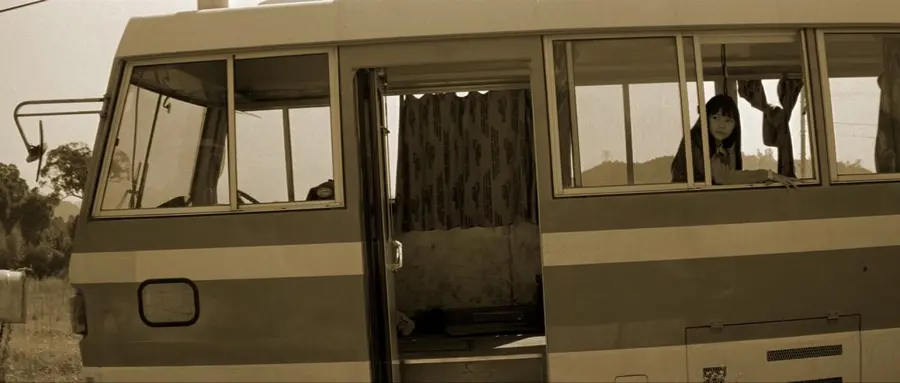
The track 'Eureka' appears in the film as an emotional pivot. It plays during the scene in which Makoto (Yakusho Koji) and Kozue (Miyazaki Aoi), now alone together, head to the seaside. Once they reach the shore, Kozue walks into the water and calls to her brother, Naoki (Miyazaki Masaru), showing him the water. Through the film's unreal premise, Naoki and Kozue share each other's senses and speak through their inner selves even when they are apart. Burdened by the cost of murder, Naoki asks Kozue—after they separate—to show him the sea with her eyes. Succumbing to the temptation of violence and trapped in the sin of murder, Naoki longs for purification and salvation through Kozue, who still retains her innocence. Kozue's walk into the sea becomes a kind of cleansing ritual for the wounds they carry from violence. Jim O'Rourke's 'Eureka,' with its warm, luminous fragments of ambient sound, envelops them tenderly as they try to break the cycle of violence and move back toward life. The repeating melody gradually swells and transforms, taking on a majestic quality that foreshadows the end of the journey. After undergoing that purification, Kozue finally releases the fragments of her wounded memories at the film's close, breaking a long silence. Aoyama Shinji's 〈Eureka〉 and Jim O'Rourke's 'Eureka' find not Archimedes' grand discovery, but the faint glimmer that wounded people salvage from the edge of despair.


![[Chu Ah-young's Music Box] Michael Jackson's 'Thriller' and 'Heal the World' That Tried to Turn Dreams into Reality](https://cdn.www.cineplay.co.kr/w160/q75/article-images/2026-05-21/1d25aa5b-22b9-4726-a711-46af213e6dbd.jpg)
![[Seong Chan-eol's Comics] The extreme realism of 'Soohee0 (tngmlek0),' the webtoon that had readers saying, 'This author is clearly obsessed with streaming'](https://cdn.www.cineplay.co.kr/w160/q75/article-images/2026-05-22/c2697021-4196-42a1-a169-572dc0cdec51.jpg)

![[Joo Seong-cheol’s Locker] Zombie Things That Don’t Flinch Even When Shot: Korea’s First Zombie Film, “Kwe-si” (1981)](https://cdn.www.cineplay.co.kr/w160/q75/article-images/2026-06-01/7b0631d6-0145-48fc-912a-135c182553cf.jpg)
![[Kim Ji-yeon’s Jewel Box] Right Now Is Yoon Byung-hee’s Prime](https://cdn.www.cineplay.co.kr/w160/q75/article-images/2026-06-01/f5e7bba5-d455-4cdb-82f1-42975d804aab.jpg)
댓글 (0)
댓글 작성
댓글을 작성하려면 로그인이 필요합니다.
로그인하기