


Cineplay Lee Hwa-jung Guest Reporter
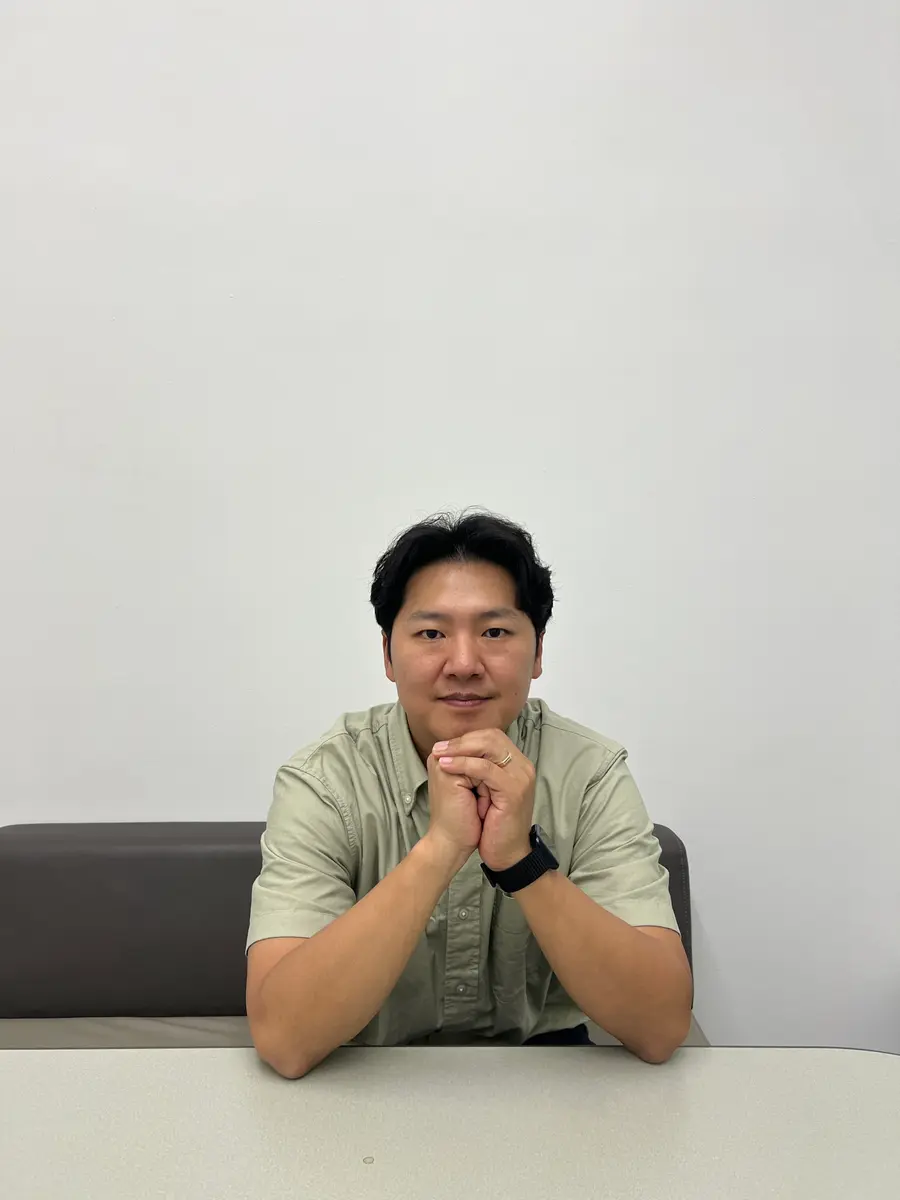
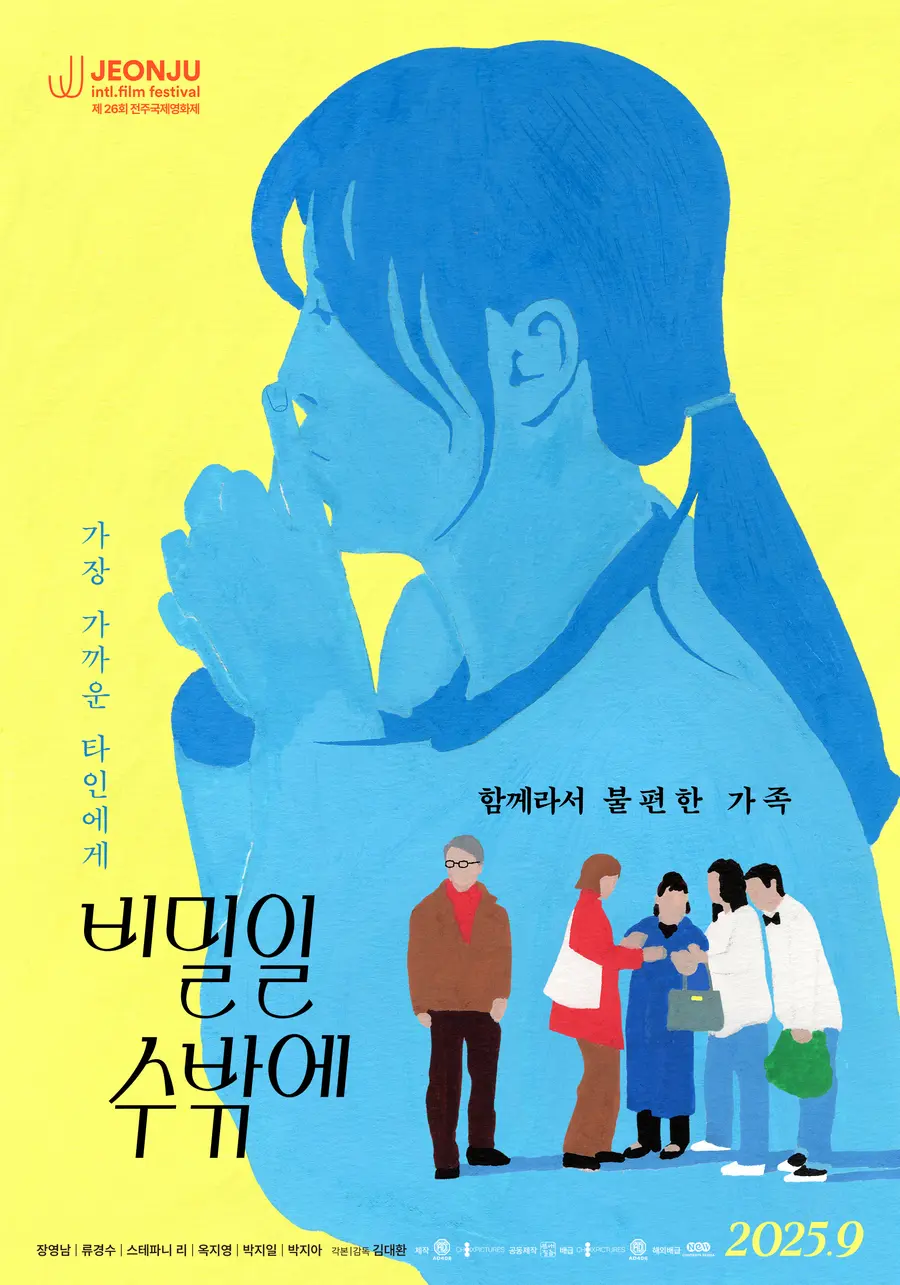
For Director Kim Dae-hwan, 'family' was the most important unit that composed the film. The lingering feelings left in the disbanded family in his debut film 〈Homeward Bound〉 (2016) acted as a 'stumbling block' for the newlywed couple in his second film 〈First Steps〉 (2017). His new work after 8 years, 〈HOMEWARD BOUND〉, gives a sense of déjà vu as if the family from 〈Homeward Bound〉 and the couple from 〈First Steps〉 have met together. 〈HOMEWARD BOUND〉 is a work that Kim Dae-hwan himself named as the final chapter of the 'family trilogy'. Of course, the joining of the two families also doubled the discord.
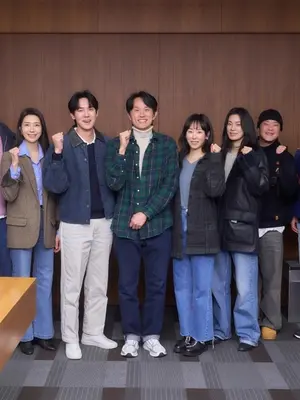
The film is a kind of farce that observes two families that unexpectedly meet and cause chaos. The story begins when Jin-woo (Ryu Kyung-soo), the son of Jeong-ha (Jang Young-nam), who lived in Canada, comes back to his hometown of Chuncheon with his girlfriend Jenny (Stephanie Lee). Jeong-ha, who lost her husband in a traffic accident long ago, is currently working as a teacher in Chuncheon after sending her son abroad for studies. Jeong-ha has two secrets to tell her son. One is about her cancer diagnosis, and the other is to come out as a lesbian and inform her son about his girlfriend Ji-sun (Ok Ji-young). However, before she can properly bring it up, Jenny's parents (Park Ji-il, Park Ji-a) unexpectedly arrive in Chuncheon, leading to an unintended cohabitation of the two families and Ji-sun. It turns out that not only Jeong-ha but everyone has their own secrets that they brought to this place. When families come together, it can be suffocating. The 2-night, 3-day time frame, the small basin city of Chuncheon, and the cramped car they all share become excellent cinematic devices that pressurize the secrets that are about to burst.
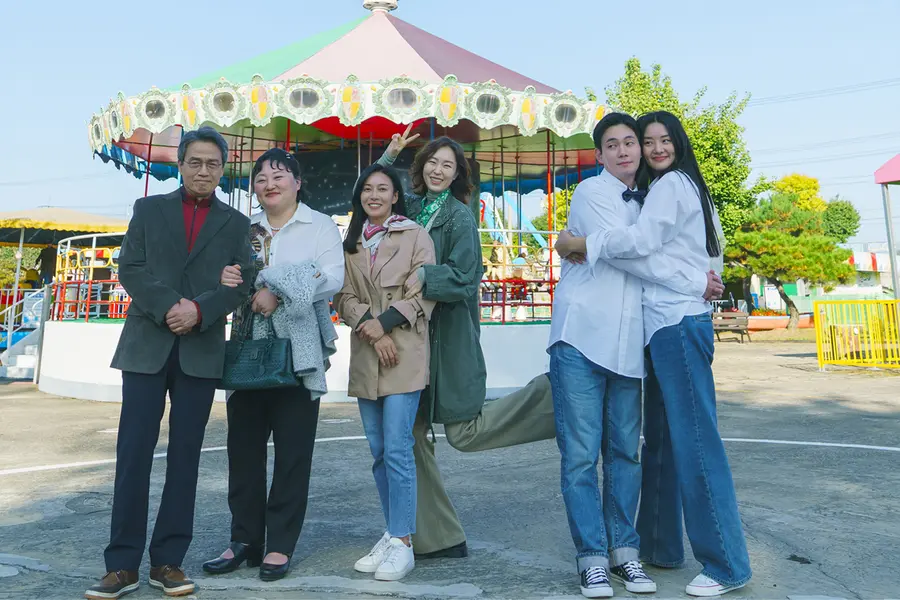
〈HOMEWARD BOUND〉 is a kind of experimental play that observes all the family secrets erupting with a cold and dry gaze that does not seek any sympathy. It captures the newly writhing family entering the midst of a discredited patriarchy. The conclusion of the family trilogy ultimately involves the dismantling and rearrangement of the unique love-hate relationships of Korean families marked with a K. Surprisingly, the film conveys this difficult subject matter in a tone that is neither serious nor heavy. It is a remarkable result of the ensemble acting of the actors who enter the tightly tangled family history. Now it is your turn to witness the absurd and trivial family chaos, even in serious moments, as if you are enjoying a step back from your own family. I met with Director Kim Dae-hwan to hear the story of the family trilogy.
It has been a while since your last feature film after 〈Homeward Bound〉 and 〈First Steps〉. This work approaches as an extension or continuation of the previous two films that depict family conflicts. Why did you choose to center the story around family again for your third film?
〈Homeward Bound〉 started with keywords like divorce, father, and the winter of Chuncheon, while 〈First Steps〉 centered around marriage, set in Incheon, Samcheok, and autumn. Since both films dealt with family, I naturally decided that I had to complete the 'family trilogy'. So this time, I conceived a story centered around 'remarriage', in the spring of Chuncheon, focusing on the mother. However, when I tried to write a script about a typical remarriage story, I couldn't find a reason to make it into a film. From my perspective, if my parents were to remarry, I would probably just say, "Congratulations, live well," and it wouldn't seem like a big conflict or event. Around that time, I happened to read an article about a mother who was involved in social movements and came out. When I met her, she had two sons, and after coming out to her husband, she naturally divorced and is now living happily. Seeing her gave me the confidence that I could capture a new form of family that is needed in this era, beyond the subject of 'remarriage'.
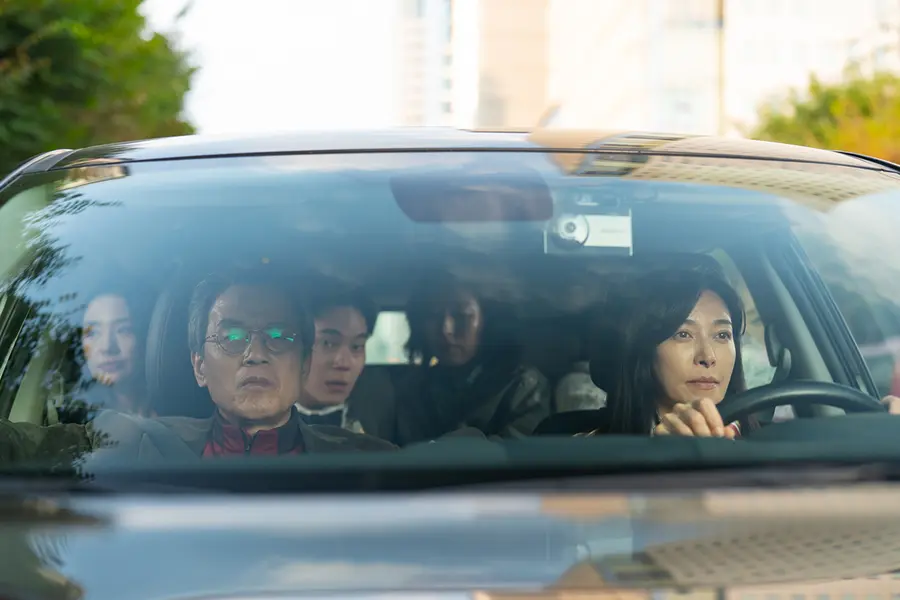
The film deals with quite strong themes such as the secretive emotions surrounding a lesbian mother and the death of a father. However, I felt that the film maintains a very dry tone rather than immersing in the events.
When I decided to start from the relationship between the lesbian Jeong-ha (Jang Young-nam) and her partner Ji-sun (Ok Ji-young), I realized that the 'secret' would inevitably act as a major event. This setting can be provocatively read in today's Korean society. However, rather than deeply immersing in specific characters like existing queer films, it was important to observe the characters from a certain distance. The 'secret' that this film deals with is not a plot twist, but rather a story that examines the reactions of those around once it is revealed. In that sense, distance was an essential element for me.
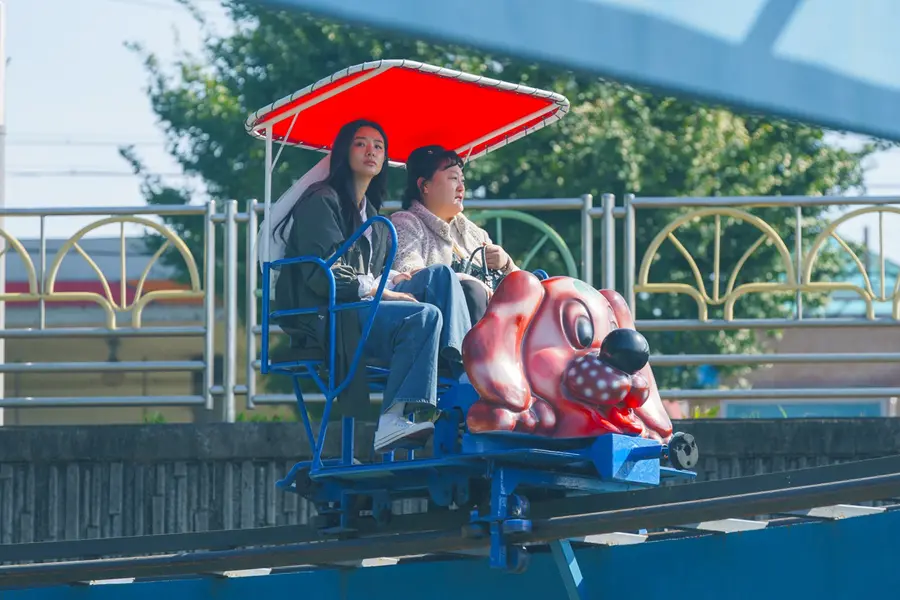
Jeong-ha has kept secrets from her son and her deceased husband due to her sexual identity. Her status as a teacher who has worked in a small town for her entire life highlights the sensitivity of these secrets. It seems that the most conservative conditions have been applied to her character. If we go back, the father in 〈Homeward Bound〉 was also set as a teacher.
My parents were in education, so I saw teachers up close. In a small town like Chuncheon, if a couple of teachers fight, it becomes gossip for everyone around. So I thought Jeong-ha had to be a teacher, and this story had to take place in a small town. Chuncheon is where I lived until I was 20, and while it is beautiful, it is also a basin surrounded by mountains, making it a suffocating place. In the past, there was a non-standardized system where just seeing the school uniform revealed grades, which stressed not only students but also the parents' generation. I thought of Chuncheon as a 'stagnant place', making it suitable for a story about a child wanting to escape and a mother choosing to live within it.
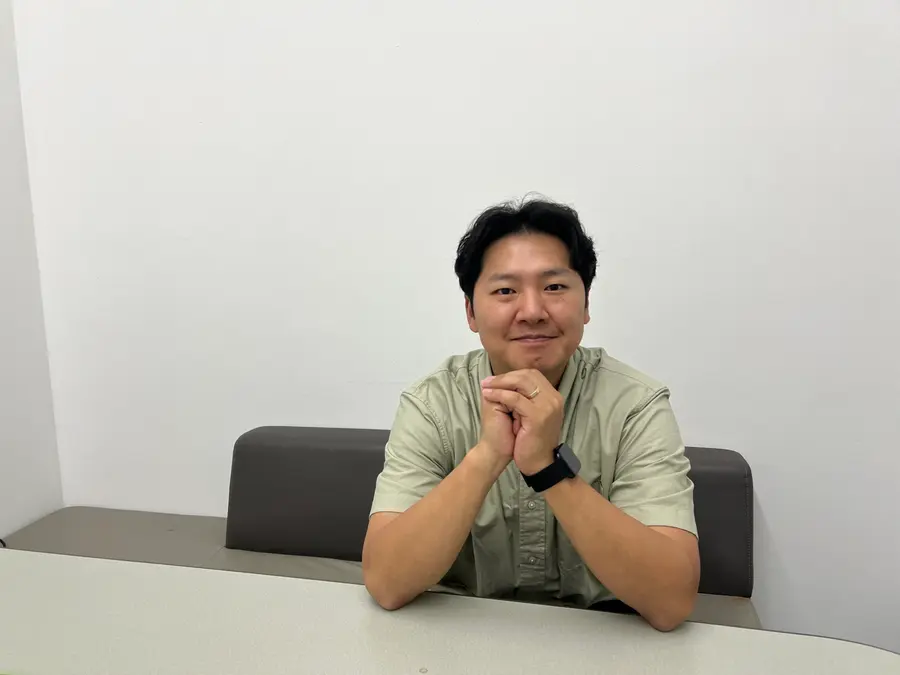
More important than society accepting Jeong-ha is her son's acceptance. Jin-woo (Ryu Kyung-soo) chooses to become a cooking YouTuber, contrary to his mother's expectations. He is also a character that brings about a writhing change in the 'stagnant' family situation.
Jin-woo symbolizes the current generation. More people are choosing the life they want, abandoning stable paths. For example, Pani Bottle, a YouTuber, is a junior from my high school who worked hard at a design company before going out into the world as a travel YouTuber. I wanted to imbue that courage into Jin-woo. However, bringing up a different career path to a mother who has sacrificed and sent him abroad for his education must have been a huge burden. I, too, once dreamed of a different life, so my experiences seem to have been reflected in Jin-woo. Moreover, while coming out as a sexual minority parent is common abroad, it still has a significant impact in Korea. Especially, the perspective of a child looking at their parents has not been well addressed in Korean cinema, so I really wanted to do it.
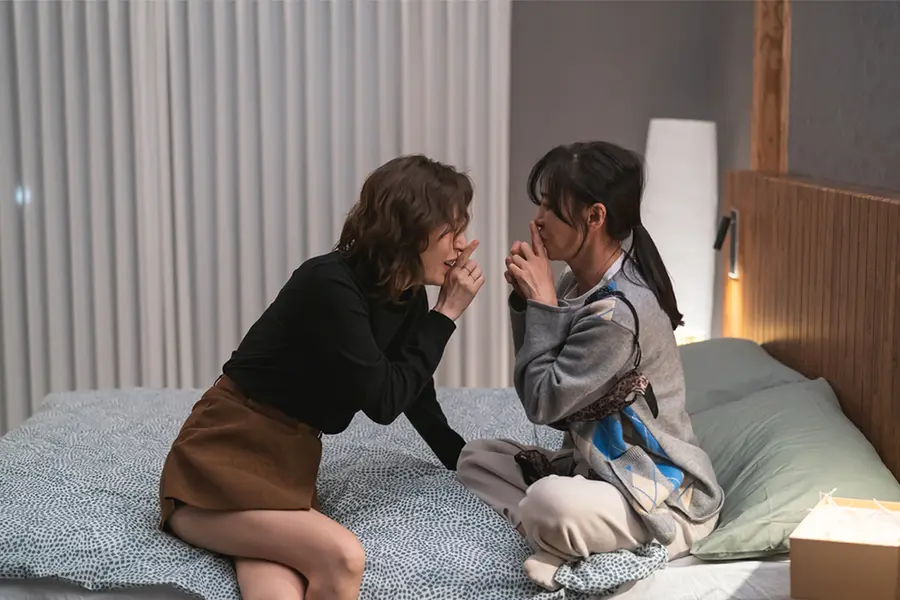
It was interesting that the film progresses in the form of a farce where the hidden secrets inevitably get revealed. The element of black comedy is present as the 'two families unexpectedly gather in one house' leads to a rapid development of events.
In fact, I have only had my in-laws gather once after getting married. What I felt then was, "Let's never gather again." (laughs) It wasn't that there was a fight, but the conversation became uncomfortable. That experience became the starting point for this film. So, while pondering what kind of character would be the most uncomfortable in the relationship between Jeong-ah and Ji-sun, the character Moon-cheol (Park Ji-il) was born, and then I imagined his daughter Jenny (Stephanie Lee). A photo I saw during the research process also had a significant impact. It was a picture of Korean Americans in LA wearing hanbok and cooking during the holidays, and it was from just a few years ago in the 2020s. I wondered if they really needed to maintain traditions to that extent, yet it was impressive to see them continuing their culture even more strongly.
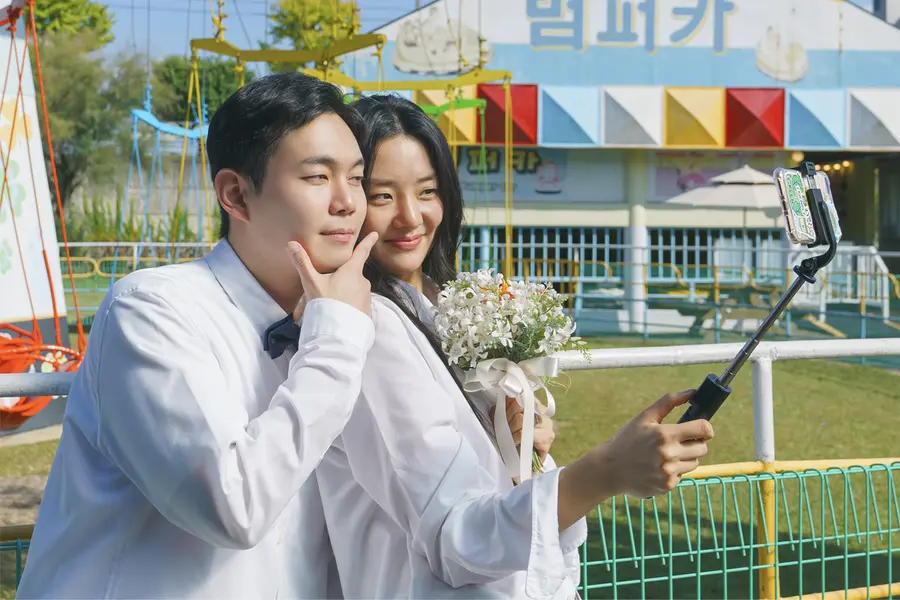
You have completed the final part of the family trilogy. I am curious about your next project plans.
The word marriage naturally brings to mind marriage-divorce-remarriage, and that’s how I thought I should complete the trilogy and have come this far. Now, I feel like I need to quickly make another film. Of course, my mind may change, but for the time being, I want to set aside family stories and tell a completely different story.

![[Interview]](https://cdn.www.cineplay.co.kr/w160/q75/article-images/2025-07-11/84adf139-4898-4055-b18d-5f8cc089c2ab.jpg)
![[Interview] Lee Jung-eun, who brought the character to life in 'My Daughter is a Zombie':](https://cdn.www.cineplay.co.kr/w160/q75/article-images/2025-07-30/ccf2ee27-509e-4466-be54-ba52f6bb866f.jpg)

![[Interview] Director Byun Young-joo of 'Queen Mantis' Says, “This Drama is a Story of Two Conflicting Worldviews”](https://cdn.www.cineplay.co.kr/w160/q75/article-images/2025-09-01/da7ce43a-3871-444c-9755-a526c04fc19f.jpg)


댓글 (0)
댓글 작성
댓글을 작성하려면 로그인이 필요합니다.
로그인하기