



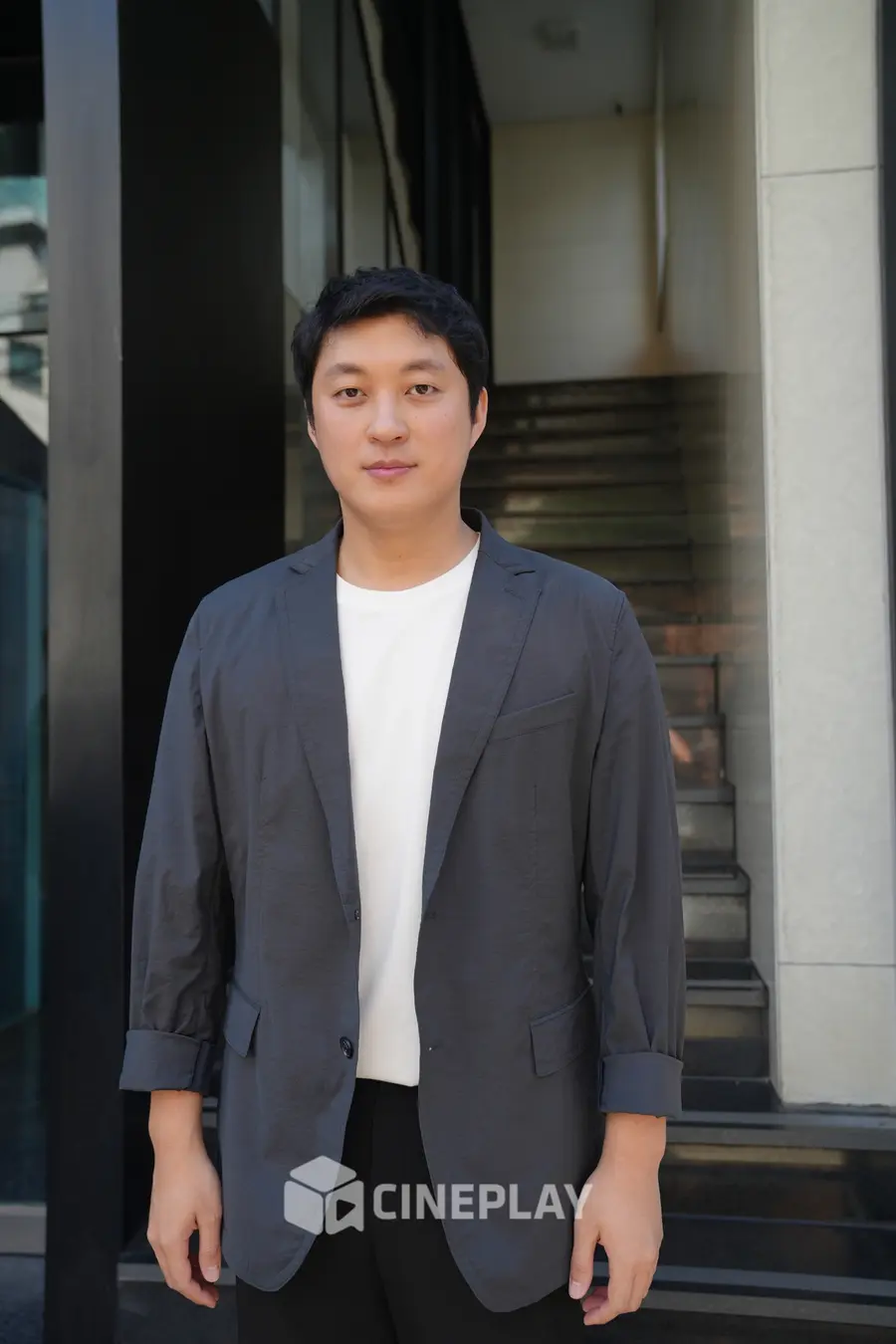
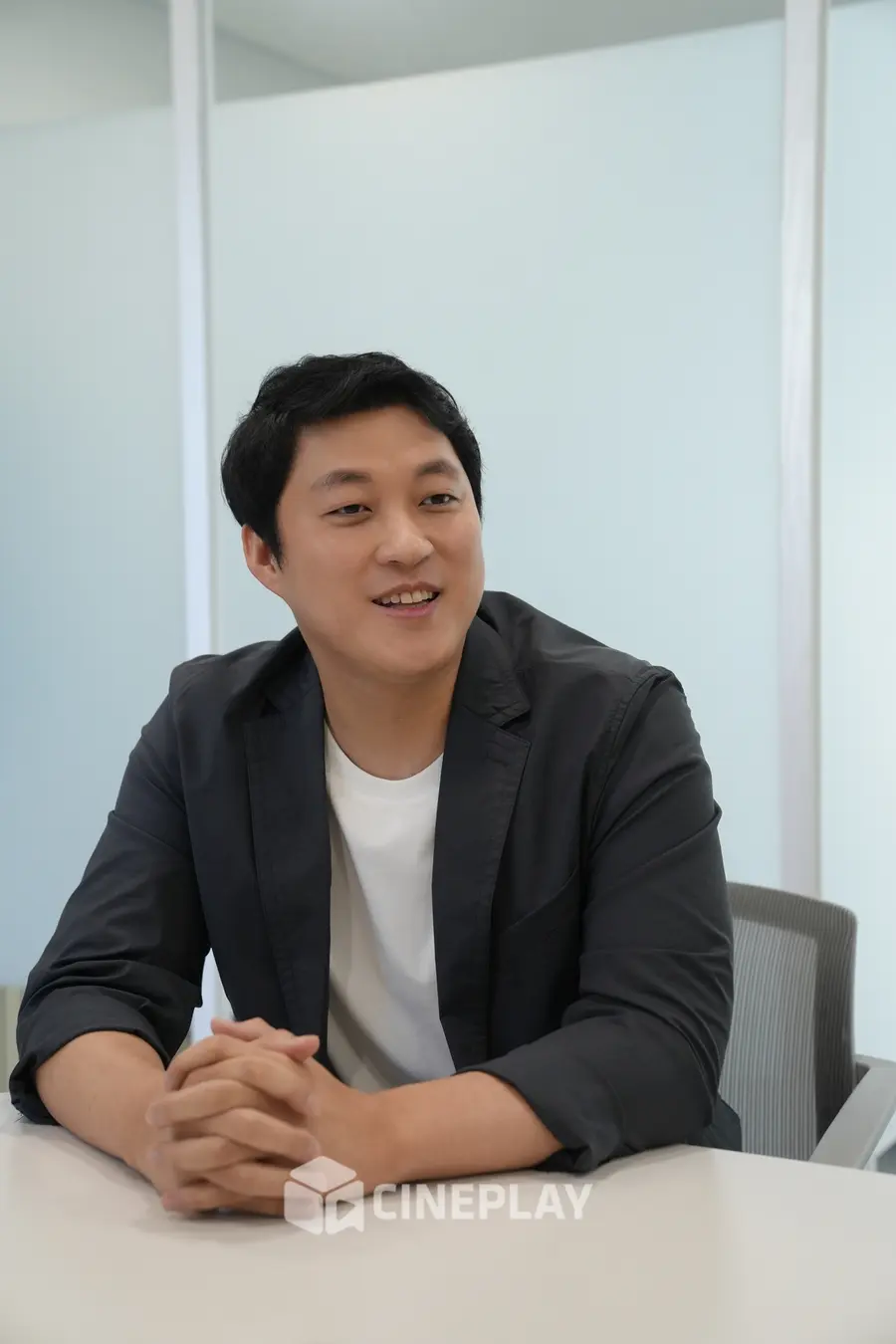
A variety of creators have submitted their challenges for the 2025 KT AI P.A.N competition. Here, 〈Disaster Girl Music Video (Global)〉 won the best award in the KT Media IP division, and Jisan X Jason uses the collaboration between the two companies as a stepping stone to raise questions in the current industry. How will we, who are in the creative industry now, survive? Jisan Creatives, which has been in the video business, and Jason Music Lab, which aims to elevate AI music to mainstream industry standards, achieved their goals with 〈Disaster Girl Music Video (Global)〉. As a representative of 'Jisan X Jason' that showcased the various possibilities of AI, we met with Bang Jin-hyeon, CEO of Jisan Creatives, to discuss. Meanwhile, this year's award-winning works can be enjoyed on the KT Genie TV YouTube channel ‘Genius Cut’ and Genie TV VOD.
What made you participate in the KT AI P.A.N video competition?
We are a video company with about 12 years of experience. When AI technology emerged, everyone in the industry must have thought the same thing. There are many creative AI works on YouTube. But the question is whether it can have commercial viability and whether it can produce quality that can earn money. The category we applied for is the KT Media IP division, and we thought this way. We chose the webtoon 'Disaster Girl' and assumed KT as the client, starting from the perspective of selling webtoon content to that client. So, we aimed to test whether we could create a video that anyone would recognize as commercial quality, something worth paying for. In that sense, we can say we achieved results.
Why did you choose 'Disaster Girl' as the subject?
In the past, we created teaser videos for webtoons. We were aware of how that process works in the market and how much the pricing is set. We wanted to test whether we could create higher quality creations using AI in a market where we had already confirmed the marketability of this webtoon content.
How did you feel when you won?
I watched all the award-winning works and was really inspired. There were many original ideas, and I thought we weren't the best to win the award. So, I said during the acceptance speech that I wasn't sure if it was conveyed properly, but I mentioned that as a person in video, the biggest sense of crisis I feel with the emergence of AI is not AI itself, but rather that creative producers who can create well with AI are a greater competitive threat, which gives me a sense of crisis. So, I thought I needed to work harder. In other words, AI itself was just a tool, and there were many creative works that utilized it well.
Was there anything you tried to reflect from the original work 'Disaster Girl'?
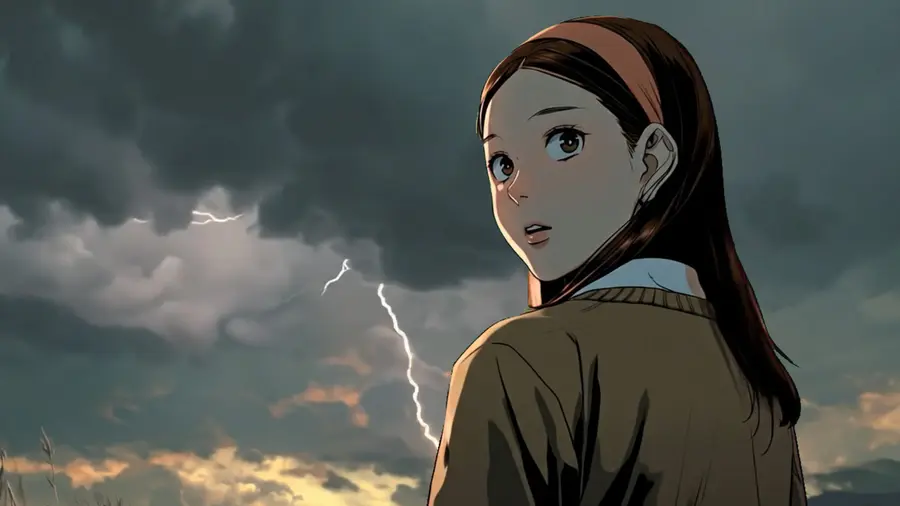
If you have seen the original work, you might look at our teaser and think, 'What does this have to do with it?' (laughs) This competition didn't require adherence to anything except the logline. As long as the logline is reflected, characters that do not appear can be included. The webtoon 'Disaster Girl' is a short work consisting of 16 episodes. The world view is somewhat narrow. So, when we worked on this, we wanted to give it more of a blockbuster feel, thus we worked on scaling it up, and in the storyline, for example, the original does not clearly depict the conflict between good and evil. We highlighted that aspect. We depicted a story of the protagonist fighting against large corporations or entities that oppress them. The original 'Disaster Girl' ends with a degree of emotional control, so we created something completely different based on the story we envisioned.
What tools and workflow did you use?
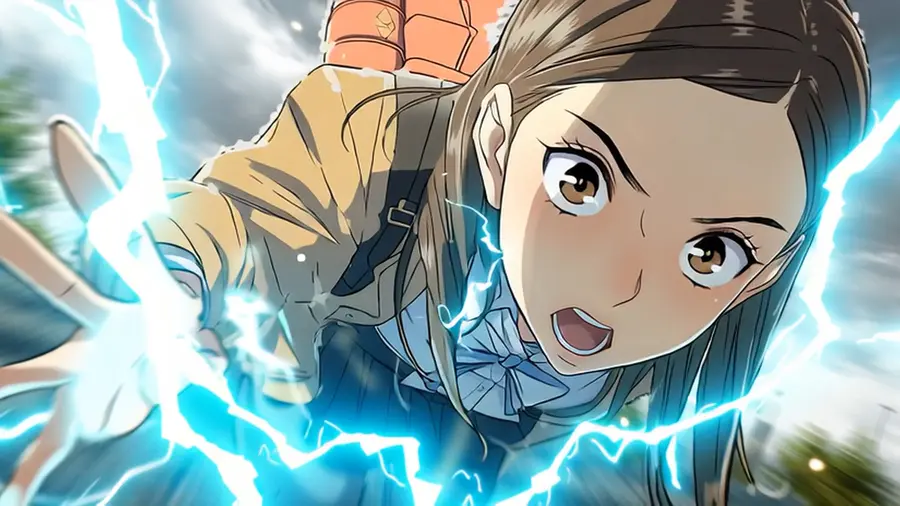
We started working on music and video simultaneously. The workflow was fast. It took only 4 days from planning to completion of this video. On the first day, we watched the original webtoon and created test shots. We collaborated with a company called Jason Music Lab for the music, and I should mention that. (laughs) Jason Music Lab is a company that has developed its own AI program that selects music created from existing AI music tools like Suno. The music produced from existing AI tools is often not as good as expected. It’s not at a quality level where you can tell a hopeful singer, 'Debut with this.' You can easily create videos that are enjoyable, like those on YouTube. However, when aiming for commercial quality, the standards are higher. Jason Music Lab uses such AI tools to produce a vast amount of music and selects from that, so we had quality music ready in a day. From the second day, we spent 3 days creating the video. We used two tools: Midjourney and Veo 3. Four days is a very short time, but in reality, in the industry, they don’t give you less than 2 weeks for a webtoon teaser video. Marketing decisions can happen suddenly. In a fast-paced environment, you can't spend a lot of time, and if we are to utilize AI, the time must be significantly shorter than before to have value. This is also something we are testing. In fact, we decided to work on this piece just 4 days before the competition deadline.
Since it's a music video format, music was very important. How did you prepare it?
Since we work with a music specialist team, we wanted to let them work freely, so we did our best to allow that. We were heavily involved in the lyric writing stage. Since we were going to make it an English song, AI would be good at matching the rhymes. The theme of 'Disaster Girl' is that when emotions are expressed, the weather changes. People around say it’s the power of evil. It’s the power of the devil, the cursed power. So, honest emotional expression is suppressed. The agents in the story, for example, are there to stop the protagonist when she is angry or wants to cry. I thought that was an attractive point, and secondly, everyone around wears masks. The girl, who is suppressed in her honesty, and the people around her who approach her while wearing masks. I thought it would be good to express the conflict she feels and the various emotions of wanting to reveal herself but not wanting to hurt those around her through music. So, the lyrics were created by a separate lyricist reflecting the intentions with AI. Thus, our work, when viewed only for its scenes, may seem flashy, but when understood with the meaning of the lyrics, it conveys a clear message.
The motion graphics in the video are also very impressive. How did you work on this part?
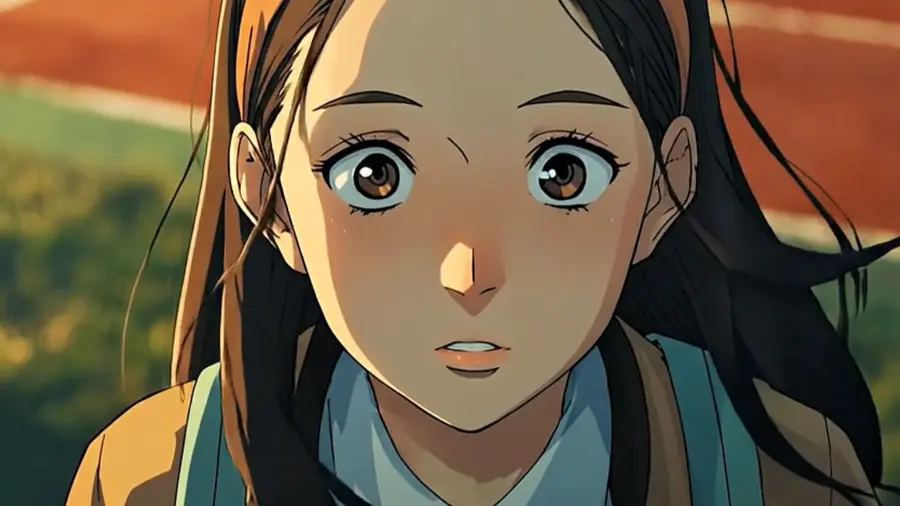
As I mentioned earlier, it was a test bed to see how far an established video company can go by utilizing AI. In fact, since all AI uses (similar) AI, I thought the quality would be similar. The cuts we can select can also be selected by someone else. So, while looking for a way to differentiate, we thought, since we are a video company, let’s make it flashy with cut flow and motion graphics. It can be said that we are seeking a path to survival as a video company.
What do you think about the future of AI movies?
This is a question I have thought a lot about. To summarize my thoughts, whether it’s a real person or not doesn’t seem to matter much. The recent 〈K-Pop Demon Hunters〉 is not a real person, but it has formed emotional connections and fandoms, expanding into a culture, so whether a content is created by a real person or not doesn’t seem to be very important. When it comes to AI, it seems that the focus is on reducing production costs since it’s still in the early stages of technology. However, even with current commercial films, audiences pay 15,000 won for tickets and express their dislike if the work is not good. Therefore, I believe that it is most important for AI to reach a quality that audiences can accept, rather than simply reducing costs. When I think about what content I would willingly pay for, I believe there will be demand for live-action films based on famous animations or webtoons. Recently, Netflix has also created 〈One Piece〉, but there are often cases where audiences are not completely satisfied with the process of adapting animations into live-action. There are fantasy novels that cannot be realized due to budget constraints, and genres like martial arts or otherworldly themes that are trending in webtoons. I think there will definitely be demand for AI movies in those areas. Secondly, most of the production costs for films are taken up by actor fees. It’s not just about acting skills but also marketing aspects. If it’s a work with an original story, that itself can be a marketing point, but from the producer's perspective, there are considerations about where to position the marketing points. There are industrial considerations, but technically, I think AI can replace industrial films to some extent.
Do you have any upcoming projects in progress?
We are preparing long-form content. I’m a bit hesitant to talk about it, but (laughs) we are preparing educational or documentary content. Making a documentary with AI is a very contradictory statement. Since documentaries capture reality. So, we are working on a science documentary. Movements of cells can be replaced with full 3D. Ultimately, what we can take from AI is storytelling. Therefore, we are recruiting credible and excellent storytellers and aiming to produce it in the first half of next year.



![[KT AI P.A.N. Interview ①]](https://cdn.www.cineplay.co.kr/w160/q75/article-images/2025-09-24/1ffdb064-bd63-4c04-b22b-424e9f1e2780.jpg)
![[KT AI P.A.N. Interview ②]](https://cdn.www.cineplay.co.kr/w160/q75/article-images/2025-09-24/c954c027-2f51-4992-8c00-1c5d3c722683.jpg)
![[KT AI P.A.N. Interview ③] A Brave AI Movie Capturing Dance, Song, and Joseon... Special IP Best Award 'Joseon's Idol' Team ArtTech](https://cdn.www.cineplay.co.kr/w160/q75/article-images/2025-09-25/b738a60a-505f-4a11-9e87-895fc3c12551.jpg)
![[KT AI P.A.N. Interview ④] Sensory Style Extracted from the Logline, KT Group Media IP Division Excellence 'There Are No Good Women. Good Woman, Busemi' Burned Rabbit Fur](https://cdn.www.cineplay.co.kr/w160/q75/article-images/2025-09-25/1e43138e-285c-47bc-9659-3b51f41e3a87.jpg)
![[KT AI P.A.N. Interview ⑥] Short Film Category Jury Special Award 'The Orange' CLUB RONAIC](https://cdn.www.cineplay.co.kr/w160/q75/article-images/2025-09-26/78dc50fc-3e2f-4d39-b617-47dc5e6c46a0.jpg)
댓글 (0)
댓글 작성
댓글을 작성하려면 로그인이 필요합니다.
로그인하기