



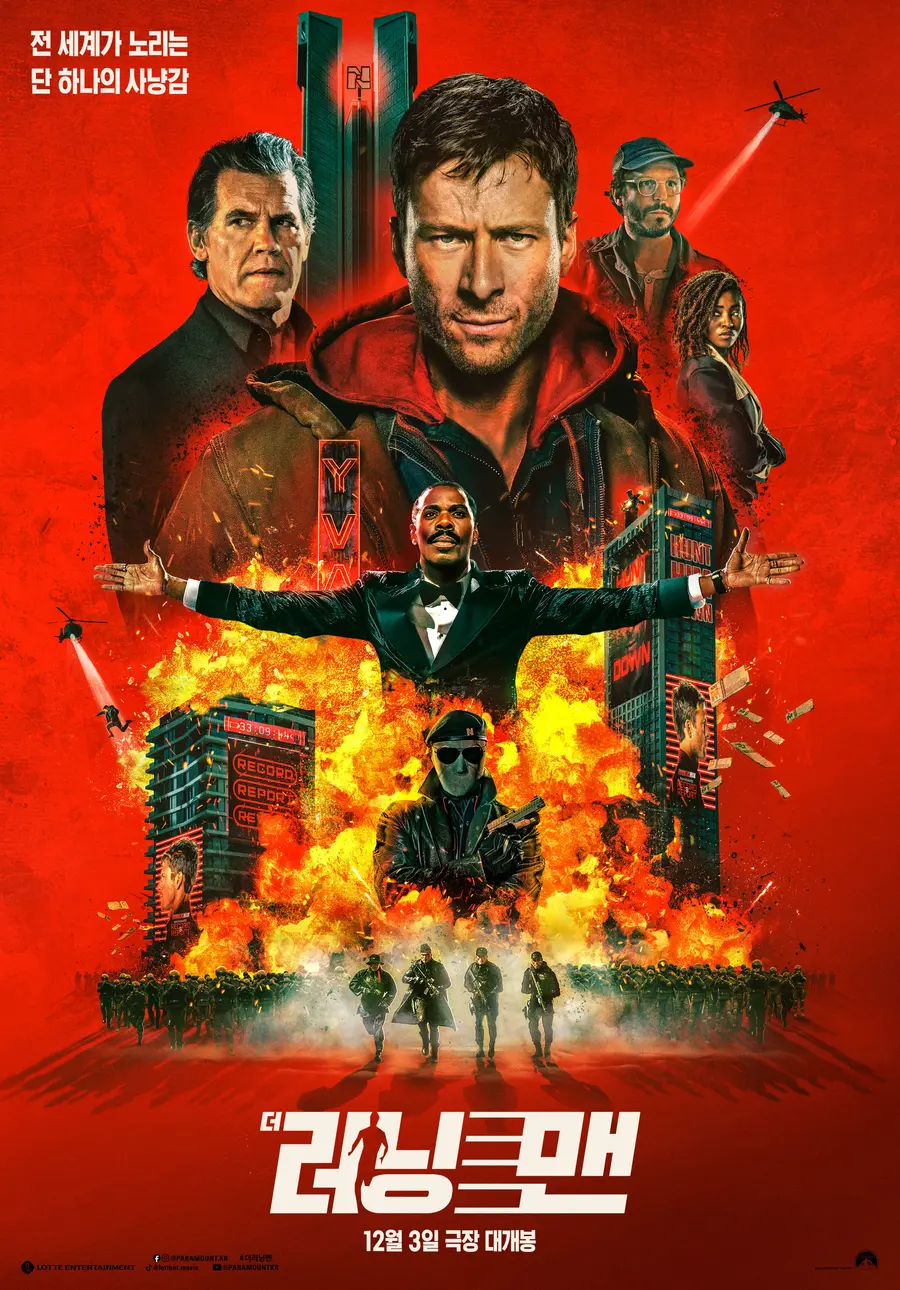
Masters of the genre have joined forces. Set to be released on December 10, 〈The Running Man〉 is based on the novel by author Stephen King, whose works are well-known even if his name isn't. Directed by Edgar Wright, known for films like 〈Shaun of the Dead〉 and 〈Baby Driver〉, the film brings the story to the screen. The protagonist, construction worker Ben Richards, participates in the 'The Running Man' show, which is popular in a future society. The show's objective is simple: survive for 30 days while being chased. Death or a fortune awaits. In this extreme situation, Ben must find a way to survive, but the manipulated show does not let him go easily.
The film, which was adapted in 1987 as 「The Running Man」, has returned this time with a story that is truly closer to the original work. The 1987 film starred Arnold Schwarzenegger and was produced in a format closer to an action thriller, and Stephen King openly criticized the film for taking liberties with his original work. However, this time he has expressed satisfaction with 〈The Running Man〉, which faithfully reproduces the original, even participating in an interview with director Edgar Wright. How did these two masters create this work, and what did they think of it? Let's meet 〈The Running Man〉 as soon as possible through the interview with Stephen King and director Edgar Wright, delivered directly from the film studio.
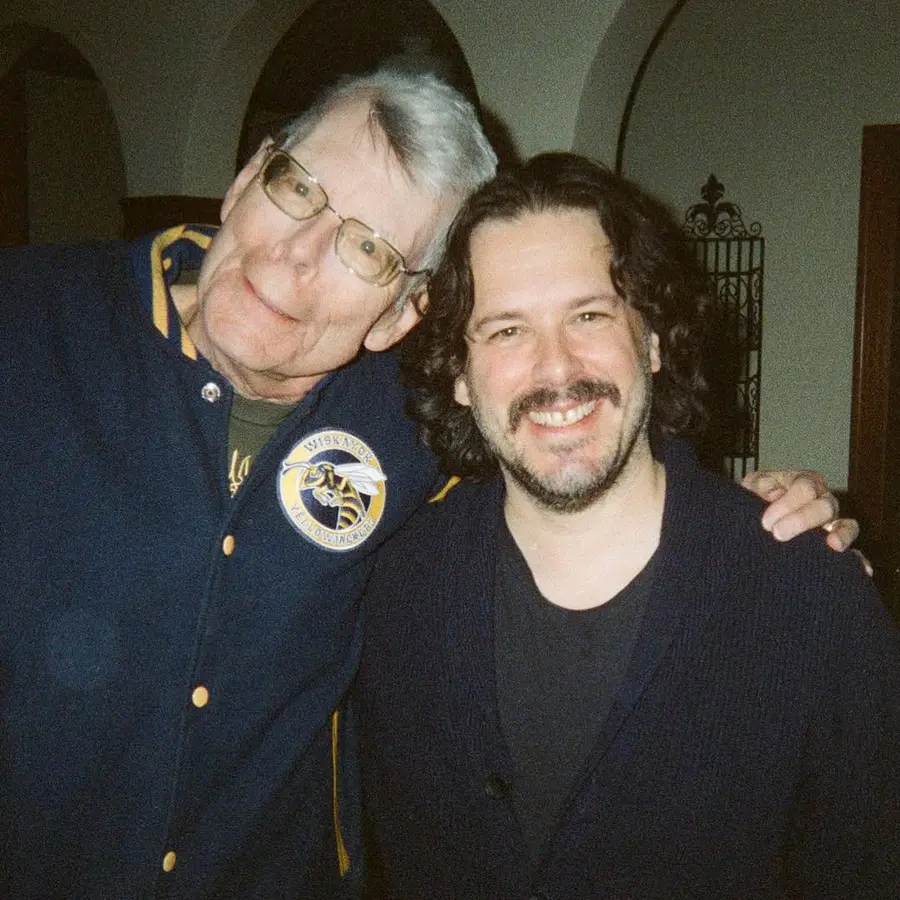
The original novel is set in 2025. Did you think the film would be released in the year set in the original?
Stephen King Not at all! When I wrote the original, it was probably around 1972. At that time, 2025 felt like such a distant future that I couldn't grasp it at all. When I sent the manuscript to the publisher, they replied, "We do not publish dystopian novels."
Edgar Wright We intentionally did not specify the year in the film. I think dystopian films often fail to imagine a sufficiently distant future. Even looking at Stanley Kubrick's film 〈2001: A Space Odyssey〉, reality has not yet reached that level. I also love 〈Escape from New York〉, which is set in 1997, but that time has already passed. So, if we can't set it in a far-off future, I thought it would be better not to set a year at all.
What inspired you to write the original novel?
Stephen King To be honest, I wanted to write an adventure novel that would sell well. At that time, I was in a very difficult situation. So I decided I needed to write an adventure novel that could sell. However, since this was a story set in a dystopian background, it was naturally not a book that would sell well. Still, I wanted to depict a very cruel world where people consume 'game shows' as entertainment. And that story felt like something that could realistically happen. I thought that it could be possible for people to be hunted on TV.
Edgar Wright It's interesting that 'The Running Man' is one of many game shows in the novel. It implies that there is a much larger world beyond it. Although 'The Running Man' show is said to be the most dangerous, there are also programs like 'How Hot Can You Take It?' and 'Treadmills for Bucks.'
Stephen King My favorite was 'Swim the Alligators.'
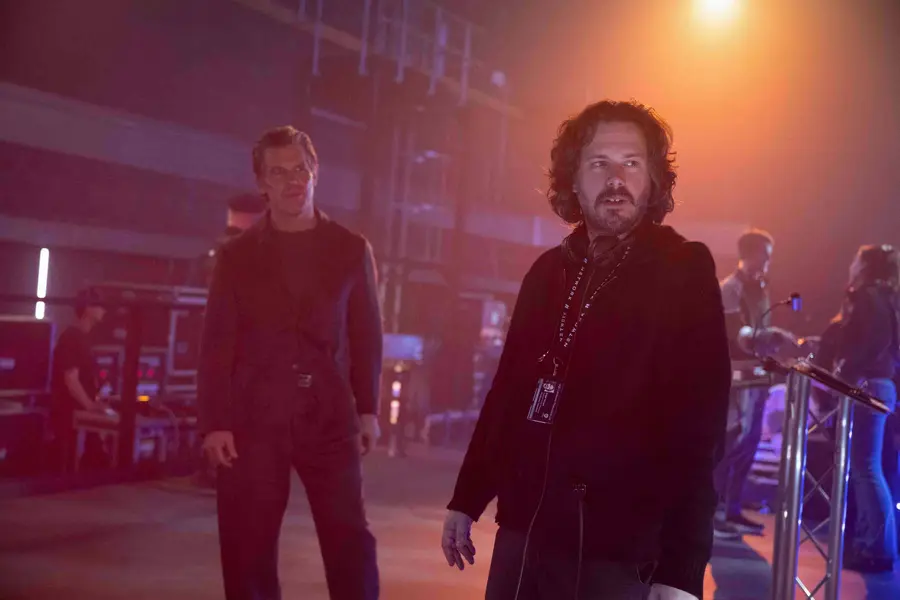
How did this film adaptation come about? Are you satisfied with the result?
Stephen King I think it turned out very well. To put it metaphorically, sometimes in life, you meet an angel. For me, that angel was Edgar Wright. Everything fell into place very naturally.
Edgar Wright Our first connection was after 〈Shaun of the Dead〉. At that time, the author wrote a wonderful recommendation for the film's advertisement, and I was very grateful. I encountered the original novel in the mid-80s, and it was published under the author's pen name 'Richard Bachman.' There were four stories in the collection, and I read them all. I saw the film that came out in 1987 when I was a teenager. It was the first time I realized, 'Wow, you can adapt the original so loosely.' They borrowed only some settings, and most of the story was not transferred at all. So I always felt that there was another story in the original that had not yet been made into a film. About 15 years ago, I looked into the film rights for 《The Running Man》, but the rights situation was so complicated that there was no progress. So, in a way, it was really a fateful event that this work eventually came to me. Producer Simon Kinberg emailed me, saying, "I heard you're interested in adapting 《The Running Man》, is that true?" It was a magical moment. I immediately replied, "Yes, it's something I've been thinking about for a long time." And the fact that a novel set in 2025 is being made into a film in 2025 was not at all intentional, but it is a truly amazing coincidence.
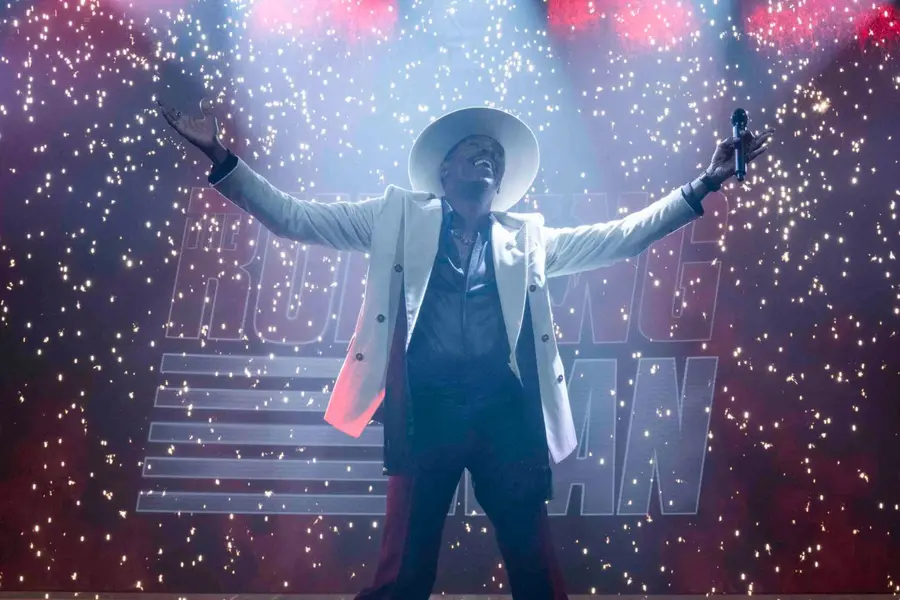
The deepfake scenes in the movie are really chilling.
Stephen King When I was writing, I thought there would come a time when we could manipulate movie scenes at will. I thought that by around 2025, such deepfake technology would be almost perfectly implemented, and I really liked that idea. I also liked the scene where a man says, "By the way, you're on Freebie right now." Drones acting as movie cameras or TV cameras hover in the air, following people wherever they go. Such things are already happening in reality, and now it's just a matter of how to adapt that for the public. Nowadays, everyone has a mobile phone and records everything on video.
Edgar Wright The person who says, "You're on Freebie right now" in the film is Michael Bacall, who co-wrote the script. He made a cameo in that scene. Over the past 25 years, during the era of reality TV, people have become very aware of how the process of 'editing' creates a narrative. Nowadays, reality TV even has a term called 'villain edit' to refer to this. It's a way of editing that makes someone appear as an extreme villain.
Stephen King Wow, is that really a thing? That's amazing! Villain edit!
Edgar Wright I just learned about it a few days ago. It's surprising that I had never heard that word until the film was completed. Even thinking of reality shows like 〈The Real Housewives of Beverly Hills〉, there is always a villain role in those programs. I've seen this phenomenon in singing competition shows as well. They create narratives for specific contestants and use intentional editing to make someone look like a scapegoat or a villain. This is very common in reality TV. A documentary about famous talk show host Jerry Springer was released on Netflix before filming, proving that the themes addressed in the film and the original novel are happening in reality. The manipulation of participants, excessive provocation by the production team, and the fact that host Jerry Springer himself was deeply involved in the process, even though he would say on camera, "I'm just the host. I don't know what will happen," the documentary clearly showed that he was much more aware of what was happening behind the scenes.
Stephen King Another issue is that people completely stop caring that reality show participants are human beings. They look at them as if they are just actors, characters on the screen. But Ben Richards is a real person who suffers real pain. He has problems at work, and his child is sick. However, within the world of the show, he is just a pawn that can be moved around. He is consumed as part of the ratings competition.
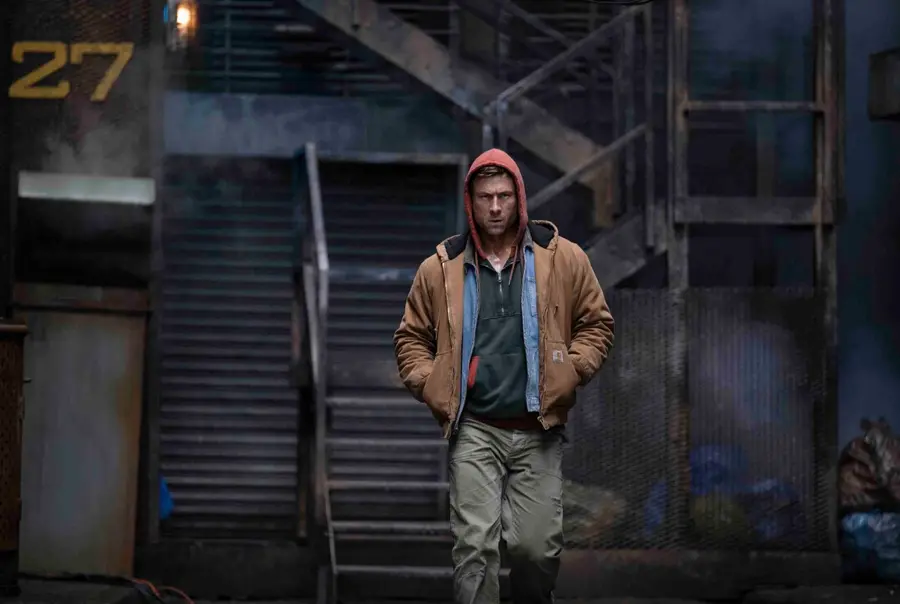
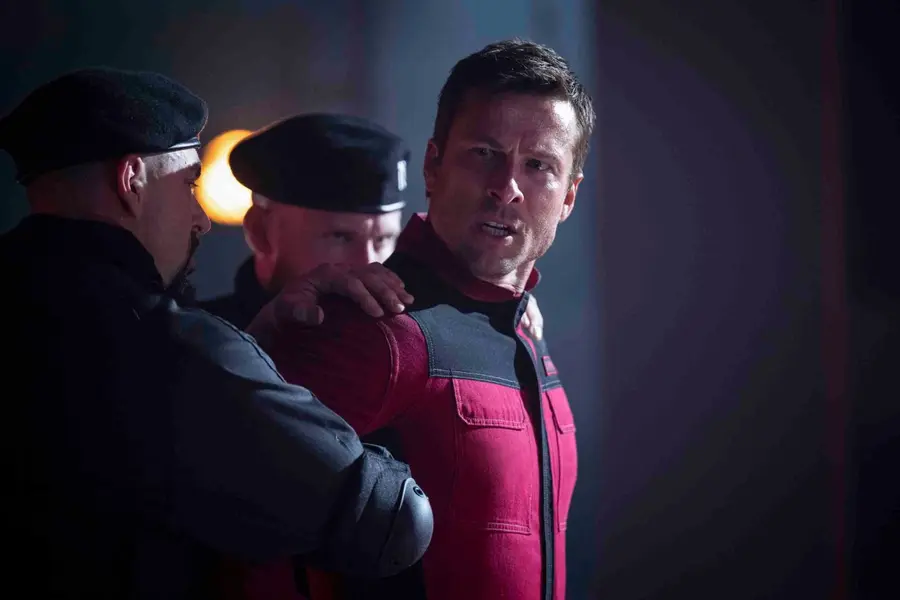
What was the reason for casting Glen Powell?
Edgar Wright I knew a bit about Glen Powell even before meeting him. I first saw him in 〈Everybody Wants Some!〉, but it was decisively after watching 〈Hitman〉, which he co-wrote, that I realized he could handle both serious and comedic acting. Equally important was that he exuded the vibe of an ordinary person, a common citizen. Not every action star has that quality, but it was very important to me. He was on the list of leading actor candidates provided by the studio. I was drawn to him for two reasons. First, he was not a typical action star who had defeated numerous villains in previous films. Second, he had the image of an ordinary guy you might run into on the street. This is reminiscent of Harrison Ford's characteristics. The early roles that Harrison Ford played had a clear commonality: they were not perfect. Nowadays, action films usually feature characters who are the best in their field. John Wick is the best killer, and Jason Bourne is a super spy who has lost his memory. However, at least the Ben Richards in the original is not a completed action hero. In this film, he appears as a laborer working on a construction site. Physically strong, but not a highly trained killer, and certainly not a superhero. Our goal was to make the audience feel, 'Can this guy really win?' An action hero must have vulnerabilities. The reason Glen Powell's performance was particularly excellent this time was that he reacts in real-time to the events and situations that occur.
Stephen King Ben Richards is a very likable character. It's very important that the audience feels a connection to the protagonist. The character played by Glen Powell actually gives that feeling. He feels like a real person. It's very good.



![[Interview] Masters of the Genre Unite, 'The Running Man' Director Edgar Wright & Stephen King](https://cdn.www.cineplay.co.kr/w160/q75/article-images/2025-12-08/f9992fc4-2b7a-41e9-8abf-8c72c6dac438.jpg)
댓글 (0)
댓글 작성
댓글을 작성하려면 로그인이 필요합니다.
로그인하기